- Product Description Description
- Table of Contents TOC
- List of Table & Figure LOT
- Get Free Sample PDF Sample PDF
Market Size, 2025
$2.61 BnMarket Estimate, 2026
$2.73 BnMarket Forecast, 2034
$3.92 BnCAGR, 2026–2034
4.60%Europe Bubble Gum Market Report Summary
The Europe bubble gum market was valued at USD 2.61 billion in 2025, is estimated to reach USD 2.73 billion in 2026, and is projected to reach USD 3.92 billion by 2034, growing at a CAGR of 4.60% during the forecast period from 2026 to 2034. The growth of the Europe bubble gum market is driven by increasing demand for innovative confectionery products, rising popularity of sugar-free formulations, and growing consumer interest in functional and healthier chewing gum alternatives. Bubble gum has evolved from a traditional novelty confectionery product into a category incorporating functional ingredients, sugar-free sweeteners, and sustainable packaging to align with changing consumer preferences across Europe. Additionally, strong consumption among households with children and increasing innovation in flavors and packaging are further supporting market growth.
Key Market Trends
-
Rising demand for sugar-free bubble gum formulations using sweeteners such as xylitol, stevia, and erythritol.
-
The increasing popularity of nostalgia-based marketing strategies targeting millennial parents.
-
Growing interest in functional bubble gum products containing vitamins and oral health ingredients.
-
Expansion of eco-friendly packaging solutions aligned with European sustainability goals.
-
Increasing adoption of digital engagement strategies and gamified brand experiences for younger consumers.
Segmental Insights
- By product type, the sugar-based bubble gum segment held the largest share of the Europe bubble gum market in 2025 due to its affordability, strong flavor profile, and wide availability across retail channels.
- The sugar-free bubble gum segment is expected to grow at the fastest CAGR of 7.8% during the forecast period, driven by increasing consumer awareness regarding dental health, regulatory pressure to reduce sugar consumption, and rising demand for healthier confectionery alternatives.
- By flavor, the fruity flavor segment dominated the Europe bubble gum market in 2025. Popular fruit flavors such as strawberry, watermelon, banana, and mixed berries remain highly preferred among children and teenagers.
- The mint flavor segment is projected to grow at a CAGR of 6.5%, supported by increasing adoption among adults seeking oral freshness and functional chewing gum benefits.
- By distribution channel, supermarkets and hypermarkets accounted for the largest share of the Europe bubble gum market in 2025 due to high consumer footfall, impulse purchase behavior, and widespread retail distribution networks.
- The online retail segment is expected to grow at the fastest CAGR of 9.2%, driven by increasing e-commerce adoption and digital marketing strategies used by confectionery brands.
Regional Insights
The Europe bubble gum market is experiencing steady growth across several countries driven by rising confectionery consumption, product innovation, and expanding retail distribution.
-
Germany held the largest share of the Europe bubble gum market in 2025 due to high confectionery consumption and a strong retail distribution network.
-
The United Kingdom is expected to witness significant growth supported by sugar-reduction initiatives and strong demand for private-label confectionery products.
-
France represents an important market due to rising demand for clean-label confectionery and innovative snack products.
-
Italy maintains a strong market presence supported by its well-established confectionery industry and increasing demand for natural sweetener alternatives.
-
Spain is emerging as a growing market driven by expanding food processing industries and rising consumer interest in innovative confectionery products.
Competitive Landscape
The Europe bubble gum market is highly competitive and includes several global confectionery manufacturers competing through product innovation, flavor diversification, and health-focused formulations. Companies are increasingly focusing on sugar-free variants, sustainable packaging, and digital marketing strategies to attract younger consumers. Major companies operating in the Europe bubble gum market include Mars, Incorporated; Mondelēz International; Perfetti Van Melle; The Hershey Company; Lotte Corporation; Cloetta AB; Ferrero Group; and Wrigley Company (Mars Wrigley). These companies are strengthening their market presence through new product launches, strategic partnerships, and sustainable packaging initiatives.
 Download Free Sample Report
Europe Bubble Gum Market Size
The Europe bubble gum market size was valued at USD 2.61 billion in 2025 and is anticipated to reach USD 2.73 billion in 2026 from USD 3.92 billion by 2034, growing at a CAGR of 4.60% during the forecast period from 2026 to 2034.

Bubble gum product has evolved from a simple novelty item to a sophisticated confection that incorporates functional ingredients and sustainable packaging to align with contemporary European values. The European Union maintains strict regulations on food additives and labeling which shapes product formulation strategies for bubble gum manufacturers operating within the region. According to the World Health Organization, over 50% of children in European countries exceed recommended daily sugar intake which has prompted reformulation efforts toward sugar free alternatives. Data from Eurostat indicates that households with children under 15 years account for approximately 30% of total confectionery expenditure in Western Europe establishing a foundational consumer base for bubble gum products. The European Food Safety Authority continuously evaluates sweetener safety which influences ingredient selection for manufacturers seeking to balance taste and compliance. Cultural traditions around confectionery consumption vary across member states with Southern European countries demonstrating higher per capita intake of chewable sweets.
MARKET DRIVERS
Innovation in Sugar Free and Functional Ingredient Formulations
The accelerating consumer demand for sugar free confectionery that aligns with public health guidelines and dental wellness priorities is solely boosting the growth of Europe bubble gum market. European parents increasingly seek treats that minimize sugar exposure, while maintaining enjoyment for their children which has driven manufacturers to invest heavily in alternative sweetener technologies. According to the European Academy of Paediatric Dentistry, dental caries affect approximately 30% of children aged 5 to 12 across EU member states prompting preventive dietary recommendations that favor non cariogenic snacks. Bubble gum brands utilizing xylitol stevia and erythritol have gained traction as these ingredients not only reduce sugar content but also offer oral health benefits such as plaque reduction. Furthermore, the European Commission Farm to Fork Strategy encourages reduction of added sugars in processed foods creating regulatory tailwinds for reformulated products. Manufacturers are also incorporating functional additives such as vitamins and minerals to enhance nutritional profiles appealing to health-conscious caregivers. This convergence of regulatory support health awareness and technological innovation ensures sustained demand growth for advanced bubble gum formulations that satisfy both taste preferences and wellness objectives.
Nostalgia Marketing and Cross Generational Appeal
The strategic deployment of nostalgia marketing that leverages emotional connections to bubble gum, across multiple generations of consumers is also driving the growth of Europe bubble gum market. Brands are increasingly reviving classic flavors packaging designs and advertising motifs from the 1980s and 1990s to resonate with millennial parents, who now purchase confectionery for their own children. According to research published by the European Journal of Marketing over 60% of consumers aged 30 to 45 report positive emotional responses to retro branded products which influences household purchasing decisions. This cross generational appeal extends beyond mere sentiment as it facilitates shared experiences between parents and children strengthening brand loyalty through familial rituals. Social media platforms amplify this effect as users share nostalgic content featuring vintage bubble gum brands creating organic visibility and engagement. Furthermore, the rise of experiential retail concepts such as pop up stores and themed confectionery shops in cities like London Paris and Berlin provides immersive touchpoints that deepen consumer connection.
MARKET RESTRAINTS
Stringent Sugar Tax Policies and Fiscal Disincentives
The proliferation of sugar tax legislation, across multiple European jurisdictions, which artificially elevates retail prices and dampens consumer demand is restricting the growth of Europe bubble gum market. Countries, such as the United Kingdom, France, and Portugal, have implemented excise duties on sugar sweetened products including certain bubble gum formulations that exceed specified sugar thresholds. According to the Organisation for Economic Co-operation and Development, sugar taxes in European nations have reduced consumption of taxed confectionery by an average of 12% within two years of implementation. These fiscal measures create significant pricing pressure for manufacturers who must either absorb costs and compress margins or pass increases to consumers risking volume decline. Data from the European Commission on fiscal policy impacts indicates that price elasticities for confectionery products are particularly high among lower income households who represent a substantial portion of bubble gum buyers. Small and medium sized confectionery producers face disproportionate challenges as they lack the scale to reformulate quickly or negotiate favorable supply terms. Furthermore, the complexity of navigating disparate national tax regimes increases compliance costs and administrative burdens for pan European distributors.
Growing Parental Scrutiny and Health Conscious Gatekeeping
The intensifying vigilance of European parents, who increasingly act as health-conscious gatekeepers controlling children access to confectionery product is also hampering the growth of Europe bubble gum market. Public health campaigns and educational initiatives have heightened awareness about the risks of excessive sugar consumption artificial additives and poor oral hygiene, which has shifted parental purchasing criteria toward healthier alternatives. According to the European Consumer Organisation, over 70% of parents in Western Europe, now actively read ingredient labels and avoid products containing artificial colors or high levels of added sugars. This scrutiny limits the addressable market for traditional bubble gum formulations that rely on conventional sweeteners and synthetic flavorings. Furthermore, school policies across several European countries restrict the sale of sugary snacks on campus reducing impulse purchase opportunities for bubble gum. The requirement for transparent labeling and clean ingredient declarations also increases formulation complexity and production costs for manufacturers.
MARKET OPPORTUNITIES
Expansion into Eco Friendly and Biodegradable Packaging Solutions
The development of sustainable packaging innovations that align with the European Union ambitious circular economy objectives and growing consumer environmental consciousness is setting up new opportunities for the growth of Europe bubble gum market. Bubble gum manufacturers can differentiate their brands by adopting biodegradable wrappers compostable blister packs and recycled material cartons that minimize plastic waste and appeal to eco minded shoppers. Companies that pioneer compostable gum bases and plant-based film wrappers can leverage eco labeling to attract environmentally conscious consumers, who prioritize sustainability in purchasing decisions. Furthermore, the EU Single Use Plastics Directive creates a favorable policy environment for alternative packaging adoption providing first mover advantages for proactive brands. Retailers in countries like Germany and the Netherlands are increasingly demanding suppliers, who demonstrate tangible commitments to waste reduction enabling preferential shelf placement for sustainable bubble gum offerings.
Integration of Digital Engagement and Gamified Consumer Experiences
The rapid digitalization of youth culture brands to forge deeper connections with European children and teenagers through interactive digital platforms and gamified marketing initiatives. This factor is solely attributed in creating new opportunities for the growth of Europe bubble gum market. Manufacturers can leverage augmented reality mobile applications and social media challenges that transform bubble gum consumption into an engaging entertainment experience beyond mere taste. According to the European Digital Economy and Society Index, over 85% of European households with children now have regular internet access enabling widespread reach for digital brand activations. Bubble gum companies can create virtual bubble blowing contests flavor customization tools and collectible digital assets that encourage repeat purchases and brand loyalty among digitally native consumers. Furthermore, partnerships with popular gaming platforms and influencer collaborations can amplify visibility and relevance among target demographics who spend significant time in digital environments. The integration of QR codes on packaging that unlock exclusive content or rewards further bridges physical and digital touchpoints enhancing consumer engagement.
MARKET CHALLENGES
Intense Competition from Alternative Snack Categories and Shifting Preferences
The fierce competition from diverse alternative snack categories that vie for the same discretionary spending and consumption occasions, among children and teenagers is one of the challenges for the growth of Europe bubble gum market. Products, such as fruit snacks yogurt tubes protein bars and savory crackers offer perceived nutritional advantages that appeal to health-conscious parents and young consumers alike. According to the European Snack Food Association, sales of better for you snack alternatives have grown by 22% annually over the past three years reflecting shifting preferences toward functional and wholesome options. This competitive pressure forces bubble gum manufacturers to justify their value proposition beyond mere entertainment which requires significant investment in product innovation and marketing communication. Furthermore, the rise of private label brands offering affordable bubble gum alternatives intensifies price competition and compresses margins for established players. The perception of bubble gum as a non-essential treat rather than a nutritional snack limits its resilience during economic downturns, when households prioritize essential expenditures.
Regulatory Complexity and Evolving Food Safety Standards
The complexity of navigating evolving food safety regulations and labeling requirements that vary across European member states is significantly to act as a major barrier for the growth of Europe bubble gum market. The European Union enforces stringent standards on food additives sweeteners flavorings and packaging materials, which require continuous monitoring and adaptation by manufacturers to maintain compliance. According to the European Food Safety Authority, new assessments of artificial sweeteners and colorants have led to reformulation mandates for several confectionery products increasing development costs and time to market. The requirement for multilingual labeling and country specific nutritional declarations further complicates production and distribution logistics for pan European brands. Furthermore, the precautionary principle embedded in European food law means that emerging scientific concerns can trigger rapid policy changes creating uncertainty for long term product planning. Small and medium sized enterprises often struggle to afford the necessary testing certification and legal expertise, which limits their ability to compete with larger players. As regulatory scrutiny intensifies in response to consumer advocacy and scientific advancements the bubble gum industry must maintain agile compliance capabilities to avoid market access disruptions and reputational risks.
REPORT COVERAGE
| REPORT METRIC | DETAILS |
| Market Size Available | 2025 to 2034 |
| Base Year | 2025 |
| Forecast Period | 2026 to 2034 |
| CAGR | 4.60% |
| Segments Covered | By Product Type, Flavor, Distribution Channel, End-User and Region. |
| Various Analyses Covered | Global, Regional & Country Level Analysis, Segment-Level Analysis, DROC, PESTLE Analysis, Porter’s Five Forces Analysis, Competitive Landscape, Analyst Overview of Investment Opportunities |
| Country Covered | UK, France, Spain, Germany, Italy, Russia, Sweden, Denmark, Switzerland, the Netherlands, Turkey, the Czech Republic, and the Rest of Europe. |
| Market Leaders Profiled | Mars, Incorporated, Mondelēz International, Perfetti Van Melle, The Hershey Company, Lotte Corporation, Cloetta AB, Ferrero Group, and Wrigley Company (Mars Wrigley). |
SEGMENTAL ANALYSIS
By Product Type Insights
The sugar-based bubble gum segment was accounted in holding a prominent share of the Europe bubble gum market in 2025 due to its significant cost advantage which enables extensive penetration across many countries. Conventional sugar formulations benefit from established global supply chains and lower raw material costs compared to specialized polyol sweeteners used in sugar free variants. According to the study, the average cost of sucrose remains substantially lower than alternative bulk sweeteners allowing manufacturers to maintain competitive shelf prices. This price accessibility ensures that sugar based bubble gum remains the default choice for price sensitive households and impulse buyers in convenience settings. Major retail chains across Germany France and Spain allocate substantial shelf space to conventional gum ranges reflecting consistent consumer demand for affordable treat options. Furthermore, the absence of complex formulation requirements reduces manufacturing overheads enabling faster inventory turnover and broader product availability. As economic pressures influence household spending across Europe the affordability of sugar based bubble gum continues to reinforce its position as the most accessible and widely consumed variant in the regional market.
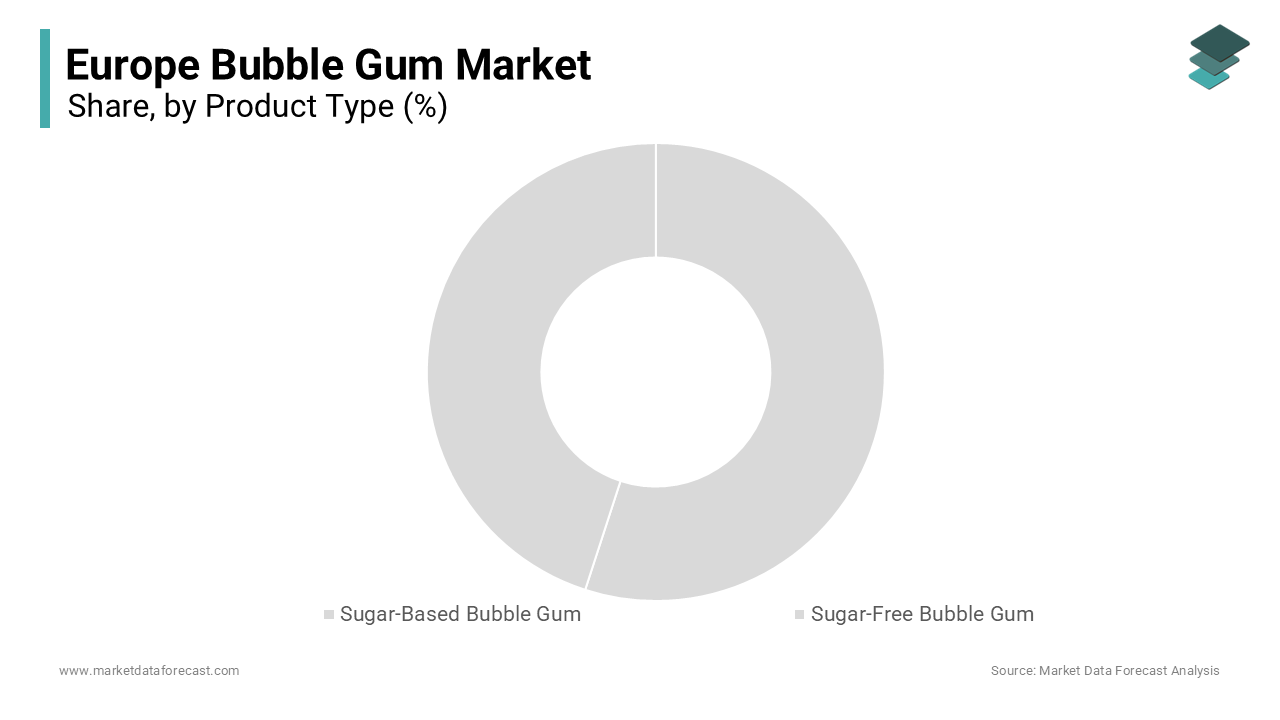
The leading status of the sugar based segment is the deep-rooted sensory preference for traditional sweetness among younger European consumers, who associate sugar with enjoyment and reward. The established taste preferences and sensory expect a Children and teenagers often perceive the texture and flavor release of sugar based gum as superior to sugar free alternatives, which can sometimes exhibit cooling effects or aftertastes. This preference is cultivated through early exposure and marketing that links sugar based treats with fun and social activities. The versatility of sugar in carrying intense fruit flavors also appeals to younger demographics who prioritize bold taste experiences over functional benefits. Data from focus groups conducted by major confectionery manufacturers indicates that reformulation to sugar free often results in initial resistance from core consumer bases unless flavor parity is perfectly achieved. The psychological association of sugar with indulgence ensures that sugar based bubble gum continues to dominate birthday parties school events and casual social gatherings.
The sugar free bubble gum segment is projected to witness a fastest CAGR of 7.8% during the forecast period. The rapid growth of the sugar free segment is the intensifying European consumer aversion to cariogenic ingredients, which has fundamentally reshaped purchasing behaviors across the confectionery sector. Parents are increasingly educated about the link between sugar consumption and tooth decay and actively seek certified dental friendly alternatives for their children. The strong among urban millennials, who view sugar free gum as a responsible choice that aligns with modern wellness values. The trust placed in xylitol and stevia as safe alternatives serves as a powerful marketing tool that allows brands to command premium pricing and foster long term brand loyalty. Retailers are responding by expanding dedicated sugar free confectionery sections and reformulating private label products to meet these health standards. The correlation between health consciousness and sugar free consumption is further reinforced by public health advisories promoting diets free from fermentable carbohydrates. As this demographic shift gains momentum, the demand for sugar free bubble gum is set to outpace conventional variants driven by a fundamental realignment of consumer priorities toward transparency and health in food sourcing.
By Flavor Insights
The fruity flavor profile segment held a dominant share of the Europe bubble gum market in 2025. The growth of the fruity segment is driven by the universal integration of fruit flavors into European youth culture, which ensures consistent and high volume demand across multiple consumption occasions. Bubble gum serves as a core treat for children who associate flavors like strawberry banana and watermelon with fun and enjoyment making it indispensable for both home consumption and social sharing. This widespread adoption extends to the retail sector where fruity gum remains one of the top selling items in supermarkets throughout Germany France and the United Kingdom. The versatility of fruit flavors allows manufacturers to introduce seasonal variations and limited editions that stimulate repeat purchases and maintain consumer interest. Furthermore, the rise of character licensed packaging featuring popular cartoons has reinforced household consumption with children seeking specific flavors associated with their favorite media franchises. Data from retail audits indicates that fruit flavored gum sales have grown steadily as consumers invest in pantry staples for home preparation. The enduring cultural relevance of fruity flavors combined with their functional role in masking the taste of gum base ensures that the fruity segment will maintain its dominant position in the flavor landscape.
The mint flavor profile segment is swiftly growing at a CAGR of 6.5% from 2026 to 2034 with the robust expansion of the adult confectionery sector, where bubble gum is increasingly viewed as a functional tool for oral hygiene and breath management. European consumers engaged in professional and social settings increasingly seek discreet solutions for freshening breath without the stigma associated with traditional mints. According to research published by the European Journal of Oral Sciences, chewing gum with mint flavors stimulates saliva production which helps neutralize acids and cleanse the mouth effectively. This evidence has prompted European gum brands to incorporate stronger mint extracts and cooling agents into formulations targeting mature demographics. The European Food Safety Authority has acknowledged several health claims related to sugar free gum and oral health which further legitimizes their use in daily routines. Consumer awareness campaigns by dental associations have also highlighted the benefits of mint gum after meals aligning with the region's preventive healthcare mindset.
By Distribution Channel Insights
The supermarkets and hypermarkets channel segment was the largest by accounting for 55.4% of the Europe bubble gum market share in 2025 with the consumer preference for consolidating grocery purchases which ensures consistent and high-volume demand across multiple retail formats. Bubble gum serves as a staple impulse item often placed near checkout counters where families complete their weekly shopping rounds. According to data from the European Retail Forum, over 90% of European households visit supermarkets at least once a week reflecting their entrenched position in consumer routines. This widespread adoption extends to the promotional sector where bulk packs and multi buy offers drive significant sales velocity during holiday seasons. The versatility of supermarket channels allows them to cater to both budget conscious shoppers and premium buyers through diverse product ranges. Furthermore, the rise of loyalty programs has reinforced household consumption with consumers seeking points and rewards on everyday items. Data from retail federation reports indicates that confectionery category sales including bubble gum have grown steadily as consumers invest in pantry staples for home preparation.
The online retail channel is expected to grow at a fastest CAGR of 9.2% during the forecast period. The surge in e-commerce adoption following global shifts in shopping behavior, which has led to a rise in online confectionery sales, allowing brands to tell their stories and showcase their portfolios without geographic limitations. Bubble gum producers can leverage this channel to offer exclusive limited releases virtual tastings and subscription services that foster deep brand loyalty. Digital platforms also enable precise targeting of niche audiences such as collectors or health-conscious buyers, who might be underserved by physical retail. Data from major online beverage retailers indicates that consumers are increasingly comfortable purchasing high value spirits online provided there are robust age verification and secure delivery systems. Furthermore, social media integration allows for real time interaction and community building which is crucial for a category reliant on heritage and narrative.
REGIONAL ANALYSIS
Germany Bubble Gum Market Analysis
Germany was the top performer of the Europe bubble gum market by holding 18.3% of share in 2025 due to its robust economy and high consumption of confectionery products among children and adults. The sophisticated consumer base that rigorously evaluates ingredient lists favoring natural and sugar free options over synthetic alternatives. The country's strong discount retail sector utilizes bubble gum extensively to drive impulse purchases at checkout counters. Furthermore, Germany acts as a central distribution gateway for the rest of Europe leveraging its advanced logistics infrastructure to re-export processed ingredients to neighboring countries. The presence of stringent food safety regulations enforced by local authorities ensures that only high purity products enter the supply chain fostering trust among industrial buyers. Continuous investment in research and development by German universities and private institutes focuses on optimizing extraction and drying technologies further solidifying the country's position as the market frontrunner.
United Kingdom Bubble Gum Market Analysis
The United Kingdom bubble gum market growth is expected to witness a fastest CAGR in coming years with the thriving retail sector and increasing adoption of sugar reduction initiatives. The British market distinguishes itself through a strong emphasis on private label products, where retailers seek cost effective yet high quality gum options for their own brands. According to statistics from the British Retail Consortium, the consumption of confectionery items in the professional catering and bakery sectors has risen steadily, as chefs seek to reduce sugar content while maintaining taste profiles. The growing popularity of veganism in urban centers like London and Manchester has spurred the development of dairy free desserts and meat substitutes that rely on bubble gum for binding and sweetening properties. British consumers are increasingly influenced by the Made in Britain label, which encourages local processors to source and manufacture domestically where possible although raw material imports remain essential. The government's National Nutrition and Health Program actively promotes the reduction of added sugars in processed foods providing a regulatory tailwind for natural sweeteners like bubble gum. Additionally, the country's extensive network of organic farms and cooperatives is beginning to integrate fruit drying capabilities which supports the growth of the organic segment.
France Bubble Gum Market Analysis
France bubble gum market growth is likely to grow with a retail sector and a strong culture of convenience food consumption. The French market is heavily influenced by the rapid proliferation of health focused private label ranges launched by major supermarket chains which prioritize clean label ingredients. The prevalence of gluten free and allergen friendly diets in France has created a specific niche for bubble gum as a safe and versatile alternative to wheat flour in home baking and industrial production. The vibrant startup ecosystem in Paris and Lyon is another key driver with numerous new food tech companies developing innovative snack bars and meal replacement shakes that feature bubble gum as a core ingredient. The combination of retail power and entrepreneurial innovation positions France as a critical growth engine for the bubble gum industry.
Italy Bubble Gum Market Analysis
Italy secures the fourth spot in the market hierarchy with a share of around 10% propelled by its world-renowned confectionery industry and evolving breakfast habits. The Italian market presents a unique scenario where traditional dessert manufacturing intersects with modern health trends creating a fertile ground for bubble gum integration. According to the Italian National Institute of Statistics, the production of gluten free pasta and baked goods has seen double digit growth as awareness of celiac disease increases and lifestyle choices shift. Bubble gum is increasingly utilized by Italian artisans to create naturally sweetened gelato and sorbets reducing the reliance on refined cane sugar while enhancing the creamy texture. The rising popularity of smoothie bowls and healthy breakfast options among younger demographics in cities like Milan and Rome has opened new avenues for fruit powder applications. Italian food manufacturers are renowned for their commitment to quality and are willing to invest in premium ingredients that align with the country's reputation for culinary excellence. Furthermore, the strong tourism sector drives demand in the hospitality industry where hotels and restaurants incorporate bubble gum into health conscious menu items for international guests.
Spain Bubble Gum Market Analysis
Spain bubble gum market growth is likely to grow with its strategic geographic location and growing focus on export oriented food processing. The Spanish market is characterized by a robust agricultural sector that although not a major banana producer itself serves as a critical logistics hub for fruit imports entering Europe from Africa and Latin America. Bubble gum is gaining traction in Spain as an ingredient in probiotic yogurts and dietary supplements due to its prebiotic fiber content. The country's strong tourism industry also contributes to demand as the hospitality sector caters to millions of visitors with diverse dietary preferences including vegan and gluten free options. Spanish food technology centers are actively researching new applications for fruit powders in meat analogues and plant based cheeses driving innovation in the sector. The proximity to North African banana sources allows Spanish processors to minimize transportation costs and carbon footprints aligning with sustainability goals. Additionally, the emergence of local brands focusing on superfood ingredients has stimulated domestic production capabilities.
COMPETITIVE LANDSCAPE
The competition in the Europe bubble gum market is characterized by intense rivalry among established confectionery giants and emerging niche producers who vie for shelf space and consumer attention through brand heritage and innovation. Major players differentiate themselves by emphasizing unique flavor profiles distinct textures and authentic storytelling that resonates with European appreciation for quality and fun. The landscape is dynamic as companies continuously invest in marketing campaigns and experiential events to educate consumers and build emotional connections with their brands. Price competition exists but leading firms mitigate this by focusing on premium and functional segments where margins are healthier and brand loyalty is stronger. Sustainability and health credentials have become critical battlegrounds where competitors showcase their sugar reduction commitments and eco-friendly packaging to attract conscious consumers. The entry of new craft confectionery brands offering artisanal bubble gum expressions adds further pressure on established entities to maintain relevance through innovation.
KEY MARKET PLAYERS
Some of the companies that are playing a dominating role in the Europe Bubble Gum market include
- Mars, Incorporated
- Mondelēz International
- Perfetti Van Melle
- The Hershey Company
- Lotte Corporation
- Cloetta AB
- Ferrero Group
- Wrigley Company (Mars Wrigley)
Top Players in the Europe Bubble Gum Market
Perfetti Van Melle
Perfetti Van Melle stands as a pivotal force in the Europe bubble gum market by leveraging its iconic portfolio including Mentos and Frisk to deliver innovative chewing confectionery experiences. The company contributes significantly to the global market through its integrated supply chain and commitment to quality craftsmanship that resonates with European consumers. Recently Perfetti Van Melle has strengthened its position by investing in sugar free formulation technologies that align with European health guidelines. They have also expanded their sustainable packaging initiatives to meet environmental standards across the region. Their strategic partnerships with major retail chains ensure prominent placement and expert recommendation. This dedication to brand storytelling and responsible consumption solidifies their reputation as a preferred supplier for discerning European buyers seeking authentic bubble gum experiences.
Mondelez International
Mondelez International operates as a leading global confectionery producer with a strong presence in the Europe bubble gum market through its flagship Trident and Dentyne brands. The company serves international markets by offering diverse gum expressions that cater to both traditional enthusiasts and modern functional consumers. Mondelez has recently enhanced its European operations by launching targeted digital marketing campaigns that highlight the oral care benefits of sugar free bubble gum. They have actively pursued collaborations with dental associations to create educational content that drives brand credibility. The company focuses on premiumization strategies that introduce limited edition flavors to capture collector interest. Their emphasis on innovation and consumer engagement enables them to address evolving preferences effectively and sustain long term growth in a competitive landscape.
Ferrero Group
Ferrero Group functions as a major independent confectionery producer with significant involvement in the Europe bubble gum market through its diverse portfolio of chewable treats and novelty confectionery. The company supports the global industry by offering allocated and limited release products that generate excitement among younger consumers and collectors. Ferrero has recently strengthened its market position by expanding distribution agreements with premium retailers across key European markets to improve product accessibility. They have implemented enhanced traceability systems to verify ingredient quality and combat counterfeiting which builds consumer trust. Their strategy includes hosting exclusive tasting events and interactive brand experiences for European trade partners to deepen brand loyalty. This collaborative approach combined with a focus on quality and innovation enables them to maintain strong demand and premium positioning in the European marketplace.
Top Strategies Used by the Key Market Participants
Key players in the Europe bubble gum market primarily employ product innovation strategies to elevate brand perception and capture health-conscious segments through sugar free formulations and functional ingredients. Companies are increasingly investing in digital marketing and social media engagement to reach younger consumers and showcase bubble gum versatility in lifestyle contexts. Another major strategy involves forging strategic partnerships with retail chains and dental associations to ensure prominent placement and expert endorsement. Market participants are also focusing on sustainability initiatives including biodegradable packaging and responsible sourcing to align with European environmental values. Educational campaigns such as interactive events and school programs help build consumer knowledge and brand loyalty. Furthermore, companies leverage limited edition releases and nostalgia marketing to create exclusivity and drive repeat purchases. These collective efforts enable key players to differentiate their offerings and respond effectively to evolving consumer preferences and regulatory expectations.
MARKET SEGMENTATION
This research report on the Europe Bubble Gum Market has been segmented and sub-segmented based on the following categories
By Product Type
- Sugar-Based Bubble Gum
- Sugar-Free Bubble Gum
By Flavor
- Fruity
- Mint
- Others
By Distribution Channel
- Supermarkets/Hypermarkets
- Convenience Stores
- Online Retail
- Specialty Stores
- Others
By End-User
- Children
- Adults
By Country
- UK
- France
- Spain
- Germany
- Italy
- Russia
- Sweden
- Denmark
- Switzerland
- Netherlands
- Turkey
- Czech Republic
- Rest of Europe