- Product Description Description
- Table of Contents TOC
- List of Table & Figure LOT
- Get Free Sample PDF Sample PDF
Market Size, 2025
$273.31 MnMarket Estimate, 2026
$306.05 MnMarket Forecast, 2034
$612.31 MnCAGR, 2026–2034
11.96%Europe Business Continuity (BC) Market Report Summary
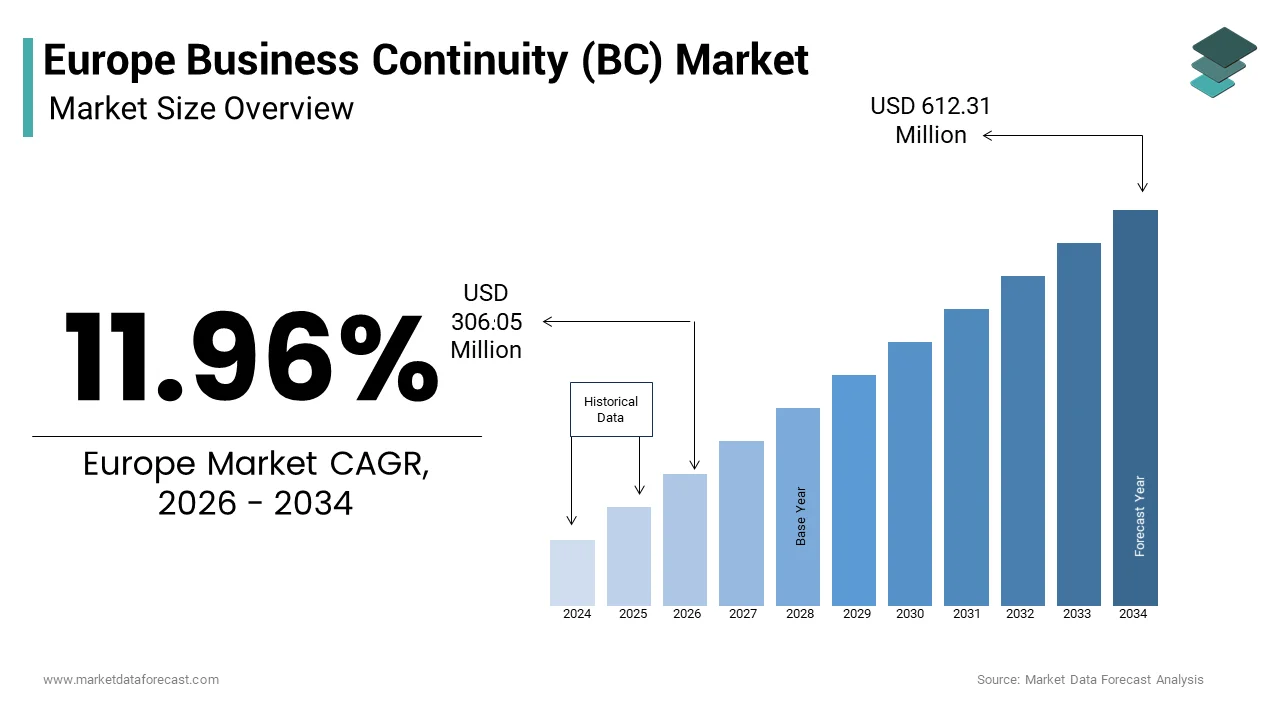
The Europe business continuity (BC) market was valued at USD 273.31 million in 2025, is estimated to reach USD 306.05 million in 2026, and is projected to reach USD 612.31 million by 2034, growing at a CAGR of 11.96% during the forecast period from 2026 to 2034. The growth of the Europe business continuity market is driven by increasing cybersecurity risks, rising regulatory compliance requirements, and the growing need for organizations to ensure operational resilience against disruptions such as cyberattacks, system failures, and natural disasters. Businesses across Europe are prioritizing continuity planning and disaster recovery strategies to minimize downtime and financial losses. Additionally, the rapid digital transformation across industries, expansion of cloud-based infrastructure, and increasing dependence on data-driven operations are accelerating the adoption of advanced business continuity solutions across enterprises.
Key Market Trends
- Increasing adoption of integrated business continuity and disaster recovery solutions to strengthen organizational resilience against cyber threats and operational disruptions.
- Growing emphasis on regulatory compliance and risk management frameworks, particularly across highly regulated sectors such as finance and healthcare.
- Rising investments in automation, cloud backup, and real-time monitoring tools to enhance incident response and recovery efficiency.
- Expansion of hybrid IT environments encouraging enterprises to implement scalable continuity strategies across on-premises and cloud ecosystems.
- Increasing awareness among SMEs regarding business continuity planning to safeguard critical business operations and customer data.
Segmental Insights
- Based on component, the services segment dominated the Europe business continuity market in 2025. The segment’s leadership is attributed to the growing demand for consulting, implementation, and managed continuity services that help organizations design customized resilience frameworks and ensure regulatory compliance.
- Based on deployment mode, the on-premises segment held the largest share of the Europe business continuity (BC) market in 2025. Organizations continue to prefer on-premises deployment due to enhanced data control, security requirements, and compliance considerations, particularly within sensitive industries handling confidential information.
- Based on end user, the Banking, Financial Services, and Insurance (BFSI) segment accounted for the largest share of the Europe business continuity market in 2025. The sector’s dominance is driven by strict regulatory mandates, high transaction volumes, and the critical need to maintain uninterrupted financial operations and protect sensitive customer data.
Regional Insights
The Europe business continuity market demonstrates strong growth across major economies supported by increasing enterprise digitalization and risk mitigation initiatives.
- Germany led the regional market in 2025, driven by strong industrial infrastructure, advanced IT adoption, and heightened focus on operational resilience among large enterprises.
- The United Kingdom followed closely, supported by rapid cloud adoption and stringent financial sector regulations encouraging continuity planning.
- France held a significant market share due to active government involvement in protecting critical infrastructure and strengthening national cybersecurity frameworks.
- Switzerland is expected to witness notable growth during the forecast period, supported by its strong banking ecosystem and increasing investments in secure IT and risk management solutions.
Competitive Landscape
The Europe business continuity market is characterized by the presence of global technology providers and specialized resilience solution vendors focusing on innovation, automation, and cloud-integrated continuity platforms. Market participants are emphasizing strategic partnerships, managed service offerings, and AI-driven risk analytics to enhance business resilience capabilities. Companies are also expanding cybersecurity integration within continuity solutions to address evolving threat landscapes and enterprise risk requirements.
Prominent players in the Europe business continuity market include Arcserve, IBM Corporation, Microsoft Corporation, Dell EMC, Continuity Logic, CloudAlly, Fusion Risk Management, Inc., Lockpath, Inc., Quantivate, LLC, Rackspace US, Inc., StorageCraft Technology Corporation, VMware, MetricStream Inc., RecoveryPlanner.com, Strategic BCP, Inc., Sungard Availability Services, and Synology Inc.
Europe Business Continuity (BC) Market Size
The Europe business continuity (BC) market size was valued at USD 273.31 million in 2025 and is anticipated to reach USD 306.05 million in 2026 to reach from USD 612.31 million by 2034, growing at a CAGR of 11.96% during the forecast period from 2026 to 2034.
Current Introduction of The Europe Business Continuity (BC) Market
Business Continuity (BC) is an organization's strategic capability to maintain or quickly resume critical functions during and after a major disruption. This sector functions as a critical safeguard for the continental economy, enabling entities to maintain essential functions and recover rapidly during crises. The operational landscape is uniquely defined by a rigorous regulatory environment that mandates robust risk management protocols. According to the European Union Agency for Cybersecurity (ENISA), significant cyber incidents, particularly DDoS and ransomware, increased in the 2023-2024 period, compelling organizations to prioritize continuity planning. Furthermore, as per data from the European Commission, the implementation of the Digital Operational Resilience Act has made comprehensive BC strategies mandatory for financial institutions across the bloc. The region also faces distinct physical threats. The European Environment Agency (EEA) reports that the frequency and intensity of extreme weather events, such as floods and heatwaves, have surged over the last decade, with climate-related economic losses in the EU now averaging over €12 billion annually. As per the International Organization for Standardization, the adoption of ISO 22301 certification has grown steadily among European enterprises, signaling a cultural shift toward proactive resilience. This convergence of digital threats, climate risks, and regulatory imperatives shapes a market where business continuity is no longer optional but a fundamental component of corporate governance and survival.
MARKET DRIVERS
Stringent Regulatory Mandates and Compliance Requirements
The aggressive expansion of legislative frameworks is the primary factor propelling the Europe business continuity (BC) market. These frameworks legally obligate organizations to establish and test robust business continuity plans. As per the European Parliament, the Digital Operational Resilience Act now requires all financial entities, including banks and insurance firms, to maintain detailed ICT risk management frameworks and conduct regular resilience testing. Non-compliance results in severe financial penalties and reputational damage, driving a surge in demand for specialized BC software and consulting services. Additionally, the General Data Protection Regulation imposes strict obligations on data availability and recovery, forcing companies to implement sophisticated backup and disaster recovery protocols to avoid massive fines. The Critical Entities Resilience Directive further extends these requirements to sectors like energy, transport, and health, mandating risk assessments and continuity measures for essential service providers. This regulatory web creates a non-negotiable baseline for investment, as organizations cannot operate legally without verified continuity capabilities. The constant evolution of these laws ensures a continuous cycle of assessment, implementation, and auditing, making regulatory compliance the most powerful and sustained driver of market growth across the continent.
Escalating Frequency of Cyber Threats and Ransomware Attacks
The dramatic increase in the sophistication and frequency of cyberattacks, particularly ransomware, is fueling the expansion of the Europe business continuity (BC) market. These attacks directly threaten operational viability and data integrity. As reported by Eurostat, a significant portion of enterprises in the European Union continues to experience security incidents leading to operational consequences, with many businesses prioritizing ICT security measures to mitigate risks. The rising cost of data breaches, which averages millions of euros per incident according to the European Union Agency for Cybersecurity, has forced boards to view business continuity as a critical financial imperative rather than an IT afterthought. Modern attacks often target backup systems specifically, rendering traditional recovery methods ineffective and necessitating advanced, air-gapped, and immutable continuity solutions. The shift toward remote work has expanded the attack surface, making decentralized continuity planning essential for maintaining productivity during disruptions. Organizations are increasingly investing in automated failover systems and real-time data replication to minimize recovery time objectives. The realization that recovery from a major cyber incident is a matter of "when" not "if" drives substantial capital allocation toward resilient architectures. This pervasive threat landscape ensures that demand for robust BC solutions remains high as entities strive to protect their operations from existential digital risks.
MARKET RESTRAINTS
High Implementation Costs and Resource Intensiveness
The substantial financial burden associated with developing, implementing, and maintaining comprehensive business continuity programs acts as a significant restraint to the growth of the Europe business continuity (BC) market. This is particularly true for small and medium-sized enterprises. As per data from the European Commission, SMEs constitute over ninety nine percent of all businesses in the EU, yet many lack the capital to invest in enterprise-grade BC software, redundant infrastructure, and specialized consulting. The total cost of ownership extends beyond initial licensing to include ongoing expenses for regular testing, staff training, system updates, and third-party audits, which can strain limited budgets. For smaller organizations, the perceived complexity of aligning with standards like ISO 22301 often leads to procrastination or the adoption of inadequate manual processes. The shortage of skilled BC professionals in Europe further inflates labor costs, making it difficult for resource-constrained firms to build internal expertise. Economic uncertainty and inflationary pressures have also led some companies to defer non-mandatory resilience investments, viewing them as discretionary rather than essential. This cost barrier creates a disparity in resilience levels, where large corporations are well-protected while a vast segment of the economy remains vulnerable, thereby limiting the total addressable market for advanced BC solutions.
Complexity of Integrating Legacy Systems with Modern BC Solutions
The technical difficulty of integrating modern business continuity platforms with the diverse and often outdated legacy systems prevalent in many European industries is a critical impediment to the Europe business continuity (BC) market expansion. Leading industry analysts observe that a significant portion of the public sector, along with utility and manufacturing industries, continues to operate on long-established mainframe systems and private software environments. These aging platforms often face challenges in modern connectivity due to a lack of compatible interfaces, which complicates their integration with newer digital technologies and cloud-based services. Connecting these siloed environments to contemporary cloud-based BC tools requires extensive customization, middleware development, and prolonged implementation timelines, increasing the risk of project failure. The fragmentation of IT landscapes across multinational European corporations, where different subsidiaries use disparate systems, complicates the creation of a unified continuity strategy. Furthermore, the migration of critical data from legacy formats to modern repositories poses significant risks of data loss or corruption during the transition. The scarcity of engineers proficient in both obsolete technologies and new BC architectures exacerbates these integration challenges. Organizations often hesitate to undertake such complex transformations due to fears of operational disruption, leading to delayed adoption of advanced continuity capabilities. This technical debt acts as a formidable brake on the speed and depth of market penetration.
MARKET OPPORTUNITIES
Adoption of Artificial Intelligence for Predictive Resilience
The integration of artificial intelligence and machine learning into business continuity planning opens up major possibilities to shift from reactive recovery to proactive risk mitigation, which is anticipated to drive the growth of the Europe business continuity (BC) market. Modern machine learning frameworks enable organizations to evaluate extensive data streams to anticipate operational challenges and digital security risks, allowing for proactive intervention. Experts in the European research community emphasize that these intelligent systems are increasingly capable of identifying patterns that signal upcoming logistical delays or network weaknesses. These tools enable organizations to simulate thousands of disruption scenarios instantly, optimizing response strategies and resource allocation with unprecedented precision. Machine learning algorithms can automatically detect anomalies in network traffic or operational metrics, triggering immediate containment protocols to minimize impact. The ability to provide real-time decision support during a crisis allows leadership to act swiftly based on data-driven insights rather than intuition. Furthermore, AI can automate routine testing and validation processes, reducing the manual burden and ensuring plans remain current with evolving risks. By offering predictive capabilities, BC vendors can differentiate their offerings and command premium pricing, appealing to organizations seeking a competitive edge through superior resilience. This technological evolution opens new revenue streams and redefines the value proposition of business continuity from insurance to strategic advantage.
Expansion of Cloud-Native Disaster Recovery as a Service
The accelerating migration to cloud infrastructure offers a lucrative avenue for the expansion of Disaster Recovery as a Service (DRaaS) and the European business continuity (BC) market. This shift makes high-end continuity capabilities accessible to a broader range of organizations. As per sources, the adoption of public and hybrid cloud services in Europe is surging, driven by the need for scalability and cost efficiency. Cloud-native DR solutions eliminate the need for expensive secondary physical data centers, allowing companies to replicate critical workloads to secure cloud regions with minimal upfront investment. This model operates on a pay-as-you-go basis, significantly lowering the barrier to entry for small and medium-sized enterprises that previously could not afford robust redundancy. The inherent geographic distribution of cloud providers ensures that data remains safe even if a specific region suffers a catastrophic event. Automated failover and failback mechanisms in cloud environments reduce recovery time objectives to minutes, ensuring near-continuous availability. The flexibility to scale resources up or down based on actual usage aligns perfectly with dynamic business needs. More European entities are embracing cloud-first strategies. Consequently, the demand for integrated, cloud-based disaster recovery services is poised for exponential growth.
MARKET CHALLENGES
Shortage of Skilled Business Continuity Professionals
A critical lack of qualified experts capable of implementing robust business continuity plans is hindering the Europe business continuity (BC) market. Based on European labour market data, the demand for cybersecurity and risk management professionals is outpacing supply, resulting in a widening skills gap and a substantial volume of unfilled positions across the continent. Developing a robust BC strategy requires a rare combination of technical knowledge, strategic thinking, and crisis management experience, which few individuals possess. This scarcity drives up salary expectations and makes it difficult for organizations, especially outside major hubs, to recruit and retain top talent. The lack of internal expertise often leads to poorly designed plans that fail during actual crises, undermining confidence in BC investments. Furthermore, the rapid evolution of threats and technologies means that existing staff require continuous upskilling, which many companies struggle to provide. The reliance on external consultants to fill this gap increases costs and can result in a lack of institutional knowledge. Addressing this workforce deficit requires significant investment in education and certification programs, yet the immediate impact remains a bottleneck for effective implementation and market maturity.
Difficulty in Quantifying Return on Investment for Resilience
The difficulty organizations face in quantifying the return on investment for resilience measures that prevent hypothetical future events is negatively impacting the expansion of the Europe business continuity (BC) market. This is a persistent challenge hindering wider adoption of comprehensive BC solutions. As per research, CFOs often struggle to justify large expenditures on BC initiatives because the benefits are intangible until a disaster occurs, which may never happen. Unlike revenue-generating projects, BC investments are seen as cost centers, making them vulnerable to budget cuts during economic downturns. The lack of standardized metrics to measure the value of avoided downtime or preserved reputation complicates the business case for senior leadership approval. Many executives perceive BC as an insurance policy rather than a strategic asset, leading to underfunding and minimal engagement. This perception gap forces BC practitioners to spend excessive time trying to prove value rather than improving resilience. The absence of clear, universally accepted financial models for resilience ROI creates hesitation in committing to long-term, high-cost continuity programs. Overcoming this psychological and financial barrier remains a crucial hurdle for market vendors to convince stakeholders of the indispensable nature of their solutions.
REPORT COVERAGE
| REPORT METRIC | DETAILS |
| Market Size Available | 2025 to 2034 |
| Base Year | 2025 |
| Forecast Period | 2026 to 2034 |
| CAGR | 11.96% |
| Segments Covered | By Component, Deployment, End-User, By Country |
| Various Analyses Covered | Global, Regional & Country Level Analysis, Segment-Level Analysis, DROC, PESTLE Analysis, Porter’s Five Forces Analysis, Competitive Landscape, Analyst Overview on Investment Opportunities |
| Regions Covered | UK, France, Spain, Germany, Italy, Russia, Sweden, Denmark, Switzerland, Netherlands, Turkey, the Czech Republic, and the Rest of Europe |
| Market Leaders Profiled | Arcserve, IBM Corporation, Microsoft Corporation, Dell EMC, Continuity Logic, CloudAlly, Fusion Risk, Management, Inc., Lockpath, Inc., Quantivate, LLC, Rackspace US, Inc., StorageCraft Technology Corporation, VMware, MetricStream Inc., RecoveryPlanner.com, Strategic BCP, Inc., Sungard Availability Services, Synology Inc. |
SEGMENTAL ANALYSIS
By Component Insights
The services segment led the Europe Business Continuity market in 2025. The leading of the segment is driven by the intricate need for expert guidance in navigating complex regulatory landscapes and the necessity of human-led crisis management strategies. This dominance reflects the reality that software alone cannot ensure resilience without proper planning, testing, and organizational alignment. The primary force propelling the services segment is the overwhelming complexity of European regulations such as the Digital Operational Resilience Act and the Critical Entities Resilience Directive, which require specialized interpretation and implementation. According to sources, thousands of financial and critical infrastructure entities must undergo rigorous gap analyses and readiness assessments to avoid severe penalties, a task that demands external expertise beyond internal IT capabilities. Organizations rely heavily on consulting firms to map their current continuity postures against these evolving legal frameworks, identify vulnerabilities, and design compliant recovery strategies. The nuanced nature of these laws, which vary slightly across member states, necessitates localized knowledge that general software vendors often lack. Furthermore, the requirement for regular third-party audits and certification processes like ISO 22301 creates a sustained demand for professional advisory services. Companies are willing to invest significantly in these expert engagements to ensure they meet statutory obligations and avoid reputational damage. This regulatory pressure ensures that services remain the foundational component of the market, as organizations prioritize getting the strategy right before investing in automation tools. A further reason for this growth is the indispensable role of professional services in conducting realistic disaster recovery simulations and comprehensive staff training programs. Software can automate failover, but it cannot replicate the human decision-making required during complex, multi-vector attacks or physical disasters. Specialized service providers design and execute tabletop exercises, full-scale drills, and cyber range simulations that expose weaknesses in plans and build muscle memory among response teams. These engagements often reveal gaps in communication protocols and resource allocation that static documents miss. Additionally, the high turnover rate in corporate environments necessitates continuous training cycles to keep new employees prepared. The cultural shift toward resilience requires changing mindsets, a soft skill challenge that consultants are best equipped to address through workshops and leadership coaching. The realization that a plan is only as good as its last successful test drives organizations to allocate substantial budgets to ongoing service engagements, cementing the dominance of this segment.
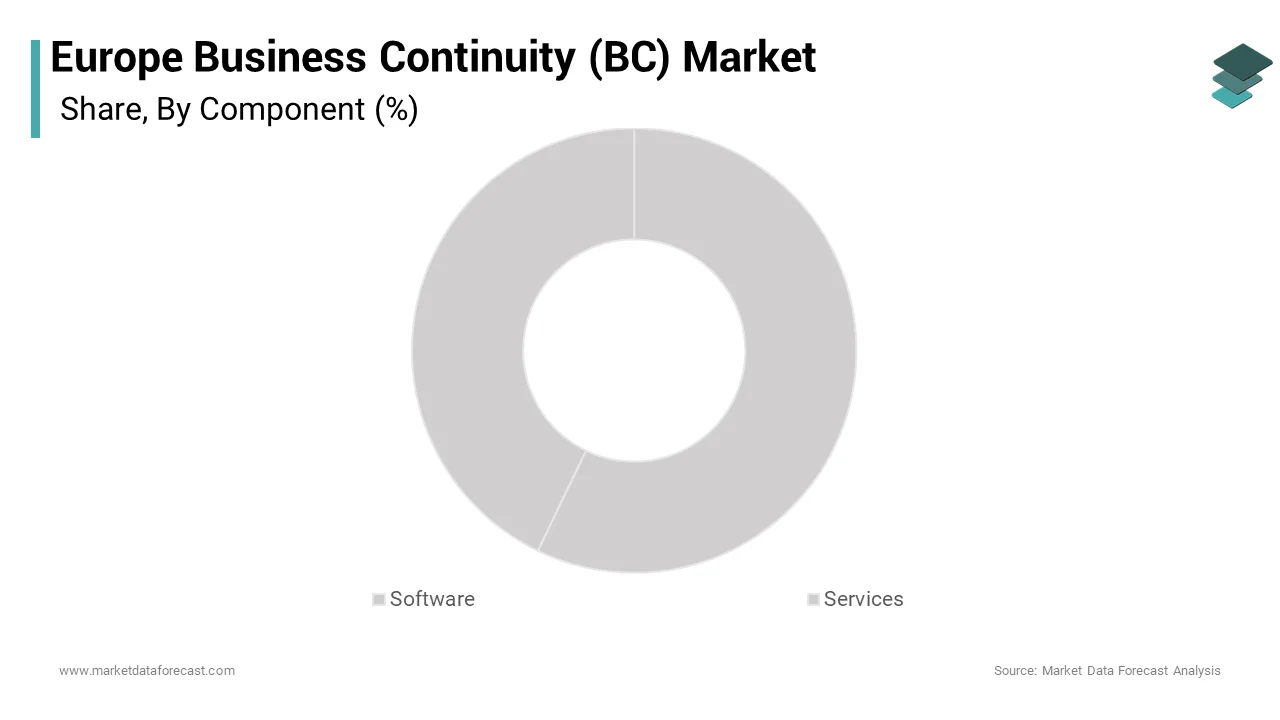
The software segment is on the rise and is expected to be the fastest growing segment in the market by witnessing a CAGR of 15.3% from 2026 to 2034 due to the urgent need for automation, real-time visibility, and the integration of artificial intelligence into continuity workflows. The surge in software adoption is mainly driven by the increasing speed and complexity of modern disruptions, which render manual response processes too slow and error-prone to be effective. According to research, organizations that utilize automated orchestration platforms can reduce recovery time objectives compared to those relying on manual checklists and phone trees. European enterprises are increasingly deploying software solutions that provide a single pane of glass view into their entire operational landscape, allowing leaders to see the status of critical assets instantly during a crisis. These platforms automatically trigger predefined workflows, such as failing over servers to backup sites or notifying stakeholders via multiple channels, eliminating human latency. The rise of ransomware attacks, which can encrypt systems within minutes, necessitates this level of instantaneous reaction that only software can provide. Furthermore, the dynamic nature of cloud environments requires continuous monitoring and automatic adjustment of recovery paths, a capability inherent in advanced BC software. The shift from static documentation to dynamic, executable plans makes software the fastest-growing component as organizations race to minimize downtime and financial loss. In addition, this segment is supported by the emergence of artificial intelligence capabilities within BC software that enable predictive risk modeling and intelligent decision support. As per studies, AI-driven tools can analyze vast amounts of historical and real-time data to predict potential disruptions before they occur, allowing companies to take preemptive action. Modern software platforms use machine learning algorithms to simulate thousands of disruption scenarios, optimizing resource allocation and identifying single points of failure that humans might overlook. These tools can also provide context-aware recommendations during a crisis, suggesting the best course of action based on the specific nature of the incident. The ability to continuously learn from near-misses and actual events improves the accuracy of risk assessments over time. This transition from reactive recovery to proactive resilience offers a compelling value proposition that drives rapid software procurement. Organizations are eager to leverage these advanced analytics to gain a competitive edge and ensure business survival in an unpredictable environment, fueling the exceptional growth rate of the software segment.
By Deployment Mode Insights
The on-Premises deployment mode segment dominated the Europe business continuity (BC) market in 2025. The dominance of the segment is attributed to stringent data sovereignty laws, the presence of legacy infrastructure in critical sectors, and a deep-seated cultural preference for direct control over sensitive continuity data. The preeminence of on-premises solutions is anchored in the rigorous data protection regulations across Europe, particularly the General Data Protection Regulation, which mandates strict control over where and how personal and critical data is stored and processed. According to sources, many national regulators interpret these laws to require that highly sensitive business continuity data, including recovery keys and customer records, remain within specific geographic boundaries under the direct physical control of the organization. Financial institutions, government agencies, and healthcare providers often perceive cloud environments as introducing unacceptable third-party risks regarding data access and jurisdiction. The fear of unauthorized access by foreign entities or cloud provider employees drives these organizations to keep their BC infrastructure behind their own firewalls. The ability to conduct internal audits and demonstrate absolute chain of custody without relying on vendor assurances provides a level of comfort that cloud models struggle to match for conservative stakeholders. This regulatory caution ensures that on-premises deployments remain the default choice for entities handling the most critical and sensitive operations, securing the segment's dominant position. Additionally, the segment is helped by the extensive reliance on legacy systems and mainframes in key European industries such as manufacturing, energy, and banking. Migrating these monolithic applications to the cloud is often prohibitively expensive, risky, and technically complex, leading organizations to extend the life of their local infrastructure. Furthermore, on-premises solutions offer operational independence, ensuring that continuity mechanisms function even if internet connectivity is severed during a widespread network outage or cyberattack. This air-gapped capability is crucial for maintaining operations during scenarios where cloud access might be compromised. The desire to avoid vendor lock-in and maintain full autonomy over upgrade cycles and security configurations further cements the preference for local deployment. Until legacy modernization efforts mature, the need to protect these entrenched systems will sustain the leadership of the on-premises segment.
The cloud deployment mode segment is expected to exhibit a noteworthy CAGR of 18.7% during the forecast period owing to the scalability advantages, cost-efficiency of Disaster Recovery as a Service, and the shifting regulatory landscape favoring secure cloud adoption. The explosive growth of cloud deployment is primarily fueled by the economic and operational advantages of Disaster Recovery as a Service, which eliminates the need for expensive secondary physical data centers. According to research, small and medium-sized enterprises are increasingly adopting cloud-based BC solutions because they allow for a pay-as-you-go model that converts large capital expenditures into manageable operational costs. This accessibility enables organizations that previously could not afford robust redundancy to implement enterprise-grade continuity strategies. The inherent scalability of cloud infrastructure allows companies to instantly spin up resources during a disaster and scale them down afterward, ensuring they only pay for what they use. This flexibility is particularly valuable in a volatile economic climate where budget optimization is paramount. Furthermore, cloud providers offer geographically distributed regions, ensuring that data replicas are stored far enough apart to survive regional catastrophes, a feat difficult and costly to achieve with on-premises setups. The ease of deployment and management reduces the burden on internal IT teams, driving rapid adoption across all sectors. A major factor that aids this segment is the shifting regulatory environment and the maturation of cloud security standards, which have alleviated previous concerns about data safety and compliance. As per sources, financial institutions are now permitted to utilize cloud services for critical functions provided they adhere to strict oversight and exit strategies, signaling a major endorsement of cloud resilience. Major cloud providers have invested billions in achieving certifications like ISO 27001 and SOC 2, demonstrating security postures that often exceed what individual organizations can achieve on their own. Features such as immutable backups, encryption at rest and in transit, and advanced threat detection are now standard offerings that address earlier sovereignty and security fears. The ability of cloud platforms to provide automated compliance reporting and built-in governance tools simplifies the audit process for regulated entities. Trust in cloud providers is growing, and regulations are adapting to recognize their robustness. Consequently, more organizations are migrating their BC (Business Continuity) workloads to the cloud, accelerating the segment's growth trajectory.
By End User Insights
The Banking, Financial Services, and Insurance (BFSI) segment was the largest segment in the Europe Business Continuity (BC) market in 2025. The prominence of the segment is credited to its systemic importance, extreme regulatory scrutiny, and the catastrophic financial impact of any operational downtime. The dominance of the BFSI sector is supported by its role as the backbone of the European economy, where even minutes of downtime can result in millions of euros in losses and trigger systemic instability. According to studies, the financial sector processes trillions of euros in transactions daily, making continuous availability a non-negotiable requirement for market confidence. A disruption in payment systems, trading platforms, or banking networks can have cascading effects across the entire economy, prompting regulators to impose the strictest continuity standards on this industry. The introduction of the Digital Operational Resilience Act has formalized these expectations, mandating that financial entities maintain robust testing regimes and immediate recovery capabilities. The reputational damage from a service outage can lead to a rapid loss of customer trust and deposit withdrawals, posing an existential threat to institutions. Consequently, banks and insurers allocate disproportionate budgets to BC solutions, prioritizing redundancy, real-time replication, and instant failover mechanisms. This zero-tolerance approach to interruption ensures that the BFSI sector remains the largest consumer of advanced business continuity technologies and services. A further reason for this growth is the dense web of regulatory requirements specific to the financial sector that legally compel heavy investment in business continuity. As per sources, financial firms face severe penalties, including license revocation and massive fines, for failing to demonstrate adequate operational resilience. Regulations require detailed documentation of recovery strategies, regular third-party audits, and proven ability to restore operations within very tight timeframes. The complexity of complying with multiple overlapping directives across different European jurisdictions necessitates sophisticated BC management platforms and expert consulting services. Financial institutions must also manage third-party risk extensively, ensuring that their vendors and partners also meet high continuity standards. The constant evolution of these rules forces banks to continuously update and test their plans, creating a recurring revenue stream for BC providers. The fear of regulatory sanction acts as a powerful motivator, driving BFSI organizations to adopt the most advanced and comprehensive continuity solutions available, solidifying their position as the market leader.
The healthcare & life sciences segment is predicted to witness the highest CAGR of 16.9% over the forecast period. The swift expansion of the segment is fuelled by the critical nature of patient safety, the digitization of health records, and the increasing frequency of cyberattacks targeting medical data. The rapid expansion in this segment is mainly propelled by the life-or-death consequences of operational disruptions in healthcare settings, where system failures can directly impact patient outcomes. According to studies, downtime in electronic health record systems or medical device networks can delay critical treatments, leading to increased mortality rates and severe legal liabilities. Hospitals and clinics are increasingly recognizing that business continuity is not just an IT issue but a core component of patient care quality. The shift toward connected medical devices and telemedicine has expanded the attack surface, making robust continuity plans essential to ensure these technologies remain available during crises. The emotional and ethical weight of protecting human life drives healthcare administrators to prioritize resilience investments more aggressively than in other sectors. The need to maintain access to patient histories, medication lists, and diagnostic images during emergencies necessitates advanced data replication and rapid recovery solutions. This moral imperative, combined with rising malpractice risks, propels the rapid adoption of sophisticated BC measures in the healthcare sector. In addition, this area is supported by the massive digitization of health data coupled with the sector becoming the primary target for ransomware attacks in Europe. The transition from paper to digital records, accelerated by EU initiatives for cross-border health data exchange, has created vast repositories of sensitive information that must be protected and rapidly recoverable. The inability to access these records halts hospital operations, forcing cancellations of surgeries and emergency admissions. This vulnerability has forced healthcare providers to invest heavily in immutable backups, air-gapped recovery environments, and incident response services. The implementation of the European Health Data Space further mandates high availability and security standards for health data, driving compliance-related spending. The convergence of high-value data, critical operational dependence, and intense cyber threats makes healthcare the fastest-growing vertical for business continuity solutions.
COUNTRY ANALYSIS
Germany Business Continuity (BC) Market Analysis
Germany outperformed other countries in the Europe Business Continuity (BC) market and accounted for a substantial share in 2025. The dominance of the segment is driven by its status as the industrial engine of the continent and its rigorous approach to risk management and compliance. The country's market status is known for a strong manufacturing base and a highly regulated financial sector that demand robust continuity frameworks. The presence of numerous global headquarters in automotive, chemical, and engineering sectors drives demand for sophisticated supply chain continuity and operational recovery solutions. German companies place a premium on adherence to standards like ISO 22301, often exceeding minimum regulatory requirements to ensure absolute reliability. The Federal Office for Information Security actively promotes resilience initiatives, providing guidelines that encourage widespread adoption of BC best practices. The country's strong data privacy culture also favors on-premises and hybrid solutions that guarantee data sovereignty. The combination of economic strength, regulatory strictness, and a culture of precision ensures Germany maintains its dominant position as the primary driver of the regional BC market.
United Kingdom Business Continuity (BC) Market Analysis
The United Kingdom followed closely behind Germany in the Europe business continuity (BC) market because of its mature financial services hub in London, advanced cybersecurity ecosystem, and proactive regulatory stance following Brexit. The nation benefits from a high concentration of global banks and insurance firms that are subject to some of the world's toughest operational resilience rules. The UK's leadership in cyber defense technology fosters a vibrant market for advanced BC software and consulting services. The departure from the EU has prompted many organizations to dual-source their continuity strategies to comply with both UK and EU regulations, increasing complexity and spend. The government's National Cyber Strategy emphasizes resilience against state-sponsored threats, encouraging public and private sector collaboration. Additionally, the vibrant startup scene and tech sector drive demand for cloud-native BC solutions. The convergence of financial might, regulatory innovation, and technological expertise secures the UK's position as a critical pillar of the European business continuity landscape.
France Business Continuity (BC) Market Analysis
France held a noteworthy share of the Europe business continuity (BC) market due to strong state involvement in critical infrastructure protection, a robust nuclear and energy sector, and a growing emphasis on digital sovereignty. The country's market is influenced by the Agence Nationale de la Sécurité des Systèmes d'Information which enforces strict security and continuity standards for operators of vital importance. French corporations in the aerospace, luxury, and defense industries drive demand for specialized BC solutions that protect intellectual property and ensure production stability. The push for "sovereign cloud" solutions aligns with national security goals, favoring local providers and on-premises deployments. The implementation of European directives is often mirrored by ambitious national initiatives that accelerate adoption rates. The cultural emphasis on strategic autonomy and the protection of national interests creates a unique market dynamic where resilience is viewed as a matter of national security. This blend of state leadership, industrial depth, and sovereign focus cements France's role as a top-tier market.
Netherlands Business Continuity (BC) Market Analysis
The Netherlands witnessed a consistent growth in the Europe business continuity (BC) market owing to its role as the digital gateway to Europe, its advanced logistics sector, and a progressive regulatory environment that encourages innovation in resilience. The Dutch market revealing a high concentration of data centers and multinational headquarters that require world-class continuity guarantees. The country's proactive approach to cybersecurity, led by the National Cyber Security Centre, fosters a culture of preparedness and rapid adoption of new technologies. Dutch organizations are early adopters of cloud-based disaster recovery and automated orchestration tools, driven by a pragmatic business culture that values efficiency and risk mitigation. The presence of major cloud providers' European regions in the Netherlands further boosts the local BC ecosystem. The open economy and reliance on international trade make the country particularly sensitive to global disruptions, driving higher per-capita spending on continuity measures. This combination of connectivity, forward-thinking regulation, and economic openness secures the Netherlands a leading position in the regional hierarchy.
Switzerland Business Continuity (BC) Market Analysis
Switzerland is anticipated to expand in the Europe business continuity (BC) market during the forecast period. It is renowned for its status as a global banking haven, its neutrality, and its exceptionally high standards for data security and operational reliability. The Swiss market shows an unwavering commitment to quality and discretion, which drives the demand for premium, highly secure business continuity solutions. The country's political stability and strict data privacy laws make it a preferred location for data centers, further stimulating the local BC market. Swiss pharmaceutical and manufacturing giants also prioritize continuity to protect valuable intellectual property and ensure uninterrupted production. The high cost of labor and operations in Switzerland incentivizes heavy automation of BC processes to minimize human error and downtime. The culture of precision and long-term planning ensures that Swiss organizations are willing to pay a premium for the most reliable and secure continuity services. This focus on excellence and security positions Switzerland as a key high-value market in the European landscape.
COMPETITIVE LANDSCAPE
The competition within the Europe Business Continuity market is intense and characterized by a rivalry between global technology giants, specialized niche vendors, and traditional consulting firms. Large corporations leverage their extensive cloud ecosystems and brand trust to offer integrated end-to-end resilience platforms while smaller players compete on customization, specific industry expertise, and superior customer service. The market sees frequent strategic alliances as companies seek to fill capability gaps in artificial intelligence and cyber recovery quickly. Differentiation increasingly depends on the ability to guarantee data sovereignty within European borders, comply with complex regulations, and provide localized support in multiple languages. Price competition remains fierce particularly in the cloud disaster recovery segment where commoditization pressures margins. The shortage of skilled resilience professionals has intensified the war for talent making retention strategies critical for service delivery quality. Customers demand higher levels of automation and transparency leading to a shift from manual plans to executable digital strategies. This dynamic environment requires continuous innovation and strategic agility to maintain market relevance and capture growth opportunities in a fragmented yet lucrative landscape.
KEY MARKET PLAYERS
A few of the dominating players that are in the Europe Business Continuity market are
- Arcserve
- IBM Corporation
- Microsoft Corporation
- Dell EMC
- Continuity Logic
- CloudAlly
- Fusion Risk Management, Inc.
- Lockpath, Inc.
- Quantivate, LLC
- Rackspace US, Inc.
- StorageCraft Technology Corporation
- VMware
- MetricStream Inc.
- RecoveryPlanner.com
- Strategic BCP, Inc.
- Sungard Availability Services
- Synology Inc.
Top Players In The Market
- IBM Corporation stands as a preeminent force in the Europe Business Continuity market by delivering comprehensive resilience solutions that integrate advanced artificial intelligence with robust cloud infrastructure. The company contributes significantly to the global market through its IBM Resiliency Orchestration platform which sets industry standards for automated recovery and risk management. IBM recently strengthened its European position by expanding its network of local data centers to ensure strict compliance with European data sovereignty regulations and the Digital Operational Resilience Act. The firm actively invests in quantum safe cryptography to future proof client data against emerging cyber threats. Strategic partnerships with major European financial institutions have enhanced its ability to deliver tailored continuity strategies for critical sectors. By focusing on hybrid cloud architectures IBM enables organizations to maintain operations seamlessly across diverse environments. These initiatives solidify its reputation as a trusted partner for safeguarding essential business functions against complex disruptions.
- Microsoft Corporation operates as a leading global provider of cloud based business continuity and disaster recovery services with a profound impact on the European enterprise landscape. The company drives innovation through its Azure Site Recovery and Microsoft Purview solutions which offer scalable protection and governance for digital assets. Microsoft has recently accelerated its growth in Europe by launching sovereign cloud regions designed to meet stringent local regulatory requirements for data residency. The corporation leverages extensive threat intelligence networks to proactively identify and mitigate risks before they impact operations. Their commitment to sustainability aligns with European green goals by optimizing energy usage in backup data centers. Microsoft continues to expand its ecosystem of certified partners to provide localized implementation and support services across the continent. By integrating continuity features directly into productivity suites the company ensures widespread adoption and ease of use. These strategic moves reinforce its status as an essential infrastructure provider for modern organizational resilience.
- VMware Inc maintains a formidable presence in the Europe Business Continuity market through its sophisticated virtualization and cloud management technologies that enable rapid workload recovery. The group plays a vital role in the global market by facilitating seamless migration and failover capabilities for hybrid and multi-cloud environments. VMware recently enhanced its European footprint by introducing new automation tools specifically designed to simplify disaster recovery planning for complex IT landscapes. The company focuses heavily on integrating security protocols into continuity workflows to protect against ransomware and other cyberattacks. Recent actions include collaborations with European telecommunications providers to improve network resilience and reduce latency during failover events. VMware emphasizes flexibility allowing organizations to choose recovery options that best fit their specific operational needs and budget constraints. These strategic developments ensure that VMware remains the preferred choice for enterprises seeking reliable and efficient business continuity solutions in a dynamic threat environment.
Top Strategies Used By Key Market Participants
Key players in the Europe Business Continuity market primarily focus on developing sovereign cloud solutions to address strict data privacy regulations and ensure data residency within European borders. Companies are aggressively integrating artificial intelligence and machine learning to automate disaster recovery processes and predict potential disruptions before they occur. Another major strategy involves forming strategic partnerships with local regulatory bodies and industry associations to align offerings with evolving compliance mandates like the Digital Operational Resilience Act. Providers are expanding their portfolios to include comprehensive cyber resilience services that combine backup with advanced threat detection and response capabilities. Firms are also investing heavily in education and training programs to bridge the skills gap and promote a culture of resilience among clients. There is a significant push toward offering subscription based pricing models to make enterprise grade continuity accessible to small and medium sized enterprises. Finally companies are prioritizing interoperability to ensure seamless integration with diverse legacy systems and third party applications.
MARKET SEGMENTATION
This research report on the Europe business continuity BC market is segmented and sub-segmented into the following categories.
By Component Type
- Software
- Services
By Deployment Mode
- On-Premises
- Cloud
- Hybrid
By End User
- BFSI
- IT & Telecommunications
- Government & Public Sector
- Healthcare & Life Sciences
- Manufacturing
- Energy & Utilities
- Retail & E-Commerce
- Misc.
By Country
- UK
- France
- Spain
- Germany
- Italy
- Russia
- Sweden
- Denmark
- Switzerland
- Netherlands
- Turkey
- Czech Republic