- Product Description Description
- Table of Contents TOC
- List of Table & Figure LOT
- Get Free Sample PDF Sample PDF
Market Size, 2025
$89.51 BnMarket Estimate, 2026
$98.87 BnMarket Forecast, 2034
$219.13 BnCAGR, 2026–2034
10.46%Europe Business Process Outsourcing Market Report Summary
The Europe business process outsourcing market was valued at USD 89.51 billion in 2025, is estimated to reach USD 98.87 billion in 2026, and is projected to reach USD 219.13 billion by 2034, growing at a CAGR of 10.46% during the forecast period. The growth of the Europe business process outsourcing market is driven by the increasing need for operational efficiency, rising demand for cost effective service delivery, and growing adoption of digital transformation strategies across enterprises. Organizations across industries such as banking, telecommunications, retail, and healthcare are increasingly outsourcing business processes to specialized service providers to enhance productivity and focus on core business functions. The integration of advanced technologies such as cloud computing, artificial intelligence, and automation in outsourcing services is further accelerating the growth of the BPO market across Europe.
Key Market Trends
- Increasing demand for outsourcing customer support, finance, and back office operations to improve business efficiency.
- Growing adoption of cloud based outsourcing platforms that enable scalable and flexible service delivery models.
- Rising integration of automation, artificial intelligence, and analytics in business process management solutions.
- Expansion of multilingual customer support services to cater to diverse European markets.
- Increasing focus on customer experience management as companies seek to enhance brand loyalty and service quality.
Segmental Insights
- Based on service type, the voice processing segment dominated the Europe business process outsourcing market and accounted for 38.3% of the regional market share in 2025. Voice based services such as customer support and helpdesk operations remain essential for organizations seeking to provide direct and personalized communication with customers.
- Based on application, the customer care segment held the largest share of the Europe business process outsourcing market and captured 42.4% of the regional market share in 2025. The growing importance of customer experience as a key competitive factor is driving organizations to outsource customer support services to specialized BPO providers.
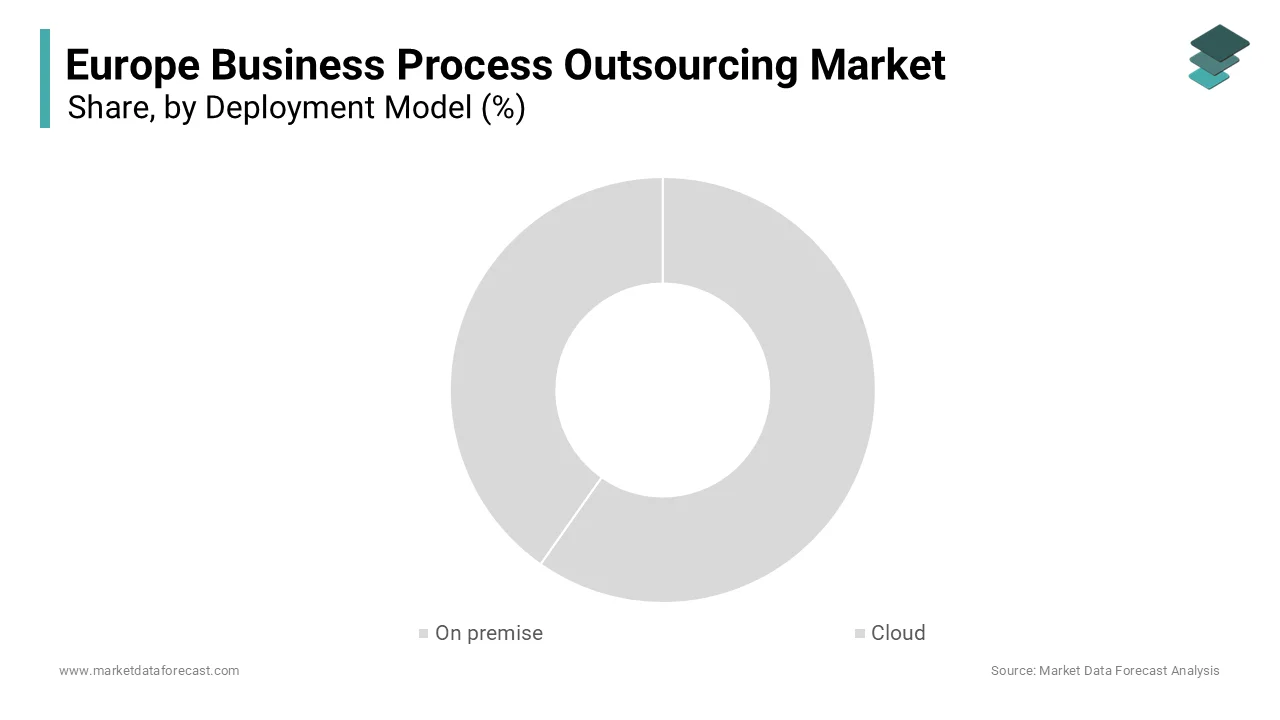
- Based on deployment model, the cloud deployment segment led the Europe business process outsourcing market and accounted for 64.6% of the regional market share in 2025. Cloud based outsourcing platforms enable organizations to scale operations efficiently while reducing infrastructure costs and improving service flexibility.
Regional Insights
- The Europe business process outsourcing market is witnessing strong growth across several countries due to increasing demand for digital services and operational efficiency solutions.
- The United Kingdom accounted for the largest share of the Europe business process outsourcing market and held 22.5% of the regional market share in 2025. The country’s strong service industry, advanced digital infrastructure, and presence of major outsourcing providers are key factors supporting market growth.
- Other European countries are also experiencing growing adoption of outsourcing services driven by increasing digital transformation initiatives and rising demand for specialized business support services.
Competitive Landscape
The Europe business process outsourcing market is highly competitive with the presence of global IT services providers, consulting firms, and specialized outsourcing companies. Companies are focusing on integrating advanced technologies such as artificial intelligence, robotic process automation, and cloud platforms to enhance service delivery and operational efficiency. Strategic partnerships, expansion of digital outsourcing services, and investments in automation technologies are helping companies strengthen their position in the European BPO ecosystem. Prominent players in the Europe business process outsourcing market include Accenture, Infosys Limited, IBM Corporation, Capgemini, Tata Consultancy Services Limited, Cognizant, NTT DATA Corporation, Concentrix Corporation, Wipro Limited, ADP Inc., Genpact, HCL Technologies Limited, Robert Half Inc., Sodexo, NCR Voyix Corporation, Amdocs, TTEC, Intetics Inc., Plaxonic Technologies, IBT, and ALTECiSyS.
Europe Business Process Outsourcing Market Size
The Europe business process outsourcing market size was valued at USD 89.51 billion in 2025 and is projected to reach USD 219.13 billion by 2034 from USD 98.87 billion in 2026, growing at a CAGR of 10.46%.
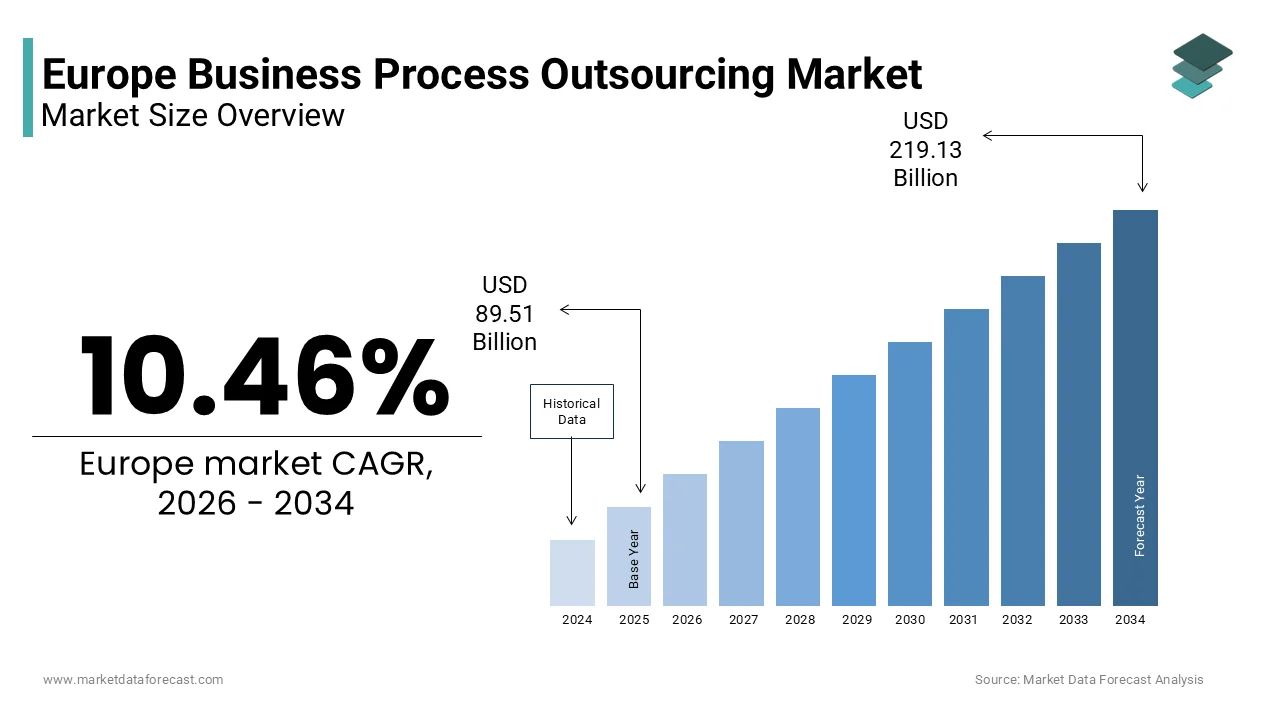
Business Process Outsourcing (BPO) is a strategic practice where a company hires an external service provider to manage one or more of its business functions or workflows. This market encompasses a wide array of services including customer support, finance and accounting, human resources, and IT management across the continent. The landscape is currently defined by a shift from simple cost arbitrage to value-driven transformation fueled by digital integration. As per Eurostat data updated in 2025, the information and communication technology sector employed over 10.3 million specialists within the European Union in 2024. This represents a 62% increase since 2014, reflecting a rapidly expanding talent pool that underpins the region's high-value BPO and tech operations. Furthermore, the European Commission’s 2025 State of the Digital Decade report highlights that digital skills gaps remain a pressing challenge, with 56% of Europeans possessing at least basic digital competencies as of 2023—still well below the 2030 target of 80%, influencing the design of automated service delivery models. The region hosts a diverse mix of nearshore hubs in Eastern Europe and established centers in Western nations like the United Kingdom and Germany. According to the International Labour Organization (ILO), the service sector accounts for approximately 75% of total employment in high-income European economies, providing a dominant and stable foundation for both domestic and outsourced service activities. The market dynamics are increasingly shaped by regulatory frameworks such as the General Data Protection Regulation which mandates strict data handling protocols. This environment forces providers to adopt advanced security measures while maintaining operational agility. The evolution of this industry now hinges on the ability to blend human expertise with automated solutions to meet the complex demands of modern European enterprises seeking competitive advantage through operational excellence.
MARKET DRIVERS
Escalating Demand for Digital Transformation and Automation Integration
The urgent corporate necessity to integrate advanced digital technologies into legacy operational frameworks boosts the growth of the Europe business process outsourcing market. Enterprises across the region are increasingly partnering with BPO vendors not merely for cost reduction but to access sophisticated capabilities in robotic process automation, artificial intelligence, and cloud computing. As per a study conducted by McKinsey and Company in 2023, approximately 65% of European executives identified automation as a top priority for their operational strategy over the next three years. This shift drives demand for providers who can seamlessly embed these technologies into customer service and back-office functions. The European Union is funnelling tens of billions of euros into digital transformation projects to close the adoption gap with the U.S. and China, particularly focusing on advanced technologies like AI and big data. Companies seek partners who can manage the transition from manual processes to automated workflows without disrupting business continuity. For instance, the banking sector alone processes millions of transactions daily. Digital and card-based transactions are rapidly displacing cash across the euro area, driven by a post-pandemic shift toward electronic and online payment methods. Handling this scale requires BPO providers to offer scalable, tech-enabled solutions that ensure accuracy and speed. Consequently, the market sees a surge in contracts focused on intelligent automation where providers deploy bots to handle repetitive tasks allowing human agents to focus on complex problem solving. This trend redefines the vendor-client relationship into a strategic partnership centered on innovation and continuous improvement rather than simple task execution.
Strategic Shift Toward Nearshoring and Regional Talent Optimization
The preference for nearshoring is significantly contributing to the expansion of the Europe Business Process Outsourcing market. These arrangements leverage geographic proximity and cultural alignment. Unlike offshoring to distant continents, nearshoring allows European companies to collaborate with providers in neighboring countries such as Poland, Romania, and Portugal, ensuring similar time zones and shared regulatory environments. According to Eurofound, the European Foundation for the Improvement of Living and Working Conditions, labor costs in Central and Eastern European nations remain approximately 40% lower than in Western Europe while maintaining high skill levels. This cost differential combined with linguistic compatibility makes these regions highly attractive for multilingual customer support and technical services. The European Commission highlighted in its 2023 digital economy report that over 70% of large enterprises in the EU prefer keeping critical data processing within European borders to comply with stringent data sovereignty laws. This regulatory pressure accelerates the move toward regional providers who can guarantee compliance with the General Data Protection Regulation. Additionally, the availability of a highly educated workforce supports this trend. Data from the Organisation for Economic Co-operation and Development indicates that tertiary education attainment rates in countries like Estonia and Lithuania exceed 45% among young adults. These nations produce thousands of graduates annually in fields relevant to BPO services including languages, engineering, and finance. The synergy between affordable skilled labor, regulatory safety, and cultural affinity creates a compelling value proposition that drives sustained growth in the nearshore segment of the European market.
MARKET RESTRAINTS
Stringent Data Privacy Regulations and Compliance Complexities
Rigorous enforcement of data privacy laws is acting as a major limiting factor for the growth of the European BPO market. As a result, service providers are facing heavy operational burdens. The General Data Protection Regulation stands as the gold standard for data protection globally, yet its complexity creates significant challenges for BPO firms managing cross-border data flows. GDPR enforcement has entered a high-stakes era characterized by billion-euro penalties against major tech firms, signaling to all sectors that data transfer and privacy violations now carry severe financial consequences. Companies hesitate to outsource sensitive functions fearing that any breach by a third-party vendor could result in catastrophic financial penalties and reputational damage. The requirement for data localization further complicates matters as organizations must ensure that personal data of EU citizens remains within specific geographic boundaries unless adequate safeguards are proven. Regulatory complexity in Europe is forcing a shift in how companies select partners, with privacy-by-design and rigorous data-sovereignty compliance now serving as mandatory criteria for any new business collaboration. Implementing the necessary technical and organizational measures to meet these standards requires substantial investment in security infrastructure and legal expertise. Small and mid-sized BPO providers often struggle to afford these compliance overheads, limiting market competition and consolidation. Furthermore, the evolving nature of regulatory interpretations means that rules can change rapidly, forcing providers to constantly update their protocols. This dynamic increases the cost of service delivery and slows down the contracting process as due diligence periods extend to verify full adherence to all applicable laws.
Persistent Shortage of Specialized High-Skill Talent
The acute scarcity of professionals possessing advanced digital skills required for next-generation service delivery further inhibits the expansion of the Europe business process out sourcing market. While the region boasts a large general workforce, there is a pronounced gap in candidates trained in emerging technologies such as data analytics, cognitive computing, and cybersecurity. Despite a record increase in the number of technology professionals across the continent, the demand for specialized digital roles continues to outpace supply, creating a chronic talent bottleneck for the European economy. This deficit forces BPO providers to engage in fierce competition for limited talent, driving up wage expectations and eroding profit margins. The situation is exacerbated by demographic shifts as the aging population in Western Europe reduces the influx of young workers into the labor market. According to the European Centre for the Development of Vocational Training, nearly 45% of European employers reported difficulties in filling positions requiring digital competencies in the last year. This shortage limits the ability of BPO firms to scale operations or take on complex projects that demand specialized knowledge. Clients increasingly expect providers to offer value-added insights derived from data analysis, yet the lack of qualified analysts hampers service quality. Moreover, the rapid pace of technological change means that existing staff require continuous retraining, which consumes time and resources. Without a steady pipeline of skilled graduates, providers risk falling behind in innovation capabilities. This talent crunch acts as a brake on market expansion as companies cannot commit to large-scale outsourcing deals if vendors cannot guarantee the availability of competent personnel to execute them effectively.
MARKET OPPORTUNITIES
Expansion of Hybrid Cloud Adoption and Managed Services
Enterprises are widely migrating toward hybrid cloud architectures, which creates a major opportunity for the Europe Business Process Outsourcing market. Such environments necessitate specialized managed services. As organizations modernize their IT landscapes, they increasingly rely on external partners to manage complex multi-cloud environments that integrate private and public infrastructures. European businesses are increasingly moving away from "all-in" public cloud models toward hybrid environments to maintain sovereignty over sensitive data while utilizing scalable infrastructure for non-critical workloads. This transition creates a vast demand for BPO providers who can offer end-to-end cloud management, monitoring, and optimization services. Traditional in-house IT teams often lack the breadth of expertise required to handle diverse cloud platforms simultaneously, making outsourcing an attractive solution. The market stands to gain as providers develop niche competencies in orchestrating workloads across different cloud vendors while ensuring seamless integration with legacy systems. Furthermore, the rise of edge computing driven by Internet of Things applications adds another layer of complexity that favors specialized external management. The proliferation of connected devices across European industries is creating a data explosion that is shifting the technical focus from centralized data centers to edge computing solutions. BPO firms that can offer scalable cloud-native services positioned to capture significant market share. By providing tailored solutions that address specific industry needs such as healthcare data management or financial transaction processing in the cloud, providers can differentiate themselves. This shift transforms the BPO role from a back-office supporter to a critical enabler of digital infrastructure resilience and agility.
Surging Demand for Customer Experience Enhancement via AI
The growing focus on superior customer experience offers significant potential for the European Business Process Outsourcing (BPO) market. This shift enables BPO providers to integrate AI into their service models to enhance efficiency and personalization. Modern consumers demand personalized, instantaneous, and omnichannel support, pressuring brands to upgrade their engagement strategies beyond traditional call centers. As per research, 73% of European customers consider easy navigation and quick resolution as the most important factors in their online experience. BPO providers are uniquely positioned to deploy AI-driven tools such as natural language processing chatbots and predictive analytics to meet these expectations at scale. These technologies enable real-time sentiment analysis and proactive issue resolution, transforming customer interactions from reactive transactions to meaningful engagements. The retail and e-commerce sectors are particularly eager to adopt these solutions given the high volume of customer inquiries they handle daily. Despite inflationary pressures, online shopping in Europe continues to expand, forcing retailers to invest heavily in automated support and high-speed logistics to handle increasing transaction volumes. Providers who can seamlessly blend human empathy with machine efficiency will secure long-term contracts with leading brands. Additionally, the ability to analyze vast amounts of interaction data allows companies to derive actionable insights into consumer behavior, further enhancing product offerings and marketing strategies. This evolution opens new revenue streams for BPO firms as they transition from charging per minute to pricing based on value delivered and customer satisfaction metrics achieved. The potential to redefine the entire customer journey through intelligent automation represents a transformative growth avenue for the sector.
MARKET CHALLENGES
Intensifying Geopolitical Instability and Economic Volatility
Escalating geopolitical instability is disrupting supply chains and creating economic uncertainty across Europe. Consequently, this poses a challenge to the Europe Business Process Outsourcing market. The ongoing conflicts in Eastern Europe have severely impacted energy prices and logistical networks, forcing businesses to reconsider their operational footprints and spending priorities. As per the International Monetary Fund, economic growth in several European nations contracted or stagnated in 2023 due to energy crises and inflationary pressures linked to geopolitical tensions. This volatility makes long-term planning difficult for both clients and providers, leading to delayed decision-making and reduced investment in outsourcing initiatives. Companies may postpone signing multi-year contracts fearing sudden shifts in regulatory landscapes or currency fluctuations that could alter cost structures overnight. The instability also affects the availability of talent in key nearshore locations where political unrest can displace skilled workers or hinder educational continuity. According to the World Bank, inflation rates in parts of Europe exceeded 10% in 2023, squeezing profit margins and forcing corporations to cut discretionary spending including external service contracts. Furthermore, sanctions and trade restrictions complicate the transfer of technology and data across borders, adding layers of compliance risk to international partnerships. Providers must navigate a fragmented landscape where rules vary significantly between allied and neutral states. This environment demands exceptional agility and risk management capabilities which many smaller firms lack. The pervasive sense of unpredictability acts as a deterrent to market expansion as stakeholders prioritize short-term survival over strategic transformation projects.
Rapid Technological Obsolescence and Continuous Upgrade Burdens
The relentless pace of technological advancement poses a significant barrier to the Europe Business Process Outsourcing market. It renders existing solutions obsolete faster than ever before. Providers must continuously invest in upgrading their software stacks, hardware infrastructure, and employee skill sets to remain competitive, placing immense financial strain on their operations. Modern enterprise technology management is moving toward a performance-based replacement model, where data-driven insights, rather than fixed schedules, determine when a system is no longer fit for purpose. This cycle of constant renewal requires substantial capital expenditure that can erode profitability especially for mid-tier players with limited resources. The pressure to adopt cutting-edge tools like generative AI and blockchain comes with steep learning curves and implementation risks that can disrupt service delivery if not managed perfectly. According to the European Digital SME Alliance, nearly 55% of small and medium-sized technology firms in Europe struggle to keep up with the speed of digital innovation due to resource constraints. Failure to upgrade promptly results in loss of client trust and contract cancellations as buyers seek partners with the latest capabilities. Moreover, integrating new technologies with legacy systems used by clients often leads to compatibility issues and extended downtime. The need for perpetual training programs to upskill the workforce further adds to operational costs and logistical complexity. In an environment where yesterday's innovation is today's standard, BPO firms face the daunting task of balancing current service reliability with future readiness. This treadmill of obsolescence threatens to widen the gap between market leaders who can afford rapid iteration and laggards who risk irrelevance.
REPORT COVERAGE
| REPORT METRIC | DETAILS |
| Market Size Available | 2025 to 2034 |
| Base Year | 2025 |
| Forecast Period | 2026 to 2034 |
| CAGR | 10.46% |
| Segments Covered | By Service Type, Application, Outsourcing Type, Deployment Model, and Region |
| Various Analyses Covered | Global, Regional, & Country Level Analysis; Segment-Level Analysis; DROC, PESTLE Analysis; Porter’s Five Forces Analysis; Competitive Landscape; Analyst Overview of Investment Opportunities |
| Regions Covered | UK, France, Spain, Germany, Italy, Russia, Sweden, Denmark, Switzerland, Netherlands, Turkey, and the Czech Republic |
| Market Leaders Profiled | Accenture (U.S.), Infosys Limited (India), IBM Corporation (U.S.), Capgemini (France), Tata Consultancy Services Limited (India), Cognizant (U.S.), NTT DATA Corporation (U.S.), Concentrix Corporation (U.S.), Wipro Limited (India), ADP, Inc. (U.S.), Genpact (U.S.), HCL Technologies Limited (India), Robert Half Inc. (U.S.), Sodexo (France), NCR Voyix Corporation (U.S.), Amdocs (U.S.), TTEC (U.S.), Intetics Inc. (U.S.), Plaxonic Technologies (India), IBT (U.A.E.), and ALTECiSyS (U.S.) |
SEGMENTAL ANALYSIS
By Service Type Insights
The voice processing segment dominated the Europe Business Process Outsourcing market and accounted for a 38.3% share in 2025. This supremacy of the segment is driven by the enduring necessity for human interaction in complex customer service scenarios across the continent's diverse linguistic environment. Despite the rise of automation, the nuanced nature of European consumer expectations requires empathetic and culturally attuned voice agents that machines cannot yet fully replicate. A key factor boosting the dominance of voice processing is the critical requirement for multilingual support across the fragmented European linguistic landscape. The European Union recognizes 24 official languages, and businesses must cater to customers in their native tongues to ensure satisfaction and loyalty. Despite high levels of multilingualism across the continent, European consumers remain most comfortable and confident when handling complex or high-stakes personal matters in their primary language. Language localization is a primary driver of commercial conversion in Europe, as consumers prioritize accessibility and clear communication when choosing where to spend their money. This linguistic diversity prevents full automation adoption as natural language processing tools still struggle with regional dialects and cultural nuances prevalent in countries like Italy, Spain, and Poland. Consequently, BPO providers invest heavily in recruiting polyglot agents who can navigate these complexities. The sheer volume of inbound queries related to order tracking, technical troubleshooting, and complaint resolution ensures that voice remains the backbone of customer engagement strategies. Furthermore, regulatory requirements in sectors like finance mandate clear verbal communication for compliance verification, solidifying the need for human voice agents who can adhere to strict scripting and legal protocols while delivering personalized service. Following that, this segment is pushed by the advanced integration of voice analytics technologies that transform traditional call centers into intelligence hubs. Modern BPO providers now deploy sophisticated speech recognition and sentiment analysis tools to monitor 100% of calls rather than relying on random sampling. Organizations are increasingly deploying advanced speech analytics to gain deeper insights into customer sentiment and operational bottlenecks, leading to measurable gains in efficiency and problem-solving speed. These tools allow managers to identify emerging customer pain points in real time and adjust agent scripts dynamically to improve outcomes. In the European market, where consumer protection laws are stringent, the ability to automatically detect compliance breaches or aggressive behavior during calls provides a crucial safety net for enterprises. The European Data Protection Board emphasizes the importance of monitoring data interactions, and voice analytics offers a compliant way to audit conversations without manual intervention. This technological evolution adds a layer of strategic value to voice services, moving them beyond simple cost centers to sources of actionable business intelligence. Companies leverage insights derived from voice data to refine product offerings and marketing messages, creating a feedback loop that justifies continued investment in voice infrastructure. The synergy between human empathy and machine-driven insights ensures that voice processing remains indispensable for maintaining high service standards in competitive European industries.
The virtual staffing services segment is predicted to witness the highest CAGR of 14.8% from 2026 to 2034 due to the fundamental shift in work paradigms post-pandemic, where organizations increasingly seek flexible, remote talent solutions to scale operations without the overhead of physical infrastructure. The segment thrives on the ability to provide specialized skills on demand, allowing European enterprises to adapt swiftly to market fluctuations. A big factor behind the expansion is the widespread acceptance of the gig economy and the corporate pivot toward flexible workforce models across Europe. Businesses are moving away from permanent hiring for non-core functions to engage specialized professionals on a project basis, reducing fixed labor costs and increasing agility. As per a report by the European Foundation for the Improvement of Living and Working Conditions, the number of people engaged in platform work in the EU doubled between 2019 and 2023, reaching approximately 28 million individuals. This surge reflects a structural change where companies prefer accessing talent pools globally or regionally without geographical constraints. Virtual staffing enables firms to tap into niche expertise such as digital marketing, software development, or data entry instantly, bypassing lengthy recruitment cycles. The cost efficiency is substantial, with companies saving up to 30% on overheads related to office space and equipment as noted by the International Labour Organization. Furthermore, the desire for work-life balance among European professionals has normalized remote arrangements, expanding the available talent pool for BPO providers to draw from. This model allows businesses to scale teams up or down based on seasonal demand peaks, such as during holiday sales periods in retail or tax seasons in finance. The flexibility offered by virtual staffing aligns perfectly with the dynamic needs of modern European enterprises seeking resilience against economic uncertainty. Advanced technological infrastructure serves as the second major catalyst propelling the rapid expansion of virtual staffing services in the European market. The proliferation of high-speed broadband and cloud-based collaboration tools has eliminated the friction previously associated with remote work, making virtual teams as productive as co-located ones. High-speed internet access is expanding rapidly across Europe, though a "digital gap" remains between urban hubs and rural areas regarding the most advanced fiber-optic connections. Platforms offering project management, secure file transfer, and virtual desktop infrastructure have matured significantly, ensuring that data security and workflow continuity are maintained regardless of employee location. The adoption of these tools allows BPO providers to manage distributed teams efficiently, tracking performance metrics and ensuring accountability through digital dashboards. Cybersecurity advancements have also alleviated client concerns regarding data breaches in remote settings, with encryption standards becoming more robust. As remote work becomes standard, European businesses are facing an escalating threat environment, requiring constant investment in "Zero Trust" architectures to protect their decentralized workforces. This technological confidence encourages more corporations to outsource entire departments virtually, knowing that operational risks are mitigated. The ability to onboard staff digitally within hours rather than weeks further accelerates the adoption rate, making virtual staffing the preferred choice for startups and established firms alike seeking rapid deployment of human capital.
By Application Insights
In 2025, the customer care segment led the Europe Business Process Outsourcing market, and occupied a 42.4% share because of the critical role of customer experience as a key differentiator for brands operating in highly competitive European sectors such as telecommunications, banking, and retail. The complexity of European consumer rights and the high expectation for service excellence compel organizations to outsource these functions to specialized providers capable of delivering omnichannel support. The top factor for this segment is the escalating expectations of European consumers who demand seamless, instantaneous, and consistent support across multiple channels. Modern customers expect to initiate a query via social media, continue it through email, and resolve it over the phone without repeating information, a capability that requires sophisticated integrated systems. Consumer loyalty in the European market is increasingly sensitive to service quality, with digital transparency and professional complaint handling serving as key drivers for long-term customer retention. This pressure forces companies to invest heavily in outsourced contact centers that offer 24/7 availability and multilingual capabilities. The fragmentation of the European market means that a single provider must often support interactions in dozens of languages, a logistical challenge that favors specialized BPO partners over in-house teams. Furthermore, the rise of e-commerce has exponentially increased the volume of customer inquiries related to order status, returns, and product details. E-commerce has become a mainstream behavior for the vast majority of Europeans, steadily increasing over the last decade and shifting from younger demographics to broad multi-generational adoption. BPO providers leverage advanced Customer Relationship Management systems to unify these interactions, ensuring that every touchpoint is recorded and analyzed. The inability of many internal IT departments to build and maintain such complex omnichannel architectures drives the sustained reliance on external experts who can deliver the required level of service sophistication. Beyond that, the segment is influenced by the intricate web of consumer protection regulations that govern business interactions across Europe. The European Union enforces some of the world's strictest laws regarding consumer rights, data privacy, and fair trading practices, requiring meticulous adherence in all customer communications. As per the European Commission, directives such as the Consumer Rights Directive and the Unfair Commercial Practices Directive impose heavy penalties on companies that fail to handle complaints or provide accurate information correctly. Outsourcing to specialized BPO firms mitigates this risk as these providers employ legal experts and compliance officers who ensure that all agent interactions meet regulatory standards. The General Data Protection Regulation further complicates customer data handling, mandating that personal information is processed securely and only for specified purposes. BPO vendors invest significantly in compliance training and secure infrastructure to guarantee adherence, offering a shield of protection for their clients. In sectors like banking and insurance, where miscommunication can lead to severe legal repercussions, the expertise of dedicated customer care providers is invaluable. UK financial regulators are intensifying their focus on operational resilience, mandating that firms apply the same standard of oversight to outsourcing partners as they do to internal operations. This risk mitigation aspect makes outsourcing not just an operational choice but a strategic necessity for European corporations navigating the complex legal landscape. The assurance of compliance allows companies to focus on core business activities while trusting partners to manage the delicate interface with consumers safely and effectively.
The product engineering segment is estimated to register the fastest CAGR of 13.5% over the forecast period owing to the intense pressure on European manufacturers and technology firms to innovate faster and reduce time-to-market for complex products. The segment benefits from the convergence of software and hardware development, where outsourcing provides access to specialized engineering talent and cutting-edge design tools. This growth is mostly because of the urgent need for accelerated innovation cycles within Europe's powerhouse automotive and industrial manufacturing sectors. As these industries undergo massive transformations toward electrification, autonomy, and connectivity, the complexity of product development has skyrocketed, necessitating external expertise. According to the European Automobile Manufacturers Association, investments in research and development for electric vehicles in Europe exceeded 60 billion euros in 2023, reflecting the scale of the transition. Original Equipment Manufacturers are increasingly partnering with BPO firms that offer specialized engineering services to handle specific modules such as battery management systems or autonomous driving algorithms. This collaboration allows carmakers to parallelize development streams and bring new models to market months ahead of competitors. The shortage of domestic engineering talent in key Western European nations further drives this trend, as companies look to nearshore hubs in Eastern Europe for skilled designers and testers. German industrial firms are increasingly leveraging external research networks and smart, networked manufacturing (Industrie 4.0) to accelerate the deployment of new technologies. By leveraging external engineering teams, companies can access niche skills in areas like additive manufacturing and simulation modeling without the long-term commitment of hiring. This flexibility enables rapid prototyping and iterative testing, crucial for staying ahead in fast-moving markets. The ability to scale engineering resources up or down based on project phases ensures cost efficiency while maintaining high innovation output, making product engineering outsourcing a strategic imperative for European industrial leaders. Along with this, the segment is driven by the widespread adoption of digital twin technology and advanced simulation tools that require specialized management. European industries are increasingly relying on virtual replicas of physical products to test performance, predict failures, and optimize designs before physical production begins. Digital twins are becoming central to the "Intelligent Enterprise" model in Europe, enabling human-machine collaboration and virtual monitoring of physical processes to improve industrial productivity. Managing these complex digital environments demands high-level computational resources and expertise in data analytics, which many traditional engineering departments lack internally. BPO providers specializing in product engineering offer the necessary infrastructure and skilled personnel to run thousands of simulation scenarios simultaneously, drastically reducing development time and costs. This capability is particularly vital in the aerospace and defense sectors where safety margins are critical and physical testing is prohibitively expensive. The ability to visualize and manipulate 3D models in real-time facilitates better collaboration between global design teams, breaking down silos and enhancing creativity. Furthermore, the integration of artificial intelligence into simulation processes allows for predictive maintenance and automated design optimization, adding layers of value to the outsourcing arrangement. Companies that leverage these advanced capabilities through partners gain a competitive edge by launching more reliable and efficient products. The technical barrier to entry for implementing such sophisticated tools internally drives more firms to seek external partnerships, cementing product engineering as the highest growth avenue in the application landscape.
By Deployment Model Insights
The cloud deployment segment was the largest segment in the Europe Business Process Outsourcing market and captured a 64.6% share in 2025. This prominence of the segment is credited to the inherent scalability, cost-efficiency, and accessibility that cloud architectures offer to businesses operating across diverse European geographies. The shift from capital-intensive on-premise infrastructure to flexible operational expenditure models has made cloud-based BPO solutions the default choice for modern enterprises. The foremost driver behind the overwhelming preference for cloud deployment is the unparalleled scalability and cost efficiency it provides to organizations facing fluctuating demand patterns. Unlike on-premise solutions that require significant upfront investment in hardware and software licenses, cloud platforms operate on a pay-as-you-go model that aligns costs directly with usage. As per the European Cloud Partnership, businesses migrating to cloud infrastructure report an average reduction of 30% in IT operational costs within the first year of adoption. This financial flexibility is particularly attractive to small and medium-sized enterprises in Europe that need enterprise-grade BPO capabilities without prohibitive capital outlays. The ability to instantly scale resources up during peak seasons, such as the holiday rush for retailers or tax filing periods for financial firms, ensures that service levels remain high without maintaining idle capacity year-round. Furthermore, cloud providers handle all maintenance, upgrades, and security patches, freeing client IT teams to focus on strategic initiatives rather than routine upkeep. The European Investment Bank highlighted in 2023 that cloud adoption enables faster deployment of new services, reducing time-to-market by up to 50% compared to traditional methods. This agility allows companies to respond swiftly to market changes and consumer trends, a critical advantage in the volatile European economic landscape. The elimination of physical hardware constraints also supports the growing trend of remote work, as cloud-based BPO tools can be accessed securely from any location with internet connectivity, fostering a more resilient and distributed workforce. Looking ahead, a further influence is its superior capability in ensuring disaster recovery and business continuity, which are paramount concerns for European enterprises. The cloud architecture inherently distributes data across multiple geographically dispersed data centers, protecting against localized failures such as power outages, natural disasters, or cyberattacks. According to the European Union Agency for Cybersecurity, organizations utilizing cloud-based backup solutions recover from disruptions 60% faster than those relying on traditional on-site servers. This resilience is essential for BPO operations where even minutes of downtime can result in significant financial losses and reputational damage. The rigorous compliance standards in Europe, including the General Data Protection Regulation, mandate robust data protection measures that cloud providers are well-equipped to deliver through advanced encryption and redundant storage systems. Major cloud vendors invest billions annually in security infrastructure, offering levels of protection that individual companies cannot afford to replicate on their own. As per data from the Cloud Security Alliance, 78% of European CIOs cite improved disaster recovery capabilities as a primary reason for migrating BPO functions to the cloud. The ability to failover seamlessly to alternative sites ensures uninterrupted service delivery, maintaining customer trust and operational stability. Additionally, cloud providers offer automated backup schedules and real-time replication, minimizing data loss risks. This reliability makes cloud deployment the safest and most logical choice for mission-critical BPO applications, driving its continued leadership in the market.
The cloud deployment segment is also anticipated to witness the fastest CAGR of 16.2% between the 2026 and 2034. The swift expansion of this segment is fuelled by the frantic pace at which remaining on-premise workloads are migrating to the cloud to accommodate artificial intelligence and machine learning workloads that cannot be supported by legacy infrastructure. The exceptional growth velocity of cloud deployment is primarily fueled by the urgent necessity for European businesses to migrate their BPO operations to cloud environments capable of supporting advanced artificial intelligence and machine learning applications. Legacy on-premise systems lack the computational power and flexibility required to train and deploy large language models or predictive analytics engines that are becoming standard in modern BPO services. BPO providers are rapidly shifting their infrastructure to the cloud to offer intelligent automation, sentiment analysis, and robotic process automation as managed services. The European Commission's push for digital sovereignty has also spurred the development of local cloud ecosystems that facilitate this migration while adhering to data residency laws. Companies realize that staying on-premise limits their ability to compete with agile rivals who leverage cloud-native AI tools to enhance customer interactions and optimize back-office processes. The speed of this transition is unprecedented, with many organizations aiming to complete their cloud migration within 24 months. This rush creates a surge in demand for cloud deployment services, driving the segment's growth rate higher than its already substantial market share would suggest. The symbiotic relationship between cloud scalability and AI innovation ensures that this segment will continue to outpace others as the backbone of digital transformation. This segment is also shaped by the emergence of collaborative ecosystems and API-led connectivity that enable seamless integration between diverse business applications. Modern BPO operations require real-time data exchange between CRM systems, ERP platforms, and specialized analytics tools, a feat that is cumbersome and costly to achieve with on-premise silos. Cloud platforms offer standardized APIs that allow for instant connectivity and data flow, fostering a modular approach to service delivery. The interoperability is crucial for European companies operating across borders, where they must connect with various local partners and regulatory databases. The cloud facilitates a plug-and-play environment where best-of-breed solutions can be easily incorporated into the BPO stack without extensive custom coding. This flexibility encourages continuous innovation, as providers can swiftly adopt new tools and features released by cloud vendors. The ability to create composite applications that draw data from multiple sources enhances the value proposition of BPO services, allowing for more comprehensive insights and streamlined operations. As the digital ecosystem becomes more interconnected, the reliance on cloud infrastructure for maintaining these complex networks grows exponentially, propelling the segment's expansion at a rate that dwarfs traditional deployment models.
REGIONAL ANALYSIS
United Kingdom Business Process Outsourcing Market Analysis
The United Kingdom remained the top performer in the Europe Business Process Outsourcing market and accounted for a 22.5% share in 2025. The UK's dominance is mainly driven by the sheer scale and sophistication of its financial and professional services industry, which generates immense demand for specialized BPO support. The country's position is supported by its mature financial services sector, robust legal framework, and deep pool of English-speaking talent, making it the preferred destination for high-value outsourcing contracts globally. London remains a global financial capital, hosting headquarters of numerous multinational banks and insurance firms that outsource complex functions such as compliance, risk management, and claims processing. The presence of a highly skilled workforce proficient in finance, law, and technology enables the UK to handle high-end processes that require critical thinking and regulatory expertise. Furthermore, the country's exit from the European Union has prompted many firms to dual-source operations, keeping strategic high-value functions in the UK while moving transactional work elsewhere, thereby retaining the most lucrative segment of the market. English language proficiency remains a unique selling point, attracting clients from North America and Asia who seek culturally aligned partners. The concentration of global capability centers in cities like Manchester and Leeds demonstrates the depth of the talent pool beyond London. This combination of industry depth, skill availability, and supportive policy ensures the UK maintains its leadership despite geopolitical shifts.
Germany Business Process Outsourcing Market Analysis
Germany was the second-largest market for Business Process Outsourcing in Europe and occupied a 17.9% share in 2025. The growth of Germany's BPO market is attributed to the transformative pressure on its manufacturing and automotive industries to adopt Industry 4.0 principles, which necessitates specialized IT and engineering process outsourcing. The nation's market is known for its powerful industrial base and the increasing digitization of its renowned Mittelstand sector, which is progressively adopting outsourcing to enhance operational efficiency and focus on core engineering competencies. German companies are increasingly outsourcing non-core functions such as HR administration, payroll, and IT maintenance to concentrate resources on innovation and production excellence. Additionally, the strict regulatory environment regarding data privacy encourages domestic outsourcing where providers can guarantee full compliance with German and EU laws. The rise of shared service centers within Germany, particularly in cities like Frankfurt and Berlin, reflects a trend toward centralizing processes for better control and efficiency. German firms prioritize quality and reliability over lowest cost, favoring partners who offer robust security and precision. The ongoing digitalization push, supported by government grants totaling billions of euros, accelerates the adoption of cloud-based BPO solutions. This focus on high-quality, compliant, and technologically advanced services ensures Germany remains a cornerstone of the European BPO landscape.
France Business Process Outsourcing Market Analysis
France witnessed consistent growth in the Europe Business Process Outsourcing market due to the public sector's ambitious digital transformation initiatives, which involve outsourcing large-scale IT and administrative functions to improve citizen services. The country's market dynamics reveals a strong public sector presence and a vibrant services economy, where outsourcing is increasingly viewed as a strategic lever for modernization and cost optimization amidst rigid labor laws. The French government has launched several programs aimed at modernizing state administration, resulting in substantial contracts for BPO providers capable of managing complex public data and processes. Additionally, the private sector, particularly in telecommunications and retail, is embracing outsourcing to navigate the country's stringent labor regulations which make hiring and firing difficult. By outsourcing, companies gain the flexibility to scale workforce levels without the legal complexities associated with permanent employment. The availability of a highly educated workforce, with a strong emphasis on engineering and mathematics from prestigious Grandes Écoles, supports high-value outsourcing in areas like data analytics and software development. Paris has emerged as a leading fintech hub in Europe, attracting investment and driving demand for specialized financial BPO services. The cultural preference for maintaining control over strategic functions means that France sees more nearshoring and domestic outsourcing rather than offshoring. This blend of public sector modernization and private sector flexibility fuels the steady expansion of the BPO market in France.
Italy Business Process Outsourcing Market Analysis
Italy is also a major contributor to the Europe Business Process Outsourcing market owing to the urgent need for small and medium-sized enterprises to access advanced technologies and global markets without incurring prohibitive costs. The Italian market is distinguished by its strong SME sector and a growing recognition of outsourcing as a vital tool for internationalization and competitiveness in a slowly growing economy. Italian SMEs, which form the backbone of the economy, are increasingly turning to BPO providers for digital marketing, e-commerce management, and customer support to compete on a global scale. Outsourcing allows these firms to leverage external expertise to modernize their operations and reach international customers. Furthermore, the banking sector in Italy is undergoing significant consolidation and digitalization, leading to increased outsourcing of back-office functions to reduce costs and improve efficiency. The presence of a multilingual workforce, particularly in northern regions, supports outsourcing activities for other European markets. Government incentives for digital innovation, part of the National Recovery and Resilience Plan, provide funding for companies to adopt cloud and outsourcing solutions. The cultural shift towards accepting external partnerships, once hindered by a preference for family-run operations, is gaining momentum. This evolving mindset, combined with economic necessity, is unlocking the potential of the Italian BPO market, making it a key growth area in Southern Europe.
Netherlands Business Process Outsourcing Market Analysis
The Netherlands is anticipated to expand in the Europe Business Process Outsourcing market during the forecast period due to its strategic position as a hub for multinational corporations establishing European shared service centers, drawn by the country's business-friendly environment and linguistic advantages. The Dutch market status is defined by its role as a logistical and financial gateway to Europe, leveraging its exceptional English proficiency and advanced digital infrastructure to attract multinational shared service centers. The robust digital infrastructure, consistently ranked among the best globally, ensures high-speed connectivity and reliability essential for BPO operations. The favorable tax regime and stable political climate further enhance its attractiveness to foreign investors. The port of Rotterdam and Schiphol Airport facilitate a thriving logistics sector, which drives demand for supply chain and procurement outsourcing services. Dutch companies are also pioneers in sustainable business practices, creating a niche for BPO providers specializing in ESG reporting and compliance. The concentration of tech startups in Amsterdam fosters innovation in BPO solutions, particularly in fintech and agritech. This unique combination of linguistic readiness, infrastructural excellence, and strategic geography cements the Netherlands as a critical node in the European outsourcing network, driving its significant market share.
COMPETITIVE LANDSCAPE
The competition within the Europe business process outsourcing market is intensely fierce characterized by the presence of numerous global giants alongside agile regional specialists vying for dominance. Market participants constantly strive to differentiate themselves through technological innovation and superior service quality rather than competing solely on price. The landscape features a mix of full service providers offering end to end solutions and niche players focusing on specific industries or functions. Large corporations leverage their scale to invest heavily in artificial intelligence and automation tools that streamline operations and reduce costs for clients. Regional firms counter this by emphasizing cultural alignment, linguistic capabilities, and personalized service delivery that resonates with local businesses. The threat of new entrants remains moderate due to high capital requirements for technology infrastructure and the need for established trust relationships. Competitive dynamics are further shaped by the ongoing war for talent as companies compete to recruit and retain skilled professionals with digital expertise. Mergers and acquisitions remain a common tactic as organizations seek to consolidate market share and acquire new capabilities quickly. This dynamic environment forces all players to continuously evolve their offerings and adapt to rapid technological changes to survive.
KEY MARKET PLAYERS
Some of the notable key players in the Europe business process outsourcing market are
- Accenture (U.S.)
- Infosys Limited (India)
- IBM Corporation (U.S.)
- Capgemini (France)
- Tata Consultancy Services Limited (India)
- Cognizant (U.S.)
- NTT DATA Corporation (U.S.)
- Concentrix Corporation (U.S.)
- Wipro Limited (India)
- ADP, Inc. (U.S.)
- Genpact (U.S.)
- HCL Technologies Limited (India)
- robert half inc (U.S.)
- Sodexo (France)
- NCR Voyix Corporation (U.S.)
- Amdocs (U.S.)
- TTEC (U.S.)
- Intetics Inc. (U.S.)
- Plaxonic Technologies (India)
- IBT (U.A.E.)
- ALTECiSyS (U.S.)
Top Players in the Market
- Concentrix Corporation stands as a global leader in customer experience management and business process outsourcing with a massive footprint across Europe. The company serves diverse industries including technology, retail, banking, and healthcare by delivering omnichannel support solutions. Concentrix recently strengthened its European position through strategic acquisitions of specialized firms in Germany and the United Kingdom to enhance its artificial intelligence capabilities. The organization focuses heavily on integrating generative AI tools into its service delivery to improve agent productivity and customer satisfaction scores. Their investment in upskilling programs ensures that thousands of European agents possess advanced digital skills required for modern complex interactions. Concentrix continues to expand its nearshore delivery centers in Eastern Europe to leverage cost efficiencies while maintaining high service quality standards for global clients. This approach allows them to offer scalable solutions that adapt quickly to changing market demands across the continent.
- Teleperformance SE operates as one of the largest business process outsourcing providers globally with its headquarters in France and a dominant presence throughout Europe. The company delivers comprehensive services ranging from customer care and technical support to content moderation and debt collection for multinational corporations. Teleperformance has recently accelerated its digital transformation by launching proprietary AI platforms that automate routine tasks and provide real time analytics to clients. They actively invest in expanding their physical infrastructure in key European hubs such as Portugal and Poland to access multilingual talent pools. The firm emphasizes sustainability initiatives and social responsibility programs to attract top tier talent and align with European corporate values. Their strategy involves deep integration with client systems to create seamless workflows that enhance operational efficiency. Teleperformance consistently wins large scale contracts by demonstrating its ability to manage complex regulatory requirements while delivering superior customer experiences across multiple languages and channels.
- Accenture plc is a premier global professional services company that provides extensive business process outsourcing and consulting services with a strong emphasis on technology led transformation in Europe. The company differentiates itself by combining deep industry expertise with advanced capabilities in cloud, data, and artificial intelligence to reinvent business processes for clients. Accenture recently expanded its intelligent operations portfolio by acquiring niche firms specializing in automation and industry specific solutions across the region. They focus on helping European enterprises migrate legacy processes to cloud native environments to achieve greater agility and cost reduction. The firm leverages its vast network of innovation hubs to co create solutions with clients that address unique regional challenges. Accenture prioritizes responsible AI deployment ensuring that automated processes adhere to strict ethical guidelines and European regulations. Their holistic approach integrates strategy, consulting, and execution to drive measurable business outcomes for organizations undergoing significant digital evolution.
Top Strategies Used by Key Market Participants
Key players in the Europe business process outsourcing market primarily employ aggressive merger and acquisition strategies to rapidly acquire specialized capabilities and expand their geographic reach. Companies frequently purchase smaller niche firms that possess advanced artificial intelligence or industry specific expertise to enhance their service portfolios. Another major strategy involves heavy investment in digital transformation technologies such as robotic process automation and machine learning to improve operational efficiency. Providers are building large scale innovation centers across Eastern Europe to access cost effective multilingual talent while maintaining proximity to Western European clients. Strategic partnerships with major cloud platform vendors enable these companies to offer scalable and secure infrastructure solutions to enterprise customers. Firms also focus extensively on upskilling their workforce through continuous training programs to bridge the gap in advanced digital competencies. Diversification into high growth verticals like healthcare and fintech allows providers to reduce dependency on traditional sectors. These combined approaches help market leaders maintain competitive advantages and respond swiftly to evolving client demands.
MARKET SEGMENTATION
This research report on the European business process outsourcing market has been segmented and sub-segmented based on categories.
By Service Type
- Finance and Accounting
- Order to Cash
- Procure to Pay
- Record to Report
- Source to Pay
- Multi Processed
- Human Resource
- Recruitment Process Outsourcing
- Employee Administration
- Payroll Administration
- Employee Benefit Management
- Training and Development
- KPO
- Market Research and Analytics
- Business Analytics
- Engineering and Design
- Legal Research
- Others KPO
- Procurement and Supply Chain
- Strategic Sourcing
- Purchase Order Management
- Inventory Management
- Logistic Coordination
- Supplier Risk Management
- Customer Services
- Inbound Customer Support
- Outbound Customer Support
- Helpdesk and Technical Support
- Others Customer Services
- Sales and Marketing
- Lead Generation
- Digital Marketing
- Sales Support
- Others Sales and Marketing
- Logistics
- Transportation Management
- Freight Forwarding
- Warehouse Management and Order Fulfillment
- Others Logistics
- Training and Development Outsourcing
- Content Development
- Learning Management System LMS Administration
- Others Training and Development Outsourcing
- IT Outsourcing
- Application Development and Maintenance
- Help Desk Support
- Infrastructure Management
- Database Administration
- Others IT Outsourcing
By Application
- BFSI
- Retail Banking
- Investment Banking and Services
- Wealth Management
- Insurance
- Others BFSI
- Healthcare
- Healthcare Providers
- Healthcare Payers
- Manufacturing
- Production Support
- Back office Support
- Others Manufacturing
- IT and Telecommunications
- IT Services
- Telecom Services
- Retail
- E commerce
- Brick and Mortar Retail
- Government and Defense
- Government
- Defense
- Others
- Education
- Higher Education
- K 12 Education
- Hospitality and Travel
- Hotels
- Resorts
- Travel
- Others Hospitality and Travel
- Media and Entertainment
- Content Management Providers
- Production Support
- Energy and Utilities
- Energy
- Utilities
- Others Others
By Outsourcing Type
- Onshore
- Offshore
- Nearshore
By Deployment Model
- On premise
- Cloud
By Country
- UK
- France
- Spain
- Germany
- Italy
- Russia
- Sweden
- Denmark
- Switzerland
- Netherlands
- Turkey
- Czech Republic
- Rest of Europe