- Product Description Description
- Table of Contents TOC
- List of Table & Figure LOT
- Get Free Sample PDF Sample PDF
Market Size, 2025
$0.79 BnMarket Estimate, 2026
$0.82 BnMarket Forecast, 2034
$1.12 BnCAGR, 2026–2034
3.96%Executive Summary: Europe C-Arms Market
- Market Scope: Comprehensive regional analysis of the Europe C-arms market covering device types, application fields, end-user settings, and country-level leadership frameworks.
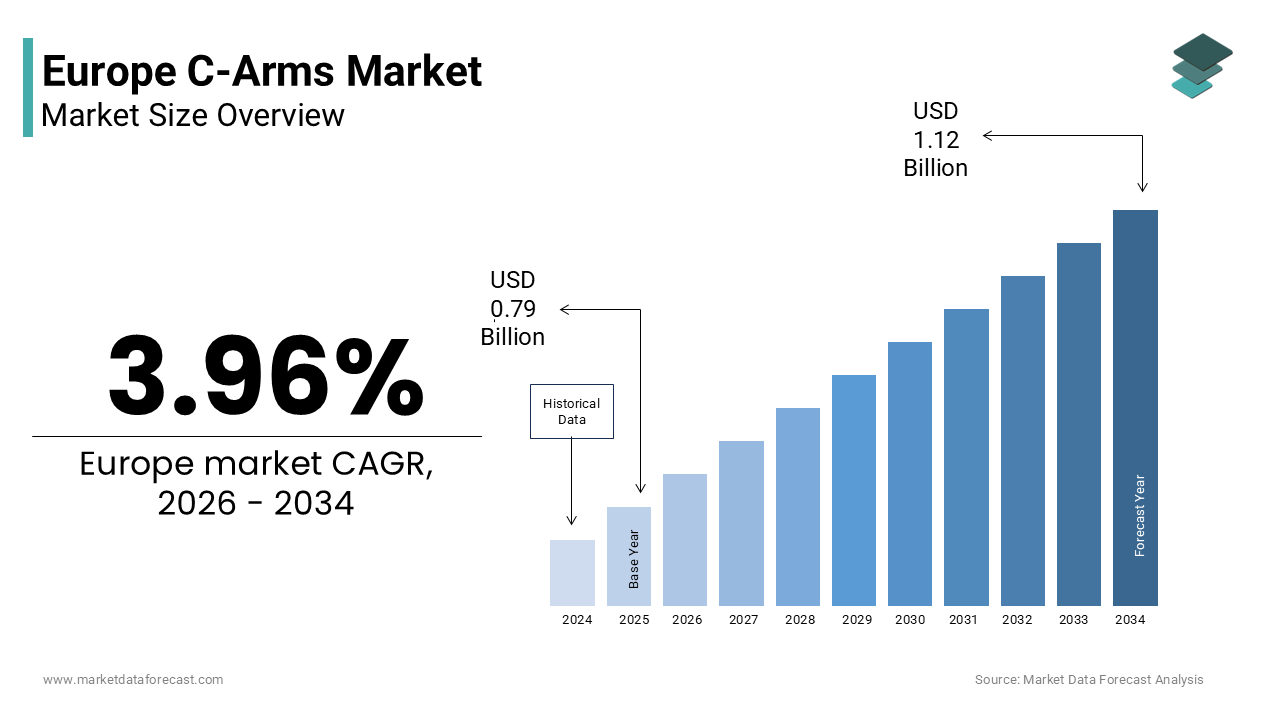
- Market Valuation: Valued at USD 0.79 billion (2025), estimated at USD 0.82 billion (2026), and projected to reach USD 1.12 billion by 2034, registering a steady CAGR of 3.96% (2026–2034).
- Primary Growth Drivers: Escalating geriatric orthopedic surgical volumes and the structural shift toward decentralized outpatient care models requiring compact imaging solutions. Key opportunities persist in AI-powered dose reduction technologies and procurement harmonization initiatives.
Key Market Segment Metrics (2026–2034)
| Category | Leading Segment (2025 Position) | Fastest-Growing Segment |
|---|---|---|
| By Product / Device Type | Mobile C-Arms (dominated with a 46.3% share in 2025) | Fixed C-Arms (predicted to witness the highest CAGR of 6.5% from 2025 to 2033) |
| By Application | Orthopedic and Trauma Surgeries (captured the largest application share in 2025) | Pain Management (anticipated to exhibit the fastest CAGR of 8.1%) |
| By End User | Hospitals (led end-user segments in 2025) | Specialty Clinics (expected to showcase a CAGR of 7.08%) |
| By Region / Country | Germany (held the dominant country position with a 22.3% share in 2025, followed by France at 18.3%) | Decentralized Outpatient Care Settings Across Europe |
Major Market Players & Market Structure
Market Structure: Highly competitive European medical imaging landscape featuring major global manufacturers competing intensely on artificial intelligence integration, workflow optimization, compact ambulatory system development, and localized service networks.
Key Companies: GE HealthCare Technologies Inc., Varian Medical Systems Inc., Philips Healthcare, Siemens AG, Toshiba Corporation, Hologic Inc., Omega Medical Imaging Inc., BMI Biomedical International, Hitachi Ltd., DMS Health Technologies, ATON GmbH, Medonica Co. Ltd., GEMSS Co. Ltd., Shimadzu Corporation, and Ziehm Imaging.
Europe C-Arms Market Size
The Europe C-Arms Market size was valued at USD 0.79 billion in 2025 and is anticipated to reach USD 0.82 billion in 2026 from USD 1.12 billion by 2034, growing at a CAGR of 3.96% during the forecast period from 2026 to 2034.
C-arms devices are integral to orthopedic trauma fixation, spinal fusion, vascular interventions, and pain management therapies where precision guidance is paramount. Unlike static diagnostic equipment, C-arms provide dynamic intraoperative feedback that directly influences procedural efficacy and patient safety outcomes. According to Eurostat, approximately 38% of the European population is aged 50 years or older as of 2024, which fundamentally sustains the clinical necessity for these imaging platforms due to the higher prevalence of degenerative musculoskeletal conditions requiring surgical correction. Furthermore, as per World Health Organization data, road traffic injuries remain a leading cause of hospitalization among Europeans aged 15 to 49 years with over 1 million serious injury cases recorded annually, necessitating immediate orthopedic intervention supported by mobile imaging. As per the European Commission, cross-border healthcare directives have increased patient mobility by 12% since 2022, thereby standardizing equipment requirements across member states to ensure interoperability and consistent care quality. This demographic and regulatory landscape defines the operational environment for C-arm deployment, distinct from pure commercial market metrics.
MARKET DRIVERS
Demographic Shifts Accelerating Surgical Imaging Demand
The escalating volume of geriatric orthopedic surgeries is majorly fuelling the growth of the European C-arms market. According to the Organisation for Economic Co-operation and Development, over 650,000 hip fracture surgeries were performed annually across EU member states as of 2023, with projections indicating a 25% increase by 2030 due to aging populations. Each of these complex procedures requires continuous intraoperative imaging to verify implant positioning and reduce revision rates, which directly correlates to C-arm utilization intensity. As per the Organisation for Economic Co-operation and Development, osteoarthritis affects nearly 40% of Europeans over age 65, resulting in sustained demand for joint replacement and spinal stabilization surgeries that rely heavily on real-time fluoroscopic guidance. Additionally, according to research published in the Journal of Orthopaedic Surgery and Research, average surgical duration for geriatric trauma cases has decreased by 18% over the past decade, largely attributed to advanced imaging integration; yet total case volumes have risen sufficiently to offset efficiency gains. This demographic imperative creates non-discretionary demand for imaging infrastructure independent of economic cycles, as untreated fractures lead to severe morbidity and increased long-term care costs that public health systems cannot absorb. Consequently, hospital procurement strategies prioritize reliable mobile imaging capacity to manage this predictable and growing surgical burden.
Decentralization of Care Driving Compact Imaging Adoption
The structural transformation toward outpatient surgical facilities is expected to drive significant growth in versatile C-arm system demand throughout Europe over the next several years. According to the European Commission, over 45% of all elective orthopedic and pain management procedures shifted to ambulatory settings between 2019 and 2024, driven by cost-containment policies and patient preference for same-day discharge. These facilities require compact, radiation-efficient imaging solutions that deliver hospital-grade performance within space-constrained environments, unlike traditional large-format fixed installations. As per national health authority reports, ambulatory surgery center licensing approvals in Spain and Italy increased by 32% from 2021 to 2023, reflecting deliberate policy support for decentralized care delivery models. Furthermore, according to the European Society of Anaesthesiology, 78% of minimally invasive spine procedures occurred in outpatient venues as of 2024, creating substantial equipment replacement cycles as legacy systems lack necessary dose-reduction technologies for high-throughput ambulatory workflows. This migration redistributes capital expenditure from centralized hospitals to distributed networks of specialized clinics, each requiring dedicated imaging assets. The trend is reinforced by reimbursement reforms across multiple EU countries that financially incentivize outpatient over inpatient care, making C-arm acquisition essential for facility viability and regulatory compliance rather than an optional enhancement.
MARKET RESTRAINTS
Regulatory Dose Limits Constraining Equipment Utilization
European radiation protection frameworks impose rigorous operational constraints that limit C-arm deployment flexibility and increase compliance costs. According to the European Union Basic Safety Standards Directive, occupational exposure limits for medical staff decreased by 20% compared to previous guidelines, requiring facilities to invest heavily in shielding, personal dosimetry and automated dose-monitoring systems. As per International Atomic Energy Agency reports, approximately 34% of European hospitals faced challenges or temporary service adjustments in 2024 due to the inability to meet updated dose-recording and reporting requirements within mandated timelines. National regulatory bodies in Belgium and the Netherlands enforce quarterly equipment calibration audits with noncompliance penalties, creating significant administrative overhead for smaller facilities. Additionally, according to medical technology industry estimates, retrofitting existing C-arms with compliant dose-area product meters costs between 8,000 and 12,000 euros per unit, representing substantial unbudgeted expenditure for institutions operating aging fleets. These regulatory pressures disproportionately affect rural and community hospitals with limited capital reserves, potentially reducing geographic access to advanced imaging services. While intended to protect patients and staff, the cumulative effect creates barriers to entry and expansion, particularly for independent surgical centers navigating complex multi-jurisdictional compliance landscapes without dedicated radiation safety officers.
Workforce Deficits Limiting Operational Capacity
Persistent shortages of qualified personnel capable of operating mobile fluoroscopy equipment severely constrain effective C-arm utilization across European healthcare systems, which is further impeding the regional market expansion. According to the European Federation of Radiographer Societies, there is an estimated deficit of 28,000 certified radiologic technologists across EU member states as of 2024, with vacancy rates exceeding 22% in surgical imaging specialties. This shortage directly translates to underutilized equipment as hospitals cannot staff additional shifts despite having available machines. As per a 2023 report by the European Health Management Association, 41% of surveyed hospitals delayed elective orthopedic procedures specifically due to the unavailability of trained fluoroscopy operators rather than equipment malfunction or surgeon scheduling conflicts. According to the European Association of Healthcare Educators, annual graduation rates for radiography programs have remained at approximately 12,000 students since 2019, while retirement attrition accelerates with 35% of the current workforce eligible for pension within the next 5 years. Training new technicians requires a minimum of 3 years of accredited education plus clinical practicum, meaning supply cannot rapidly respond to demand surges. Consequently, facilities face difficult trade-offs between maintaining emergency coverage and expanding elective services, often resulting in conservative scheduling that leaves installed C-arm capacity idle during peak demand periods despite clear clinical need.
MARKET OPPORTUNITIES
Smart Imaging Platforms Enhancing Procedural Efficiency
Emerging artificial intelligence applications present promising opportunities for the European C-arms market growth. According to the European Society of Medical Imaging Informatics, AI-powered image guidance systems reduced average fluoroscopy time by 27% in clinical trials conducted across 15 European academic centers during 2024 through automated collimation and exposure parameter adjustment. These intelligent systems compensate for technician shortages by reducing cognitive load and minimizing setup errors, enabling less experienced operators to achieve expert-level performance. As per the European Commission, the Horizon Europe research program allocated 85 million euros specifically for medical imaging AI development between 2023 and 2027, accelerating the commercial translation of academic innovations into clinically validated products. National digital health strategies in Sweden and Estonia mandate AI-readiness assessments for all new imaging equipment procurements, which is creating guaranteed adoption pathways for vendors offering integrated smart features. Furthermore, according to the European Medicines Agency, 14 approvals for AI-based clinical decision support tools were granted in 2024 compared to only 3 in 2022, signalling regulatory alignment with technological advancement. Early adopters report a 19% improvement in daily case throughput without additional staffing, demonstrating a tangible return on investment beyond mere image quality enhancement. This convergence of technological maturity, supportive regulation, and demonstrable operational benefits creates a compelling value proposition for fleet upgrades even amid budgetary pressures.
Harmonized Procurement Creating Regional Scale Opportunities
European Union efforts to standardize medical device specifications across member states will likely unlock significant economies of scale for C-arm manufacturers and healthcare providers in the coming years. As per the European Health Data Space regulation enacted in 2024, interoperability requirements for surgical imaging equipment now apply uniformly across all 27 member states, eliminating previously fragmented national technical standards that hindered cross-border service provision. According to European Commission procurement records, the Joint Procurement Agreement mechanism facilitated collective purchasing of 340 mobile fluoroscopy units by Baltic and Central European nations in 2023, achieving average unit cost reductions of 18% compared to individual national tenders. European Reference Networks for rare bone diseases established common imaging protocols adopted by 89 specialized centers across 19 countries, creating demand for standardized equipment configurations optimized for specific clinical pathways. As per the European Investment Bank, 2 billion euros were committed in 2024 specifically for healthcare infrastructure modernization in cohesion regions with preferential financing terms for facilities adopting EU-harmonized equipment standards. Additionally, according to MedTech Europe, mutual recognition agreements for maintenance certifications enable single service contracts covering multiple countries, reducing lifetime ownership costs by an estimated 12%. These systemic initiatives transform what was historically a collection of discrete national markets into an integrated regional ecosystem where vendors can develop unified product portfolios and providers benefit from reduced complexity, improved service availability, and enhanced bargaining power through collective action
MARKET CHALLENGES
Integration Challenges Hindering Fleet Modernization
Widespread dependence on outdated hospital information systems is a significant challenge to the growth of the European C-arms market. According to a 2025 European Hospital and Healthcare Federation survey, approximately 58% of medium-sized hospitals still operate picture archiving and communication systems installed before 2015, lacking native support for modern DICOMweb standards required by current fluoroscopy equipment. This incompatibility forces institutions to either undertake costly PACS replacements averaging 450,000 euros or accept suboptimal workflow integrations that negate many benefits of new imaging technology. As per the European Commission Digital Europe Programme, healthcare IT legacy debt is a critical barrier to digital transformation, with 31% of planned imaging upgrades being postponed in 2024 specifically due to backend system limitations rather than equipment funding constraints. National audit offices in Austria and Portugal documented cases where newly acquired C-arms operated at only 60% functional capacity for over 18 months while awaiting interface development and validation. Vendor lock-in from proprietary legacy systems further complicates matters, as original manufacturers often discontinue support, forcing expensive third-party middleware solutions. These technical debts accumulate silently over decades, creating hidden costs that distort true total cost-of-ownership calculations and delay the realization of clinical benefits despite apparent capital availability for equipment refreshment.
Payment Model Misalignment Stifling Innovation Adoption
Evolving but inconsistent reimbursement frameworks across European jurisdictions create financial risk that discourages the adoption of technologically superior C-arm systems, which is further challenging the regional market expansion. According to the European Observatory on Health Systems and Policies, only 11 of 27 EU member states had established specific tariff codes for AI-enhanced fluoroscopy procedures as of 2025, which are leaving providers in the remaining countries to absorb incremental technology costs within existing flat-rate payments. Health technology assessment bodies in France and Germany require separate evidence submissions for each new imaging feature with evaluation timelines averaging 14 months during which early adopters face uncompensated utilization. As per the European Association of Private Hospitals, 67% of member facilities delayed premium C-arm purchases in 2024, citing unclear return on investment due to reimbursement ambiguity despite recognized clinical advantages. National health insurers increasingly demand real-world outcome data linking specific imaging capabilities to measurable cost savings or quality improvements before approving enhanced payments, creating a chicken-and-egg problem where evidence generation requires an installed base that payment uncertainty prevents. Even when favorable tariffs exist, variation in interpretation across regional payers within federal systems like Spain and Italy creates administrative complexity that smaller providers cannot navigate effectively. This fragmented payment landscape means technological superiority alone does not guarantee commercial success, forcing vendors to prioritize features aligned with current reimbursement realities over potentially more impactful innovations awaiting future policy alignment.
REPORT COVERAGE
| REPORT METRIC | DETAILS |
| Market Size Available | 2025 to 2034 |
| Base Year | 2025 |
| Forecast Period | 2026 to 2034 |
| CAGR | 3.96% |
| Segments Covered | By Type, Application, End-User Region |
| Various Analyses Covered | Global, Regional & Country Level Analysis, Segment-Level Analysis; DROC, PESTLE Analysis; Porter's Five Forces Analysis, Competitive Landscape, Analyst Overview of Investment Opportunities |
| Regions Covered | UK, France, Spain, Germany, Italy, Russia, Sweden, Denmark, Switzerland, the Netherlands, Turkey, the Czech Republic, and the Rest of Europe. |
| Key Market Players | GE HealthCare Technologies Inc., Varian Medical Systems, Inc., Philips Healthcare, Siemens AG, Toshiba Corporation, Hologic, Inc., Omega Medical Imaging, Inc., BMI Biomedical International, Hitachi, Ltd., DMS Health Technologies, ATON GmbH, Medonica Co., Ltd., GEMSS Co., Ltd., and Shimadzu Corporation. |
SEGMENTAL ANALYSIS
By Type Insights
The mobile C-arms segment was accounted in holding 46.3% of the Europe C-arms market share in 2025 due to their unparalleled flexibility, across diverse clinical settings. According to the study, over 82% of orthopedic trauma procedures performed in 2024, utilized mobile fluoroscopy units because these devices can be rapidly positioned around complex surgical tables without requiring permanent structural modifications. The ability to transport imaging equipment between operating rooms emergency departments and intensive care units allows hospitals to maximize asset utilization rates, which is crucial given that the average cost of a high-end mobile C-arm exceeds 150000 euros. Furthermore, the rise of hybrid operating rooms has not diminished mobile unit demand but rather complemented it as backup systems for routine cases preserving expensive fixed assets for complex vascular interventions. National procurement guidelines in France and Italy explicitly prioritize mobile units for general surgery departments due to their lower installation costs and easier compliance with evolving radiation shielding standards. This operational adaptability ensures that mobile C-arms remain the workhorse of European surgical imaging despite technological advancements in stationary systems.

On the other side, the fixed c-arms segment is estimated to record a CAGR of 6.5% over the forecast period in the European market owing to the increasing complexity of cardiovascular and neurovascular interventions. According to the European Society of Cardiology, the number of percutaneous coronary interventions performed across EU member states increased by 18% between 2020 and 2024, necessitating imaging systems with superior spatial resolution and larger detector sizes that only fixed platforms can provide. These advanced systems offer image quality metrics that are 40% higher than standard mobile units, which is enabling precise visualization of small vessels and stent placement, which is critical for patient outcomes in stroke and heart attack treatments. As per the Italian National Institute of Health, 92% of tertiary care centers upgraded to fixed flat-panel detector systems in 2023 to support growing volumes of endovascular aneurysm repairs and this require continuous high-frame-rate imaging without motion artifacts. Furthermore, reimbursement policies in Germany and the United Kingdom provide higher tariff codes for procedures performed in hybrid operating rooms equipped with fixed C-arms, creating financial incentives for hospitals to invest in these premium platforms. The integration of three-dimensional rotational angiography capabilities, exclusively available in fixed systems, further accelerates adoption as surgeons increasingly rely on volumetric data for preoperative planning and intraoperative navigation in complex cases.
By Application Insights
The orthopedic and trauma surgeries segment captured the largest share of the European market in 2025 and this trend is expected to persist as musculoskeletal conditions remain prevalent in the aging population. According to the European Alliance Against Rheumatism, over 120 million Europeans suffer from chronic joint pain and degenerative bone diseases requiring surgical intervention supported by real-time fluoroscopic guidance. As per the World Health Organization, falls among individuals aged 65 and older result in approximately 1.2 million hip fractures annually across the region, each necessitating immediate imaging for fracture reduction and internal fixation. National health registries in Sweden and Denmark indicate that orthopedic procedures account for 45% of all surgeries utilizing mobile C-arms, reflecting the indispensable role of these devices in trauma care. Furthermore, according to the European Federation of National Associations of Orthopaedics and Traumatology, total joint replacement volumes increased by 22% from 2019 to 2024, driven by improved implant longevity and patient expectations for active lifestyles. This sustained clinical volume creates consistent demand for reliable imaging equipment capable of withstanding high-usage frequencies in busy trauma centers. The repetitive nature of orthopedic procedures also facilitates standardized workflow integration, making C-arms essential infrastructure rather than optional tools in this specialty.
However, the pain management segment is expected to exhibit a CAGR of 8.1% over the forecast period in the European market owing to the increasing recognition of interventional pain therapies as alternatives to opioid medication. According to the European Pain Federation, approximately 100 million Europeans live with chronic pain conditions such as lower back pain and neuropathic disorders, leading to a surge in demand for fluoroscopically guided injections and nerve blocks. As per European Medicines Agency restrictions on long-term opioid prescriptions since 2022, there has been an accelerated shift toward minimally invasive pain interventions which require precise needle placement verified by C-arm imaging. Data from the British Pain Society indicates that epidural steroid injections and radiofrequency ablation procedures increased by 41% in 2023 as healthcare providers sought effective non-pharmacological treatment options. Furthermore, according to national health insurance data, schemes in the Netherlands and Belgium expanded coverage for interventional pain procedures in 2024, recognizing their cost-effectiveness in reducing long-term disability claims. This policy support combined with clinical efficacy drives rapid adoption of portable C-arms in outpatient pain clinics where space and budget constraints favor compact imaging solutions.
By End User Insights
The hospitals segment led the market with the major share of the European market in 2025 and is likely to maintain their position as the primary end users of C-arms over the next few years due to their role as central hubs for emergency trauma care and complex surgical interventions. According to the European Hospital and Healthcare Federation, acute care hospitals perform over 75% of all fluoroscopy-guided procedures in the region, including emergency orthopedic trauma surgeries and urgent vascular interventions that require immediate imaging availability. As per the World Health Organization European Regional Office, emergency departments in major European cities handle an average of 15,000 trauma cases annually, each requiring rapid assessment and often immediate surgical intervention supported by mobile C-arms. National health systems in Germany, France, and the United Kingdom maintain large fleets of C-arms within hospital networks to ensure 24-hour coverage for critical care scenarios. Furthermore, teaching hospitals serve as training centers for surgical residents, creating consistent demand for equipment that supports educational workflows and complex case management. The concentration of specialized surgical teams and advanced operating theatres within hospital settings ensures that these institutions remain the primary purchasers and users of high-end C-arm systems despite the growth of alternative care models.
On the other side, the specialty clinics segment is predicted to showcase a CAGR of 7.08% over the forecast period in the European market owing to the strategic shift of elective surgeries from hospitals to outpatient settings. According to the European Federation of Ambulatory Surgery Centres, over 50% of orthopedic and pain management procedures were performed in specialized clinics by 2024, reducing hospital burden and lowering overall healthcare costs. These facilities require dedicated imaging equipment to operate independently, leading to increased C-arm procurement as clinics expand their service offerings. As per Spanish Ministry of Health data, licensed specialty surgical clinics increased by 35% from 2020 to 2024, with each new facility typically purchasing at least one mobile C-arm to support minimally invasive procedures. Furthermore, reimbursement policies in several European countries now favor outpatient care, providing financial incentives for physicians to establish independent practices equipped with necessary imaging technology. The autonomy of specialty clinics allows for faster adoption of new technologies as decision-making processes are less bureaucratic than in large hospital systems. This agility, combined with growing patient preference for convenient and localized care, ensures continued robust growth for this end-user segment.
COUNTRY ANALYSIS
Germany C-arms Market Analysis
Germany was the top performer of the Europe C-arms market by accounting for 22.3% of share in 2025 due to its robust healthcare infrastructure and high surgical volumes. According to the study, the nation performs more than 1.5 million orthopedic surgeries, annually driving consistent demand for mobile fluoroscopy equipment. The statutory health insurance system provides comprehensive coverage for surgical procedures ensuring stable funding for hospital equipment upgrades. Furthermore, Germany is a hub for medical device manufacturing and innovation with several leading C-arm manufacturers headquartered in the country fostering strong domestic adoption of latest technologies. Recent government initiatives to digitize healthcare facilities, include substantial funding for imaging equipment modernization ensuring continued investment in advanced C-arm systems with artificial intelligence capabilities.
France C-arms Market Analysis
France C-arms market was ranked second by holding 18.3% of share in 2025 with the mix of public university hospitals and private clinics, driving diverse equipment demand. The centralized public healthcare system facilitates bulk procurement agreements that standardize equipment specifications across regions, while private clinics drive demand for compact and cost effective solutions. France has implemented strict radiation protection regulations prompting hospitals to replace older C-arm models with newer dose efficient systems. The French Society of Orthopaedic Surgery emphasizes the importance of real time imaging in complex trauma cases supporting sustained equipment utilization. Government funding for regional health agencies includes specific allocations for imaging infrastructure ensuring steady market growth.
United Kingdom C-arms Market Analysis
The United Kingdom is expected to experience increased demand for C-arms as the government prioritizes the reduction of surgical waiting lists in the coming years. According to NHS England data, over 600,000 orthopedic procedures were delayed in 2023, prompting significant investment in surgical capacity including new C-arm acquisitions. The UK government allocated 2 billion pounds for hospital infrastructure upgrades in 2024, with a portion dedicated to imaging equipment modernization. The British Orthopaedic Association advocates for wider adoption of minimally invasive techniques which require reliable fluoroscopic support, driving demand for advanced mobile units. Private healthcare providers in the UK are also expanding their surgical offerings to capture patients seeking faster access to care, further stimulating market growth. The country has stringent radiation safety standards enforced by the Health and Safety Executive, requiring regular equipment updates to maintain compliance. Additionally, the post-Brexit regulatory environment has streamlined approval processes for innovative medical devices, encouraging faster adoption of next-generation C-arm technologies.
Italy C-arms Market Analysis
Italy is anticipated to see market growth driven by ongoing national efforts to modernize its healthcare system over the next few years. According to the Italian National Institute of Health, significant regional variations in imaging infrastructure exist, prompting recent federal investment programs to equalize access. Over 500,000 orthopedic surgeries are performed annually in Italy, creating substantial baseline demand for C-arms. The Italian Society of Orthopaedics and Traumatology promotes standardized surgical protocols that emphasize fluoroscopic guidance, ensuring consistent equipment utilization. Recent reforms in the national health service have encouraged public-private partnerships, allowing private clinics to participate in publicly funded surgical programs and driving equipment purchases. Italy has also seen growth in medical tourism, particularly for orthopedic procedures, attracting international patients who expect state-of-the-art imaging capabilities. The government has introduced tax incentives for healthcare facilities investing in digital health technologies, including advanced C-arms with connectivity features, supporting market expansion.
Spain C-arms Market Analysis
Spain is likely to experience sustained demand for C-arms as the country addresses the needs of its aging population over the next few years. According to the Spanish Ministry of Health, the number of hip and knee replacement surgeries increased by 20% between 2020 and 2024, necessitating expanded imaging capacity. The decentralized healthcare system allows autonomous communities to make independent procurement decisions, leading to varied adoption rates across regions. Catalonia and Madrid have led in equipment modernization initiatives, replacing older C-arm units with digital flat-panel systems. The Spanish Society of Orthopaedic Surgery emphasizes the role of fluoroscopy in complex trauma care, supporting sustained demand in emergency departments. Additionally, Spain has become a destination for medical tourism from Northern Europe, driving private clinics to invest in high-quality imaging equipment to attract international patients. Government funding for primary care integration includes provisions for diagnostic imaging, ensuring broader geographic distribution of C-arm technology.
COMPETITIVE LANDSCAPE
The competition in the Europe C-arms Market is characterized by intense rivalry among established multinational corporations and specialized regional manufacturers. Major players differentiate themselves through technological innovation particularly in image quality dose reduction and workflow integration capabilities. The market exhibits high barriers to entry due to stringent regulatory requirements and significant capital investment needed for research and development. Companies compete not only on product features but also on after sales service quality and training support which are critical for customer retention. Pricing pressure remains moderate as healthcare providers prioritize reliability and clinical outcomes over initial cost savings. The shift toward outpatient care has intensified competition in the compact C-arm segment with manufacturers launching specialized products for ambulatory settings. Strategic alliances with local distributors and healthcare networks help firms navigate diverse national regulations and procurement processes. Continuous innovation in artificial intelligence and digital connectivity serves as a key battleground for gaining competitive edge. Overall the market dynamics favor companies that can demonstrate clear clinical value and operational efficiency while maintaining compliance with evolving European standards.
KEY MARKET PLAYERS
Key players operating in the Europe C-Arms Market include
- GE HealthCare Technologies Inc.
- Varian Medical Systems, Inc.
- Philips Healthcare
- Siemens AG
- Toshiba Corporation
- Hologic, Inc.
- Omega Medical Imaging, Inc.
- BMI Biomedical International
- Hitachi, Ltd.
- DMS Health Technologies
- ATON GmbH
- Medonica Co., Ltd.
- GEMSS Co., Ltd.
- Shimadzu Corporation
Top Players in the Europe C-Arms Market
Siemens Healthineers
Siemens Healthineers maintains a prominent position in the European medical imaging sector through its comprehensive portfolio of advanced C-arm systems. The company focuses on integrating artificial intelligence into its imaging platforms to enhance workflow efficiency and reduce radiation exposure for patients and staff. Recent initiatives include the launch of new mobile C-arms with flat panel detectors that offer superior image quality for complex orthopedic and vascular procedures. Siemens actively collaborates with European hospitals to develop customized solutions that address specific clinical needs while ensuring compliance with stringent regional safety regulations. Their commitment to digital health integration allows seamless connectivity with hospital information systems thereby supporting the broader trend toward smart healthcare infrastructure across the continent.
Philips Healthcare
Philips Healthcare contributes significantly to the Europe C-Arms Market by emphasizing precision imaging and patient centric care innovations. The company has recently strengthened its market presence by introducing compact mobile C-arms designed specifically for ambulatory surgery centers and pain management clinics. Philips prioritizes dose reduction technologies that align with European radiation protection standards making their equipment highly attractive to regulatory conscious healthcare providers. Strategic partnerships with academic medical centers enable continuous refinement of imaging algorithms and clinical protocols. Their focus on sustainable healthcare solutions includes energy efficient designs and modular components that extend equipment lifespan. This approach resonates well with European institutions seeking to balance clinical excellence with environmental responsibility and operational cost management.
Ziehm Imaging
Ziehm Imaging specializes in high performance mobile C-arms and has established a strong reputation for reliability and image quality in the European market. The company recently expanded its product line to include advanced fluoroscopy systems with enhanced detector technology suitable for demanding surgical applications. Ziehm focuses on providing robust service support and training programs that ensure optimal utilization of their equipment across diverse healthcare settings. Their strategic emphasis on ergonomic design and user friendly interfaces appeals to surgical teams seeking efficient workflow solutions. By maintaining a dedicated manufacturing presence in Europe Ziehm ensures rapid response to local market demands and regulatory changes. This localized approach combined with technological innovation helps them compete effectively against larger multinational corporations in the region.
Top Strategies Used by Key Market Participants
Key players in the Europe C-Arms Market primarily employ product innovation and strategic partnerships to maintain competitive advantage. Companies invest heavily in research and development to integrate artificial intelligence and dose reduction technologies into their imaging systems. This focus on technological advancement addresses growing regulatory pressures and clinical demands for safer more efficient procedures. Manufacturers also pursue collaborative agreements with hospitals and academic institutions to validate new features and gather real world performance data. Another critical strategy involves expanding service networks to provide comprehensive maintenance and training support which enhances customer loyalty. Additionally firms are adapting their product portfolios to cater to the rising demand from ambulatory surgery centers by developing compact and cost effective solutions. These multifaceted approaches enable companies to navigate complex regulatory landscapes while meeting diverse clinical needs across European healthcare systems.
MARKET SEGMENTATION
This research report on the European C-Arms Market has been segmented and sub-segmented into the following categories:
By Type
- Mobile C-Arms
- Fixed C-Arms
By Application
- Orthopaedic
- Pain Management
- Trauma
- Cardiovascular
- Neurology
- Urology
- Gastrointestinal
- General Surgery
By End-User
- Hospitals
- Specialty Clinics
By Country
- UK
- France
- Spain
- Germany
- Italy
- Russia
- Sweden
- Denmark
- Switzerland
- Netherlands
- Turkey
- Czech Republic
- Rest of Europe