- Product Description Description
- Table of Contents TOC
- List of Table & Figure LOT
- Get Free Sample PDF Sample PDF
Market Size, 2025
$1.58 BnMarket Estimate, 2026
$1.84 BnMarket Forecast, 2034
$6.15 BnCAGR, 2026–2034
16.29%Europe Cancer Vaccines Market Summary
Market Size & Growth
- The Europe Cancer Vaccines Market was valued at USD 1.58 billion in 2025.
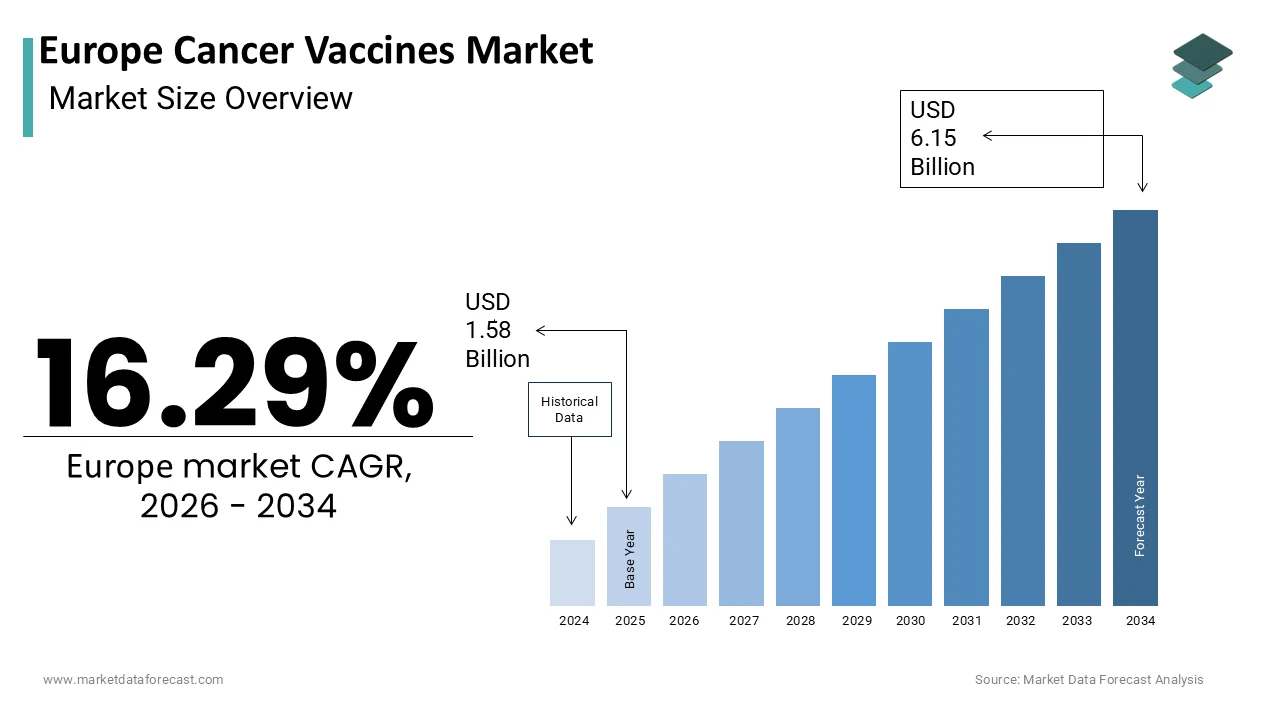
- Expected to reach USD 6.15 billion by 2034, growing at a CAGR of 16.29% from 2026 to 2034.
- Germany led regional market share at 22.05% in 2025.
Key Market Segments
- By Cancer Type: Prostate, Cervical, Colorectal, Throat, Others. Cervical cancer held 47.4% share in 2025; Throat cancer is fastest growing at CAGR of 12.2%.
- By Vaccine Type: Protein, Peptide-based, Tumor cell, Dendritic cell, Genetic vaccines, Others. Genetic vaccines led with 38.8% share in 2025; Dendritic cell vaccines are fastest growing at CAGR of 14.04%.
- By End User: Cancer Treatment Centres (dominant); Research Institutes (fastest growing at CAGR of 13.5%).
- By Country: Germany leads; Italy and Sweden are projected to register strong CAGRs over 2026–2034.
Key Drivers
- Accelerated integration of mRNA platforms in oncology, with the European Commission's Cancer Mission allocating significant 2025 funding for RNA-based immunotherapies targeting melanoma and non-small cell lung cancer.
- Rising burden of HPV-related cancers, with 30,000–35,000 EU women diagnosed with cervical cancer annually, driving demand under Europe's Beating Cancer Plan targeting 90% HPV vaccination coverage by 2030.
- Expansion of combination immunotherapy regimens pairing cancer vaccines with checkpoint inhibitors such as anti-PD-1 antibodies, with over 100 active combination trials in Europe by mid-2025.
Key Players
Dendreon, GlaxoSmithKline, Merck KGaA, BioNTech, CureVac, Bavarian Nordic, Celldex Therapeutics, Inovio Pharmaceuticals, Oxford BioMedica, Advaxis, Immatics, and Transgene.
Europe Cancer Vaccines Market Size
The Europe Cancer Vaccines Market is projected to grow from USD 1.58 billion in 2025 to USD 1.84 billion in 2026 and reach USD 6.15 billion by 2034, registering a CAGR of 16.29% during the forecast period from 2026 to 2034.
Cancer vaccines include therapeutic and prophylactic biological products engineered to stimulate the immune system againsttumor-associatedd antigens or oncogenic viruses. Unlike conventional vaccines designed for infectious disease prevention, cancer vaccines aim either to prevent virus induced malignancies or to treat established cancers by enhancing T cell recognition of malignant cells. As of 2025, cancer remains a leading cause of mortality in Europe, with approximately 2.7 million new cases diagnosed annually and over 1.3 million deaths, according to the European Commission’s Joint Research Centre. The burden is particularly acute in high‑income nations where aging populations and lifestyle factors drive incidence. For example, the Robert Koch Institute reports that Germany records more than 500,000 new cancer cases each year. Europe’s robust biopharmaceutical infrastructure supports advanced clinical development in personalized neoantigen vaccines and mRNA‑based platforms. Regulatory alignment through the European Medicines Agency and strategic funding from Horizon Europe further enable innovation, which is positioning the continent as a global leader in immuno‑oncology, despite the clinical complexity and high attrition rates inherent to this therapeutic class.
MARKET DRIVERS
Accelerated Integration of mRNA Platforms in Oncology
The successful deployment of messenger RNA technology during the pandemic catalysed its repurposing for cancer vaccine development across Europe, which is majorly driving the European cancer vaccines market growth. mRNA platforms offer rapid design flexibility, enabling customization to patient-specific tumor neoantigens, which is a critical advantage in treating heterogeneous malignancies. According to the European Medicines Agency, dozens of mRNA-based cancer vaccine candidates entered Phase I or II trials in the EU between 2022 and 2025, with institutions like BioNTech in Germany and CureVac collaborating with academic hospitals in Mainz and Tübingen. The European Commission’s Cancer Mission allocated significant funding in 2025 specifically for RNA-based immunotherapies, recognizing their potential to improve durable response rates in melanoma and non-small cell lung cancer. Furthermore, as per the European Society for Medical Oncology, peer-reviewed Phase 2 data show that individualized mRNA vaccines combined with checkpoint inhibitors can substantially improve progression-free survival in certain solid tumors compared to monotherapy. This scientific validation, backed by public funding and academic industry partnerships, is driving sustained investment and clinical adoption, which is transforming mRNA from a pandemic tool into a cornerstone of Europe’s next-generation cancer strategy.
Rising Burden of HPV Related Cancers and Preventive Imperatives
Human papillomavirus-associated malignancies, particularly cervical, oropharyngeal,l and anal cancers, continue to exert significant public health pressure across Europe, which is fuelling demand for prophylactic cancer vaccines and contributing to the expansion of the European cancer vaccines market. According to the International Agency for Research on Cancer and the European Cancer Information System, around 30,000 to 35,000 women in the EU are diagnosed with cervical cancer annually, and the incidence of HPV positive head and neck cancers has increased over the past decade. In response, the European Commission launched the Europe’s Beating Cancer Plan in 2021 with a target of 90% HPV vaccination coverage among adolescents by 2030. As per the European Centre for Disease Prevention and Control and WHO/UNICEF reporting, national immunization programs in countries like Denmark, Sweden,n and Portugal have achieved high coverage in girls, ls with several adding boys to schedules to curb oropharyngeal disease. The expanded use of nonavalent HPV vaccines further enhances preventive impact. Policy-driven, population-level intervention not only reduces future cancer incidence but also establishes a stable demand base for prophylactic cancer vaccines, anchoring market growth in public health strategy rather than solely therapeutic innovation.
MARKET RESTRAINTS
High Clinical Trial Attrition and Regulatory Complexity
Therapeutic cancer vaccines face exceptionally high failure rates in late-stage clinical development due to tumor immune evasion mechanisms and patient heterogeneity, which is hindering the growth of the European cancer vaccines market. According to the European Medicines Agency, single digit%ages of oncology vaccine candidates that enter Phase I trials ultimately achieve marketing authorization, which is lower than success rates reported for other biologics. This attrition stems from challenges in identifying immunogenic yet universally expressed tumor antigens and from the immunosuppressive tumor microenvironment that blunts vaccine-induced T cell responses. Moreover, the European Directorate for the Quality of Medicines reported that a majority of advanced therapy medicinal product submissions for cancer vaccines between 2020 and 2025 received major objections related to potency assays or stability protocols. These scientific and procedural hurdles extend development timelines by three to five years on average, which is deterring smaller biotechs and inflating R and D costs that can exceed one billion euros per approved product, thereby constraining market entry despite a strong scientific rationale.
Limited Reimbursement Pathways for Personalized Vaccines
Despite promising clinical data, personalized cancer vaccines encounter significant access barriers due to fragmented and underdeveloped reimbursement mechanisms across European healthcare systems, which further hinder the cancer vaccines market growth in Europe. Most national pricing and reimbursement bodies classify these therapies as high-cost orphan interventions without established health technology assessment precedents. According to the European Observatory on Health Systems and Policies, only a small number of EU countries had issued preliminary guidance for reimbursing individualized neoantigen vaccines as of 2025. In contrast, countries like Italy and Spain require case-by-case compassionate use approvals, delaying patient access by several months, as per surveys of European biopharmaceutical companies. The absence of standardized cost-effectiveness models for therapies that may benefit only dozens of patients annually further complicates payer negotiations. As per the Organisation for Economic Co-operation and Development and Eurostat health accounts, out-of-pocket payments in Europe can represent a substantial share of household health spending, and non-reimbursed advanced therapy medicinal products can entail patient costs in the tens of thousands of euros, placing them beyond reach for most patients. Until harmonized valuation frameworks emerge, commercial viability remains constrained even for clinically validated candidates.
MARKET OPPORTUNITIES
Expansion Of Combination Immunotherapy Regimens
Combining cancer vaccines with immune checkpoint inhibitors or adoptive cell therapies is unlocking synergistic anti‑tumor responses and creating new clinical niches across Europe, which is a potential opportunity for the European cancer vaccines market. Vaccines prime the immune system by presenting tumor antigens while checkpoint blockers like anti‑PD‑1 antibodies prevent T‑cell exhaustion, resulting in enhanced and sustained tumor clearance. According to the European Society for Medical Oncology, randomized Phase 2 evidence in melanoma (e.g., individualized mRNA vaccine plus pembrolizumab) demonstrated superior recurrence‑free outcomes versus pembrolizumab monotherapy, with additional studies in metastatic settings reporting improved response metrics compared to single‑agent therapy. The European Commission’s Innovative Health Initiative has funded multiple large‑scale consortia since 2023 to optimize such combinations, including EU‑supported vaccine and trial networks that link clinical sites across Europe. Furthermore, as per the German Cancer Consortium and EU clinical trial registries, more than one hundred combination trials involving therapeutic vaccines were active in Europe by mid‑2025, which is targeting cancers with historically poor immunotherapy response, such as pancreatic and glioblastoma. This strategic shift transforms vaccines from standalone interventions into integral components of multimodal regimens, broadening their therapeutic applicability and strengthening their value proposition to clinicians and payers alike.
National Cancer Control Programs Embracing Vaccination as Prevention
Europe’s coordinated public health strategy against cancer is increasingly integrating vaccination as a core preventive pillar, which is creating structured demand beyond sporadic clinical use and a promising opportunity in the European market. TheEuropeans Beating Cancer Plan mandates all member states to implement or strengthen national cancer control programs that include HPV and hepatitis B vaccination. As per the World Health Organization Regional Office for Europe and ECDC, many EU countries updated national cancer plans in 2023–2025 to include explicit vaccination components, budgets, and school‑based delivery infrastructure, with high HPV coverage already achieved in several countries and expanding gender‑neutral offers. In the Netherlands, the national program now offers free HPV vaccination to all adolescents regardless of gender, with uptake monitored through the national public health registry. Similarly, France’s current cancer strategy earmarks funding for vaccine equity initiatives targeting underserved communities. These systemic commitments ensure consistent procurement, reduce market volatility, and de‑risk manufacturer investment. By embedding cancer vaccines within universal prevention architecture, Europe is transforming them from niche biologics into public health commodities with predictable demand trajectories.
MARKET CHALLENGES
Manufacturing Scalability for Patient‑Specific Vaccines
Personalized cancer vaccines, tailored to individual tumor mutational profiles, face profound logistical and production challenges that hinder broad deployment across Europe, which is challenging the expansion of the European market. Each vaccine requires rapid sequencing of the patient’s tumor, RNA/exome analysis, neoantigen selection, and bespoke manufacturing, which is often within a four‑ to six‑week window to align with treatment schedules. According to the European Federation of Pharmaceutical Industries and Associations, Europe currently has a limited number of GMP‑compliant facilities with integrated bioinformatics and clean‑room capacity to produce individualized mRNA vaccines at a clinical scale. The Paul Ehrlich Institute reported in 2025 that manufacturing bottlenecks are a leading cause of trial delays for personalized vaccines, independent of clinical enrolment. Moreover, cold‑chain requirements for mRNA products strain distribution networks in rural regions of several member states. As per the European Commission’s Joint Research Centre, per‑patient batch production costs are high, which further limits accessibility. Until decentralized or modular manufacturing platforms emerge, scalability will remain a critical bottleneck despite scientific promise.
Scientific Uncertainty Around Biomarker Predictability
The inconsistent correlation between vaccine‑induced immune responses and actual clinical outcomes undermines confidence in patient selection and trial design across Europe, which is further challenging the expansion of the European cancer vaccines market. While many cancer vaccines elicit measurable T‑cell activation, this immunogenicity does not always translate into tumor regression or survival benefit due to variable antigen presentation and immune suppression in the microenvironment. According to the European Organisation for Research and Treatment of Cancer and recent European congress data, a substantial share of Phase II therapeutic vaccine trials over the past several years failed to meet primary endpoints despite robust immune monitoring. The absence of validated predictive biomarkers leads to heterogeneous trial populations and diluted efficacy signals. As per a 2025 European expert consensus, no biomarker has yet received regulatory qualification for vaccine response prediction in solid tumors. This scientific ambiguity complicates regulatory submissions, payer negotiations, and clinical adoption, as physicians lack tools to identify likely responders. Until biomarker‑driven stratification becomes standard, the therapeutic value proposition of cancer vaccines will remain partially obscured by biological noise.
REPORT COVERAGE
| REPORT METRIC | DETAILS |
| Market Size Available | 2025 to 2034 |
| Base Year | 2025 |
| Forecast Period | 2026 to 2034 |
| Segments Covered | By Cancer Type, Vaccine Type, End User, and Region. |
| Various Analyses Covered | Global, Regional, and Country-Level Analysis, Segment-Level Analysis, Drivers, Restraints, Opportunities, Challenges; PESTLE Analysis; Porter’s Five Forces Analysis, Competitive Landscape, Analyst Overview of Investment Opportunities |
| Countries Covered | UK, France, Spain, Germany, Italy, Russia, Sweden, Denmark, Switzerland, Netherlands, Turkey, Czech Republic, Rest of Europe |
| Market Leaders Profiled | Dendreon, GlaxoSmithKline, and Merck. In addition, companies with their products in the pipeline are Aduro Biotech, Advantagene, Advaxis, Agenus, Altor BioScience, Argos Therapeutics, AVAX Technologies, Bavarian Nordic, Biothera, Celldex Therapeutics, CureVac, Galena Biopharma, Genexine, GlobeImmune, Gradalis, Heat Biologics, Immatics, ImmunoCellular Therapeutics, Inovio Pharmaceuticals, ISA Pharmaceuticals, Juvaris Biotherapeutics, NewLink Genetics, Northwest Biotherapeutics, NovaRx, OncoThyreon, Oncovir, Oxford BioMedica, Prima BioMed, Sotio, Transgene, Ubivac, Vaccinogen, and Vaxon Biotech. |
SEGMENTAL ANALYSIS
By Cancer Type Insights
The cervical cancer segment accounted for 47.4% of the European cancer vaccines market share in 2025. The leading position of the cervical cancer segment in the European market is driven by the widespread adoption of prophylactic HPV vaccines, which directly prevent infection by oncogenic strains responsible for nearly all cervical malignancies. According to the European Centre for Disease Prevention and Control, HPV vaccination is embedded in national immunization programs across nearly all EU member states. According to WHO Europe, 23 countries achieved HPV vaccine coverage above 80% among adolescent girls in 2025, with Sweden, Denmark, and the Netherlands exceeding 90%. The European Commission’s Beating Cancer Plan mandated gender‑inclusive vaccination, prompting many nations to extend programs to boys to curb rising oropharyngeal cancer rates. The International Agency for Research on Cancer estimates that widespread use of nonavalent HPV vaccines could prevent up to 90% of cervical cancer cases in Europe by 2050. Cervical cancer vaccines are expected to remain dominant as policy‑driven, population‑scale implementation ensures stable demand unmatched by therapeutic cancer vaccine segments.
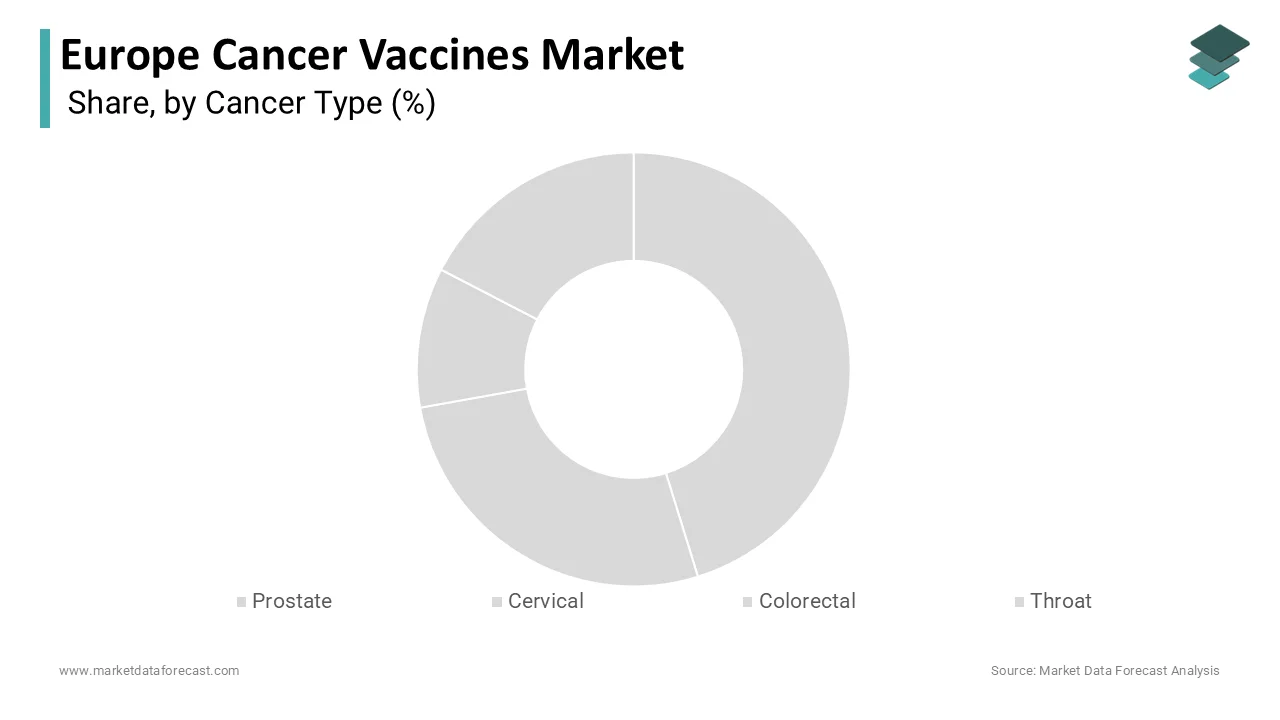
The throat cancer segment is the fastest-growing application area and is predicted to register a CAGR of 12.2% over the forecast period, owing to the rising incidence of HPV‑positive oropharyngeal carcinomas. According to the Robert Koch Institute, HPV‑related oropharyngeal cancer diagnoses in Germany increased significantly between 2018 and 2025, with similar trends observed in the UK and France. The European Medicines Agency confirmed in 2023 that nonavalent HPV vaccines are effective in preventing oral HPV infection, prompting revisions to vaccination guidelines. In 2025, the UK’s Joint Committee on Vaccination and Immunisation expanded school‑based HPV programs to include boys, citing Public Health England projections that this measure could prevent more than 100,000 HPV‑related cancers by 2070. Throat cancer vaccines are expected to grow rapidly as awareness expands beyond gynaecological contexts and public health campaigns emphasize oral cancer prevention.
By Vaccine Type Insights
The genetic vaccines segment had the leading share of 38.8% of the European market in 2025. The dominating position of the genetic vaccine segment is attributed to the rapid clinical translation of mRNA and DNA platforms that enable precise targeting of tumor‑specific neoantigens. According to the European Medicines Agency, multiple mRNA cancer vaccines are in clinical development across Europe. The European Commission’s Horizon Europe programme allocated more than €210 million between 2022 and 2025 to support RNA vaccine development, with BioNTech and CureVac leading Phase II trials in melanoma and pancreatic cancer. ESMO reports that 28 active clinical trials involving mRNA cancer vaccines were ongoing in Europe as of mid‑2025, far surpassing other modalities. Pandemic‑proven manufacturing infrastructure and regulatory familiarity further cement genetic vaccines as the dominant technological pathway. Genetic vaccines are expected to remain dominant as modularity, adaptability, and strong EU funding reinforce their role in personalized oncology.
The dendritic cell vaccines segment is the fastest-expanding category and is expected to register a CAGR of 14.04% over the forecast period. These personalized cellular immunotherapies harness antigen‑presenting cells to stimulate anti‑tumor immunity. According to the European Medicines Agency, conditional approval was granted in 2023 to a dendritic cell therapy for prostate cancer following positive Phase III data. The European Confederation of Pharmaceutical Entrepreneurs notes that more than 15 academic medical centers in Germany, Sweden, and the Netherlands now operate certified dendritic cell production facilities under hospital exemption rules. The European Commission’s Innovative Health Initiative awarded €65 million in 2025 to the DENDRIVAX consortium to standardize manufacturing protocols across 12 countries. Dendritic cell vaccines are expected to grow rapidly as investment in cell‑therapy infrastructure and clinical evidence expand their role in oncology.
By End User Insights
The cancer treatment centres segment accounted for the largest share of the European cancer vaccines market in 2025. The dominance of the cancer treatment centers segment in the regional market can be credited to the clinical nature of most cancer vaccines, which are administered as part of integrated oncology care. According to the European Observatory on Health Systems and Policies, cancer centres are the primary delivery hubs for advanced therapies. Leading institutions such as the Netherlands Cancer Institute, the Royal Marsden in the UK, and Charité in Berlin serve as both treatment and trial sites. ESMO mandates that advanced therapy medicinal products like personalized vaccines be administered only in certified centres with cell‑therapy handling capabilities. OECD data show Europe has more than 420 designated comprehensive cancer centres, most of which offer immuno‑oncology programs, including vaccine trials. Cancer treatment centres are expected to remain dominant as institutional infrastructure and reimbursement frameworks concentrate vaccine delivery within accredited oncology units.
The research institutes segment is the fastest-growing end‑user segment and is estimated to witness a CAGR of 13.5% over the forecast period due to Europe’s emphasis on translational immuno‑oncology. According to the European Research Council, Horizon Europe 2025 dedicated €180 million specifically to academic‑led cancer vaccine development, with most funding allocated to public research entities. The European Molecular Biology Laboratory reports that investigator‑initiated trials for peptide and dendritic cell vaccines increased by more than 40% in 2025, supported by EU and national grants. Pan‑European networks such as VACCELERATE and CancerCore Europe facilitate cross‑border vaccine testing, pooling patient cohorts and resources. Research institutes are expected to grow rapidly as academic momentum accelerates scientific discovery and seeds future commercial pipelines.
COUNTRY LEVEL ANALYSIS
Germany Cancer Vaccines Market Analysis
Germany led the cancer vaccines market in Europe in 2025 and occupied 22.05% of the regional market share. The dominance of Germany in the European market is attributed to its dense concentration of world‑class cancer centers integrated with biotechnology hubs in Mainz, Munich, and Heidelberg. Germany is home to BioNTech, whose mRNA cancer vaccine platform has advanced to Phase II trials in collaboration with the University Hospital of Tübingen. The national healthcare system reimburses prophylactic HPV vaccines for all adolescents and covers therapeutic vaccine administration within certified oncology units. As per the Robert Koch Institute, HPV vaccination coverage among 15‑year‑old girls reached 89% in 2025, one of the highest rates in Europe. Additionally, the German Federal Ministry of Education and Research allocated 120 million euros in 2025 to the National Decade Against Cancer initiative, with dedicated funding for neoantigen vaccine development. Germany’s robust regulatory science infrastructure and early adoption of hospital‑exemption pathways for personalized vaccines further solidify its dominant position in both preventive and therapeutic segments. With strong clinical trial density, advanced reimbursement frameworks, and patient advocacy, Germany is expected to remain the anchor of Europe’s cancer vaccine ecosystem.
France Cancer Vaccines Market Analysis
France occupied the second position in the European cancer vaccines market in 2025. The nation’s strength lies in its integrated oncology research ecosystem anchored by institutions such as Gustave Roussy and the Institut Curie, which lead multicenter trials in dendritic‑cell and peptide‑based vaccines. France was among the first EU countries to implement universal HPV vaccination for both boys and girls through its national immunization schedule, achieving 86% coverage in adolescents by 2025 as per Santé Publique France. The French government’s 2025–2030 Cancer Plan allocated 2.1 billion euros to immuno‑oncology innovation, including a 95-million-euro fund for academic biotech partnerships focused on vaccine manufacturing scalability. Furthermore, the country’s centralized health technology assessment body HAS has established fast‑track pathways for advanced therapy medicinal products with unmet need, accelerating patient access. With strong public investment, a tradition of clinical excellence, and a clear regulatory framework, France remains a pivotal market for both prophylactic and emerging therapeutic vaccines, and is expected to expand its influence as new technologies mature.
United Kingdom Cancer Vaccines Market Analysis
The United Kingdom commanded a prominent share of the European cancer vaccines market in 2025. Despite its departure from the EU, the UK maintains alignment with European advanced‑therapy regulations and continues to participate in Horizon Europe research consortia. The country’s market is driven by its network of National Institute for Health and Care Research-designated centers, including the Royal Marsden and the Christie Hospital, which lead trials in personalized mRNA and viral‑vector vaccines. The UK Health Security Agency reported 84% HPV vaccine uptake among 13‑year‑old girls in 2025, with the program expanded to boys in 2023 following projections of thousands of preventable cancers. The Department of Health and Social Care’s 2025 Life Sciences Vision committed 150 million pounds to cell and gene therapy manufacturing, including dendritic‑cell vaccine production at the Cell and Gene Therapy Catapult facilities. This blend of clinical infrastructure, public‑health policy, and strategic investment sustains the UK’s influential role in the European landscape. Looking ahead, the UK’s emphasis on personalized medicine and rapid regulatory adaptation is expected to drive premium demand for advanced cancer vaccines.
Italy Cancer Vaccines Market Analysis
Italy is estimated to register a promising CAGR in the European cancer vaccines market over the forecast period. The country’s market is characterized by strong regional disparities but anchored by excellence in oncology centers such as Istituto Nazionale Tumori in Milan and Regina Elena in Rome. Italy was an early adopter of nonavalent HPV vaccination, achieving 82% coverage among adolescent girls by 2025 as per the National Institute of Health. The Italian government’s National Recovery and Resilience Plan allocated 320 million euros to oncology innovation between 2021 and 2026, with 75 million euros earmarked for vaccine development under the Mission Against Cancer pillar. Italian researchers are pioneering peptide‑based vaccines targeting colorectal and gastric cancers, with several candidates in Phase II trials coordinated by national oncology groups. Despite challenges in uniform healthcare access across regions, Italy’s academic productivity, high cancer burden, and policy support ensure sustained demand and scientific contribution to the European market. With continued investment and clinical innovation, Italy is expected to strengthen its role in therapeutic vaccine development.
Sweden Cancer Vaccines Market Analysis
Sweden is projected to grow at a healthy CAGR in the European cancer vaccines market during the forecast period. The country’s prominence stems from its near‑universal HPV vaccination program, which achieved 92% coverage among 12‑year‑old girls and 89% among boys in 2025 as per the Public Health Agency of Sweden. This proactive public‑health stance has contributed to projections of a major reduction in cervical cancer incidence by 2040. Beyond prevention, Sweden is a leader in therapeutic vaccine research through the Karolinska Institute and Uppsala University, which operate GMP facilities for dendritic‑cell and DNA vaccine production under the EU hospital‑exemption framework. The Swedish Research Council allocated 85 million kronor in 2025 to immuno‑oncology projects, including a national neoantigen vaccine platform for melanoma. Sweden’s integrated electronic health records and biobanks enable rapid patient stratification for trials, making it a preferred site for pan‑European vaccine studies. With high trust in public health, strong academic output, and advanced digital infrastructure, Sweden continues to punch above its population weight in shaping the continent’s cancer vaccine trajectory.
TOP LEADING PLAYERS IN THE MARKET
- BioNTech is a pioneering force in the European cancer vaccines market through its leadership in mRNA-based personalized immunotherapies. Headquartered in Germany, the company leverages its proprietary iNeST platform to develop neoantigen-specific vaccines tailored to individual patient tumor profiles. BioNTech has advanced multiple candidates into mid-stage clinical trials in collaboration with European academic hospitals, including the University Hospital of Tübingen and the Netherlands Cancer Institute. In 202,4 the company expanded its GMP manufacturing capacity in Mainz to supporlarger-scalele trials and established a dedicated immuno-oncology data analytics unit to optimize antigen selection. Its strategic partnerships with global pharmaceutical firms have also accelerated the global translation of its European-developed vaccine technologies.
- Merck KGaA plays a critical role in the European cancer vaccines market through its sustained investment in therapeutic vaccine platforms targeting solid tumors. The German life science company focuses on combining cancer vaccines with its proprietary immune modulators to enhance T cell activation and overcome tumor immune suppression. Merck KGaA operates integrated R and D facilities in Darmstadt, where it develops peptide and viral vector-based vaccine candidates. In 2025, the company launched apan-Europeann clinical network to evaluate its MVA-based vaccine in combination with checkpoint inhibitors across melanoma and non-small cell lung cancer indications. Additionally, it deepened collaborations with European research consortia under Horizon Europe funding to standardize immune monitoring protocols across trial sites.
- GSK maintains a strong foothold in theEuropeane cancer vaccines market primarily through its prophylactic HPV vaccines, which are widely deployed in national immunization programs. Beyond prevention,n the company is revitalizing its oncology pipeline with renewed focus on therapeutic cancer vaccines, es leveraging its adjuvant technology to boost immune responses. GSK’s R and D center in Si, Italy, serves as a hub for antigen discovery and formulation innovation. In 2025, the company initiated a Phase II trial otumor-associatedciated antigen vaccine in colorectal cancer patients across France, Germany,y and Spain. It also partnered with the European Organisation for Research and Treatment of Cancer to develop biomarker strategies that identify patients most likely to benefit from vaccine-based interventions.
TOP STRATEGIES USED BY KEY MARKET PARTICIPANTS
Key players in the European cancer vaccines market prioritize strategic alliances with academic medical centers to co-develop and clinically validate novel vaccine platforms. They invest heavily in mRNA and dendritic cell manufacturing infrastructure to support personalized therapy demands across the region. Companies actively pursue regulatory harmonization through early scientific advice from the European Medicines Agency to streamline advanced therapy medicinal product pathways. They integrate real-world data and artificial intelligence to refine neoantigen prediction and patient stratification. Additionally, they align clinical development with public health initiatives such as Europe’s Beating Cancer Plan to ensure policy support and sustainable reimbursement frameworks.
COMPETITIVE LANDSCAPE
Competition in theEuropeane cancer vaccines market is defined by a dynamic interplay between large multinational pharmaceutical companies and agile biotechnology firms supported by robust public research ecosystems. The landscape is bifurcated into two streams, which are prophylactic vaccines led by established players with entrenched public health distribution and therapeutic vaccines driven by innovation in personalized immuno-oncology. While prophylactic segments benefit from policy-mandated procurement and stable demand, therapeutic segments face intense scientific competition centered on platform differentiation, antigen selection accuracy,y and combination strategies with checkpoint inhibitors. Regulatory complexit, ty manufacturingscalabilityl, manufacturing scalability, and biomarker validation serve as key competitive differentiators. Academic institutions often act as both collaborators and competitorsthrough theh hospital exemption path, ways enabinvestigator-ledr led vaccine production. Unlike traditional drug markets, pricing power is limited by health technology assessment scrutiny and the orphan nature of many indications. Success hinges on the ability to navigate scientific uncertainty while building integrated ecosystems spanning R&, D manufacturi ng D manufacturingclinic deliveryry, and health policy engagement across diverse European healthcare systems.
KEY MARKET PLAYERS
A few of the noteworthy companies operating in the europe cancer vaccines market profiled in this report are
- Dendreon
- GlaxoSmithKline
- Merck
- Aduro Biotech
- Advantagene
- Advaxis
- Agenus
- Altor BioScience
- Argos Therapeutics
- AVAX Technologies
- Bavarian Nordic
- Biothera
- Celldex Therapeutics
- CureVac
- Galena Biopharma
- Genexine
- GlobeImmune
- Gradalis
- Heat Biologics
- Immatics
- ImmunoCellular Therapeutics
- Inovio Pharmaceuticals
- ISA Pharmaceuticals
- Juvaris Biotherapeutics
- NewLink Genetics
- Northwest Biotherapeutics
- NovaRx
- OncoThyreon
- Oncovir
- Oxford BioMedica
- Prima BioMed
- Sotio
- Transgene
- Ubivac
- Vaccinogen
- Vaxon Biotech
MARKET SEGMENTATION
This research report on the European cancer vaccines market has been segmented and sub-segmented into the following categories.
By Cancer Type
- Prostate
- Cervical
- Colorectal
- Throat
- Others
By Vaccine Type
- Protein
- Peptide-based
- Tumor cell
- Dendritic cell
- Genetic vaccines
- Others
By End User
- Cancer Treatment Centres
- Research Institutes
By Country
- UK
- France
- Spain
- Germany
- Italy
- Russia
- Sweden
- Denmark
- Switzerland
- Netherlands
- Turkey
- Czech Republic
- Rest of Europe