- Product Description Description
- Table of Contents TOC
- List of Table & Figure LOT
- Get Free Sample PDF Sample PDF
Market Size, 2025
$517.90 MnMarket Estimate, 2026
$580.57 MnMarket Forecast, 2034
$1447.43 MnCAGR, 2026–2034
12.1%Executive Summary: Europe Cannabis Testing Market
- Market Scope: Comprehensive regional market evaluation of the European cannabis testing sector covering product and software solutions, testing procedures, end-users, and country-level distribution frameworks.
- Market Valuation: Valued at USD 517.90 million in 2025, estimated at USD 580.57 million in 2026, and projected to reach USD 1447.43 million by 2034, registering a strong CAGR of 12.1% from 2026 to 2034.
- Primary Growth Drivers: Stringent regulatory compliance mandates requiring certified batch testing, rising consumer awareness and demand for product transparency, and the expansion of medical cannabis and industrial hemp frameworks across European nations.
Key Market Segment Metrics (2026–2034)
| Category | Leading Segment (2025 Position) | Fastest-Growing / Preferred Segment |
|---|---|---|
| By Testing Procedures | Potency Testing (dominated market share in 2025 due to fundamental regulatory requirements for cannabinoid profiling and dosing) | Terpene Profiling (estimated to showcase a CAGR of 13.3% driven by the entourage effect and medical/wellness demands) |
| By End-User | Laboratories Segment (held dominant share in 2025 as central ISO-accredited hubs for third-party analytical services) | Drug Manufacturers and Dispensaries (estimated to record a CAGR of 12.2% due to commercialization and retail expansions) |
| By Product & Software | Analytical Instruments (dominated market share in 2025 due to high capital investments in chromatographs and spectrometers) | Software Solutions (expected to witness a promising CAGR of 15.5% driven by LIMS and blockchain traceability) |
| By Country | Germany (dominated the European market in 2025 anchored by the largest medical cannabis sector and strict oversight) | United Kingdom & Netherlands (expanding analytical capabilities, compliance frameworks, and export logistics hubs) |
Major Market Players & Market Structure
Market Structure: Highly competitive landscape featuring analytical instrument manufacturers and specialized independent testing laboratories competing on ISO accreditations, method accuracy, and data integrity solutions.
Key Companies: Agilent Technologies, Inc., Shimadzu Corporation, Waters Corporation, PerkinElmer, Inc., AB SCIEX LLC, Millipore Sigma, Restek Corporation, LabLynx, Inc., Steep Hill Labs, Inc., PharmLabs, LLC, SC Laboratories, Inc., Digipath Labs, Inc., CannaSafe Analytics, and Accelerated Technology Laboratories, Inc.
Europe Cannabis Testing Market Size
The size of the European cannabis testing market was valued at USD 517.90 million in 2025. The market size in Europe is anticipated to progress at a CAGR of 12.1% from 2026 to 2034 and be valued at USD 1447.43 million by 2034 from USD 580.57 million in 2026.
Cannabis testing is a specialized sector of analytical services dedicated to ensuring the safety, potency, and purity of cannabis-derived products, including medical marijuana, industrial hemp, and cannabidiol extracts. This market is critical for verifying compliance with stringent regulatory frameworks that govern maximum residue limits for pesticides, heavy metals, microbial contaminants, and solvent residues. As European nations increasingly legalize medical cannabis and expand industrial hemp cultivation, the demand for accredited third-party laboratories has surged to provide objective data for regulators, manufacturers, and consumers. According to the European Monitoring Centre for Drugs and Drug Addiction, over 20 European countries have established legal frameworks for medical cannabis access, creating a complex web of national standards that require rigorous testing protocols. As per the European Industrial Hemp Association, the cultivated area for industrial hemp in the European Union reached approximately 33,000 hectares in recent years, necessitating comprehensive quality control measures to meet food and cosmetic safety regulations. The definition of this market extends beyond simple potency analysis to include terpene profiling, mycotoxin screening, and genetic identification of plant strains. Laboratories must adhere to ISO standards and Good Laboratory Practices to ensure data integrity and legal defensibility. The market operates at the intersection of agriculture, pharmaceuticals, and consumer safety, requiring advanced instrumentation such as high-performance liquid chromatography and mass spectrometry. This scientific rigor ensures that products entering the supply chain are free from harmful contaminants and accurately labeled, thereby protecting public health and fostering consumer trust in an emerging industry.
MARKET DRIVERS
Stringent Regulatory Compliance Mandates Drive Demand For Accredited Testing Services
Stringent regulatory compliance mandates is one of the major factors propelling the growth of the European cannabis testing market. Each European country has developed specific thresholds for contaminants such as aflatoxins, pesticide residues, and heavy metals, which vary significantly across borders, creating a complex compliance landscape. According to the European Pharmacopoeia, monographs for cannabis flowers specify strict limits for microbial contamination and foreign matter, compelling manufacturers to engage certified laboratories for batch release testing. As per the German Federal Institute for Drugs and Medical Devices, all medical cannabis imports must undergo rigorous quality control checks, including potency verification and contaminant screening, to ensure patient safety. This regulatory pressure forces companies to invest in regular testing rather than treating it as an optional quality assurance step. The European Union’s Novel Food Regulation further requires detailed safety assessments for cannabidiol products intended for human consumption, mandating comprehensive toxicological data. Non-compliance can result in product recalls, hefty fines, and loss of licensing, which poses existential risks to businesses. Consequently, producers prioritize partnerships with accredited testing facilities that offer fast turnaround times and legally defensible results. The increasing harmonization efforts by the European Committee for Standardization aim to unify testing methods, but until then, the diversity of national rules sustains high demand for localized expertise. This regulatory environment ensures a steady and growing volume of samples submitted for analysis across the continent.
Rising Consumer Awareness And Demand For Product Transparency Fuel Testing Volume
Rising consumer awareness and demand for product transparency are further boosting the expansion of the European cannabis testing market as buyers increasingly scrutinize ingredient lists and safety certifications. Modern consumers, particularly in Western Europe, are well-informed about the potential health risks associated with contaminated cannabis products, such as residual solvents from extraction processes or pesticide exposure. According to a survey by the European Consumer Organisation, 68% of respondents stated they would only purchase cannabis-derived products if they carried verified safety labels from independent laboratories. This shift in consumer behavior pressures brands to adopt voluntary testing standards that exceed minimum legal requirements to build brand loyalty and differentiate themselves in a crowded marketplace. As per data from the UK Cannabis Industry Association, sales of lab-tested CBD oils increased by 40% in 2024 compared to non-tested alternatives, indicating a clear market preference for verified quality. Retailers and pharmacies are also demanding certificates of analysis from suppliers to mitigate liability and ensure they stock reputable products. The rise of digital platforms allowing consumers to scan QR codes and view full lab results further amplifies the need for transparent testing practices. Brands that fail to provide this level of transparency risk losing market share to competitors who prioritize openness. This consumer-driven demand creates a virtuous cycle where testing becomes a marketing asset rather than just a regulatory burden, driving higher volumes of analytical services.
MARKET RESTRAINTS
Lack Of Harmonized Testing Standards Across European Nations Creates Operational Complexity
The lack of harmonized testing standards across European nations is majorly impeding the European cannabis testing market growth. Each country maintains its own regulatory body and specific testing protocols for parameters such as potency, tolerance limits, and acceptable contaminant levels. According to the European Industrial Hemp Association, there are currently over 15 different national frameworks for hemp-derived products in the EU, leading to fragmented requirements that hinder cross-border trade. As per the Swiss Medic agency, Switzerland has distinct testing criteria for medical cannabis that differ significantly from neighboring Germany and France, requiring separate validation processes for each market. This fragmentation forces testing laboratories to maintain multiple accreditation scopes and invest in diverse analytical methods to serve clients operating in multiple jurisdictions. Small and medium-sized laboratories struggle to afford the resources needed to comply with varying international standards, limiting their ability to scale operations. Producers face delays and increased expenses when exporting products, as they must undergo retesting or additional analyses to meet destination country requirements. The absence of a unified European standard for cannabinoid profiling and terpene analysis further complicates data comparison and quality benchmarking. Industry associations have called for greater harmonization, but political and legislative hurdles slow progress. This regulatory disarray stifles efficiency and discourages investment in standardized testing infrastructure, thereby restraining market growth and integration.
High Costs Of Advanced Analytical Equipment And Skilled Personnel Limit Market Entry
High costs of advanced analytical equipment and skilled personnel is further hampering the expansion of the European cannabis testing market. Accurate cannabis testing requires sophisticated instrumentation such as gas chromatography, mass spectrometry, and high-performance liquid chromatography systems, which involve substantial capital expenditure. According to the Laboratory Equipment Market Analysis, the average cost for a fully equipped cannabis testing laboratory exceeds 500,000 euros, excluding ongoing maintenance and calibration expenses. As per the European Society for Mass Spectrometry, there is a severe shortage of trained analysts proficient in cannabinoid chemistry and complex matrix analysis, leading to inflated salary expectations and recruitment challenges. Laboratories must also invest in continuous training to keep staff updated on evolving regulatory requirements and new testing methodologies. These high operational costs force smaller players to charge premium prices, which may deter price-sensitive producers, especially in emerging markets. The financial burden is exacerbated by the need for regular proficiency testing and accreditation renewals, which add to overheads. Many startups fail to secure sufficient funding to sustain operations during the initial years before achieving economies of scale. This financial constraint limits the number of accredited facilities available, leading to bottlenecks in testing capacity during peak harvest seasons. Consequently, the high cost structure restricts market accessibility and slows down the overall development of a robust testing infrastructure across Europe.
MARKET OPPORTUNITIES
Expansion Of Medical Cannabis Programs In Emerging European Markets Offers Growth Potential
The expansion of medical cannabis programs in emerging European markets offers substantial opportunities for the Europe cannabis testing market as more countries legalize therapeutic use. Nations such as Poland, Czech Republic, and Portugal are progressively refining their medical cannabis frameworks, creating new demand for compliant testing services. According to the Polish Ministry of Health, the number of patients prescribed medical cannabis increased by 50% in 2024, driving the need for domestic testing capabilities to reduce reliance on imports. As per the Czech State Institute for Drug Control, new licensing rounds for cultivators and processors mandate strict quality control measures, including mandatory third-party testing for each batch. This regulatory evolution opens avenues for testing laboratories to establish partnerships with local growers and pharmaceutical companies seeking to enter the market. Early movers who secure accreditations in these emerging jurisdictions can capture significant market share before competition intensifies. The transition from imported products to domestic production requires robust local testing infrastructure to ensure compliance with national pharmacopoeia standards. Additionally, the inclusion of cannabis-based medicines in national reimbursement schemes increases volume and necessitates consistent quality monitoring. Laboratories that offer specialized services such as stability testing and method validation for new drug applications will find lucrative opportunities. This geographic expansion diversifies revenue streams and reduces dependence on mature markets like Germany and the Netherlands, positioning testing providers for long-term, sustainable growth.
Integration Of Blockchain Technology For Supply Chain Traceability Enhances Service Value
The integration of blockchain technology for supply chain traceability presents a promising opportunity for the European cannabis testing market by enhancing data integrity and consumer trust. Blockchain allows for the immutable recording of test results, linking them directly to specific batches of cannabis products from seed to sale. According to the European Blockchain Partnership, several pilot projects in the agricultural sector have demonstrated that blockchain-enabled tracking reduces fraud and ensures authenticity of certification documents. As per IBM Food Trust initiatives, similar models are being adapted for the cannabis industry, allowing consumers to verify lab results via QR codes on packaging. Testing laboratories can offer value-added services by integrating their laboratory information management systems with blockchain platforms, providing real-time data access to regulators and retailers. This transparency addresses concerns about counterfeit products and mislabeled potency, which are prevalent issues in the unregulated segments of the market. Brands leveraging blockchain-verified test results can command premium pricing and strengthen brand loyalty among discerning consumers. The technology also streamlines regulatory audits by providing a transparent and tamper-proof record of compliance history. Laboratories that adopt this technology early can differentiate themselves as innovators and preferred partners for tech-savvy producers. This digital transformation aligns with broader trends in smart agriculture and pharmaceutical traceability, offering a competitive edge in an increasingly digital marketplace.
MARKET CHALLENGES
Risk Of Sample Contamination And Integrity Issues Compromise Test Accuracy
The risk of sample contamination and integrity issues poses a major challenge to the Europe cannabis testing market by compromising the accuracy and reliability of test results. Cannabis matrices are complex and heterogeneous, making them prone to variability in cannabinoid distribution and contaminant concentration. According to the Association of Official Agricultural Chemists, studies have shown that improper sampling techniques can lead to variance of up to 30% in potency results, rendering batch release decisions unreliable. As per the German Accreditation Body, common errors include inadequate homogenization of plant material and exposure to environmental contaminants during transport and storage. These integrity issues can lead to false negatives or positives, causing significant financial losses for producers through unnecessary retesting or product rejection. Laboratories must implement rigorous chain-of-custody protocols and standardized sampling procedures to mitigate these risks, but enforcement varies across facilities. The lack of universal sampling standards exacerbates the problem, as different labs may use different methods, leading to inconsistent results for the same batch. Disputes over test outcomes between producers and laboratories often arise due to these discrepancies, damaging business relationships. Ensuring sample integrity requires investment in specialized packaging, temperature-controlled logistics, and trained personnel, which increases operational complexity. Until standardized sampling protocols are widely adopted and enforced, the industry will continue to face challenges in maintaining consistent data quality and trust.
Rapidly Evolving Regulatory Landscape Creates Uncertainty For Long Term Planning
The rapidly evolving regulatory landscape creates significant uncertainty for long-term planning in the European cannabis testing market as laws and guidelines change frequently. Governments across Europe are continuously updating limits for pesticides, heavy metals, and microbial contaminants based on new scientific findings and public health concerns. According to the European Commission, recent revisions to the maximum residue levels for certain pesticides in hemp products required laboratories to update their testing methods and validation protocols within short timeframes. As per the Dutch Office of Medicinal Cannabis, changes in import regulations for medical cannabis have forced testing facilities to rapidly adapt their accreditation scopes to include new analytes. This constant flux makes it difficult for laboratories to invest in long-term infrastructure and staffing strategies, as today’s compliant method may become obsolete tomorrow. The ambiguity surrounding the legal status of novel cannabinoids and minor terpenes further complicates testing requirements, leaving laboratories unsure of which parameters to monitor. Regulatory delays in approving new testing methods also hinder innovation and service expansion. Companies must dedicate substantial resources to regulatory affairs and compliance monitoring, diverting funds from research and development. This unpredictability increases operational risk and discourages foreign investment in the testing sector. Stakeholders must remain agile and maintain close dialogue with regulators to navigate this dynamic environment effectively, but the inherent instability remains a persistent challenge.
REPORT COVERAGE
| REPORT METRIC | DETAILS |
| Market Size Available | 2025 to 2034 |
| Base Year | 2025 |
| Forecast Period | 2026 to 2034 |
| CAGR | 12.1% |
| Segments Covered | By Product & Software, Testing Procedures, End-Users and Region |
| Various Analyses Covered | Global, Regional & Country Level Analysis; Segment-Level Analysis; DROC, PESTLE Analysis; Porter’s Five Forces Analysis; Competitive Landscape; Analyst Overview of Investment Opportunities |
| Regions Covered | United Kingdom, France, Spain, Germany, Italy, Russia, Sweden, Denmark, Switzerland, the Netherlands, Turkey, and the Czech Republic |
| Market Leaders Profiled | Agilent Technologies, Inc., Shimadzu Corporation, Waters Corporation, PerkinElmer, Inc., AB SCIEX LLC, Millipore Sigma, Restek Corporation, LabLynx, Inc. (U.S.), Steep Hill Labs, Inc., PharmLabs, LLC, SC Laboratories, Inc., Digipath Labs, Inc., CannaSafe Analytics, and Accelerated Technology Laboratories, Inc. |
SEGMENTAL ANALYSIS
By Testing Procedures Insights
The potency testing segment dominated the market by holding the largest share of the European market in 2025 due to its fundamental role in determining the therapeutic value and legal compliance of cannabis products. This procedure quantifies the concentration of cannabinoids, such as tetrahydrocannabinol and cannabidiol, which is essential for accurate dosing in medical applications and labeling requirements for consumer goods. According to the European Pharmacopoeia, strict guidelines mandate precise cannabinoid profiling for all medicinal cannabis preparations to ensure patient safety and treatment efficacy. As per data from the German Federal Institute for Drugs and Medical Devices, over 90% of medical cannabis batches submitted for approval undergo rigorous potency analysis to verify that active ingredient levels fall within specified tolerance ranges. The variability in natural plant material necessitates frequent testing throughout the cultivation and extraction processes to maintain product consistency. Manufacturers rely on potency data to standardize their formulations and meet contractual obligations with pharmaceutical partners. Furthermore, regulatory bodies in countries like the Netherlands and Italy require detailed certificates of analysis for every batch imported or distributed legally. The high frequency of testing required for quality control during production drives substantial volume for laboratories offering this service. Unlike other tests that may be periodic, potency testing is integral to every production run, making it the most recurrent and revenue-generating segment. The critical nature of accurate dosing in medical treatments ensures that potency testing remains the cornerstone of the cannabis testing industry across Europe.
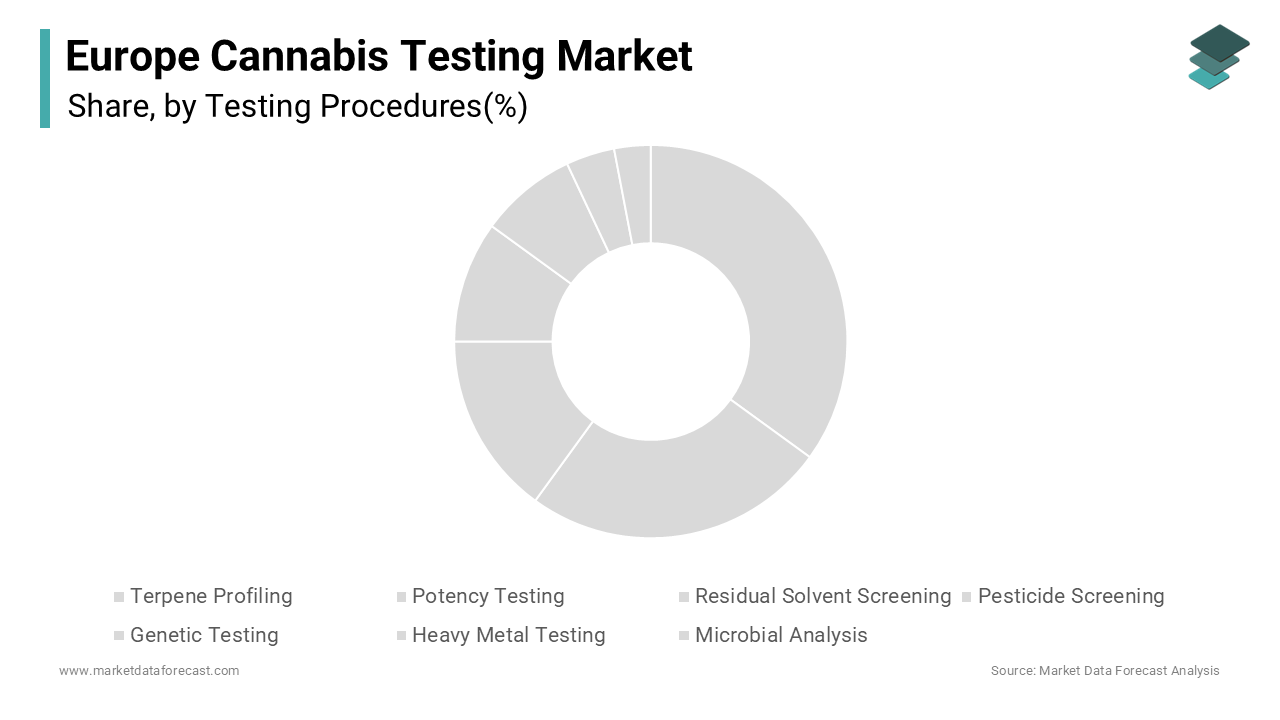
On the other side, the terpene profiling segment is estimated to showcase a CAGR of 13.3% during the forecast period in the European market owing to the emerging understanding of the entourage effect, where terpenes synergize with cannabinoids to enhance therapeutic benefits and influence user experience. Consumers and medical professionals are increasingly interested in specific terpene profiles, such as myrcene, limonene, and linalool, for their potential anti-inflammatory, anxiolytic, and sedative properties. According to the Journal of Cannabis Research, recent studies have highlighted the clinical significance of terpenes in modulating the effects of tetrahydrocannabinol and cannabidiol, prompting greater demand for detailed profiling. As per the European Industrial Hemp Association, breeders are developing cultivars with specific terpene signatures to target niche medical and wellness markets, requiring precise analytical characterization. The rise of premium CBD products in the cosmetics and aromatherapy sectors also fuels this growth, as brands use terpene content as a key marketing differentiator. Advanced gas chromatography-mass spectrometry techniques now allow for the identification of minor terpenes that were previously overlooked, adding depth to product specifications. Laboratories are expanding their capabilities to offer comprehensive terpene panels catering to both medical and recreational segments. This scientific validation of terpene benefits transforms them from mere aromatic compounds into active therapeutic agents, driving increased testing volumes.
By End User Insights
The laboratories segment held the dominant position in the Europe cannabis testing market by holding the major share of the European market in 2025 as they are the primary entities equipped with the specialized instrumentation and accreditation required to perform compliant analyses. These facilities serve as the central hubs for testing services, catering to cultivators, processors, and distributors who lack internal analytical capabilities. According to the International Organization for Standardization, the number of ISO 17025 accredited laboratories specializing in cannabis analysis in Europe has grown by 25% since 2020, reflecting the professionalization of the sector. As per the European Accreditation body, over 60% of all cannabis-related tests are conducted by independent third-party laboratories to ensure impartiality and regulatory acceptance. These laboratories invest heavily in advanced equipment, such as liquid chromatography-tandem mass spectrometry systems, and maintain skilled personnel capable of interpreting complex data. They offer a comprehensive suite of services, including potency, pesticide, and microbial testing under one roof, providing convenience and efficiency for clients. The reliance on external labs is driven by the high capital cost of setting up internal testing facilities and the need for unbiased results for regulatory submissions. Laboratories also play a crucial role in method development and validation, helping industry stakeholders navigate evolving regulatory requirements. Their central role in the supply chain ensures steady demand and revenue stability, making them the leading end-user segment in terms of service consumption and infrastructure investment.
On the other side, the drug manufacturers and dispensaries segment is estimated to record a CAGR of 12.2% during the forecast period in the European market owing to the increasing commercialization of medical cannabis and the expansion of retail channels for cannabidiol products across Europe. As pharmaceutical companies develop cannabis-based medicines, they require extensive testing for clinical trials, stability studies, and quality control to meet Good Manufacturing Practice standards. According to the European Medicines Agency, the number of clinical trials involving cannabis derivatives increased by 40% in 2023, driving demand for specialized analytical services. As per data from the Association of European Dispensaries, the number of licensed cannabis pharmacies in Germany and the Netherlands has doubled in the past three years, each requiring regular inventory testing to ensure product freshness and potency. Dispensaries are increasingly conducting in-house screening or partnering with labs for rapid turnover to meet customer expectations for fresh and verified products. The shift toward branded and packaged cannabis products, rather than bulk flower, necessitates more frequent testing for label claim verification and shelf-life determination. This commercial maturation transforms testing from a regulatory hurdle into a competitive advantage for manufacturers and retailers seeking to build brand trust. The integration of testing into supply chain management by these entities drives significant growth in service adoption.
By Product And Software Insights
The analytical instruments segment dominated the market by holding the largest share of the European cannabis testing market in 2025 due to the high capital investment required for sophisticated equipment such as chromatographs and spectrometers. These instruments form the backbone of any compliant testing laboratory, enabling the precise detection and quantification of cannabinoids, pesticides, and contaminants. According to the European Laboratory Equipment Market data, the sale of high-performance liquid chromatography and gas chromatography systems accounted for approximately 55% of total spending in cannabis testing facilities in 2024. As per Agilent Technologies, a leading supplier, the demand for integrated analytical solutions in Europe grew by 15% annually as laboratories upgrade to meet stricter regulatory limits for residues. The complexity of cannabis matrices requires high-resolution instruments capable of separating closely related compounds, which drives the preference for premium equipment from established manufacturers. Laboratories must regularly replace or upgrade instruments to maintain accuracy and throughput capacity amidst growing sample volumes. The initial purchase price of these systems, combined with maintenance contracts and calibration services, contributes significantly to market revenue. Additionally, the need for specialized detectors such as mass spectrometers for trace-level analysis further increases the average transaction value. While consumables are recurring costs, the substantial upfront investment in instruments defines the market structure. This segment’s dominance reflects the technical rigor required in cannabis analytics and the continuous modernization of laboratory infrastructure across Europe.
However, the software solutions segment is expected to witness a promising CAGR of 15.5% during the forecast period owing to the increasing need for digital laboratory information management systems and blockchain-enabled traceability platforms to manage complex data workflows. According to Gartner, the adoption of cloud-based laboratory software in the life sciences sector, including cannabis testing, increased by 25% in 2023, as labs seek to improve data accessibility and collaboration. As per LabWare, a leading provider, implementations of electronic laboratory notebooks and sample tracking systems in European cannabis labs grew by 35% annually, driven by regulatory demands for data integrity and audit trails. Software solutions automate routine tasks, reduce manual entry errors, and facilitate seamless reporting to regulatory authorities. The integration of artificial intelligence for data analysis and predictive maintenance further enhances the value proposition of these digital tools. Laboratories are transitioning from paper-based records to fully digital environments to improve efficiency and compliance. The rise of seed-to-sale tracking requirements in various European jurisdictions necessitates robust software infrastructure to link testing data with supply chain movements. This digital transformation accelerates the adoption of specialized software, making it the most dynamic segment in the market.
REGIONAL ANALYSIS
Germany Cannabis Testing Market Analysis
Germany dominated the cannabis testing market in Europe in 2025 and is expected to reinforce its position as the premier clinical and commercial gateway for compliant cannabis testing in Europe over the next few years, holding a significant share of the Europe Cannabis Testing Market driven by its status as the largest medical cannabis market in Europe and strict regulatory oversight. The country’s federal institute for drugs and medical devices enforces rigorous quality standards for all cannabis products, requiring comprehensive testing for potency, pesticides, and microbes. According to the German Ministry of Health, the number of prescribed medical cannabis patients exceeded 100,000 in 2024, creating substantial demand for batch release testing services. As per the Association of German Laboratories, the volume of cannabis samples analyzed increased by 20% year on year, reflecting the expanding domestic cultivation and import activities. German laboratories are among the most advanced in Europe, utilizing state-of-the-art instrumentation to meet pharmacopoeia requirements. The legalization of controlled adult-use discussions has further stimulated investment in testing infrastructure to prepare for potential recreational markets. Strict limits on residual solvents and heavy metals compel producers to engage accredited labs for every production cycle. The presence of major pharmaceutical companies developing cannabis-based medicines adds to the demand for clinical-grade testing. Germany’s central location and robust logistics network also make it a hub for testing services for neighboring countries. This combination of regulatory stringency, market size, and technological advancement positions Germany as the dominant force in the European cannabis testing landscape.
United Kingdom Cannabis Testing Market Analysis
The United Kingdom is poised to rapidly expand its domestic analytical capabilities and cannabinoid safety frameworks over the next few years, maintaining a strong position in the Europe Cannabis Testing Market supported by its well-established medical cannabis framework and growing industrial hemp sector. Since the rescheduling of cannabis-based products for medicinal use in 2018, the UK has developed a robust ecosystem of licensed producers and testing facilities. According to the UK Home Office, over 50 licenses for cannabis cultivation and processing have been issued, requiring mandatory third-party testing for compliance. As per the Association of the Cannabinoid Industry, the market for CBD and medical cannabis testing grew by 18% in 2024, driven by consumer demand for verified safe products. UK laboratories adhere to strict ISO standards and are recognized for their expertise in analyzing complex matrices such as oils and edibles. The exit from the European Union has led to divergent regulations, prompting local producers to rely more heavily on domestic testing services rather than cross-border arrangements. The National Health Service prescriptions for medical cannabis continue to rise, increasing the volume of regulated products requiring quality control. Additionally, the UK is a leader in hemp-derived CBD innovation, driving demand for novel food safety assessments. The presence of world-class research institutions further supports method development and validation. This mature regulatory environment and active industry participation ensure the UK remains a key player in the regional testing market.
Netherlands Cannabis Testing Market Analysis
The Netherlands is anticipated to maintain its highly influential role as an international testing logistics hub and a center for rapid screening innovation over the next few years, serving as a hub for innovation and export-oriented testing in the Europe Cannabis Testing Market leveraging its long history with cannabis policy and advanced agricultural technology. Although recreational use remains tolerated, the medical cannabis sector is highly regulated and export-focused, requiring stringent testing to meet international standards. According to the Dutch Office of Medicinal Cannabis, the country exports significant quantities of medical cannabis to Germany and other European nations, each batch requiring comprehensive analytical certification. As per the Netherlands Enterprise Agency, the number of licensed cannabis growers has increased by 15% in recent years, driving demand for local testing services to support export compliance. Dutch laboratories are pioneers in developing rapid testing methods and terpene profiling techniques that cater to premium market segments. The country’s expertise in greenhouse cultivation leads to high-quality biomass that requires precise potency and contaminant analysis to maintain its reputation. The presence of major international testing companies with regional headquarters in the Netherlands facilitates knowledge transfer and technology adoption. Regulatory clarity and government support for life sciences innovation create a favorable environment for testing infrastructure development. The focus on quality and consistency makes Dutch testing services highly sought after by international buyers. This strategic position ensures the Netherlands remains a critical node in the European cannabis testing network.
COMPETITIVE LANDSCAPE
The competition in the Europe Cannabis Testing Market is characterized by a mix of large multinational testing organizations and specialized regional laboratories creating a fragmented yet highly competitive landscape. Global players leverage their scale and resources to offer comprehensive testing suites and international accreditation which appeals to multinational pharmaceutical companies and large cultivators. These firms compete on technology leadership investing in cutting edge instrumentation to provide faster and more accurate results. Regional specialists often differentiate themselves through deep local regulatory knowledge and personalized customer service catering to small and medium sized enterprises. Price competition is moderate as quality and accreditation status are primary decision factors for clients due to strict legal requirements. The market sees continuous innovation as companies develop new methods for analyzing novel cannabinoids and terpenes to meet emerging consumer demands. Regulatory complexity acts as a barrier to entry favoring established players with proven compliance track records. Collaborations between testing firms and technology providers are becoming common to enhance digital capabilities and supply chain traceability. This dynamic environment drives continuous improvement in service quality and operational efficiency as participants strive to capture market share in a rapidly evolving industry.
KEY MARKET PLAYERS
A few of the promising companies operating in the European cannabis testing market include
- Agilent Technologies, Inc.
- Shimadzu Corporation
- Waters Corporation
- PerkinElmer, Inc.
- AB SCIEX LLC
- Millipore Sigma
- Restek Corporation
- LabLynx, Inc. (U.S.)
- Steep Hill Labs, Inc.
- PharmLabs, LLC
- SC Laboratories, Inc.
- Digipath Labs, Inc.
- CannaSafe Analytics
- Accelerated Technology Laboratories, Inc.
Top Players In The Europe Cannabis Testing Market
Eurofins Scientific SE
Eurofins Scientific SE stands as a global leader in bioanalytical testing services with a robust presence in the Europe Cannabis Testing Market through its specialized life science divisions. The company leverages its extensive network of accredited laboratories across Germany France and the Netherlands to offer comprehensive analytical solutions including potency profiling pesticide screening and microbial analysis. Eurofins recently invested heavily in expanding its high performance liquid chromatography capabilities to meet the stringent requirements of the European Pharmacopoeia for medical cannabis. By integrating advanced mass spectrometry technologies the firm ensures precise detection of trace contaminants thereby supporting regulatory compliance for pharmaceutical clients. Its strategic focus on digital laboratory information management systems enhances data integrity and turnaround times for customers. Eurofins actively collaborates with regulatory bodies to shape testing standards ensuring its methods remain at the forefront of scientific rigor. This commitment to quality and innovation solidifies its reputation as a trusted partner for cultivators and pharmaceutical manufacturers seeking reliable and defensible test results in a complex regulatory landscape.
SGS SA
SGS SA contributes significantly to the Europe Cannabis Testing Market by providing world leading inspection verification and testing services tailored to the evolving needs of the cannabis industry. The company operates state of the art facilities in key European markets offering specialized testing for industrial hemp and medical cannabis products to ensure safety and compliance. SGS has recently strengthened its market position by launching dedicated cannabis testing packages that address specific regional regulations such as those in Switzerland and the United Kingdom. These packages include detailed terpene profiling and heavy metal analysis which are critical for product differentiation and consumer trust. The firm emphasizes sustainability by promoting eco friendly extraction methods and verifying supply chain transparency through its certification services. SGS actively engages in industry forums to share best practices and educate stakeholders on emerging regulatory changes. Its global reach combined with local expertise allows it to serve multinational clients efficiently while maintaining high standards of accuracy and reliability. This holistic approach positions SGS as a vital enabler of quality and safety in the European cannabis sector.
Bureau Veritas SA
Bureau Veritas SA plays a pivotal role in the Europe Cannabis Testing Market by delivering specialized testing and certification services that support the integrity of cannabis derived products. The company utilizes advanced analytical techniques to assess potency purity and safety ensuring that products meet strict European health and safety standards. Bureau Veritas has recently expanded its laboratory capacity in Central Europe to accommodate the growing demand from medical cannabis producers and CBD manufacturers. It introduced innovative rapid testing solutions that reduce turnaround times without compromising accuracy helping clients accelerate time to market. The firm also offers consulting services to help businesses navigate complex regulatory frameworks and achieve necessary certifications for international trade. By focusing on customer centric solutions and technological innovation Bureau Veritas enhances its value proposition in a competitive market. Its commitment to ethical practices and scientific excellence builds long term relationships with clients who prioritize quality and compliance. This strategic emphasis on comprehensive service offerings reinforces its position as a key player in the European cannabis testing ecosystem.
Top Strategies Used By Key Market Participants
Key players in the Europe Cannabis Testing Market employ several strategic approaches to maintain competitiveness and drive growth in this dynamic sector. Companies focus extensively on expanding their geographical footprint by establishing new accredited laboratories in emerging markets such as Poland and Spain to capture local demand. They invest heavily in advanced analytical technologies like tandem mass spectrometry to enhance sensitivity and accuracy for detecting trace contaminants. Strategic partnerships with regulatory bodies and industry associations help these firms stay ahead of evolving compliance requirements and influence standard setting processes. Diversification of service portfolios to include consulting and certification adds value for clients seeking end to end solutions. Digital transformation through the adoption of cloud based laboratory information management systems improves operational efficiency and data transparency. Acquisitions of smaller specialized labs allow larger entities to integrate niche expertise and expand their client base rapidly. Emphasis on sustainability and eco friendly testing methods aligns with broader corporate social responsibility goals and appeals to environmentally conscious stakeholders. These combined strategies enable companies to differentiate themselves and build resilient business models in a regulated environment.
MARKET SEGMENTATION
This research report on the European cannabis testing market is segmented and sub-segmented into the below categories.
By Testing Procedures
- Terpene Profiling
- Potency Testing
- Residual Solvent Screening
- Pesticide Screening
- Genetic Testing
- Heavy Metal Testing
- Microbial Analysis
By End-user
- Cannabis Cultivators
- Laboratories
- Drug Manufacturers & Dispensaries
- Research Institutes
By Product & Software
- Analytical Instruments
- Consumables
- Software
By Country
- UK
- France
- Spain
- Germany
- Italy
- Russia
- Sweden
- Denmark
- Switzerland
- Netherlands
- Turkey
- Czech Republic
- Rest of Europe