Europe Caravans Market Size, Share, Growth, Trends Research Report, Segmented By Type, Tourist, Booking, Mode, And By Region (U.K France, Germany, Spain, Italy, Sweden, Russia and Denmark, Switzerland, Netherlands, Turkey, Czech Republic and Rest of Europe), Industry Analysis Forecasts (2026 to 2034)
Market Size, 2025
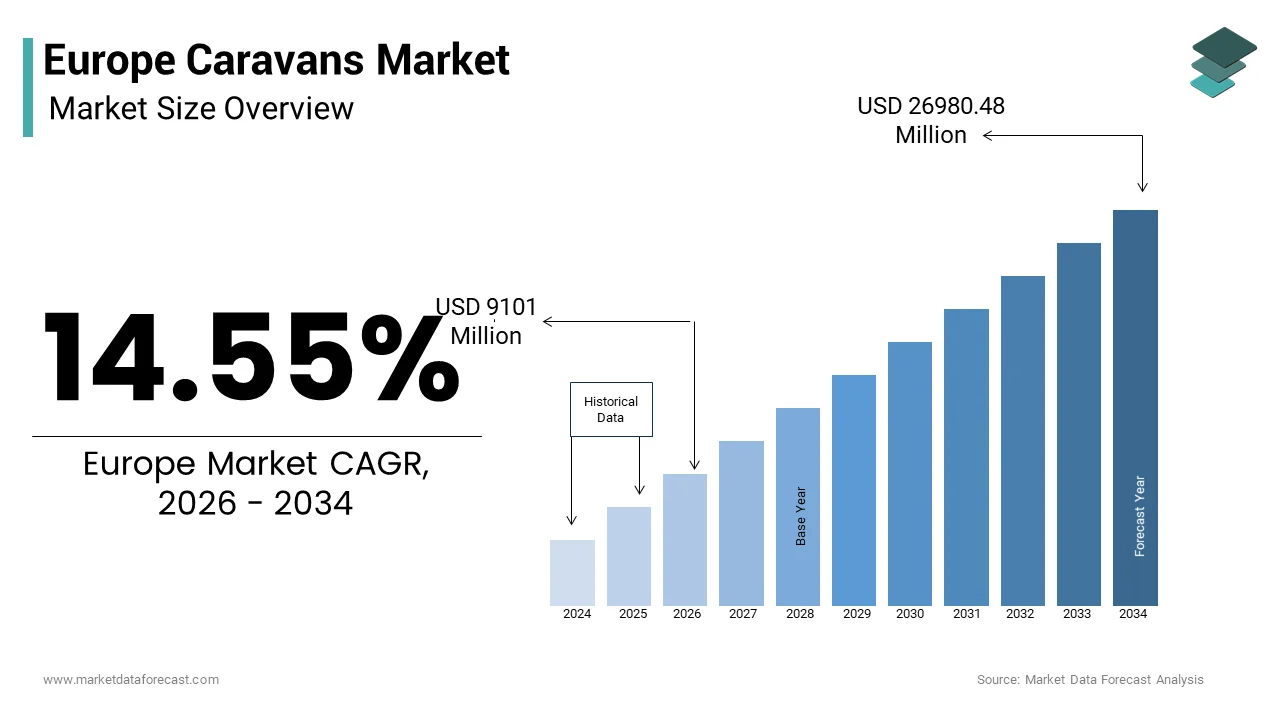
$7945 MnMarket Estimate, 2026
$9101 MnMarket Forecast, 2034
$26980 MnCAGR, 2026–2034
14.55%Europe Caravans Market Size
The Europe caravans market size was valued at USD 7945 million in 2025 and is anticipated to reach USD 9101 million in 2026 to reach USD 26980.48 million by 2034, growing at a CAGR of 14.55% during the forecast period from 2026 to 2034.
Current Introduction of the Europe Caravans Market
A caravan is a vehicle or trailer equipped for living in, typically towed by a car for camping and road trips, often called a mobile home. It provides amenities like beds and kitchens. These units range from lightweight entry level models to luxury caravans equipped with integrated kitchens, bathrooms, and climate control systems. The sector is deeply embedded in European holiday culture, particularly in Western and Northern regions where domestic and cross border road trips remain popular. According to European Travel Commission 2024 data, road trips and regional travel saw strong demand, with a significant portion of travellers focusing on "cool-cations" and value-for-money, while a portion of travellers surveyed explicitly planned a road trip. As per Eurostat preliminary 2024 data, the EU recorded a record-breaking year with over 3 billion nights spent in tourist accommodation, with camping grounds, recreational vehicle parks, and trailer parks accounting for approximately 13.5% of these nights. This resurgence reflects a post pandemic shift toward private, self contained travel experiences that offer flexibility and contactless lodging. Regulatory frameworks such as the EU Type Approval for trailers and national weight restrictions further shape design and usage patterns across member states.
MARKET DRIVERS
Resurgence of Domestic and Regional Road Tourism
The sustained preference for localized and flexible travel has become a cornerstone for the growth of the Europe caravans market. In the wake of global health concerns and geopolitical uncertainties, travelers increasingly favor self contained, private mobility solutions that minimize exposure to crowded transport hubs and shared accommodations. According to recent sentiment monitoring for intra-European travel, overall travel intentions remain strong across all generations, with a high proportion of Europeans planning leisure trips in the near future and a significant interest in exploring less-touristic destinations. Recent registration data confirms that the German caravanning market continues to perform at historically high levels, with significant demand for both new and pre-owned leisure vehicles reflecting the enduring popularity of this travel style. France and the Netherlands continue to be major markets for outdoor hospitality, supported by an extensive infrastructure of campsites where a high percentage of international visitors choose camping and caravanning as their primary lodging option. This behavioral shift is not merely cyclical but structural, driven by aging populations seeking accessible travel and younger families prioritizing cost effective, nature oriented vacations. The caravan thus functions not as a niche product but as a mainstream enabler of Europe’s evolving tourism identity.
Advancements in Lightweight Materials and Energy Efficiency
Technological innovation in construction and onboard systems has significantly broadened the appeal and accessibility of modern caravans, which further propels the expansion of the Europe caravans market. Manufacturers are increasingly utilizing composite panels and aluminum, alongside advanced insulation techniques, to combat the increased weight of modern amenities, with a focus on improving fuel efficiency and improving towability by smaller vehicles. The German Association of the Automotive Industry (VDA) continuously monitors the evolution of vehicle types, focusing on the integration of lighter materials to meet changing regulatory and efficiency standards in the caravan market. Concurrently, solar panel integration, lithium iron phosphate batteries, and smart energy management systems allow off grid operation for extended periods, a critical factor for wild camping and remote destinations. The European Alternative Fuels Observatory notes the rapid expansion of EV infrastructure and charging points in Scandinavian and Alpine regions, supporting the trend towards electrified transportation. These enhancements align with broader EU sustainability goals while addressing practical consumer pain points around fuel consumption, maneuverability, and self sufficiency, thereby lowering the barrier to entry for first time buyers and expanding the total addressable market beyond traditional enthusiasts.
MARKET RESTRAINTS
Stringent National Regulations on Towing and Vehicle Dimensions
Significant disparities in national towing laws, despite harmonized EU type approval standards, restrain the growth of the Europe caravans market. This creates fragmentation and consumer hesitation across the single market. Spain and Italy enforce standard European maximum width dimensions for caravans, requiring drivers to hold a higher-category license for heavier vehicle combinations, similar to many other EU countries. In contrast, Germany and the Netherlands generally adhere to standard European width restrictions for caravans and follow consistent EU license requirements for towing capacities, rather than allowing wider units under standard licenses. According to research, these inconsistencies deter cross border purchases and complicate fleet planning for rental operators. Moreover, urban congestion charges and low emission zone restrictions in cities like London, Paris, and Brussels often exclude caravans due to their classification as non essential trailers, limiting access to key logistical hubs. Despite concerns about increasing vehicle weights, 2024 data shows the European caravan market continues to experience strong growth, driven by high demand for leisure vehicles. This regulatory patchwork undermines the EU’s principle of free movement and constrains economies of scale for manufacturers aiming to serve pan European demand with standardized models.
High Acquisition and Maintenance Costs Relative to Alternatives
The upfront investment required for a new caravan remains a significant barrier to mass adoption and to the Europe caravans market. This is particularly true among younger demographics and middle-income households. New caravan prices vary significantly, with basic, smaller models retailing for under 20,000 euros, while high-end or luxurious, larger models frequently exceed 50,000 euros, excluding the towing vehicle. Contrary to claims of a decline, European household expenditure on recreational goods, including camping equipment, has shown a positive growth trend in 2024, despite inflationary pressures. Additionally, annual ownership expenses for a caravan, including insurance, storage, servicing, and optional site fees, typically total in the thousands, with fees varying based on storage location and service frequency. These expenses compete directly with alternative vacation options such as short-term apartment rentals or package tours, which offer comparable flexibility at lower capital outlay. Caravans generally exhibit slower depreciation rates compared to motorized vehicles, retaining a significant portion of their value over the first few years. The market may stagnate among cost-conscious consumers, even with high aspirational interest, if affordable financing or subscription models are not available.
MARKET OPPORTUNITIES
Growth of Caravan Sharing and Subscription Models
The emergence of peer to peer and corporate managed sharing platforms unlocks large potential to democratize access and reduce ownership barriers, which is expected to boost the growth of the Europe caravans market. Major peer-to-peer recreational vehicle platforms in Europe have significantly scaled their operations and merged to become dominant market leaders. These services enable trial without commitment, appealing to occasional users who may later convert to buyers. Simultaneously, subscription models offering all inclusive packages, vehicle, insurance, maintenance, and seasonal storage, are gaining traction among urban professionals. Research indicates a growing interest among younger demographics in flexible, subscription-based access to campervans. Automakers like Renault and Dacia are exploring white label partnerships with mobility startups to bundle caravan access with vehicle leases. This asset light approach aligns with broader shifts toward access over ownership, potentially unlocking millions of new users who previously viewed caravanning as financially or logistically prohibitive.
Integration with Sustainable Tourism and Off Grid Infrastructure
The expansion of eco certified caravan sites and renewable energy ready infrastructure is creating a virtuous cycle of demand and environmental responsibility, which provides fresh prospects for the Europe caravans market. The European Camping Group is actively accelerating the adoption of sustainability certifications, such as the EU Ecolabel or Green Key, across their portfolio to reduce environmental impact. National tourism boards in Sweden, Austria, and Portugal have launched “green caravan route” initiatives, mapping low impact itineraries with designated wild camping zones compliant with Leave No Trace principles. Research by the ifEU Institute indicates that caravanning generally presents a lower climate footprint compared to traditional air-and-hotel holidays. Manufacturers are responding with cradle to cradle design philosophies, using recycled upholstery, bio based composites, and modular components for easy repair. This alignment with EU Green Deal objectives not only enhances brand reputation but also qualifies businesses for public funding under rural development programs. Conscious travel is now entering the mainstream. This shift positions the caravan at the forefront of sustainable leisure innovation due to its potential as a low footprint mobility solution.
MARKET CHALLENGES
Aging Fleet and Limited Aftermarket Modernization Pathways
A significant portion of the region’s caravan stock is outdated, which challenges the growth of the Europe caravans market. According to European Caravan Federation reports, a significant portion of the European leisure vehicle fleet consists of older models, reflecting a trend of long-term durability in the market. These older models lack modern safety features such as ALKO ATC trailer control, LED lighting, and electronic stability systems now mandated for new registrations in several countries. Retrofitting is often cost prohibitive or technically unfeasible due to obsolete chassis designs and incompatible electrical architectures. Consequently, many owners delay replacement despite deteriorating comfort and efficiency, suppressing new vehicle demand. Unlike automobiles, caravans have no standardized diagnostic interface or software update capability, hindering incremental upgrades. DEKRA safety inspections indicate that older caravans are more likely to show mechanical wear in critical areas such as braking and coupling systems. This aging inventory creates a dual challenge: it discourages new buyers wary of second hand reliability, while simultaneously reducing the trade in value of newer models. Without coordinated scrappage incentives or modular retrofit kits, the market faces prolonged stagnation in replacement cycles.
Shortage of Skilled Labor and Production Bottlenecks
The caravan manufacturing sector confronts acute workforce shortages that constrain output, innovation capacity, and the expansion of the Europe caravans market. According to reports from the German Engineering Federation (VDMA), the mechanical engineering sector is experiencing significant difficulty in filling technical positions, including those specialized in production and assembly. This scarcity stems from an aging artisanal workforce and limited vocational training pipelines focused on recreational vehicle assembly. The bespoke nature of caravan production, requiring manual craftsmanship alongside precision engineering, makes automation difficult, unlike high volume automotive lines. Consequently, lead times for custom orders stretch to six months or more, frustrating consumers accustomed to faster delivery expectations. The Czech Republic and Poland, key subcontracting hubs, face similar labor gaps exacerbated by migration to higher paying sectors. Data from the European Skills Index indicates that while overall European skill systems are improving, specific industrial sectors face ongoing challenges in adapting to rapid technological changes and implementing digital transformation. These structural bottlenecks limit responsiveness to demand surges and hinder the integration of advanced technologies such as smart home systems or hydrogen ready appliances, ultimately capping the industry’s growth ceiling despite robust underlying interest.
REPORT COVERAGE
| REPORT METRIC | DETAILS |
| Market Size Available | 2025 to 2034 |
| Base Year | 2025 |
| Forecast Period | 2026 to 2034 |
| CAGR | 14.55% |
| Segments Covered | By Type, Tourist, Booking Mode, By Country |
| Various Analyses Covered | Global, Regional & Country Level Analysis, Segment-Level Analysis, DROC, PESTLE Analysis, Porter’s Five Forces Analysis, Competitive Landscape, Analyst Overview on Investment Opportunities |
| Regions Covered | UK, France, Spain, Germany, Italy, Russia, Sweden, Denmark, Switzerland, Netherlands, Turkey, the Czech Republic, and the Rest of Europe |
| Market Leaders Profiled | Apollo RV Holidays, Hymer AG, Caravans International (CI Group), Campervan North America LLC, Knaus Tabbert Group, Cruise America, Road Bear RV, Britz, Motohom, Roadsurfer GmbH, McRent, Camperbug, DRM |
SEGMENTAL ANALYSIS
By Type Insights
In 2025, the conventional towable caravans segment held the majority share of the Europe caravans market. The supremacy of the segment is attributed to lower acquisition costs, greater towing flexibility, and established cultural preferences in key markets like Germany, France, and the Netherlands. Towable caravans offer a significantly more accessible entry point for leisure travelers compared to motorhomes. New motorhomes typically command significantly higher entry and premium prices compared to new caravans across Europe, with market demand for motorhomes driving higher overall expenditure. Additionally, caravan owners can utilize their existing vehicle for daily commuting, avoiding the depreciation and insurance costs associated with a dedicated motorhome. A large portion of European households possess passenger vehicles capable of towing, which supports the accessibility of lightweight caravanning as a leisure option. Maintenance is also simpler and cheaper, with standard automotive garages able to service the towing vehicle while caravan-specific repairs are limited to periodic checks. This economic pragmatism makes caravans the preferred choice for middle income families and retirees seeking affordable, repeatable holiday solutions without long term financial commitment. Western and Northern Europe feature a robust, extensive infrastructure of camping sites and dedicated parking spots, facilitating widespread, established caravanning habits. Countries like Germany and France maintain national networks of low cost municipal sites with full hookups, many located near natural attractions or historic towns. France maintains one of the largest networks of approved, high-quality camping sites in Europe, supporting both short-term and long-term leisure travel. Generational transmission plays a key role, grandparents often introduce grandchildren to caravan holidays, reinforcing emotional loyalty. Unlike motorhomes, which are perceived as complex and fuel intensive, caravans symbolize simplicity and connection to nature. This cultural resonance, combined with decades of infrastructure investment, ensures sustained demand even as newer mobility models emerge.
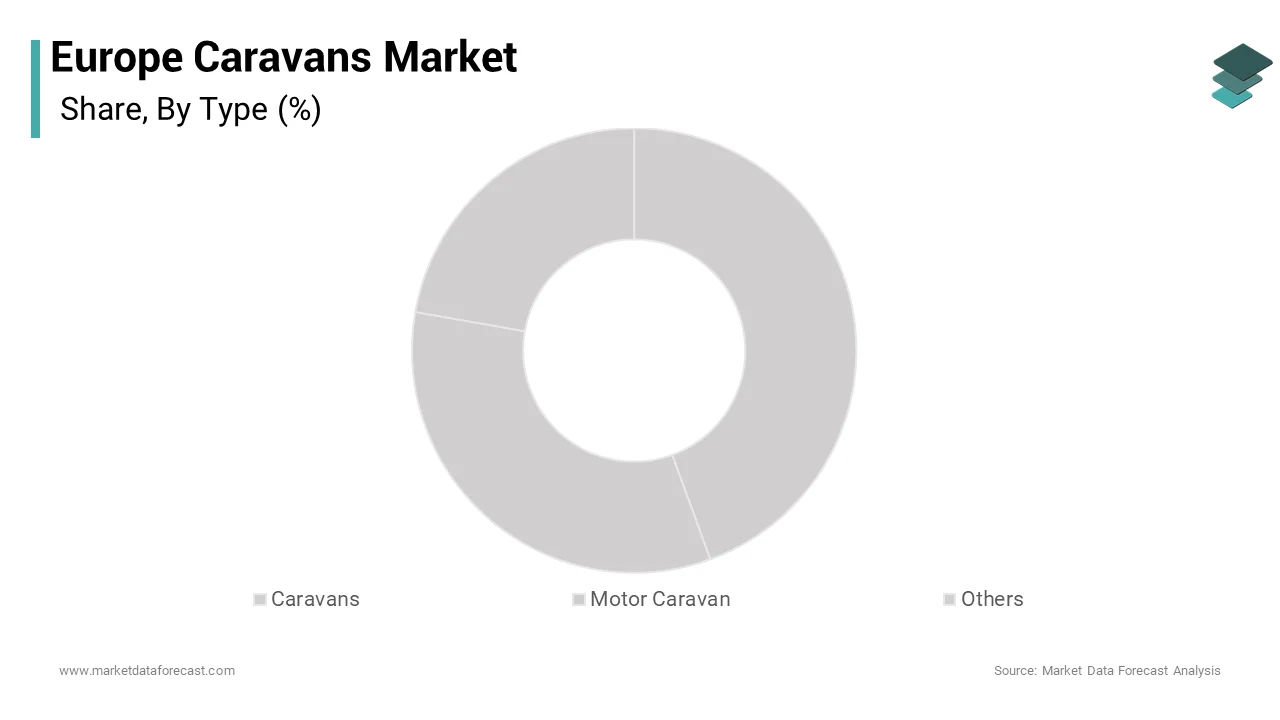
The motor caravan segment is likely to experience the fastest CAGR of 5.4% between 2026 and 2034 due to the demand for integrated mobility and comfort among aging populations, and technological advancements in electrification and autonomous features. Motor caravans are gaining traction among Europe’s aging yet active demographic, who prioritize convenience, accessibility, and self sufficiency. An increasing share of older EU residents is driving demand for independent travel vehicles that offer enhanced comfort and accessibility, such as motorhomes. Motorhomes provide seamless door to door mobility, crucial for those with reduced physical agility. German retirees are increasingly choosing motorhomes for extended vacations due to the convenience and ease of use they provide. Manufacturers like Hymer and Rapido have responded with lowered thresholds, automated leveling systems, and medical emergency connectivity features. As life expectancy rises and healthspan extends, this cohort’s spending power and desire for independent travel will continue to drive premium motorhome adoption across Southern and Central Europe. Recent innovations are transforming motor caravans from utilitarian vehicles into high tech mobile living spaces. Mercedes Benz and Fiat Professional now offer chassis with 48 volt mild hybrid systems that power onboard appliances without idling, reducing emissions and noise. A growing proportion of new motorhomes are equipped with advanced power solutions, such as solar panels and lithium batteries, to facilitate off-grid, multi-day travel. Furthermore, integration of Level 2 driver assistance systems, including adaptive cruise control and lane keeping assist, enhances safety on long Alpine or Scandinavian routes. Companies like Dethleffs have piloted hydrogen ready prototypes compatible with upcoming EU refueling corridors. These advancements align with the EU’s Green Deal objectives while addressing historical pain points around fuel consumption and driving fatigue. The rise of digital nomadism means tech-forward RVs now appeal to a broader demographic, including younger professionals seeking flexibility.
By Tourist Insights
The domestic tourism segment dominated the Europe caravans market and accounted for a substantial share in 2025. The dominance of the segment is driven by post pandemic risk aversion, cost sensitivity, and robust national caravan park networks. European travelers increasingly favor familiar destinations that minimize logistical complexity and currency exposure. European travelers are increasingly choosing domestic road trips to escape airport congestion and maintain better control over their personal health and hygiene. Caravans enable point to point exploration of national parks, coastal regions, and rural heritage sites without reliance on commercial lodging. Caravanning in Germany has experienced a significant, sustained surge in popularity, with nationwide overnight stays in caravans and motorhomes recording substantial growth above 2019 levels, particularly benefiting popular rural regions. Similarly, France’s “Tourisme de Proximité” initiative promoted regional itineraries, boosting occupancy at inland sites. This trend is reinforced by rising airfare volatility and baggage fees, making self contained road travel economically rational. Domestic caravanning thus functions as a resilient core demand layer, less susceptible to global disruptions than international flows. Despite Schengen Area freedoms, practical hurdles deter international caravan tourism. Varying national rules on trailer width, speed limits, and required safety equipment create compliance uncertainty. For instance, Spain mandates rear fog lights on all trailers, while Italy requires fire extinguishers and reflective vests, items not standard in Northern European models. Complex and changing cross-border regulations, including new entry requirements, have caused some travelers to reconsider or abandon plans for traveling outside their home country. Additionally, toll systems differ widely, France uses electronic tags, Austria requires vignettes, and Switzerland enforces manual checks, complicating route planning. Language barriers at campsites and limited multilingual support further reduce confidence. These frictions make domestic travel not just preferable but pragmatically simpler, cementing its dominance in usage patterns.
The international caravan segment is on the rise and is expected to be the fastest growing segment in the market by witnessing a CAGR of 6.1% during the forecast period owing to revival of transnational road trip culture and visa liberalization, and harmonization of cross border camping infrastructure. Post pandemic, there is a renewed appetite for epic European road journeys such as the Atlantic Coast Route or the Balkan Loop, facilitated by improved visa access and digital travel coordination. The EU’s ETIAS pre authorization system will streamline entry for non EU citizens, encouraging longer multi country itineraries. According to studies, the European caravanning market has maintained high registration levels and stable growth, with a notable, sustained popularity in motor caravan segments following post-pandemic declines, while overall interest in rental vehicles remains strong among international visitors. Companies like Indie Campers and Motorhome Republic have expanded fleets in Lisbon, Berlin, and Athens, offering English language support and GPS routed itineraries. Social media platforms amplify aspirational content, #VanLife posts featuring Alpine passes or Croatian coastlines drive demand among experience seeking millennials. This renaissance of continental exploration transforms caravans from static holiday units into dynamic tools of cultural discovery. Pan European initiatives are reducing friction in international caravan travel. European camping and caravanning providers are increasing investments in eco-friendly infrastructure, with a rising focus on integrating electric vehicle charging capabilities and improving amenities to meet modern, sustainable tourism demands. Apps like Park4Night and Campercontact now integrate real time availability, user reviews, and regulatory alerts in multiple languages. The European Camping Group’s interoperable booking platform allows seamless reservations from Norway to Greece. Furthermore, bilateral agreements between France and Spain or Germany and Austria enable mutual recognition of safety inspections. Improved infrastructure and the popularity of motorhomes allow travelers to stay longer, which in turn increases the economic contribution of camping tourism to local regions. As infrastructure convergence accelerates, the psychological and logistical barriers to cross border travel erode, unlocking pent up demand for transnational leisure mobility.
COUNTRY ANALYSIS
Germany Caravans Market Analysis
Germany outperformed other countries in the Europe caravans market and occupied a 34.5% share in 2025. It serves as the global epicenter for manufacturing innovation and domestic consumption. The country’s market is known for a unique dual role where the country acts as both the largest producer of high-end motorhomes and caravans and the most voracious consumer base on the continent. One of the main market drivers is the deeply ingrained camping culture supported by a large number of certified campsites, which creates a robust ecosystem for recreational vehicle ownership. Data from the German Caravaning Trade Association (CIVD) shows that new registrations of motorhomes and caravans remained at a high level in 2024, demonstrating steady interest in mobile leisure despite broader economic challenges. The presence of industry giants like Knaus Tabbert and Hymer ensures continuous technological advancements in lightweight construction and energy efficiency, setting global standards. Furthermore, the demographic shift toward an active aging population has spurred demand for premium models equipped with advanced comfort features and automation. According to the German Caravaning Trade Association (CIVD), the appeal of caravanning is expanding as a younger generation of families increasingly adopts outdoor holidays, leading to a more diverse and youthful customer base. The government's support for domestic tourism infrastructure further bolsters the sector, making Germany the indispensable anchor of the European recreational vehicle industry.
United Kingdom Caravans Market Analysis
The United Kingdom was the second largest country in the Europe caravans market, with a 19.4% share in 2025. This growth of the UK market is driven by its mature touring heritage and a dense network of holiday parks that cater specifically to static and touring caravans. The market status here shows a strong preference for static caravans located in dedicated coastal and rural resorts, which differs from the continental focus on mobile touring units. A major driving factor is the limited availability of affordable overseas holidays for many households, prompting a surge in "staycations" that has sustained high demand for domestic leisure accommodation. The National Caravan Council (NCC) confirm that the UK holiday park and camping sector provides a substantial multibillion-pound boost to the national economy, supporting a significant number of jobs in the manufacturing and tourism sectors. The proliferation of glamping sites and luxury caravan parks has modernized the sector, attracting affluent consumers seeking high-specification accommodations without the hassles of international travel. According to sources, while the domestic tourism market faced pressure from rising living costs, the demand for self-catering and outdoor accommodations remains a central pillar of the UK’s visitor economy. Additionally, the development of fully serviced seasonal sites with year-round amenities has extended the usage period, enhancing the value proposition for owners. The strong resale market and established financing options further lower entry barriers, ensuring the UK remains a critical volume driver in the regional landscape.
France Caravans Market Analysis
France is also a major player in the Europe caravans market, owing to its position as the premier holiday destination that drives significant seasonal demand for rental and owner-occupied units. The market status in this region is heavily influenced by its status as the world's leading tourist destination, which fosters a massive rental fleet of mobile homes and caravans along the Mediterranean and Atlantic coasts. The primary driver is the extensive network of campsites, many of which are rated four or five stars, offering premium facilities that attract millions of visitors annually. Findings from the Federation of Outdoor Hospitality (FNHPA) indicate that the sector continues to achieve record-breaking levels of overnight stays, with rental accommodations like mobile homes representing a major share of total bookings. The French government's initiative to promote rural tourism has led to investments in upgrading campsite infrastructure, thereby increasing capacity and appeal. Furthermore, the growing trend toward long-term camping and semi-permanent residency among retirees has created a stable market for high-quality static units. According to reports from the Federation of Outdoor Hospitality (FNHPA), sales of new mobile homes for professional rental fleets have seen a rise as park operators invest in higher-quality offerings to satisfy the ongoing demand for outdoor vacations. The combination of favorable climate, diverse landscapes, and a strong hospitality culture ensures France remains a pivotal hub for caravan utilization and investment.
Italy Caravans Market Analysis
Italy grew steadily in the Europe caravans market. It is renowned for its vibrant camping culture centered around its extensive coastline and lake districts which attract both domestic and international tourists. The market here sees a high concentration of premium campsites in regions like Veneto, Tuscany, and Lombardy, where caravans and motorhomes are integral to the summer tourism economy. A key accelerator of this market is the strong tradition of family camping holidays, which has persisted for generations and continues to drive steady ownership rates despite fluctuating economic conditions. The manufacturing sector, led by companies like Trigano and Dethleffs (via Italian plants), benefits from proximity to this robust domestic market and export channels. The integration of agritourism with camping sites has also opened new niches for eco-friendly and rustic caravan experiences. As per studies, the push for sustainable tourism has encouraged the adoption of solar-powered and water-efficient caravan models, aligning with broader environmental goals while maintaining Italy's reputation for style and quality in the sector.
Sweden Caravans Market Analysis
Sweden is predicted to expand significanly in the Europe caravans market during the forecast period. It will function as a specialized leader in all-season and winter-ready recreational vehicles tailored to Nordic climatic conditions. The market status in this region is unique due to the high demand for caravans capable of withstanding harsh winters, which has fostered a niche industry focused on superior insulation, heating systems, and durability. A major driving factor is the Swedish cultural concept of "friluftsliv" or open-air life, which encourages year-round outdoor activities and drives consistent ownership across all demographics. The domestic manufacturing base, including brands like Kabe and Adria (distributed heavily here), specializes in high-end four-season models that command premium prices in export markets. The government's investment in maintaining public access rights and developing wilderness campsites further supports this lifestyle. As per research, the trend toward electrification and off-grid capabilities in Swedish caravan designs is setting new benchmarks for sustainability, ensuring the country remains a vital and innovative segment of the European market.
COMPETITIVE LANDSCAPE
The Europe caravans market features a mix of established manufacturers, regional specialists, and emerging rental platforms competing on innovation, sustainability, and accessibility. Legacy brands leverage engineering heritage and distribution networks to dominate premium segments, while value oriented players target first time buyers through cost efficient designs. Intense rivalry exists in weight reduction, energy autonomy, and smart features, with rapid iteration cycles driven by consumer feedback and regulatory shifts. The rise of peer to peer sharing platforms introduces non traditional competition, pressuring OEMs to explore subscription models. Fragmented national regulations on towing and dimensions complicate pan European standardization, favoring companies with agile production and localized compliance expertise. Despite high barriers to entry due to capital intensity and skilled labor shortages, the market remains dynamic as players balance tradition with technological transformation to capture evolving leisure mobility demand.
KEY MARKET PLAYERS
A most dominating players that are in the Europe caravans market are
- Apollo RV Holidays
- Hymer AG
- Caravans International (CI Group)
- Campervan North America LLC
- Knaus Tabbert Group
- Cruise America
- Road Bear RV
- Britz
- Motohom
- Roadsurfer GmbH
- McRent
- Camperbug
- DRM
Top Players In The Market
- Headquartered in Germany, Hymer AG is a leading European manufacturer of caravans and motorhomes with a strong global footprint across North America, Australia, and Asia. The company offers a diverse portfolio under brands like Eriba, Bürstner, and Sunlight, catering to both entry level and luxury segments. Hymer has intensified its focus on lightweight construction and energy autonomy, integrating lithium battery systems and solar roofs across its 2025 model range. In 2024, the company launched its “Smart Living” platform featuring IoT enabled climate and security controls, enhancing user experience for digital nomads and retirees alike. This innovation reinforces Hymer’s reputation for engineering excellence and positions it at the forefront of connected caravan solutions in Europe.
- Based in the United Kingdom, Caravans International is a major player in the European towable caravan sector through its Swift and Sprite brands. The company emphasizes affordability, durability, and family oriented design, serving a broad demographic across Western Europe. CI Group has invested heavily in sustainable manufacturing, achieving ISO 14064 certification for carbon footprint management at its Cottingham facility in 2024. The company also introduced modular interior systems that allow post purchase customization, reducing waste and extending product life. These initiatives align with EU circular economy principles while strengthening customer loyalty through personalization and environmental responsibility.
- Knaus Tabbert, headquartered in Germany, operates premium caravan and motorhome brands including Knaus, Weinsberg, and T@B. The group is known for its aluminum frame technology and aerodynamic designs that improve towing efficiency and fuel economy. In 2025, Knaus Tabbert expanded its production capacity in Slovakia to meet rising demand from Southern and Eastern Europe. The company also partnered with Siemens to develop smart energy management systems that optimize solar charging and appliance usage. By combining German engineering with scalable manufacturing and digital integration, Knaus Tabbert has solidified its position as an innovator in high performance recreational vehicles across the continent.
Top Strategies Used By The Key Market Participants
Key players in the Europe caravans market are prioritizing lightweight material innovation to enhance fuel efficiency and broaden vehicle compatibility for towing. They are integrating renewable energy systems such as solar panels and lithium batteries to support off grid travel and align with sustainability mandates. Digitalization through IoT platforms enables remote monitoring of security, climate, and energy use, appealing to tech savvy travelers. Companies are expanding production in Central and Eastern Europe to reduce costs while maintaining quality. Additionally, they are developing modular and customizable interiors to extend product lifespans and reduce waste, thereby supporting circular economy objectives and deepening consumer engagement beyond initial purchase.
MARKET SEGMENTATION
This research report on the Europe caravans market is segmented and sub-segmented into the following categories.
By Type
- Caravans
- Motor Caravan
- Others
By Tourist
- Domestic
- International
By Booking Mode
- Direct Booking
- Travel Agents & Tour Operators
- Online Booking Marketplaces
By Country
- UK
- France
- Spain
- Germany
- Italy
- Russia
- Sweden
- Denmark
- Switzerland
- Netherlands
- Turkey
- Czech Republic
Frequently Asked Questions
Why are caravans becoming popular again among European travelers?
Flexible road travel appeals to people who want independence from fixed hotel bookings.
What makes caravans different from motorhomes in practical use?
Caravans are towable units that can be detached while the vehicle is used separately.
Why did domestic tourism boost caravan demand in Europe?
Travel restrictions encouraged people to explore regional destinations by road.
How does seasonal tourism influence caravan sales patterns?
Demand typically rises before summer when families plan extended holidays.
Why are lightweight caravans attracting new buyers?
Smaller vehicles can tow them without requiring heavy-duty upgrades.
How do European campsite networks support caravan growth?
Well-developed camping infrastructure makes long-distance touring convenient.
What feature matters most to first-time caravan buyers?
Ease of towing and interior layout often influence purchase decisions.
Why are manufacturers focusing on energy-efficient caravan designs?
Travelers increasingly value off-grid capability and lower fuel consumption.
How does resale value affect caravan purchasing decisions?
Strong second-hand markets make caravans a long-term lifestyle investment.
Why are digital booking platforms influencing caravan travel?
Online campsite reservations simplify trip planning across countries.
Access the study in MULTIPLE FORMATS
Purchase options starting from
$ 2000
Didn’t find what you’re looking for?
TALK TO OUR ANALYST TEAM
Need something within your budget?
NO WORRIES! WE GOT YOU COVERED!
Call us on: +1 888 702 9696 (U.S Toll Free)
Write to us: sales@marketdataforecast.com