- Product Description Description
- Table of Contents TOC
- List of Table & Figure LOT
- Get Free Sample PDF Sample PDF
Market Size, 2025
$25.57 BnMarket Estimate, 2026
$26.63 BnMarket Forecast, 2034
$36.81 BnCAGR, 2026–2034
4.13%Europe Cardiac Rhythm Management Market Report Summary
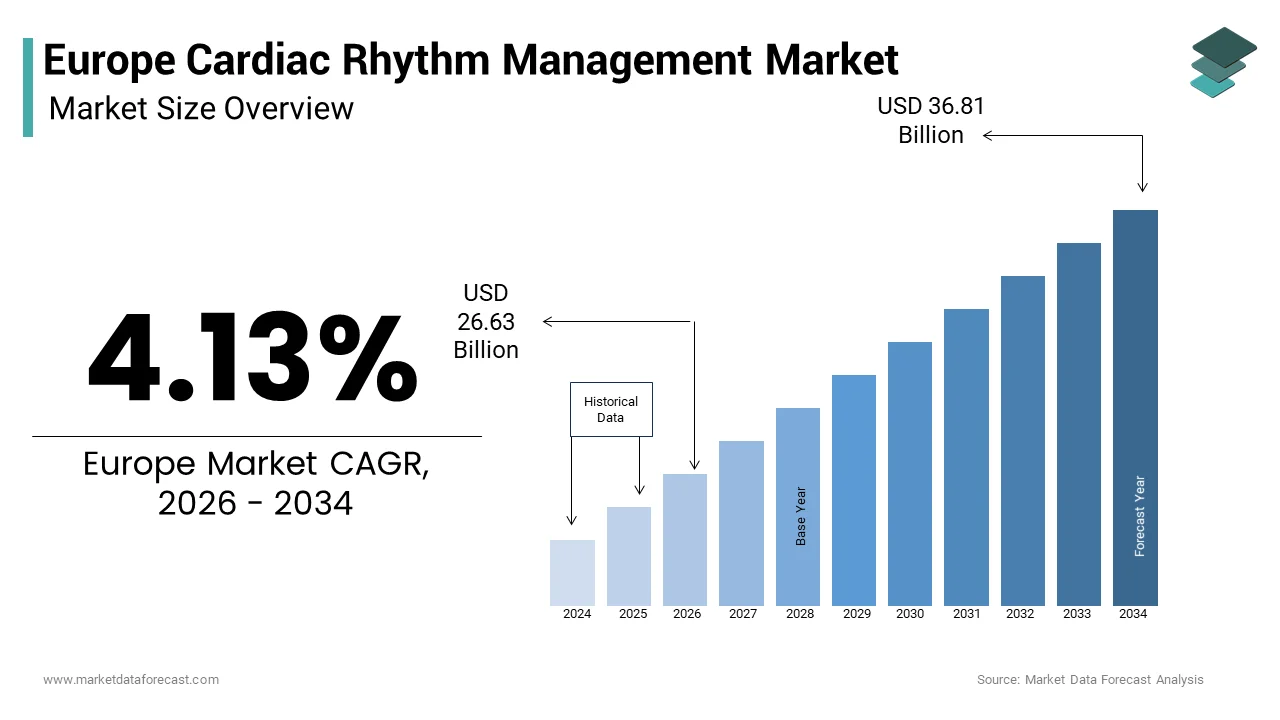
The Europe cardiac rhythm management market size was valued at USD 25.57 billion in 2025, is estimated to reach USD 26.63 billion in 2026, and is projected to reach USD 36.81 billion by 2034, growing at a CAGR of 4.13% during the forecast period from 2026 to 2034. The growth of the Europe cardiac rhythm management market is driven by the rising prevalence of cardiovascular diseases, increasing geriatric population, and growing adoption of advanced cardiac monitoring and implantable devices. Technological advancements in pacemakers and defibrillators, along with improved healthcare infrastructure and awareness regarding early diagnosis, are further supporting market expansion across Europe.
Key Market Trends
- Increasing adoption of minimally invasive cardiac devices is improving patient outcomes and reducing recovery time.
- Rising demand for remote cardiac monitoring solutions is enhancing real-time patient management and follow-up care.
- Technological advancements in implantable devices such as MRI-compatible pacemakers and smart defibrillators are gaining traction.
- Growing investments in healthcare infrastructure and cardiac care centers across Europe are boosting market growth.
- Increasing focus on early detection and preventive cardiology is driving the use of advanced diagnostic technologies.
Segmental Insights
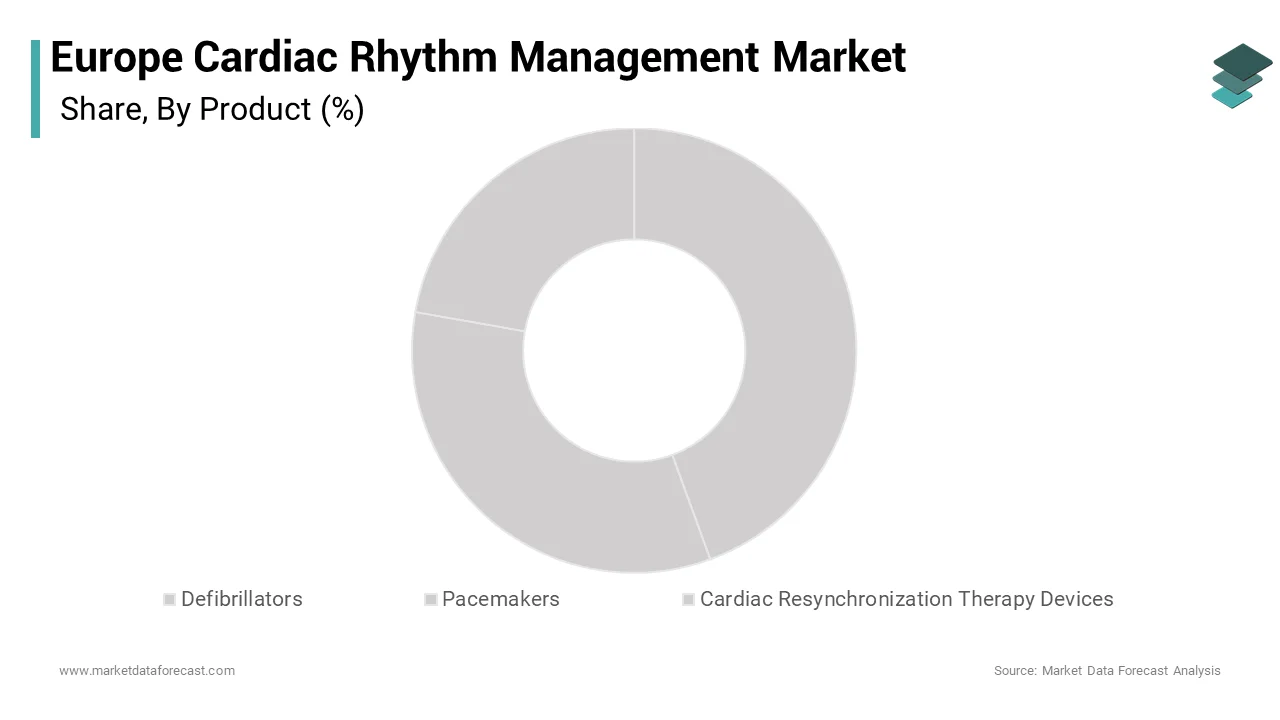
Based on product, the pacemaker segment dominated the Europe cardiac rhythm management market by holding a share of 42.35% in 2025. The segment’s leadership is attributed to the widespread use of pacemakers in managing arrhythmias and other heart rhythm disorders, along with continuous technological improvements enhancing device efficiency and patient safety.
Regional Insights
The Europe cardiac rhythm management market is witnessing steady growth across major countries.
- Germany led the market by accounting for 26.8% of the share in 2025, driven by its advanced healthcare system and high adoption of cardiac technologies.
- The United Kingdom followed with 18.4% of the market share, supported by increasing healthcare spending and awareness programs.
- France is expected to register the fastest CAGR in the coming years due to rising demand for advanced cardiac treatments. Italy is anticipated to present significant growth opportunities.
- Spain is projected to grow steadily with the modernization of healthcare infrastructure and improved access to cardiac care services.
Competitive Landscape
The Europe cardiac rhythm management market is highly competitive, with key players focusing on innovation, product development, and strategic collaborations to strengthen their market position. Companies are investing in advanced technologies, expanding their product portfolios, and enhancing distribution networks to cater to the growing demand for cardiac care solutions. Prominent players in the Europe cardiac rhythm management market include Abbott, Biotronik SE & Co KG, Boston Scientific Corporation, Cardinal Health, LivaNova PLC, Medtronic, Schiller AG, Shenzhen Mindray Biomedical Electronics Co. Ltd, and Zoll Medical Corporation.
Europe Cardiac Rhythm Management Market Size
The Europe cardiac rhythm management market size will reach USD 25.57 billion in 2025 and is anticipated to reach USD 26.63 billion in 2026 to reach USD 36.81 billion by 2034, growing at a CAGR of 4.13% during the forecast period from 2026 to 2034.
Current Introduction of the Europe Cardiac Rhythm Management Market
The cardiac rhythm management is an ecosystem of medical devices and therapeutic solutions designed to diagnose, monitor, and treat irregular heartbeats known as arrhythmias. This sector includes implantable cardioverter defibrillators, pacemakers, cardiac resynchronization therapy devices, and emerging leadless systems that regulate electrical activity within the heart. According to Eurostat, individuals aged 65 and older constituted 21.3% of the total European Union population in 2024, creating a substantial patient pool susceptible to atrial fibrillation and heart failure. The European Society of Cardiology indicates that atrial fibrillation alone affects approximately 11 million people across Europe, a figure projected to double by 2060 due to increasing life expectancy. National health systems prioritize early detection and management to reduce the burden of stroke and sudden cardiac death, which remain leading causes of mortality. As per the World Health Organization Regional Office for Europe, cardiovascular diseases account for over 45% of all deaths in the region, necessitating robust infrastructure for rhythm management. This environment fosters innovation while ensuring patient safety through advanced monitoring capabilities and minimally invasive implantation techniques that are becoming standard care protocols across major European healthcare institutions.
MARKET DRIVERS
Escalating Prevalence of Atrial Fibrillation and Conduction Disorders
The surging incidence of atrial fibrillation and other conduction abnormalities directly linked to the aging demographic profile of the continent is greatly influencing the growth of Europe cardiac rhythm management market. As the population ages, the structural and electrical integrity of the heart deteriorates, leading to a higher frequency of arrhythmic events that require device intervention. According to the European Heart Rhythm Association, the lifetime risk of developing atrial fibrillation for individuals over 55 years of age is approximately 25%, creating a massive addressable patient population for pacemakers and defibrillators. In 2024, data from the Global Burden of Disease Study revealed that hospital admissions related to arrhythmias in Western Europe increased by 8.5% compared to the previous year, highlighting the growing clinical demand. The correlation between age and disease prevalence is stark, with studies showing that the incidence of atrial fibrillation doubles with every decade of life after age 50. Furthermore, the rising prevalence of comorbidities such as hypertension and diabetes exacerbates cardiac electrical instability, further driving the need for rhythm management therapies. As per the International Diabetes Federation, over 60 million adults in Europe live with diabetes, a condition that significantly elevates the risk of sudden cardiac death and necessitates prophylactic implantable cardioverter defibrillator placement.
Advancements in Miniaturization and Leadless Technology Adoption
The rapid technological evolution toward miniaturized and leadless cardiac devices, which offer superior safety profiles and reduced complication rates compared to traditional systems is additionally fuelling the growth of Europe cardiac rhythm management market. Traditional transvenous leads are a common source of device failure and infection by prompting a strong clinical shift toward leadless pacemakers and subcutaneous defibrillators that eliminate these risks. According to a clinical registry published by the European Society of Cardiology in 2024, leadless pacemaker implants in Europe grew by 35% year over year as physicians increasingly adopt this technology for eligible patients. These devices are significantly smaller, often the size of a large vitamin capsule, and are implanted directly into the heart chamber via a catheter, which is avoiding the surgical pocket associated with conventional systems. This innovation reduces the risk of pocket infections which affect up to 2% of traditional implants and can be life threatening. As per data from the European Centre for Disease Prevention and Control, device related infections result in prolonged hospital stays averaging 14 days and substantial healthcare costs, making the infection resistant nature of leadless systems highly attractive to hospital administrators. Additionally, the development of MRI conditional devices allows patients to undergo essential diagnostic imaging without device interference, a feature now standard in over 90% of new implants in major European markets. The ability to remotely monitor these advanced devices also enhances patient management, allowing clinicians to detect issues before they become critical, thereby driving widespread adoption across the region.
MARKET RESTRAINTS
Stringent Regulatory Compliance Under EU MDR Framework
The implementation of the European Union Medical Device Regulation has introduced rigorous compliance requirements is limiting the growth of Europe cardiac rhythm management market. This regulatory framework demands extensive clinical data, post market surveillance, and traceability for all cardiac rhythm management devices, significantly extending the time and cost required to bring new products to market. The notified bodies responsible for conducting conformity assessments face a backlog, resulting in approval timelines that have extended by an average of 12 to 18 months compared to the previous directive. As per the MedTech Europe association, over 30% of small and medium sized device manufacturers reported delays in product launches in 2024 specifically attributed to the complexities of the new regulation. This bottleneck restricts the immediate availability of innovative therapies for patients and forces companies to allocate substantial resources to regulatory affairs rather than research and development. The requirement for unique device identification and enhanced post market clinical follow up adds layers of administrative burden that strain operational capacities.
High Procedural Costs and Reimbursement Pressures
The substantial cost associated with cardiac rhythm management procedures and the increasing pressure on national healthcare budgets is hindering the growth of Europe cardiac rhythm management market. Implantable devices such as defibrillators and cardiac resynchronization therapy systems represent a significant financial burden for single payer systems and insurance providers across the continent. According to the study, healthcare expenditure is under intense scrutiny, with many nations implementing strict cost containment measures that limit the reimbursement rates for high value medical devices. In several Eastern European countries, the reimbursement cap for a standard pacemaker implantation remains below the actual cost of advanced features, forcing clinicians to opt for basic models rather than physiologically superior options. As per study, budget constraints in 2024 led to a 10% reduction in the approval rate for premium cardiac resynchronization therapy devices in Southern Europe, delaying access for heart failure patients. The economic disparity between Western and Eastern Europe creates a fragmented market where access to cutting edge rhythm management technologies is uneven. Hospitals facing financial deficits may delay upgrading equipment or postpone non-emergency implantations, directly impacting procedure volumes. Furthermore, the rising cost of raw materials and manufacturing has squeezed margins, making it difficult for manufacturers to offer competitive pricing without compromising quality.
MARKET OPPORTUNITIES
Integration of Artificial Intelligence for Predictive Analytics
The integration of artificial intelligence and machine learning algorithms into cardiac rhythm management devices to shift care from reactive to predictive models is creating new opportunities for the growth of Europe cardiac rhythm management market. Modern devices equipped with AI capabilities can analyze vast amounts of physiological data to predict arrhythmic events before they occur, enabling timely interventions that prevent hospitalizations and improve survival rates. The capability allows clinicians to initiate anticoagulation therapy earlier, which is significantly reducing the risk of stroke in high risk patients. The opportunity extends to remote patient monitoring platforms where AI triages data alerts, reducing the workload on healthcare professionals by filtering out non critical notifications. As per the Digital Health Coalition Europe, the adoption of AI enabled remote monitoring could reduce heart failure related hospital readmissions by 25%, generating substantial cost savings for healthcare systems. Manufacturers who embed proprietary AI software into their hardware can create recurring revenue streams through software subscriptions and data analytics services. The ability to provide personalized therapy adjustments based on real time data analysis enhances patient outcomes and strengthens the value proposition of advanced devices. This technological convergence opens new market segments focused on digital therapeutics and positions companies as partners in holistic patient management rather than mere hardware suppliers.
Expansion of Subcutaneous and Wearable Monitoring Solutions
The growing demand for less invasive monitoring and treatment options for the expansion of subcutaneous and wearable cardiac rhythm management solutions is additionally enhancing the growth of Europe cardiac rhythm management market. Patients and physicians increasingly prefer devices that avoid transvenous leads due to the associated long-term complications, driving interest in subcutaneous implantable cardioverter defibrillators and wearable cardioverter defibrillator vests. According to the European Resuscitation Council, the use of wearable cardioverter defibrillators as a bridge to decision or transplant increased by 28% in 2024, reflecting a shift toward flexible and temporary protection strategies. These wearable solutions are particularly valuable for patients with transient risks or those awaiting device implantation, expanding the treatable population beyond chronic candidates. The development of patch-based monitors that can be worn for weeks provides continuous data without the need for surgery, facilitating earlier diagnosis of intermittent arrhythmias. As per data from the European Society of Cardiology, the diagnostic yield for atrial fibrillation doubled when using extended wear patch monitors compared to traditional 24 hour Holter monitors. This diagnostic clarity drives subsequent therapeutic interventions, creating a funnel effect that boosts the overall market. The comfort and cosmetic appeal of smaller, wire free devices also improve patient adherence and quality of life by making them attractive to younger demographics. Companies that innovate in this space can capture market share by addressing the unmet needs of patients who are ineligible for or reluctant to undergo traditional implantation procedures.
MARKET CHALLENGES
Critical Shortage of Specialized Electrophysiologists
The acute shortage of specialized cardiac electrophysiologists required to perform complex device implantations and manage advanced therapies is one of the challenges for the growth of Europe cardiac rhythm management market. The training pathway for electrophysiology is lengthy and rigorous, resulting in a supply of specialists that fails to keep pace with the growing demand for arrhythmia treatments. According to the European Board of Cardiovascular Medicine, there is a deficit of approximately 1500 qualified electrophysiologists across the European Union as of 2024, with significant disparities between urban centers and rural regions. This scarcity leads to prolonged waiting times for patients requiring device implants, with some nations reporting average wait periods exceeding six months for non-urgent procedures. As per the survey, the retirement rate of senior electrophysiologists is outpacing the entry of new fellows, exacerbating the gap in expertise. The complexity of modern devices such as conduction system pacing and leadless implants requires highly specialized skills that general cardiologists may not possess, that is further limiting the pool of capable operators. This bottleneck restricts procedure volumes and delays the adoption of innovative technologies that require advanced technical proficiency. Hospitals struggle to recruit and retain talent, often losing specialists to private sectors or other regions with better compensation packages.
Cybersecurity Vulnerabilities in Connected Devices
The increasing connectivity of cardiac rhythm management devices to hospital networks and patient smartphones introduces severe cybersecurity challenges that threaten patient safety and data integrity. The cybersecurity vulnerabilities in connected devices is to degrade the growth of Europe cardiac rhythm management market. As devices become more integrated with digital health ecosystems, they become potential targets for malicious cyberattacks that could theoretically alter device settings or steal sensitive patient data. According to the European Union Agency for Cybersecurity, medical devices were among the top three targeted sectors for cyber incidents in 2024, with cardiac devices identified as high risk due to their life sustaining function. A successful breach could allow unauthorized actors to manipulate pacing parameters or deliver inappropriate shocks, posing a direct threat to patient life. The regulatory requirement for robust cybersecurity measures adds complexity and cost to the development lifecycle, delaying product launches. Manufacturers must invest heavily in encryption, authentication protocols, and continuous monitoring systems to mitigate these risks. The fear of liability and reputational damage from potential hacks makes hospitals cautious about adopting highly connected devices, slowing the deployment of advanced remote monitoring features.
REPORT COVERAGE
| REPORT METRIC | DETAILS |
| Market Size Available | 2025 to 2034 |
| Base Year | 2025 |
| Forecast Period | 2026 to 2034 |
| CAGR | 4.13% |
| Segments Covered | By Product By Country |
| Various Analyses Covered | Global, Regional & Country Level Analysis, Segment-Level Analysis, DROC, PESTLE Analysis, Porter’s Five Forces Analysis, Competitive Landscape, Analyst Overview on Investment Opportunities |
| Regions Covered | UK, France, Spain, Germany, Italy, Russia, Sweden, Denmark, Switzerland, Netherlands, Turkey, the Czech Republic, and the Rest of Europe |
| Market Leaders Profiled | Abbott, Biotronik SE & Co KG, Boston Scientific Corporation, Cardinal Health, LivaNova PLC, Medtronic, SchillerAG, Shenzhen Mindray Biomedical Electronics Co. Ltd, Zoll Medical Corporation |
SEGMENTAL ANALYSIS
By Product Insights
The pacemaker segment was accounted in holding 42.35 of the Europe cardiac rhythm management market share in 2025 owing to the high prevalence of bradycardia and heart block conditions among the aging European population, coupled with the established clinical guidelines that recommend pacing therapy as the standard of care for symptomatic patients. The rapid demographic aging across Europe which directly correlates with a higher incidence of conduction system diseases, such as sick sinus syndrome and atrioventricular block is elevating the growth of Europe cardiac rhythm management market. As life expectancy increases, the cumulative wear on the cardiac electrical system results in a larger pool of patients requiring permanent pacing to maintain adequate heart rates and prevent syncope. According to Eurostat, the proportion of individuals aged 80 and older in the European Union is projected to reach 15% by 2030, a demographic group where the prevalence of bradycardia exceeds 10%. The European Society of Cardiology reports that over 300,000 pacemaker implants are performed annually in Europe, with demand growing steadily by 3 to 4% each year. This growth is not merely due to new cases but also includes a significant volume of generator replacements as devices reach their elective replacement indicator. National health systems prioritize these procedures because untreated bradycardia leads to frequent falls, fractures, and reduced quality of life, placing a heavy burden on social care services. As per data from the survey, hip fractures resulting from fainting spells in the elderly cost European healthcare systems billions annually by making pacemaker implantation a cost effective preventive measure.
The Cardiac Resynchronization Therapy (CRT) devices segment is projected to witness a fastest CAGR of 7.4% from 2026 to 2034 with the widening of clinical indications to include patients with milder forms of heart failure and narrower QRS durations, driven by robust evidence demonstrating mortality benefits and quality of life improvements. Historically reserved for end stage heart failure patients, CRT is now recommended for individuals with moderate symptoms and left bundle branch block, significantly expanding the eligible patient pool. CRT devices address the mechanical dyssynchrony of the failing heart, improving pumping efficiency and reducing the strain on the myocardium. This compelling clinical outcome drives aggressive adoption by cardiologists and health payers who view CRT as a vital tool for managing the escalating heart failure epidemic.
COUNTRY ANALYSIS
Germany Cardiac Rhythm Management Market Analysis
Germany was the top performer in the Europe cardiac rhythm management market by holding 26.8% of share in 2025 by early adoption of advanced technologies and generous reimbursement policies that facilitate access to premium devices. The nation possesses one of the highest densities of electrophysiology laboratories in the world by ensuring that patients have timely access to implantation procedures. As per the German Society of Cardiology, over 85,000 pacemaker and defibrillator implants are performed annually in Germany, reflecting a high procedural volume per capita. The country's statutory health insurance system covers the full cost of cardiac rhythm management devices, including advanced features like remote monitoring and MRI compatibility, removing financial barriers for patients. Furthermore, Germany is a hub for medical device innovation, hosting research facilities of major global manufacturers who often launch new products there first. As per the German Medical Technology Association, investment in cardiovascular research and development within the country increased by 8% in 2024, fostering a culture of clinical excellence. The presence of comprehensive national registries ensures rigorous quality control and data driven improvements in patient care.
United Kingdom Cardiac Rhythm Management Market Analysis
The United Kingdom cardiac rhythm management market was positioned second with 18.4% of share in 2025. The influence of the National Institute for Health and Care Excellence, which sets rigorous evidence based guidelines that dictate device usage, across the nation. These guidelines ensure that effective therapies like cardiac resynchronization are deployed efficiently to patients who will benefit most. According to the British Heart Foundation, cardiovascular diseases remain the leading cause of death in the UK, with over 7 million people living with heart and circulatory conditions, providing a large addressable market. However, the government has initiated specific workforce training programs to increase the number of electrophysiologists. The private healthcare sector also plays a significant role, offering faster access to premium devices for insured patients.
France Cardiac Rhythm Management Market Analysis
France cardiac rhythm management market is likely to witness a fastest CAGR in coming years. The Haute Autorite de Sante, which evaluates and approves medical devices for reimbursement, ensuring that only clinically proven technologies reach patients is leveraging the growth of market. The country has one of the highest rates of implantable cardioverter defibrillator usage in Europe, driven by strong guidelines for primary prevention in post myocardial infarction patients. According to INSEE, the French National Institute of Statistics and Economic Studies, the population over 75 years old is expected to double by 2040, creating a future surge in demand for pacing therapies. The French Society of Cardiology reported that over 50,000 new devices were implanted in 2024, with a notable increase in cardiac resynchronization therapy procedures. The French healthcare system fully reimburses the cost of devices and follow up care by encouraging widespread adoption across all socioeconomic groups. Furthermore, France has been a pioneer in the adoption of telemedicine for device monitoring, with regulatory frameworks supporting remote consultations since 2018.
Italy Cardiac Rhythm Management Market Analysis
Italy cardiac rhythm management market is esteemed to have a prominent growth opportunity in coming years. The demographic profile as one of the oldest populations globally, which inherently drives high volumes of arrhythmia cases is also boosting the growth of segment. According to the Italian National Institute of Statistics, the median age in Italy reached 48 years in 2024, the highest in Europe, resulting in a prevalence of atrial fibrillation that exceeds 10% in the adult population. The Italian Federation of Cardiology notes that while the north performs implantation rates comparable to Germany, the south lags due to resource constraints, creating an opportunity for market expansion. Public funding through the National Health Service covers device costs, but budget caps in certain regions can delay the adoption of newer, more expensive technologies. As per data from the Ministry of Health, approximately 45,000 cardiac devices are implanted annually, with a growing trend towards leadless pacemakers in major centers like Milan and Rome. The country participates actively in European clinical trials, often serving as a key recruitment site for new device studies.
Spain Cardiac Rhythm Management Market Analysis
Spain cardiac rhythm management market growth is likely to grow with the modernization of healthcare infrastructure, increasing awareness of sudden cardiac death prevention, and a recovering economy that boosts elective procedure volumes. However, national initiatives to standardize care have begun to harmonize device access. The country has made significant strides in implementing public access defibrillation programs, which raises awareness and drives demand for implantable counterparts. Spain is also emerging as a hub for medical tourism within Europe, attracting patients from other regions for specialized electrophysiology procedures. The government has recently increased funding for digital health initiatives, facilitating the rollout of remote monitoring platforms for cardiac devices.
COMPETITIVE LANDSCAPE
The competition in the Europe cardiac rhythm management market is characterized by an oligopolistic structure featuring a few dominant multinational corporations alongside emerging niche players specializing in specific technologies. Intense rivalry exists among top contenders who compete primarily on technological superiority, clinical evidence, and the breadth of their remote monitoring ecosystems rather than price alone due to the critical nature of these life sustaining devices. Established giants leverage their extensive global resources and brand reputation to secure contracts for major hospital groups while smaller innovative firms focus on disrupting the status quo with breakthrough leadless or bioresorbable solutions. Innovation serves as a key battleground with firms racing to integrate artificial intelligence and predictive analytics into their devices to offer proactive care management. Regulatory compliance with the stringent European Union Medical Device Regulation acts as a significant barrier to entry ensuring that only manufacturers capable of meeting rigorous safety and performance standards can participate. Price pressure from centralized procurement groups remains a persistent challenge forcing producers to demonstrate clear value through reduced hospitalization rates and improved patient outcomes.
KEY MARKET PLAYERS
A dominating players that are in the Europe cardiac rhythm management market are
- Abbott
- Biotronik SE & Co KG
- Abbott Laboratories
- Boston Scientific Corporation
- Cardinal Health
- LivaNova PLC
- Medtronic
- SchillerAG
- Shenzhen Mindray Biomedical Electronics Co. Ltd
- Zoll Medical Corporation
Top Players In The Market
- Medtronic plc stands as a global titan in the cardiac rhythm management sector with a profound influence on the European healthcare landscape. The company offers a comprehensive portfolio ranging from traditional pacemakers to advanced leadless systems and subcutaneous defibrillators. Medtronic contributes significantly by pioneering miniaturization technologies that reduce procedural invasiveness and improve patient quality of life. Recently the firm has strengthened its European position by launching next generation devices equipped with enhanced battery longevity and seamless remote monitoring capabilities. They have also expanded their clinical training programs for electrophysiologists across major European hubs to ensure optimal device utilization. Furthermore, Medtronic actively collaborates with European regulatory bodies to shape policies regarding digital health integration and cybersecurity standards for connected implants.
- Abbott Laboratories operates as a key innovator in the Europe cardiac rhythm management market through its transformative advancements in leadless pacing and atrial fibrillation management. The company revolutionized the sector with the introduction of the world smallest pacemaker which eliminates the need for surgical pockets and leads. Abbott contributes to the global market by driving the shift toward less invasive therapies that minimize complications and accelerate patient recovery. To bolster their standing in Europe the group has recently accelerated the rollout of their bioresorbable technology and integrated diagnostic algorithms that predict heart failure decompensation. They have also established strategic partnerships with European research institutions to validate the long-term efficacy of their novel devices in diverse patient populations. Additionally,Abbott has invested heavily in digital platforms that enable clinicians to monitor patient data in real time thereby improving care coordination.
- Boston Scientific Corporation serves as a dominant force in the Europe cardiac rhythm management market leveraging its robust pipeline of high-definition mapping systems and intelligent implantable devices. As a global leader the company supplies advanced solutions for complex arrhythmias including cardiac resynchronization therapy and wearable defibrillators. Their contribution to the worldwide market is characterized by a relentless focus on integrating artificial intelligence into device software to optimize therapy delivery. To strengthen their European footprint the corporation has recently introduced new generators with extended battery life and improved connectivity features that align with regional digital health mandates. They have also expanded their manufacturing and distribution networks in Central Europe to ensure rapid supply chain responsiveness for critical care products. Furthermore, Boston Scientific initiates large scale clinical registries in multiple European countries to gather real world evidence supporting the clinical value of their technologies.
Top Strategies Used By Key Market Participants
Key players in the Europe cardiac rhythm management market primarily employ strategies focused on continuous product innovation, strategic acquisitions, and digital ecosystem development to maintain competitive advantages. Companies are heavily investing in research and development to create miniaturized leadless devices and subcutaneous systems that reduce infection risks and improve patient comfort. Many firms are pursuing vertical integration by acquiring specialized software startups to enhance their remote monitoring platforms and artificial intelligence capabilities. Another prevalent strategy involves forming strategic alliances with hospital networks and academic institutions to conduct large scale clinical trials that validate the efficacy of new technologies under real world conditions. Additionally, participants are prioritizing regulatory compliance with the European Union Medical Device Regulation to ensure uninterrupted market access and build trust with healthcare providers. Sustainability initiatives such as reducing the carbon footprint of manufacturing processes and implementing recycling programs for expired devices are increasingly used to differentiate brands.
MARKET SEGMENTATION
This research report on the Europe cardiac rhythm management market is segmented and sub-segmented into the following categories.
By Product
- Defibrillators
- Implantable Cardioverter Defibrillators (ICDS)
- External Defibrillators (ED)
- Pacemakers
- Implantable Pacemakers (ICPS)
- External Pacemakers
- Cardiac Resynchronization Therapy Devices
- Cardiac Resynchronization Therapy Defibrillators (CRT-D)
- Cardiac Resynchronization Therapy Pacemakers (CRT-P)
By Country
- UK
- France
- Spain
- Germany
- Italy
- Russia
- Sweden
- Denmark
- Switzerland
- Netherlands
- Turkey
- Czech Republic