- Product Description Description
- Table of Contents TOC
- List of Table & Figure LOT
- Get Free Sample PDF Sample PDF
Market Size, 2025
$128.91 MnMarket Estimate, 2026
$136.72 MnMarket Forecast, 2034
$210.90 MnCAGR, 2026–2034
6.04%Europe Cedar Wood Market Report Summary
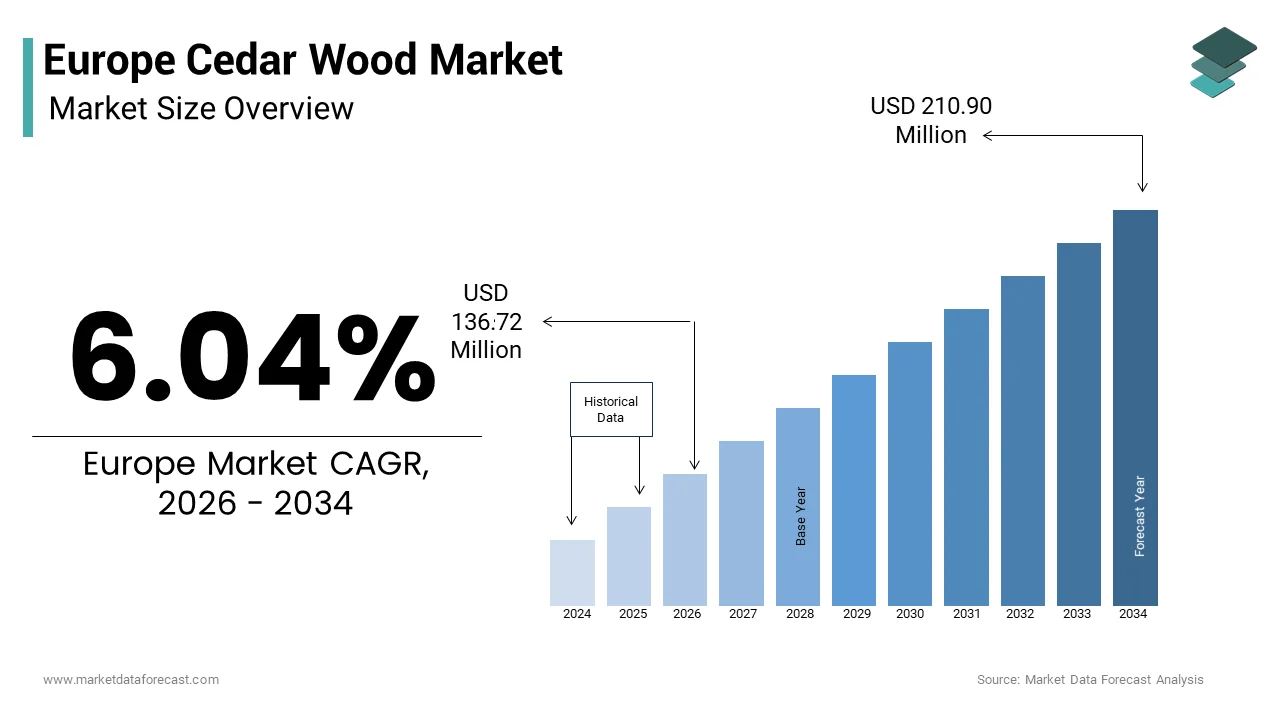
The Europe cedar wood market was valued at USD 128.91 million in 2025, is estimated to reach USD 136.72 million in 2026, and is projected to reach USD 210.90 million by 2034, growing at a CAGR of 6.04% during the forecast period from 2026 to 2034. The growth of the Europe cedar wood market is driven by increasing demand for durable, lightweight, and naturally resistant wood materials across construction and interior applications. Cedar wood’s inherent resistance to decay, moisture, and insects, along with its aesthetic appeal, makes it highly suitable for residential construction, outdoor decking, cladding, and furniture. Additionally, rising investments in sustainable construction practices and eco-friendly building materials are further supporting market expansion across Europe.
Key Market Trends
- Rising demand for cedar wood in residential construction due to its durability, insulation properties, and natural resistance to pests and decay.
- Increasing preference for aesthetically appealing and premium wood materials in interior design and outdoor applications.
- Growing adoption of sustainable and certified timber aligned with green building regulations across Europe.
- Expansion of renovation and remodeling activities driving consistent demand for cedar wood products.
- Technological advancements in wood processing improving product quality, treatment, and longevity.
Segmental Insights
By Product
The rough sawn timber segment led the Europe cedar wood market in 2025. Its dominance is attributed to its wide usage in construction frameworks, structural applications, and further processing into finished wood products.
By Grade
The commercial grade segment held the majority share of 58.4% in 2025. The segment’s growth is driven by its cost-effectiveness and widespread application across residential and light commercial construction projects.
By End User
The residential segment dominated the Europe cedar wood market and accounted for a 62.7% share in 2025. The dominance is supported by growing housing construction, renovation activities, and demand for high-quality wood in home interiors and exteriors.
Regional Insights
The Europe cedar wood market is witnessing strong growth across key countries, supported by rising construction activities and increasing demand for premium wood materials.
- Germany led the market with an 18.9% share in 2025, driven by robust construction activity and strong demand for sustainable building materials.
- The United Kingdom accounted for 15.8% of the market, supported by renovation trends and increasing use of cedar wood in residential and commercial structures.
- France plays a significant role due to its diverse architectural landscape and growing tourism infrastructure, which drives demand for high-quality wood materials.
- Italy is progressing steadily, supported by its strong design heritage and expanding luxury real estate sector.
- Sweden is expected to witness notable growth during the forecast period, driven by sustainable forestry practices and increasing adoption of eco-friendly construction materials.
Competitive Landscape
The Europe cedar wood market is moderately competitive, with the presence of both regional and international players focusing on sustainable sourcing, product quality, and supply chain efficiency. Companies are emphasizing certified timber production, advanced processing technologies, and expanding their distribution networks to strengthen market presence. Strategic collaborations and product diversification are also key approaches adopted by market participants.
Prominent players in the Europe cedar wood market include Idaho Cedar Sales Co., Metsä Group, Stora Enso, UPM-Kymmene, Tennessee Cedar Products, Sierra Pacific Industries, British Columbia Cedar Ltd., Weyerhaeuser, US Lumber, Maibec, Freres Lumber Co. Inc., Western Red Cedar Lumber Association, Interior, Hampton Lumber, Holbrook Lumber, White Valley Lumber Mill, Jones Wholesale Lumber, Coastal Forest Products, Bear Creek Lumber, Duluth Timber Company, Superior Lumber, Marwood Ltd., Lignum Forest Products.
Europe Cedar Wood Market Size
The Europe cedar wood market size was valued at USD 128.91 million in 2025 and is anticipated to reach USD 136.72 million in 2026 to reach USD 210.90 million by 2034, growing at a CAGR of 6.04% during the forecast period from 2026 to 2034.
Current Introduction of The Europe Cedar Wood Market
Cedar wood is a versatile, durable, and highly aromatic softwood harvested from various species of coniferous trees. This distinct softwood is increasingly sought after for high end outdoor applications including decking fencing and garden structures due to its inherent durability against moisture and insect infestation. The material serves as a premium alternative to chemically treated woods aligning with the growing consumer preference for natural and sustainable building materials across the continent. According to Eurostat, the total volume of timber harvested in the European Union provides a massive resource base for the wood industry, though specialty woods like cedar represent only a small fraction of the market compared to dominant species like spruce and pine. The architectural sector in countries such as Germany France and the United Kingdom demonstrates a marked inclination towards using cedar for cladding and roofing shingles owing to its longevity and low maintenance requirements. According to the Food and Agriculture Organization of the United Nations global forest products consumption continues to rise with Europe maintaining a significant share of high value timber imports. The market dynamics are further influenced by stringent environmental regulations that favor responsibly sourced wood certified by schemes such as the Forest Stewardship Council. This regulatory landscape ensures that only legally harvested and sustainably managed cedar enters the supply chain thereby enhancing its market value and consumer trust while supporting broader ecological conservation goals within the region.
MARKET DRIVERS
Rising Demand for Sustainable and Eco Friendly Construction Materials
The escalating preference for environmentally responsible building materials acts as a primary factor for the expansion of the Europe cedar wood market. Consumers and architects are increasingly prioritizing materials that offer a lower carbon footprint and possess natural biodegradability. Cedar wood fits this criterion perfectly as it requires minimal chemical treatment compared to other softwoods thus reducing the release of volatile organic compounds into indoor and outdoor environments. According to the European Environment Agency the construction sector accounts for approximately 40 percent of total energy consumption and 36 percent of CO2 emissions in the European Union which has intensified the push for green building certifications such as BREEAM and LEED. These certifications often award points for the use of sustainable timber thereby driving demand for cedar in residential and commercial projects. Furthermore, as per the Confederation of European Paper Industries, the European market is making progress in the reuse and recycling of timber materials, reflecting a wider move toward sustainable consumption and the circular economy. This trend extends to structural timber where cedar’s long lifespan reduces the frequency of replacement and subsequent waste generation. The durability of cedar means that structures built with this material can last for decades without significant degradation thereby lowering the overall environmental impact over the lifecycle of the building. This alignment with sustainability goals makes cedar an attractive choice for developers aiming to meet strict environmental standards and appeal to eco conscious buyers who are willing to pay a premium for green credentials.
Growth in Outdoor Living and Landscaping Expenditures
The surge in expenditure on outdoor living spaces and landscaping projects significantly fuels the demand for cedar wood across households in the region and the growth of the Europe cedar wood market. The post pandemic era has seen a sustained interest in home improvement with particular focus on creating functional and aesthetically pleasing outdoor areas such as patios decks and pergolas. Cedar is highly favored in these applications due to its natural resistance to rot decay and insect damage which ensures longevity even in harsh weather conditions. According to Eurostat, the amount of money European households spend on keeping their homes in good condition has continued to rise, showing that property owners remain focused on improving and maintaining their living spaces. In countries like the United Kingdom and Germany where garden culture is deeply entrenched the demand for high quality fencing and decking materials remains robust. The Royal Horticultural Society indicates that gardening and outdoor leisure activities contribute substantially to the well being of residents which further incentivizes investment in durable outdoor infrastructure. Cedar’s lightweight nature and ease of workability also make it a preferred choice for DIY enthusiasts who constitute a significant portion of the market. Additionally the aesthetic appeal of cedar which weathers to a distinctive silver grey tone if left untreated or retains a rich warm hue when sealed adds significant visual value to properties. This combination of practical durability and visual charm ensures that cedar remains a top choice for homeowners looking to extend their living space outdoors thereby sustaining steady demand in the residential construction and renovation sectors.
MARKET RESTRAINTS
Stringent Environmental Regulations and Supply Chain Compliance
Strict environmental regulations and the complexity of ensuring supply chain compliance inhibit the expansion of the Europe cedar wood market. The European Union Timber Regulation prohibits the placement of illegally harvested timber on the EU market requiring operators to exercise due diligence to minimize the risk of illegal wood entering the supply chain. While this regulation aims to protect forests it also increases the administrative burden and costs for importers and distributors of cedar wood which is often sourced from regions outside Europe such as North America and Asia. According to the European Commission compliance with these regulations requires detailed documentation and traceability systems which can be particularly challenging for small and medium sized enterprises that lack the resources for extensive supply chain monitoring. Furthermore, while the EU Deforestation Regulation officially began its legal existence in 2023, its mandatory application was postponed to late 2025 and mid-2026 to allow companies more time to ensure their products are verified as deforestation-free. This regulation mandates geolocation data for the plots of land where the wood was harvested adding another layer of complexity to the procurement process. As per the World Wildlife Fund illegal logging remains a significant global issue accounting for up to 30 percent of all timber traded globally which necessitates rigorous verification processes. These regulatory hurdles can lead to delays in shipment and increased operational costs which may ultimately be passed on to consumers thereby reducing the competitiveness of cedar wood compared to locally sourced alternatives that are easier to verify. The need for continuous adaptation to evolving legal frameworks creates uncertainty and potential barriers to market entry for new players.
Volatility in Raw Material Prices and Logistics Costs
Fluctuations in raw material prices and elevated logistics costs are an impediment to the stability of the Europe cedar wood market. Cedar wood is largely imported into Europe from countries such as Canada the United States and Lebanon making it susceptible to global price volatility and supply chain disruptions. According to the International Monetary Fund global commodity prices have experienced significant fluctuations in recent years driven by factors such as geopolitical tensions currency exchange rate variations and changes in global demand. These price instabilities make it difficult for manufacturers and retailers to maintain consistent pricing strategies which can deter price sensitive consumers and contractors. Additionally the cost of transportation has remained elevated due to fuel price increases and logistical bottlenecks at major ports. As per the European Central Bank producer prices for wood and wood products saw notable increases in 2022 and 2023 partly due to higher energy and transport costs. These increased input costs squeeze profit margins for businesses involved in the cedar wood supply chain forcing them to either absorb the costs or pass them on to end users. The reliance on long distance shipping also exposes the market to risks associated with port congestion and labor strikes which can lead to delays and inventory shortages. Such unpredictability in supply and pricing undermines confidence among buyers who may opt for more stable and locally available alternatives such as treated pine or composite materials. The cumulative effect of these economic pressures restricts market growth and complicates long term planning for industry stakeholders.
MARKET OPPORTUNITIES
Expansion into High Value Architectural and Interior Design Applications
The integration of cedar wood into high value architectural and interior design projects offers a lucrative opportunity for the Europe cedar wood market growth. Architects and designers are increasingly recognizing the aesthetic versatility and acoustic properties of cedar making it suitable for both exterior cladding and interior paneling. The unique grain pattern and warm tones of cedar add a touch of elegance and natural beauty to modern and traditional designs alike. According to the American Institute of Architects trends in sustainable design emphasize the use of natural materials that enhance occupant well being which aligns with the characteristics of cedar wood. In commercial spaces such as hotels restaurants and retail stores cedar is used to create inviting atmospheres that appeal to customers seeking authentic and eco friendly experiences. The hospitality industry in Europe, which has seen a major financial recovery recently, is a significant driver of this trend as hotels and restaurants use high-quality interior finishes to stand out and attract customers. Furthermore, the use of cedar in acoustic panels and ceiling installations leverages its sound absorbing qualities which is beneficial in offices and educational institutions. This diversification into specialized architectural applications allows suppliers to target niche markets with higher profit margins. By positioning cedar as a premium design element rather than just a construction material companies can capture value from clients who prioritize quality and uniqueness. Collaborations with design firms and participation in architectural exhibitions can further promote the use of cedar in innovative ways thereby expanding its application scope beyond traditional outdoor uses.
Development of Certified and Traceable Supply Chains
The development of certified and fully traceable supply chains provides a significant prospect for differentiation and growth in the Europe cedar wood market. Consumers and regulators are placing greater emphasis on sustainability and ethical sourcing. Consequently, certification schemes like the Forest Stewardship Council (FSC) and PEFC have become critical competitive advantages. According to the Forest Stewardship Council, a vast amount of woodland worldwide is now managed under strict environmental standards, ensuring a consistent supply of timber that is harvested in a responsible way. Companies that can guarantee the origin and sustainability of their cedar wood through blockchain technology or other digital traceability solutions can build stronger trust with buyers. This transparency addresses concerns about illegal logging and deforestation thereby enhancing brand reputation and customer loyalty. As per the European Union Action Plan on Forests the promotion of certified wood products is a key strategy to support sustainable forest management and combat climate change. By investing in certified supply chains businesses can access public procurement contracts and corporate clients who have strict sustainability mandates. Moreover, certified cedar wood often commands a price premium reflecting the added value of ethical sourcing. This opportunity allows market participants to cater to the growing segment of conscious consumers who are willing to pay more for products that align with their values. Developing partnerships with certified suppliers and obtaining relevant ecolabels can thus open new market channels and strengthen the position of cedar wood as a preferred sustainable material in the European construction and landscaping sectors.
MARKET CHALLENGES
Impact of Climate Change on Cedar Forest Health and Yield
Climate change poses a severe challenge to the health and yield of cedar forests, which holds back the expansion of the Europe cedar wood market. This threatens the long-term supply of cedar wood in Europe and its source regions. Rising temperatures altered precipitation patterns and increased frequency of extreme weather events such as droughts and storms adversely affect the growth and survival of cedar trees. According to the Intergovernmental Panel on Climate Change global warming is expected to increase the vulnerability of forest ecosystems to pests and diseases which can lead to significant mortality rates in cedar populations. For instance the Atlas cedar native to North Africa and widely planted in Europe is particularly sensitive to drought stress which can reduce its growth rate and wood quality. As per the European Forest Institute climate induced stresses are already impacting forest productivity across the continent with some species experiencing reduced vitality. This decline in forest health not only reduces the available volume of harvestable cedar but also increases the cost of forest management and protection measures. Suppliers may face difficulties in securing consistent quantities of high quality cedar leading to supply shortages and price spikes. Furthermore the changing climate may shift the suitable growing zones for cedar requiring adjustments in silvicultural practices and potentially limiting the areas where cedar can be sustainably cultivated. These environmental uncertainties complicate long term supply planning and investment decisions for industry stakeholders. Addressing these challenges requires adaptive management strategies and research into resilient tree varieties but the immediate impact remains a significant constraint on market stability and growth potential.
Competition from Alternative Materials and Composite Woods
Intense competition from alternative materials such as composite woods, plastics, and treated softwoods is a formidable barrier to the Europe cedar wood market. Composite decking and fencing materials made from a blend of wood fibers and plastics have gained popularity due to their low maintenance requirements and durability. These alternatives offer resistance to rot insects and weathering without the need for regular staining or sealing which appeals to homeowners seeking convenience. Additionally chemically treated pine and other softwoods provide a cost effective solution for outdoor construction projects thereby capturing price sensitive segments of the market. As per the European Panel Federation the production of wood based panels and engineered wood products continues to grow offering versatile and affordable options for construction and furniture industries. The availability of these substitutes limits the market share of cedar wood which is often perceived as a premium and higher maintenance option. Manufacturers of cedar wood must therefore compete on the basis of natural aesthetic appeal and environmental benefits but these attributes may not always outweigh the practical advantages and lower initial costs of alternatives. This competitive landscape forces cedar suppliers to innovate in terms of product finishes and marketing strategies to retain relevance and justify the higher price point in a market saturated with diverse material choices.
REPORT COVERAGE
| REPORT METRIC | DETAILS |
| Market Size Available | 2025 to 2034 |
| Base Year | 2025 |
| Forecast Period | 2026 to 2034 |
| CAGR | 6.04% |
| Segments Covered | By Product, Grade, End-User, Country |
| Various Analyses Covered | Global, Regional & Country Level Analysis, Segment-Level Analysis, DROC, PESTLE Analysis, Porter’s Five Forces Analysis, Competitive Landscape, Analyst Overview on Investment Opportunities |
| Regions Covered | UK, France, Spain, Germany, Italy, Russia, Sweden, Denmark, Switzerland, Netherlands, Turkey, the Czech Republic, and the Rest of Europe |
| Market Leaders Profiled | Idaho Cedar Sales Co., Metsä Group, Stora Enso, UPM-Kymmene, Tennessee Cedar Products, Sierra Pacific Industries, British Columbia Cedar Ltd., Weyerhaeuser, US Lumber, Maibec, Freres Lumber Co. Inc., Western Red Cedar Lumber Association, Interior, Hampton Lumber, Holbrook Lumber, White Valley Lumber Mill, Jones Wholesale Lumber, Coastal Forest Products, Bear Creek Lumber, Duluth Timber Company, Superior Lumber, Marwood Ltd., Lignum Forest Products |
SEGMENTAL ANALYSIS
By Product Insights
The rough sawn timber segment led the Europe cedar wood market in 2025. It is primarily used in structural applications and outdoor construction where aesthetic finish is secondary to durability and cost efficiency. Planed boards are favored for visible surfaces such as decking and cladding where a smooth finish is required for staining or sealing. According to sources, the trade of sawn softwood in Europe has remained stable with specific grades of cedar commanding premium prices due to their scarcity and quality. Shingles and shakes represent a niche but high value segment utilized predominantly in roofing and decorative wall coverings. These products are popular in regions with traditional architectural styles such as the Alps and Scandinavia where wooden roofing is culturally significant.
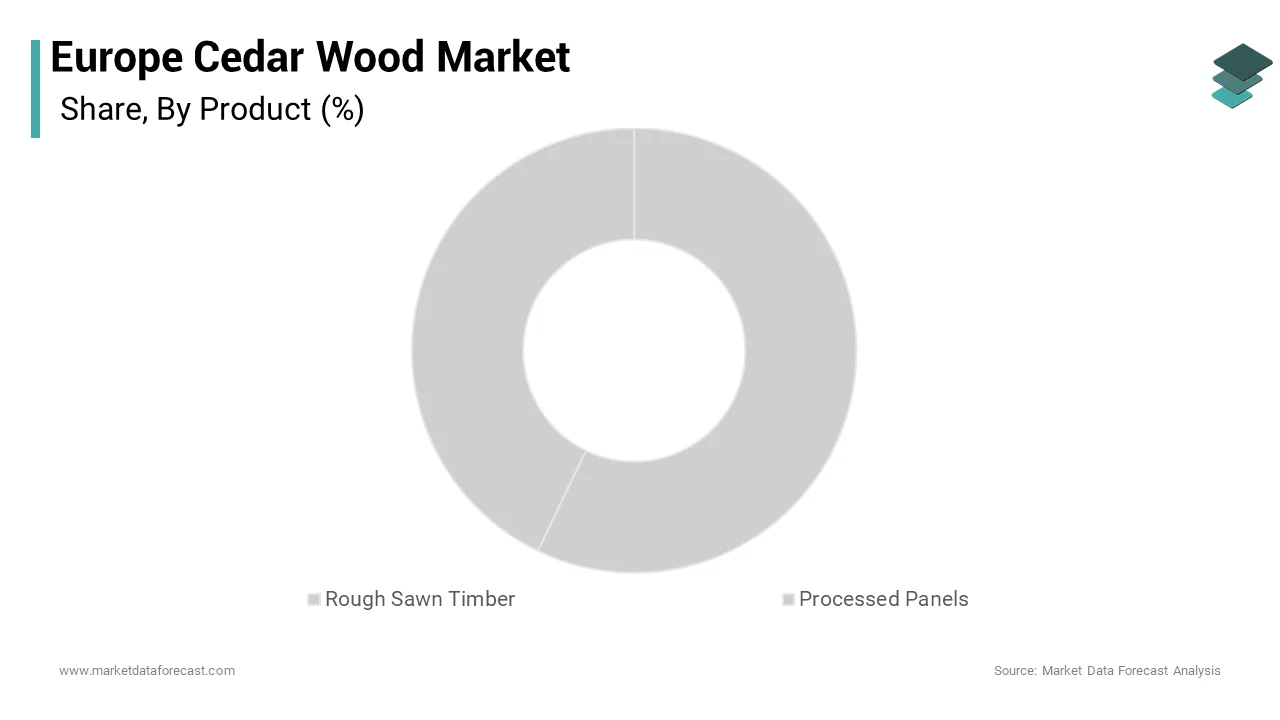
The processed panels is expected to showcase a promising CAGR in the Europe cedar wood market from 2026 to 2034. It includes cedar plywood and medium density fiberboard are gaining traction in interior design and furniture manufacturing due to their stability and ease of installation. As per research, the production of engineered wood products continues to evolve with innovations in bonding technologies enhancing the performance of cedar based panels. The availability of treated versus untreated cedar also influences segmentation with untreated natural cedar preferred by eco conscious consumers while treated options cater to those seeking enhanced durability against extreme weather conditions. This diversification allows suppliers to target specific customer needs and price points effectively.
By Grade Insights
The commercial grade segment held the majority share of 58.4% of the Europe cedar wood market in 2025. This supremacy of the segment is mainly driven by its widespread applicability in general construction and landscaping projects where high aesthetic perfection is secondary to structural integrity and cost efficiency. The primary factor fueling this leadership is the extensive use of Commercial grade cedar in residential fencing and decking which constitute the bulk of consumer demand across Western and Northern Europe. This grade offers sufficient durability for most outdoor applications while remaining accessible to middle income homeowners who form the largest demographic of buyers. The availability of Commercial grade cedar in standard dimensions further simplifies procurement for contractors and DIY enthusiasts reducing labor costs and installation time. As per studies, the preference for standardized lumber sizes in mass housing developments reinforces the dominance of this grade. Additionally the supply chain for Commercial grade is more robust with higher inventory levels maintained by distributors ensuring consistent availability even during peak construction seasons. This reliability makes it the default choice for large scale housing projects and municipal landscaping initiatives where budget constraints necessitate the use of cost effective yet durable materials.
The HD-5 Clear grade segment is on the rise and is expected to be the fastest growing segment in the market by witnessing a CAGR of 6.8% from 2026 to 2034 due to increasing demand for premium architectural applications and high end interior design. This rapid growth is also attributed to the rising trend of luxury home renovations and commercial hospitality projects that prioritize knot free aesthetically flawless wood surfaces. The primary driver is the expanding luxury real estate market in Western Europe where developers use HD-5 cedar for visible cladding roofing shingles and interior paneling to convey exclusivity and natural elegance. HD-5 cedar’s uniform texture and rich color allow for superior staining and finishing results which are critical for achieving the desired visual impact in upscale designs. Furthermore the growth of the wellness tourism sector has spurred demand for premium sauna installations where knot free cedar is preferred for its thermal properties and aromatic purity. This niche but high value application drives disproportionate growth in the HD-5 segment as suppliers cater to discerning clients who are less price sensitive and more focused on quality and aesthetic perfection.
By End User Insights
The Residential end user segment dominated the Europe cedar wood market an accounted for a 62.7% share in 2025. This dominance of the segment is supported by the pervasive use of cedar in single family homes for exterior cladding decking fencing and garden structures. The main driver is the strong cultural emphasis on home ownership and outdoor living spaces in countries such as Germany the United Kingdom and Sweden where private gardens are integral to residential life. Also, the post pandemic shift towards remote work has further intensified investment in home improvements as residents seek to enhance their living environments for both functionality and aesthetics. Cedar’s natural resistance to decay and insects makes it ideal for long term outdoor use reducing maintenance burdens for homeowners. Additionally the rise of DIY culture supported by readily available online tutorials and retail support has empowered homeowners to undertake cedar installation projects themselves. This democratization of access combined with the material’s inherent benefits ensures that the residential segment remains the cornerstone of market demand driving consistent volume sales across all grades of cedar wood.
The Commercial end user segment is expected to exhibit a noteworthy CAGR of 5.9% over the forecast period owing to robust activity in the hospitality and retail sectors. This accelerated growth is also driven by the strategic use of cedar in hotel resorts restaurants and retail outlets to create warm inviting atmospheres that enhance customer experience. The primary factor is the recovery and expansion of the European tourism industry which has seen a surge in visitor numbers following global travel restrictions. Hospitality developers increasingly specify cedar for facade cladding interior wall paneling and outdoor terrace decking to align with biophilic design principles that connect guests with nature. Cedar’s acoustic properties also make it suitable for conference centers and office spaces where noise reduction is valued. The commercial segment’s growth is further supported by corporate sustainability mandates that favor responsibly sourced natural materials over synthetic alternatives. This shift towards ethical and aesthetic construction practices ensures that commercial entities remain key drivers of demand for high quality cedar wood in the coming years.
COUNTRY LEVEL ANALYSIS
Germany Cedar Wood Market Analysis
Germany outperformed other countries in the Europe cedar wood market and captured a 18.9% share in 2025 because of a robust construction sector and strong environmental consciousness. The country’s market shows high demand for sustainable building materials in both new residential developments and energy efficient retrofitting projects. A key driving factor is the German government’s stringent energy efficiency regulations which encourage the use of natural insulating materials such as cedar cladding to improve building envelopes. Cedar is favored for its thermal properties and durability which align with the Passive House standard widely adopted in the country. A further critical driver is the strong DIY culture among German homeowners who frequently undertake garden and facade improvements using high quality timber. The presence of well established timber distribution networks ensures wide availability of certified cedar products. Furthermore Germany’s commitment to forest certification schemes means that only legally sourced and sustainably managed cedar enters the market enhancing consumer trust. This regulatory clarity combined with economic stability supports steady demand for cedar wood across residential and commercial applications positioning Germany as the central hub for cedar trade in Central Europe.
United Kingdom Cedar Wood Market Analysis
The United Kingdom was the second largest market for cedar wood in Europe and accounted for a 15.8% share in 2025. This growth of the UK market is propelled by a deeply ingrained garden culture and active housing market. The market sees high consumption of cedar for fencing decking and shed construction which are staple features of British suburban homes. A primary driving factor is the extensive land area dedicated to private gardens with a notable share of households having access to outdoor space. This widespread availability of garden space creates a consistent baseline demand for durable fencing and decking materials that can withstand the UK’s damp climate. Cedar’s natural resistance to rot makes it particularly suitable for these conditions reducing the need for chemical treatments. An additional driver is the renovation boom triggered by the stamp duty holiday and subsequent housing market activity which encouraged homeowners to invest in property improvements. The UK market also benefits from a strong network of specialist timber merchants who provide expert advice and custom milling services. Consumer preference for natural materials over plastic composites is growing due to environmental concerns further boosting cedar sales. The combination of climatic suitability cultural habits and economic factors ensures that the United Kingdom remains a pivotal market for cedar wood consumption in Northern Europe.
France Cedar Wood Market Analysis
France plays a major role in the Europe cedar wood market due to a diverse architectural landscape and strong tourism infrastructure. The market status is characterized by significant demand in both rural residential projects and high end hospitality developments in popular tourist regions. A key driving factor is the prevalence of traditional wooden architecture in regions such as the Alps and Pyrenees where cedar is used for chalet construction and renovation. Cedar’s ability to withstand heavy snow and moisture makes it ideal for these alpine applications. A different driver is the luxury tourism sector which utilizes cedar for upscale hotel facades and spa interiors to create authentic and inviting atmospheres. The French consumer also values aesthetic quality leading to preference for higher grades of cedar in visible applications. Government incentives for energy renovation of older buildings further stimulate demand for external cladding solutions. The combination of traditional usage patterns and modern tourism demands creates a dynamic market environment. France’s emphasis on local craftsmanship and quality materials supports the premium positioning of cedar wood within the national construction and design sectors.
Italy Cedar Wood Market Analysis
Italy is moving ahead steadfastly in the European market owing to its strong design heritage and luxury real estate sector. The market status is defined by selective usage in high end architectural projects restoration of historical villas and luxury hospitality venues. A major driving factor is the Italian focus on aesthetic excellence and material quality in construction which favors natural woods like cedar for their visual appeal and longevity. Cedar is extensively used in exterior shading systems pergolas and poolside decking in affluent residential areas such as Tuscany and the Lake District. Another significant driver is the luxury hospitality industry which leverages cedar to create sophisticated and relaxing environments for international tourists. Italian architects often specify cedar for its ability to age gracefully developing a silver patina that complements traditional stone and brick structures. The market is also supported by a network of specialized importers who cater to the specific needs of designers and builders. Although price sensitivity exists in the broader market the luxury segment’s willingness to pay for quality ensures steady demand for premium cedar grades. Italy’s unique blend of tradition and modern design keeps cedar relevant in high value applications.
Sweden Cedar Wood Market Analysis
Sweden is likely to expand notably in the European market from 2026 to 2034 due to a strong tradition of wood construction and emphasis on sustainability. The market status is characterized by extensive use of cedar in coastal properties summer cottages and public infrastructure projects that require high durability against harsh weather conditions. One of the major driving factors is the Swedish lifestyle which places high value on access to nature and outdoor leisure activities leading to significant investment in second homes and recreational facilities. A further driver is the country’s ambitious climate goals which promote the use of renewable and recyclable building materials. Cedar’s long lifespan and low maintenance requirements align with these sustainability objectives. The Swedish market also benefits from high consumer awareness regarding forest certification with most cedar sold carrying Forest Stewardship Council or Programme for the Endorsement of Forest Certification labels. This trust in certified sources encourages consumption despite higher prices. Sweden’s integration of cedar into both private and public spheres underscores its importance in the Nordic construction landscape.
COMPETITIVE LANDSCAPE
The competition in the Europe cedar wood market is characterized by a fragmented landscape with numerous regional suppliers and international importers vying for market share. Large multinational forestry corporations compete alongside specialized timber merchants who offer niche products and personalized services. Competitive dynamics are heavily influenced by product quality sustainability credentials and price competitiveness. Companies differentiate themselves through certification schemes such as Forest Stewardship Council which serve as key trust indicators for environmentally conscious buyers. The market sees intense rivalry in the residential segment where price sensitivity is higher prompting suppliers to offer varied grades and treatment options. In contrast the commercial and luxury segments focus on aesthetic perfection and technical performance allowing for premium pricing strategies. Supply chain reliability is a critical competitive factor as delays can significantly impact construction timelines. Innovations in wood processing and preservation technologies provide additional avenues for differentiation. Strategic alliances with distributors and contractors help firms secure long term contracts and steady demand. The entry of composite alternatives adds pressure on traditional cedar suppliers to highlight natural benefits and durability. Overall the market requires participants to balance cost efficiency with high sustainability standards to maintain their competitive positions in this evolving industry landscape.
KEY MARKET PLAYERS
A few of the market players that are dominating the Europe cedar wood market are
- Idaho Cedar Sales Co.
- Metsä Group
- Stora Enso
- UPM-Kymmene
- Tennessee Cedar Products
- Sierra Pacific Industries
- British Columbia Cedar Ltd.
- Weyerhaeuser
- US Lumber
- Maibec
- Freres Lumber Co. Inc.
- Western Red Cedar Lumber Association
- Interior
- Hampton Lumber
- Holbrook Lumber
- White Valley Lumber Mill
- Jones Wholesale Lumber
- Coastal Forest Products
- Bear Creek Lumber
- Duluth Timber Company
- Superior Lumber
- Marwood Ltd.
- Lignum Forest Products
Top Players In The Market
- Metsä Group stands as a pivotal entity in the European timber landscape leveraging its extensive forest resources to supply high quality cedar and alternative softwoods. The company focuses on sustainable forestry practices ensuring that all wood products meet rigorous environmental standards demanded by modern consumers. Recent initiatives include expanding their digital sales platforms to enhance customer accessibility and streamline supply chain efficiency across Northern Europe. By investing in advanced processing technologies Metsä Group improves the precision and quality of sawn timber catering to both residential and commercial construction sectors. Their commitment to circular economy principles strengthens their brand reputation among eco conscious buyers. The group actively collaborates with architects and builders to promote wood usage in urban development projects. This strategic engagement helps drive demand for durable and aesthetically pleasing timber solutions. Their robust logistics network ensures timely delivery across key European markets reinforcing their position as a reliable supplier of premium wood products for diverse applications.
- Stora Enso is a leading renewable materials company that significantly influences the European wood market through its innovative product offerings and sustainable sourcing models. The company integrates cedar and other softwoods into its broader portfolio of construction materials emphasizing low carbon footprint solutions. Recent actions involve launching new engineered wood products that combine cedar aesthetics with enhanced structural performance for modern architectural needs. Stora Enso has strengthened its market position by partnering with green building certification bodies to validate the sustainability credentials of its timber supplies. They have also expanded their production capabilities in key regions to meet rising demand for natural building materials. The company actively promotes the benefits of wood construction in reducing urban heat islands and improving air quality. Their research and development efforts focus on creating value added wood products that offer superior durability and ease of installation. This continuous innovation helps Stora Enso maintain a competitive edge in the evolving European construction sector.
- UPM Kymmene operates as a major player in the European bioforestry sector providing a wide range of wood based products including specialty timbers for construction and landscaping. The company emphasizes responsible forest management ensuring that its cedar and softwood supplies are certified and traceable. Recent strategies include enhancing their digital services to provide customers with real time information on product availability and sustainability metrics. UPM has invested in modernizing its sawmill operations to improve yield efficiency and product quality meeting the specific needs of high end architectural projects. They actively engage in industry collaborations to promote the use of wood in sustainable urban planning and infrastructure development. The company’s focus on innovation extends to developing new treatments that enhance the natural durability of wood without harmful chemicals. This approach aligns with stringent European environmental regulations and consumer preferences for safe natural materials. UPM’s strong distribution network and commitment to sustainability reinforce its leadership in the European timber market.
Top Strategies Used By Key Market Participants
Key players in the Europe cedar wood market primarily employ vertical integration strategies to control supply chains from forest to finished product ensuring consistent quality and availability. Companies invest heavily in sustainable forestry certifications such as Forest Stewardship Council to meet regulatory requirements and appeal to eco conscious consumers. Product differentiation is another critical strategy where firms develop specialized grades and treatments for specific applications like cladding or decking. Strategic partnerships with construction firms and architects help embed cedar specifications into large scale projects early in the design phase. Digital transformation initiatives are widely adopted to enhance customer experience through online procurement platforms and virtual design tools. Expansion into high growth segments such as luxury hospitality and wellness tourism drives targeted marketing efforts. Companies also focus on logistical optimization to reduce lead times and costs associated with importing cedar from non European sources. Innovation in wood preservation techniques allows players to offer longer lasting products with lower maintenance needs. These combined strategies enable market participants to maintain competitiveness and respond effectively to changing consumer preferences and regulatory landscapes in the European region.
MARKET SEGMENTATION
This research report on the Europe cedar wood market is segmented and sub-segmented into the following categories.
By Product
- Rough Sawn Timber
- Processed Panels
By Grade
- Commercial Grade
- HD-5 Clear Grade
By End-user
- Residential End-User
- Commercial End-User
By Country
- UK
- France
- Spain
- Germany
- Italy
- Russia
- Sweden
- Denmark
- Switzerland
- Netherlands
- Turkey
- Czech Republic