- Product Description Description
- Table of Contents TOC
- List of Table & Figure LOT
- Get Free Sample PDF Sample PDF
Market Size, 2025
$89.78 MnMarket Estimate, 2026
$95.61 MnMarket Forecast, 2034
$158.11 MnCAGR, 2026–2034
6.49%Europe Cell Sorting Market Size
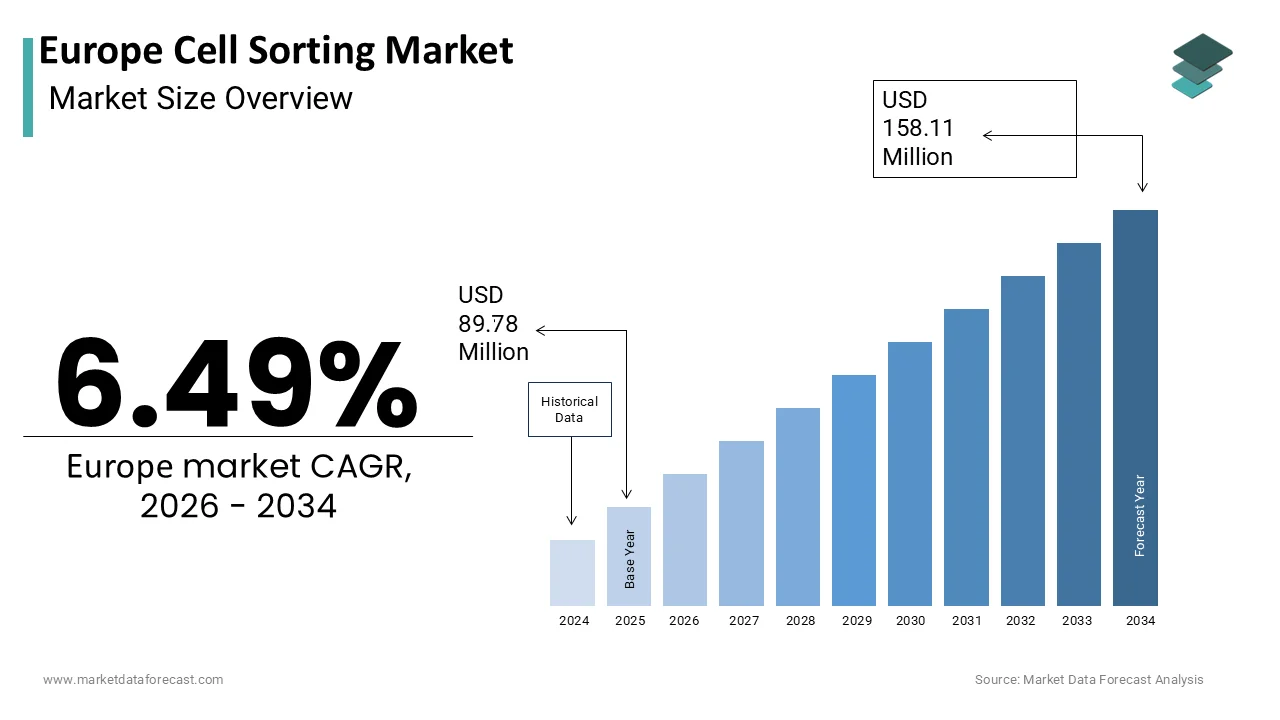
The Europe Cell Sorting Market is projected to grow from USD 89.78 million in 2025 to USD 95.61 million in 2026 and reach USD 158.11 million by 2034, registering a CAGR of 6.49% during the forecast period from 2026 to 2034.
Cell sorting is a critical technique in biomedical research and clinical diagnostics that involves the separation of specific cell populations from heterogeneous biological samples based on physical or biochemical characteristics. This process is primarily conducted using advanced technologies such as fluorescence-activated cell sorting (FACS) and magnetic-activated cell sorting (MACS). These techniques are widely used in immunology, oncology, stem cell research, and drug discovery to isolate rare cell types for further analysis and experimentation.
The Europe Cell Sorting Market encompasses the development, manufacturing, and application of cell sorting instruments, reagents, software, and consumables across academic institutions, pharmaceutical companies, biotechnology firms, and hospitals.
Additionally, as per the German Cancer Research Center (DKFZ), advancements in single-cell analysis and flow cytometry have led to an increased reliance on automated cell sorters in both basic and translational research.
With rising investments in genomics, regenerative medicine, and cancer immunotherapy, the Europe Cell Sorting Market is witnessing strong momentum driven by scientific progress and healthcare modernization initiatives.
MARKET DRIVERS
Expansion of Immunotherapy and Personalized Medicine Initiatives
A major driver of the Europe Cell Sorting Market is the rapid advancement of immunotherapy and personalized medicine, particularly in oncology and autoimmune disease treatment. Cell sorting plays a crucial role in isolating immune cells such as T-cells, NK cells, and dendritic cells, which are essential components in developing CAR-T cell therapies and other targeted treatments.
As per the European Society for Medical Oncology (ESMO), more than 30 new cell and gene therapy products were under clinical development in Europe in 2023 , many of which required extensive use of cell sorting for target cell isolation and expansion. The growing number of clinical trials in immuno-oncology has significantly increased the demand for high-precision cell sorting equipment capable of handling small, rare cell populations with minimal contamination risk.
Apart from these, according to the European Medicines Agency (EMA), regulatory approvals for personalized therapeutic approaches have surged , prompting pharmaceutical and biotech firms to invest heavily in cell-based assays and biomarker discovery platforms. Institutions like the University of Oxford and Karolinska Institute are actively utilizing cell sorting technologies to develop patient-specific treatment protocols.
Furthermore, as reported by the British Society for Immunology, academic funding bodies in the UK and Germany have allocated significant grants to support research into adoptive cell transfer therapies , reinforcing the need for advanced sorting infrastructure in laboratories and biomanufacturing facilities.
This expanding application scope in precision medicine is a key factor driving sustained growth in the Europe Cell Sorting Market.
Increasing Government Funding and Research Collaborations
Another major driver fueling the Europe Cell Sorting Market is the increasing availability of government-backed funding and collaborative research programs aimed at advancing cellular and molecular biology studies. European Union initiatives such as Horizon Europe and the Innovative Medicines Initiative (IMI) have significantly boosted financial support for life sciences, enabling widespread access to advanced cell sorting technologies.
According to the European Commission, over EUR 10 billion was allocated to health-related research under Horizon Europe in 2023 , with a substantial portion directed toward cancer biology, regenerative medicine, and infectious disease research—areas where cell sorting is integral. The IMI’s partnership between the European Federation of Pharmaceutical Industries and Associations (EFPIA) and academic institutions has also facilitated joint ventures focused on novel cell-based therapies.
In addition, the German Federal Ministry of Education and Research (BMBF) has launched several national programs supporting biobanking and cell characterization, contributing to enhanced infrastructure for cell sorting in research centers across the country.
These coordinated efforts to promote scientific collaboration and technological development are instrumental in expanding the adoption of cell sorting solutions across Europe.
MARKET RESTRAINTS
High Cost and Complexity of Advanced Cell Sorting Systems
One of the primary restraints limiting the broader adoption of cell sorting technologies in Europe is the high cost and technical complexity associated with advanced sorting systems. Instruments such as high-speed FACS machines require substantial capital investment, specialized training, and ongoing maintenance, making them less accessible to smaller research institutions and diagnostic labs.
Moreover, as per the European Association of Cancer Research, operating cell sorters requires skilled personnel trained in flow cytometry, data interpretation, and biosafety protocols , creating a barrier for institutions lacking experienced staff.
Institutions in Eastern Europe, in particular, face challenges in acquiring and maintaining high-end cell sorting equipment due to limited funding and infrastructure. This economic disparity within the region hinders uniform market growth and limits access to cutting-edge technologies outside major research hubs.
These financial and operational constraints remain key obstacles to the widespread implementation of cell sorting technologies across the European life sciences sector.
Ethical and Regulatory Constraints in Cell-Based Research
Ethical and regulatory concerns surrounding the use of human-derived cells pose a significant restraint on the Europe Cell Sorting Market . The collection, manipulation, and storage of human cells are subject to stringent regulations that vary across European countries, affecting research timelines, sample availability, and overall market dynamics.
According to the European Group on Ethics in Science and New Technologies (EGE), European directives emphasize strict ethical oversight of human tissue use in research , requiring informed consent, anonymization, and compliance with the General Data Protection Regulation (GDPR) when handling biological samples. These requirements add administrative layers that delay experimental processes and limit scalability.
Also, as per the French National Ethics Advisory Committee (CCNE), several EU member states have implemented restrictive policies regarding stem cell research and genetic modification , indirectly impacting the development of next-generation cell sorting applications in regenerative medicine.
While these regulations aim to ensure responsible scientific conduct, they also slow down innovation cycles and deter commercial investment in certain high-potential areas of cell sorting technology.
MARKET OPPORTUNITIES
Growth in Single-Cell Analysis and Genomic Research
A significant opportunity within the Europe Cell Sorting Market is the rising demand for single-cell analysis and genomic research, which rely heavily on precise and efficient cell sorting technologies. The ability to isolate individual cells enables researchers to study heterogeneity within cell populations, leading to deeper insights into disease progression, drug response, and developmental biology.
According to the European Bioinformatics Institute (EMBL-EBI), the volume of single-cell sequencing studies published in Europe increased by more than 40% between 2020 and 2023 , reflecting a growing emphasis on high-resolution cellular profiling. This trend is being supported by major research infrastructures such as Euro-BioImaging, which provides open access to advanced cell sorting and imaging technologies.
Moreover, as per the Broad Institute’s European collaborators, single-cell RNA sequencing projects in Germany, France, and the Netherlands have become increasingly reliant on FACS-based cell isolation methods , enhancing the importance of sorting in omics research.
So, with increasing investment in next-generation sequencing and bioinformatics tools, the integration of cell sorting into genomic pipelines is expected to drive substantial market expansion across Europe.
Rising Demand for Regenerative Medicine and Stem Cell Therapies
The growing interest in regenerative medicine and stem cell-based therapies presents a promising growth avenue for the Europe Cell Sorting Market. Cell sorting is a foundational step in stem cell isolation, purification, and expansion—processes critical to the development of regenerative treatments for conditions such as Parkinson’s disease, heart failure, and degenerative disorders.
According to the International Society for Stem Cell Research (ISSCR), Europe accounts for nearly 30% of global stem cell research activity , with Germany, the UK, and Spain leading in clinical trial enrollment. Many of these studies involve the isolation of hematopoietic stem cells and induced pluripotent stem cells (iPSCs), which require advanced sorting methodologies.
In addition, as per the European Union’s Innovative Medicines Initiative (IMI), biopharma companies are increasingly partnering with academic centers to scale up stem cell production for therapeutic applications, necessitating robust and reproducible cell sorting protocols. With policy support from EMA and increasing private-sector involvement, the regenerative medicine landscape in Europe offers strong potential for sustained growth in the cell sorting domain.
MARKET CHALLENGES
Limited Accessibility in Peripheral Healthcare and Academic Institutions
A major challenge facing the Europe Cell Sorting Market is the uneven accessibility of cell sorting technologies across different regions, particularly in Central and Eastern Europe. While major research centers in Western Europe have well-established cell sorting facilities, many peripheral institutions struggle with limited resources, outdated equipment, and insufficient technical expertise.
According to the European University Foundation, only 40% of universities in Poland, Romania, and Bulgaria have access to modern cell sorting instruments , compared to over 90% in Germany, France, and the UK. This gap restricts the capacity of emerging research groups to participate in high-impact biomedical studies.
Moreover, as per the Czech Academy of Sciences, even when equipment is available, there is often a shortage of trained personnel to operate complex cell sorting systems , leading to inefficiencies and delays in research output.
Addressing this regional imbalance requires targeted investment in education, shared research infrastructure, and cross-border collaboration to ensure broader access to cell sorting technologies across the continent.
Technical Limitations and Sample Integrity Concerns
Technical limitations and concerns about sample integrity during the sorting process represent a persistent challenge in the Europe Cell Sorting Market . Traditional cell sorting methods, especially those involving high-pressure fluidics, can induce mechanical stress on cells, affecting viability and downstream functionality.
According to the Max Planck Institute for Molecular Biomedicine, cell sorting via conventional droplet-based FACS results in a 10–20% loss of cell viability , which is a critical concern in applications requiring live-cell recovery, such as regenerative medicine and cell therapy development.
Emerging alternatives such as microfluidic-based sorting and image-activated cell sorting offer improved gentler handling but are not yet widely adopted due to higher costs and limited compatibility with existing laboratory workflows.
Overcoming these technical barriers remains a priority for manufacturers and end-users alike, as the demand for high-integrity cell populations continues to grow in both research and clinical applications across Europe.
REPORT COVERAGE
| REPORT METRIC | DETAILS |
| Market Size Available | 2025 to 2034 |
| Base Year | 2025 |
| Forecast Period | 2026 to 2034 |
| Segments Covered | By Technology,Product,End User and Country. |
| Various Analyses Covered | Global, Regional, & Country Level Analysis; Segment-Level Analysis, DROC, PESTLE Analysis, Porter’s Five Forces Analysis, Competitive Landscape, Analyst Overview of Investment Opportunities |
| Country Covered | UK, Germany, Italy, France, Spain, Sweden, Denmark, Poland, Switzerland, Netherlands, Rest of Europe. |
| Market Leaders Profiled | Becton, Dickinson and Company, Bio-Rad Laboratories, Inc., Beckman Coulter |
SEGMENT ANALYSIS
By Technology Insights
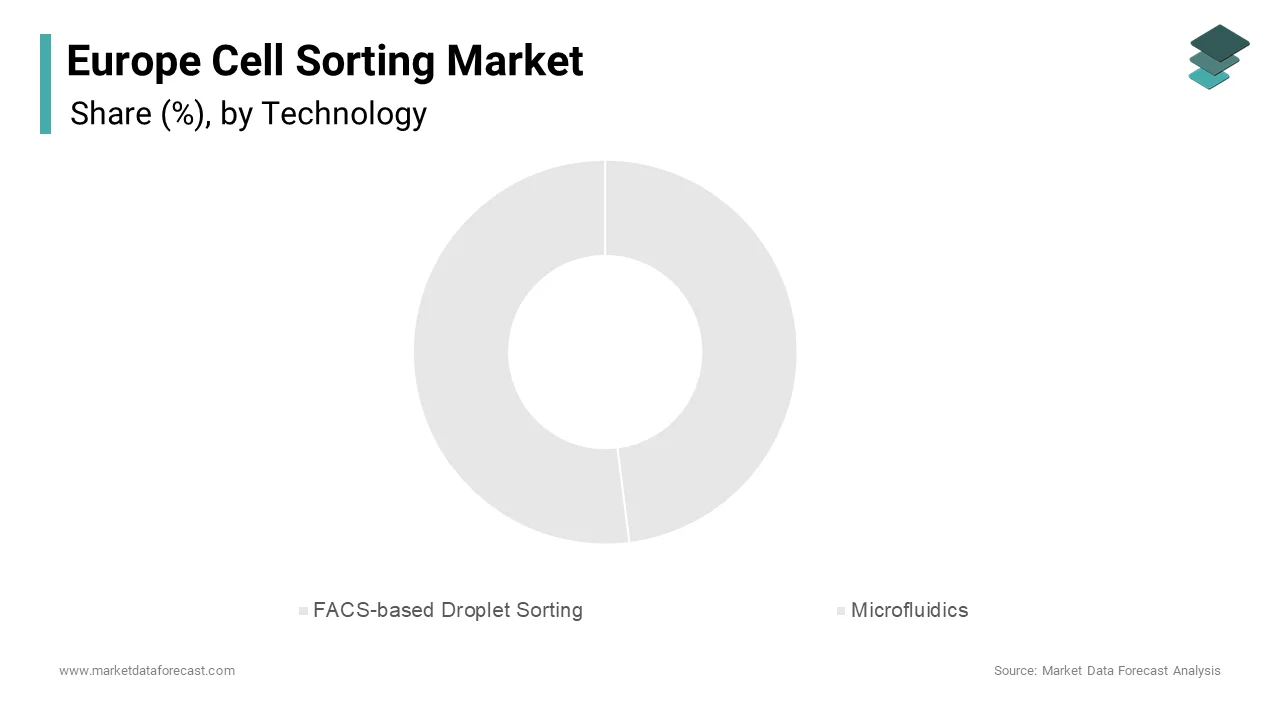
FACS-based droplet sorting held the largest segment in the Europe Cell Sorting Market, capturing 52.5% of total market revenue in 2025. This dominance is attributed to the technology’s widespread adoption in research laboratories, pharmaceutical companies, and academic institutions due to its high precision and ability to handle complex cell populations.
According to the European Society for Clinical Cell Analysis (ESCCA), over 60% of European flow cytometry facilities use FACS-based systems , particularly for applications requiring high-speed, multi-parameter analysis such as immunophenotyping and stem cell isolation. The technology allows researchers to detect fluorescent markers on individual cells and sort them with high purity, making it indispensable in cancer biology, vaccine development, and regenerative medicine.
Moreover, as reported by the German Cancer Research Center (DKFZ), the number of clinical trials utilizing FACS-based sorting for CAR-T cell therapy has increased since 2021 , reinforcing its role in translational research.
Also, major upgrades in digital signal processing and automation have enhanced the efficiency and reproducibility of droplet-based sorting , making it a preferred choice for large-scale studies. With continued innovation from manufacturers like BD Biosciences and Beckman Coulter, and increasing integration into biobanking and single-cell sequencing pipelines, FACS-based droplet sorting remains at the forefront of the Europe Cell Sorting Market.
Microfluidic-based cell sorting is emerging as the fastest-growing segment in the Europe Cell Sorting Market, projected to expand at a CAGR 14.8%. This rapid growth is driven by advancements in lab-on-a-chip technologies, reduced sample consumption, and improved viability of sorted cells—factors that are increasingly important in clinical and point-of-care settings.
According to the European BioMEMS Association, microfluidic sorting systems reduce mechanical stress on cells by up to 50% compared to traditional FACS , preserving cellular function and enhancing downstream analysis accuracy. This makes microfluidics especially valuable in regenerative medicine and organoid research, where live-cell recovery is crucial.
Moreover, the miniaturization of microfluidic devices enables their deployment in decentralized labs and smaller hospitals , expanding access beyond major research centers.
Startups such as Parsortix and On-chip Biotechnologies are gaining traction in Europe by offering compact, cost-effective solutions tailored for diagnostics and liquid biopsy applications. With rising interest in personalized medicine and minimally invasive diagnostics, microfluidic sorting is poised to disrupt conventional methods and redefine cell separation strategies across the region.
By Product Insights
Cell sorters represented the biggest product segment in the Europe Cell Sorting Market, accounting for 48.1% of total market share in 2025. This lead position stems from the foundational role these instruments play in isolating specific cell populations for research and clinical applications, particularly in immunology, oncology, and stem cell therapy.
Institutions like the Francis Crick Institute and EMBL Heidelberg rely heavily on advanced sorters to support high-throughput experiments and novel therapeutic discovery.
Moreover, as per the European Hematology Association (EHA), cell sorters are essential in CAR-T cell manufacturing workflows , where precise isolation of T-cells is required before genetic modification and expansion.
Moreover, European biopharma firms have increased investments in internal flow cytometry infrastructure , reducing reliance on contract research organizations and boosting demand for benchtop and high-speed sorters.
The continuous technological evolution—from droplet-based to imaging and microchip sorting—is further reinforcing the centrality of cell sorters in both academic and industrial applications, ensuring sustained growth in this segment.
Reagents are the booming product segment in the Europe Cell Sorting Market , projected to grow at a CAGR of around 13% through 2033. This surge is primarily driven by the increasing utilization of fluorescence-labeled antibodies, magnetic beads, and other staining agents in conjunction with sorting workflows.
Also, each FACS experiment requires multiple fluorescent reagents for marker identification , and as single-cell analysis becomes more multiplexed, the demand for specialized dyes and conjugated antibodies is growing exponentially.
Furthermore, as per the Spanish Society of Flow Cytometry, the shift toward standardized protocols and pre-validated antibody panels has led to higher reagent consumption across hospital-based core facilities , particularly in oncology and infectious disease research.
In addition, the rise in contract manufacturing organizations (CMOs) supporting cell and gene therapy development is contributing to reagent demand. With ongoing advancements in targeted labeling and multiparametric assays, reagent usage is expected to outpace instrument sales, making this segment one of the most dynamic areas of growth in the Europe Cell Sorting Market.
By End User Insights
Research institutes dominated the Europe Cell Sorting Market , capturing 45.4% of total market share in 2025. These institutions form the backbone of biomedical research in Europe, driving demand for high-end sorting equipment and consumables used in immunology, stem cell biology, and cancer research.
Universities such as Heidelberg, Uppsala, and Leiden maintain state-of-the-art sorting facilities accessible to multiple research groups, maximizing resource utilization. With increasing emphasis on fundamental biological discoveries and long-term health research initiatives, research institutes remain the primary drivers of the Europe Cell Sorting Market.
Biopharma companies are emerging as the fastest-growing end-user segment in the Europe Cell Sorting Market , projected to expand at a CAGR of nearly 15%. This growth is fueled by the expanding pipeline of cell and gene therapies, coupled with rising in-house investments in flow cytometry infrastructure.
Moreover, as per the European Medicines Agency (EMA), the number of Advanced Therapy Medicinal Product (ATMP) approvals has risen sharply since 2021 , prompting biopharma firms to integrate cell sorting into Good Manufacturing Practice (GMP) environments.
Companies like Novartis, Roche, and Autolus Therapeutics are actively leveraging cell sorting in early-stage R&D and production of engineered immune cells, signaling a strategic shift toward greater vertical integration of sorting technologies within the biopharmaceutical sector. This trend underscores the increasing importance of cell sorting in commercializing next-generation biotherapeutics, positioning biopharma as a key growth engine in the market.
COUNTRY LEVEL ANALYSIS
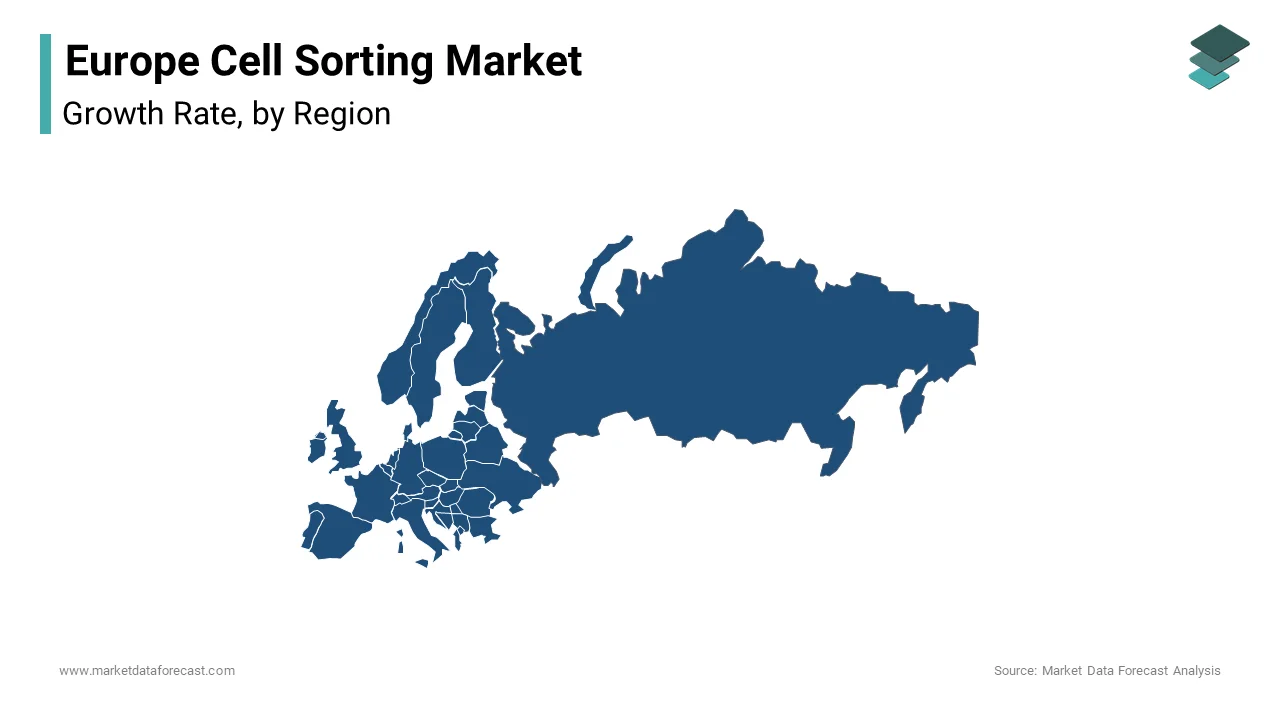
Germany maintained the largest national share of the Europe Cell Sorting Market, accounting for 28.1% of total regional revenue in 2025. This dominant position is supported by the country's robust life sciences ecosystem, high levels of public and private R&D investment, and a well-established network of university hospitals and biopharma manufacturing centers. Institutions such as the Charité in Berlin, University Hospital Heidelberg, and the Max Planck Institute are at the forefront of adopting advanced cell sorting technologies for immunotherapy and regenerative medicine applications.
Also, Germany hosts several GMP-certified cell therapy manufacturing hubs , all of which depend on high-throughput cell sorting for process optimization and quality assurance.
Furthermore, as per the German Cancer Aid Foundation, clinical trials involving CAR-T and NK cell therapies have surged since 2021 , reinforcing the need for sophisticated cell sorting infrastructure.
With strong regulatory support from the Paul-Ehrlich-Institut and increasing industry-academia collaborations, Germany continues to lead the Europe Cell Sorting Market, setting benchmarks in innovation and clinical translation.
The United Kingdom accounts for a significant share of the Europe Cell Sorting Market, driven by a well-developed network of academic and clinical research institutions. The UK’s leadership in biomedical sciences, combined with strong government backing for life sciences, has fostered a thriving environment for cell sorting technology deployment. Institutions like the Francis Crick Institute and the University of Cambridge are among the top users of advanced cell sorting platforms, particularly in cancer and infectious disease research.
Additionally, genomic and single-cell sequencing initiatives in the UK have significantly increased the demand for high-precision cell sorters , with a growing emphasis on purity and reproducibility.
Despite post-Brexit adjustments, the UK maintains a strong foothold in the Europe Cell Sorting Market, backed by world-class research infrastructure and a commitment to advancing precision medicine.
France is seeing expanding role in the Europe Cell Sorting Market in 2025, driven by expanding investments in translational medicine and the development of novel cellular therapies. The country's strategic focus on bridging basic research with clinical applications has spurred demand for advanced cell sorting infrastructure in academic hospitals and biotech firms.
Additionally, cell sorting is playing a central role in infectious disease modeling and vaccine development, particularly in response to emerging pathogens and antimicrobial resistance. With growing industry-academia partnerships and an expanding biopharma sector, France is strengthening its position in the Europe Cell Sorting Market, particularly in oncology and immunology-focused applications.
Spain is supported by growing investments in biomedical research and the expansion of hospital-based research centers. The country has made notable strides in recent years to integrate cell sorting into both academic and clinical workflows.
Spain has one of the highest concentrations of cell therapy clinical trials in Southern Europe , many of which depend on precise cell isolation techniques. The San Raffaele Scientific Institute and Ospedale San Raffaele in Milan are leading centers for CAR-T therapy development, requiring sophisticated cell sorting infrastructure.
Moreover, public funding for cell and gene therapy projects has increased in recent years, facilitating the establishment of dedicated cell processing units in university hospitals.
Additionally, Italian researchers are increasingly adopting imaging flow cytometry and microfluidic sorting technologies, aiming to improve cell viability and functional analysis. With ongoing investments in biomanufacturing and personalized medicine, Italy is positioning itself as a key contributor to the evolving landscape of the Europe Cell Sorting Market.
Italy represents a growing segment of the Europe Cell Sorting Market. The country is gaining traction as a hub for cellular therapies, particularly in the fields of hematology, regenerative medicine, and rare diseases.
Italy has one of the highest concentrations of cell therapy clinical trials in Southern Europe , many of which depend on precise cell isolation techniques. The San Raffaele Scientific Institute and Ospedale San Raffaele in Milan are leading centers for CAR-T therapy development, requiring sophisticated cell sorting infrastructure. With ongoing investments in biomanufacturing and personalized medicine, Italy is positioning itself as a key contributor to the evolving landscape of the Europe Cell Sorting Market.
Sweden plays a pivotal role in the Europe Cell Sorting Market , capturing a significant share due to its strong emphasis on innovation, digital pathology, and life sciences research. As part of the Nordic region, Sweden benefits from a highly integrated healthcare system and a forward-looking approach to medical technology adoption.
According to the Karolinska Institute, Sweden leads in single-cell research and has integrated cell sorting into national biobanking initiatives , enabling large-scale studies on population health and disease mechanisms.
Also, government and private investments in genomics and immunology have increased annually since 2020 , fueling demand for high-resolution cell separation tools.
Sweden’s strong focus on AI-assisted flow cytometry and standardized research protocols positions it as a leader in high-quality, reproducible cell sorting applications, contributing to its growing influence in the European market.
The Netherlands holds a prominent position in the Europe Cell Sorting Market , known for its strategic investment in centralized core facilities that serve both academic and industrial sectors. Dutch institutions have established well-equipped flow cytometry and cell sorting centers that cater to a broad user base, including universities, biotech firms, and pharmaceutical companies.
The country’s collaborative research culture ensures efficient utilization of shared resources, minimizing redundancy and maximizing impact.
Additionally, Dutch hospitals and research centers are increasingly adopting automated and high-throughput sorting systems to support clinical-grade cell processing for immunotherapy and regenerative medicine .
Furthermore, the Netherlands is home to several EU-funded cell therapy consortia , reinforcing its role in shaping future sorting standards and application guidelines.
With strong institutional support and a focus on centralized, high-efficiency operations, the Netherlands is a key player in the European cell sorting landscape.
KEY MARKET PLAYERS AND COMPETITIVE LANDSCAPE
Some of the notable companies leading the Europe Cell Sorting Market profiled in the report are Becton, Dickinson and Company, Bio-Rad Laboratories, Inc., Beckman Coulter, Inc., Miltenyi Biotec GmbH, Affymetrix Inc., Sony Biotechnology, Inc., Sysmex Partec GmbH, Cytonome/ST, LLC, On-Chip Biotechnologies Co., Ltd., and Union Biometrica, Inc.
The competition in the Europe cell sorting market is marked by the presence of established global players and emerging innovators striving to capture market share through differentiation and innovation. Companies compete based on technological advancements, system performance, ease of use, and after-sales support. As demand grows in both research and clinical settings, vendors are increasingly focusing on developing compact, automated, and cost-effective cell sorting solutions tailored for diverse applications. Academic and pharmaceutical sectors drive much of this demand, prompting manufacturers to align their offerings with evolving industry standards. In response, major players leverage their brand reputation, extensive distribution networks, and robust R&D pipelines to maintain dominance. Meanwhile, smaller firms challenge the status quo by introducing niche technologies and agile service models. Strategic moves such as product launches, geographic expansions, and collaborative research initiatives further intensify the competitive landscape. Ultimately, this dynamic environment fosters continuous improvement and ensures end users have access to increasingly sophisticated and efficient cell sorting technologies.
Top Players in the Market
Becton, Dickinson and Company (BD)
BD is a leading global medical technology company that plays a crucial role in the Europe cell sorting market. Known for its innovative flow cytometry and cell sorting solutions, BD provides advanced instruments, reagents, and software that enhance research and clinical applications. The company contributes significantly to the global market by continuously investing in R&D, expanding product portfolios, and supporting academic and industrial collaborations.
Thermo Fisher Scientific Inc.
Thermo Fisher Scientific is a dominant player offering a broad range of life science tools, including high-performance cell sorters. Its contributions to the global market include cutting-edge technologies, automation, and integrated workflows that improve efficiency and accuracy in cell analysis. Through strategic acquisitions and partnerships, Thermo Fisher strengthens its presence across Europe and supports diverse applications in biopharma and academia.
Sony Biotechnology Inc.
Sony Biotechnology has emerged as a key player with its innovative cell sorting systems that offer high-speed sorting with minimal sample loss. The company’s focus on user-friendly design and compact instrumentation makes it a preferred choice for research institutions. Their impact on the global market lies in introducing novel approaches to cell analysis and expanding accessibility through reliable and efficient technologies.
Top Strategies Used by Key Market Participants
Key players in the Europe cell sorting market utilize several strategies to reinforce their positions. First , they invest heavily in research and development to introduce advanced, high-efficiency cell sorting systems tailored for various applications. These innovations help maintain technological leadership and address evolving customer needs.
Second , companies engage in strategic partnerships and collaborations , especially with academic institutions and biotech firms, to co-develop new tools and expand application areas. These alliances also facilitate better market penetration and knowledge exchange.
Third , acquisitions and mergers are commonly used to integrate complementary technologies, broaden product portfolios, and enhance service capabilities. This strategy enables companies to strengthen their foothold in competitive regions like Europe while improving customer support infrastructure and global reach.
RECENT HAPPENINGS IN THE MARKET
In January 2023, Thermo Fisher Scientific launched a next-generation cell sorter designed specifically for high-throughput applications, enhancing productivity in European research labs.
In August 2023, BD expanded its European operations by opening a new innovation center in Germany focused on flow cytometry and cell sorting technologies.
In March 2025, Sony Biotechnology introduced an upgraded version of its cell sorter with improved usability and data analysis features, targeting academic institutions across Europe.
In November 2025, Agilent Technologies partnered with a French research institute to develop customized cell sorting workflows for cancer immunotherapy studies.
In May 2025, Miltenyi Biotec acquired a German startup specializing in microfluidic-based cell separation, aiming to integrate novel sorting methods into its existing platform.
MARKET SEGMENTATION
This research report on the Europe Cell Sorting Market has been segmented and sub-segmented into the following categories.
By Technology
- FACS-based Droplet Sorting
- Microfluidics
By Product
- Cell Sorters
- Reagents
By Application
- Research
- Clinical
By End User
- Research Institutes
- Biopharma Companies
By Country
- UK
- France
- Spain
- Germany
- Italy
- Russia
- Sweden
- Denmark
- Switzerland
- Netherlands
- Turkey
- Czech Republic
- Rest of Europe