Europe Cell Therapy Market Size, Share, Trends, & Growth Forecast Report By Therapy Type (Autologous, Allogeneic), Cell Type, Technology, Source, Application, End-User and Country (UK, France, Spain, Germany, Italy, Russia, Sweden, Denmark, Switzerland, Netherlands, Turkey, Czech Republic and Rest of Europe), Industry Analysis From 2026 to 2034
Market Size, 2025
$1.75 BnMarket Estimate, 2026
$2.00 BnMarket Forecast, 2034
$5.81 BnCAGR, 2026–2034
14.25%Europe Cell Therapy Market Report Summary
The Europe cell therapy market was valued at USD 1.75 billion in 2025, is estimated to reach USD 2.00 billion in 2026, and is projected to reach USD 5.81 billion by 2034, growing at a CAGR of 14.25% during the forecast period from 2026 to 2034. The growth of the Europe cell therapy market is driven by strong public funding for translational research, increasing clinical demand for regenerative treatments, and rising prevalence of chronic and age-related degenerative diseases across the region. Expanding hospital exemption frameworks, advancements in allogeneic off-the-shelf technologies, and improvements in GMP manufacturing capacity are further fueling market growth. Moreover, the evolution of regulatory pathways, growing investment from biopharmaceutical companies, and increasing adoption of CAR-T and stem cell-based therapies are accelerating access to innovative cell therapy solutions throughout Europe.
Key Market Trends
- Rising adoption of CAR-T and engineered cell therapies is supported by expanding certified treatment centers across Europe.
- Increasing investment in allogeneic, off-the-shelf platforms that enhance scalability and reduce treatment costs.
- Strong public and EU-level funding (Horizon Europe, national research programs), accelerating clinical translation and GMP manufacturing innovation.
- Growing use of hospital exemption pathways enabling bespoke, non-commercial cell therapies for rare and urgent clinical needs.
- Expanding role of automated, decentralized manufacturing and cryogenic logistics systems to enhance supply chain reliability.
Segmental Insights
- Based on therapy type, the autologous segment dominated the Europe cell therapy market in 2025, supported by its established clinical acceptance, lower immunogenicity, and routine use of licensed CAR-T therapies across major medical centers.
- Based on cell type, stem cell therapies held a significant share in 2024 due to their broad applicability in regenerative medicine, autoimmune disorders, and musculoskeletal repair, reinforced by extensive academic research activity across the region.
- Based on end-user, hospitals and clinics represented the largest share of the market in 2025. Their dominance is driven by their central role as treatment sites, manufacturing centers under hospital exemption provisions, and hubs for advanced oncology and regenerative procedures.
Regional Insights
The Europe cell therapy market is experiencing strong growth across leading economies, supported by structured regulatory frameworks, major academic innovation hubs, and expanding clinical adoption of advanced therapies.
- Germany was the largest contributor, holding 24.3% of the regional market share in 2024, driven by robust hospital exemption programs, strong ATMP manufacturing infrastructure, and proactive regulatory engagement.
- The United Kingdom continues to demonstrate strong growth fueled by the Cell & Gene Therapy Catapult, expanding CAR-T treatment centers, and high levels of private investment.
- France remains an important market, supported by its structured hospital exemption ecosystem, strong oncology centers, and substantial funding allocated under the France 2030 national innovation program.
- Other European countries, including Sweden, the Netherlands, Italy, and Switzerland, are emerging as key hubs for stem cell research, GMP capacity expansion, and ATMP clinical trials.
Competitive Landscape
The Europe cell therapy market is characterized by a mix of global pharmaceutical companies and innovative regional biotechs with strong research and clinical footprints. Leading players are focusing on scaling GMP manufacturing, implementing decentralized production models, and expanding indications beyond oncology into regenerative and autoimmune diseases. Strategic collaborations with academic institutions, investment in real-world evidence generation, and advancements in off-the-shelf allogeneic technologies are strengthening competitiveness across the region. Prominent players in the Europe cell therapy market include Novartis AG, Gilead Sciences, Bristol-Myers Squibb, Immunocore Holdings, Innovent Biologics, Janssen Global Services, Legend Biotech, Fujifilm Holdings Corporation, Smith & Nephew, and Kolon TissueGene.
Europe Cell Therapy Market Size
The europe cell therapy market size was valued at USD 1.75 billion in 2025 and is anticipated to reach USD 2.00 billion in 2026 from USD 5.81 billion by 2034, growing at a CAGR of 14.25% during the forecast period from 2026 to 2034
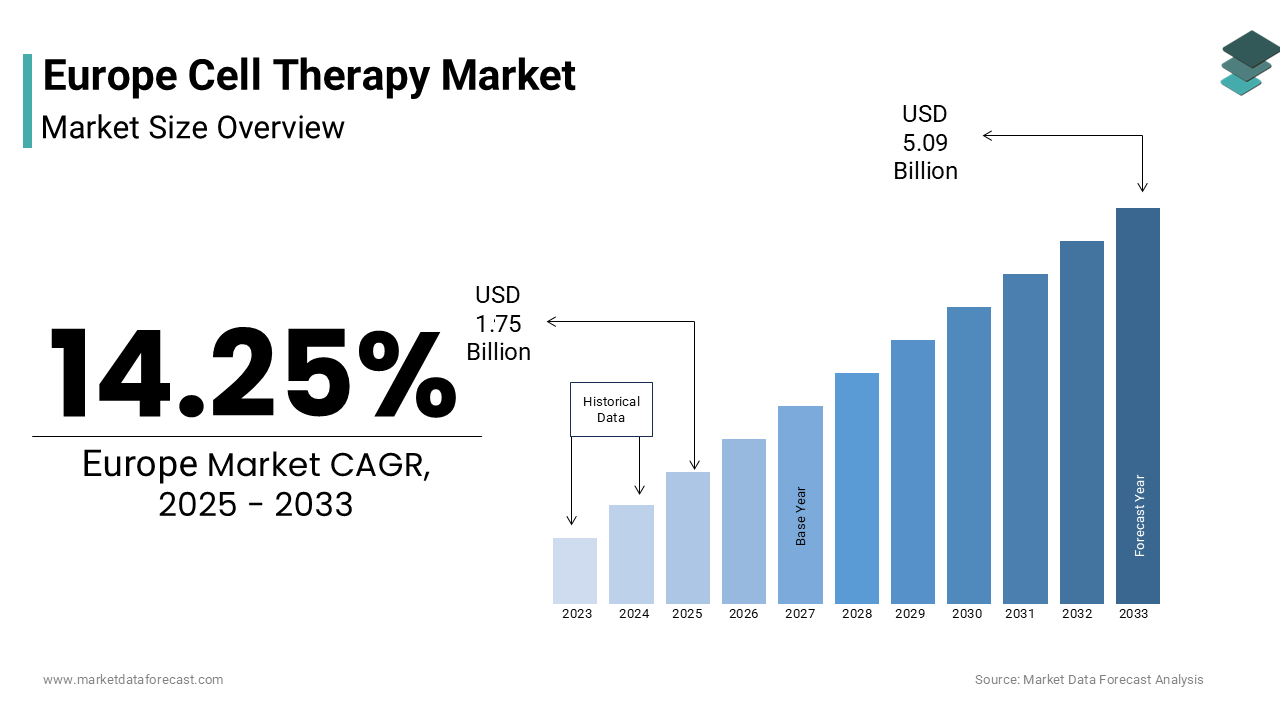
Cell therapy is the clinical application of live human cells, including autologous allogeneic and engineered cell populations to restore repair or replace damaged tissues or modulate pathological immune responses. These therapies fall primarily under the Advanced Therapy Medicinal Products framework established by Regulation EC 1394 2007 and are regulated by the European Medicines Agency through a centralized authorization process. Unlike conventional pharmaceuticals, cell therapies are living drugs with complex manufacturing logistics stringent chain of identity requirements and often single patient batch production. The clinical landscape is further shaped by hospital exemption provisions under Article 28 of the ATMP Regulation which permit non-commercial use of bespoke cell preparations under national oversight. This ecosystem of regulated commercial products national hospital exemptions and robust academic research defines the nuanced and rapidly evolving character of the Europe cell therapy market.
MARKET DRIVERS
Strong Public Funding for Academic and Translational Cell Therapy Research
Europe’s cell therapy advancement is significantly propelled by sustained public investment in academic and translational research infrastructure, which is driving the growth of Europe cell therapy market. The European Union’s Horizon Europe program allocated 1.2 billion euros between 2021 and 2027 specifically for advanced therapies including cell-based interventions as per the European Commission’s Directorate General for Research and Innovation. National initiatives further amplify this support with Germany’s Federal Ministry of Education and Research committing 220 million euros in 2023 to the Cell Therapy Platform Germany a multicenter network linking university hospitals and GMP manufacturing units. Similarly, the UK Medical Research Council funded the Cell and Gene Therapy Catapult with 90 million pounds to accelerate process development and regulatory readiness. These investments have enabled over 40 early phase academic trials in Europe focusing on mesenchymal stromal cells for graft versus host disease and regulatory T cells for type 1 diabetes as documented by the Clinical Trials Register of the European Union. This symbiosis between public funding and clinical academia ensures Europe remains a global incubator for novel cell therapy concepts beyond oncology.
High Burden of Chronic and Age Related Degenerative Diseases
The rising prevalence of chronic degenerative conditions across Europe creates compelling clinical demand for regenerative cell-based interventions is additionally to elevate the growth of Europe cell therapy market. According to Eurostat, EU population was aged 65 or older in 2023 a demographic projected to reach 32% by 2030. This aging cohort faces escalating rates of osteoarthritis with the European Alliance of Associations for Rheumatology estimating that 40 million Europeans suffer from symptomatic knee osteoarthritis alone. Similarly, the European Heart Network reports that cardiovascular diseases account for 1.8 million deaths annually making heart failure a critical target for cardiac progenitor cell therapies. Neurodegenerative disorders add further urgency with Alzheimer’s Disease International stating that 9.1 million Europeans live with dementia a figure expected to double by 2050. These statistics translate into tangible clinical pipelines where European institutions lead trials in chondrocyte implantation for cartilage repair cardiomyocyte patches for post infarction remodeling and neural stem cells for Parkinson’s disease.
MARKET RESTRAINTS
Complex and Lengthy ATMP Regulatory Approval Pathways
The European regulatory framework for cell therapies, while scientifically rigorous imposes significant time and cost barriers is solely hampering the growth of Europe cell therapy market. Advanced Therapy Medicinal Products require centralized marketing authorization from the European Medicines Agency involving comprehensive chemistry manufacturing and controls data non-clinical safety packages and confirmatory clinical trials. As per the European Court of Auditors the average development timeline for an ATMP from preclinical to approval exceeds 10 years with regulatory review alone taking 18 to 24 months. Only 29 ATMPs have received full EU approval since 2009 despite hundreds of clinical trials reflecting a high attrition rate. The requirement for full GMP compliance at early stages discourages academic innovators who lack manufacturing infrastructure. Furthermore, variations in national implementation of hospital exemption rules create legal uncertainty with Germany permitting broader use than France or Italy as noted by the European Regulatory Science on Advanced Therapies consortium. These regulatory complexities disproportionately affect small and medium enterprises which constitute 70% of Europe’s cell therapy developers.
Limited Reimbursement and Health Technology Assessment Hurdles
Even after regulatory approval cell therapies in Europe face formidable barriers in securing public reimbursement due to uncertain cost effectiveness and budget impact concerns. The limited reimbursement and health technology assessment hurdles is also impeding the growth of Europe cell therapy market. Health technology assessment bodies, such as Germany’s Institute for Quality and Efficiency in Health Care and the UK’s National Institute for Health and Care Excellence require robust comparative efficacy data and long-term outcomes which are often unavailable for novel one time therapies. As per the European Observatory on Health Systems and Policies, only 12 of the 29 approved ATMPs have achieved full national reimbursement across major EU markets. Kymriah a CAR T cell therapy for leukemia faces restricted use in Italy and Spain due to price negotiations stalling over 300000 euro per treatment costs. The absence of outcomes-based payment models exacerbates payer reluctance with most countries requiring upfront payment despite uncertain durability.
MARKET OPPORTUNTIES
Expansion of Hospital Exemption Frameworks for Bespoke Therapies
The hospital exemption provision under Article 28 of the EU ATMP Regulation offers a vital opportunity for delivering non-commercial personalized cell therapies within national healthcare systems. Unlike centralized marketing authorization this pathway allows hospitals to prepare and administer cell products for individual patients under national oversight without full EMA approval. Countries like Belgium Sweden and the Netherlands have established robust hospital exemption ecosystems with over 60 active programs as per the European Consortium for Cell Therapy and Regenerative Medicine. In 2023, the Karolinska University Hospital in Sweden treated 180 patients with mesenchymal stromal cells for Crohn’s fistula under this framework achieving 65% remission rates. The European Medicines Agency’s 2022 reflection paper encouraged harmonization of quality standards for exempted products to ensure patient safety while preserving access. This model is particularly valuable for ultra rare diseases and complex autologous interventions where commercial development is economically unviable.
Emergence of Allogeneic Off the Shelf Platforms and Process Innovation
The shift from autologous to allogeneic cell therapies in manufacturing scalability and cost barriers is substantially to create new opportunities for the growth of Europe cell therapy market. These allogeneic therapies are derived from healthy donor cells can be manufactured in large batches cryopreserved and distributed on demand. European companies, such as Celyad Oncology and TxCell are pioneering off the shelf CAR T and regulatory T-cell platforms with standardized production protocols. The European Commission’s Innovative Health Initiative funded the ALLOX project in 2023 with 55 million euros to develop universal donor T cell banks using gene editing to eliminate immune rejection. Concurrently, advances in bioreactor technology and closed automated systems from companies like Miltenyi Biotec reduce manual handling and contamination risk. These innovations position Europe to lead in scalable next generation cell therapies that align with healthcare system needs for predictability affordability and accessibility.
MARKET CHALLENGES
Shortage of Specialized GMP Manufacturing Capacity
Lack of proper Good Manufacturing Practice compliant facilities, which are capable of handling complex cell therapy production is acting as a barrier for the growth of Europe cell therapy market. According to the Alliance for Regenerative Medicine, Europe has fewer than 40 commercial scale ATMP manufacturing sites serving over 500 active clinical programs. This scarcity forces academic developers to outsource to overburdened contract development and manufacturing organizations leading to batch delays and cost inflation. A 2023 survey by the European Society for Gene and Cell Therapy found that 68% of academic trial sponsors experienced manufacturing delays exceeding six months due to capacity constraints. The situation is exacerbated by the need for segregated suites for autologous products to prevent cross contamination further reducing throughput. National initiatives like Germany’s Cell Therapy Platform aim to build public GMP hubs but progress is slow with only three new facilities operational since 2020.
Inconsistent Cross National Regulatory Interpretation and Clinical Trial Approval Timelines
The EU Clinical Trials Regulation aiming to harmonize trial authorization significant disparities persist in national review timelines and requirements for cell therapy studies. This factor is also to hamper the growth of Europe cell therapy market. Ethics committee evaluations add further variability with some countries requiring local site approvals even for multinational trials. These inconsistencies fragment trial recruitment increase administrative burden and deter sponsors from initiating pan European studies. The lack of mutual recognition for manufacturing and quality documentation further complicates multi center trials.
REPORT COVERAGE
| REPORT METRIC | DETAILS |
| Market Size Available | 2025 to 2034 |
| Base Year | 2025 |
| Forecast Period | 2026 to 2034 |
| Segments Covered | By Therapy Type, Cell Type, Technology, Source, Application, End-User & Region. |
| Various Analyses Covered | Global, Regional & Country Level Analysis, Segment-Level Analysis, DROC, PESTLE Analysis, Porter’s Five Forces Analysis, Competitive Landscape, Analyst Overview on Investment Opportunities |
| Regions Covered | UK, France, Spain, Germany, Italy, Russia, Sweden, Denmark, Switzerland, the Netherlands, Turkey, the Czech Republic, and the Rest of Europe. |
| Key Market Players | Novartis AG, Gilead Sciences, Inc., Bristol-Myers Squibb Co., Immunocore Holdings Plc, Innovent Biologics Inc., Janssen Global Services LLC, Legend Biotech Corp, Fujifilm Holdings Corporation, Smith & Nephew PLC, and Kolon TissueGene, Inc. |
SEGMENTAL ANALYSIS
By Therapy Type Insights
The autologous segment was accounted in holding 61.2% of the Europe cell therapy market share in 2025 with its established clinical track record regulatory acceptance and lower immunogenic risk compared to donor derived approaches. Autologous therapies, such as CAR T cell products Kymriah and Yescarta are standard of care for refractory B cell malignancies with response rates exceeding 80% in pivotal trials. As per the European Society for Blood and Marrow Transplantation, many autologous CAR T procedures were performed across EU hospitals in 2023 reflecting routine clinical integration. Additionally, autologous chondrocyte implantation for knee cartilage defects has been reimbursed in Germany and Sweden for over a decade with documented long term functional improvement in 70% of patients, as per some reports.
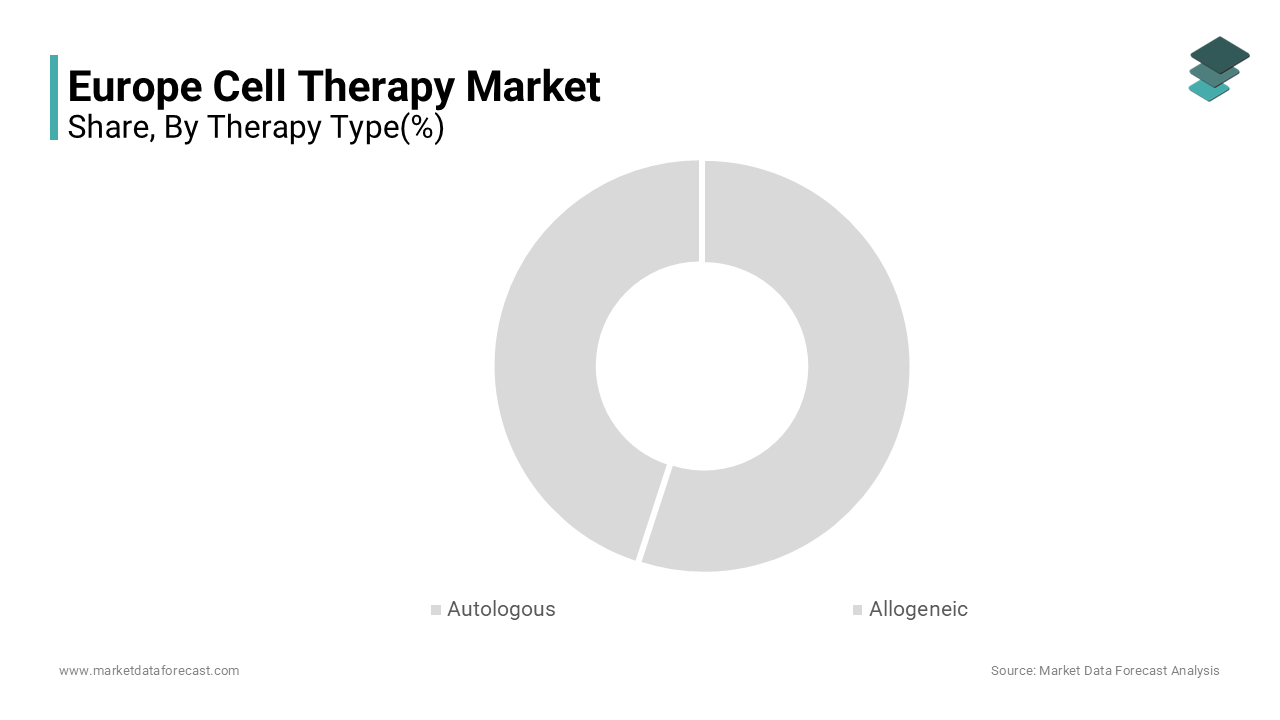
The allogeneic segment is swiftly emerging at a fastest CAGR of 24.3% from 2025 to 2033 from the emergence of off the shelf platforms that address the scalability and cost limitations inherent in autologous models. Unlike patient specific products allogeneic therapies can be manufactured in large batches cryopreserved and distributed on demand enabling broader access. European developers, such as Celyad Oncology and Kiadis Pharma are advancing universal donor T cell and NK cell platforms with gene editing to eliminate host rejection. Furthermore, the Paul Ehrlich Institute in Germany approved the first clinical trial of an allogeneic mesenchymal stromal cell product for steroid refractory graft versus host disease in early 2024 demonstrating regulatory openness.
By Cell Type Insights
The stem cells segment held a dominant share of the Europe cell therapy market share in 2025 owing to their multipotent differentiation capacity and immunomodulatory properties, which enable applications beyond oncology into regenerative and autoimmune disorders. Mesenchymal stromal cells derived from bone marrow or adipose tissue are the most widely used with over 120 active clinical trials in Europe targeting conditions such as Crohn’s fistula multiple sclerosis and osteoarthritis. Academic hospitals in Sweden and Belgium routinely administer stem cell therapies under hospital exemption with documented efficacy in real world settings. Additionally, induced pluripotent stem cell research at institutions like the University of Cambridge and Karolinska Institutet is advancing toward clinical translation for retinal and cardiac applications. The versatility of stem cells across therapeutic areas and their alignment with Europe’s public health priorities for degenerative diseases sustain their dominant position.
The non stem segment is expected to witness a fastest CAGR of 26.8% from 2026 to 2034 with the breakthroughs in immuno oncology particularly CAR T and TCR engineered lymphocytes for hematologic and solid tumors. In 2023, the European Medicines Agency approved Tepkinly a bispecific T cell engager for lymphoma marking accelerated regulatory pathways for non-stem cell modalities. European biotechs, such as Adaptimmune and TCR2 Therapeutics are pioneering TCR T cell platforms targeting solid tumors like sarcoma and melanoma with trials active in the UK, France, and Germany. As per the study, 40% increase in non-stem cell therapy trials between 2022 and 2023 driven by modular receptor engineering and improved tumor targeting. Additionally, NK cell therapies from companies like Nkarta and Affimed offer potential for allogeneic use without graft versus host risk. These innovations position non stem cell therapies as the engine of high growth in Europe’s evolving immuno oncology landscape.
By End User Insights
The hospitals and clinics segment was the largest by capturing 48.3% of the Europe cell therapy market share in 2025 with their dual role as both treatment delivery sites and manufacturing hubs under the hospital exemption framework. Over 200 EU hospitals are authorized to prepare and administer cell therapies on site with major centers in Germany, the UK, and Sweden performing hundreds of CAR T and mesenchymal stromal cell procedures annually. As per the research, 85% of commercially approved CAR T infusions occur in certified hospital units equipped with cytokine release syndrome management protocols. Additionally, national reimbursement systems in countries like France, and Italy tie therapy access to accredited hospital centers ensuring quality control and patient safety. The integration of cell therapy into standard oncology and immunology care pathways further cements hospitals as the primary point of clinical contact and operational execution in the European ecosystem.
The cell therapy manufacturing and processing centers segment is ascribed to register a fastest CAGR 28.1% during the forecast period owing to the urgent need to address critical GMP capacity shortages across the continent. In response, national initiatives are establishing dedicated centers such as the Cell and Gene Therapy Catapult’s Stevenage facility in the UK, and the French Cell Therapy Platform in Lyon. The German Federal Ministry of Education and Research invested 120 million euros in 2023 to build three public GMP hubs linked to university hospitals. These centers offer modular clean rooms automated bioreactors and chain of identity tracking to support both academic and commercial developers. Furthermore, the European Commission’s Innovative Health Initiative is funding the CGT Manufacturing Network to harmonize standards across 12 countries.
REGIONAL ANALYSIS
Germany Cell Therapy Market Analysis
Germany was the top performer of the Europe cell therapy market with 24.3% of share in 2025. The growth of the market in this country is driven with its robust hospital exemption system integrated oncology networks and strong public investment in ATMP infrastructure. Over 50 university hospitals are authorized to manufacture and administer cell therapies with the University Hospital of Heidelberg performing more than 300 CAR T procedures annually. Germany’s Paul Ehrlich Institute maintains a proactive regulatory stance having approved 12 ATMP clinical trials in 2023 alone. The Federal Ministry of Education and Research’s 220 million euro Cell Therapy Platform Germany links manufacturing academic and clinical sites into a cohesive ecosystem. Additionally, statutory health insurers provide timely reimbursement for approved therapies like Kymriah and Yescarta ensuring patient access.
The United Kingdom Cell Therapy Market Analysis
The United Kingdom was positioned second by holding 17.3% of the Europe cell therapy market share in 2025. The UK benefits from world class academic institutions, such as King’s College London and the University of Manchester that pioneer early phase cell therapy research. The Cell and Gene Therapy Catapult has catalyzed commercial translation by providing GMP manufacturing support to over 100 companies since 2012. The National Health Service operates 22 designated CAR T treatment centers ensuring standardized delivery and long term follow up. In 2023, the UK approved the first TCR T cell therapy for solid tumors under this framework. Strong venture capital investment with over 800 million pounds raised by UK cell therapy firms in 2023, according to UK BioIndustry Association further accelerates market momentum.
France Cell Therapy Market Analysis
France cell therapy market growth is likely to grow with the excels in both academic innovation and clinical application with Gustave Roussy and Institut Curie serving as leading oncology and cell therapy hubs. France has one of Europe’s most structured hospital exemption systems with 18 authorized centers administering mesenchymal stromal cells for graft versus host disease and Crohn’s fistula. The government’s France 2030 investment plan allocated 1 billion euros to advanced therapies including a national cell therapy manufacturing platform in Lyon. The Agence de la Biomédecine oversees donor registries and quality control ensuring ethical and safe cell sourcing. Additionally, France actively participates in EU wide consortia such as ALLOX to advance allogeneic platforms.
COMPETITIVE LANDSCAPE
Competition in the Europe cell therapy market is defined by a dual ecosystem of multinational pharmaceutical companies and agile academic biotechs operating under divergent models. Large firms like Novartis and Gilead dominate commercial oncology indications with centralized manufacturing and global regulatory strategies while European biotechs such as Celyad and TxCell focus on niche allogeneic platforms and non oncology applications often leveraging hospital exemption frameworks. The market is further shaped by public research institutions that drive early innovation but lack commercial scale. Regulatory complexity under the ATMP framework creates high barriers to entry favoring incumbents with established quality systems yet simultaneously enables bespoke academic therapies through national exemptions. Reimbursement remains fragmented with payers demanding long term outcomes data that are difficult to generate for one time curative therapies.
KEY MARKET PLAYERS
Some of the companies that are playing a dominating role in the Europe Cell Therapy Market include
- Novartis AG
- Gilead Sciences, Inc.
- Bristol-Myers Squibb Co.
- Immunocore Holdings Plc
- Innovent Biologics Inc.
- Janssen Global Services LLC
- Legend Biotech Corp
- Fujifilm Holdings Corporation
- Smith & Nephew PLC
- Kolon TissueGene, Inc.
Top Players in the Europe Cell Therapy Market
Novartis AG
Novartis AG is a Swiss multinational pharmaceutical company and a global pioneer in commercializing cell therapies with its CAR T cell product Kymriah being the first to receive European Medicines Agency approval in 2018. The company operates a state-of-the-art cell therapy manufacturing facility in Stein Switzerland serving the entire European market with stringent chain of identity and chain of custody protocols. Novartis expanded its European logistics network with cryogenic distribution hubs in the Netherlands and Sweden to reduce vein to vein time. It also launched a real world evidence program across 15 EU countries to monitor long term outcomes in pediatric leukemia patients treated with Kymriah. Novartis actively collaborates with academic centers to explore next generation T cell receptor therapies for solid tumors reinforcing its leadership in both delivery and innovation across the global cell therapy landscape.
Gilead Sciences Inc
Gilead Sciences Inc through its Kite Pharma subsidiary is a major force in the Europe cell therapy market with its anti CD19 CAR T therapy Yescarta approved for multiple B cell malignancies. The company established a dedicated European Commercial Cell Therapy Unit headquartered in London to coordinate market access regulatory engagement and hospital training. In 2024 Gilead inaugurated a new automated manufacturing suite at its Amsterdam facility capable of processing 3000 patient batches annually. It also partnered with the European Society for Blood and Marrow Transplantation to standardize cytokine release syndrome management protocols across certified treatment centers. Gilead’s investment in decentralized manufacturing and clinician education ensures consistent delivery quality and supports broader adoption of CAR T therapy throughout Europe and beyond.
Takeda Pharmaceutical Company Limited
Takeda Pharmaceutical Company Limited entered the Europe cell therapy market through its acquisition of TiGenix and now markets Alofisel an allogeneic stem cell therapy for complex perianal fistulas in Crohn’s disease. The company leverages its established gastroenterology and rare disease infrastructure to drive adoption across EU referral centers. In 2024 Takeda launched a digital patient support platform in Germany France and Italy offering care coordination logistics tracking and adverse event reporting. It also initiated the REALISE registry to collect real world data on Alofisel’s durability and quality of life impact. Takeda’s focus on unmet needs in non-oncology indications and its commitment to post authorization evidence generation distinguish its contribution to the global advancement of regenerative medicine.
Top Strategies Used by the Key Market Participants
Key players in the Europe cell therapy market are investing heavily in decentralized and automated manufacturing to reduce vein to vein time and improve batch consistency. Companies are establishing regional cryogenic logistics hubs and digital chain of identity platforms to ensure product integrity across complex supply chains. Strategic collaborations with academic hospitals and professional societies enhance clinician training and standardize treatment protocols. Real world evidence generation through post authorization registries and patient support programs strengthens reimbursement dossiers and addresses health technology assessment requirements. Additionally, firms are expanding into non oncology indications such as autoimmune and degenerative diseases to diversify therapeutic portfolios and leverage hospital exemption pathways for bespoke therapies.
MARKET SEGMENTATION
This research report on the Europe Cell Therapy Market has been segmented and sub–segmented into the following categories.
By Therapy Type
- Autologous
- Allogeneic
By Cell Type
- Stem Cells
- Non-Stem Cells
By Technology
- Somatic Cell Technology
- Viral Vector Technology
- Genome Editing Technology
- Cell Immortalization Technology
- Cell Plasticity Technology
- 3D Technology
By Source
- Bone Marrow
- Adipose Tissues
- Neural Stem Cell
- iPSCs
- Umbilical Cord Blood–Derived Cells
By Application
- Cardiovascular
- Gastrointestinal
- Neurological
- Oncology
- Musculoskeletal
- Dermatology
- Wounds & Injuries
- Ocular
- Others
By End-users
- Hospitals & Clinics
- Diagnostic & Research Centres
- Regenerative Medicine Centres
- Others
By Country
- UK
- France
- Spain
- Germany
- Italy
- Russia
- Sweden
- Denmark
- Switzerland
- Netherlands
- Turkey
- Czech Republic
- Rest of Europe
Frequently Asked Questions
What is the Europe Cell Therapy Market?
The Europe cell therapy market focuses on developing and commercializing therapeutic products derived from modified, engineered, or transplanted cells to treat various diseases including cancer, cardiovascular conditions, neurological disorders, and musculoskeletal issues.
What is driving the growth of the Europe cell therapy market?
Key drivers include rising prevalence of chronic diseases, advancements in stem cell and CAR-T technologies, growing investments in regenerative medicine, supportive government regulations, and increasing clinical trial activities across Europe.
Which countries lead the Europe cell therapy market?
Major contributing countries include Germany, the United Kingdom, France, Italy, and Spain, driven by strong healthcare infrastructure, active research institutions, and growing biotech investments.
What types of cell therapies are commonly used in Europe?
The major types include autologous cell therapy (patient’s own cells) and allogeneic cell therapy (donor cells). CAR-T cell therapies, stem cell therapies, and regenerative cell treatments are widely adopted.
What technologies are used in the cell therapy market?
Key technologies include somatic cell technology, viral vector technology, genome editing, cell immortalization, cell plasticity, and 3D technologies.
What are the key applications of cell therapy?
Cell therapies are used in cardiovascular disorders, oncology, neurological diseases, dermatology, musculoskeletal repair, wound healing, ocular diseases, and gastrointestinal diseases.
Who are the major players in the Europe cell therapy market?
Leading companies include Novartis AG, Gilead Sciences, Bristol-Myers Squibb, Immunocore Holdings, Innovent Biologics, Janssen Global Services, Legend Biotech, Fujifilm Holdings, Smith & Nephew, and Kolon TissueGene.
What challenges are limiting market growth?
Challenges include high treatment costs, complex regulatory frameworks, manufacturing limitations, ethical issues related to stem cell use, and limited reimbursement options for advanced therapies.
What opportunities exist in the Europe cell therapy market?
Key opportunities include expanding clinical trials, increasing demand for personalized therapies, technological innovation in stem cell engineering, growing public–private partnerships, and rising adoption of regenerative medicine.
How is cell therapy reimbursed in Europe?
Reimbursement varies by country, with nations like Germany and the UK having clearer frameworks for high-cost therapies, while others still face limited reimbursement acceptance.
Access the study in MULTIPLE FORMATS
Purchase options starting from
$ 2000
Didn’t find what you’re looking for?
TALK TO OUR ANALYST TEAM
Need something within your budget?
NO WORRIES! WE GOT YOU COVERED!
Call us on: +1 888 702 9696 (U.S Toll Free)
Write to us: sales@marketdataforecast.com