- Product Description Description
- Table of Contents TOC
- List of Table & Figure LOT
- Get Free Sample PDF Sample PDF
Market Size, 2025
$68.66 BnMarket Estimate, 2026
$72.13 BnMarket Forecast, 2034
$104.11 BnCAGR, 2026–2034
5.04%Europe Cheese Block Market Report Summary
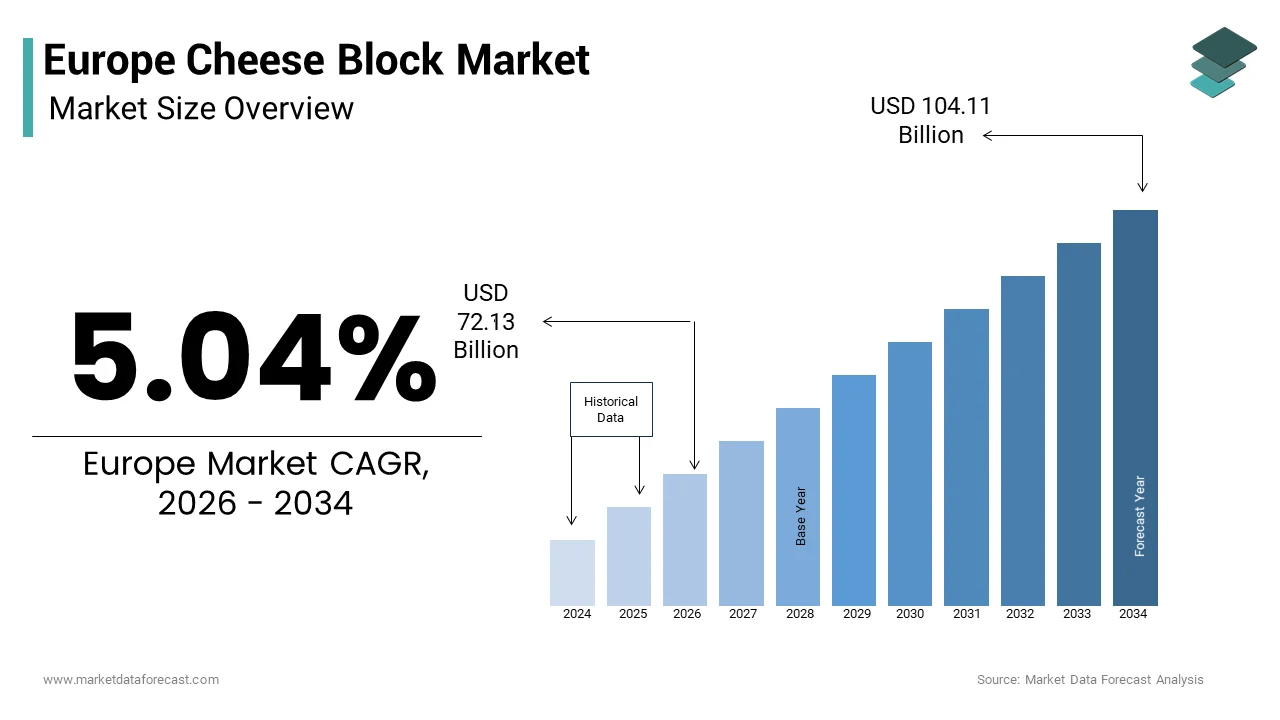
The Europe cheese block market was valued at USD 68.66 billion in 2025, is estimated to reach USD 72.13 billion in 2026, and is projected to reach USD 104.11 billion by 2034, growing at a CAGR of 5.04% during the forecast period from 2026 to 2034. The growth of the Europe cheese block market is driven by increasing consumption of dairy-based convenience foods, rising demand from the food service industry, and the widespread use of cheese blocks in processed and ready-to-eat meals. Additionally, strong culinary traditions across Europe, coupled with growing demand for high-quality natural cheese products, are further supporting market expansion. The increasing popularity of quick-service restaurants, bakery products, and frozen foods is also contributing significantly to the market’s steady growth.
Key Market Trends
- Rising demand for natural and minimally processed cheese blocks due to increasing consumer preference for clean-label and authentic dairy products.
- Growing consumption of cheese in fast food, pizza, and ready-to-eat meals across urban populations.
- Expansion of private-label dairy brands offering cost-effective cheese block options in retail markets.
- Increasing innovation in packaging and portion sizes to enhance shelf life and convenience.
- Strong demand from the HoReCa (Hotels, Restaurants, Cafés) sector driving bulk cheese block consumption.
Segmental Insights
By Type
The natural cheese segment dominated the Europe cheese block market in 2025, holding a substantial share. This dominance is attributed to the strong consumer preference for traditional, high-quality cheese varieties that offer superior taste, texture, and nutritional value compared to processed alternatives.
By Application
The offline sales segment held the majority share of the Europe cheese block market in 2025. Supermarkets, hypermarkets, and specialty dairy stores remain the primary distribution channels, as they provide consumers with a wide range of cheese varieties along with freshness assurance and in-store purchasing experiences.
Regional Insights
The Europe cheese block market demonstrates strong regional diversity, supported by well-established dairy industries and high per capita cheese consumption.
- Germany led the market, accounting for 22.2% of the share in 2025, driven by high consumption levels, a strong retail network, and a well-developed dairy processing industry.
- France held 16.3% of the market share, supported by its rich cheese-making heritage and strong domestic demand for premium cheese varieties.
- Italy maintains a notable position due to its globally recognized cuisine, particularly pizza and pasta, which rely heavily on cheese blocks such as mozzarella and provolone.
- The United Kingdom is experiencing steady growth, fueled by strong demand for cheddar cheese and an established food service sector.
- The Netherlands is expected to witness notable growth during the forecast period, supported by its robust dairy exports and advanced cheese production capabilities.
Competitive Landscape
The Europe cheese block market is highly competitive, with the presence of both global and regional dairy ingredient manufacturers focusing on product quality, innovation, and supply chain efficiency. Companies are investing in expanding production capacities, improving product formulations, and strengthening distribution networks to meet rising demand across retail and food service channels. Strategic partnerships with food processors and private-label retailers are also playing a key role in enhancing market presence.
Prominent players in the Europe cheese block market include Lactosan, Kerry, WILD Flavors, Lácteos La Cristina, NZMP, Kraft Heinz Ingredients, DairiConcepts, Primo Cheese, Ballantyne, Indesso, Commercial Creamery, Dairy Farmers of America, IBT InterBioTech, Rogue Creamery, Schwarzwaldmilch Dairy Ingredients, Food Source International, Kanegrade, and Blue Grass Dairy.
 Download Free Sample Report
Europe Cheese Block Market Size
The Europe cheese block market size was valued at USD 68.66 billion in 2025 and is anticipated to reach USD 72.13 billion in 2026 to reach USD 104.11 billion by 2034, growing at a CAGR of 5.04% during the forecast period from 2026 to 2034.
Current Introduction of the Europe Cheese Block Market
A cheese block is a solid, undivided piece of cheese sold in its natural form, typically in a rectangular or square shape. These blocks serve as essential raw materials for shredding, slicing, and melting operations within the culinary and manufacturing sectors across the continent. Unlike retail consumer packs, cheese blocks prioritize functional utility and volume efficiency for pizza manufacturers, sandwich producers, and institutional caterers. The region maintains a profound cultural connection to dairy, with per capita cheese consumption in the European Union continuing to show steady growth. According to the European Commission, this upward trajectory is driven by a strong consumer preference for a diverse range of traditional and specialty varieties. France and Germany stand as the largest consumers, accounting for a significant portion of this intake due to their entrenched gastronomic traditions. Production volumes remain robust, with Eurostat data confirming that the European Union has maintained high output levels in recent years. This consistent performance strengthens the region’s position as a global dairy powerhouse, supported by strategic processing shifts that prioritize cheese production over other dairy commodities to meet both domestic and international demand. The supply chain relies heavily on established cooperatives in nations like the Netherlands and Denmark, where milk collection systems ensure consistent raw material quality. Regulatory frameworks regarding geographical indications protect specific varieties, ensuring that blocks labeled as Parmigiano Reggiano or Roquefort adhere to strict origin standards. This structural integrity supports a market defined by high hygiene standards and sophisticated cold chain logistics essential for preserving product integrity during transit.
MARKET DRIVERS
Escalating Demand from the Industrial Food Processing Sector
The surging requirement from the industrial food processing sector is one of the major factors boosting the growth of the Europe cheese block market. This sector utilizes these blocks as fundamental ingredients for ready meals and frozen products. Manufacturers favor cheese blocks because they offer superior cost efficiency and operational flexibility compared to pre shredded alternatives, allowing facilities to customize shred sizes and blend varieties according to specific product formulations. The frozen food industry in Europe has witnessed substantial expansion, driven by a profound transformation in consumer behavior toward food resilience and sustainability. According to various sources, the market is growing as consumers increasingly prioritize products that offer a balance of nutrition, affordability, and convenience. Pizza production alone consumes vast quantities of mozzarella and cheddar blocks, driven by the quick service restaurant segment which continues to expand its footprint across major urban centers. Research indicates that the frozen pizza segment in Europe is experiencing steady year-over-year growth, supported by a rising preference for ready-to-bake options among dual-income families. This upward trend in pizza consumption supports a consistent demand for dairy components, particularly for the procurement of bulk cheese blocks used in high-volume production. Furthermore, the rise of meal kit delivery services has intensified demand for standardized cheese portions that can be easily integrated into home cooking solutions. Industrial buyers prioritize blocks for their extended shelf life and reduced waste profiles, which align with lean manufacturing principles. Food service operators are seeking to optimize kitchen workflows by shifting toward bulk block purchasing over retail packaging. As a result, this is creating a sustained upward trajectory for wholesale cheese block transactions throughout the region.
Robust Growth in Food Service and Hospitality Recovery
The vigorous recovery and subsequent growth of the food service and hospitality sector also fuels the expansion of the Europe cheese block market. This sector heavily relies on cheese blocks for menu preparation and bulk cooking operations. Following the stabilization of post pandemic restrictions, restaurants, hotels, and institutional cafeterias have resumed full scale operations, leading to a sharp rebound in the consumption of bulk dairy ingredients. The European hospitality sector continues to report steady revenue performance, though growth rates are stabilizing following the post-pandemic rebound. According to HOTREC, the industry remains a vital economic contributor, even as it navigates pressures from rising labor costs and evolving taxation policies across various member states.This resurgence directly translates to higher orders for cheese blocks used in breakfast buffets, lunch specials, and dinner entrees where melting consistency and flavor profile are critical. School canteens and corporate dining facilities also contribute substantially to this demand, as they require large format packaging to manage high volume feeding programs efficiently. The trend toward casual dining establishments offering gourmet grilled cheese sandwiches and cheese laden pasta dishes further amplifies the need for versatile cheese blocks that can be sliced or melted on demand. Additionally, the proliferation of cloud kitchens and dark stores has created new distribution channels that prioritize bulk ingredients to minimize storage space while maximizing output. Procurement patterns of food service distributors reflect a renewed commitment to stocking substantial inventories of cheese blocks. This shift follows a return of consumer confidence in dining out to pre-crisis levels, meeting the relentless pace of kitchen operations across the continent.
MARKET RESTRAINTS
Volatility in Raw Milk Prices and Feed Costs
The persistent volatility in raw milk prices impedes the growth of the Europe cheese block market. This volatility is driven by fluctuating feed costs and unpredictable weather patterns affecting pasture quality. Dairy farmers across the continent struggle with rising expenses for animal feed, energy, and fertilizers, which directly impact the cost base of milk production and subsequently cheese manufacturing. When feed costs escalate, farmers often reduce herd sizes or limit production, leading to tighter milk supplies that force cheese processors to pay premium rates for raw materials. This cost pressure squeezes profit margins for cheese block manufacturers who may find it difficult to pass the entire price increase to industrial buyers locked into long term contracts. Furthermore, climate variability such as droughts in Southern Europe or excessive rainfall in Northern regions disrupts grass growth cycles, forcing reliance on expensive stored fodder. The European Milk Board frequently highlights how these instabilities create an erratic pricing environment that hampers strategic planning for cheese producers. Consequently, manufacturers face difficulties in maintaining stable pricing for cheese blocks, causing hesitation among bulk buyers who seek predictable cost structures for their own production budgets. This economic uncertainty acts as a significant brake on market expansion, compelling some smaller processors to delay capacity upgrades or reduce output volumes to mitigate financial risk.
Stringent Environmental Regulations and Carbon Footprint Mandates
Stringent environmental regulations and carbon footprint mandates are slowing down the expansion of the Europe cheese block market. They increase operational complexity and compliance costs for cheese block producers. The European Union Green Deal and associated Farm to Fork Strategy demand drastic reductions in greenhouse gas emissions from the agricultural and food processing sectors, compelling dairy companies to invest heavily in sustainable technologies. Compliance with these regulations requires significant capital expenditure on manure management systems, renewable energy installations, and water recycling facilities, which elevates the overall cost of producing cheese blocks. Smaller artisanal producers often lack the financial resources to implement these advanced systems, potentially leading to market consolidation where only large conglomerates can afford to operate compliantly. Additionally, new packaging laws aimed at reducing plastic waste necessitate changes in how cheese blocks are wrapped and transported, adding another layer of expense and logistical adjustment. The transition to biodegradable or recyclable packaging materials often involves higher unit costs and potential compromises in product shelf life or protection. These regulatory pressures create a challenging operating landscape where the focus shifts from pure volume growth to costly sustainability adaptations, thereby slowing down the pace of market expansion and limiting the ability of producers to compete on price alone.
MARKET OPPORTUNITIES
Innovation in Plant Based and Hybrid Cheese Block Formats
The development and commercialization of innovative plant-based and hybrid cheese block formats provide major opportunities for the Europe cheese block market. These products cater directly to the evolving dietary preferences of European consumers. The flexitarian movement is gaining momentum across the region, with a growing number of individuals seeking to reduce animal protein intake without completely abandoning dairy flavors. Cheese block manufacturers can capitalize on this trend by introducing blocks made from nuts, oats, or coconut oil that mimic the melting and stretching properties of traditional dairy cheese. These products appeal to food service operators looking to diversify menus for vegan and lactose intolerant customers while maintaining the operational convenience of block formats. Furthermore, hybrid blocks that blend dairy and plant proteins offer a middle ground, reducing the overall carbon footprint while retaining familiar taste profiles. Investment in fermentation technology allows producers to create casein proteins without animals, enabling the production of cheese blocks that are chemically identical to dairy versions but classified as non animal derived. As major restaurant chains commit to expanding their plant based offerings, the demand for industrial sized blocks of these alternative cheeses will surge. Early movers who secure partnerships with quick service restaurants and frozen food manufacturers stand to capture significant market share in this emerging segment, redefining the traditional boundaries of the cheese block category.
Expansion of E Commerce and Direct to Business Digital Platforms
The rapid expansion of e-commerce and direct-to-business digital platforms is occurring across the region, which is likely to promote the growth of the Europe cheese block market. This offers a substantial opportunity to streamline the distribution and sales of cheese blocks. Traditional distribution models relying on multiple intermediaries are increasingly being bypassed by digital marketplaces that connect cheese producers directly with industrial buyers, restaurants, and catering companies. Dedicated B2B platforms enable cheese manufacturers to showcase their block varieties, provide real time inventory visibility, and offer dynamic pricing based on volume commitments. This digital transformation reduces transaction costs, minimizes order errors, and accelerates delivery times, making it easier for small and medium sized food businesses to access high quality cheese blocks. Additionally, data analytics integrated into these platforms allow producers to forecast demand more accurately and optimize production schedules, reducing waste and improving supply chain efficiency. The ability to offer subscription based models for regular block deliveries ensures steady revenue streams and fosters long term customer loyalty. As logistics networks become more sophisticated with cold chain capabilities tailored for online orders, the barrier to entry for digital cheese block sales diminishes. Producers who invest in robust digital infrastructures can reach a wider geographic audience, including remote rural areas previously underserved by traditional distributors, thereby unlocking new revenue potentials and enhancing market penetration throughout the continent.
MARKET CHALLENGES
Supply Chain Disruptions and Logistics Bottlenecks
The prevalence of supply chain disruptions and logistics barriers hampers the expansion of the Europe cheese block market. These issues impede the timely delivery of temperature-sensitive products. The intricate cold chain required for transporting cheese blocks demands seamless coordination between producers, transporters, and distributors, yet recent years have exposed significant vulnerabilities in this network. Driver shortages across the European trucking industry have reached critical levels. This lack of personnel leads to delayed shipments, increased freight costs, and potential spoilage of cheese blocks if temperature controls lapse during extended transit times. Furthermore, border congestion resulting from customs checks and regulatory divergences, particularly involving non EU neighbors, creates additional delays that threaten product freshness. Energy price spikes also impact refrigeration capabilities during transport, forcing logistics providers to raise rates to cover fuel and electricity expenses. These logistical hurdles complicate inventory management for food processors who rely on just in time delivery systems to maintain lean operations. When cheese blocks arrive late or in compromised conditions, production lines halt, causing financial losses and damaging supplier relationships. The fragility of the current logistics framework means that even minor disruptions can cascade into significant market inefficiencies, challenging producers to develop more resilient distribution strategies such as regional warehousing or diversified carrier partnerships to mitigate these persistent risks.
Labor Shortages in Dairy Farming and Processing Facilities
The acute labor shortage affects both dairy farming operations and cheese processing facilities, which in turn hinders the growth of the Europe cheese block market. This crisis threatens the consistent supply of cheese blocks. The agricultural workforce in Europe is aging rapidly, with fewer young people entering the farming profession due to perceived low wages and demanding working conditions. In addition, cheese processing plants face difficulties in recruiting skilled technicians and machine operators needed to run sophisticated production lines that manufacture cheese blocks. Automation offers a partial solution, yet the initial investment remains prohibitive for many mid sized enterprises, and fully automated systems still require human oversight for quality control and maintenance. The scarcity of labor drives up wage costs, further squeezing margins in an already competitive market. In regions heavily dependent on seasonal migrant workers, political changes and visa restrictions have exacerbated the shortage, leaving fields unharvested and factories understaffed. This manpower deficit limits the ability of the industry to scale up production in response to growing demand, creating a bottleneck that stifles market growth. The Europe cheese block market risks chronic supply constraints that could undermine its competitiveness against global imports. These risks arise from a lack of strategic interventions to attract talent through better training and working conditions.
REPORT COVERAGE
| REPORT METRIC | DETAILS |
| Market Size Available | 2025 to 2034 |
| Base Year | 2025 |
| Forecast Period | 2026 to 2034 |
| CAGR | 5.04% |
| Segments Covered | By Type, Application, and Region |
| Various Analyses Covered | Global, Regional, & Country Level Analysis; Segment-Level Analysis; DROC, PESTLE Analysis; Porter’s Five Forces Analysis; Competitive Landscape; Analyst Overview of Investment Opportunities |
| Regions Covered | UK, France, Spain, Germany, Italy, Russia, Sweden, Denmark, Switzerland, Netherlands, Turkey, and the Czech Republic |
| Market Leaders Profiled | Lactosan, Kerry, WILD Flavors, Lácteos La Cristina, NZMP, Kraft Heinz Ingredients, DairiConcepts, Primo Cheese, Ballantyne, Indesso, Commercial Creamery, Dairy Farmers of America, IBT InterBioTech, Rogue Creamery, Schwarzwaldmilch Dairy Ingredients, Food Source International, Kanegrade, Blue Grass Dairy |
SEGMENTAL ANALYSIS
By Type Insights
The natural cheese segment led the Europe cheese block market and captured a substantial share in 2025. This leading position of the segment is driven by the European consumer preference for authentic, minimally processed dairy products that adhere to traditional recipes and geographical indication standards. The dominance is further strengthened by the extensive use of natural cheese blocks in the industrial food service sector, where chefs and manufacturers prioritize flavor complexity and melting characteristics that processed alternatives cannot replicate. In addition, the primary force driving the natural cheese segment is the intensifying consumer demand for clean label products free from artificial additives, preservatives, and emulsifiers commonly found in processed varieties. European shoppers are increasingly scrutinizing ingredient lists, favoring products with short and recognizable components. A study indicates that a portion of consumers in the region actively seek out food items labeled as natural or free from artificial ingredients when making purchasing decisions. This shift has compelled food manufacturers and restaurant chains to reformulate their menus and product lines to feature natural cheese blocks exclusively. The perception of natural cheese as a healthier and more premium option aligns with the broader wellness trend sweeping across the continent. Furthermore, the strong cultural heritage associated with specific natural cheeses like Cheddar, Gouda, and Emmental reinforces this demand, as these varieties are integral to national cuisines. Retailers have responded by expanding their natural cheese block offerings, often emphasizing the origin and production methods to appeal to discerning buyers. This collective move toward transparency and authenticity ensures that natural cheese remains the preferred choice for both household consumption and industrial applications, sustaining its market leadership. A further reason for this growth is the robust regulatory framework within the European Union that protects and promotes traditional agricultural products through Geographical Indication schemes. These regulations safeguard the names of specific natural cheeses, ensuring that only products made in designated regions using traditional methods can bear certain labels. As per sources, there are numerous registered geographical indications for agricultural products and foodstuffs in the EU, a significant portion of which are natural cheeses. This legal protection creates a competitive moat for natural cheese producers, preventing imitation by processed alternatives and maintaining high value perception among consumers. The scheme not only guarantees quality but also supports rural economies by preserving traditional farming and cheesemaking practices. Industrial buyers seeking to market premium food products often mandate the use of GI certified natural cheese blocks to leverage this quality assurance in their own branding. The strict adherence to traditional production methods results in superior texture and flavor profiles that are highly valued in gourmet cooking and high end food manufacturing. Consequently, the regulatory environment acts as a powerful catalyst, reinforcing the market position of natural cheese blocks and discouraging the substitution with processed variants in premium market segments.
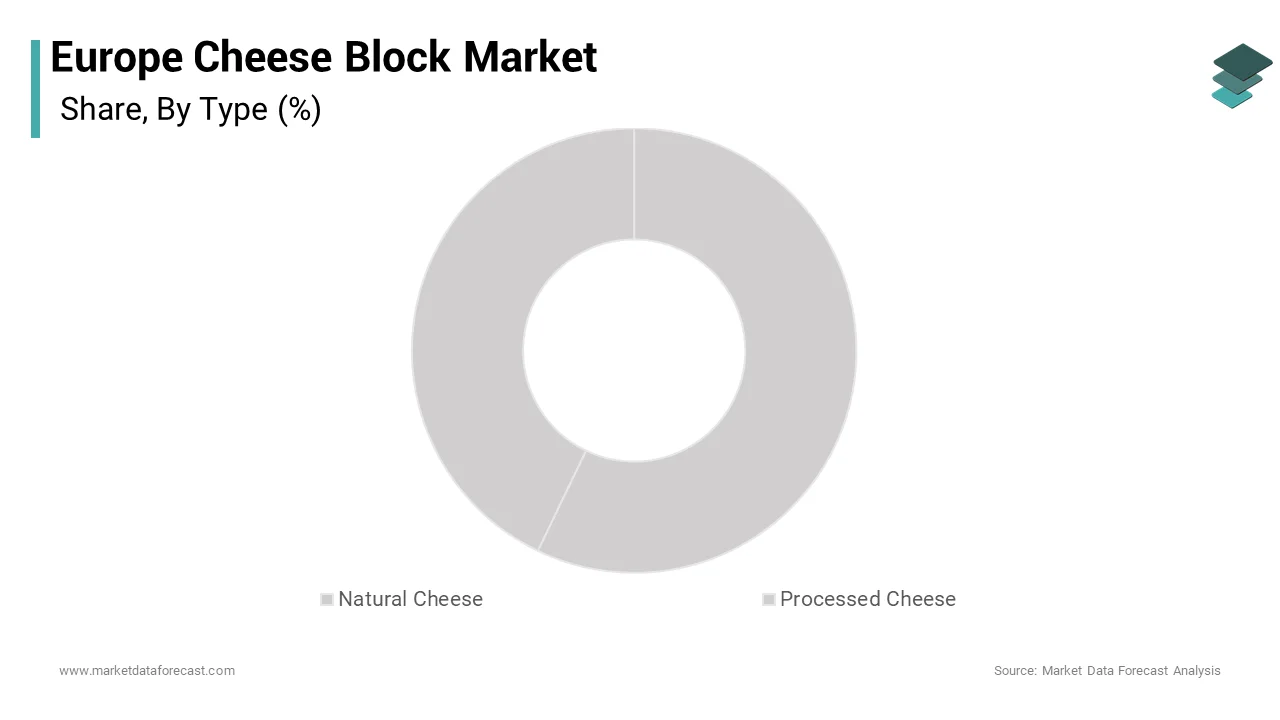
The processed cheese segment is likely to experience the fastest CAGR of 5.8% during the forecast period. This segment is experiencing rapid acceleration due to its functional advantages in specific industrial applications and its alignment with the needs of modern quick service restaurants. The growth is also fueled by the unique melting consistency, extended shelf life, and cost effectiveness that processed cheese blocks offer, making them indispensable for large scale food production where uniformity and efficiency are paramount. Moreover, the foremost factor propelling the growth of processed cheese blocks is the escalating demand from the quick service restaurant sector for ingredients that deliver consistent performance under high volume cooking conditions. Processed cheese blocks are engineered to melt uniformly without separating or becoming oily, a critical requirement for burgers, sandwiches, and nachos served in fast food chains. According to research, the quick service restaurant sector in Europe has notably expanded annually, driven by urbanization and changing lifestyle patterns that favor convenience dining. This expansion directly correlates with increased procurement of processed cheese blocks that guarantee every serving looks and tastes identical regardless of the location or staff skill level. The ability of processed cheese to remain stable during reheating and transport makes it ideal for ready to eat meals and frozen food applications as well. Food manufacturers value the predictability of processed cheese, which reduces waste and simplifies inventory management. Major fast food brands are continuing to rollout new cheese-laden menu items across the continent, increasing reliance on processed cheese blocks for operational reliability. Consequently, this will drive substantial volume growth in this segment. In addition, this segment is supported by the inherent cost efficiency and superior shelf life of processed cheese blocks compared to their natural counterparts, which appeals to cost conscious industrial buyers and retailers. The manufacturing process of processed cheese involves blending natural cheeses with emulsifying salts and heating, which halts bacterial activity and significantly extends the product lifespan. The extended durability reduces spoilage rates and allows for more flexible logistics and distribution networks, lowering overall supply chain costs. For food service operators facing tight margins, the lower price point of processed cheese blocks offers a viable solution to manage food costs without compromising on the presence of cheese in their dishes. Additionally, the versatility of processed cheese allows for the incorporation of various flavors and textures, enabling product innovation at a lower cost base. The demand for affordable, functional dairy ingredients is expected to rise as economic pressures persist in certain European regions. Processed cheese blocks offer a strategic solution for manufacturers trying to balance quality and cost in their portfolios.
By Application Insights
The offline sales segment held the majority share of the Europe cheese block market in 2025 because of the entrenched nature of traditional retail formats, the necessity of cold chain integrity for bulk dairy products, and the strong relationships between food service distributors and physical suppliers. Despite the digital surge, the tangible nature of food procurement, especially for perishable bulk items like cheese blocks, keeps brick and mortar channels at the forefront of the industry. Leading cause behind the offline segment's leadership is the pervasive presence and continued relevance of hypermarkets, supermarkets, and wholesale clubs across Europe. These physical stores serve as the primary procurement hubs for both household consumers buying large format packs and small to medium food businesses sourcing ingredients. For cheese blocks, the ability to verify packaging integrity, check expiration dates, and ensure proper refrigeration at the point of sale is a critical factor that online channels struggle to match perfectly. Large retail chains like Carrefour, Edeka, and Tesco operate sophisticated cold chain infrastructures that guarantee product freshness from warehouse to shelf, building immense trust among buyers. Furthermore, these stores often host in store promotions and tasting events that drive impulse purchases and brand loyalty for specific cheese block varieties. The immediate availability of stock eliminates delivery wait times, which is crucial for restaurants and caterers facing urgent inventory needs. This combination of trust, immediacy, and tactile verification ensures that offline channels remain the preferred route for the majority of cheese block transactions in the region. Also, this segment is boosted by the strength and maturity of established food service distribution networks that operate primarily through offline mechanisms. Specialized cash and carry wholesalers and broadline distributors form the backbone of the hospitality supply chain, delivering cheese blocks directly to restaurants, hotels, and institutional kitchens. These distributors offer credit terms, customized delivery schedules, and emergency restocking services that digital platforms often cannot replicate with the same flexibility. Account managers build long term partnerships with chefs and procurement officers, providing tailored recommendations on cheese block varieties based on menu requirements and budget constraints. The complexity of handling temperature sensitive bulk items requires a level of logistical coordination and human oversight that is deeply embedded in the offline model. Drivers and sales representatives often act as the final quality check, ensuring that cheese blocks arrive in perfect condition. This high touch service model fosters loyalty and reduces the incentive for food service operators to switch to purely digital alternatives, thereby sustaining the overwhelming market share of the offline sales segment.
The online sales segment is expected to exhibit a noteworthy CAGR of 11.2% between 2026 and 2034 owing to the digital transformation of B2B procurement, the rise of specialized food e commerce platforms, and the increasing comfort of businesses with online ordering systems. The convenience, transparency, and efficiency offered by digital channels are reshaping how cheese blocks are sourced and distributed. This rise is mainly due to the rapid digitalization of business to business procurement processes within the food and beverage industry. Companies are increasingly adopting e procurement platforms to streamline ordering, reduce administrative overhead, and gain better visibility into spending patterns. Online platforms allow purchasers to compare cheese block prices from multiple suppliers instantly, access detailed product specifications, and place orders 24 hours a day without being restricted by traditional sales hours. These systems often integrate with enterprise resource planning software, enabling automatic reordering when inventory levels drop, which minimizes the risk of stockouts. The transparency of digital marketplaces also fosters competition among suppliers, often resulting in better pricing and service terms for buyers. Additionally, the ability to track orders in real time provides reassurance regarding delivery schedules, a critical factor for perishable goods. The migration of cheese block purchasing to online channels will accelerate as more suppliers enhance their digital interfaces and offer seamless user experiences. Consequently, this segment is expected to see exceptional growth rates. Additionally, the segment is helped by the advancement of specialized cold chain logistics tailored for e commerce deliveries. Historically, the difficulty of maintaining temperature control during last mile delivery hindered the online trade of frozen and chilled bulk items. However, recent innovations in insulated packaging, refrigerated vans, and route optimization software have overcome these barriers. Third party logistics providers now offer dedicated services for perishable foods, ensuring that cheese blocks arrive at their destination within safe temperature ranges. This improved capability has encouraged specialized online grocery wholesalers and B2B food platforms to expand their catalogues to include heavy and bulky items like cheese blocks. The convenience of home or business delivery eliminates the need for buyers to travel to physical warehouses, saving time and transportation costs. Confidence in the reliability of cold chain delivery is growing, prompting more food service operators and bulk-buying households to turn to online channels for dairy. As a result, this segment is becoming the fastest-growing area of the market.
COUNTRY ANALYSIS
Germany Cheese Block Market Analysis
Germany dominated the Europe cheese block market and occupied a 22.2% share in 2025. The demand for cheese blocks in Germany is supported by its massive domestic consumption and robust processing industry. The country serves as the central hub for dairy production and distribution in Central Europe, leveraging its advanced infrastructure and high per capita dairy intake. The German market is characterized by a strong preference for versatile cheese varieties used extensively in both household cooking and the industrial food sector. A key driving factor is the sheer size of the German food processing industry, which is the largest in Europe and relies heavily on cheese blocks for the production of frozen pizzas, ready meals, and bakery products. The presence of major global food conglomerates and a dense network of bakeries and butchers further amplifies demand. Additionally, the German retail landscape is dominated by large discount supermarket chains that drive high volumes of private label cheese block sales, making the product accessible to a broad consumer base. The culture of "Abendbrot" or evening bread, which traditionally includes cheese slices cut from blocks, remains a staple in German households, ensuring steady retail demand. This combination of industrial might and deep rooted culinary traditions secures Germany's top position in the regional market.
France Cheese Block Market Analysis
France followed closely behind in the Europe cheese block market and accounted for a 16.3% share in 2025. The expansion of the French market is driven by its unparalleled reputation for cheese quality and diversity. The French market is unique due to its intense focus on protected designation of origin products, which influences the types of cheese blocks produced and consumed. While France is famous for artisanal wheels, the industrial sector increasingly utilizes cheese blocks for food service and export purposes. A primary driver is the thriving French hospitality and tourism sector, which consumes vast quantities of cheese blocks for hotel breakfasts, restaurant menus, and catering events. Furthermore, France is a major exporter of dairy products, and cheese blocks serve as a convenient format for international shipping to markets outside the EU where specific French varieties are in demand. The government's support for agricultural cooperatives ensures a stable supply of high quality milk, which is essential for producing premium cheese blocks. The rising trend of gourmet fast casual dining in Paris and other major cities also contributes to growth, as these establishments require consistent supplies of high grade cheese blocks to maintain their culinary standards while managing operational efficiency.
Italy Cheese Block Market Analysis
Italy holds a noteworthy share of the Europe cheese block market due to its iconic pizza and pasta industries which are heavy users of mozzarella and provolone blocks. The Italian market is deeply intertwined with its global reputation for Mediterranean cuisine, where cheese is a non negotiable ingredient in countless dishes. The primary catalyst for the market here is the enormous output of the Italian frozen pizza sector, which is one of the largest in the world and relies almost exclusively on mozzarella cheese blocks for production. Another significant factor is the dense network of pizzerias and trattorias across the country, from Naples to Milan, which purchase cheese blocks in bulk to shred fresh daily for authenticity. The Italian consumer's insistence on fresh ingredients means that pre shredded options are less popular in traditional settings, bolstering the demand for blocks. Additionally, the growth of the food delivery market in Italy has spurred restaurants to optimize their kitchen operations, leading to increased adoption of standardized cheese blocks that ensure quick preparation times without sacrificing the quality expected by discerning Italian diners.
United Kingdom Cheese Block Market Analysis
The United Kingdom experienced a steady growth in the Europe cheese block market owing to a strong affinity for cheddar and a mature food service sector. Despite challenges related to post Brexit trade dynamics, the UK market remains resilient due to its high consumption of cheese in traditional dishes like sandwiches, toasties, and cooked meals. A major driving force is the widespread popularity of the sandwich culture in the UK, where millions of sandwiches are consumed daily, many of which contain cheese sliced from bulk blocks in commercial kitchens and factory production lines. Furthermore, the UK has a highly developed pub and restaurant culture where cheese boards and melted cheese dishes are staples, requiring reliable supplies of block cheese. The consolidation of the retail sector into a few dominant supermarket groups has also streamlined the supply chain for cheese blocks, enabling efficient distribution to stores nationwide. The trend toward home cooking and baking, which saw a permanent uplift in recent years, has also increased household purchases of larger cheese blocks as consumers look to save money by buying in bulk rather than pre packed slices.
Netherlands Cheese Block Market Analysis
The Netherlands is anticipated to expand notably in the Europe cheese block market from 2026 to 2034 by leveraging its status as a global dairy powerhouse and a key export gateway. Although smaller in population compared to Germany or France, the Netherlands punches above its weight due to its massive production capacity and strategic logistics infrastructure. The primary driver is the country's role as a leading exporter of cheese, with Dutch cooperatives producing vast quantities of Gouda and Edam blocks specifically for international markets. The highly efficient port of Rotterdam serves as a critical hub for distributing these cheese blocks to the rest of Europe and beyond, enhancing the country's market influence. Domestically, the Dutch food processing industry is highly advanced, utilizing cheese blocks for a wide range of savory snacks and ready meals that are popular locally and exported. The concentration of large scale dairy farms and state of the art processing facilities ensures a consistent and high volume supply of cheese blocks. Additionally, the Dutch tradition of eating cheese with bread and crackers sustains steady local demand, while the country's focus on innovation in dairy technology keeps its cheese block products competitive in terms of quality and shelf life on the global stage.
COMPETITIVE LANDSCAPE
The competition in the Europe cheese block market is intense and characterized by the presence of large multinational corporations alongside strong regional cooperatives. Major players compete vigorously on product quality, price stability, and supply chain reliability to secure contracts with industrial food processors and retail chains. The market features a high degree of consolidation where top companies leverage their scale to negotiate better rates for raw materials and logistics services. Innovation plays a crucial role as firms strive to introduce new cheese varieties and sustainable packaging solutions to differentiate their offerings. Regulatory compliance regarding food safety and environmental standards creates a barrier to entry that favors established entities with resources to invest in necessary technologies. Price volatility in raw milk often leads to aggressive marketing tactics as companies attempt to protect their margins while retaining customer loyalty. The rise of private label products from major retailers adds another layer of pressure on branded manufacturers to justify premium pricing. Strategic partnerships and vertical integration are common tactics used to control costs and ensure consistent supply. This dynamic environment forces continuous adaptation and investment to maintain market standing.
KEY MARKET PLAYERS
A few of the dominating the players that are in the Europe cheese market are
- Lactosan
- Kerry
- Lactalis Group
- Arla Foods
- WILD Flavors
- Lácteos La Cristina
- Fonterra Co-operative Group
- NZMP
- Kraft Heinz Ingredients
- DairiConcepts
- Primo Cheese
- Ballantyne
- Indesso
- Commercial Creamery
- Dairy Farmers of America
- IBT InterBioTech
- Rogue Creamery
- Schwarzwaldmilch Dairy Ingredients
- Food Source International
- Kanegrade
- Blue Grass Dairy
Top Players In The Market
- Lactalis Group stands as a global dairy giant with a profound impact on the Europe cheese block market through its extensive portfolio of branded and private label products. The company operates numerous production facilities across France and neighboring nations to ensure a consistent supply of natural and processed cheese blocks for industrial clients. Lactalis recently focused on expanding its production capacity by upgrading manufacturing plants to increase efficiency and meet rising demand from the food service sector. The group actively pursues strategic acquisitions of local dairies to secure raw milk supplies and diversify its cheese varieties. Their commitment to sustainability involves investing in renewable energy sources for processing units to reduce carbon footprints. Lactalis leverages its vast distribution network to deliver cheese blocks to retailers and manufacturers throughout the continent. This robust infrastructure allows the company to maintain a leading position by offering reliable logistics and high quality products that adhere to strict European safety standards.
- Arla Foods operates as a major cooperative owned by thousands of European farmers and holds a significant influence in the Europe cheese block market. The company specializes in producing high quality cheddar and mozzarella blocks that serve as key ingredients for pizza manufacturers and sandwich producers globally. Arla recently launched innovative packaging solutions designed to extend the shelf life of cheese blocks while reducing plastic waste to align with environmental goals. The cooperative invests heavily in digital technologies to optimize its supply chain and improve traceability from farm to factory. Arla strengthens its market position by forming long term partnerships with large quick service restaurant chains to supply customized cheese block formats. Their focus on farmer welfare ensures a stable supply of premium milk which is essential for producing superior cheese products. The company also expands its footprint in emerging markets by exporting European style cheese blocks produced in their advanced facilities located in Denmark and Germany.
- Fonterra Co-operative Group although headquartered in New Zealand maintains a substantial presence in the Europe cheese block market through strategic imports and local blending operations. The company supplies specialized cheese blocks that cater to the specific melting and flavor requirements of European food processors. Fonterra recently enhanced its European logistics network to ensure faster delivery times and better temperature control during transit of perishable cheese products. The cooperative focuses on research and development to create new cheese block variants that meet evolving consumer preferences for taste and texture. They actively collaborate with European chefs and food technologists to develop custom solutions for the hospitality industry. Fonterra strengthens its position by committing to sustainable farming practices and transparent sourcing which appeals to environmentally conscious buyers. Their global scale allows them to balance supply fluctuations and offer competitive pricing to industrial customers across the region. This approach ensures they remain a key supplier despite being a non European native entity.
Top Strategies Used By Key Market Participants
Key players in the Europe cheese block market primarily employ expansion and innovation strategies to maintain competitiveness. Companies frequently invest in upgrading production facilities to increase output capacity and improve operational efficiency. Many firms pursue strategic acquisitions of smaller regional dairies to secure raw milk supplies and expand their product portfolios. Sustainability initiatives form a core part of their strategies as brands adopt eco friendly packaging and reduce carbon emissions to meet regulatory demands. Product differentiation is another vital approach where manufacturers develop specialized cheese blocks with unique flavors or functional properties for specific industrial applications. Strong supply chain management allows these entities to ensure consistent delivery and maintain product freshness across long distances. Digital transformation enables better inventory tracking and direct engagement with business customers through online platforms. Partnerships with food service giants help secure long term contracts and stabilize revenue streams. These combined efforts allow market leaders to adapt to changing consumer trends and economic conditions effectively.
MARKET SEGMENTATION
This research report on the Europe cheese block market is segmented and sub-segmented into the following categories.
By Type
- Natural Cheese
- Processed Cheese
By Application
- Online Sales
- Offline Sales
By Country
- UK
- France
- Spain
- Germany
- Italy
- Russia
- Sweden
- Denmark
- Switzerland
- Netherlands
- Turkey
- Czech Republic
- Rest of Europe