- Product Description Description
- Table of Contents TOC
- List of Table & Figure LOT
- Get Free Sample PDF Sample PDF
Market Size, 2025
$557 MnMarket Estimate, 2026
$592 MnMarket Forecast, 2034
$970 MnCAGR, 2026–2034
6.35%Europe Chick Peas Market Size
The Europe chick peas market size was valued at USD 557.41 million in 2025. The European market size is estimated to be worth USD 970.09 million by 2034 from USD 592.81 million in 2026, growing at a CAGR of 6.35% from 2026 to 2034.
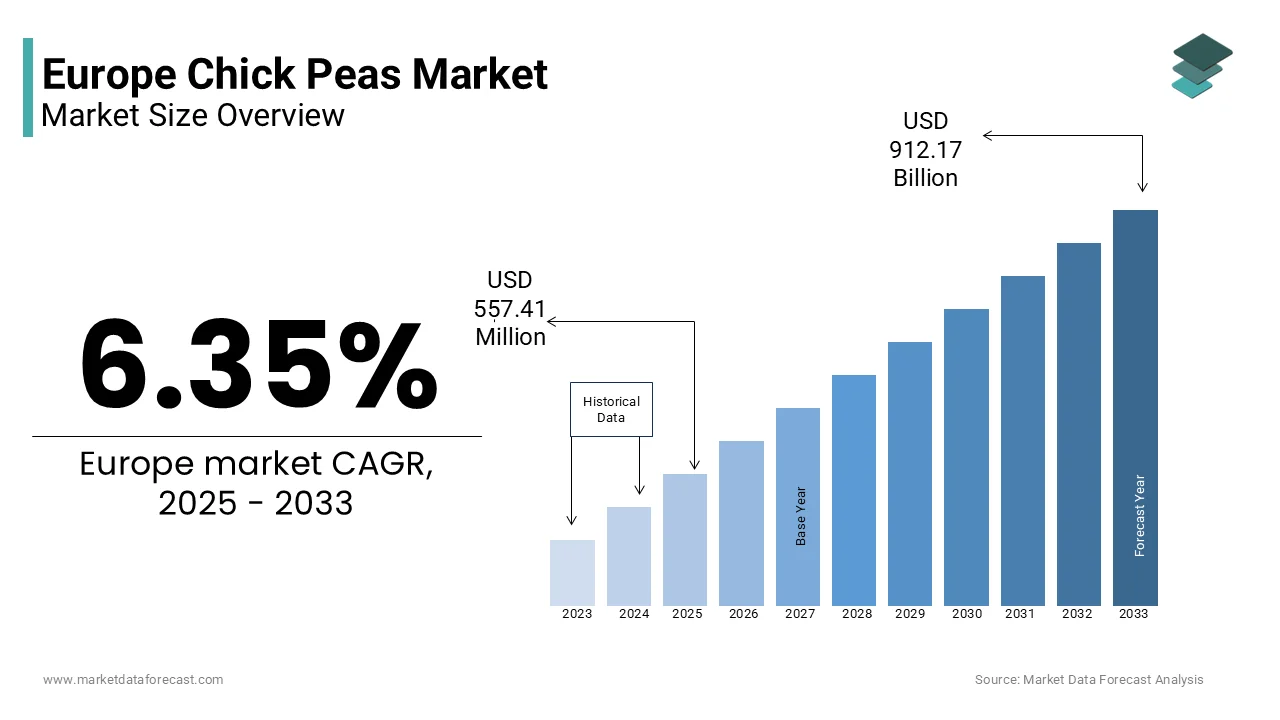
Chickpeas are a vital legume crop valued for their high protein content, dietary fiber, and versatility in both traditional and modern food applications. They are extensively used in Mediterranean and Middle Eastern-inspired cuisines, plant-based meat alternatives, ready-to-eat snacks, and health-focused food formulations. According to the Food and Agriculture Organization (FAO) , chickpeas contribute significantly to sustainable agriculture due to their nitrogen-fixing properties, which improve soil fertility and reduce dependency on synthetic fertilizers.
MARKET DRIVERS
Rising Demand for Plant-Based and Protein-Rich Diets
One of the primary drivers of the Europe chick peas market is the growing consumer preference for plant-based diets, particularly among younger demographics seeking sustainable and healthy food options. Chickpeas serve as a key ingredient in numerous plant-based food products such as meat substitutes, dairy-free spreads, and protein-enriched snacks. As per Euromonitor International, sales of plant-based meat alternatives in Europe grew by nearly 25% between 2020 and 2023, with chickpea-based formulations gaining traction due to their neutral flavor profile and nutritional benefits. Additionally, public health initiatives promoting legume consumption for cardiovascular health and diabetes management have contributed to increased demand. The European Food Safety Authority (EFSA) recognizes chickpeas as a source of essential nutrients including folate, iron, and soluble fiber, reinforcing their role in functional food development.
Expansion of Convenience and Ready-to-Eat Food Products
Another major driver fueling the Europe chick peas market is the rapid expansion of convenience and ready-to-eat (RTE) food products incorporating chickpeas as a core ingredient. Manufacturers are increasingly using chickpeas in snack bars, roasted chickpea crisps, instant soups, and pre-prepared meals tailored for busy consumers seeking nutritious yet time-saving meal solutions. As per the European Food Safety Authority (EFSA), processed legume-based snacks have gained popularity due to their low glycemic index and satiety-enhancing properties. Moreover, leading food companies such as Nestlé and Danone have introduced chickpea-infused product lines targeting health-conscious shoppers. Retailers like Carrefour and Tesco have also expanded their private-label offerings featuring chickpeas in innovative formats. This shift aligns with changing lifestyles, urbanization, and a growing emphasis on clean-label ingredients, all of which continue to support robust demand for chickpeas across the European food industry.
MARKET RESTRAINTS
Limited Domestic Production and Reliance on Imports
A significant restraint affecting the Europe chick peas market is the limited domestic production capacity, necessitating heavy reliance on imports to meet rising demand. While countries like Spain, Italy, and Greece cultivate chickpeas, yields remain relatively modest compared to global producers such as India and Australia. According to the Food and Agriculture Organization (FAO), Europe accounts for less than 5% of global chickpea production, despite increasing consumption trends.
This dependence on external sources exposes the market to supply chain disruptions, price volatility, and regulatory constraints. As per the European Commission’s Directorate-General for Agriculture and Rural Development, inconsistent climatic conditions across Europe, including droughts and unseasonal rainfall, further limit yield stability. Additionally, import tariffs and phytosanitary regulations imposed by the EU can complicate sourcing strategies for food manufacturers. These challenges hinder the consistent availability of raw materials, which is making it difficult for processors and retailers to maintain stable pricing and product supply, ultimately constraining market expansion.
Seasonal Availability and Storage Challenges
Another critical constraint in the Europe chick peas market is the seasonal nature of chickpea cultivation and the associated storage difficulties. Chickpeas require specific climatic conditions, primarily dry and warm environments, limiting their production window to certain months of the year. As per the European Environment Agency, unpredictable weather patterns due to climate change have exacerbated this issue, leading to irregular harvest cycles and reduced stock availability.
Storage presents additional complications, as chickpeas must be kept in controlled humidity and temperature environments to prevent spoilage and infestation. The International Legume Society notes that improper storage conditions can lead to significant post-harvest losses by reducing overall supply efficiency. Small-scale farmers and regional suppliers often lack access to advanced storage infrastructure, further complicating the supply chain. Furthermore, long-term storage of chickpeas requires investment in silos, hermetic containers, and pest control measures, which many local producers cannot afford.
MARKET OPPORTUNITIES
Growth of Functional and Nutritional Food Products
An emerging opportunity within the Europe chick peas market lies in the expanding sector of functional and nutritionally enhanced food products. Chickpeas are rich in protein, dietary fiber, resistant starch, and essential micronutrients by making them an ideal ingredient for developing fortified foods aimed at improving gut health, managing weight, and regulating blood sugar levels.
According to the European Nutrition and Health Report, there is a growing consumer demand for foods that offer added health benefits beyond basic nutrition. This has led to increased incorporation of chickpea flour, protein isolates, and whole chickpeas into breakfast cereals, baked goods, infant formulas, and sports nutrition products. Companies such as Upfield and Alpro have launched chickpea-based spreads and beverages catering to health-conscious consumers. Additionally, the European Institute of Innovation & Technology (EIT) supports research into novel legume-based food applications, encouraging startups and established food manufacturers to innovate.
Increasing Use in Alternative Protein and Meat Substitute Formulations
A major opportunity shaping the Europe chick peas market is the rising use of chickpeas in alternative protein and meat substitute formulations. As plant-based diets gain mainstream acceptance, food technologists are exploring chickpeas as a viable base for textured vegetable proteins, meat analogs, and dairy-free cheeses due to their mild taste, binding properties, and high protein content. Moreover, the European Sustainable Protein Association promotes chickpeas as part of a broader initiative to develop indigenous plant proteins that reduce reliance on imported soy and pea protein.
MARKET CHALLENGES
Competition from Other Legumes and Alternative Ingredients
A notable challenge facing the Europe chick peas market is the intense competition from other legumes and alternative plant-based ingredients that offer similar nutritional profiles and culinary versatility. Pulses such as lentils, peas, and fava beans are increasingly being used in food formulations due to their adaptability, shorter growing cycles, and better yield stability under varying climatic conditions. As reported by the European Pulse Association, lentil and field pea production has seen steady growth, supported by favorable EU agricultural subsidies and research programs aimed at enhancing domestic legume cultivation. Additionally, plant-based protein isolates derived from peas and soy have become dominant in the meat substitute industry, outpacing chickpea-based alternatives in terms of commercial scalability. Consumer familiarity also plays a role, as some European markets prefer locally available pulses over chickpeas, which are traditionally more associated with Mediterranean and Middle Eastern cuisines.
Consumer Awareness and Culinary Adaptation
Another significant challenge for the Europe chick peas market is the varying levels of consumer awareness and culinary adaptation across different European regions. While chickpeas are well-established in Southern European diets through dishes such as Spanish pan de garbanzo and Italian pasta e ceci, they remain less familiar in Northern and Eastern Europe where traditional diets emphasize animal proteins and cereal grains. According to the European Consumer Organisation (BEUC) , many consumers outside the Mediterranean basin perceive chickpeas as exotic or difficult to prepare, limiting their inclusion in everyday meals. This perception is reinforced by limited representation in mainstream supermarket meal kits, frozen entrees, and fast-food innovations compared to other legumes. Collaborations with chefs, influencers, and dietitians can help normalize chickpeas as a staple ingredient, thereby broadening their acceptance and usage across the wider European market.
REPORT COVERAGE
| REPORT METRIC | DETAILS |
| Market Size Available | 2025 to 2034 |
| Base Year | 2025 |
| Forecast Period | 2026 to 2034 |
| CAGR | 6.35% |
| Segments Covered | By Type, Color, Distribution Channel, and Region |
| Various Analyses Covered | Global, Regional, & Country Level Analysis; Segment-Level Analysis; DROC; PESTLE Analysis; Porter’s Five Forces Analysis; Competitive Landscape; Analyst Overview of Investment Opportunities |
| Regions Covered | UK, France, Spain, Germany, Italy, Russia, Sweden, Denmark, Switzerland, Netherlands, Turkey, Czech Republic, Rest of Europe |
| Market Leaders Profiled | Wimmera Grain Company, Arbel S.A., Bean Growers, Isik Tarim, Urunleri Sanayi Ic Ve Dis Ticaret Ltd Sti, JOVA Graneros S.A. de C.V., Mast Qalander Group of Companies, Indraprasth foods Ltd, and others. |
SEGMENT ANALYSIS
By Type Insights
The Kabuli chickpeas segment dominated the Europe chick peas market by accounting for 60.3% of share in 2025. A key driver behind this segment’s dominance is the higher consumer acceptance due to its larger size, creamy texture, and mild flavor , which make it ideal for use in Western-style dishes and processed foods. Additionally, the expansion of health-focused food brands incorporating Kabuli chickpeas into gluten-free pasta, protein bars, and extruded snacks has further boosted its popularity. Market research firm Statista notes that sales of chickpea-based snacks increased by over 25% between 2021 and 2023, with Kabuli varieties forming the majority of these formulations.
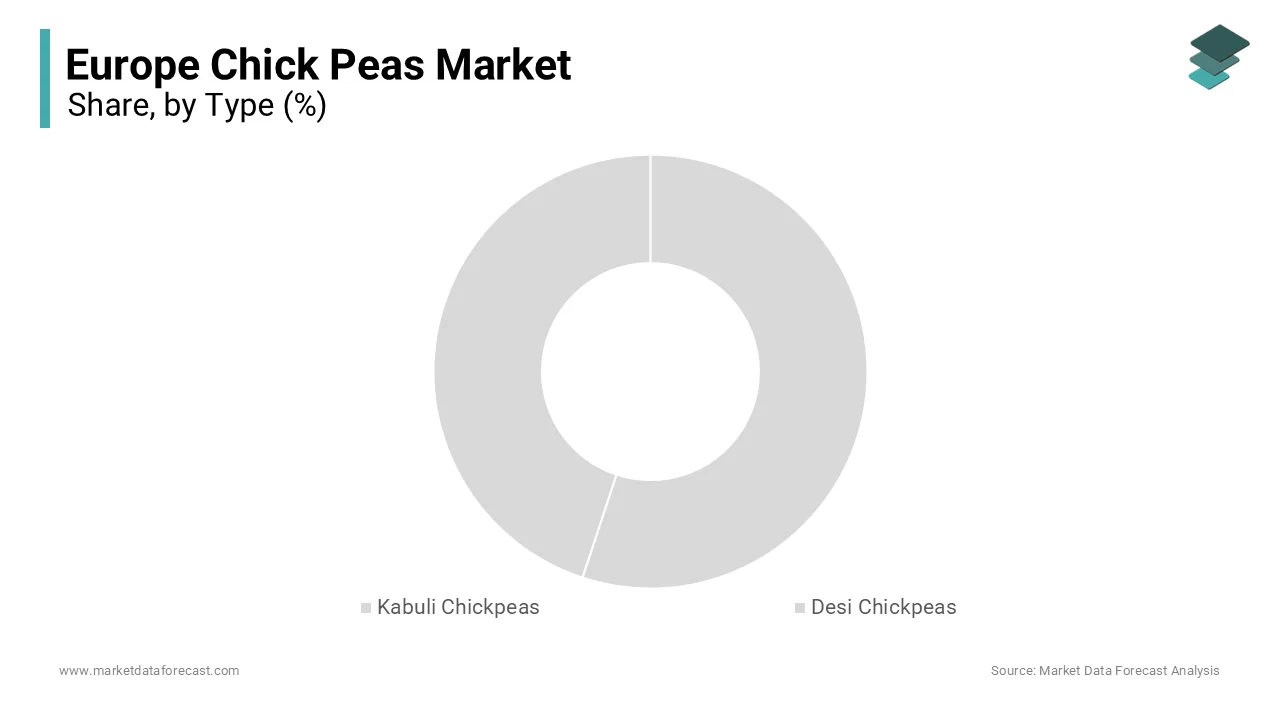
The Desi chickpeas segment is likely to grow with a CAGR of 7.8% throughout the forecast period. One significant factor fueling this expansion is the rising use of Desi chickpeas in flour-based food products such as besan (gram flour) and falafel mixes, which have gained traction in health-conscious and vegan diets. According to the European Vegetarian Union, plant-based and gluten-free eating trends have spurred demand for alternative flours, with chickpea flour being a preferred choice due to its high protein content and low glycemic index. Moreover, increased availability through specialty retailers and online platforms has made Desi chickpeas more accessible to consumers beyond their traditional culinary base.
By Colour Insights
The yellow chickpeas segment held 45.3% of the Europe chick peas market share in 2025. A primary growth driver is the increasing incorporation of yellow chickpea flour in bakery, snack, and pasta formulations among manufacturers targeting health-conscious consumers. According to the European Celiac Association, there is a rising demand for gluten-free alternatives, with chickpea flour serving as a nutrient-rich substitute for wheat and rice flour. Another contributing element is the growing popularity of yellow chickpea-based beverages and dairy alternatives in Northern Europe where plant-based diets are on the rise.
The brown chickpeas segment is esteemed to expand grow with a CAGR of 8.2% during the forecast period. One key contributing factor is the increased use of brown chickpeas in ready-to-cook and pre-packaged meal solutions, which is aligning with modern consumer preferences for convenience without compromising nutritional value. According to the European Consumer Organisation (BEUC) , packaged legume-based meals have seen a 30% increase in sales since 2020, with brown chickpeas featuring prominently in soups, stews, and curries. Additionally, the rising demand for minimally processed natural ingredients has positioned brown chickpeas as a preferred choice among organic food producers. Retailers like Carrefour and Rewe have expanded their private-label offerings to include brown chickpea-based products, catering to eco-conscious shoppers seeking whole-food nutrition.
By Distribution Channel Insights
The offline retailers segment was the largest by occupying 55.4% of the Europe chick peas market share in 2025. A key driver behind this segment’s prominence is the high footfall and consumer trust associated with physical shopping experiences for essential commodities like legumes. Additionally, major supermarket chains such as Lidl, Tesco, and Carrefour have expanded their chickpea product ranges, offering both branded and private-label options. According to Mintel , in-store promotions, bulk packaging, and recipe suggestions displayed at retail counters have further enhanced chickpea visibility and purchase intent.
The online retailers segment is expected to witness a CAGR of 9.4% in the next coming years. One significant factor fueling this expansion is the convenience of doorstep delivery and easy access to niche and organic chickpea products, which may not be readily available in local stores. Moreover, e-commerce platforms such as Amazon Fresh, Ocado, and Picnic have introduced subscription-based models for pantry staples, including chickpeas by encouraging repeat purchases. As per Euromonitor International, younger demographics and professionals are increasingly opting for online grocery services to save time and explore diverse product options.
REGIONAL ANALYSIS
Spain
Spain held 18.2% of the Europe chick peas market share in 2025. A major growth driver is the country’s significant domestic production of chickpeas in Castile and León, Extremadura, and Andalusia. In addition, Spanish cuisine heavily features chickpeas in dishes such as potaje de garbanzos , callos a la madrileña , and cocido. The Instituto Nacional de Estadística (INE) reports that household consumption remains stable, while the food processing sector increasingly utilizes chickpeas in ready-to-eat meals and plant-based snacks.
Italy
Italy chick peas market was positioned second by capturing 15.3% of the share in 2025. A key growth factor is the rising popularity of Mediterranean and vegetarian diets , which emphasize legumes for their nutritional benefits. Another contributing element is the expansion of chickpea-based food innovations, including plant-based burgers, gluten-free pasta, and protein-enriched snacks.
Germany
Germany chick peas market growth is likely to grow with prominent growth opportunities in the next coming years. According to the German Vegetarian Society (VEBU) , over 10% of the population follows a vegetarian or vegan diet, with many others adopting flexitarian habits that incorporate legumes like chickpeas. Additionally, the growing availability of chickpea-based convenience foods —such as ready-to-eat hummus cups, roasted chickpea crisps, and protein shakes—has broadened consumer appeal.
United Kingdom
The United Kingdom chick peas market is estimated to have steady growth rate in the next coming years. A major growth driver is the National Health Service (NHS) promotion of legumes as part of a balanced diet for cardiovascular health and diabetes management. Additionally, the UK government has allocated funding under the Future Food Strategy to encourage domestic legume cultivation, reducing import dependency.
France
France chick peas market is witnessing a growing shift toward plant-based proteins , with chickpeas playing a central role in both traditional and modern food formulations. One key growth enabler is the expansion of chickpea usage in French gastronomy , particularly in fusion cuisine and innovative plant-forward recipes. According to the French National Institute of Agricultural Research (INRAE), chickpea-based dishes are becoming more prevalent in institutional catering and restaurant menus, especially in Paris and Lyon. Additionally, there is a rising emphasis on sustainable farming practices, with the French government promoting legume rotation to enhance soil fertility and reduce chemical inputs.
KEY MARKET PLAYERS AND COMPETITIVE LANDSCAPE
Some of the major players in the market are Wimmera Grain Company, Arbel S.A., Bean Growers, Isik Tarim, Urunleri Sanayi Ic Ve Dis Ticaret Ltd Sti, JOVA Graneros S.A. de C.V., Mast Qalander Group of Companies, Indraprasth foods Ltd., R Young Seeds Inc. and OLEGA S.A. among others.
The Europe chick peas market is characterized by a mix of established agri-food companies, specialty food manufacturers, and emerging plant-based brands competing to capture growing consumer interest in nutritious and sustainable food options. While large-scale processors dominate through broad product portfolios and strong distribution networks, niche players are gaining traction by focusing on organic, functional, and innovative chickpea-based offerings. The market landscape is highly dynamic, shaped by shifting dietary trends, increasing vegetarianism, and rising demand for alternative proteins. Competitive differentiation is achieved through branding, product formulation, and strategic positioning around health and wellness. Additionally, retailers are playing a more prominent role by launching private-label chickpea products that compete directly with branded offerings.
TOP PLAYERS IN THIS MARKET
Ardo
Ardo is a leading European supplier of frozen vegetables, including chickpeas, and plays a crucial role in supplying high-quality legumes to both retail and foodservice sectors. The company emphasizes sustainable farming practices and vertical integration to ensure product consistency and traceability. Ardo’s commitment to innovation has led to the development of ready-to-use chickpea-based meal solutions tailored for convenience-driven consumers. Its extensive distribution network across Europe supports its strong market presence.
Amy's Kitchen Ltd. (Europe Division)
Amy’s Kitchen is well-known for incorporating chickpeas into a wide range of plant-based and organic food products such as soups, stews, and frozen meals. The company contributes significantly to expanding chickpea usage beyond traditional formats by integrating them into health-focused packaged foods. Amy’s Kitchen continues to influence consumer perception and demand for chickpeas in Western Europe with an emphasis on clean-label ingredients and ethical sourcing.
Lantmännen Cerealia AB
Lantmännen, a Swedish agri-food cooperative, actively promotes chickpeas as part of its sustainable crop rotation strategy and plant-based food portfolio. Through its subsidiary Cerealia, the company develops chickpea-based flours, pasta alternatives, and baking ingredients that cater to gluten-free and protein-rich diets. Lantmännen’s focus on regional agriculture and food innovation strengthens its position as a key player in Northern and Central Europe.
TOP STRATEGIES USED BY THE KEY MARKET PLAYERS
Product Innovation and Diversification
Leading companies are continuously developing new chickpea-based food formats such as snacks, dairy alternatives, and meat substitutes to meet evolving consumer preferences. This includes introducing value-added products like pre-cooked chickpeas, ready-to-eat hummus cups, and extruded chickpea crisps tailored for convenience and nutrition-conscious shoppers.
Sustainable Sourcing and Local Production Initiatives
To align with European sustainability goals, companies are investing in local chickpea cultivation and implementing eco-friendly sourcing strategies. These efforts reduce carbon footprints, support farmers through contract farming, and ensure supply chain resilience while promoting chickpeas as a climate-smart crop.
Strategic Partnerships and Retail Collaborations
Key players are forming alliances with retailers, foodservice providers, and ingredient suppliers to expand market reach. These collaborations help in co-developing chickpea-integrated products, enhancing shelf visibility, and leveraging marketing campaigns that educate consumers about the nutritional and culinary benefits of chickpeas.
RECENT HAPPENINGS IN THE MARKET
- In March 2025, Ardo nv launched a new line of flash-frozen chickpea-based meal components designed for quick-service restaurants and home meal kits, which is aiming to enhance convenience and reduce preparation time for chefs and consumers alike.
- In July 2025, Amy's Kitchen introduced a chickpea-based vegan burger patty under its frozen food range by targeting environmentally conscious consumers seeking plant-based protein alternatives without compromising taste or texture.
- In October 2025, Lantmännen Cerealia partnered with a major Nordic supermarket chain to develop exclusive chickpea flour and ready-to-mix pancake products by reinforcing its presence in the gluten-free and health-focused food segment.
- In January 2026, Hipp Organic, a German baby food brand, expanded its legume-based infant meals with the inclusion of chickpea purees, which is tapping into the growing trend of early exposure to diverse plant proteins.
- In May 2026, Algramo, a UK-based sustainable packaging startup, collaborated with chickpea suppliers to offer refillable chickpea packs in select grocery stores by supporting zero-waste initiatives and encouraging bulk purchases among eco-conscious shoppers.
MARKET SEGMENTATION
This research report on the Europe chick peas market is segmented and sub-segmented into the following categories.
By Type
- Kabuli Chickpeas
- Desi Chickpeas
By Color
- Yellow
- Brown
- Green
- Red
By Distribution Channel
- Distributors
- Suppliers
- Online Retailers
- Offline Retailers
By Country
- UK
- France
- Spain
- Germany
- Italy
- Russia
- Sweden
- Denmark
- Switzerland
- Netherlands
- Turkey
- Czech Republic
- Rest of Europe