- Product Description Description
- Table of Contents TOC
- List of Table & Figure LOT
- Get Free Sample PDF Sample PDF
Market Size, 2025
$3.44 BnMarket Estimate, 2026
$3.89 BnMarket Forecast, 2034
$10.24 BnCAGR, 2026–2034
12.87 BnEurope Circulating Tumor Cells Market Report Summary
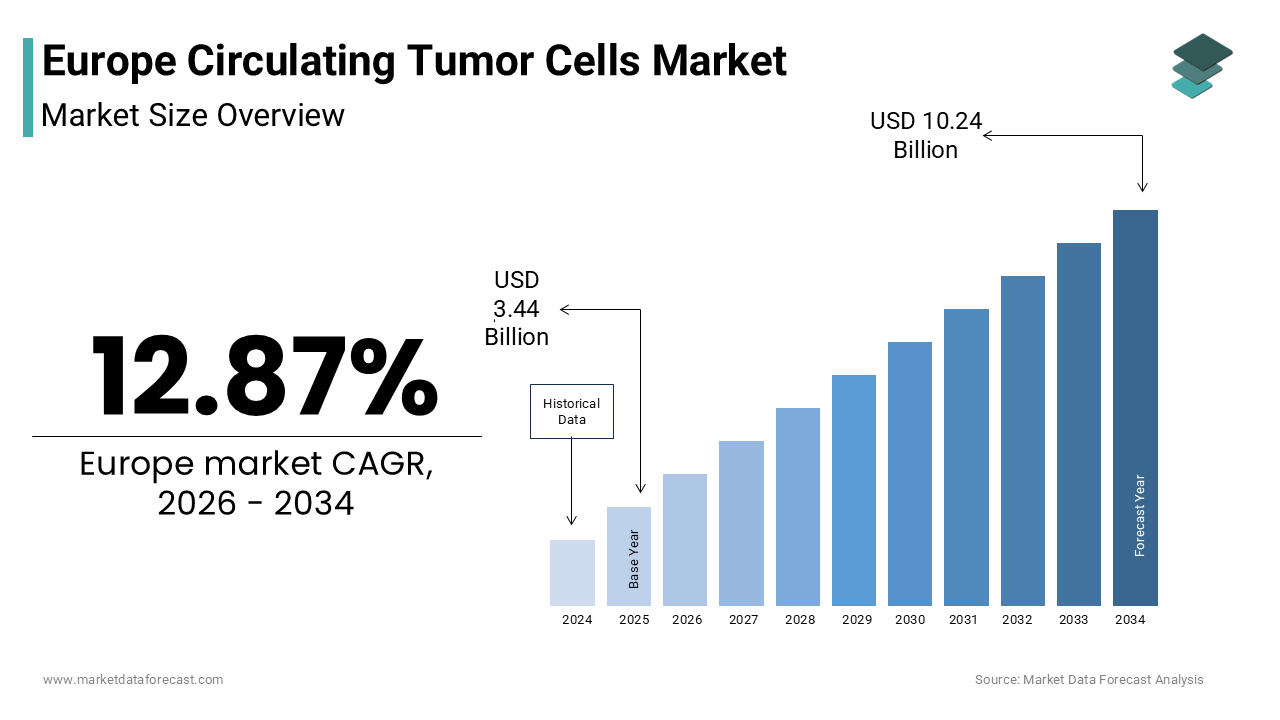
The Europe circulating tumor cells (CTCs) market was valued at USD 3.44 billion in 2025, is projected to reach USD 3.89 billion in 2026, and is expected to grow to USD 10.24 billion by 2034, expanding at a CAGR of 12.87% during the forecast period from 2026 to 2034. The growth of the Europe circulating tumor cells market is primarily driven by the rising prevalence of metastatic cancers, increasing adoption of precision oncology frameworks, and advancements in liquid biopsy technologies. Circulating tumor cells offer a minimally invasive approach to monitor disease progression, therapeutic response, and tumor heterogeneity in real time, supporting personalized treatment strategies across European healthcare systems. Furthermore, growing investments in biomarker-driven oncology research and the integration of molecular diagnostics into national cancer programs are accelerating market expansion across Europe.
Key Market Trends
-
Increasing adoption of liquid biopsy solutions for real-time cancer monitoring and treatment response assessment.
-
Expansion of precision oncology programs incorporating CTC analysis alongside genomic profiling.
-
Advancements in single-cell multiomics enabling deeper functional characterization of circulating tumor cells.
-
Growing collaboration between academic institutions, pharmaceutical companies, and diagnostics providers to validate CTC clinical utility.
-
Development of label-free microfluidic technologies improving capture efficiency and enabling high-throughput analysis.
Segmental Insights
-
Based on technology, the CTC enrichment methods segment dominated the Europe circulating tumor cells market with a 42.3% share in 2024, driven by the critical need to isolate extremely rare tumor cells before downstream molecular analysis.
-
Based on application, the cancer stem cell research segment held 58.2% of the Europe CTC market share in 2024, supported by increasing research focus on metastasis biology and therapy resistance mechanisms.
-
Based on end user, the research and academic institutes segment accounted for 62.1% of the Europe circulating tumor cells market in 2024, reflecting strong public funding and Europe’s dense network of oncology research centers driving innovation and validation studies.
Regional Insights
The Europe circulating tumor cells market shows strong regional growth supported by advanced healthcare infrastructure, national cancer initiatives, and rising adoption of precision diagnostics.
-
Germany led the Europe circulating tumor cells market by accounting for 22.3% of the regional share in 2024, driven by strong biomedical research infrastructure and early adoption of liquid biopsy technologies.
-
France maintains a significant position due to centralized oncology networks, national cancer programs, and strong government investment in precision medicine initiatives.
-
The United Kingdom is expected to witness notable growth supported by NHS genomic medicine programs and increasing clinical adoption of liquid biopsy diagnostics.
-
Italy and the Netherlands are emerging as important markets owing to expanding personalized oncology initiatives, strong academic collaborations, and growing investments in translational research.
Competitive Landscape
The Europe circulating tumor cells market features a competitive environment shaped by continuous innovation in microfluidics, molecular profiling, and biomarker discovery. Leading companies focus on improving capture efficiency, enabling single-cell analysis, and achieving regulatory compliance under evolving European diagnostic standards. Key players operating in the Europe circulating tumor cells market include Eurofins Genomics, MDx Health, Guardant Health, Thermo Fisher Scientific, Menarini Silicon Biosystems, QIAGEN, Exact Sciences, Myriad Genetics, Illumina, Natera, Bio-Rad Laboratories, Biocept, LungLife AI, and F. Hoffmann-La Roche. Strategic partnerships with academic institutions, advancements in multiomics technologies, and expanding clinical validation programs remain central to strengthening market positioning across Europe
 Download Free Sample Report
Europe Circulating Tumor Cells Market Size
The Europe circulating tumor cells market size was valued at USD 3.44 billion in 2025 and is anticipated to reach USD 3.89 billion in 2026 from USD 10.24 billion by 2034, growing at a CAGR of 12.87% during the forecast period from 2026 to 2034.
The Circulating tumor cells (CTCs) are rare malignant cells that detach from primary or metastatic tumors and enter the peripheral bloodstream by offering a minimally invasive means to assess cancer dynamics in real time. In Europe, the CTC market encompasses technologies for isolation, enumeration, and molecular profiling of these cells, primarily used in oncology research and clinical decision support. Unlike traditional tissue biopsies, CTC analysis enables longitudinal monitoring of disease progression, therapeutic response, and resistance mechanisms without procedural morbidity. The scientific credibility of CTCs has grown substantially in metastatic breast, prostate, and colorectal cancers, where their prognostic value is well documented. According to the European Commission’s Joint Research Centre, over 2.7 million new cancer cases were diagnosed in the European Union in 2020. As per the Organisation for Economic Co operation and Development, cancer accounts for approximately 21% of all noncommunicable disease related deaths in high income European nations. These epidemiological trends underscore the urgent need for advanced diagnostic modalities like CTC assays that align with Europe’s evolving precision oncology sector.
MARKET DRIVERS
Rising Incidence of Metastatic Cancers Fuels Demand for Real Time Monitoring Tools
The metastatic disease is the principal cause of cancer mortality is certainly one of the major driving factors for the growth of Europe circulating tumor cells market. According to the International Agency for Research on Cancer, nearly 45% of newly diagnosed breast cancer cases in Western Europe either present with or later develop distant metastases, a pattern also observed in prostate and colorectal malignancies. Conventional imaging often fails to detect micrometastatic spread or early signs of treatment resistance, whereas CTC enumeration provides a quantifiable biomarker strongly correlated with clinical outcomes. Landmark studies published in The Lancet Oncology have shown that metastatic breast cancer patients with five or more CTCs per 7.5 mL of blood exhibit significantly shorter progression free and overall survival compared to those with fewer CTCs. This prognostic reliability has led to CTC integration into clinical trial endpoints and national oncology guidelines.
Expansion of Precision Oncology Frameworks Across European Healthcare Systems
The strategic commitment to precision medicine, where the adoption of CTC technologies within national cancer control infrastructures is also accelerating the growth of Europe circulating tumor cells market. The European Reference Networks for rare and complex cancers, established under the EU Directive on Patients’ Rights in Cross Border Healthcare, increasingly incorporate molecular diagnostics into therapeutic algorithms. As per the European Society for Medical Oncology, more than 70% of oncology trials launched in the European Union between 2018 and 2023 employed biomarker driven patient selection, many leveraging liquid biopsy data. Countries such as France, and the Netherlands have formally integrated genomic profiling and minimal residual disease monitoring into routine oncology pathways, with CTC analysis serving as a complementary tool to circulating tumor DNA. Additionally, the Innovative Medicines Initiative with a joint venture between the European Union and the European Federation of Pharmaceutical Industries and Associations has funded multiple consortia exploring CTC utility in predicting immunotherapy response.
MARKET RESTRAINTS
High Cost and Limited Reimbursement Hinder Widespread Clinical Adoption
The clinical deployment of CTC assays is significantly constrained by high per test costs and inconsistent reimbursement policies. This factor is solely hampering the growth of Europe circulating tumor cells market. Most commercial CTC platforms, including the CellSearch system, range from 800 to 1500 euros per test expenses rarely covered by public health insurers outside specialized academic centers. According to the European Observatory on Health Systems and Policies, only four European countries like Germany, France, Italy, and the Netherlands that offer partial or conditional reimbursement for CTC testing, and even then, exclusively in defined metastatic contexts. Nations like Spain and Poland classify CTC analysis as investigational, excluding it from standard benefit packages. This financial barrier disproportionately affects community oncology practices and smaller hospitals, limiting equitable access. As per a 2023 survey by the European Association for Cancer Research, oncologists in Central and Eastern Europe identified cost as the primary obstacle to implementing liquid biopsy protocols.
Technical Limitations in CTC Capture Efficiency and Standardization
The extreme rarity and biological heterogeneity of circulating tumor cells pose persistent technical hurdles that compromise assay reliability across European laboratories. The technical limitations in adopting new technologies is also impeding the growth of Europe circulating tumor cells market. CTCs can occur at frequencies as low as one cell per billion blood cells, and their detection is further complicated by epithelial to mesenchymal transition, which reduces expression of surface markers used in antibody based capture. According to a multicenter validation study published in Nature Communications, the sensitivity of leading CTC platforms varies widely from 55 to 89% depending on cancer type and disease stage, with notably poor performance in early stage disease. Compounding this issue, the European Committee for Standardization confirms that no universally accepted protocol exists for preanalytical variables such as blood collection tubes, storage duration, or processing timelines. This lack of standardization introduces significant interlaboratory variability. The European Liquid Biopsy Society has acknowledged that inconsistent CTC enumeration can lead to divergent clinical interpretations, even when using identical platforms.
MARKET OPPORTUNITIES
Integration of CTC Analysis into Early Detection and Screening Programs
The emerging evidence positions CTCs as potential tools for population level cancer screening is setting up new opportunities for the growth of Europe circulating tumor cells market. While current applications focus on metastatic monitoring, recent studies demonstrate CTC presence in asymptomatic individuals years before clinical diagnosis. These findings align with the European Commission’s Beating Cancer Plan, which prioritizes early detection through innovative diagnostics. Pilot programs in Sweden and Finland are already evaluating CTC assays alongside conventional biomarkers in lung and pancreatic cancer screening two malignancies lacking effective early detection methods. According to the World Health Organization Regional Office for Europe, early diagnosis could reduce regional cancer mortality by up to 30%. Strategic investment in high throughput, automated CTC platforms tailored for screening contexts could position Europe as a global leader in preventive oncology.
Advancements in Single Cell Multiomics Unlocking Functional CTC Profiling
The emergence of microfluidics, next generation sequencing, and artificial intelligence is enabling deep functional characterization of individual CTCs, opening new frontiers in therapeutic discovery and monitoring. The advancements in single cell multiomics is leveraging the growth of Europe circulating tumor cells market. Unlike bulk tissue analysis, single cell CTC profiling reveals intratumoral heterogeneity, clonal evolution, and real time resistance mechanisms. As per the European Molecular Biology Laboratory, researchers in Heidelberg have successfully performed whole transcriptome and epigenetic analyses on single CTCs from metastatic prostate cancer patients, identifying novel androgen receptor splice variants undetectable in primary biopsies. These innovations are gaining traction under the EU’s Horizon Europe program, which allocated 120 million euros in 2024 to liquid biopsy driven oncology initiatives. By transforming CTCs from static prognostic indicators into dynamic models of tumor biology, Europe is fostering a new paradigm in drug development and adaptive therapy. This evolution not only enhances clinical utility but also attracts pharmaceutical partnerships seeking real world biomarkers for trial enrichment and pharmacodynamic assessment.
MARKET CHALLENGES
Interpretation Variability Due to Lack of Clinical Validation Across Tumor Types
The uneven clinical validation across different cancer types, resulting in inconsistent interpretation and limited integration into clinical guidelines is a major challenge for the growth of Europe circulating tumor cells market. While CTC enumeration is well established in metastatic breast, prostate, and colorectal cancers, its prognostic or predictive value remains uncertain in malignancies such as glioblastoma, ovarian, and renal cell carcinoma. According to a systematic review by the European Society of Pathology, fewer than 15% of CTC studies published between 2019 and 2023 included prospective validation in non-epithelial tumors, leaving clinicians without evidence-based thresholds for clinical action. This knowledge gap leads to significant interphysician variability; as per a 2024 survey by the European Organisation for Research and Treatment of Cancer, 61% of medical oncologists reported uncertainty in interpreting CTC results for cancers outside the validated trio. Regulatory bodies like the European Medicines Agency have not issued tumor specific guidance for CTC use, further complicating adoption. Without large scale, multicenter trials demonstrating clinical utility across a broader oncology spectrum, CTC platforms risk being confined to a narrow set of indications, stifling innovation and market expansion.
Regulatory Fragmentation Across European Jurisdictions Delays Market Access
The decentralized implementation of medical device regulations creates substantial delays and compliance complexities for CTC platform developers is additionally limiting the growth of Europe circulating tumor cells market. Although the European Union Medical Device Regulation (MDR) came into full effect in 2021, its enforcement varies significantly among member states due to differences in notified body capacity and national competent authority interpretations. As per the European Coordination Committee of the Radiological Electromedical and Healthcare IT Industry, the average time to obtain CE marking for a Class IIb in vitro diagnostic device like a CTC assay increased by 40% between 2020 and 2024, with some startups awaiting certification for over 18 months. Post market surveillance requirements also differ markedly: Germany mandates quarterly performance audits for liquid biopsy devices, while Portugal requires only annual reporting. This regulatory asymmetry forces manufacturers to maintain multiple compliance dossiers, escalating operational costs. According to a report by the European Diagnostic Manufacturers Association, many small and medium enterprises identified regulatory fragmentation as the top barrier to pan European commercialization.
REPORT COVERAGE
| REPORT METRIC | DETAILS |
| Market Size Available | 2025 to 2034 |
| Base Year | 2025 |
| Forecast Period | 2026 to 2034 |
| CAGR | 12.87% |
| Segments Covered | By Technology, Product, End User and Region |
| Various Analyses Covered | Regional & Country Level Analysis, Segment-Level Analysis, DROC, PESTLE Analysis, Porter’s Five Forces Analysis, Competitive Landscape, Analyst Overview on Investment Opportunities |
| Countries Covered | UK, France, Spain, Germany, Italy, Russia, Sweden, Denmark, Switzerland, the Netherlands, Turkey, the Czech Republic, and the Rest of Europe. |
| Market Leaders Profiled | Eurofins Genomics, MDx Health, Guardant Health, IMMUCOR, Thermo Fisher Scientific Inc., Menarini Silicon Biosystems, QIAGEN N.V., Exact Sciences Corporation, Myriad Genetics Inc., LungLife AI Inc., Bio-Rad Laboratories Inc., Illumina Inc., Natera Inc., Biocept Inc., and F. Hoffmann-La Roche Ltd. |
SEGMENTAL ANALYSIS
ByTechnology Insights
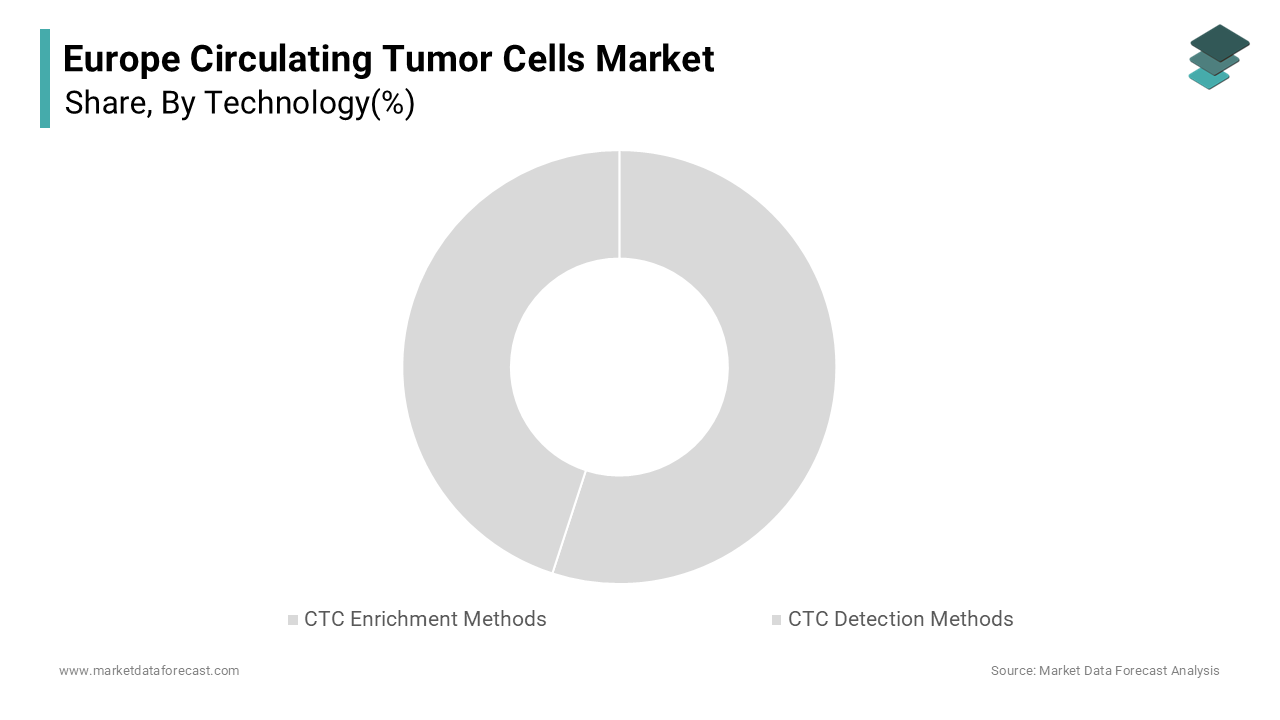
The CTC enrichment methods segment was the largest by holding 42.3% of the Europe circulating tumor cells market share in 2024 owing to the foundational role enrichment plays in nearly all downstream CTC analyses, whether for enumeration, molecular profiling, or functional assays. The primary driver is the necessity to isolate extremely rare CTCs that often fewer than 10 cells per 7.5 mL of blood from a complex background of billions of hematologic cells. As per the European Molecular Biology Laboratory, over 90% of published CTC studies between 2020 and 2024 employed some form of physical or immunomagnetic enrichment prior to detection. Antibody based positive selection using epithelial cell adhesion molecule (EpCAM) remains the most widely adopted approach, particularly in clinical settings aligned with the CellSearch platform’s regulatory clearance. Additionally, academic consortia funded under Horizon Europe increasingly standardize enrichment protocols to ensure cross study reproducibility. Germany’s Federal Institute for Drugs and Medical Devices reports that many CE marked CTC kits submitted since 2022 included integrated enrichment modules, reflecting industry alignment with this critical workflow step.
The single spiral microchannel technology segment is lucratively growing at a fastest CAGR of 18.3% during the forecast period with its label free, high throughput capability to separate CTCs based on size and deformability without relying on surface markers with an advantage in capturing mesenchymal or EpCAM low CTC subpopulations often missed by antibody-based methods. According to a validation study led by the Karolinska Institute in Sweden, single spiral devices achieved a CTC recovery rate of 89% in metastatic lung cancer patients, compared to 62% for conventional immunomagnetic systems. The technology’s compatibility with downstream genomic and proteomic analysis further enhances its appeal in precision oncology pipelines. Startups such as Vortex Biosciences and Parsortix have formed strategic partnerships with European research hospitals, including the Netherlands Cancer Institute, to integrate spiral microchannels into liquid biopsy workflows.
By Application Insights
The cancer stem cell research segment was the largest by occupying 58.2% of the Europe circulating tumor cells market share in 2024 with the scientific consensus that CTCs harbor stem like properties enabling tumor initiation, therapy resistance, and metastasis key hallmarks of aggressive disease. European research institutions have prioritized CTC derived cancer stem cell characterization as a strategic focus under the EU’s Horizon Europe Cluster 1 Health program. As per the European Association for Cancer Research, over 200 active projects in 2024 specifically investigated CTC plasticity and stemness markers such as CD44, ALDH1, and OCT4 in breast and pancreatic malignancies. The German Cancer Consortium has demonstrated that CTCs expressing stem cell signatures correlate with 3.2 times higher risk of relapse in early-stage colon cancer patients. Furthermore, the European Medicines Agency recognizes CTC based stemness profiling as a potential surrogate endpoint in trials evaluating novel anti metastatic agents. National funding bodies, including France’s Institute National du Cancer, have allocated dedicated grants for CTC stem cell organoid development. The emergence of basic science, drug discovery, and clinical validation ensures sustained dominance of cancer stem cell research in the European CTC landscape.
The “Multiple Chromosome Abnormalities & Others” application segment is estimated to witness a fastest CAGR of 16.7% throughout the forecast period with the advances in single cell cytogenetics that enable high resolution detection of aneuploidy, chromothripsis, and copy number variations directly in CTCs, providing real time insights into genomic instability during therapy. As per a multicenter study coordinated by the University of Cambridge, CTCs from metastatic prostate cancer patients exhibited complex chromosomal rearrangements in many cases, often preceding radiographic progression by months. Such findings are reshaping clinical monitoring paradigms, particularly in cancers where tissue biopsies cannot capture spatial heterogeneity. The European Liquid Biopsy Society has endorsed CTC based karyotyping as a complementary tool to circulating tumor DNA for tracking clonal evolution.
By End User Segment Insights
The research and academic institutes segment was the largest by holding 62.1% of the Europe circulating tumor cells market share in 2024 from Europe’s dense network of publicly funded cancer research centers, which serve as incubators for CTC technology development, validation, and protocol standardization. Institutions such as the German Cancer Research Center, the Institut Curie in Paris, and the Francis Crick Institute in London operate dedicated liquid biopsy cores that process thousands of CTC samples annually for both internal and collaborative studies. As per Eurostat, European Union member states invested 24.8 billion euros in health-related research in 2023, with oncology diagnostics receiving the largest allocation within the life sciences domain. Moreover, the European Reference Networks facilitate cross border data sharing, enabling multi-institutional CTC studies that would be impossible in isolated settings. The European Research Council has awarded over 40 Proof of Concept grants since 2020 specifically for CTC based innovations originating from academic labs.
The hospitals and physician laboratories segment in the Europe CTC market is projected to grow at a CAGR of 15.9% from 2025 to 2033 with the gradual integration of CTC testing into routine oncology care pathways, particularly in countries with advanced precision medicine infrastructures. As per the European Society for Medical Oncology, 38% of comprehensive cancer centers in Germany, France, and the Netherlands now offer CTC enumeration as part of standard metastatic workups for breast and prostate cancer. The UK’s National Health Service has initiated pilot programs in 12 tertiary hospitals to evaluate CTC guided therapy switching in real world settings. Regulatory milestones also contribute: the European Commission granted CE IVDR certification to three new CTC platforms in 2024, all designed for hospital laboratory deployment with turnaround times under 48 hours. Additionally, the European Organisation for Research and Treatment of Cancer’s SPECTA platform enables hospitals to contribute CTC data to pan European biomarker registries, enhancing clinical relevance.
REGIONAL ANALYSIS
Germany Circulating Tumor Cells Market Analysis
Germany was the largest contributor of the Europe circulating tumor cells market by occupying 22.3% of share in 2024 with the robust biomedical infrastructure and early adoption of liquid biopsy technologies. The country hosts Europe’s highest concentration of molecular pathology laboratories certified under the German Medical Association’s quality standards, with over 140 facilities offering CTC analysis as of 2024. The German Cancer Consortium, a national network linking 12 university hospitals and the German Cancer Research Center, has standardized CTC protocols across its sites, enabling large scale clinical validation. The Federal Ministry of Education and Research has committed 85 million euros since 2022 to liquid biopsy innovation, including CTC based minimal residual disease detection. Furthermore, German regulatory authorities maintain one of Europe’s most efficient CE IVDR review pathways, facilitating faster market entry for domestic developers like Greiner Bio One.
France Circulating Tumor Cells Market Analysis
France was ranked second with 18.2% of the Europe CTC market share in 2024 owing to its centralized oncology care model and strong public investment in precision medicine. The French National Cancer Institute oversees a nationwide network of 15 designated “Labs of Excellence” that routinely perform CTC enumeration in metastatic settings for breast and prostate cancer. As per the French National Authority for Health, CTC testing was included in the 2023 National Cancer Plan as a recommended tool for monitoring treatment response in high-risk patients. The country also benefits from dynamic public private partnerships; the Carnot Institute network has facilitated technology transfer agreements between academic labs and diagnostics firms such as Rarecells Diagnostics.
UK Circulating Tumor Cells Market Analysis
The United Kingdom CTC market growth is expected to grow with a prominent CAGR throughout the forecast period with its world class academic medical centers and proactive integration of liquid biopsies into national health strategy. The NHS Genomic Medicine Service, launched in 2018, now includes CTC analysis in its portfolio of advanced diagnostics for hard-to-treat cancers, with implementation underway in 18 Genomic Laboratory Hubs. According to Cancer Research UK, over 375 000 new cancer cases were diagnosed in 2023, with late-stage presentation rates exceeding 40% for pancreatic and lung malignancies conditions, where CTC monitoring offers significant clinical value. The UK Research and Innovation agency allocated 28 million pounds in 2024 to liquid biopsy projects under its Industrial Strategy Challenge Fund.
Italy Circulating Tumor Cells Market Analysis
Italy circulating tumor cells market growth is likely to grow with its regionalized but highly specialized oncology networks and growing emphasis on personalized therapy. The Italian Association of Medical Oncology reports that 19 major cancer centers, including Istituto Nazionale dei Tumori in Milan and Regina Elena National Cancer Institute in Rome routinely incorporate CTC testing into metastatic management protocols. Italy’s National Health Service partially reimburses CTC enumeration for breast and prostate cancer under restrictive criteria, a policy that has spurred hospital-based validation studies to broaden coverage. According to the Italian National Institute of Statistics, 392 000 new cancer cases were recorded in 2023, with aging demographics amplifying demand for noninvasive monitoring tools. The Ministry of Health’s 2024 National Oncology Plan explicitly identifies liquid biopsies as a priority area for diagnostic modernization. Collaborative initiatives like the Italian Liquid Biopsy Network have harmonized preanalytical procedures across 24 laboratories, improving data comparability.
Netherlands Circulating Tumor Cells Market Analysis
The Netherlands CTC market growth is propelled with its compact yet highly integrated healthcare system and leadership in translational oncology. The Dutch Federation of Cancer Patients Organizations reports that all eight university medical centers in the country offer CTC analysis, primarily through the Netherlands Cancer Institute’s centralized liquid biopsy service. The nation’s participation in the European Reference Network for rare cancers has accelerated cross border adoption of CTC protocols, particularly for sarcomas and neuroendocrine tumors. The Dutch government’s Health Holland initiative has invested 19 million euros since 2022 in liquid biopsy innovation, including CTC based therapy response prediction. Notably, the Netherlands is home to several CTC technology startups collaborating with Philips and other medtech giants on point of care platforms.
COMPETITIVE LANDSCAPE
The competition in the Europe circulating tumor cells market is characterized by a mix of specialized diagnostics firms and large life science companies vying for technological leadership and clinical integration. While the market is not highly consolidated it features intense rivalry among innovators focused on improving CTC isolation purity throughput and analytical depth. Companies differentiate themselves through proprietary enrichment methods compatibility with downstream molecular platforms and regulatory milestones such as CE IVDR certification. Academic and clinical partnerships serve as key battlegrounds where validation studies and real world data generation determine credibility among oncologists and pathologists. The absence of universal reimbursement creates a fragmented commercial landscape where success depends on demonstrating clear clinical utility in specific cancer types. Emerging entrants face high barriers due to technical complexity and regulatory demands yet innovation in label free and functional assays continues to disrupt established approaches. This dynamic environment fosters continuous advancement but also demands rigorous scientific validation and strategic alignment with Europe’s precision oncology priorities.
KEY MARKET PLAYERS
Some of the companies that are playing a dominating role in the Europe circulating tumor cells market include
- Eurofins Genomics
- MDx Health
- Guardant Health
- IMMUCOR
- Thermo Fisher Scientific Inc.
- Menarini Silicon Biosystems
- QIAGEN N.V.
- Exact Sciences Corporation
- Myriad Genetics Inc.
- LungLife AI Inc.
- Bio-Rad Laboratories Inc.
- Illumina Inc.
- Natera Inc.
- Biocept Inc.
- F. Hoffmann-La Roche Ltd.
Top Players in the Europe Circulating Tumor Cells Market
Menarini Silicon Biosystems
Menarini Silicon Biosystems is a leading innovator in the Europe circulating tumor cells market with a strong focus on microfluidic and label free CTC isolation technologies. The company’s proprietary DEPArray and Parsortix systems enable high purity CTC capture and single cell analysis for research and clinical applications. Menarini has deepened its European footprint through strategic collaborations with major cancer centers including the Royal Marsden Hospital and the Gustave Roussy Institute. In recent years the company has invested heavily in regulatory compliance securing CE IVDR certification for its platforms and expanding its clinical validation programs across multiple oncology indications to support broader adoption in precision medicine workflows.
Biocept Inc
Biocept Inc has established a significant presence in the Europe circulating tumor cells market by offering both CTC and circulating tumor DNA assays under its proprietary Target Selector platform. The company emphasizes noninvasive monitoring of treatment response and resistance mechanisms in solid tumors. The company has also expanded its biomarker panel to include PD L1 and HER2 protein expression on CTCs aligning with immunotherapy and targeted therapy trends. Recent efforts include participation in pan European clinical trials to validate CTC utility in real world oncology settings.
Illumina Inc
Illumina Inc contributes to the Europe circulating tumor cells market primarily through its next generation sequencing integration capabilities that support downstream molecular characterization of isolated CTCs. While not a direct CTC isolation provider Illumina collaborates with enrichment technology developers to enable comprehensive genomic and transcriptomic profiling at single cell resolution. The company has reinforced its European role by launching dedicated liquid biopsy analysis pipelines compatible with major CTC platforms. Illumina enhanced its DRAGEN Bio IT Platform to support CTC derived variant calling improving sensitivity for low frequency mutations. These actions position Illumina as an enabler of functional CTC analysis within Europe’s precision oncology ecosystem.
Top Strategies Used by the Key Market Participants
Key players in the Europe circulating tumor cells market employ several strategic approaches to enhance their competitive positioning. Product innovation remains central with companies investing in microfluidics artificial intelligence and single cell multiomics to improve CTC capture and analysis accuracy. Regulatory compliance is another critical strategy particularly achieving CE IVDR certification to ensure continued market access amid stricter European diagnostic regulations. Strategic collaborations with academic hospitals and cancer networks facilitate clinical validation and real-world evidence generation. Geographic expansion within Europe is pursued through localized service agreements and laboratory partnerships especially in high incidence countries like Germany and France. Additionally, firms are diversifying their assay portfolios to include protein expression and functional drug sensitivity testing thereby increasing clinical utility beyond enumeration alone.
MARKET SEGMENTATION
This research report on the Europe Circulating Tumor Cells Market has been segmented and sub-segmented based on the following categories.
By Technology
- CTC Enrichment Methods
- Positive Enrichment
- Negative Enrichment
- Others
- CTC Detection Methods
- Immunocytochemical Technology
- Molecular (RNA)-Based Technology
By Product
- Kits & Reagents
- Blood Collection Tubes
- Devices or Systems
By End-User
- Research & Academic Institutes
- Hospital & Clinics
- Diagnostic Centers
By Country
- UK
- France
- Spain
- Germany
- Italy
- Russia
- Sweden
- Denmark
- Switzerland
- Netherlands
- Turkey
- Czech Republic
- Rest of Europe