- Product Description Description
- Table of Contents TOC
- List of Table & Figure LOT
- Get Free Sample PDF Sample PDF
Market Size, 2025
$9.79 BnMarket Estimate, 2026
$10.17 BnMarket Forecast, 2034
$13.76 BnCAGR, 2026–2034
3.85%Europe Cognac Market Report Summary
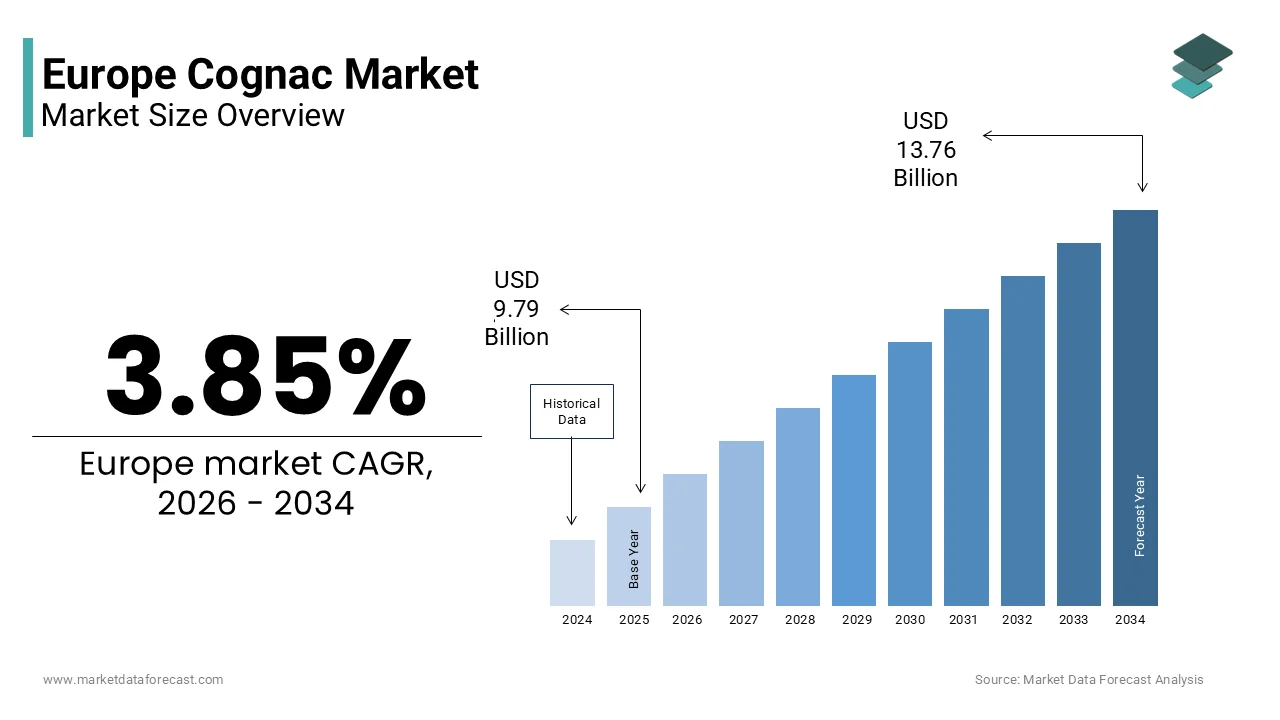
The Europe cognac market was valued at USD 9.79 billion in 2025, is estimated to reach USD 10.17 billion in 2026, and is projected to reach USD 13.76 billion by 2034, growing at a CAGR of 3.85% during the forecast period. Market growth is driven by strong cultural affinity for premium spirits, rising consumption of aged and high quality alcoholic beverages, and increasing demand from affluent and aspirational consumers. Expanding exports, premiumization trends, and growing interest in heritage driven French spirits are further supporting market expansion. Additionally, the influence of gifting culture and premium on trade experiences is enhancing cognac consumption across Europe.
Key Market Trends
- Rising preference for aged and premium cognac varieties supported by evolving consumer taste profiles.
- Growing popularity of cognac as a luxury lifestyle beverage beyond traditional consumption occasions.
- Strong demand through off trade channels driven by retail availability, brand visibility, and competitive pricing.
- Increasing influence of cocktail culture and mixology using cognac among younger consumers.
- Emphasis on authenticity, geographic origin, and craftsmanship to strengthen brand trust and differentiation.
Segmental Insights
- Based on grade, the V.S.O.P. segment dominated the Europe cognac market by accounting for 58.3% of the market share in 2025. The segment’s leadership is attributed to its balanced aging profile, premium perception, and wide acceptance among both regular and occasional consumers seeking quality without ultra luxury pricing.
- Based on distribution channel, the off trade segment led the European cognac market by holding 60.8% of the market share in 2025. This dominance is driven by strong retail penetration, availability across supermarkets and specialty liquor stores, and increasing at home consumption trends.
Regional Insights
- The Europe cognac market shows steady growth across major consuming countries, supported by strong brand heritage, premium alcohol consumption, and export oriented production.
- France remained the undisputed leader, accounting for 35.5% of the European market share in 2025, driven by its exclusive cognac production rights, well established distilleries, and global export strength.
- Other European countries continue to witness consistent demand growth fueled by premium spirits adoption and tourism driven consumption.
Competitive Landscape
The Europe cognac market is highly competitive and dominated by established heritage brands with strong global recognition and distribution networks. Leading players are focusing on brand storytelling, limited edition releases, and premium packaging to attract high value consumers. Strategic investments in marketing, export expansion, and experiential branding are reinforcing competitive positioning. Prominent players in the Europe cognac market include Hennessy, Rémy Martin, Martell, Courvoisier, Camus, Bisquit Dubouché, Delamain, Frapin, Hine, Pierre Ferrand, Larsen Cognac, and Meukow.
Europe Cognac Market Size
The Europe cognac market size was valued at USD 9.79 billion in 2025 and is projected to reach USD 13.76 billion by 2034 from USD 10.17 billion in 2026, growing at a CAGR of 3.85%.
Cognac is a legally protected grape-based spirit produced exclusively in the delimited Cognac region of southwestern France, adhering to strict Appellation d’Origine Contrôlée regulations. Within Europe, it functions not merely as an alcoholic beverage but as a cultural artifact, deeply embedded in French heritage and European luxury identity. The European Union serves as both the regulatory nucleus and a primary consumption zone, where tradition, terroir, and trade intersect. According to the Bureau National Interprofessionnel du Cognac, more than 97% of Cognac is consumed outside France, showing the spirit’s strong export orientation. As per the Bureau National Interprofessionnel du Cognac, the Cognac vineyard area was about 88,000 hectares in 2025, which is reflecting stability in vineyard allocation despite environmental pressures. Unlike other spirit categories, Cognac’s geographic exclusivity and production codification under EU law create a distinct market ecosystem where authenticity and origin are non-negotiable. This institutional framework ensures that the European market remains the definitive benchmark for global Cognac standards.
MARKET DRIVERS
Resurgent Domestic Consumption Among Younger Demographics
A structural shift is underway in European Cognac consumption patterns, driven by the rising engagement of adults under 35 in France, Germany, and the United Kingdom. Once viewed as a relic of older generations, Cognac has reemerged through cocktail innovation and premium ready to drink formats. According to the International Wine and Spirit Research, Cognac sales among European consumers aged 25 to 34 increased by 22% between 2021 and 2023. This demographic gravitates toward experiential luxury, which is favoring venues where Cognac is featured in curated cocktails rather than consumed neat. As per the French National Federation of Catering Professionals, the number of licensed cocktail bars in France offering at least three Cognac based signature drinks grew from 400 in 2020 to over 700 by 2023. Social media amplification and collaborations with music and fashion industries have further modernized Cognac’s image. This cultural recalibration positions Cognac not as a static heritage product but as a dynamic ingredient in contemporary European nightlife and gastronomy, securing durable demand among digitally native consumers.
Expansion of E Commerce and Digital Brand Engagement
The digital transformation of alcohol retail has fundamentally altered Cognac’s route to market across Europe, which is further fuelling the expansion of the European cognac market. Post pandemic, online platforms have enabled producers to bypass traditional gatekeepers and connect directly with discerning consumers. According to the European Spirits Organisation, online alcohol sales in the European Union grew by 35% between 2020 and 2023, with premium spirits like Cognac leading the segment. As per the German Federal Statistical Office, online Cognac sales in Germany surged by 41% in 2022. Leading houses now deploy immersive digital strategies including virtual distillery tours, blockchain verified provenance, and augmented reality labels that convey terroir and craftsmanship. Direct to consumer websites offer limited editions, personalized engraving, and subscription services that deepen brand loyalty. This channel not only improves margin control but also generates rich behavioral data for targeted marketing. Crucially, digital engagement allows Cognac to transcend its traditional confines and appeal to a pan European audience that values transparency, narrative, and exclusivity, qualities increasingly central to luxury consumption in the digital age.
MARKET RESTRAINTS
Stringent Regulatory Constraints on Alcohol Advertising and Promotion
Europe’s regulatory environment presents a formidable barrier to Cognac brand visibility and consumer acquisition, which is restraining the growth of the European cognac market. According to the European Centre for Monitoring Alcohol Marketing in 2023, 21 of 27 member states imposed partial or complete bans on alcohol advertising across broadcast, print, and digital media. In France, the Loi Évin prohibits nearly all forms of public alcohol promotion, which is restricting Cognac houses to passive communication such as heritage storytelling on owned channels. These constraints severely limit outreach to younger consumers who discover brands primarily through social media influencer content and digital advertising. Unlike newer spirit categories that leverage craft narratives and agile digital campaigns, Cognac’s traditional prestige makes it more susceptible to regulatory scrutiny. As a result, producers must rely on cost intensive alternatives like trade education, sommelier partnerships, and invitation only tasting events, which yield slower and less scalable returns. This regulatory asymmetry places Cognac at a competitive disadvantage, particularly in markets like Sweden and Finland where brand awareness remains low due to decades of restricted exposure.
Climate Vulnerability and Grape Yield Instability
Cognac’s production is inherently vulnerable to climate volatility due to its geographically restricted vineyards and dependence on specific white grape varieties, notably Ugni Blanc, which is further impeding the European cognac market growth. Rising temperatures, erratic rainfall, and extreme weather events have disrupted harvest consistency and grape chemistry essential for high quality distillate. According to FranceAgriMer, the 2022 Cognac harvest yielded eight hundred and ten thousand hectoliters of base wine, a 20% decline from the 10-year average due to drought and heat stress. As per the Bureau National Interprofessionnel du Cognac, the 2023 vintage faced similar challenges with flowering delays and uneven maturation reducing usable grape volume by 15%. According to the European Environment Agency, southwestern France will experience a 30% increase in days with temperatures exceeding 35 degrees Celsius by 2050. This escalating risk forces producers to invest heavily in adaptive viticulture such as shade netting, soil moisture retention, and precision irrigation, raising production costs and potentially constraining long term supply elasticity in a high demand global market.
MARKET OPPORTUNITIES
Premiumization Through Ultra Luxury and Limited-Edition Releases
Cognac producers are strategically leveraging Europe’s robust luxury goods ecosystem to introduce ultra-premium offerings that transcend beverage categorization, which is a promising opportunity in the European cognac market. Bottles priced above five hundred euros such as Louis XIII or Richard Hennessy are increasingly positioned as collectible art objects rather than mere spirits. According to Bain & Company, the European luxury market grew strongly between 2021 and 2023, with high-net worth individuals driving demand for rare and exclusive products, including premium spirits. These releases often feature handcrafted crystal decanters, decades old blends, and collaborations with renowned designers or artists. In 2022, Sotheby’s reported that rare Cognac bottles achieved record auction prices, highlighting the asset like appeal of collectible spirits. Strategic partnerships with fashion houses have further embedded Cognac into the broader luxury lifestyle narrative. This premiumization strategy not only enhances brand prestige but also insulates producers from volume competition and macroeconomic volatility by catering to high-net-worth individuals for whom price sensitivity is minimal. In an era of experiential consumption, such offerings fulfil desires for exclusivity, heritage, and narrative depth.
Growing Demand in Non-Traditional European Markets
While Western Europe remains the historical stronghold, emerging demand in Central and Eastern Europe offers a compelling expansion frontier. Countries such as Poland, Romania, and the Czech Republic are witnessing adoption of Cognac driven by urbanization, rising disposable incomes, and aspirational lifestyle trends. According to Eurostat trade data, imports of premium spirits into Central and Eastern Europe have grown steadily in recent years, reflecting rising consumer interest. In these markets, Cognac symbolizes success, sophistication, and global connectivity, qualities highly valued by the emerging middle and upper classes. Local distributors are responding with entry level VS and VSOP expressions priced accessibly yet retaining brand authenticity. Simultaneously, the growth of fine dining and cocktail culture in cities like Warsaw, Bucharest, and Prague provides critical on trade platforms for consumer education and trial. Unlike mature Western markets where brand hierarchies are entrenched, these regions allow producers to shape perceptions from the outset through masterclasses, food pairings, and bartender training. This presents a rare opportunity to build long term loyalty in demographically youthful and economically ascending territories.
MARKET CHALLENGES
Counterfeit and Illicit Trade Erosion
The high value and global recognition of Cognac make it a prime target for counterfeiting and gray market diversion across Europe, which is a notable challenge to the European cognac market growth. Illicit bottles often refilled with substandard or hazardous liquids undermine brand integrity and consumer safety. According to the European Union Intellectual Property Office, counterfeit spirits remain a significant issue in the EU, with seizures increasing in recent years. French customs have reported multiple interceptions of fake Cognac bottles destined for resale in unlicensed shops and online marketplaces across Europe. These operations frequently replicate premium labels such as Hennessy XO with astonishing fidelity yet lack regulatory oversight. The gray market further complicates matters as genuine Cognac purchased in low tax countries is resold without brand authorization, distorting pricing and distribution. Combating this requires significant investment in anti-counterfeit technologies including NFC chips, holographic seals, and blockchain traceability. However, these measures increase costs and cannot fully eliminate the reputational and financial damage caused by widespread illicit trade, particularly in digital and informal retail channels.
Labor Shortages and Artisanal Skill Gaps in Production
Cognac’s artisanal character depends on a dwindling pool of highly skilled labor including distillers, coopers, and cellar masters whose knowledge is transmitted through decades of hands on practice, which is further challenging the European cognac market expansion. Yet rural depopulation and declining interest in agricultural vocations threaten this human capital base. According to France’s Ministry of Agriculture, agricultural labor shortages have intensified in recent years, affecting viticulture and related trades. Regional economic reports indicate that a significant proportion of cellar staff are nearing retirement age, while apprenticeship applications in cooperage and distillation have declined. Because Cognac regulations mandate manual oversight at critical stages such as double distillation in copper alembics and barrel rotation, automation cannot easily substitute for human expertise. Urban job markets offering higher wages and better working conditions further deter youth from entering the sector. This skills crisis risks not only production continuity but also subtle quality degradation as institutional knowledge erodes. Without urgent intervention through vocational incentives and modernized training frameworks, the long-term sustainability of authentic Cognac production in its historic heartland remains in question.
REPORT COVERAGE
| REPORT METRIC | DETAILS |
| Market Size Available | 2025 to 2034 |
| Base Year | 2025 |
| Forecast Period | 2026 to 2034 |
| CAGR | 3.85% |
| Segments Covered | By Grade, Distribution Channel, and Region |
| Various Analyses Covered | Global, Regional, & Country Level Analysis; Segment-Level Analysis; DROC, PESTLE Analysis; Porter’s Five Forces Analysis; Competitive Landscape; Analyst Overview of Investment Opportunities |
| Regions Covered | UK, France, Spain, Germany, Italy, Russia, Sweden, Denmark, Switzerland, Netherlands, Turkey, and the Czech Republic |
| Market Leaders Profiled | Hennessy, Rémy Martin, Martell, Courvoisier, Camus, Bisquit Dubouché, Delamain, Frapin, Hine, Pierre Ferrand, Larsen Cognac, and Meukow |
SEGMENTAL ANALYSIS
By Grade Insights
Among the graded categories in the European Cognac market, the V.S.O.P. (Very Superior Old Pale) segment commanded the dominant market share by accounting for 58.3% of the European market share in 2025. The leading position of the V.S.O.P segment in this regional market is driven by its balanced positioning between accessibility and aging quality, appealing to both traditional consumers and emerging premium cocktail enthusiasts. V.S.O.P. Cognac’s 4-year minimum aging requirement yields a smoother, more aromatic profile that mixologists across Europe favor for high end cocktails. In France, Germany, and the United Kingdom the rise of craft cocktail bars has amplified this preference. For instance, V.S.O.P. is widely used in premium spirit-based cocktails in metropolitan areas due to its versatility and depth. Data from hospitality associations confirm that V.S.O.P. usage in on trade venues has increased in recent years. Unlike V.S., which is often perceived as too sharp for nuanced mixes, V.S.O.P. offers oak notes and rounded texture that complement citrus, herbal, and spice elements commonly used in modern mixology. This functional advantage has cemented V.S.O.P. as the default choice for bartenders curating elevated drinking experiences, thereby driving consistent commercial demand across Europe’s vibrant hospitality sector.
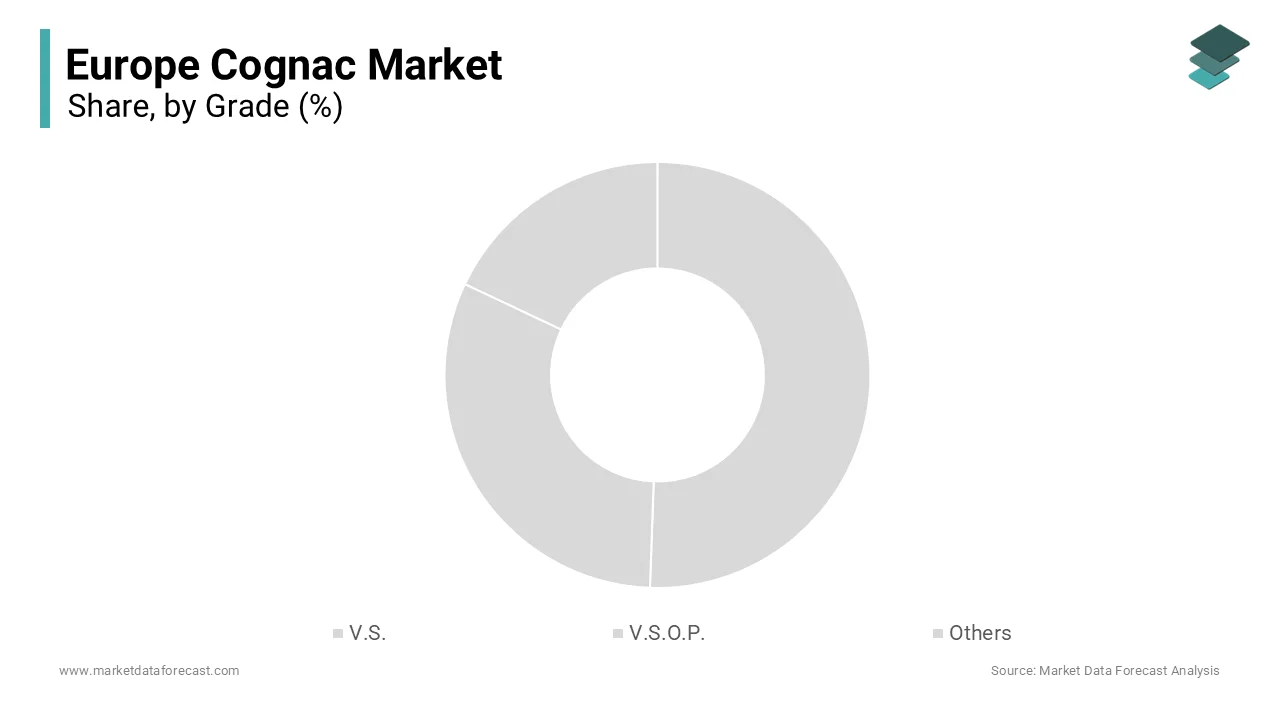
While V.S.O.P. dominates in volume, the V.S. (Very Special) segment is expanding at the fastest rate with a CAGR of 8.5% across Europe over the forecast period owing to the strategic repositioning and demographic tailwinds. V.S. Cognac’s lower price point and bolder flavor profile have made it increasingly attractive to first time and budget conscious buyers, particularly in emerging European markets. In Poland, Romania, and the Czech Republic, V.S. accounts for a significant share of Cognac imports according to Eurostat trade data. Its affordability, typically retailing between twenty and thirty euros, enables trial without significant financial commitment. Furthermore, V.S. has gained traction in ready to drink canned formats targeting convenience-oriented millennials. As per Euromonitor International, Cognac based RTDs have grown rapidly in Eastern Europe, driven by supermarket placements and social media visibility. Younger consumers view V.S. as an authentic entry into French luxury, especially when paired with mixers or used in home cocktail experiments.
By Distribution Channel Insights
The off-trade segment led the European cognac market by holding 60.8% of the European market share in 2025. The dominance of off-trade segment in this regional market is attributed to the retail accessibility, evolving home consumption habits, and strategic brand placement in high traffic outlets. European consumers increasingly replicate premium drinking experiences at home, leading to robust off trade Cognac sales. According to Euromonitor International, home consumption of premium spirits in the EU grew significantly between 2020 and 2023, with Cognac among the top beneficiaries. In countries like France and Italy, Cognac is a traditional gift during holidays and celebrations, with surveys showing it as a preferred luxury present for family elders. Supermarkets, hypermarkets, and specialized wine shops have responded by expanding Cognac shelf space, particularly during festive quarters. Data from French retail associations confirm that Cognac sales in hypermarkets peak during December. Furthermore, the normalization of online grocery shopping has integrated Cognac into routine basket purchases, especially in the Netherlands and Germany where click and collect alcohol orders have grown steadily. This shift reflects a broader cultural move toward curated domestic hospitality where owning a bottle of Cognac signals taste and generosity.
Despite its smaller market share, the on-trade channel segment is expanding rapidly and is likely to register a CAGR of 10.4% over the forecast period owing to the experiential demand and hospitality sector recovery. Post pandemic, European cities have witnessed a revival of luxury nightlife with premium bars, clubs, and hotels prioritizing Cognac as a signature spirit. According to the International Wine and Spirit Research, on trade Cognac sales in Western Europe grew strongly in 2022 with V.S.O.P. and XO grades leading. In the United Kingdom, nightclubs and members clubs have embraced Cognac as a status symbol, with bottle service orders featuring Hennessy or Rémy Martin rising significantly in London according to the UK Night Time Industries Association. This renaissance is amplified by tourism, with France welcoming nearly ninety million international visitors in 2023 according to the World Tourism Organization, many of whom seek authentic Cognac experiences in iconic Parisian brasseries or Bordeaux wine bars.
REGIONAL ANALYSIS
France Cognac Market Analysis
France is the undisputed leader in the European Cognac market and accounted for 35.5% of the European market share in 2025. France is both the sole production origin and the largest domestic consumer base. The dominance of France in the European cognac market is rooted in cultural embeddedness and institutional support. Cognac is deeply woven into French gastronomic rituals, from postprandial sipping to ceremonial toasts, ensuring consistent household demand. According to FranceAgriMer, domestic consumption has remained stable at around 16 million bottles annually despite economic headwinds. Urban centers like Paris, Lyon, and Bordeaux drive premium upgrades, with V.S.O.P. and XO sales showing growth among professionals aged forty and above. Moreover, the French government’s active promotion of geographical indications through EU trade policy reinforces Cognac’s protected status, shielding it from imitation. Tourism further amplifies visibility, with millions of visitors touring the Cognac region each year as per the Nouvelle Aquitaine Regional Tourism Board. This unique combination of heritage, regulation, and lived tradition ensures France remains the market’s gravitational center both commercially and symbolically.
United Kingdom Cognac Market Analysis
The United Kingdom ranked as the second largest Cognac market in Europe in 2025 with a 19.8% of the regional market share. London’s status as a global luxury and nightlife capital fuels high demand, particularly for premium and super premium expressions. According to the UK Spirits Alliance, Cognac imports reached over 9 million bottles in 2023, reflecting steady growth driven by affluent urban professionals and diaspora communities. Nightclubs in Mayfair and members clubs in Soho routinely feature Cognac in bottle service, with average spend per session exceeding several hundred pounds as reported by the UK Night Time Industries Association. Additionally, the UK’s historical ties to French luxury goods and its robust gifting culture during Christmas and corporate events sustain off trade sales. Data from Kantar shows that a majority of Cognac purchases in the UK occur between November and January. Despite Brexit related customs complexities, major houses maintain dedicated UK distribution networks ensuring product freshness and promotional agility. This blend of hedonism, heritage, and commercial infrastructure solidifies the UK’s role as Europe’s premier export driven Cognac stronghold.
Germany Cognac Market Analysis
Germany is a promising regional segment in the European cognac market. Unlike France or the UK, German consumption is characterized by consistent middle-class adoption rather than elite exclusivity. Cognac is widely perceived as a refined digestif among professionals aged 45 to 65, with surveys confirming tradition and quality as primary motivators. The country’s dense network of independent liquor stores and premium supermarkets such as Edeka and Rewe provides broad accessibility, with dedicated spirit sections featuring tasting notes and aging information. Online alcohol sales have further democratized access, growing significantly in 2022 as per the German E Commerce Association, with Cognac among the top selling premium categories. Additionally, German appreciation for craftsmanship and production transparency resonates strongly with Cognac’s artisanal methods. This rational yet aspirational consumer mindset combined with economic stability ensures Germany remains a reliable volume engine for sustained European market growth.
Spain Cognac Market Analysis
Spain is estimated to account for a notable share of the European cognac market during the forecast period. Unlike Northern Europe where Cognac is consumed quietly after dinner, Spaniards integrate it into vibrant social rituals, particularly during holidays, festivals, and family gatherings. According to the Spanish Wine and Spirits Federation, Cognac sales peak during Christmas and Easter celebrations when it is commonly served as a welcoming drink for elders. The southern regions of Andalusia and Catalonia lead adoption, with urban professionals increasingly using V.S. and V.S.O.P. in cocktail form during tapas pairings. Data from Nielsen Spain shows growth in Cognac based cocktail mentions on restaurant menus between 2021 and 2023. Moreover, Spain’s proximity to North Africa and historical trade links have normalized Cognac in multicultural households. Importantly, the country’s large hospitality sector, supporting hundreds of millions of annual tourist visits as per the World Tourism Organization, creates constant exposure in hotels and upscale bars. This festive embeddedness and culinary adaptability make Spain a uniquely dynamic and resilient market within Southern Europe.
Russia Cognac Market Analysis
Russia remains a notable regional segment in the European cognac market, despite ongoing geopolitical tensions and import restrictions. Cognac has long held symbolic status in Russian culture, associated with sophistication, success, and ceremonial toasts, particularly among the business elite and older generations. Historical ties dating back to the Tsarist era have cemented its prestige, with brands like Hennessy and Martell functioning as social currency. Surveys confirm that many urban Russians consider Cognac the most prestigious imported spirit. While official imports declined due to sanctions, alternative trade routes through Armenia, Kazakhstan, and Turkey have partially offset losses as noted by the Eurasian Economic Commission. Parallel markets and gifting during New Year celebrations, Russia’s most important holiday, continue to drive underground demand. Despite formal market contraction, Cognac’s deep cultural resonance ensures it retains significant latent demand that could reemerge if trade conditions normalize, making Russia a high potential albeit volatile segment in the European landscape.
COMPETITIVE LANDSCAPE
The Europe cognac market features intense yet structured competition dominated by historic houses that leverage centuries old reputations alongside agile modern strategies. While the category is defined by tradition innovation is increasingly critical as players vie for relevance among younger digitally native consumers. Competition manifests not through price wars but through narrative differentiation experiential depth and sustainability credentials. Each major house cultivates distinct brand identities Hennessy with urban cultural fluency Rémy Martin with artisanal exclusivity and Martell with cross cultural versatility. New entrants face high barriers due to geographic appellation laws and capital intensity yet niche producers gain traction through terroir driven storytelling. The regulatory environment particularly advertising restrictions and alcohol policies further shapes competitive tactics steering focus toward owned channels and trade education. Ultimately rivalry in Europe centers on capturing emotional loyalty rather than volume with success measured by brand prestige consumer engagement and long-term equity within a tightly governed luxury ecosystem.
KEY MARKET PLAYERS
Some of the notable key players in the Europe cognac market are
- Hennessy
- Rémy Martin
- Martell
- Courvoisier
- Camus
- Bisquit Dubouché
- Delamain
- Frapin
- Hine
- Pierre Ferrand
- Larsen Cognac
- Meukow
Top Players in the Market
- Hennessy has maintained a commanding presence in the Europe cognac market through its deep heritage and dynamic innovation. The brand actively engages European consumers via immersive experiences including pop up bars digital storytelling and collaborations with contemporary artists. In recent years Hennessy has intensified its focus on sustainability launching initiatives to reduce carbon emissions across its supply chain while reinforcing its commitment to the Cognac region’s terroir. Its digital commerce platform has been expanded to serve key European markets offering personalized engraving and limited-edition releases. These efforts underscore Hennessy’s strategy to blend tradition with modernity ensuring relevance among both legacy connoisseurs and emerging luxury audiences across the continent.
- Rémy Martin distinguishes itself in the Europe cognac market by emphasizing the artistry of fine Champagne Cognac and cultivating exclusivity. The house has invested significantly in bespoke consumer journeys including private tastings at its Château de Merpins and virtual reality experiences that showcase its distillation craftsmanship. Recently Rémy Martin launched targeted educational programs for bartenders and sommeliers across major European cities to deepen professional advocacy. The brand also introduced eco designed packaging using recycled materials aligning with EU sustainability directives. By reinforcing its narrative of patience precision and legacy Rémy Martin strengthens emotional resonance with discerning European consumers who value authenticity and artisanal excellence in luxury spirits.
- Martell leverages its status as the oldest of the major Cognac houses to build cultural bridges across Europe. The brand has revitalized its portfolio with expressions tailored to local palates such as lighter blends for Nordic markets and bolder profiles for Southern Europe. Martell’s recent initiatives include partnerships with Michelin starred chefs to integrate Cognac into gastronomic pairings and collaborations with fashion designers for limited edition bottles. It has also enhanced its e commerce capabilities offering curated gift sets and digital cellar services. These actions reflect Martell’s adaptive strategy to position Cognac not only as a spirit but as a versatile element of contemporary European lifestyle bridging heritage with innovation through experiential luxury.
Top Strategies Used by the Key Market Participants
Key players in the Europe cognac market deploy a combination of premiumization digital transformation sustainability integration and cultural storytelling to reinforce their positioning. They launch ultra limited editions and artist collaborations to elevate brand prestige while expanding direct to consumer platforms for personalized engagement. Investments in climate resilient viticulture and circular packaging align with European regulatory and consumer expectations on environmental responsibility. Simultaneously they empower on trade professionals through certified training programs to drive authentic advocacy. Geographic diversification within Europe focusing on emerging markets like Poland and Romania allows them to tap into aspirational demand. These strategies collectively ensure long term relevance in a competitive luxury landscape shaped by evolving tastes digital fluency and ethical consumption.
MARKET SEGMENTATION
This research report on the European cognac market has been segmented and sub-segmented based on categories.
By Grade
- V.S.
- V.S.O.P.
- Others
By Distribution Channel
- On-Trade
- Off-Trade
By Country
- UK
- France
- Spain
- Germany
- Italy
- Russia
- Sweden
- Denmark
- Switzerland
- Netherlands
- Turkey
- Czech Republic
- Rest of Europe