- Product Description Description
- Table of Contents TOC
- List of Table & Figure LOT
- Get Free Sample PDF Sample PDF
Market Size, 2025
$732.54 MnMarket Estimate, 2026
$773.12 MnMarket Forecast, 2034
$1190 MnCAGR, 2026–2034
5.54%Europe Controlled-Release Fertilizers Market Size
The Europe-controlled release fertilizers market size was valued at USD 732.54 million in 2025 and is anticipated to reach USD 773.12 million in 2026 to reach USD 1190.10 million by 2034, growing at a CAGR of 5.54% during the forecast period from 2026 to 2034.
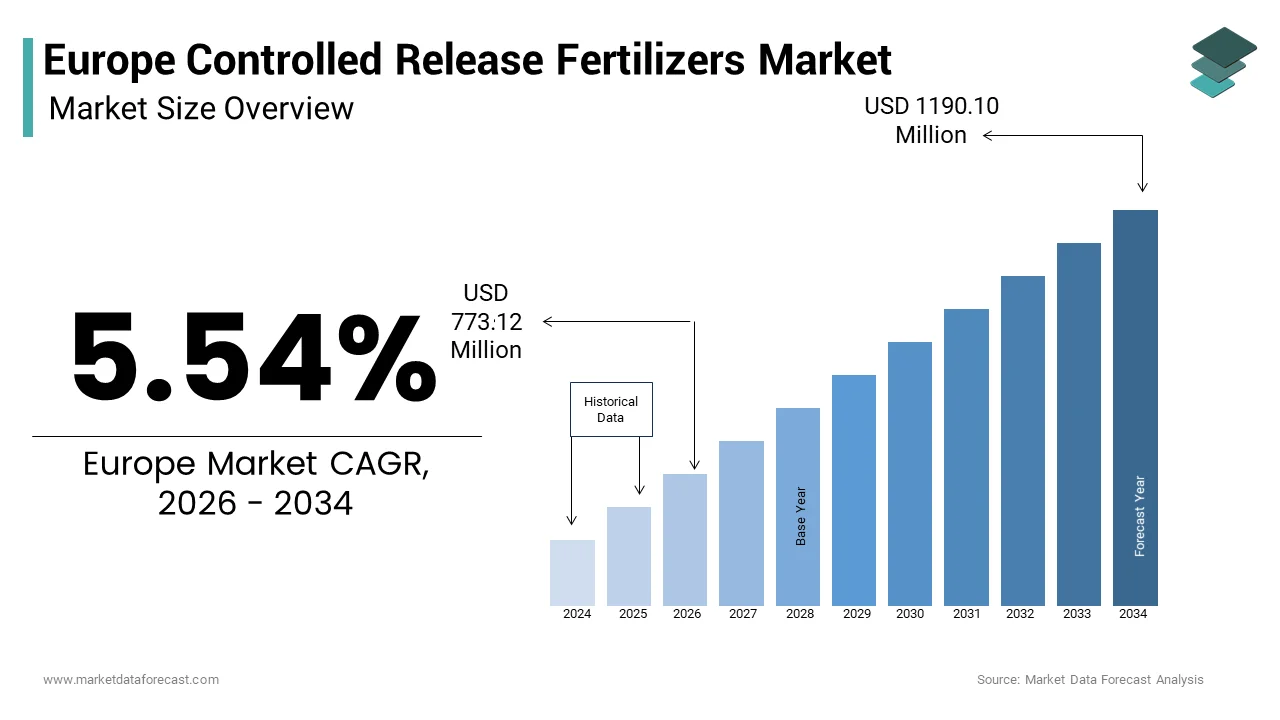
Controlled-release fertilizers are nutrient delivery systems engineered to release nitrogen, phosphorus, and potassium gradually in alignment with crop uptake patterns, thereby minimizing leaching,g, volatilization,n, and runoff. These formulations are typically polymer-coated or matrix-based and distinct from conventional soluble fertilizers due to their precision agronomic function and environmental stewardship attributes. The adoption of controlled-release fertilizers is increasing rapidly owing to the European Union’s regulatory emphasis on sustainable nutrient management under frameworks such as the Farm to Fork Strategy and the Nitrates Directive. According to Eurostat, agricultural land under organic or low-input management covered 16.9 million hectares in the European Union in 2022, which represents around 10.5 percent of the utilised agricultural area. Agricultural activities are a major source of nitrogen surplus impacting water bodies, which is underscoring the urgency of nutrient efficiency measures. Controlled-release fertilizers offer a technologically viable pathway to reconcile productivity with ecological responsibility, particularly in high-value horticulture, turf management, and protected cultivation systems where input optimization directly influences yield quality and compliance with environmental standards.
MARKET DRIVERS
Stringent EU Regulations on Nutrient Runoff Drive Adoption
The tightening of nutrient management regulations across the European Union is a primary factor driving the growth of the European controlled-release fertilizers market. The Nitrates Directive mandates that member states limit nitrogen application in vulnerable zones to 170 kilograms per hectare annually. The European Commission’s implementation review confirmed that several member states continue to face nitrate contamination in groundwater, with agricultural sources identified as the dominant contributor. In response, countries like the Netherlands and Denmark have introduced mandatory nutrient accounting systems requiring farmers to document fertilizer efficiency. Controlled-release fertilizers are increasingly adopted by greenhouse vegetable growers in the Netherlands to comply with stricter discharge limits. Similarly, Germany’s Fertilizer Ordinance now promotes the use of slow-release or stabilized nitrogen forms in sensitive watersheds to mitigate nutrient runoff. These regulatory instruments transform controlled-release fertilizers from optional inputs into compliance requirements, particularly in intensive production systems where yield stability must coexist with environmental accountability.
Expansion of High Value Horticulture and Protected Cultivation Systems
The structural shift toward high-value horticultural production in Europe has amplified demand for precision nutrient delivery, which is further boosting the growth of the European controlled-release fertilizers market. Protected cultivation, including greenhouses and polytunnels, now accounts for a significant area across the EU, with tomatoes, peppers, and berries representing dominant crops. These systems operate on narrow profit margins where input efficiency directly affects economic viability. Controlled-release fertilizers reduce labour costs associated with frequent fertigation and minimise salt accumulation in soilless media. Spain is the leading EU producer of greenhouse vegetables,les, and the area under protected cultivation grew modestly in recent years. Many of these farms now integrate polymer-coated fertilizers into their nutrient regimes to maintain consistent electrical conductivity and pH. Similarly, in Italy’s Emilia-Romagna region (known for strawberry production), many growers have switched to controlled-release formulations between 2021 and 2024 to meet retailer sustainability criteria. This crop-specific intensification creates a durable demand base insulated from commodity price fluctuations.
MARKET RESTRAINTS
High Initial Cost Relative to Conventional Fertilizers Limits Broad Adoption
The elevated upfront cost of controlled-release fertilizers is a significant constraint to widespread use, particularly among small and medium-scale arable farmers, which is majorly impeding the regional market expansion. According to available industry data, polymer-coated nitrogen products cost noticeably more than standard urea. Fertilizer accounts for a substantial share of variable costs in cereal and oilseed production systems. In Poland and Romania, where average farm sizes remain below 10 hectares and access to agricultural credit is limited,d, and the adoption of controlled-release products remains relatively low among arable land. Even in wealthier markets such as France, the adoption rate in broad-acre cropping remains modest due to perceived cost inefficiency in low-value-per-hectare systems. Until public subsidies or carbon-credit mechanisms offset the price differential, the technology will remain confined to high-return specialty crops rather than mainstream agriculture.
Limited Awareness and Technical Guidance Among Conventional Farmers
Despite regulatory and environmental incentives, many conventional farmers across Europe lack sufficient knowledge or agronomic support to effectively deploy controlled-release fertilizers, which further hinders the European market growth. Agricultural farmers in Central and Eastern Europe often report that they have never received training on nutrient-release kinetics or soil temperature-dependent dissolution rates. Misapplication,n such as using formulations designed for greenhouse conditions in open field settings, can lead to nutrient immobilisation or delayed availability, causing yield penalties. Extension and advisory services in many member states remain underfunded, and only a small number of countries maintain active fertilizer advisory programmes with dedicated field agronomists. This knowledge gap perpetuates reliance on familiar soluble fertilizers even when environmental penalties or input inefficiencies are evident, undermining the potential for scalable adoption.
MARKET OPPORTUNITIES
Integration with Precision Agriculture and Digital Farming Platforms
The convergence of controlled-release fertilizers with digital agronomy tools to enhance nutrient use efficiency and data-driven decision making was one of the significant opportunities in the market. Modern formulations can now be paired with soil moisture sensors, satellite imagery, and variable rate application software to create dynamic nutrient plans. Satellite-borne data are increasingly employed across the European Union to support farm-level monitoring and optimisation of crop-management practices, including vegetation-health assessment and potentially more refined fertiliser-regime adjustments. Companies are developing QR-coded fertilizer bags that link to digital dashboards showing release profiles based on local weather and soil data. Research institutions in the Netherlands are piloting integrated approaches combining controlled-release fertilizers with soil-sensor or Internet-of-Things-enabled monitoring systems to reduce nitrogen application without compromising crop yields. Since 2023, the EIP-AGRI has provided funding via Member States’ national instruments and EU rural-development programmes to support operational-group projects and other innovation initiatives in agriculture and sustainability. This synergy positions controlled-release fertilizers not as standalone inputs but as intelligent components of a connected agrifood ecosystem aligned with the EU’s digital farming ambitions.
Growth in Urban and Peri-Urban Green Infrastructure Projects
The proliferation of green roofs, urban parks, and sports turf across European cities is creating a non-agricultural demand channel for controlled-release fertilizers, which is expected to be a promising opportunity for the market participants. Municipalities are prioritizing low-maintenance sustainable landscaping that reduces labor and nutrient runoff into stormwater systems. Many European cities have adopted green-infrastructure mandates since the early 2020s, with Berlin, Paris, and Copenhagen among the leaders in implementation. Berlin’s Urban Greening Plan requires new commercial flat-roof buildings to allocate a substantial portion of he roof area to vegetation and encourages the use of slow-release fertilizers to reduce nutrient leaching into the Spree River basin. Many professional football stadiums in Western Europe now use polymer-coated fertilizers on pitches to maintain consistent playability and comply with local water-quality regulations. In recent years, the total area of managed urban green space in the EU has exceeded several million hectares, and this is offering a stable and growing market segment less susceptible to agricultural-commodity cycles and more aligned with circular-economy and climate-adaptation policies.
MARKET CHALLENGES
Inconsistent Performance Under Variable Climatic Conditions
The efficacy of controlled release fertilizers is highly dependent on soil temperature, moisture, and microbial activity,y, creating reliability concerns in Europe’s diverse agroclimatic zones, which is a notable challenge to the regional market growth. Polymer-coated products designed for Mediterranean conditions may release nutrients too slowly in cooler Northern European springs, delaying early crop development. According to reports, standard sulfur-coated urea applied in early spring in certain conditions may release significantly less nitrogen by early summer than crop-optimal levels require. As per the Italian National Research Council, excessive summer heat accelerated the release, leading to nitrate spikes and groundwater contamination in Southern Italy. These inconsistencies erode farmer confidence, particularly in rainfed systems where irrigation cannot modulate soil conditions. Unlike stabilized fertilize, rs, which inhibit nitrification regardless of temperature, controlled-release mechanisms remain passive and environment dependent. Until region-specific formulations or adaptive coating technologies become widely available, performance unpredictability will constrain adoption in climatically marginal zones.
Fragmented Regulatory Classification Across Member States
The absence of a harmonized EU-wide regulatory definition of controlled-release fertilizers is also challenging the expansion of the European market. While the EU Fertilising Products Regulation 2019 established a framework for CE-marked products, many member states maintain parallel national rules that classify these inputs as soil improvers, plant protection adjuvants, or specialty fertilizers. According to regulatory commentary, several countries still require separate national registrations for polymer-coated fertilizers beyond CE certification, which is adding months to market-entry timelines. For instance, in France, the Ministry of Ecological Transition mandates additional ecotoxicity testing for any fertilizer claiming slow‐release properties, while Austria restricts certain polymer types due to microplastic concerns. This regulatory fragmentation increases compliance costs for manufacturers and delays innovation diffusion. Small and medium enterprises lacking regulatory affairs capacity often avoid cross-border expansion altogether and are limiting product availability in smaller markets, and undermining the EU’s goal of a unified internal market for sustainable inputs.
REPORT COVERAGE
| REPORT METRIC | DETAILS |
| Market Size Available | 2025 to 2034 |
| Base Year | 2025 |
| Forecast Period | 2026 to 2034 |
| CAGR | 5.54% |
| Segments Covered | By Type, Application, and Country |
| Various Analyses Covered | Regional and Country-Level Analysis, Segment-Level Analysis, DROC, PESTLE Analysis, Porter’s Five Forces Analysis, Competitive Landscape, Analyst Overview of Investment Opportunities |
| Regions Covered | Germany, the UK, France, Spain, Russia, Sweden, Denmark, Italy, Switzerland, the Netherlands, and the Rest of Europe. |
| Market Leaders Profiled | Chisso Corporation, Shandong Shikefeng Chemical Industry Co. Ltd., Kingenta Ecological Engineering Group Co. Ltd., Scotts Miracle-Gro Company, Agrium, Yara International, Israel Chemicals Ltd. (Israel), Compo GmbH Co., Sociedad Quimica Y Minera S.A., and Haifa Chemicals Limited |
SEGMENT ANALYSIS
By Type Insights
The coated and encapsulated fertilizers segment captured 61.6% of the European market share in 2025. The growth of the coated and encapsulated segment is majorly driven by their versatility, predictable release kinetics, and compatibility with diverse cropping systems ranging from greenhouse horticulture to turf management. Precision nutrient delivery in protected cultivation systems is further boosting the expansion of the coated and encapsulated fertilizers segment in the European market. Polymer and sulfur-coated fertilizers offer tunable release durations that align precisely with crop growth cycles in controlled environments. Some greenhouse tomato and pepper producers in the EU use encapsulated nitrogen formulations in soilless substrates to maintain stable electrical conductivity. In the Netherlands, where protected cultivation covers thousands of hectares, the adoption of encapsulated nitrogen formulations is very high due to the strict nutrient-discharge limits under the Dutch manure laws. These coatings prevent salt spikes that damage sensitive root systems while reducing labor associated with frequent fertigation. The technology is particularly critical in recirculating hydroponic systems where nutrient imbalances can cascade rapidly. This operational reliability in high-value production systems ensures sustained demand despite higher input costs.
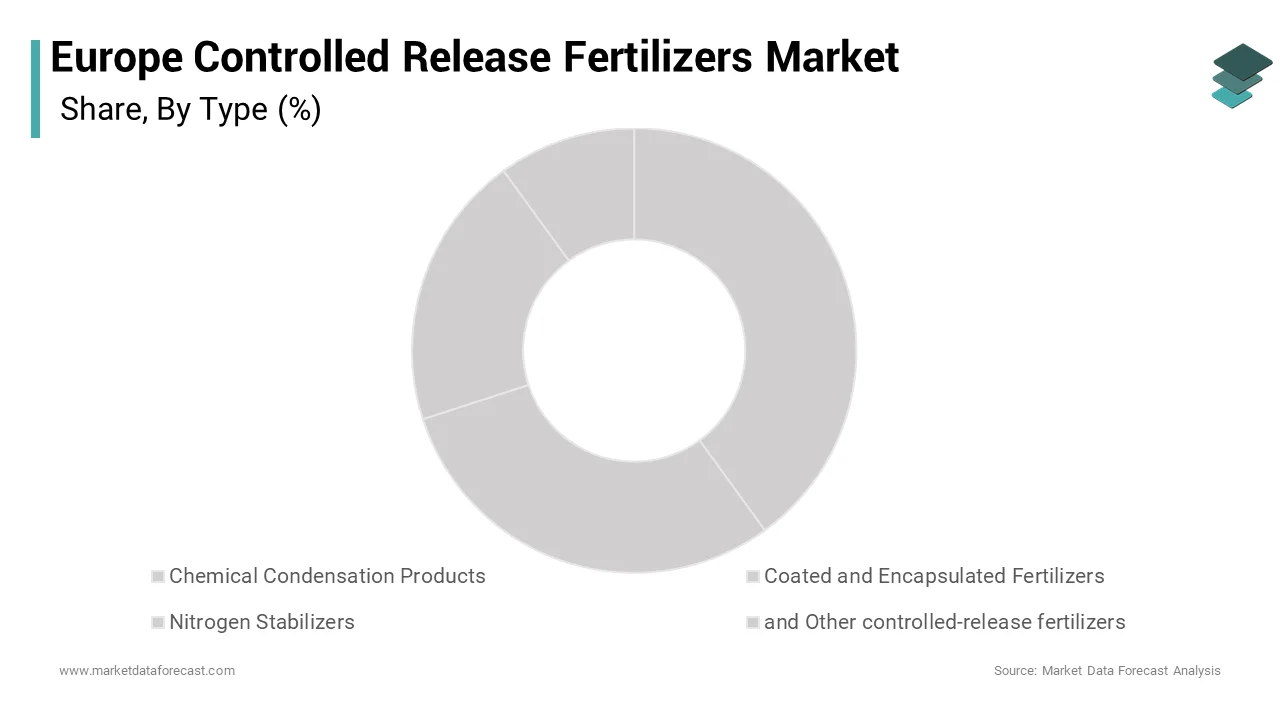
The nitrogen stabilizers segment is predicted to witness the fastest CAGR of 8.9% over the forecast period, owing to their unique biochemical mechanism and compatibility with existing application infrastructure. Immediate integration into conventional fertilizer supply chains is also boosting the expansion of the nitrogen stabilizers segment in the European controlled-release fertilizers market during the forecast period. Unlike coated products, nitrogen stabilizers, such as nitrification and urease inhibitors, are liquid or powder additives that can be blended directly into standard urea or ammonium nitrate without requiring new equipment or handling protocols. According to sources, many bulk-blending facilities in Central Europe now offer stabilized nitrogen as a standard option. In Poland, where farm cooperatives manage a large share of arable land and the use of nitrapyrin-based stabilizers has grown significantly in recent years. This seamless integration lowers adoption barriers for broadacre farmers who lack capital for specialized coated products yet face mounting pressure to reduce ammonia emissions under the EU National Emissions Ceilings Directive.
By Application Insights
The crop-based segment dominated the market by accounting for the major share of the European market in 2025 due to the centrality of agricultural productivity to fertilizer demand, particularly high-value horticulture and specialty cropping systems. Intensification of high-value horticultural production is also driving the growth of the crop-based segment in the European market. The The
European horticultural sector is producing fruits, vegetables, and ornamentals and generates a very large annual farm gate value across the EU. These crops require precise nutrient regimes to maintain quality shelf life and yield consistency. In Spain, in the EU’s largest producer of fresh vegetables, a very large area of greenhouse cultivation relies almost exclusively on controlled-release fertilizers to optimise nutrient use efficiency under scarcity constraints. In Italy, strawberry growers in Emilia Romagna switching to polymer-coated formulations reported improved yields and reduced nitrogen use in recent trials. This economic incentive ensures robust adoption in sectors where input costs are offset by premium market returns.
The non-crop-based segment is projected to grow at a CAGR of 11.4% over the forecast period in the European market, owing to the municipal climate adaptation mandates and private sector sustainability commitments. Expansion of urban green infrastructure mandates is also driving the growth of the non-crop-based segment in the European market. European cities are legally required to increase green space to mitigate urban heat island effects and manage stormwater runoff. According to the reports of the European Environment Agency, a substantial number of cities adopted binding green roof or urban park ordinances between 2021 and 2024. Berlin’s Climate Adaptation Act mandates vegetation on all new flat roof constructions with controlled-release fertilizers specified to prevent nutrient leaching into the city’s combined sewer system. Similarly, Paris’s Urban Biodiversity Plan allocates significant annual funding for park maintenance using slow-release inputs to reduce maintenance frequency. The total area of managed urban green space in the EU forms a stable non-agricultural demand base insulated from food commodity cycles.
COUNTRY ANALYSIS
Germany Controlled-Release Fertilizers Market
Germany was the top performer in the European-controlled release fertilizers market in 2025 and held 21.4% of the regional market share. The leading role of Germany in the European market is mainly due to the stringent environmental regulations, advanced agricultural research, and a dense network of high-tech horticultural producers. Fertilizer Ordinance restricts soluble nitrogen use in a significant share of arable land designated as nitrate-vulnerable zones, which is directly boosting demand for coated and stabilized products. Germany hosts a large number of greenhouse operations specialising in tomatoes, cucumbers, ers and ornamentals that support substantial consumption of controlled-release fertilizers. Public research institutions like the Julius Kühn Institute actively validate new formulations, ensuring scientific credibility. With the federal government allocating major funding in 2024 to support nutrient-efficiency innovations, Germany remains the innovation and compliance benchmark for the broader European market.
France Controlled-Release Fertilizers Market
France captured a prominent share of the European market in 2025. The vast agricultural diversity of France, from cereal plains to Mediterranean vineyards, creates es multifaceted demand for controlled release solutions. Écophyto II+ mandates a substantial reduction in environmental impact from fertilisers and pesticides, which is driving adoption in both crop and non-crop settings. For instance, more than 250,000 hectares of public parks and sports fields now use slow-release nitrogen under municipal green-space directives. According to the national research bodies, the use of polymer-coated fertilisers grew by 19% in 2024 in viticulture. Additionally, France’s cooperative-farming model, which covers approximately 65% of farmland, enables bulk procurement and knowledge transfer, which is accelerating technology diffusion across small and medium holdings.
Netherlands Controlled Release Fertilizers Market
The Netherlands is anticipated to register a promising CAGR in the European market over the forecast period. The Netherlands is Europe’s leading exporter of fresh vegetables and flowers with a substantial area under glass. This hyper-intensive production system relies almost entirely on controlled-release fertilizers to maintain nutrient balance in closed-loop hydroponic systems. The Dutch Manure Act caps nitrogen application at 170 kilograms per hectare annually, which is forcing growers to maximise efficiency. Growing numbers of greenhouse tomato producers use encapsulated fertilizers with release durations calibrated to the growth stage. The Green Deal Fertilisers initiative of the Dutch government has certified many products for environmental performance, which is creating a trusted marketplace. This combination of regulatory pressure, technological sophistication, and export orientation makes the Netherlands a high-value-per-hectare market unmatched in adoption depth.
Spain Controlled-Release Fertilizers Market
Spain is expected to hold a substantial share of the Europe-controlled-release fertilizers market over the forecast period. The semi-arid climate and recurring droughts of Spain make water and nutrient efficiency existential priorities, which are primarily driving the growth of the Spanish market. A large area of greenhouse cultivation in Almería, which is one of the most concentrated in Europe, uses polymer-coated fertilizers to minimise leaching in sandy soils with low cation-exchange capacity. The National Irrigation Plan allocates significant funding to modernize fertigation systems with controlled-release integration as a core component. The area under drip-irrigated olive groves expanded strongly in recent years, with many new plantings adopting stabilised nitrogen to reduce ammonia loss in high-pH soils. Spain’s focus on climate-adaptive agriculture ensures sustained growth even as water allocations tighten under the EU Water Framework Directive.
Italy Controlled-Release Fertilizers Market
Italy is anticipated to command a notable share of the European market over the forecast period, owing to the country’s agricultural identity centers on high-value specialty crops, includitomatoetoe,, strawberries, grapes, and olives, where fruit quality and shelf life are directly tied to nutrient management. According to the Italian National Institute of Agricultural Economics, use of controlled-release fertilizers in strawberry production increased significantly in recent years, driven by retailer requirements from major EU supermarket chains. In viticulture, the Consorzio di Tutela del Prosecco DOC now mandates slow-release nitrogen for all certified producers to protect the Piave River basin from nitrate pollution. Additionally, Italy’s large ornamental-nursery sector is concentrated in Tuscany and Lombardy and relies on encapsulated products to meet phytosanitary standards for export. This confluence of premium crop economics, environmental regulation, and supply-chain pressure sustains Italy’s position as a dynamic and quality-oriented market.
COMPETITIVE LANDSCAPE
The Europe Controlled Release Fertilizers Market features competition among multinational agrochemical firms, specialized nutrient companies, and regional blenders. Differentiation centers on release technology, agronomic support, and regulatory compliance rather than price alone. Global players leverage R and D scale to offer scientifically validated products, while niche firms focus on specific applications, such as turf or organic compatible formulations. The regulatory complexity of the EU Fertilising Products Regulation creates both barriers and opportunities, favoring companies with robust compliance infrastructure. Competition is further shaped by retailer sustainability requirements, its municipal green infrastructure mandates, and national nutrient reduction plans. Unlike the commodity fertilizer market, where cosdominatesa t, es, here technical credibility, product reliability, and alignment with environmental policy determine competitive advantage. As a result, the landscape rewards innovation in coating chemistry, digital integration, nd localized agronomic validation,n creating a dynamic yet demanding environment for sustained market presence.
KEY MARKET PLAYERS
A few of the market players in the Europe Controlled Release Fertilizers Market
- Chisso Corporation
- ICL Group Ltd
- Nutrien Ltd
- ShandonShikefeng Chemical Industry Ltd.
- Kingenta Ecological Engineering Group Co., Ltd.
- Scotts Miracle-Gro Company
- Haifa Group
- Agrium
- Yara International
- Israel Chemicals Ltd. (Israel)
- Compo GmbH Co.
- Sociedad Química Y Minera S.A.
- Haifa Chemicals Limited
Top Players In The Market
- ICL Group Ltd is a leading global specialty minerals and fertilizers company with deep integration in the Europe Controlled Release Fertilizers Market through its flagship Agro division. The company supplies polymeric-coated and sulfur-coated fertilizers tailored for European horticulture, turf, and protected cultivation systems. In 2024, ICL launched its next-generation CRF Pro series across Germany, France, and the Netherlands, featuring temperature-responsive release technology validated in collaboration with Wageningen University. It also expanded its production capacity at its facility in Spain to meet rising demand from Southern European greenhouse growers. These initiatives reinforce ICL’s commitment to science-based nutrient solutions aligned with EU sustainability mandates.
- Haifa Group plays a pivotal role in the Europe Controlled Release Fertilizers Market by offering advanced multinutrient controlled release formulations under its Multicote and Agrolution brands. The company focuses on high-value horticultural and urban green applications where precision nutrition is critical. In 2024, Haifa strengthened its European footprint by establishing a technical agronomy center in Italy to support growers in adopting nutrient release planning tools. It also partnered with major European retail chains to certify its products under private label sustainability programs. These actions enhance Haifa’s reputation as a solutions provider that bridges agronomic science with practical field implementation across diverse European cropping systems.
- Nutrien Ltd contributes significantly to the Europe Controlled Release Fertilizers Market through its extensive portfolio of stabilized and encapsulated nitrogen products distributed via its European retail network. The company leverages its global R and D capabilities to adapt formulations for regional soil and climate conditions. In 20,24, Nutrien introduced a new line of nitrification inhibitor-enhanced urea for cereal and grassland systems in Germany and Denmark, responding to national ammonia reduction targets. It also integrated digital nutrient planning software into its advisory services, enabling farmers to model release profiles against local weather data. These efforts position Nutrieasaa full-service provider combining product innovation with data-driven agronomic support.
Top Strategies Used By The Key Market Participants
Key players in the Europe Controlled Release Fertilizers Market prioritize regulatory alignment by developing products that meet EU Farm to Fork and Nitrates Directive requirements. They invest in region-specific agronomic research to validate performance under local soil and climate conditions. Companies expand technical support networks to educate farmers on proper application and timing. Strategic partnerships with retailers, cooperatives, and municipalities enhance market access in both agricultural and urban segments. Additionally, they integrate digital tools such as nutrient modeling software and QR-coded product information to improve user confidence and compliance. These strategies collectively address cost awareness, performance,ce rreliabilityyand policy-driven adoption barriers across diverse European end users.
MARKET SEGMENTATION
This research report on the Europe-controlled release fertilizers market is segmented and sub-segmented into the following categories.
By Type
- Chemical Condensation Products
- Coated and Encapsulated Fertilizers
- Nitrogen Stabilizers
- and Other controlled-release fertilizers
By Application
- crop based
- Grains & Cereals
- Oil seeds
- Fruits & Vegetables
- non-crop-based fertilizers
- Turf & Ornamental Grass
- and other non-crop-based fertilizers
By Country
- UK
- France
- Spain
- Germany
- Italy
- Russia
- Sweden
- Denmark
- Switzerland
- Netherlands
- Turkey
- Czech Republic
- Rest of Europe