Europe Crustaceans Market Size, Share, Growth, Trends, And Forecasts Report, Segmented By Type, And By Region (UK, France, Spain, Germany, Italy, Russia, Sweden, Denmark, Switzerland, Netherlands, Turkey, Czech Republic and Rest of Europe), Industry Analysis From 2026 to 2034
Europe Crustaceans Market Size
The Europe crustaceans market size was valued at USD 5.82 billion in 2025 and is anticipated to reach a valuation of USD 6.06 billion in 2026 and USD 8.31 billion by 2034, growing at a CAGR of 4.27% during the forecast period from 2026 to 2034.
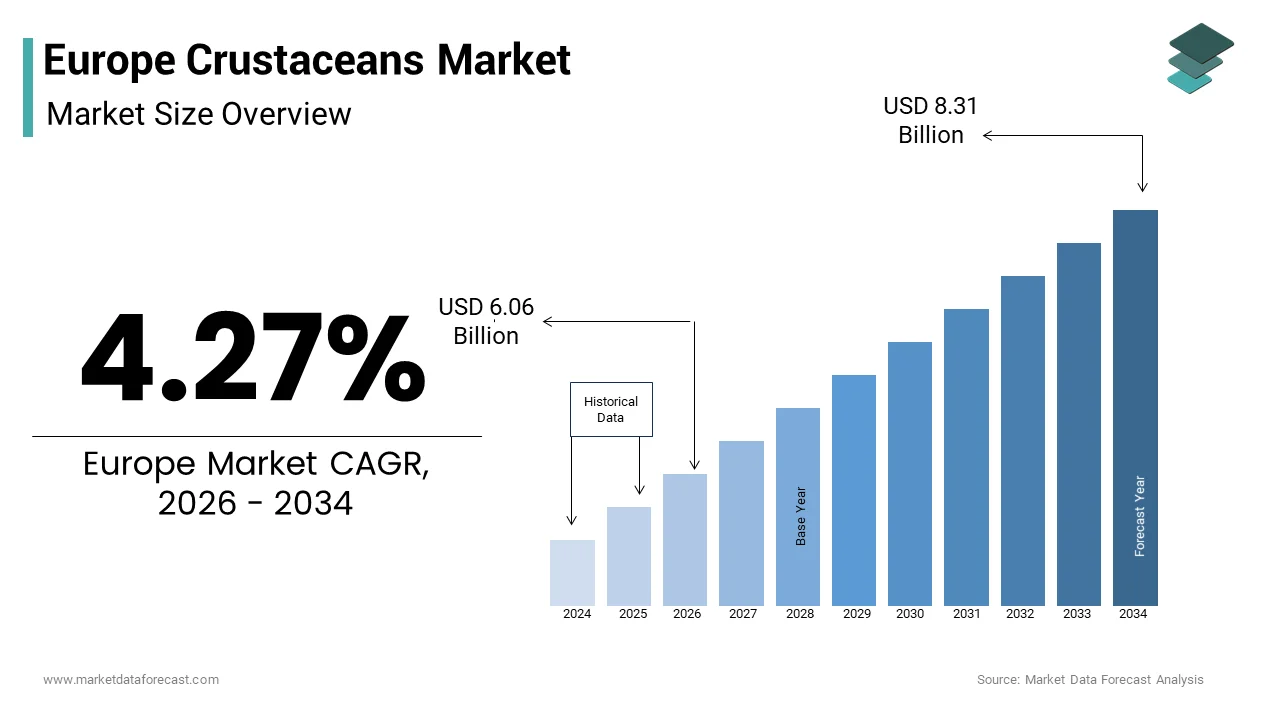
This European crustaceans market is integral to the regional seafood industry, which supports culinary traditions and nutritional security for millions of consumers. The European Union stands as one of the largest importers of seafood globally, with crustaceans representing a significant portion of this demand due to their high protein content and versatility in gastronomy. According to Eurostat, the European Union imported approximately 1.1 million tons of fishery and aquaculture products in 2024, with crustaceans forming a substantial share of these imports primarily sourced from Asia and Latin America. As per the European Market Observatory for Fisheries and Aquaculture Products, consumer preference for premium seafood has risen steadily, with household expenditure on fresh and frozen crustaceans increasing by 8% over the last five years. The region benefits from strict food safety regulations enforced by the European Food Safety Authority, which ensures high quality standards for both domestic catches and imported varieties. Coastal nations such as Spain, France, and Italy maintain robust fishing fleets that contribute to local supply, while landlocked countries rely heavily on cross-border trade. The market dynamics are influenced by seasonal availability, sustainability certifications, and evolving dietary trends favoring low-fat, high-protein diets. This intricate network of supply chains, regulatory frameworks, and consumer behaviors defines the current landscape of the Europe crustaceans market.
MARKET DRIVERS
Rising Health Consciousness and Nutritional Awareness among Consumers
The growing health consciousness among the European population acts as a key factor for the expansion of the Europe crustaceans market as consumers increasingly prioritize nutrient-dense food options. Crustaceans such as shrimp and crab are renowned for their high protein content and low saturated fat levels, making them ideal for heart-healthy diets. According to the World Health Organization, noncommunicable diseases account for 74% of all deaths globally, prompting individuals to adopt healthier eating habits that include lean proteins. In Europe, as per European Commission data, approximately 58% of adults balance their diet by incorporating more seafood, which is rich in omega-3 fatty acids essential for cardiovascular health. The nutritional profile of crustaceans includes vital minerals such as zinc, selenium, and iodine, which support immune function and metabolic processes. A study published by the National Institutes of Health indicates that regular consumption of shellfish can reduce the risk of chronic inflammation and improve cognitive function. This scientific validation reinforces consumer confidence in crustaceans as a superior protein source compared to red meats. Furthermore, the rise of fitness culture and weight management programs across major European cities has driven demand for low-calorie, high-satiety foods. Retailers respond to this trend by offering ready-to-cook crustacean products that align with busy lifestyles while maintaining nutritional integrity. The alignment of medical recommendations with consumer behavior creates a sustained demand trajectory for crustaceans in the European marketplace.
Expansion of Premium Dining and Culinary Tourism Experiences
The proliferation of premium dining establishments and culinary tourism is further boosting the expansion of the European crustaceans market. Gastronomic experiences centred on luxury seafood items such as lobster, langoustine, and king crab have become central to the hospitality industry in major tourist destinations. According to the World Tourism Organization, international tourist arrivals in Europe reached over 700 million in 2024, with food and drink cited as a top motivator for travel by a significant portion of visitors. Countries like France, Spain, and Italy leverage their coastal heritage to offer authentic seafood dishes that attract global tourists seeking unique culinary adventures. The European restaurant and mobile food service activities sector generated approximately 380 billion euros in 2024, with fine dining segments showing resilient growth despite economic fluctuations. Chefs in Michelin-starred restaurants increasingly feature sustainably sourced crustaceans to meet the expectations of discerning diners who value provenance and quality. This trend extends beyond traditional hubs to emerging foodie destinations in Northern and Eastern Europe, where fusion cuisines incorporate local crustacean varieties. The social media influence further amplifies this demand as visual platforms showcase elaborate seafood platters, driving consumer curiosity and willingness to pay premium prices. Additionally, the rise of food festivals dedicated to seafood celebrates regional specialties and educates consumers about diverse crustacean types. This cultural embedding of crustaceans in high-end dining and tourism ensures a steady influx of demand that transcends basic nutritional needs and enters the realm of experiential consumption.
MARKET RESTRAINTS
Stringent Environmental Regulations and Sustainability Compliance Costs
Strict environmental regulations and the associated costs of sustainability compliance pose significant restraints on the Europe crustaceans market. The European Union has implemented rigorous policies under the Common Fisheries Policy to prevent overfishing and protect marine ecosystems, which directly impacts the availability and cost of wild-caught crustaceans. According to the European Environment Agency, approximately 35% of fish stocks in the North-East Atlantic remain overfished, necessitating strict quotas and seasonal bans that limit supply volumes. Compliance with these regulations requires fishing vessels to adopt selective gear technologies and monitoring systems, which increase operational expenses for fishermen. As per the Marine Stewardship Council, the costs of maintaining sustainability certifications have risen by 15% in recent years, creating financial barriers for smaller operators. These costs are often passed down the supply chain, resulting in higher retail prices that may deter price-sensitive consumers. Furthermore, the EU Green Deal aims to make Europe the first climate-neutral continent by 2050, imposing additional carbon footprint reporting requirements on seafood imports. Importers must now verify the environmental impact of their supply chains, leading to increased administrative burdens and logistical complexities. The transition towards sustainable aquaculture also faces hurdles due to land-use restrictions and water quality standards mandated by national authorities. While these measures are essential for long-term ecological balance, they create short-term market friction by limiting supply flexibility and increasing production costs. Consequently, producers and retailers must navigate a complex regulatory landscape that constrains market growth and profitability.
Vulnerability to Climate Change and Marine Ecosystem Disruptions
Climate change-induced disruptions to marine ecosystems are further impeding the European crustaceans market growth. Rising sea temperatures, ocean acidification, and changing currents alter the habitats and breeding cycles of key crustacean species, leading to unpredictable catch volumes. According to the Intergovernmental Panel on Climate Change, global ocean temperatures have increased, causing shifts in species distribution towards cooler northern waters. This migration affects traditional fishing grounds in Southern Europe, where species like shrimp and crayfish face declining populations due to thermal stress. As per the International Council for the Exploration of the Sea, scientific assessments indicate that certain crustacean populations have faced downward trends in specific regions due to habitat loss and warming waters. These biological changes disrupt supply chains, forcing importers to seek alternative sources which may vary in quality and price. Extreme weather events, such as storms and floods, further damage aquaculture infrastructure and disrupt logistics networks, leading to temporary shortages. The unpredictability of yields makes it difficult for processors and retailers to maintain consistent inventory levels, affecting consumer trust and brand loyalty. Additionally, the spread of marine diseases, exacerbated by warmer waters, poses threats to both wild and farmed crustacean populations. Disease outbreaks can lead to sudden bans on specific regions or species, causing market volatility. The cumulative effect of these environmental stressors undermines the reliability of supply and increases the risk profile for stakeholders in the Europe crustaceans market.
MARKET OPPORTUNITIES
Development of Advanced Aquaculture Technologies and Recirculating Systems
The advancement of aquaculture technologies, particularly recirculating aquaculture systems offers substantial opportunities for the Europe crustaceans market. These closed-loop systems allow for the controlled farming of species such as shrimp and crayfish in inland facilities, reducing dependence on wild catches and mitigating environmental impacts. According to the Food and Agriculture Organization of the United Nations, aquaculture production is expanding to meet rising global demand, accounting for over 50% of total fish production for human consumption. In Europe, the adoption of land-based aquaculture is growing at an annual rate of 6% driven by technological innovations that improve water efficiency and disease control. As per the European Aquaculture Technology and Innovation Platform, investments in smart farming solutions, including automated feeding sensors and water quality monitoring, have increased significantly in recent years. These technologies enable year-round production regardless of seasonal variations, ensuring a stable supply of high-quality crustaceans. Furthermore, recirculating systems minimize waste discharge and antibiotic use, aligning with consumer preferences for clean and sustainable products. The ability to locate farms closer to urban centers reduces transportation costs and carbon emissions while enhancing product freshness. Startups and established players are collaborating to scale these operations, creating new job opportunities and boosting local economies. The integration of artificial intelligence for predictive analytics further optimizes growth rates and feed conversion ratios, enhancing profitability. This technological leap positions Europe as a leader in sustainable seafood production, which is opening avenues for export and domestic market expansion.
Growth of E-Commerce Platforms and Direct-to-Consumer Models
The rapid expansion of e-commerce platforms and direct-to-consumer models presents a significant opportunity for the Europe crustaceans market. Digital transformation in the retail sector has enabled seafood suppliers to bypass traditional intermediaries and reach customers directly through online marketplaces and subscription services. According to Eurostat, the percentage of individuals in the EU purchasing food or groceries online has grown to approximately 18% in recent years, reflecting a shift in consumer purchasing behavior towards convenience and transparency. Specialized online seafood retailers offer traceability features, allowing buyers to verify the origin and sustainability credentials of their crustacean purchases. As per industry analysis, a growing segment of European consumers is willing to pay a premium for products with verified supply chain information, which digital platforms facilitate effectively. Social media marketing and influencer collaborations further drive engagement by showcasing recipe ideas and cooking tutorials that inspire home chefs to experiment with crustaceans. The convenience of home delivery, coupled with vacuum-sealed packaging, ensures product quality and extends shelf life, appealing to busy urban households. Additionally, data analytics from e-commerce transactions provide valuable insights into consumer preferences, enabling personalized recommendations and targeted promotions. This direct connection fosters brand loyalty and allows producers to capture higher margins by eliminating distributor markups. The integration of blockchain technology for immutable record-keeping enhances trust and accountability in the digital supply chain. As internet penetration and digital literacy continue to rise across Europe, the online channel becomes an increasingly vital avenue for market growth and customer acquisition.
MARKET CHALLENGES
Complexities in Supply Chain Logistics and Cold Chain Maintenance
Maintaining efficient supply chain logistics and cold chain integrity poses a major challenge for the Europe crustaceans market due to the perishable nature of the products. Crustaceans require strict temperature control from harvest to retail to prevent spoilage and ensure food safety, which involves sophisticated refrigeration infrastructure and coordinated transportation networks. According to the Global Cold Chain Alliance, a significant percentage of perishable goods are lost globally due to inadequate cold chain management, resulting in significant economic losses. In Europe, the fragmented nature of logistics providers across different countries complicates the seamless movement of seafood products, leading to potential delays and temperature fluctuations. As per the International Air Transport Association, air freight costs, which are crucial for importing fresh crustaceans from distant regions have increased due to fuel price volatility and capacity constraints. These rising costs squeeze profit margins for importers and retailers who must balance affordability with quality preservation. Furthermore, regulatory differences in customs procedures and health inspections between member states can cause bottlenecks at borders, extending transit times. The reliance on multiple handlers increases the risk of human error in temperature monitoring, which can compromise product safety. Small and medium-sized enterprises often lack the resources to invest in advanced tracking technologies, making them vulnerable to supply chain disruptions. The need for continuous investment in infrastructure and technology to maintain cold chain integrity remains a persistent operational hurdle that affects market efficiency and product availability.
Geopolitical Tensions and Trade Policy Uncertainties
Geopolitical tensions and uncertainties in trade policies pose significant challenges for the Europe crustaceans market, which relies heavily on international imports. The European Union sources a large proportion of its crustaceans from countries in Asia and Latin America, making it susceptible to diplomatic disputes and trade barriers. According to the World Trade Organization, global trade tensions have led to the imposition of tariffs and non-tariff barriers that disrupt established supply routes and increase costs for importers. Recent geopolitical conflicts have caused fluctuations in currency exchange rates, affecting the purchasing power of European buyers and the competitiveness of foreign suppliers. As per the European Central Bank, exchange rate volatility remains a factor introducing financial risks for businesses engaged in cross-border seafood trade. Sanctions and export restrictions imposed by producing countries can suddenly limit access to key species such as shrimp and crab, forcing retailers to seek alternative sources that may differ in quality or price. The uncertainty surrounding trade agreements continues to affect logistics and regulatory compliance for traders, impacting the broader European market. Additionally, political instability in key exporting regions can disrupt production and shipping schedules, leading to supply shortages. These external factors require market participants to maintain flexible sourcing strategies and robust risk-management frameworks. The unpredictability of the global political landscape necessitates constant vigilance and adaptability to mitigate the impact on supply continuity and pricing stability in the Europe crustaceans market.
REPORT COVERAGE
| REPORT METRIC | DETAILS |
| Market Size Available | 2025 to 2034 |
| Base Year | 2025 |
| Forecast Period | 2026 to 2034 |
| CAGR | 4.27% |
| Segments Covered | By Type, By Country |
| Various Analyses Covered | Global, Regional & Country Level Analysis; Segment-Level Analysis, DROC, PESTLE Analysis, Porter’s Five Forces Analysis, Competitive Landscape, Analyst Overview of Investment Opportunities |
| Regions Covered | UK, France, Spain, Germany, Italy, Russia, Sweden, Denmark, Switzerland, Netherlands, Turkey, Czech Republic,c & Rest of Europe |
| Market Leaders Profiled | Marine Harvest (NO), Thai Union Group (TH), Cermaq Group, Austevoll Seafood, Maine Lobster (US), Nippon Suisan Kaisha (JP), Maruha Nichiro Corporation (JP), Trident Seafoods (US), Bumble Bee Foods (US), Pacific Seafood (US) |
SEGMENTAL ANALYSIS
By Type Insights
The shrimps and prawns segment dominated the market by accounting for the highest share of the European market in 2025. The growth of the shrimps and prawns segment in the European market is attributed to their widespread culinary acceptance and affordability. The versatility of this species allows it to be integrated into diverse European cuisines that range from Mediterranean paella to Nordic salads, driving consistent high-volume consumption. According to the European Market Observatory for Fisheries and Aquaculture Products, shrimps account for approximately 45% of total crustacean imports into the European Union, reflecting their status as a staple seafood item. The primary driver for this dominance is the robust supply chain established with major exporting nations such as India, Vietnam, and Ecuador, which ensures year-round availability at competitive prices. As per Eurostat data, the average household expenditure on shrimp products has remained stable, indicating inelastic demand driven by consumer preference. Furthermore, the retail sector supports this dominance through extensive distribution networks that offer various forms, including fresh, frozen, and ready-to-eat options catering to modern lifestyle needs. The nutritional profile of shrimps, which is high in protein and low in fat, aligns with contemporary health trends, further solidifying their market position. Processing innovations have also enhanced shelf life and convenience, making shrimps accessible to a broader demographic across urban and rural areas. This combination of supply reliability, price accessibility, and dietary compatibility ensures that shrimps maintain their leadership position in the European crustacean landscape.
On the other side, the lobsters segment is estimated to record a CAGR of 7.4% over the forecast period in the European market owing to the rising disposable income among European consumers and the increasing popularity of luxury dining experiences. For instance, the premium seafood sector in Europe has seen a steady revenue increase, with lobsters being a key contributor to this expansion. The aspiration for gourmet meals at home, driven by social media influence and celebrity chef endorsements, has transformed lobsters from occasional treats to more frequent purchases for special occasions. As per the European Travel Commission, the resurgence of international tourism has boosted demand in hospitality sectors where lobster dishes are menu staples, thereby stimulating wholesale orders. Additionally, advancements in live transport logistics have improved the quality and survival rates of imported lobsters from North America and Australia, ensuring better product integrity upon arrival. The introduction of value-added products, such as pre-cracked tails and seasoned lobster meat, has lowered the preparation barrier for home cooks, expanding the consumer base beyond professional chefs. Sustainability certifications for lobster fisheries have also enhanced brand trust, appealing to environmentally conscious buyers who are willing to pay a premium for responsibly sourced seafood. These factors collectively drive the rapid expansion of the lobster segment within the European market.
COUNTRY LEVEL ANALYSIS
United Kingdom Crustaceans Market Analysis
The United Kingdom dominated the market in Europe in 2025 by holding the largest share of the regional market and is poised for steady market development over the next few years as it balances domestic production with international sourcing to meet evolving consumer demands. The country holds a prominent position in the Europe crustaceans market, characterized by a strong cultural affinity for seafood and a well-developed retail infrastructure. The country is one of the largest importers of crustaceans in Europe, with a significant portion of consumption met through imports from Norway, Canada, and Asia. According to the Seafood Industry Authority, UK household spending on seafood remains significant, with crustaceans forming a notable share of this expenditure. The demand is driven by the popularity of traditional dishes such as crab sandwiches and prawn cocktails, which remain staples in British cuisine. As per the Department for Environment, Food and Rural Affairs, the UK fishing fleet lands substantial quantities of native crab and lobster, supporting local supply chains while meeting domestic demand for premium varieties. The post-Brexit regulatory environment has introduced new customs procedures, but trade agreements have facilitated continued access to key markets, ensuring supply stability. Retailers have responded to consumer interest in sustainability by offering certified sustainable crustacean options, which now account for 30% of sales in major supermarket chains. The growth of online grocery shopping has further expanded access to fresh and frozen crustaceans, particularly in urban centers where convenience is prioritized. This blend of tradition, innovation, and regulatory adaptation sustains the UK's leading role in the regional market.
France Crustaceans Market Analysis
France is expected to maintain its leadership in high-end seafood consumption over the coming years through a continued emphasis on quality and culinary traditions. France maintains a prestigious status in the Europe crustaceans market, driven by its rich gastronomic heritage and high per-capita seafood consumption. The country is renowned for its appreciation of premium crustaceans such as langoustine and spider crab, which are integral to French culinary identity. According to FranceAgriMer, the national consumption of crustaceans stands at approximately 4 kilograms per person annually, with significant peaks during holiday seasons and summer months. The demand is supported by a dense network of local fish markets and specialized seafood boutiques that prioritize freshness and provenance. As per the French Ministry of Agriculture, sustainable fishing practices are heavily promoted, with over 60% of domestic catches carrying eco-labels that appeal to discerning consumers. The tourism sector plays a crucial role in driving demand, particularly in coastal regions like Brittany and Normandy, where seafood festivals attract millions of visitors each year. Import data from Customs France indicates a steady rise in lobster and crab imports from North America, catering to the high-end restaurant sector. The integration of crustaceans into fine-dining menus continues to elevate their perceived value, encouraging higher spending among affluent households. This cultural reverence for seafood, combined with strict quality standards, ensures France's sustained influence in the European crustacean landscape.
Spain Crustaceans Market Analysis
Spain is projected to leverage its strong tourism and production capacity to sustain market growth in the next few years. Spain occupies a vital position in the Europe crustaceans market as both a major producer and consumer with a deep-rooted seafood culture. The country boasts one of the highest per-capita seafood consumption rates in the world, with crustaceans playing a central role in traditional dishes such as paella and gazpacho. According to the Spanish Ministry of Agriculture, Fisheries and Food, the domestic production of crustaceans, including shrimp and crayfish, contributes significantly to local economies in coastal regions. The demand is further amplified by the vibrant tourism industry, which attracts over 80 million visitors annually, many of whom seek authentic seafood experiences. As per Mercasa, the wholesale market for fresh seafood in Spain has shown resilient growth, with crustacean volumes increasing by 5% in recent years. The preference for fresh over frozen products is pronounced in Spain, driving the need for efficient local supply chains and daily market deliveries. Imports from Latin America and Africa supplement domestic supply, particularly for species not native to European waters. The government supports the sector through initiatives promoting sustainable aquaculture and fishing practices, which enhance long-term viability. Consumer awareness of health benefits associated with seafood consumption continues to rise, reinforcing the staple status of crustaceans in the Spanish diet. This dynamic interplay of production, consumption, and tourism cements Spain's key role in the regional market.
Germany Crustaceans Market Analysis
Germany is anticipated to see increased market penetration of crustacean products as health and convenience trends continue to shape consumer habits in the coming years. Germany represents a significant and evolving market for crustaceans in Europe, characterized by growing consumer interest in healthy and convenient food options. While traditionally less focused on seafood compared to southern European nations, Germany has seen a marked increase in crustacean consumption driven by urbanization and changing dietary habits. According to the Federal Ministry of Food and Agriculture, seafood sales in Germany have grown steadily, with crustaceans gaining popularity among younger demographics. The demand is largely met through imports from Asia and South America, as domestic production is limited to small-scale freshwater crayfish farming. The online retail channel for seafood has expanded rapidly in Germany, with a 15% increase in digital sales allowing consumers easier access to diverse crustacean varieties. Supermarkets have responded by introducing ready-to-cook and marinated crustacean products that cater to busy lifestyles, reducing preparation time. Health consciousness is a key driver, with consumers recognizing the nutritional benefits of lean protein and omega-3 fatty acids found in shellfish. Sustainability certifications are increasingly influencing purchasing decisions, with German shoppers showing a strong preference for eco-labeled products. The rise of international cuisine restaurants, featuring Asian and Mediterranean dishes, has also exposed consumers to new crustacean preparations, broadening their palate. This shift towards convenience, health, and global flavors positions Germany as a growing hub in the European crustacean market.
Italy Crustaceans Market Analysis
Italy is likely to continue its focus on premium and artisanal seafood offerings, supporting a stable and resilient market over the next few years. Italy holds a distinguished place in the Europe crustaceans market, leveraging its extensive coastline and renowned culinary traditions to drive demand. The country is a major consumer of high-quality crustaceans such as scampi and red shrimp, which are essential ingredients in iconic Italian pasta and risotto dishes. According to ISMEA, the Italian seafood market values crustaceans highly, with imports reaching record levels to meet domestic demand that outstrips local supply. The preference for fresh and locally sourced products is strong, particularly in regions like Sicily and Campania, where fishing communities maintain centuries-old traditions. As per the Italian National Institute of Statistics, household expenditure on seafood has remained robust, with crustaceans accounting for a significant portion of premium seafood purchases. The restaurant sector is a major driver, with thousands of establishments specializing in seafood cuisine, attracting both locals and tourists. Sustainability initiatives are gaining traction, with Italian fishermen adopting selective gear to protect marine stocks and ensure long-term availability. The rise of food tourism has further boosted demand, as visitors seek authentic regional specialties featuring fresh catch of the day. Retailers are enhancing their offerings with traceable and certified products to meet the expectations of informed consumers. This combination of culinary heritage, quality focus, and tourism support sustains Italy's prominent position in the European crustacean market.
COMPETITIVE LANDSCAPE
The competition in the Europe crustaceans market is characterized by a mix of large multinational corporations and specialized regional players who vie for consumer attention through quality and sustainability. Major competitors differentiate themselves by offering certified sustainable products and investing in advanced processing technologies to ensure freshness and safety. The market sees intense rivalry in the premium segment where brands compete on provenance and exclusive sourcing relationships with fisheries. Price competition remains significant in the mass market segment where retailers leverage economies of scale to offer affordable options. Innovation in packaging and product formats serves as a key differentiator as companies strive to meet the demand for convenience and extended shelf life. Regulatory compliance acts as a barrier to entry ensuring that only established players with robust quality control systems can thrive. Collaborative efforts among industry stakeholders to promote sustainable fishing practices also shape the competitive landscape by setting high standards for environmental responsibility. This dynamic environment drives continuous improvement in product quality and supply chain efficiency across the region.
KEY MARKET PLAYERS
A few of the market players that are in the Europe crustaceans market are
- Marine Harvest (NO)
- Thai Union Group (TH)
- Cermaq Group
- Austevoll Seafood
- Maine Lobster (US)
- Nippon Suisan Kaisha (JP)
- Maruha Nichiro Corporation (JP)
- Trident Seafoods (US)
- Bumble Bee Foods (US)
- Pacific Seafood (US)
Top Players In The Market
- Mowi stands as a leading global seafood company with significant operations in the European crustaceans sector through its extensive supply chain network. The company focuses on sustainable aquaculture practices and has recently invested in advanced processing facilities to enhance product quality and traceability. Mowi collaborates with local fishermen to source premium wild caught crustaceans ensuring consistent supply for retail and hospitality clients. Their recent initiatives include launching eco friendly packaging solutions and expanding their ready to eat product lines to meet consumer demand for convenience. By integrating digital tracking systems Mowi provides transparency regarding the origin and sustainability of their crustacean products. This strategic focus on innovation and environmental responsibility strengthens their reputation among discerning European consumers who prioritize ethical sourcing and high quality seafood options in their dietary choices.
- Cermaq Group operates as a major player in the European seafood industry with a strong emphasis on integrated value chains for crustaceans and other marine products. The company has strengthened its market position by acquiring specialized processing plants that enable efficient handling of fresh and frozen crustaceans. Cermaq prioritizes sustainability by adhering to strict environmental standards and supporting responsible fishing practices across its supply network. Recent actions include partnerships with technology firms to implement smart logistics solutions that reduce waste and improve delivery times. The group also engages in community development programs in coastal regions to support local fishing communities. By focusing on operational efficiency and corporate social responsibility Cermaq enhances its brand loyalty and ensures a reliable supply of high quality crustaceans to meet the evolving needs of the European market.
- Austevoll Seafood is a prominent Norwegian company with a robust presence in the European crustaceans market known for its commitment to quality and sustainability. The company manages a vertically integrated operation from harvesting to processing which allows for strict control over product freshness and safety standards. Austevoll has recently expanded its distribution network to reach more retailers and food service providers across Europe. They have introduced innovative value added products such as marinated and seasoned crustaceans to cater to changing consumer preferences. The company actively participates in industry forums to promote sustainable fishing practices and marine conservation efforts. By leveraging its expertise in cold chain management and product development Austevoll maintains a competitive edge and continues to deliver premium crustacean products that meet the high expectations of European consumers.
Top Strategies Used By Key Market Participants
Key players in the Europe crustaceans market employ several strategic approaches to maintain competitiveness and drive growth. Sustainability certification is a primary strategy where companies obtain labels such as Marine Stewardship Council to appeal to environmentally conscious consumers. Vertical integration is another common approach allowing firms to control the entire supply chain from harvest to retail ensuring quality and reducing costs. Product innovation focuses on developing convenient ready to cook and value added crustacean items that suit modern lifestyles. Digital transformation involves implementing e commerce platforms and blockchain technology for enhanced traceability and direct consumer engagement. Strategic partnerships with local fishermen and international suppliers help secure stable raw material sources. Marketing efforts emphasize health benefits and culinary versatility to expand the consumer base. These strategies collectively enable companies to navigate regulatory challenges and meet diverse consumer demands effectively.
MARKET SEGMENTATION
This research report on the Europe crustaceans market is segmented and sub-segmented into the following categories.
By Type
- Crabs
- Shrimps
- Lobsters
- Others
By Country
- UK
- France
- Spain
- Germany
- Italy
- Russia
- Sweden
- Denmark
- Switzerland
- Netherlands
- Turkey
- Czech Republic
- Rest of Europe
Frequently Asked Questions
What is driving the growth of the European crustaceans market?
The European crustaceans market is growing due to increasing seafood consumption, rising consumer preference for high-protein diets, and expanding demand for premium shellfish products. Growth in aquaculture, improvements in cold chain logistics, and the increasing availability of sustainably sourced shrimp, crab, lobster, and other crustaceans are further supporting market expansion across Europe.
Which crustacean products account for the largest share of the European crustaceans market?
The European crustaceans market primarily includes shrimp, prawns, crabs, lobsters, crayfish, and langoustines. Shrimp and prawns account for a significant share due to their widespread consumption in retail, foodservice, and seafood processing industries, while premium products such as lobster and crab continue to witness strong demand in the hospitality and fine dining sectors.
What are the key trends shaping the European crustaceans market?
Key trends in the European crustaceans market include the growing demand for sustainably certified seafood, expansion of aquaculture production, increasing popularity of ready-to-cook and value-added seafood products, digital seafood traceability, and eco-friendly packaging solutions. Consumers are also showing greater interest in responsibly sourced crustaceans that meet strict environmental and food safety standards.
Which countries are leading the European crustaceans market?
Spain, France, Italy, the United Kingdom, Norway, and the Netherlands are among the leading contributors to the European crustaceans market. These countries have well-established seafood industries, strong import and distribution networks, high seafood consumption, and advanced processing facilities that support both domestic demand and export activities.
What is the future outlook for the European crustaceans market?
The European crustaceans market is expected to witness steady growth over the forecast period, driven by increasing demand for premium seafood, expanding sustainable aquaculture, and continuous innovation in seafood processing and distribution. Rising consumer awareness of nutrition, coupled with investments in responsible fishing practices and supply chain modernization, is expected to create new growth opportunities for producers, processors, and seafood suppliers across Europe.
Access the study in MULTIPLE FORMATS
Purchase options starting from
$ 2000
Didn’t find what you’re looking for?
TALK TO OUR ANALYST TEAM
Need something within your budget?
NO WORRIES! WE GOT YOU COVERED!
Call us on: +1 888 702 9696 (U.S Toll Free)
Write to us: sales@marketdataforecast.com