- Product Description Description
- Table of Contents TOC
- List of Table & Figure LOT
- Get Free Sample PDF Sample PDF
Market Size, 2025
$80.29 BnMarket Estimate, 2026
$84.15 BnMarket Forecast, 2034
$122.54 BnCAGR, 2026–2034
4.81%Executive Summary: Europe Dairy Snacks Market
- Market Scope: Comprehensive analysis of the Europe dairy snacks market covering convenient ready-to-eat dairy snack formats, segmented by product types, taste profiles, distribution channels, and country-level markets.
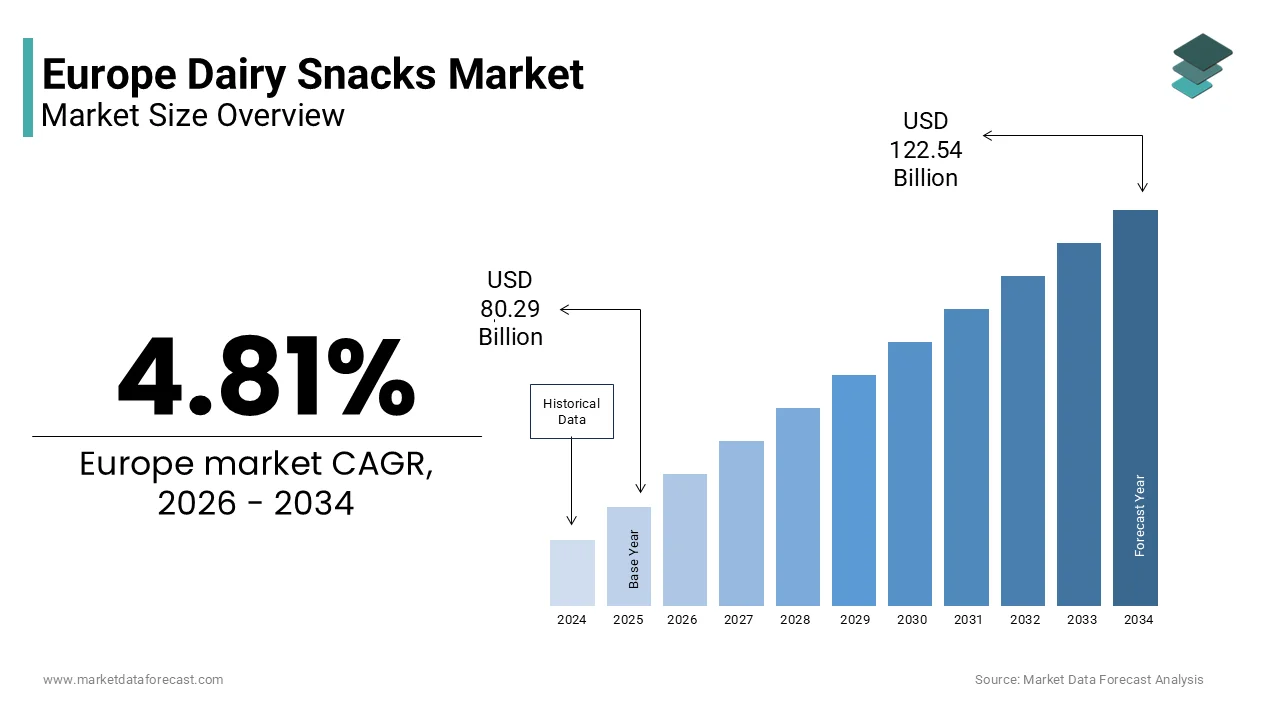
- Market Valuation: Valued at USD 80.29 billion in 2025, estimated at USD 84.15 billion in 2026, and projected to reach USD 122.54 billion by 2034, growing at a compound annual growth rate (CAGR) of 4.81% from 2026 to 2034.
- Primary Growth Drivers: Rising consumer demand for nutritious and protein-rich snacks aligned with active lifestyles, growing preference for functional/fortified products, and the rapid expansion of modern convenience retail formats and e-commerce platforms.
Key Market Segment Metrics (2026–2034)
| Category | Leading Segment Focus | Detailed Taxonomy & Sub-Segments |
|---|---|---|
| By Type | Cheese-Based Snacks (34.2% market share in 2025) | Cheese-based snacks, Yogurt-based snacks, Flavored milk drinks, Cottage cheese cups, & Lactose-Free Milk Snacks (Fastest-growing at 10.6% CAGR) |
| By Taste | Sweet-Tasting Dairy Snacks (Dominant share) | Sweet-tasting dairy snacks (fruit yogurts, chocolate milk, desserts) & Sour-tasting dairy snacks (Fastest-growing at 8.9% CAGR due to gut-health focus) |
| By Distribution Channel | Supermarkets (45.3% market share in 2025) | Supermarkets, Convenience Stores, Specialty Dairies, & Online Retail (Fastest-growing at 12.3% CAGR) |
| By Country Focus | Germany (22.2%) & France (18.2% share) | Germany, France, United Kingdom (Fastest-growing CAGR), Italy, Spain, Russia, Sweden, Denmark, Switzerland, Netherlands, Turkey, Czech Republic, & Rest of Europe |
Regional Insights & Market Dynamics
Germany: Leads the European dairy snacks market with a 22.2% share in 2025, driven by strong dairy heritage, high per capita consumption, and advanced cold-chain processing hubs.
France: Captured 18.2% of the market share, emphasizing food quality, artisanal/regional sourcing, and strict Nutri-Score reformulation standards.
United Kingdom: Projected to witness the fastest CAGR driven by consumer demand for portable, protein-rich snacks, school/office lunchbox trends, and private-label expansions.
Market Challenges & Restraints: Plant-based alternatives competition, strict EU nutritional labeling rules (FIC regulation), volatile raw material/milk prices, and sugar/fat content perceptions.
Key Market Leaders Profiled: Amul, Arla Foods UK Plc., Blue Bell Creameries, Breyers, Dairy Farmers of America Inc., Danone, Dean Foods Company, Nestlé SA, Fonterra Group Cooperative Limited, Kraft Foods, and Unilever.
 Download Free Sample Report
Europe Dairy Snacks Market Size
The Europe dairy snacks concentrate market size was valued at USD 80.29 billion in 2025 and is projected to reach USD 122.54 billion by 2034 from USD 84.15 billion in 2026, growing at a CAGR of 4.81%.
The Dairy Snacks are category of ready-to-eat or on-the-go food products that incorporate dairy ingredients such as milk, cheese, yogurt, and cream in snack-sized formats. These snacks are designed to provide consumers with convenient, nutritious, and flavorful options that cater to active lifestyles and evolving dietary preferences. Common product types include cheese sticks, yogurt bars, flavored milk drinks, cottage cheese cups, and protein-enriched dairy-based bites. As per the European Food Safety Authority, dairy remains a crucial component of the daily diet for many Europeans, contributing significantly to calcium, protein, and vitamin D intake. The shift toward convenience-driven consumption patterns has led to an increased demand for portion-controlled, healthy snacking alternatives, with dairy emerging as a preferred base due to its satiety and nutrient-rich profile.
MARKET DRIVERS
Rising Demand for Nutritious and Protein-Rich Snacks
The increasing consumer preference for nutritious and protein-rich snacks that align with health-conscious lifestyles is propelling the growth of Europe dairy snacks market. Consumers are actively seeking snacks that offer more than just taste by focusing on functional benefits, such as energy replenishment, muscle recovery, and digestive health with rising awareness about balanced diets and wellness. As per the British Nutrition Foundation, consumers in the UK prioritize protein content when selecting between snack options. This trend is mirrored across other major European markets, where fitness enthusiasts, working professionals, and parents seeking healthier choices for children are driving the demand for dairy-based protein snacks. Yogurt cups, cheese sticks, and high-protein smoothies have gained popularity as go-to options for individuals looking to meet their daily protein requirements without compromising on convenience. Moreover, manufacturers are responding to this shift by launching clean-label, minimally processed variants that emphasize natural ingredients and transparency in formulation.
Expansion of Convenience Retail Formats and E-commerce Channels
The rapid expansion of modern retail formats, particularly convenience stores and e-commerce platforms is solely accelerating the growth of Europe dairy snacks market. There is a growing reliance on quick-access shopping channels that facilitate impulse purchases and easy reordering of staple items. According to the European Commerce Association, the online grocery sector in Europe expanded by nearly 20% in 2023, with dairy products accounting for a substantial share of repeat purchases. Platforms such as Amazon Fresh, Ocado, and Zalando Life have introduced curated snack sections that prominently feature dairy-based options, enhancing visibility and accessibility for consumers. Additionally, convenience store chains like Spar, Carrefour Express, and 7-Eleven have broadened their snack aisles to include refrigerated dairy snacks, which is catering to office workers and commuters who seek portable, nutritious options. This retail evolution has enabled manufacturers to reach diverse consumer segments efficiently, ensuring steady product availability and brand exposure.
MARKET RESTRAINTS
Increasing Consumer Preference for Plant-Based Alternatives
The growing inclination towards plant-based and alternative protein sources, which is gradually eroding the dominance of traditional dairy products is restricting the growth of Europe dairy snacks market. Consumers in Western Europe are shifting towards non-dairy substitutes such as almond, oat, soy, and coconut-based snacks due to concerns related to lactose intolerance, environmental sustainability, and animal welfare. According to the European Vegetarian Union, the vegan population in Europe has doubled since 2018, with millions more adopting flexitarian or dairy-reduced diets. While some dairy companies have launched hybrid or blended dairy-plant products to retain customer interest, the overall shift in consumer mindset poses a considerable challenge to the growth trajectory of the traditional dairy snacks segment in Europe.
Regulatory Constraints and Labeling Requirements
The tightening regulatory environment concerning food labeling, nutritional claims, and advertising practices is inhibiting the growth of Europe dairy snacks market. The European Commission has implemented stringent guidelines under the EU Food Information to Consumers Regulation (FIC), requiring detailed ingredient disclosure, allergen warnings, and restrictions on misleading health claims. For instance, the European Food Standards Agency mandates that any product labeled as “low fat,” “high fiber,” or “source of protein” must adhere to specific compositional thresholds, limiting the flexibility of marketers to position certain dairy snacks as health foods. Furthermore, several European countries have introduced front-of-pack nutritional warning labels and advertising restrictions targeting high-sugar or high-fat products. France’s Nutri-Score system and the UK’s traffic light labelling scheme have influenced consumer perceptions, potentially discouraging purchases of dairy snacks that fall into less favorable categories. According to the European Food and Drink Association, compliance with these regulations has increased operational costs for manufacturers, particularly small and medium-sized enterprises that lack the resources to adapt quickly.
MARKET OPPORTUNITIES
Innovation in Functional and Fortified Dairy Snack Products
The development and commercialization of functional and fortified dairy-based snack products tailored to address specific health needs is creating new opportunities for the growth of Europe dairy snacks market. Manufacturers are leveraging dairy as a carrier for vitamins, minerals, probiotics, and plant extracts with rising consumer interest in immunity support, gut health, and cognitive function. According to the European Hygienic Engineering & Equipment Association, the functional food and beverage market in Europe is expanding annually with the heightened health consciousness post-pandemic. Brands such as Danone, Arla Foods, and Müller have already introduced fortified yogurt drinks, fermented milk shots, and protein bars infused with digestive enzymes and immune-boosting nutrients. These innovations align with the growing demand for preventive healthcare solutions through everyday food choices. Moreover, the rise of personalized nutrition platforms enables consumers to select dairy snacks based on individual dietary profiles and health goals.
Growth of Premium and Artisanal Dairy Snack Offerings
The rising demand for premium and artisanal dairy-based snacks that emphasize quality, authenticity, and regional heritage is another factor boosting the growth of Europe dairy snacks market. Consumers are increasingly willing to pay higher prices for products perceived as indulgent, sustainably sourced, or crafted using traditional methods. As per the European Specialty Food Association, premium dairy product sales in Europe have grown by over 12% annually in recent years, reflecting a shift away from mass-produced commodities toward niche, high-value offerings. Retailers such as Waitrose, Marks & Spencer, and Carrefour have dedicated premium shelves to showcase locally sourced dairy snacks, appealing to discerning shoppers who prioritize flavor, provenance, and ethical sourcing. Additionally, direct-to-consumer models via farm shops and subscription boxes are enabling smaller producers to access wider audiences. The success of brands like Fromage Frais de Normandie and Swedish organic dairy startups highlights how authenticity can be leveraged to differentiate in a competitive market.
MARKET CHALLENGES
Fluctuating Raw Material Prices and Supply Chain Disruptions
The volatility in raw material prices, primarily linked to fluctuations in milk production costs and supply chain disruptions is one of the factors creating barrier for the growth of Europe dairy snacks market. Milk, being the core ingredient in most dairy snacks, is subject to seasonal variations, feed costs, and geopolitical factors that impact availability and pricing stability. According to the European Milk Bank Association, milk prices in the EU saw a year-on-year increase due to rising energy costs and input shortages. In addition, logistics bottlenecks caused by labor shortages, fuel price surges, and pandemic-related restrictions have disrupted cold-chain transportation, which is for preserving dairy snack quality. These challenges necessitate strategic sourcing, vertical integration, and investment in local production facilities to mitigate dependency on distant suppliers.
Changing Consumer Perceptions Around Sugar and Fat Content
The evolving consumer perception regarding sugar and saturated fat content in dairy-based products is also to decline the growth of the Europe dairy snacks market. According to the World Health Organization Regional Office for Europe, excessive sugar consumption remains a primary contributor to obesity and metabolic disorders in the region. Governments have imposed sugar taxes and mandatory reformulation targets, pressuring manufacturers to reduce caloric content without compromising taste or texture. This has led to a surge in demand for alternative sweeteners and fat replacers, but formulating palatable dairy snacks with reduced sugar and fat remains technically challenging. Balancing health-conscious reformulation with sensory appeal presents a complex dilemma for brands.
REPORT COVERAGE
| REPORT METRIC | DETAILS |
| Market Size Available | 2025 to 2034 |
| Base Year | 2025 |
| Forecast Period | 2026 to 2034 |
| CAGR | 4.81% |
| Segments Covered | By Type, Taste, Distribution Channel, and Region |
| Various Analyses Covered | Global, Regional, & Country Level Analysis; Segment-Level Analysis; DROC; PESTLE Analysis; Porter’s Five Forces Analysis; Competitive Landscape; Analyst Overview of Investment Opportunities |
| Regions Covered | UK, France, Spain, Germany, Italy, Russia, Sweden, Denmark, Switzerland, Netherlands, Turkey, Czech Republic, Rest of Europe |
| Market Leaders Profiled | Amul, Arla Foods UK Plc., Blue Bell Creameries, Breyers, Dairy Farmers of America Inc., Danone, Dean Foods Company, Nestlé SA, Fonterra Group Cooperative Limited, Kraft Foods, Unilever, and others. |
SEGMENT ANALYSIS
By Type Insights
The cheese-based dairy snacks segment was the largest by accounting for 34.2% of the Europe Dairy Snacks market share in 2025 with their deep-rooted cultural significance across European diets. According to the International Dairy Federation, per capita cheese consumption in Europe averages annually, significantly higher than global levels. Countries like France, Germany, and the Netherlands are among the world’s top cheese consumers, fostering a strong consumer base for snackable cheese formats. Additionally, cheese offers high satiety and nutrient density by aligning with the growing demand for protein-rich foods. The British Nutrition Foundation notes that cheese provides essential nutrients including calcium, phosphorus, and high-quality proteins by making it an attractive option for health-conscious consumers seeking indulgence without nutritional compromise. Furthermore, manufacturers have introduced convenient packaging and single-serve portions that appeal to children and working professionals.
The lactose-free milk-based snacks segment is swiftly emerging at a fastest CAGR of 10.6% throughout the forecast period owing to the rising prevalence of lactose intolerance across Europe. According to the European Food Safety Authority, approximately 50 million Europeans suffer from some degree of lactose maldigestion, prompting increased demand for alternative dairy options that retain the nutritional benefits of traditional milk. Moreover, consumer perception of lactose-free products has evolved from being niche medical solutions to mainstream lifestyle choices. The Vegan Society reports that while not all lactose-free consumers are vegan, many view these products as part of a broader movement toward digestive wellness and inclusive nutrition. In addition, major dairy companies have launched innovative formulations enriched with vitamins D and B12, plant-based fibers, and prebiotics to enhance gut health.
 By Taste Insights
The sweet-tasting dairy snacks segment was the largest by holding a dominant share of the Europe Dairy Snacks market in 2025. This category encompasses yogurt cups with fruit toppings, chocolate-flavored milk drinks, dessert-like cottage cheese blends, and sweetened dairy bars aimed at satisfying consumers' cravings for indulgent yet nutritious options. The widespread preference for sweet flavors is deeply embedded in European food culture, particularly in countries like France, Italy, and Spain, where desserts and sweet dairy confections have historical significance. According to the European Consumer Organisation, surveyed consumers in Western Europe indicated a preference for sweet over sour flavors when selecting between dairy-based snack options. This inclination is further reinforced by product innovation strategies employed by major dairy brands. Companies such as Danone, Nestlé, and Müller have invested heavily in developing creamy, sugar-reduced, and naturally sweetened variants to cater to evolving taste preferences while maintaining nutritional value. Moreover, the convenience of pre-packaged sweet dairy snacks appeals to parents looking for healthy treat alternatives for children.
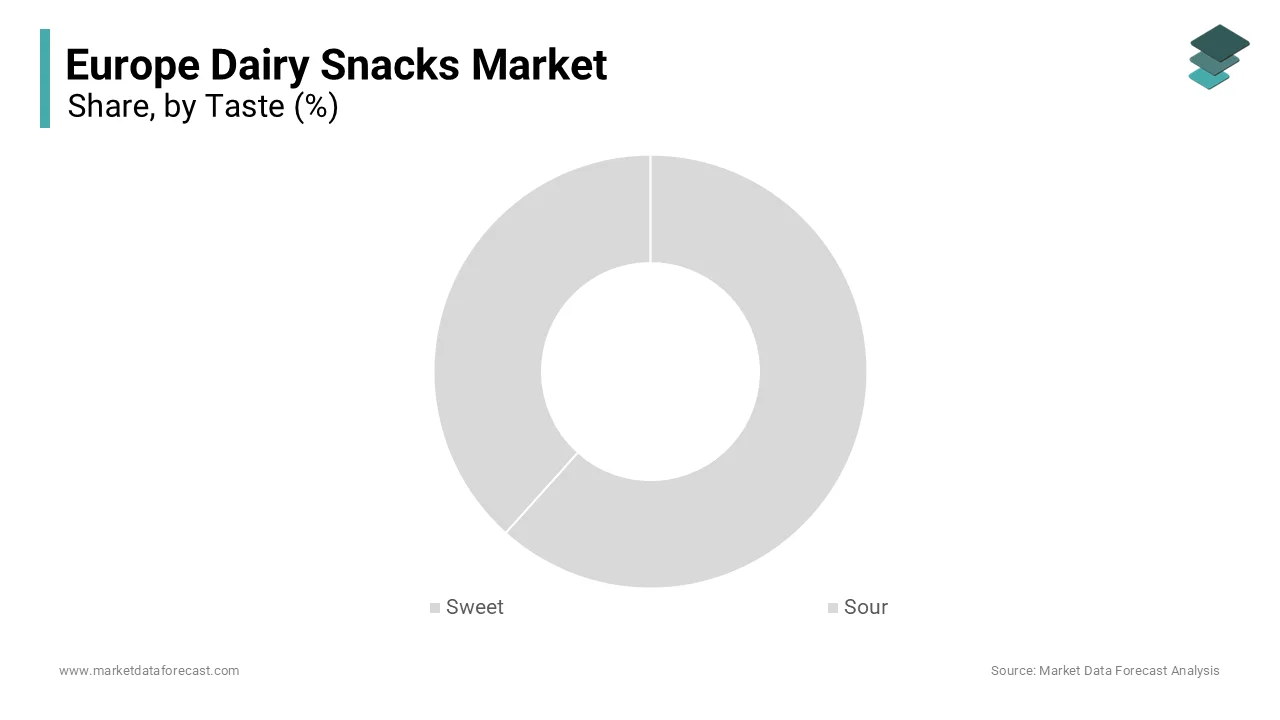
The sour-tasting dairy snacks segment is gaining traction at a fastest CAGR of 8.9% in coming years owing to the increasing awareness of gut health and the role of probiotics in enhancing digestion and immunity. Additionally, sour dairy snacks are becoming popular among fitness enthusiasts and clean-eating advocates due to their lower sugar content and natural fermentation process. Retailers are also capitalizing on this shift by expanding chilled snack sections with sour dairy options positioned as "clean label" and "functional."
By Distribution Channel Insights
The supermarkets segment was the largest by accounting for 45.3% of Europe dairy snacks market share in 2025. These large-format retail stores offer a wide variety of dairy snack products under one roof, making them a preferred shopping destination for consumers seeking convenience, variety, and competitive pricing. According to EuroCommerce, there are over 250,000 supermarket outlets across Europe, with major chains such as Carrefour, Tesco, and Rewe offering dedicated refrigerated dairy sections featuring portion-controlled snacks. Moreover, supermarkets benefit from strong supplier relationships and private-label offerings that allow them to introduce exclusive dairy snack lines tailored to local tastes. Additionally, promotional activities such as multi-buy discounts, endcap displays, and seasonal campaigns significantly influence purchasing decisions.
The online retail segment is esteemed to grow at a fastest CAGR of 12.3% throughout the forecast period. According to the European Commerce Association, online grocery sales in Europe surpassed in 2023, with dairy products representing a significant portion of repeat orders. Platforms such as Amazon Fresh, Ocado, and Zalando Life have expanded their chilled and frozen snack categories, enabling consumers to access a diverse range of dairy-based options from home. The rise of direct-to-consumer (DTC) models adopted by specialty dairy snack brands is another factor boosting the growth of segment. Startups focusing on organic, low-sugar, and functional dairy snacks often leverage online channels to build brand recognition and engage directly with health-conscious shoppers. Additionally, mobile apps and subscription services offering weekly snack deliveries have gained popularity, particularly among millennials and Gen Z consumers.
REGIONAL ANALYSIS
Germany Dairy Snacks Market Analysis
Germany was the top performer in the Europe Dairy Snacks market by accounting for 22.2% of share in 2025. The country’s strong dairy heritage, coupled with a robust food processing industry and high per capita dairy consumption, supports the widespread availability and acceptance of dairy-based snacks. German consumers exhibit a strong preference for functional and nutrient-dense dairy products, particularly among health-conscious demographics. Additionally, Germany serves as a manufacturing and export hub for dairy snacks, benefiting from advanced cold-chain infrastructure and stringent quality standards.
France Dairy Snacks Market Analysis
France was ranked second in the Europe Dairy Snacks market by capturing 18.2% of share in 2025. French consumers place high importance on food quality and authenticity, which has led to the success of artisanal and regionally sourced dairy snacks. The Nutri-Score labeling system, widely adopted in France, has also influenced product development, encouraging manufacturers to reduce sugar and fat content while maintaining taste.
United Kingdom Dairy Snacks Market Analysis
The United Kingdom Dairy Snacks market is expected to have fastest CAGR in the coming years. Despite post-Brexit trade challenges, the U.K. remains a major consumer of dairy-based snacks, particularly in the form of yogurt pots, cheese singles, and milk-based protein bars. British consumers increasingly seek portable, protein-rich snacks that align with active lifestyles and weight management goals. According to the UK Food Standards Agency, dairy snacks have become a staple in school lunchboxes and office snacks, with portion-controlled formats leading growth. The Vegan Society reports that while plant-based alternatives are rising, dairy snacks still dominate supermarket shelves in family packs and fortified varieties targeting children and seniors. E-commerce expansion and private-label innovation by retailers like Tesco and Marks & Spencer have further strengthened the U.K.’s position in the regional dairy snacks market.
Italy Dairy Snacks Market Analysis
Italy Dairy Snacks market growth is likely to grow with its rich dairy tradition and growing demand for convenient, on-the-go consumption formats. Italian consumers have a long-standing appreciation for high-quality dairy products such as mozzarella, ricotta, and yogurt, which are now being adapted into snack-sized offerings. As per the Italian Dairy Association, per capita dairy consumption stands with a particular emphasis on freshness and regional specialties. Brands like Parmalat and Granarolo have successfully launched single-serve yogurt and milk-based snacks tailored for breakfast and midday consumption. Additionally, Italy is experiencing a surge in demand for functional dairy snacks enriched with probiotics and digestive enzymes. The Italian Ministry of Health reports that many consumers consider gut health a priority when selecting between snack options.
Spain Dairy Snacks Market Analysis
Spain Dairy Snacks market growth is likely to grow with the rising urbanization, changing eating habits, and increased availability of refrigerated snack options. Spanish consumers traditionally favor fresh dairy products, particularly yogurt and flavored milk, which are now being offered in portion-controlled formats to suit busy lifestyles.
According to the Spanish Dairy Industry Association, domestic dairy consumption has risen steadily over the past five years, with yogurt and dairy desserts leading growth. The introduction of ambient-stable dairy snacks and chilled convenience options has broadened market accessibility.
Moreover, Spain has witnessed a surge in health-focused dairy innovations, including reduced-sugar yogurts and protein-enriched milk drinks. The Spanish Agency for Consumer Affairs, Safety, and Quality notes that regulatory efforts promoting healthier formulations have encouraged manufacturers to invest in reformulation and product diversification.
COMPETITIVE LANDSCAPE
The competition in the Europe Dairy Snacks market is marked by a dynamic interplay of established multinational corporations and agile regional brands striving to capture consumer attention through differentiation and innovation. Major players leverage their extensive R&D capabilities to develop healthier, more sustainable, and functionally enriched snack options that align with evolving dietary expectations. At the same time, local dairies and boutique brands capitalize on authenticity, heritage, and niche positioning to carve out loyal customer bases.
The market is witnessing increasing consolidation through strategic acquisitions, joint ventures, and co-branding initiatives aimed at expanding product portfolios and geographic reach. Innovation cycles have accelerated, with companies frequently introducing new formats, flavors, and packaging solutions to meet the demand for convenience and portability.
Consumer preferences are shifting toward clean-label, ethically sourced, and functional dairy snacks, prompting manufacturers to invest heavily in transparent sourcing practices and ingredient transparency. In this highly competitive environment, success depends not only on product quality but also on effective branding, supply chain agility, and responsiveness to emerging health and sustainability trends.
KEY MARKET PLAYERS
Some of the key players in the Europe Dairy Snacks market are
- Amul
- Arla Foods UK Plc.
- Blue Bell Creameries
- Breyers
- Dairy Farmers of America Inc.
- Danone
- Dean Foods Company
- Nestlé SA
- Fonterra Group Cooperative Limited
- Kraft Foods
- Unilever
TOP PLAYERS IN THE MARKET
- One of the leading players in the Europe Dairy Snacks market is Danone , a multinational food and beverage company with a strong presence in the dairy and plant-based food sectors. Danone has been instrumental in shaping consumer preferences through its diverse portfolio of yogurt-based snacks, probiotic drinks, and fortified milk products. The company emphasizes health-focused innovation and sustainability, aligning its product development with evolving dietary trends across Europe.
- Another major contributor is Arla Foods , a prominent European dairy cooperative known for its high-quality cheese sticks, organic yogurts, and lactose-free dairy snacks. Arla’s commitment to traceability and ethical sourcing has strengthened consumer trust and brand loyalty. Its regional expertise and cooperative structure enable it to respond swiftly to market demands while maintaining premium product positioning.
- Nestlé , a global leader in nutrition and food science, also plays a crucial role in the Europe Dairy Snacks market. With well-established brands like Nesquik and La Lechera, Nestlé offers a wide range of snackable dairy products tailored to different age groups and nutritional needs.
Top Strategies Used by Key Players
A key strategy employed by leading companies in the Europe Dairy Snacks market is product innovation focused on health and wellness. Brands are continuously launching new formulations that cater to specific dietary needs such as low sugar, high protein, and digestive health benefits, ensuring alignment with current consumer preferences.
Another approach is expansion into niche and premium segments , including organic, artisanal, and locally sourced dairy snacks. This allows companies to differentiate their offerings, command higher price points, and appeal to discerning consumers seeking authenticity and quality.
RECENT HAPPENINGS IN THE MARKET
- In February 2024, Danone launched a new line of plant-enhanced dairy snacks combining traditional dairy with plant-based proteins, aiming to cater to flexitarian consumers without compromising taste or texture.
- In July 2023, Arla Foods introduced a carbon-neutral cheese stick packaging initiative across several European markets, reinforcing its sustainability commitments while maintaining product freshness and convenience.
- In November 2023, Nestlé partnered with a biotech startup to develop next-generation probiotic cultures for yogurt-based snacks, enhancing gut health benefits and supporting immune function.
- In March 2024, Müller expanded its organic dairy snacks range in Germany, targeting health-conscious families and positioning itself as a leader in natural and minimally processed snacking options.
- In September 2023, Lactalis acquired a small Greek dairy snacks brand specializing in Mediterranean-style fresh cheese bites, strengthening its foothold in the premium dairy segment and diversifying its product offerings across Europe.
MARKET SEGMENTATION
This research report on the Europe dairy snacks market is segmented and sub-segmented into the following categories.
By Type
- Cheese
- Yogurt
- Butter
- Buttermilk
- Ice Cream
- Lactose-Free Milk
- Others
By Taste
- Sweet
- Sour
By Distribution Channel
- Supermarkets
- Convenience Stores
- Grocery Stores
- Online
- Others
By Country
- UK
- France
- Spain
- Germany
- Italy
- Russia
- Sweden
- Denmark
- Switzerland
- Netherlands
- Turkey
- Czech Republic
- Rest of Europe