- Product Description Description
- Table of Contents TOC
- List of Table & Figure LOT
- Get Free Sample PDF Sample PDF
Market Size, 2025
$1,297.48 MnMarket Estimate, 2026
$1,605.54 MnMarket Forecast, 2034
$8,823.47 MnCAGR, 2026–2034
23.74%Europe Digital Biomarkers Market Report Summary
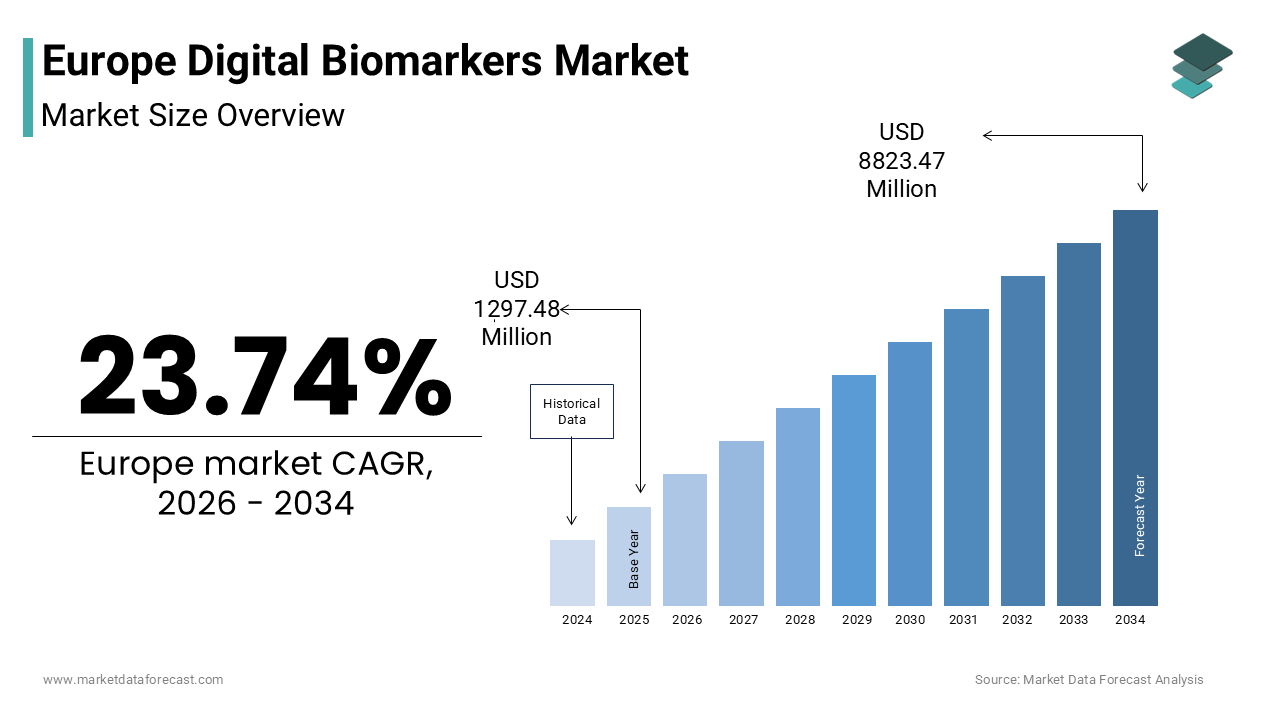
The Europe digital biomarkers market was valued at USD 1,297.48 million in 2025, is estimated to reach USD 1,605.54 million in 2026, and is projected to reach USD 8,823.47 million by 2034, growing at a CAGR of 23.74% during the forecast period from 2026 to 2034. The growth of the Europe digital biomarkers market is driven by the accelerating integration of digital endpoints into regulatory science, rising adoption of remote patient monitoring technologies, and the increasing demand for continuous real-world health data in clinical development. Growing use of wearable devices, mobile health applications, and AI-driven analytics for chronic disease management and early diagnosis is further fueling market expansion. Moreover, the emergence of digital therapeutics with embedded biomarker capabilities and the expansion of European digital health infrastructure are enabling broader clinical adoption across the region.
Key Market Trends
- Rising adoption of wearable devices and smartphone-based monitoring tools to generate continuous physiological and behavioural data.
- Increasing use of digital biomarkers as secondary endpoints in decentralized clinical trials, particularly in neurology and cardiology research.
- Strong growth of AI-driven predictive and prognostic biomarkers supporting precision medicine and early disease detection strategies.
- Expansion of public–private digital health consortiums to validate biomarkers using real-world evidence across Europe.
- Growing investment in digital therapeutics platforms that integrate continuous biomarker monitoring to personalize treatment outcomes.
Segmental Insights
- Based on type, the wearable devices segment was the largest and held a significant share of the Europe digital biomarkers market in 2024. The segment’s dominance is attributed to widespread consumer adoption of smartwatches and fitness trackers equipped with biosensors capable of capturing validated physiological signals such as heart rate variability, sleep metrics, and oxygen saturation.
- Based on clinical practice, the monitoring digital biomarkers segment accounted for 48.6% of the Europe digital biomarkers market share in 2024. The growth of this segment is driven by the increasing need for continuous remote monitoring of chronic diseases, enabling early intervention and reducing hospital readmissions through longitudinal patient data.
- Based on end use, the healthcare companies segment was the largest, occupying a prominent share of the Europe digital biomarkers market in 2024. The dominance of this segment stems from pharmaceutical companies integrating digital biomarkers into clinical trials to accelerate drug development, enhance endpoint accuracy, and support value-based healthcare models.
Regional Insights
The Europe digital biomarkers market is witnessing strong growth across major economies, supported by expanding digital health infrastructure, regulatory recognition of digital endpoints, and increasing healthcare digitization initiatives.
- Germany was the largest contributor, accounting for 24.3% of the European digital biomarkers market share in 2024, driven by its advanced digital health reimbursement frameworks, strong clinical research ecosystem, and widespread adoption of digital health applications under the DiGA program.
- The United Kingdom continues to perform strongly, fueled by the integration of digital monitoring programs within the National Health Service and increasing investment in digital biomarker validation across mental health and chronic disease management.
- France is emerging as a key market, supported by centralized health data governance initiatives, government funding for digital therapeutics, and large-scale real-world evidence platforms such as the Health Data Hub.
- Italy and the Netherlands are also witnessing notable growth, driven by expanding remote monitoring programs, investments in digital health modernization, and advanced electronic health record integration enabling continuous biomarker deployment.
Competitive Landscape
The Europe digital biomarkers market is characterized by collaboration between pharmaceutical companies, digital health startups, wearable technology providers, and research institutions focused on developing clinically validated digital endpoints. Leading companies are prioritizing AI-driven analytics, real-world evidence generation, and regulatory alignment with European health authorities to strengthen market positioning. Strategic partnerships with healthcare providers, academic institutions, and public research programs are accelerating innovation and adoption. Prominent players in the Europe digital biomarkers market include AliveCor, Biogen Inc., Koneksa Health, Evidation Health, Empatica, ActiGraph, IXICO plc, AliveSense, Fitbit, and Apple Inc.
Europe Digital Biomarkers Market Size
The Europe Digital Biomarkers Market size was valued at USD 1297.48 million in 2025 and is anticipated to reach USD 1605.54 million in 2026 from USD 8823.47 million by 2034, growing at a CAGR of 23.74% during the forecast period from 2026 to 2034
Digital biomarkers are objective, quantifiable physiological and behavioural data collected and measured by digital devices, such as wearables, implantables, and mobile applications to explain, influence, or predict health-related outcomes. In Europe, this domain has evolved from exploratory research to a regulated component of clinical development and remote care delivery. Unlike static lab-based biomarkers, digital biomarkers enable continuous, real-time observation outside traditional healthcare settings, thereby enhancing early diagnosis, chronic disease management, and therapeutic personalisation. The European Medicines Agency has increasingly acknowledged the scientific validity of certain digital endpoints, particularly in neurology and cardiology. As per the European Commission, over 30% of European citizens now use health-related mobile applications. Additionally, Eurostat data indicates that 70% of the European Union population aged 16 to 74 had internet access at home in 2023, establishing foundational digital infrastructure. Chronic diseases, which account for 80% of healthcare expenditure in high-income European countries, according to, the World Health Organization.
MARKET DRIVERS
Accelerating Integration of Digital Endpoints in Regulatory Science
The incorporated digital biomarkers into regulatory decision-making, especially for neurological and psychiatric disorders, where subjective clinical assessments lack reliability is escalating the growth of Europe digital biomarkers market. In 2022, the EMA published a reflection paper outlining evidentiary standards for digital biomarkers in decentralised clinical trials, significantly lowering development barriers. As per a 2023 analysis by the Innovative Medicines Initiative, over 60% of ongoing neurodegenerative disease trials in Europe now include at least one digital biomarker as a secondary endpoint. Moreover, the European Union’s Horizon Europe programme allocated more than 1.2 billion euros between 2021 and 2027 specifically for digital health innovations, including digital endpoint validation. This regulatory alignment enables earlier detection of treatment effects, research published in Nature Digital Medicine demonstrated that gait variability measured by a smartwatch predicted cognitive decline in elderly Europeans with 87% accuracy over a two-year period. These developments have redefined endpoint selection strategies across therapeutic areas and incentivised pharmaceutical investment in sensor-based digital solutions.
Rising Prevalence of Age-Related Chronic Conditions Driving Continuous Monitoring Needs
The growing ageing population intensifies demand for remote, proactive health monitoring tools, which is also prompting the growth of Europe digital biomarkers market. Eurostat data from 2023 confirms that 21.3% of the EU population is aged 65 or older, a figure projected to reach 29.1% by 2050. Age-related conditions, such as heart failure, atrial fibrillation, and chronic obstructive pulmonary disease require frequent oversight to prevent acute episodes and hospitalisations. Digital biomarkers derived from wrist-worn photoplethysmography or ambient home sensors offer non-intrusive, longitudinal tracking. The European Innovation Partnership on Active and Healthy Ageing has endorsed voice and gait analytics as early Parkinson’s indicators in primary care. Pilot programmes in the Netherlands and Sweden recorded hospital readmission reductions of up to 22% through remote biomarker surveillance, demonstrating clinical utility and cost-effectiveness in integrated care models.
MARKET RESTRAINTS
Fragmented Data Protection Frameworks Across European Jurisdictions
The inconsistent national implementations create compliance complexity for digital biomarker developers is impeding the growth of Europe digital biomarker market. As per the European Data Protection Board, a 2023 audit found that 14 of 27 EU member states apply stricter conditions for processing biometric health data than GDPR’s baseline. This fragmentation increases legal exposure, particularly for startups lacking multi-jurisdictional legal capacity. For example, France’s data authority CNIL fined a digital health firm 10 million euros in 2022 for inadequate anonymisation of voice biomarkers—even though the company complied with German and Dutch standards. Furthermore, the European Court of Justice’s 2023 ruling in Case C-460/20 clarified that continuous physiological data constitutes sensitive personal data, requiring explicit, purpose-specific consent and limiting secondary research use. These divergent interpretations hinder the creation of pan-European datasets essential for algorithm training, compelling firms to restrict operations to limited markets and delaying scalable deployment.
Lack of Standardised Clinical Validation Protocols for Novel Biomarkers
The absence of harmonised validation pathways comparable to those for molecular diagnostics is additionally restricting the growth of Europe digital biomarker market. According to the European Federation of Pharmaceutical Industries and Associations, fewer than 15% of digital biomarker submissions to European health technology assessment bodies between 2020 and 2023 included evidence from prospective multicentre trials. This stems from the lack of consensus on gold-standard comparators, especially for behavioural metrics like speech patterns or sleep quality. As of 2024, only Germany, the Netherlands, and the United Kingdom have published national guidance on digital biomarker validation, per the European Coordination Committee of the Radiological, Electromedical and Healthcare IT Industry. A 2023 Lancet Digital Health study found that the same digital tremor metric exhibited sensitivity ranging from 68 to 89%, across four European validation sites due to differences in reference criteria and environmental variables.
MARKET OPPORTUNITIES
Expansion of Public-Private Consortiums for Real-World Evidence Generation
The collaborative ecosystems that unite academia, industry, and regulators to validate digital biomarkers in real-world settings, which is setting up new opportunities for the growth of Europe digital biomarkers market. The Innovative Medicines Initiative’s Digital Innovation Hub, launched in 2022, includes 43 partners from 15 countries and has secured 85 million euros to generate robust evidence for digital endpoints in oncology and mental health. Enabled by the 2023 European Health Data Space Regulation, federated data infrastructures now facilitate cross-border health data sharing while preserving national sovereignty. Projects like the EU-funded RADAR-CNS have demonstrated that smartphone-derived digital biomarkers can predict depressive relapse with over 80% positive predictive value in multi-country cohorts. National initiatives, such as France’s Health Data Hub and Sweden’s National Pandemic Centre are integrating digital biomarker streams into observational platforms. These efforts not only accelerate analytical validation but also embed digital tools within existing care pathways, strengthening clinician adoption and informing coverage decisions by bodies like Germany’s Institute for Quality and Efficiency in Health Care.
Growing Investment in Digital Therapeutics with Embedded Biomarker Capabilities
The digital therapeutics are emerging as a primary vehicle for digital biomarker deployment, as these software-based interventions rely on continuous sensing to personalise treatment. The growing investment in digital therapeutics with embedded biomarker capabilities, which is also boosting the growth of Europe digital biomarkers market. The European digital therapeutics market is projected to grow at a compound annual growth rate of 23.4% from 2023 to 2030, according to the European Digital Therapeutics Alliance. For instance, a prescription digital therapeutic approved in Germany in 2023 for anxiety disorders modulates cognitive behavioural therapy modules in real time using voice and typing patterns. The European Commission’s Digital Europe Programme has allocated 200 million euros to support clinical integration of such therapeutics, including embedded biomarker co-development. Regulatory milestones are advancing this convergence, where the United Kingdom’s Medicines and Healthcare products Regulatory Agency granted Europe’s first combined digital therapeutic and biomarker designation in early 2024.
MAKRET CHALLENGES
Interoperability Gaps Between Proprietary Sensor Platforms and Clinical IT Systems
The lack of universal data exchange standards between consumer sensors and electronic health record systems is one of the challenges for the growth of Europe digital biomarkers market. Most wearables use proprietary APIs that do not conform to healthcare interoperability frameworks like Fast Healthcare Interoperability Resources. As per a 2023 survey by the European Health Telematics Observatory, only 12% of EU hospitals routinely integrate patient-generated sensor data into clinical workflows due to technical incompatibilities. In Germany, a heart failure remote monitoring pilot found that 67% of cardiologists abandoned the digital biomarker dashboard within three months because it could not be embedded within their hospital information system. The absence of structured, real-time data flow prevents clinicians from correlating biomarker trends with lab results or medication histories, compromising decision-making.
Ethical and Equity Concerns Regarding Algorithmic Bias in Biomarker Interpretation
Digital biomarkers risk perpetuating health disparities due to insufficient representation of diverse populations in algorithm training and validation, which is also to be a challenge for the growth of Europe digital biomarkers market. As per a 2023 audit by the European Group on Ethics in Science and New Technologies, only 9% of publicly funded digital biomarker trials in Europe included stratified performance analysis by gender or socioeconomic status. This oversight has tangible consequences, where a 2024 BMJ study found a widely used photoplethysmography-based atrial fibrillation algorithm exhibited 15% lower sensitivity in women over 70 due to differences in skin perfusion and wrist anatomy. Similarly, voice-based cognitive decline biomarkers trained, primarily on native German speakers showed markedly reduced accuracy among migrants with non-Germanic linguistic backgrounds. The European Commission’s 2023 guidelines on trustworthy artificial intelligence mandate bias mitigation, yet enforcement remains weak.
REPORT COVERAGE
| REPORT METRIC | DETAILS |
| Market Size Available | 2025 to 2034 |
| Base Year | 2025 |
| Forecast Period | 2026 to 2034 |
| CAGR | 13.88% |
| Segments Covered | By Type, Clinical Practice, Therapeutic Area, End-use |
| Various Analyses Covered | Regional & Country Level Analysis, Segment-Level Analysis, DROC, PESTLE Analysis, Porter’s Five Forces Analysis, Competitive Landscape, Analyst Overview on Investment Opportunities |
| Countries Covered | UK, France, Spain, Germany, Italy, Russia, Sweden, Denmark, Switzerland, the Netherlands, Turkey, the Czech Republic, and the Rest of Europe. |
| Market Leaders Profiled | AliveCor, Biogen Inc., Koneksa Health, Evidation Health, Empatica, ActiGraph, IXICO plc, AliveSense, Fitbit, and Apple Inc. |
SEGMENTAL ANALYSIS
By Type Insights
The wearable devices segment was the largest by holding 42.3% of the Europe digital biomarkers market share in 2024 owing to the widespread consumer adoption of smartwatches and fitness trackers integrated with advanced biosensors capable of capturing validated physiological signals. The European consumer electronics has seen robust uptake of devices from brands, such as Apple Garmin and Withings, which now include regulatory cleared features for detecting atrial fibrillation sleep apnoea and blood oxygen saturation. As per the International Data Corporation, over 85 million wearables were shipped to European consumers in 2023 with 68% incorporating at least one health monitoring function approved under the EU Medical Device Regulation. Additionally, the European Society of Cardiology’s 2023 clinical guidelines formally endorsed the use of photoplethysmography based wearables for opportunistic atrial fibrillation screening in adults over 65 further legitimising their role in clinical pathways. The emergence of consumer familiarity regulatory validation and clinical endorsement has cemented wearables as the primary hardware vector for digital biomarker deployment across the region.
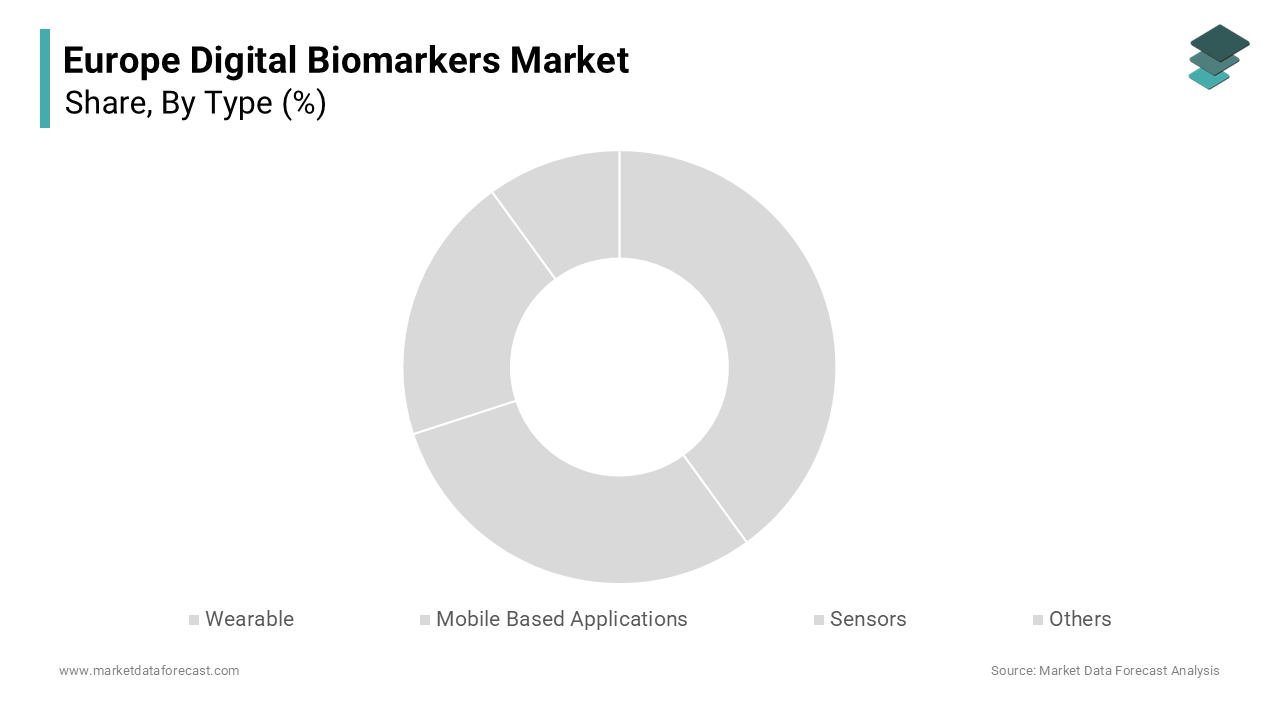
The mobile based applications segment is anticipated to grow at a fastest CAGR of 26.8% during the forecast period owing to their flexibility low deployment cost and seamless integration with existing smartphone ecosystems, which reach nearly the entire adult population. Unlike hardware dependent modalities, mobile applications can rapidly iterate algorithms and scale across borders without logistical constraints. A key enabler is the European Commission’s 2023 Digital Therapeutics Action Plan which prioritises software based medical devices for fast-track assessment and temporary reimbursement in Germany, France, and the Netherlands. According to the European Digital Health Observatory, over 120 mobile health applications incorporating digital biomarkers received CE marking under the new Medical Device Regulation in 2023 alone more than double the number in 2021. These apps span mental health neurology and respiratory care with features such as voice analysis gait assessment and breathing pattern recognition. Furthermore, national health services including Italy’s Servizio Sanitario Nazionale have begun pilot programmes reimbursing prescription mobile apps that use validated digital biomarkers to manage depression and chronic obstructive pulmonary disease.
By Clinical Practice Insights
The Monitoring digital biomarkers segment was the largest by capturing 48.6% of the Europe digital biomarkers market share in 2024 owing to the urgent need for continuous remote oversight of patients with chronic and degenerative conditions in post-acute and home care settings. Unlike diagnostic or predictive, biomarkers monitoring tools provide longitudinal data streams essential for adjusting therapy adherence and preventing hospital readmissions. The European Union’s Strategic Agenda for Chronic Disease Management explicitly prioritises digital remote monitoring as a cost containment measure given that chronic diseases account for 70 to 80% of national health expenditures according to the World Health Organization’s 2023 European Health Report. Real world evidence supports this focus a 2022 multi-country study coordinated by the European Heart Journal demonstrated that heart failure patients using wearable based fluid status monitoring experienced a 24% reduction in 30-day readmission rates. Furthermore, Germany’s DiGA framework now includes 14 reimbursed digital monitoring solutions incorporating validated biomarkers for conditions ranging from epilepsy to diabetes.
The predictive and prognostic digital biomarkers segment is most likely to grow at a fastest CAGR of 29.3% from 2025 to 2033 with the shift toward precision medicine and preventive care models that prioritise early intervention before irreversible pathology occurs. Neurological and psychiatric disorders where traditional diagnostics lag are particularly receptive to predictive digital signals. As per the Innovative Medicines Initiative over 70% of ongoing public private partnership trials in Europe now incorporate digital biomarkers to stratify patient risk or forecast treatment response. A landmark example is the EU funded MOBILISE D project, which validated gait speed and variability from smartphone sensors as predictors of functional decline in Parkinson’s disease with 91% specificity over 18 months. Regulatory bodies are also adapting the European Medicines Agency’s 2023 qualification opinion for a digital speech biomarker to predict relapse in schizophrenia marks a pivotal step toward endpoint acceptance. Additionally, national health systems such as Sweden’s are integrating predictive algorithms into primary care pathways to identify elderly patients at high risk of falls or cognitive deterioration. These advances align with the European Commission’s Europe’s Beating Cancer Plan which allocates 400 million euros to digital early detection tools including biomarker driven risk models.
By End Use Insights
The healthcare companies segment was accounted in occupying 55.3% of the Europe digital biomarkers market share in 2024 owing to their strategic investment in digital endpoints to accelerate clinical development improve trial efficiency and differentiate therapeutics in value based markets. The adoption of digital biomarkers reduces reliance on infrequent clinic visits and subjective scales thereby generating richer more granular efficacy data. According to the European Federation of Pharmaceutical Industries and Associations, over 80% of large pharma companies operating in Europe now embed digital biomarkers in at least one active clinical trial portfolio. Notably Roche’s use of wearable derived mobility metrics in its multiple sclerosis trials and Novartis’s deployment of voice analytics in schizophrenia studies exemplify this trend. Regulatory incentives further catalyse uptake the European Medicines Agency’s Adaptive Pathways pilot has approved 12 drug device combinations since 2021, where digital biomarkers serve as surrogate endpoints. Moreover, the 2023 EU Pharma Package explicitly encourages the use of real world digital data for post authorisation safety and effectiveness studies. These structural and strategic drivers position healthcare companies as the primary commercial engine behind digital biomarker innovation and deployment in Europe.
The payers segment is esteemed to witness a fastest CAGR of 31.1% during the forecast period owing to a shift from volume based to value-based reimbursement where outcomes evidence derived from digital biomarkers directly informs coverage and pricing decisions. European national health insurers and sickness funds are increasingly demanding real world performance data before granting long term reimbursement for high-cost therapies particularly in oncology neurology and rare diseases. As per the European Network for Health Technology Assessment, over 18 European countries now require or strongly recommend digital outcome measures as part of health technology assessment submissions for digital therapeutics and advanced therapies. Germany’s Federal Joint Committee for instance mandated the use of remote monitoring biomarkers as a condition for reimbursing a new gene therapy for spinal muscular atrophy in 2023. Similarly, France’s Haute Autorité de Santé launched a digital endpoints observatory in 2024 to evaluate the predictive validity of biomarkers for cost effectiveness modelling. These initiatives are supported by the European Commission’s 2023 Value Based Healthcare Declaration which commits member states to integrate continuous outcome measurement into payment systems.
REGIONAL ANALYSIS
Germany Digital Biomarkers Market Analysis
Germany was the top performer of the Europe digital biomarkers market by holding 24.3% of share in 2024 owing to its mature digital health infrastructure robust regulatory frameworks and high healthcare expenditure. The country pioneered the world’s first reimbursement pathway for digital health applications through its DiGA framework which as of early 2024 includes over 40 approved apps many incorporating validated digital biomarkers for mental health cardiovascular and neurological conditions. According to the Federal Ministry of Health, total digital health expenditure in Germany exceeded 2.1 billion euros in 2023 with over 60% allocated to reimbursed software as a medical device solutions. The German healthcare system also benefits from a nationwide telematics infrastructure connecting over 90% of physicians and pharmacies enabling seamless data exchange. Furthermore, the Fraunhofer Institute and Charite Berlin lead several EU funded validation projects for digital biomarkers in Alzheimer’s disease and chronic pain. These institutional strengths combined with strong patient and clinician trust in digital tools position Germany, as the undisputed market leader in digital biomarker adoption and commercialisation.
United Kingdom Digital Biomarkers Market Analysis
The United Kingdom digital biomarkers market was ranked second by holding 16.3% of share in 2024 with a proactive regulatory environment and deep integration of digital innovation into the National Health Service. The Medicines and Healthcare products Regulatory Agency has emerged as a European leader in digital biomarker oversight having issued the region’s first combined digital therapeutic and biomarker designation in 2024. According to NHS England, over 1.2 million patients were enrolled in digital remote monitoring programmes by the end of 2023 covering conditions such as hypertension heart failure and diabetes. The National Institute for Health and Care Research allocated 75 million pounds in 2023 specifically to validate digital endpoints in mental health and neurodegenerative trials. Additionally,the UK Biobank’s integration of wearable data from 1,00,000 participants provides an unparalleled resource for algorithm training and population level validation. The regulatory divergence the UK maintains scientific alignment with EU standards through collaborative research initiatives and continues to attract significant venture funding with digital health startups raising over 1.1 billion pounds in 2023 according to the Office for Life Sciences.
France Digital Biomarkers Market Analysis
France biomarkers market growth is likely to grow with the strong governmental support for digital health transformation and centralised health data governance. The French National Health Insurance Fund introduced a temporary reimbursement code for digital therapeutics in 2022 and by 2023 had approved 11 solutions that rely on digital biomarkers for conditions including insomnia and major depressive disorder. As per the French Ministry of Health, the national Health Data Hub now aggregates anonymised data from over 67 million citizens enabling large scale validation studies for digital endpoints. The country also leads in voice-based biomarker research with the Institut du Cerveau et de la Moelle Epiniere validating vocal tremor metrics for early Parkinson’s detection in a cohort of 8 500 patients. Furthermore France’s 2023 Digital Health Strategy allocates 300 million euros to deploy remote monitoring in primary care with a focus on elderly populations.
Italy Digital Biomarkers Market Analysis
Italy digital biomarkers market growth is growing with the digital health adoption despite historical infrastructure challenges. The turning point came in 2022, when Italy’s National Recovery and Resilience Plan allocated 1.2 billion euros to modernise digital health systems including widespread deployment of remote monitoring for chronic diseases. According to the Italian Medicines Agency, over 20 digital health applications incorporating biomarkers received national authorisation in 2023 alone with a focus on respiratory and metabolic conditions. The Servizio Sanitario Nazionale launched a nationwide digital therapeutics reimbursement pilot in Lombardy and Tuscany covering 3.5 million patients using biomarker driven apps for type 2 diabetes and COPD management. Additionally, Italy hosts the European Union’s largest real world evidence study on digital biomarkers for frailty in the elderly co led by the University of Bologna and involving 15,000 participants across five regions.
Netherlands Digital Biomarkers Market Analysis
The Netherlands digital biomarkers market growth is steadily growing with its advanced data infrastructure strong patient empowerment culture andin ethical AI governance. The Dutch healthcare system operates one of Europe’s most mature electronic health record ecosystems with over 95% of general practitioners using interoperable digital platforms according to the Netherlands eHealth Monitor 2023. This foundation enables seamless integration of digital biomarker data into routine care with over 2,00,000 patients currently enrolled in remote monitoring programmes for cardiovascular and mental health conditions. The Netherlands Organisation for Health Research and Development funded 28 digital biomarker validation projects in 2023 focusing on equitable algorithm design and bias mitigation. Notably, the Amsterdam UMC developed and validated a smartphone based gait analysis tool that predicts fall risk in Parkinson’s patients with 89% accuracy, now being adopted across Scandinavian health systems. Furthermore, the Dutch Data Protection Authority published the EU’s first sector specific guidelines for health AI in 2024 providing regulatory clarity that attracts international developers.
COMPETITIVE LANDSCAPE
The competitive landscape of the Europe digital biomarkers market is characterised by dynamic collaboration between pharmaceutical giants technology startups and academic institutions. Unlike traditional medtech sectors dominance is not determined by manufacturing scale but by algorithmic validity clinical validation networks and regulatory engagement. Large healthcare companies leverage their trial infrastructure and payer relationships to embed digital endpoints while agile startups differentiate through novel sensor fusion and AI driven analytics. Competition intensifies around data quality interoperability and ethical compliance particularly under the General Data Protection Regulation. The absence of a dominant universal platform has led to a fragmented yet innovation rich environment where success hinges on generating robust real world evidence and achieving formal recognition from bodies like the European Medicines Agency or national health technology assessment agencies.
KEY MARKET PLAYERS
Some of the companies that are playing a dominating role in the Europe Digital Biomarkers Market include
- AliveCor
- Biogen Inc.
- Koneksa Health
- Evidation Health
- Empatica
- ActiGraph
- IXICO plc
- AliveSense
- Fitbit
- Apple Inc.
Top Players in the Market
Roche Holding AG
Roche Holding AG has established a significant presence in the Europe digital biomarkers market through its strategic integration of digital endpoints into neurology and oncology clinical trials. The company leverages data from wearables and mobile platforms to capture real world mobility cognition and behavioural metrics in patients with Parkinson’s disease multiple sclerosis and Alzheimer’s. In 2023 Roche partnered with a leading European digital health startup to co-develop a voice-based biomarker for monitoring cognitive decline in early-stage dementia patients. Additionally, Roche’s acquisition of a Swiss digital phenotyping firm in early 2024 expanded its algorithm validation capabilities. These initiatives underscore Roche’s commitment to embedding objective digital measures into drug development and regulatory submissions across Europe and globally.
Philips Healthcare
Philips Healthcare contributes to the Europe digital biomarkers market by embedding sensor derived physiological indicators into its hospital and home care monitoring ecosystems. The company focuses on respiratory cardiovascular and sleep health applications using proprietary biosignal analytics to generate continuous real time biomarkers. In late 2023, Philips launched an updated version of its wearable biosensor patch validated for detecting nocturnal hypoxemia and arrhythmia trends in chronic disease patients. The firm also collaborated with Germany’s Technische Universität Dresden to validate a novel impedance-based fluid status biomarker for heart failure management. Through these innovations Philips strengthens its position as a provider of integrated diagnostic and monitoring solutions that support both clinical decision making and decentralised trial execution across Europe.
Biofourmis Inc
Biofourmis Inc has rapidly advanced its footprint in the Europe digital biomarkers market by deploying AI powered physiological analytics across cardiology and oncology care pathways. The company’s Biovitals platform transforms data from clinical grade wearables into actionable digital biomarkers for early deterioration detection and therapy personalisation. Biofourmis received CE marking for a new biomarker suite that predicts chemotherapy induced cardiotoxicity using heart rate variability and activity patterns. It also signed a multi-year partnership with a leading UK NHS trust to implement remote monitoring for 10,000 cancer patients. These actions demonstrate Biofourmis’s focus on clinically validated scalable digital endpoints that bridge pharmaceutical development and routine healthcare delivery throughout Europe.
MARKET SEGMENTATION
This research report on the Europe digital biomarkers market has been segmented and sub-segmented based on following categories.
By Type
- Wearable
- Mobile Based Applications
- Sensors
- Others
By Clinical Practice
- Diagnostic Digital Biomarkers
- Monitoring Digital Biomarkers
- Predictive And Prognostic Digital Biomarkers
- Other's (Safety, Pharmaco dynamics/ Response, Susceptibility)
By Therapeutic Area
- Cardiovascular And Metabolic Disorders (CVMD)
- Respiratory Disorders
- Psychiatric Disorders
- Sleep & Movement Disease
- Neurological Disorders
- Musculoskeletal Disorders
- Others (Diabetes, Pain Management)
By End-use
- Healthcare Companies
- Healthcare Providers
- Payers
- Others
By Country
- UK
- France
- Spain
- Germany
- Italy
- Russia
- Sweden
- Denmark
- Switzerland
- Netherlands
- Turkey
- Czech Republic
- Rest of Europe