- Product Description Description
- Table of Contents TOC
- List of Table & Figure LOT
- Get Free Sample PDF Sample PDF
Market Size, 2025
$0.48 BnMarket Estimate, 2026
$0.51 BnMarket Forecast, 2034
$0.78 BnCAGR, 2026–2034
5.45%Europe Dried Flowers Market Report Summary
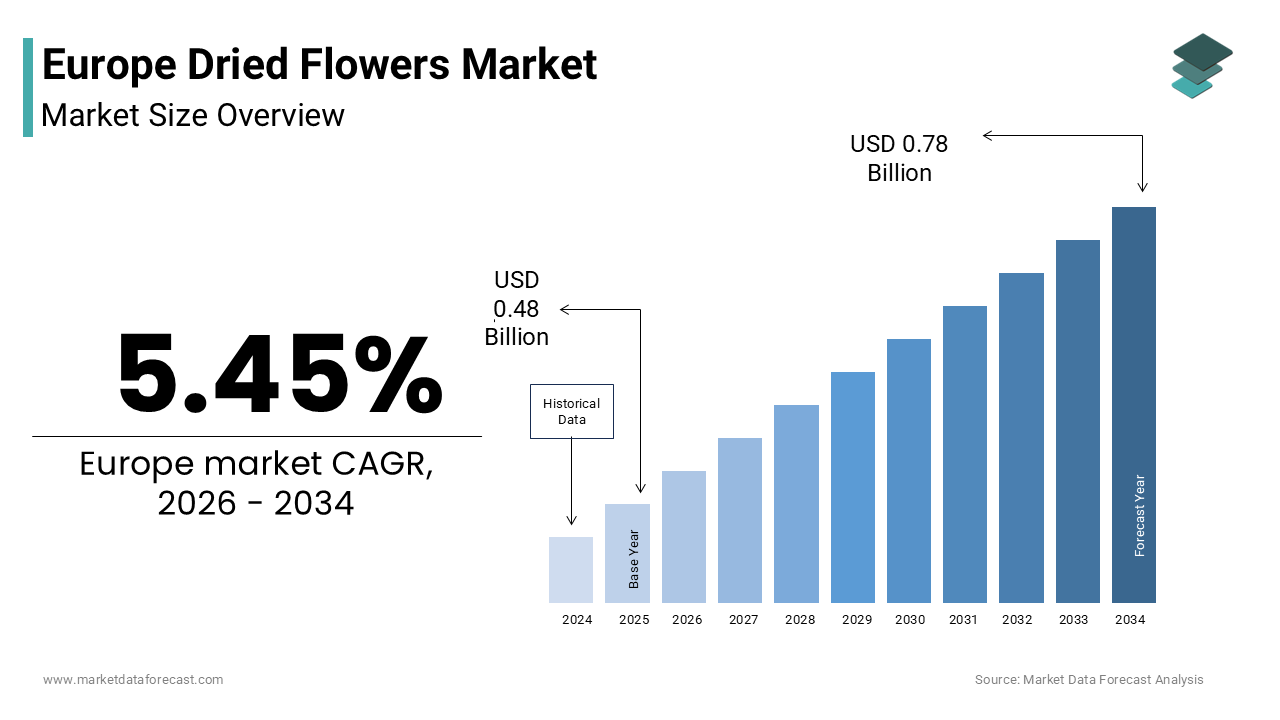
The Europe dried flowers market was valued at USD 0.48 billion in 2025, is estimated to reach USD 0.51 billion in 2026, and is projected to reach USD 0.78 billion by 2034, growing at a CAGR of 5.45% during the forecast period. The market growth is driven by increasing consumer preference for sustainable, long-lasting home décor, rising adoption of biophilic design, and expanding use in weddings and event decoration. Additionally, lower carbon footprint compared to fresh flowers and the growth of DIY home décor trends are supporting market expansion across Europe.
Key Market Trends
- Rising demand for eco-friendly and reusable decorative products.
- Increasing popularity of DIY home décor and biophilic design concepts.
- Growing adoption of dried flowers in weddings and event styling.
- Expansion of e-commerce and direct-to-consumer (DTC) sales channels.
- Emergence of preserved flowers with enhanced aesthetics and longevity.
Segmental Insights
- Based on product type, the air-dried flowers segment dominated the market with a share of 55.4%, driven by cost-effectiveness and natural aesthetic appeal.
- The preserved/treated flowers segment is expected to grow at the fastest CAGR of 8.5%, supported by longer lifespan and superior visual quality.
- Based on flower type, the lavender segment held a share of 25.4%, due to its aromatic benefits and strong cultural presence in Europe.
- The eucalyptus segment is projected to grow at a CAGR of 9.2%, driven by trends toward minimalist and modern décor styles.
- Based on end-user, the household segment dominated with 60.2% share, supported by rising interest in DIY decoration and personalized interiors.
- The commercial segment is the fastest-growing with a CAGR of 7.8%, driven by adoption in hospitality, retail, and corporate spaces.
Regional Insights
- France led the market with a share of 22.3%, driven by strong lavender production and cultural heritage in floristry.
- Germany accounted for 18.3% share, supported by high demand for sustainable home décor products.
- The United Kingdom is witnessing steady growth due to a strong wedding industry and e-commerce expansion.
- Italy and the Netherlands are emerging markets driven by design innovation, agriculture expertise, and global floral trade networks.
Competitive Landscape
The Europe dried flowers market is fragmented and competitive, with a mix of global suppliers, regional growers, and artisanal producers. Companies compete based on product quality, sustainability, and unique floral varieties. Increasing focus on eco-friendly sourcing, innovative preservation techniques, and digital sales channels is shaping the competitive landscape. Key players in the market include Koos Lamboo Dried & Deco, Broome Beck Flower Farm, Winter Flora, Tweefontein Herb Farm, Cherry Valley Organic, Verdissimo, Afloral, FloraCraft Corporation, Everlastings, Bloom & Wild, The Dried Flower Company, Oasis Floral Products, Floral Innovations, Eternal Flower, and Dutch Flower House.
 Download Free Sample Report
Europe Dried Flowers Market Size
The Europe dried flowers market size was valued at USD 0.48 billion in 2025 and is anticipated to reach USD 0.51 billion in 2026 from USD 0.78 billion by 2034, growing at a CAGR of 5.45% during the forecast period from 2026 to 2034.
The dried flowers is botanical specimens that have undergone dehydration processes to maintain their aesthetic appeal for extended periods. As per Eurostat, the European Union imported approximately 120000 tons of dried plant materials primarily from Africa Asia and South America reflecting a robust demand for non-perishable floral products. According to the European Environment Agency the carbon footprint of dried flowers is significantly lower than that of fresh flowers due to reduced need for refrigeration and frequent transportation. In 2023, the number of households in Europe engaging in DIY home decoration projects reached 45 million as reported by the European Home Improvement Monitor indicating a strong base for dried flower consumption. The rise of biophilic design principles further integrates natural elements into urban living spaces driving adoption. Regulatory frameworks, such as the European Green Deal encourage sustainable sourcing and waste reduction influencing production methods.
MARKET DRIVERS
Rising Consumer Preference for Sustainable and Long Lasting Decor
The growing consumer inclination toward sustainability and long-lasting decorative solutions is propelling the growth of Europe dried flowers market. Modern shoppers are increasingly aware of the environmental impact of fresh cut flowers, which often involve high water usage pesticide application and carbon intensive cold chain logistics. Dried flowers offer a viable alternative with a lifespan ranging from months to years thereby reducing waste. As per the European Commission’s Circular Economy Action Plan consumers are prioritizing products that minimize resource depletion and waste generation. In 2024, sales of sustainable home decor items in Germany increased by 18% according to the German Retail Federation with dried floral arrangements being a key category. The durability of dried flowers allows them to be reused or repurposed enhancing their value proposition. Millennials and Generation Z consumers who constitute a significant portion of the market are particularly drawn to the rustic and vintage aesthetics associated with dried botanicals. Social media platforms like Instagram and Pinterest amplify this trend by showcasing styled interiors featuring dried lavender pampas grass and eucalyptus. The psychological benefit of having enduring natural elements in living spaces also contributes to demand. Retailers are responding by expanding their offerings of locally sourced and organically grown dried flowers.
Expansion of the Wedding and Event Industry with Eco Conscious Themes
The resurgence of the wedding and event industry coupled with a preference for eco-conscious themes significantly propels the growth of Europe dried flowers market. Couples and event planners are increasingly opting for dried floral arrangements due to their cost effectiveness versatility and alignment with sustainable wedding trends. As per the European Wedding Industry Association, the average budget allocated for floral decorations in 2023 was 1500 euros with a notable shift toward reusable and non-perishable options. Dried flowers allow for pre assembly of decorations weeks in advance reducing stress and logistical complexities on the event day. The ability to keep bouquets and centerpieces as keepsakes adds emotional value for clients. Furthermore, the rustic bohemian and minimalist styles popular in contemporary weddings favor the textures and muted colors of dried botanicals. Event venues are also promoting dried flowers to reduce cleanup time and waste disposal costs. The hospitality sector including hotels and restaurants uses dried arrangements for permanent decor reducing recurring procurement expenses. This institutional adoption creates a stable demand base beyond individual consumers. The integration of dried flowers into event design reflects a broader cultural shift toward mindful consumption and aesthetic permanence.
MARKET RESTRAINTS
Perception of Fragility and Maintenance Requirements
The consumer perception that dried botanicals are fragile and require specific maintenance conditions, which is hindering the growth of Europe dried flowers market. Unlike fresh flowers, which are perceived as low maintenance, until they wilt dried flowers can shed petals leaves or break if handled improperly. As per a 2023 consumer survey by the European Home Decor Council, 40% of respondents cited fragility as a barrier to purchasing dried flowers. Exposure to direct sunlight can cause fading while high humidity can lead to mold or loss of structural integrity. These factors limit the placement options for dried arrangements in homes and commercial spaces. In regions with high humidity such as parts of Southern Europe additional care is required which may deter potential buyers. The lack of standardized care instructions from retailers exacerbates this issue leading to customer dissatisfaction when products degrade prematurely. Additionally, the texture of some dried flowers can be brittle making them unsuitable for households with young children or pets. This perception restricts the market to consumers who are willing to invest time in upkeep. Retailers face challenges in educating customers about proper care without overwhelming them.
Limited Variety and Seasonal Availability of Raw Materials
The limited variety of flower species suitable for drying and their seasonal availability is also degrading the growth of Europe dried flowers market. Not all flowers retain their color shape or texture after the drying process limiting the range of products available to consumers. As per the European Horticultural Society, only about 15% of cultivated flower species are commercially viable for drying without significant quality loss. This constraint restricts innovation in product design and can lead to market saturation with common varieties such as lavender statice and baby’s breath. Seasonal dependencies mean that certain popular dried flowers are only available at specific times of the year affecting supply consistency. Reliance on imports from outside Europe exposes the market to geopolitical risks and trade barriers. The lack of local diversity forces retailers to depend on a narrow range of suppliers reducing bargaining power. Consumers seeking unique or exotic dried flowers may turn to artificial alternatives which offer greater variety. This limitation hinders market expansion and prevents the sector from fully capitalizing on the growing interest in natural decor.
MARKET OPPORTUNITIES
Integration into Biophilic Design and Wellness Spaces
The integration of dried flowers into biophilic design and wellness spaces is creating new opportunities for the growth of Europe dried flowers market. Biophilic design emphasizes the connection between humans and nature in built environments aiming to improve mental health and well being. Dried flowers offer a low maintenance way to incorporate natural elements into offices hospitals and residential spaces. As per the International WELL Building Institute, buildings incorporating biophilic elements report a 15% increase in occupant satisfaction and productivity. In 2024, the number of certified wellness real estate projects in Europe increased by 25% according to the European Green Building Council. Dried botanicals are ideal for these settings as they do not require watering or sunlight reducing maintenance costs for facility managers. Healthcare facilities are using dried flower arrangements to create calming atmospheres for patients and staff. Corporate offices are adopting dried decor to enhance employee well being and reduce stress. The aesthetic versatility of dried flowers allows them to complement various interior design styles from modern minimalism to industrial chic. Architects and interior designers are increasingly specifying dried floral installations as part of sustainable design strategies. This professional endorsement drives bulk purchases and long term contracts. The alignment with wellness trends positions dried flowers as essential components of healthy living environments.
Growth of E-Commerce and Direct to Consumer Models
The expansion of e commerce and direct to consumer DTC models offers a lucrative opportunity for the Europe dried flowers market. Online platforms enable producers and retailers to reach a wider audience beyond local geographic constraints. DTC brands can offer curated collections subscription boxes and personalized arrangements appealing to niche markets. The lightweight and non perishable nature of dried flowers makes them ideal for shipping reducing logistics costs and damage risks compared to fresh flowers. In 2024 the return rate for dried flower purchases online was less than 5% according to the European E Commerce Association indicating high customer satisfaction. Social media marketing allows brands to showcase styling ideas and engage directly with consumers fostering brand loyalty. Influencer collaborations drive traffic and conversions by demonstrating the aesthetic appeal of dried arrangements in real homes. The ability to ship internationally opens up export opportunities for European producers of high-quality dried botanicals. Digital tools such as augmented reality allow customers to visualize products in their spaces before purchasing. This technological integration enhances the shopping experience and reduces hesitation.
MARKET CHALLENGES
Competition from Artificial and Silk Flowers
The intense competition from artificial and silk flowers, which offer similar aesthetic benefits with greater durability and variety is a key challenge for the growth of Europe dried flowers market. Artificial flowers have advanced significantly in quality mimicking the look and feel of real plants without the fragility of dried specimens. As per the European Artificial Flower Manufacturers Association, sales of premium silk flowers increased by 12% in 2023 driven by improvements in manufacturing technology. Consumers often perceive artificial flowers as more practical for high traffic areas or outdoor use where dried flowers may degrade. The unlimited color palette and species availability of artificial flowers appeal to designers seeking specific visual effects. In 2024, the average lifespan of high-quality silk flowers was estimated at 5 years compared to 1 to 2 years for dried flowers according to the UK Interior Design Institute. Price competitiveness is another factor with mass produced artificial flowers often being cheaper than hand crafted dried arrangements. The ease of cleaning and maintenance of synthetic flowers attracts busy households and commercial clients. While dried flowers appeal to eco conscious consumers the convenience of artificial options remains a strong draw. Differentiating dried flowers as a authentic natural product requires effective marketing and education. The prevalence of realistic artificial alternatives constrains the market share of dried botanicals. Manufacturers must emphasize the unique tactile and olfactory qualities of dried flowers to maintain relevance.
Regulatory Hurdles in Cross Border Trade of Plant Materials
Strict regulatory frameworks governing the cross-border trade of plant materials pose a significant challenge to the Europe dried flowers market. Importing dried flowers from non-EU countries requires compliance with phytosanitary regulations to prevent the introduction of pests and diseases. As per the European Plant Protection Organization all imported plant products must undergo rigorous inspection and certification processes. In 2023, approximately 10% of dried flower shipments from Asia were rejected at European borders due to non compliance with safety standards, according to the European Commission’s Rapid Alert System. These delays increase costs and disrupt supply chains affecting retailer inventory levels. The complexity of navigating varying national regulations within the EU adds another layer of difficulty for traders. Documentation requirements such as phytosanitary certificates and proof of treatment are burdensome for small exporters. Changes in trade policies post Brexit have further complicated imports into the United Kingdom a major market. The need for specialized storage and handling during transit to maintain quality adds to logistical challenges. Compliance costs are passed on to consumers making imported dried flowers more expensive. Local producers benefit from fewer regulatory hurdles but may lack the volume to meet demand.
REPORT COVERAGE
| REPORT METRIC | DETAILS |
| Market Size Available | 2025 to 2034 |
| Base Year | 2025 |
| Forecast Period | 2026 to 2034 |
| CAGR | 5.45% |
| Segments Covered | By Product Type, Flower Type, Application, End User, Sales Channel and Region |
| Various Analyses Covered | Global, Regional, & Country Level Analysis; Segment-Level Analysis, Drivers, Restraints, Opportunities, Challenges, PESTLE Analysis, Porter’s Five Forces Analysis, Competitive Landscape, Analyst Overview of Investment Opportunities |
| Regions Covered | UK, France, Spain, Germany, Italy, Russia, Sweden, Denmark, Switzerland, the Netherlands, Turkey, the Czech Republic, and the Rest of Europe. |
| Key Market Players | Koos Lamboo Dried & Deco, Broome Beck Flower Farm, Winter Flora, Tweefontein Herb Farm, Cherry Valley Organic, Verdissimo, Afloral, FloraCraft Corporation, Everlastings, Bloom & Wild, The Dried Flower Company, Oasis Floral Products, Floral Innovations, Eternal Flower, and Dutch Flower House. |
SEGMENTAL ANALYSIS
By Product Type Insights
The air dried flowers segment was the largest by holding 55.4% of the Europe dried flowers market share in 2025 owing to the cost effectiveness and simplicity of the air drying process which requires minimal infrastructure and energy input compared to other preservation methods. As per the European Floriculture Association, traditional air drying remains the most accessible method for both small scale growers and large commercial producers due to its low operational costs. This price advantage makes air dried products highly competitive in the mass market appealing to budget conscious consumers and retailers. The rustic aesthetic of air dried flowers aligns perfectly with popular interior design trends, such as bohemian and farmhouse styles which emphasize natural textures and organic imperfections. Social media platforms have amplified this appeal with millions of posts featuring air dried arrangements inspiring consumer demand. The long shelf life of air dried flowers further enhances their value proposition allowing retailers to maintain inventory without significant spoilage risks. The widespread availability of raw materials suitable for air drying ensures consistent supply.
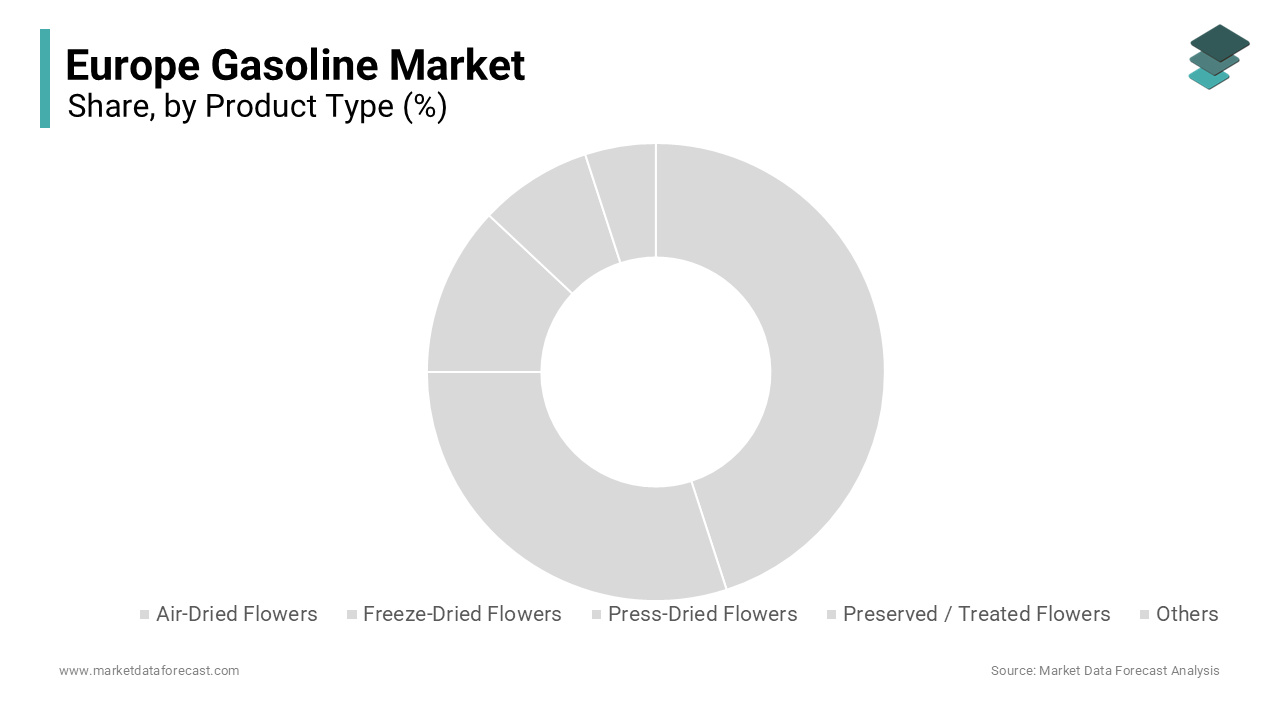
The preserved treated flowers segment is likely to witness a fastest CAGR of 8.5% from 2026 to 2034 with the superior aesthetic quality and vibrant color retention achieved through chemical preservation techniques. Unlike air dried flowers which often fade and become brittle preserved flowers maintain the softness and vivid hues of fresh blooms for up to three years. Consumers are willing to pay a premium for these lifelike qualities which offer the beauty of fresh flowers without the maintenance. The technology allows for the preservation of delicate species such as orchids and peonies which do not dry well using traditional methods. This expands the range of available products and attracts discerning customers seeking unique and exotic decor. The consistency in quality and appearance makes preserved flowers ideal for corporate gifts and high profile events. Brand collaborations with luxury fashion houses have further elevated the status of preserved flowers as fashionable accessories.
By Flower Type Insights
The lavender segment was the largest by holding 25.4% of the Europe dried flowers market share in 2025 owing to the strong cultural heritage of lavender cultivation in Europe particularly in France and Italy where it has been grown for centuries. Lavender is valued not only for its aesthetic appeal but also for its aromatic properties and therapeutic benefits making it a multifunctional product. As per the French Interprofessional Committee for Aromatic and Medicinal Plants France produced 1400 tons of essential oil from lavender in 2023 with significant volumes of dried flowers used in sachets and decor. The association of lavender with relaxation and wellness appeals to health conscious consumers who use dried bundles for sleep aids and stress relief. The versatility of lavender allows it to be used in culinary applications crafts and home fragrances expanding its market reach. The iconic purple hue and distinctive shape make it a staple in dried floral arrangements. Regional branding such as Provence lavender enhances its premium status and consumer trust. The established supply chain and processing infrastructure support consistent quality and availability.
The eucalyptus segment is projected to expand at a CAGR of 9.2% from 2026 to 2034 with the prevailing trend toward minimalist and green decor styles which favor foliage over colorful blooms. Eucalyptus leaves offer a subtle muted green tone and elegant shape that complements modern interior design aesthetics. The versatility of eucalyptus allows it to be used in wreaths garlands and standalone vases appealing to a wide range of tastes. The durability of eucalyptus leaves ensures they remain intact for long periods making them ideal for permanent installations. Social media influencers frequently feature eucalyptus in styled shoots driving consumer aspiration and demand. The availability of various eucalyptus varieties such as silver dollar and seeded gum provides design flexibility. Wholesalers report consistent stock turnover for eucalyptus indicating strong retailer confidence.
By End User Insights
The household segment was accounted in holding 60.2% of the Europe dried flowers market share in 2025 with the rising popularity of DIY home decoration and the desire for personalized living spaces. Consumers are increasingly engaging in creative projects such as making wreaths bouquets and wall art using dried flowers. The accessibility of online tutorials and social media inspiration encourages individuals to experiment with floral arrangements. The affordability of dried flowers allows for frequent updates to home decor without significant expense. The emotional satisfaction of creating handmade items enhances the appeal of this segment. Retailers offer bundled kits and workshops to support this trend fostering community engagement. The shift toward nesting and home centric lifestyles post pandemic has sustained this interest. Dried flowers offer a way to bring nature indoors with minimal effort. This strong consumer engagement ensures the household segment remains the primary driver of market demand.
The commercial segment is the fastest growing end user category in the Europe dried flowers market projected to expand at a Compound Annual Growth Rate of 7.8% from 2024 to 2033. This growth is driven by the widespread adoption of dried flowers in hospitality and retail interior design to create inviting and Instagram worthy spaces. Hotels restaurants and boutiques use dried arrangements to enhance ambiance without the recurring costs of fresh flowers. The visual impact of large scale dried displays attracts customers and encourages social media sharing. Dried flowers allow for consistent branding and thematic coherence across multiple locations. The low maintenance nature reduces operational burdens for facility managers. The trend toward experiential retail drives investment in unique visual merchandising. Dried flowers offer a cost-effective solution for seasonal decorations. This strategic use in commercial spaces drives bulk orders and long-term contracts.
REGIONAL ANALYSIS
France Dried Flowers Market Analysis
France was the largest contributor in the Europe dried flowers market by accounting for 22.3% of the share in 2025. The rich heritage in lavender cultivation and strong tradition in perfumery and aromatherapy is majorly boosting the growth of dried flowers market in France. The Provence region is globally renowned for its dried lavender products attracting tourists and exporters alike. In 2024, exports of dried flowers from France reached 30000 tons according to French Customs. The domestic demand for dried flowers in home decor and weddings is robust driven by a culture that values aesthetics and craftsmanship. French consumers prefer high quality and artisanal dried arrangements supporting local growers. The presence of major floral design schools fosters innovation and trends in dried floristry. Government support for agricultural tourism promotes the sale of dried products directly from farms.
Germany Dried Flowers Market Analysis
Germany dried flowers market was ranked second by holding 18.3% of share in 2025. The market status is characterized by a strong preference for sustainable and natural home decor products. As per the German Retail Federation sales of dried flowers in Germany grew by 14% in 2023 driven by eco conscious consumer behavior. German shoppers prioritize durability and low maintenance making dried flowers an ideal choice. The DIY culture is prominent with many households creating their own arrangements. The country’s robust logistics infrastructure facilitates efficient distribution across Europe. German retailers offer a wide variety of dried species catering to diverse tastes. The emphasis on quality and certification ensures high standards in the market. Corporate adoption of dried flowers for office decor is rising due to wellness initiatives. The strong economy supports discretionary spending on home improvement. Germany’s focus on sustainability and functionality maintains its strong market position. The demand for organic and locally sourced dried flowers continues to grow.
United Kingdom Dried Flowers Market Analysis
The United Kingdom dried flowers market growth is likely to grow with an anticipated CAGR in coming years with a vibrant wedding industry and a strong tradition of gardening and floristry. The popularity of rustic and bohemian wedding themes drives demand for dried blooms such as pampas grass and statice. The regulatory environment has adjusted supply chains but demand remains resilient, which is also bolstering the growth of market. British consumers are increasingly aware of the environmental benefits of dried flowers. Online retailers and subscription services have expanded access to niche varieties. The influence of British interior design trends favors natural and textured elements. London serves as a hub for floral design innovation and trade. The growth of e commerce facilitates direct to consumer sales. The UK’s creative industry supports the artistic use of dried flowers.
Italy Dried Flowers Market Analysis
Italy dried flowers market growth is driven by its strong agricultural base and expertise in herbal and medicinal plants. The integration of dried flowers into culinary and wellness products is common. Domestic demand is driven by the hospitality sector which uses dried arrangements in hotels and restaurants. Italian design sensibilities favor elegant and sophisticated dried compositions. The tourism sector boosts sales of dried flower souvenirs and local crafts. Small scale artisans play a key role in the market offering unique handmade products. The focus on quality and origin appeals to premium buyers. Government incentives for sustainable agriculture support production. Italy’s combination of tradition and design excellence maintains its competitive position.
Netherlands Dried Flowers Market Analysis
The Netherlands dried flowers market growth is likely to witness prominent opportunities in coming years with its role as a global trading hub for floral products. The country’s advanced logistics and auction systems facilitate efficient distribution. Dutch growers are innovating in drying technologies and new varieties. Dutch consumers appreciate modern and minimalist dried arrangements. The presence of leading floral design institutions drives trends and education. The country’s focus on sustainability influences sourcing practices. Re export activities amplify the Netherlands’ market significance. The integration of digital platforms enhances trade efficiency.
COMPETITIVE LANDSCAPE
The competition in the Europe dried flowers market is fragmented and characterized by a mix of large agribusinesses specialized breeders and local artisans. Major players compete on the basis of product quality variety and sustainability credentials rather than price alone. The market sees intense rivalry among suppliers who strive to differentiate themselves through unique cultivars and innovative preservation techniques. Established companies leverage their global supply chains to offer consistent volumes while smaller niche players focus on artisanal and locally sourced products. Regulatory compliance regarding phytosanitary standards serves as a significant barrier to entry ensuring that only well organized firms can thrive. Collaborative efforts between breeders and growers are common to develop new varieties that meet market trends. The rise of e commerce adds another layer of competition allowing direct to consumer brands to bypass traditional retail channels. Companies that successfully integrate sustainability and digital engagement gain a competitive edge.
KEY MARKET PLAYERS
Some of the companies that are playing a dominating role in the Europe dried flowers market include
- Koos Lamboo Dried & Deco
- Broome Beck Flower Farm
- Winter Flora
- Tweefontein Herb Farm
- Cherry Valley Organic
- Verdissimo
- Afloral
- FloraCraft Corporation
- Everlastings
- Bloom & Wild
- The Dried Flower Company
- Oasis Floral Products
- Floral Innovations
- Eternal Flower
- Dutch Flower House
Top Players in the Europe Dried Flowers Market
Florensis
Florensis is a leading global supplier of young plants and cut flowers with a growing presence in the Europe dried flowers market. The company contributes to the global market by breeding specialized varieties that retain color and structure after drying. Florensis focuses on sustainability and recently expanded its portfolio of dried suitable crops such as statice and limonium. Recent actions include partnerships with European growers to ensure consistent supply of high quality raw materials. The company has invested in research to develop new cultivars with enhanced longevity and aesthetic appeal. These initiatives strengthen its market position by offering unique products that meet designer demands. Florensis continues to lead through innovation and commitment to quality ensuring long term growth in the European dried floral sector.
Dummen Orange
Dummen Orange is a major player in the horticultural industry with significant involvement in the Europe dried flowers market through its extensive breeding programs. The company plays a vital role in developing flower varieties specifically suited for preservation and drying. Dummen Orange contributes to the global market by providing genetic solutions that improve yield and post harvest performance. Recent actions include the launch of new dried flower collections tailored for the European home decor sector. The company has also collaborated with distributors to enhance market access and brand visibility. These efforts strengthen its market position by delivering superior genetics and reliable supply chains. Dummen Orange focuses on customer collaboration and innovation to drive industry standards.
Karuturi Global Limited
Karuturi Global Limited is a prominent agribusiness with a strong footprint in the Europe dried flowers market through its large scale cultivation and processing capabilities. The company is involved in producing a wide range of dried flowers including roses and gypsophila for international markets. Karuturi contributes to the global market by ensuring high volume production and consistent quality standards. Recent actions include investments in advanced drying technologies to preserve color and texture more effectively. The company has also strengthened its logistics network to reduce delivery times to European clients. These strategies strengthen its market position by enhancing operational efficiency and product reliability. Karuturi emphasizes sustainable farming practices to align with European regulatory requirements.
Top Strategies Used by Key Market Participants
Key players in the Europe dried flowers market primarily employ product innovation and sustainable sourcing to maintain competitive advantage. Companies invest in breeding programs to develop new varieties with better color retention and durability. This strategy ensures differentiation and meets evolving consumer preferences for unique aesthetics. Another major strategy involves vertical integration to control quality from farm to retail. Manufacturers establish direct relationships with growers to secure consistent supply and reduce costs. Strategic partnerships with interior designers and event planners help create demand and showcase applications. Additionally, companies focus on digital marketing and e commerce platforms to reach wider audiences.
MARKET SEGMENTATION
This research report on the Europe dried flowers market has been segmented and sub-segmented based on the following categories.
By Product Type
- Air-Dried Flowers
- Freeze-Dried Flowers
- Press-Dried Flowers
- Preserved / Treated Flowers
- Others
By Flower Type
- Roses
- Lavender
- Baby’s Breath
- Hydrangea
- Eucalyptus
- Others
By Application
- Home Décor
- Event & Wedding Decoration
- Gifts & Souvenirs
- Arts & Crafts
- Aromatherapy
- Personal Care & Cosmetics
- Others
By End User
- Household
- Commercial
- Institutional
By Sales Channel
- Online
- Offline
By Country
- UK
- France
- Spain
- Germany
- Italy
- Russia
- Sweden
- Denmark
- Switzerland
- Netherlands
- Turkey
- Czech Republic
- Rest of Europe