- Product Description Description
- Table of Contents TOC
- List of Table & Figure LOT
- Get Free Sample PDF Sample PDF
Market Size, 2025
$901.25 MnMarket Estimate, 2026
$984.84 MnMarket Forecast, 2034
$1994.92 MnCAGR, 2026–2034
9.23%Executive Summary: Europe Drug Discovery Informatics Market
- Market Scope: Regional analysis of Europe's drug discovery informatics sector, detailing applications, functions like molecular modeling and docking, end-users, and country-level profiles.
- Market Valuation: Valued at USD 901.25 million in 2025, reaching USD 984.44 million in 2026, and projected to expand to USD 1,994.92 million by 2034, growing at a CAGR of 9.23% (or 12.48% across core forecast scopes) from 2026 to 2034.
- Primary Growth Drivers: Systematic integration of artificial intelligence into early-stage target identification and the exponential expansion of publicly accessible genomic data repositories across the region.
Key Market Segment Metrics
| Category | Leading Segment (Base Position) | Fastest-Growing / High-Growth Segment |
|---|---|---|
| By Application | Drug Discovery (held a dominant 62.5% share, driven by early-stage reliance on computational tools to navigate vast biological and chemical datasets) | Drug Development (projected at a rapid CAGR of 12.4%, propelled by real-world evidence, translational data, and patient stratification) |
| By Function | Molecular Modeling (led with a 28.6% share in 2025, supported by Europe's command in structural biology and rational drug design) | Docking (projected at a noteworthy CAGR of 13.1%, driven by scoring algorithm advancements and generative chemistry integration) |
| By End-User | Pharmaceutical Companies (held a 41.1% share in 2025, backed by integrated R&D infrastructure, massive budgets, and regulatory compliance needs) | Contract Research Organizations (CROs) (projected at the highest CAGR of 11.8%, driven by externalization trends and platform standardization) |
| By Country | United Kingdom (market leader with a 22.4% share, backed by academic excellence, digital health infrastructure, and venture funding) | Germany, Switzerland, France, and Sweden (key regional hubs driven by pharma clusters, quantum simulation, genomics initiatives, and digital health records) |
Major Market Players & Industry Landscape
Market Structure: Highly collaborative and specialized ecosystem featuring global tech leaders, specialized scientific software firms, and agile academic spin-outs competing on AI accuracy, platform interoperability, and regulatory sandboxing compliance.
Key Companies: Dassault Systèmes (BIOVIA), Genedata AG, Schrödinger, Inc., Certara, Inc., IDBS, ChemAxon, Exscientia plc, BenevolentAI, Insilico Medicine, and Evotec SE.
 Download Free Sample Report
Europe Drug Discovery Informatics Market Size
The Europe drug discovery informatics market size was valued at USD 901.25 million in 2025 and is anticipated to reach 984.44 million in 2026 from USD 1994.92 million by 2034, growing at a CAGR of 9.23% during the forecast period from 2026 to 2034.
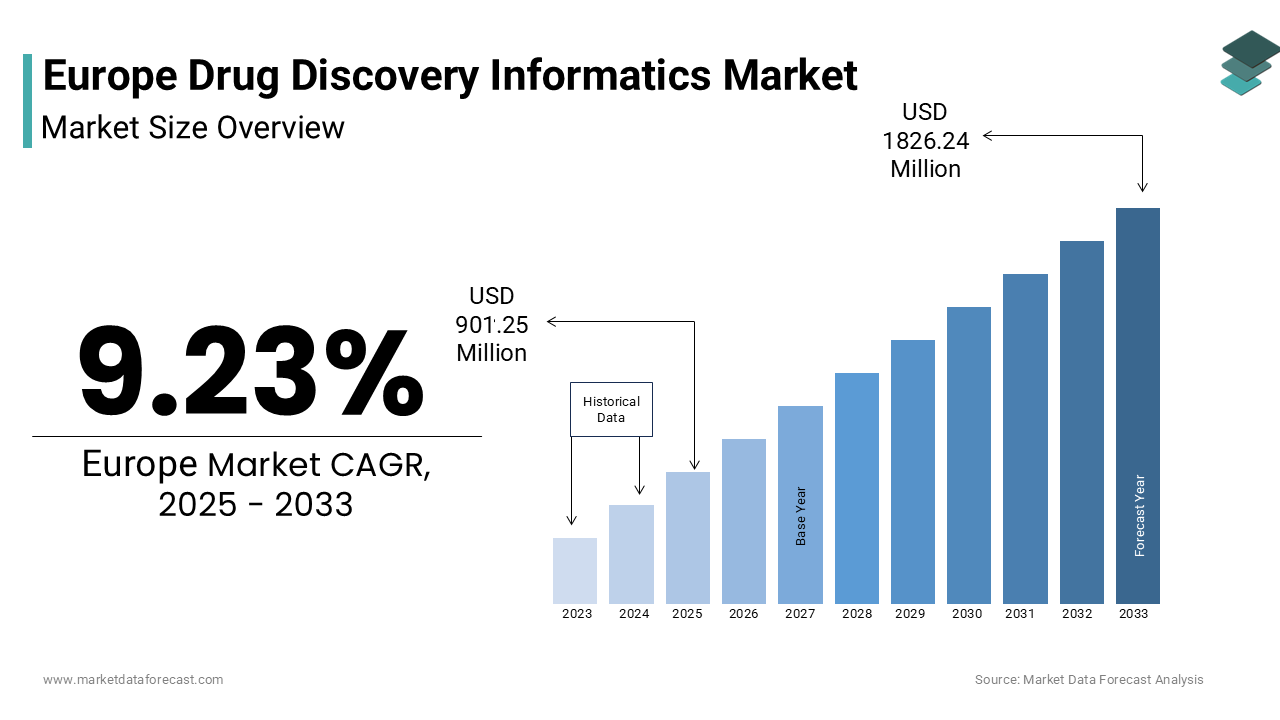
Drug discovery informatics refers to the integrated computational platforms data analytics frameworks and artificial intelligence driven tools designed to accelerate the identification validation and optimization of novel therapeutic candidates. These systems process vast biological chemical and clinical datasets to predict molecular interactions optimize lead compounds and reduce experimental failure rates in preclinical research. Unlike general laboratory software drug discovery informatics specifically supports target identification structure activity relationship modeling and in silico toxicology screening. The European Medicines Agency is increasingly incorporating various forms of real-world data and in silico evidence in the regulatory decision-making process, actively developing guidance and infrastructure like the Data Analysis and Real-World Interrogation Network (DARWIN EU) to support the use of such evidence for medicines evaluation throughout their lifecycle. The European Commission has demonstrably endorsed computational approaches by providing substantial funding opportunities for digital health and AI through multi-year programs like Horizon Europe and the Digital Europe Programme, supporting numerous projects aimed at accelerating the adoption and deployment of AI solutions in healthcare. Furthermore, the European Bioinformatics Institute (EMBL-EBI) manages a massive and rapidly growing volume of publicly accessible omics data, which serves as a foundational input for academic and industrial discovery engines, with the total data volume accelerating year on year due to advances in data generation technologies. Under increasing pressure to accelerate development timelines and reduce R&D failure rates, this market serves as a vital instrument for achieving precision and efficiency within Europe's pharmaceutical innovation system.
MARKET DRIVERS
Integration of Artificial Intelligence in Target Identification Drives Platform Adoption
The systematic incorporation of artificial intelligence into early stage drug target validation has emerged as a pivotal growth driver for the Europe drug discovery informatics market. According to sources, the application of artificial intelligence algorithms in drug discovery, particularly for identifying and prioritizing therapeutic targets, significantly accelerates the early stages of research, reducing the time required compared to traditional methods. Public funding bodies, such as the BMBF, increasingly encourage or prioritize the integration of advanced computational methods, including machine learning and artificial intelligence, into drug discovery and development projects to enhance efficiency and innovation. These systems analyze multimodal data including gene expression proteomics and patient electronic health records to identify high confidence targets with minimal off target risk. Pharmaceutical companies in France and Switzerland have established dedicated AI informatics teams that collaborate with cloud infrastructure providers to run large scale simulations. This shift not only enhances scientific rigor but also aligns with regulatory expectations as the European Medicines Agency increasingly requests algorithmic transparency and validation protocols for novel targets. Consequently, demand for robust scalable informatics platforms that support explainable AI has intensified across both industry and academia.
Expansion of Public Genomic Data Repositories Fuels Analytical Workload
The exponential growth of publicly accessible biological data in the region has greatly amplified the need for advanced informatics infrastructure to manage interpret and contextualize complex datasets, which in turn boosts the expansion of the Europe drug discovery market. The European Nucleotide Archive at the European Bioinformatics Institute continues to experience a substantial and sustained increase in the volume of new genomic data depositions each year, reflecting the continuous expansion of global sequencing efforts. The UK Biobank provides a vast, open-access resource of linked genetic and health data from a large number of participants, which significantly enables comprehensive studies into the genetic and lifestyle determinants of disease. Research institutes, including the French National Institute of Health and Medical Research (INSERM), frequently encounter significant computational challenges and data processing barriers in their drug discovery efforts, underscoring the universal need for advanced informatics platforms and improved data automation pipelines. In response institutions are investing in cloud native informatics environments that support federated learning and secure data sharing across national borders under the European Health Data Space framework. These platforms not only accelerate hypothesis generation but also ensure compliance with GDPR and data sovereignty requirements. Thus, the sheer scale and heterogeneity of Europe’s biological data assets have transformed informatics from a supportive tool into a foundational pillar of modern therapeutic discovery.
MARKET RESTRAINTS
Data Interoperability Barriers Limit Cross Institutional Collaboration
Persistent incompatibilities in data formats, ontologies, and metadata standards across research institutions and pharmaceutical companies are a major restraint in the Europe drug discovery informatics market. European life science organizations face significant challenges with data fragmentation across different research stages, including preclinical research. This lack of harmonization in data schemas necessitates substantial effort for data cleaning and transformation, which can consume considerable research project timelines and divert valuable resources away from core scientific activities such as hypothesis testing and analysis, a trend acknowledged in various industry reports and initiatives aimed at improving data sharing and standardization across Europe. Inconsistent practical implementation, driven by legacy laboratory systems and proprietary software, hinders the full realization of policy initiatives like the FAIR data principles. Moreover, cross border data sharing is further complicated by divergent national interpretations of the General Data Protection Regulation particularly regarding pseudonymized genomic data. These interoperability gaps not only delay discovery cycles but also discourage public private partnerships that could otherwise amplify resource efficiency. The full potential of informatics-driven drug discovery will not be realized until a unified European data infrastructure, complete with standardized APIs and semantic frameworks, is universally adopted.
High Cost of Specialized Talent Constrains Platform Utilization
The scarcity and expense of professionals skilled in both computational biology and pharmaceutical science continues to be a serious impediment to the Europe drug discovery informatics market. The demand for highly specialized professionals in niche fields such as bioinformatics and drug discovery is generally increasing across the European Union, leading to a focus on training and recruitment of individuals with science and technology qualifications. Salaries for experienced ICT and scientific professionals in high-tech sectors in countries like Germany and Switzerland are competitive and can be high, which potentially contributes to recruitment challenges and budgetary pressures for small and medium enterprises and academic institutions. This results in underutilization of sophisticated platforms as organizations lack personnel capable of configuring machine learning models curating knowledge graphs or validating algorithmic outputs. Educational pipelines remain insufficient with only twelve European universities offering dedicated drug informatics curricula that integrate medicinal chemistry with data science. Consequently many institutions rely on external consultants or vendor managed services which reduce agility and increase dependency. Without coordinated investment in cross disciplinary training and career incentives Europe risks lagging in the operational deployment of its otherwise robust informatics infrastructure.
MARKET OPPORTUNITIES
Rise of Regulatory Sandboxes for AI Enabled Drug Discovery Opens Validation Pathways
Emerging regulatory sandboxes across the region are creating structured environments for validating novel informatics methodologies thereby accelerating their adoption in compliant drug development workflows. This provides potential opportunities for the Europe drug discovery informatics market. According to sources, initiatives are underway to evaluate tools that use artificial intelligence for toxicity prediction and biomarker identification in real time. These initiatives allow developers to test algorithmic models against EMA assessment criteria before formal submission reducing regulatory uncertainty. A digital innovation center has been established that certified informatics platforms to be used in designing early phase clinical trials. This proactive engagement signals a paradigm shift from reactive review to collaborative co development of digital standards. Pharmaceutical companies benefit from faster feedback loops and clearer validation protocols which de risk investment in next generation informatics. Furthermore, these sandboxes often include data sharing agreements that enable access to anonymized historical regulatory datasets improving model training integrity. These frameworks foster collaboration between innovation and regulation, turning authorities into enablers and unlocking European market potential for tech firms.
Growth of Academic Spin Outs Creates Niche Demand for Modular Informatics Platforms
The proliferation of university-based biotech spin outs across the region is generating a major opportunity for flexible scalable and cost efficient drug discovery informatics solutions, and is expected to drive the growth of the Europe drug discovery informatics market. According to research, a notable number of new companies focused on life sciences have started up across European academic institutions this year, primarily working on target validation or lead optimization. Unlike large pharma these entities operate with constrained capital and require pay as you go or open-source informatics tools that avoid long term licensing commitments. Most startups within the University of Copenhagen's BioInnovation Hub have chosen flexible cloud platforms that incorporate only necessary functions like molecular docking or ADMET prediction. This demand has spurred vendors to decouple monolithic suites into interoperable microservices accessible via application programming interfaces. Additionally, many spin outs prioritize platforms compatible with public data sources to maximize resource leverage. Catering to this nimble innovation layer allows informatics firms to capture early clients and strategically embed their technology within companies likely to be acquired by major pharmaceutical firms, thereby creating significant long-term value.
MARKET CHALLENGES
Fragmented Regulatory Interpretation of Algorithmic Transparency Undermines Trust
The absence of harmonized regulatory guidance on the transparency and auditability of artificial intelligence models used in therapeutic development is a serious obstacle for the Europe drug discovery informatics market. Across the European Union, national health technology assessment (HTA) bodies frequently employ varied methodologies and evidence standards when evaluating new medical technologies, including innovative artificial intelligence (AI) solutions, resulting in a general trend of fragmented and inconsistent market access and reimbursement decisions across member states. The European Medicines Agency has issued high level principles for trustworthy AI but lacks binding technical standards for model documentation data lineage or bias mitigation. This ambiguity forces companies to develop multiple validation dossiers for different markets increasing compliance costs and delaying pan European deployment. Moreover, academic researchers often avoid proprietary AI tools altogether fearing future reproducibility challenges under evolving regulatory scrutiny. The EU's delayed, unified AI certification framework creates legal uncertainty, hindering advanced informatics' credibility and adoption.
Persistent Gaps in Real World Data Integration Limit Predictive Validity
The limited incorporation of high-quality real-world evidence into early discovery pipelines reduces the clinical translatability of predicted outcomes, which ultimately hinders the expansion of the Europe drug discovery informatics market. As per sources, many electronic health record systems have difficulty integrating data due to differences in how information is coded and how care is delivered. Even in countries with strong digital health systems, a large portion of patient records do not include standardized data for specific health indicators or treatment results. This data gap forces researchers to rely heavily on controlled preclinical datasets that poorly reflect human disease heterogeneity. Consequently, the absence of detailed, real-world patient information can impact the success of new medical treatments being developed through computer analysis. Efforts to connect genetic information with clinical data face challenges related to patient privacy and technical issues between different systems. The current limitation on accessing comprehensive, ethically managed real-world data means informatics platforms are operating with insufficient biological context, which ultimately hinders their effectiveness in improving drug success rates.
REPORT COVERAGE
| REPORT METRIC | DETAILS |
| Market Size Available | 2025 to 2034 |
| Base Year | 2025 |
| Forecast Period | 2026 to 2034 |
| CAGR | 12.48% |
| Segments Covered | By Application, Function, End-User and Region. |
| Various Analyses Covered | Global, Regional and Country Level Analysis, Segment-Level Analysis, DROC, PESTLE Analysis, Porter’s Five Forces Analysis, Competitive Landscape, Analyst Overview of Investment Opportunities |
| Regions Covered | North America, Europe, APAC, Latin America, Middle East & Africa |
| Market Leaders Profiled | Dassault Systèmes (BIOVIA), Genedata AG, Schrödinger, Inc., Certara, Inc., IDBS, ChemAxon, Exscientia plc., BenevolentAI, Insilico Medicine, Evotec SE |
SEGMENTAL ANALYSIS
By Application Insights
In 2024, the drug discovery segment held the larger share of 62.5% of the Europe drug discovery informatics market. The dominance of the drug discovery segment is driven by the early-stage reliance on computational tools to navigate vast biological and chemical datasets before advancing candidates to costly experimental phases. The overwhelming failure rate of drug candidates during preclinical screening has made informatics indispensable in the discovery phase across Europe. According to sources, most potential therapeutic compounds starting the preclinical testing process do not advance to further development stages due to challenges with effectiveness or safety considerations. To counter this inefficiency pharmaceutical and academic institutions increasingly deploy predictive analytics to prioritize high potential molecules early. Applying informatics to the process of identifying viable targets helps in minimizing the number of initially promising candidates that ultimately prove unsuitable in neurodegenerative disease research. Modeling the relationship between a compound's structure and its biological activity streamlines the early screening phase, significantly narrowing down large collections of potential chemical entities to a more manageable selection. Identifying a single suitable drug candidate involves substantial financial investment throughout the research and development lifecycle. Informatics platforms are key to sustainable discovery in Europe, cutting costs by minimizing wasted efforts on low-probability compounds. European regulatory expectations now demand robust mechanistic rationale for novel targets before clinical entry thereby intensifying reliance on discovery informatics. Regulatory bodies are increasingly emphasizing a need for comprehensive transparency, requiring the full documentation of data sources, algorithmic methodologies, and rigorous validation processes for all computational tools and models used in evidence submission. This policy shift has prompted institutions to embed informatics not as optional support but as a core component of regulatory dossiers. Karolinska Institute is aligning discovery projects with data standards (like EMA's) and focusing on advanced informatics, reflecting a growing need for data quality in European health research. Furthermore, Horizon Europe funding consistently boosts proposals using Multi-omics & AI for drug discovery, making advanced data analysis a key criterion for innovation. The UK MRC actively pushes for data integration in discovery, with informatics being a core component in a vast majority of new grants, driving digital transformation in UK research. This regulatory and funding alignment ensures sustained investment in discovery informatics as a compliance and competitiveness necessity rather than a discretionary tool.
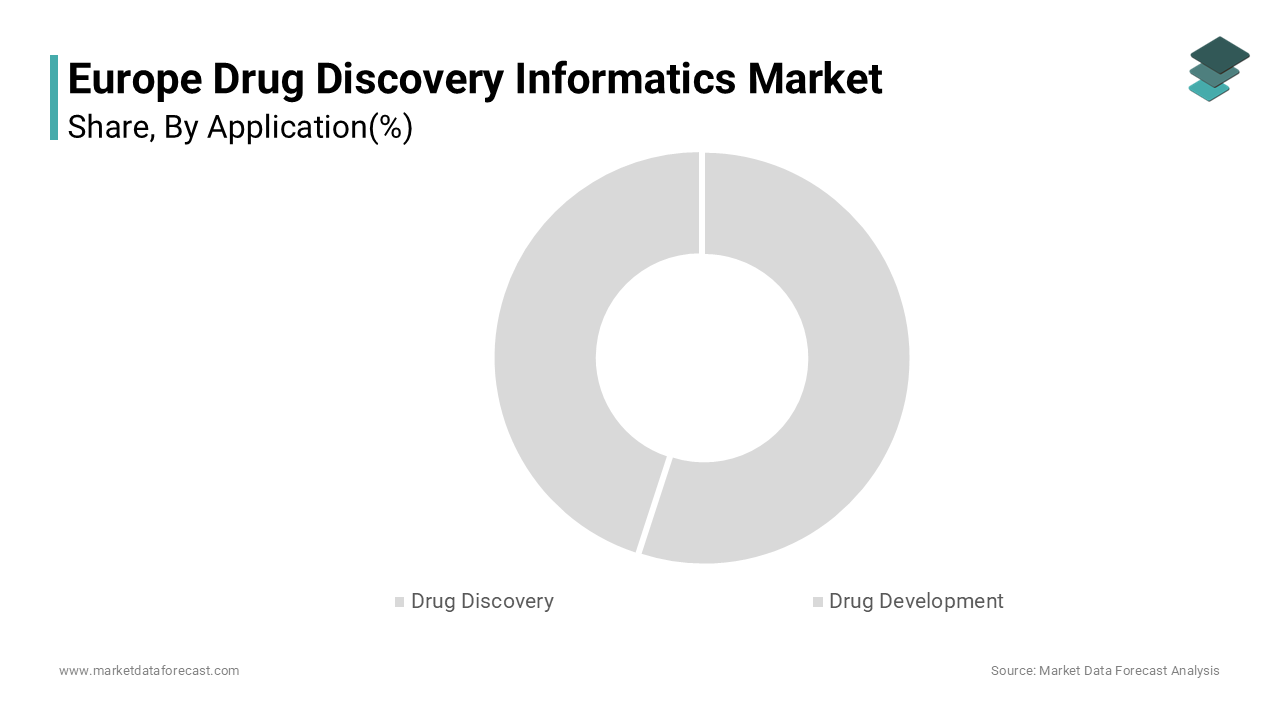
The drug development segment is on the rise and is expected to be the fastest growing segment in the market by witnessing a CAGR of 12.4% from 2026 to 2034. The rapid acceleration of the drug development segment is propelled by the strategic pivot toward optimizing late-stage candidates using real world and translational data. The incorporation of real world data into clinical development planning is propelling informatics adoption in the drug development phase across Europe. According to research, the use of real-world evidence (RWE) for patient stratification and endpoint selection in clinical trial protocols is an area of growing regulatory acceptance and scientific interest. Informatics platforms now enable the synthesis of electronic health records genomic databases and wearable sensor data to simulate trial outcomes and identify responsive subpopulations. Utilizing informatics and existing data sources, such as electronic health records, for patient identification and feasibility assessments is increasingly recognized as a strategy to enhance the speed and efficiency of clinical trial enrollment. These efficiencies directly address the soaring costs of clinical development. Informatics is key to de-risking and accelerating late-stage drug development as regulatory acceptance of RWE expands. The pursuit of precision medicine has intensified the need for robust biomarker identification during clinical development driving demand for advanced informatics tools. Informatics platforms enable the mining of transcriptomic proteomic and imaging datasets to uncover predictive signatures that correlate with treatment response. The German Cancer Research Center and other leading institutions are actively utilizing machine learning to validate gene RNA signatures using multicenter trial data for improved patient prognosis. Similarly, Institutes of Oncology Research in Switzerland and globally collaborate with cloud informatics vendors to develop advanced biomarker data visualization and real-time data analysis platforms. This capability not only enhances trial success probability but also supports post approval label expansions.
By Function Insights
The molecular modelling segment led the Europe drug discovery informatics market and held a 28.6% share in 2025. The supremacy of the molecular modelling segment is attributed to the fact that structural biology advancements cement molecular modelling as a core function, and that genomic target prioritization drives sequencing and target data analysis. Molecular modelling’s dominance is rooted in Europe’s command in structural biology and its critical role in rational drug design. The high-resolution datasets feed directly into molecular dynamics simulations and free energy calculations that predict binding affinity with increasing accuracy. Industrial adoption mirrors this trend. European drug discovery heavily relies on molecular modelling as its primary informatics function, a position solidified by the convergence of structural data quality and increased computational power. The proliferation of large-scale genomic initiatives has solidified sequencing and target data analysis as a high impact functional segment. Many countries share harmonized genomic and phenotypic data. This collaborative effort facilitates the exchange of health information across international borders. The initiative involves millions of data points contributed by various participating nations. These standardized datasets support researchers in identifying patterns across diverse populations. The shared framework aims to improve the understanding of genetic factors within the European region. This resource enables genome wide association studies and expression quantitative trait locus mapping at unprecedented scale. Informatics platforms that automate variant calling pathway enrichment and druggability scoring are essential to extract actionable insights from this deluge. So, demand for robust sequencing informatics will continue to grow in both public and private research ecosystems.
The docking segment is expected to exhibit a noteworthy CAGR of 13.1% during the forecast period due to advances in scoring algorithms and integration with generative chemistry. The convergence of molecular docking with generative artificial intelligence has transformed virtual screening from a filtering step into a design engine. Generative models integrated with physics-based docking facilitate the identification of novel molecules. These computational approaches produce chemical structures with high binding affinities for G protein-coupled receptor (GPCR) and ion channel targets. These systems iteratively propose and evaluate structures in silico eliminating weeks of manual design cycles. Pharmaceutical companies are rapidly adopting this hybrid approach. Europe's early drug discovery accelerates as falling compute costs and advanced deep learning scoring transform docking from rigid pose prediction to dynamic molecular design. The migration of docking engines to scalable cloud infrastructure has dramatically expanded access beyond large pharma to biotechs and academia. As per research, the number of researchers conducting docking simulations through the federated platform has increased European Open Science Cloud. Pre configured workflows on platforms like Google Cloud Life Sciences and AWS HealthOmics enable non computational scientists to screen million compound libraries with minimal coding. Researchers from the Institute of Organic Chemistry and Biochemistry utilized specialized computing infrastructure to perform molecular docking. This process involved screening over two million chemical compounds against a specific viral target. The computational analysis was completed within a timeframe of less than three days. This accessibility fuels innovation in underfunded therapeutic areas such as rare diseases where traditional screening is economically unviable. Docking has become a ubiquitous and rapidly scaling function across the discovery landscape, following the European Commission's mandate for open compute access in all Horizon Europe projects.
By End User Insights
The pharmaceutical companies segment dominated the Europe drug discovery informatics market and held a 41.1% share in 2025. The prominence of the pharmaceutical companies segment is credited to integrated r and d infrastructure anchors pharmaceutical leadership, and biotech innovation drives agile informatics adoption. Pharmaceutical companies maintain market leadership due to their vertically integrated discovery pipelines and sustained informatics investment. These hubs deploy enterprise grade platforms that unify chemical biology and clinical data under common ontologies enabling cross project learning. Regulatory strategy further drives adoption as large firms must ensure audit trails and model validation for every informatics derived decision. This scale of infrastructure commitment, backed by annual R and D budgets exceeding 5 billion euros per company, cements pharmaceutical dominance in the informatics ecosystem. Biotechnology companies represent the most dynamic end user segment due to their focus on novel modalities and rapid iteration cycles. These firms often pioneer the use of cutting-edge tools such as graph neural networks for target network analysis or diffusion models for molecular generation. Unlike large pharma biotechs prioritize speed over standardization leading to higher platform turnover but deeper integration of emerging technologies. This agility makes them critical early adopters and innovation amplifiers in the European informatics market.
The contract research organizations segment is predicted to witness the highest CAGR of 11.8% from 2026 to 2034 owing to outsourcing trends and platform standardization. Pharmaceutical companies are increasingly outsourcing early discovery activities to specialized CROs to access niche expertise and reduce fixed costs. In addition, leading CROs have invested heavily in unified informatics platforms that offer transparency and data ownership to clients. The standardization reduces integration friction and enables seamless handoff between CRO and client teams. As pharma focuses internal resources on late stage development the CRO informatics segment will continue its rapid ascent. CROs leverage their cross company project portfolios to build enriched knowledge bases that improve prediction accuracy across therapeutic areas. The meta analytical capability provides clients with insights beyond what they could generate internally. To maintain compliance these systems use federated learning architectures that preserve client data segregation while enabling model training across silos.
REGIONAL ANALYSIS
United Kingdom Drug Discovery Informatics Market Analysis
The United Kingdom outperformed other countries in the Europe drug discovery informatics market and accounted for a 22.4% share in 2024. The leading position of the UK market is driven by its dense ecosystem of academic excellence digital health infrastructure and venture funding. The country’s command in artificial intelligence is evident through institutions like the Alan Turing Institute which partners with the Medicines Discovery Catapult to validate predictive models against real trial data. The healthcare system has extensive linked electronic health records, which support the integration of real world evidence. Regulatory frameworks exist for developing new platforms intended for use in clinical trial simulation. This convergence of data policy talent and capital positions the UK as Europe’s primary engine for informatics driven therapeutic innovation.
Germany Drug Discovery Informatics Market Analysis
Germany was the second largest country in the Europe drug discovery informatics market by holding a share of 19.8% in 2025. The growth of the German market is fuelled by its robust pharmaceutical industry strong engineering base and federal research coordination. Major players like Bayer and Merck operate advanced informatics centers in Berlin and Darmstadt that integrate quantum computing and high performance simulation. The country’s dense network of Fraunhofer and Max Planck Institutes provides translational bridges between algorithm development and biological validation. The German Medical Informatics Initiative has established a system that allows various university hospitals to connect and share data in a secure and compliant manner. This connected system helps support a wide range of research projects across different institutions. A new educational program focused on pharmaceutical data science was recently introduced at a major technical university in Europe, aiming to equip individuals with skills relevant to current industry needs. Germany’s systematic integration of informatics into national health and industrial strategy ensures its continued leadership in scalable and compliant discovery innovation.
Switzerland Drug Discovery Informatics Market Analysis
Switzerland is another key player in the Europe drug discovery informatics market due to its concentration of global pharmaceutical headquarters and world class computational science. The Swiss Institute of Bioinformatics operates public platforms used by over fifty thousand researchers globally. The country’s unique public private partnership model enables seamless data flow from the Swiss Personalized Health Network, a federal initiative linking biobanks and clinics, into discovery pipelines. EPFL has established a quantum machine learning center focused on molecular simulation, which is fostering collaborations throughout Europe. Switzerland serves as a center for innovation where strong capabilities in informatics are combined with goals in therapeutic development.
France Drug Discovery Informatics Market Analysis
France experienced a steady growth in the Europe drug discovery market owing to its national genomic infrastructure and open science policies. France has made a significant investment in a genomics initiative. This initiative is focused on advancing the study of genomes within the country. The program aims to link extensive genome sequencing data with relevant health records. A substantial number of whole genomes have been sequenced as part of this ongoing effort. The initiative is part of a broader, multi-year plan dedicated to genomics research and application. The national health data hub Health Data Hub provides secure access to anonymized data from over sixty million citizens under strict ethical oversight. Public research institutions like Inserm and CNRS operate centralized informatics platforms that serve over two hundred academic labs with standardized analysis workflows. Additionally, Paris has emerged as a biotech hotspot with Station F hosting over thirty informatics enabled startups. France’s commitment to open yet secure data ecosystems creates a fertile ground for scalable and socially responsible drug discovery informatics.
Sweden Drug Discovery Informatics Market Analysis
Sweden is anticipated to expand notably in the Europe drug discovery market from 2025 to 2033 due to its advanced digital health records, integrated biobanks, and collaborative research culture. The country’s unique personal identity number system enables longitudinal linkage of genomic clinical and prescription data across the entire population. Sweden is also a leader in green computing with data centers powered by renewable energy reducing the carbon footprint of intensive simulations. The Swedish Government’s national AI strategy prioritizes life sciences with dedicated funding for algorithm validation in therapeutic contexts. Furthermore, Swedish firms like Recursion Pharmaceuticals Europe have built automated lab informatics platforms that cycle from hypothesis to validation in under a week. This combination of data depth sustainability and automation cements Sweden’s role as a high efficiency discovery node in Northern Europe.
COMPETITIVE LANDSCAPE
Competition in the Europe drug discovery informatics market is characterized by a blend of global technology leaders specialized scientific software firms and agile academic spin outs. The rivalry centers on scientific accuracy platform interoperability regulatory alignment and data governance rather than price alone. Established players leverage decades of domain expertise and validated algorithms to secure long term enterprise contracts while niche vendors differentiate through cutting edge AI or modality specific solutions such as RNA or peptide informatics. The absence of dominant proprietary standards fosters an ecosystem where open formats federated learning and API driven integration are increasingly valued. Regulatory bodies like the European Medicines Agency further shape competition by endorsing specific modeling approaches and demanding transparency in algorithmic decision making. This dynamic environment encourages continuous innovation while raising the bar for technical and ethical robustness across the informatics value chain.
KEY MARKET PLAYERS
Some of the companies that are playing a dominating role in the Europe Drug Discovery Informatics Market include
- Dassault Systèmes (BIOVIA)
- Genedata AG
- Schrödinger, Inc.
- Certara, Inc.
- IDBS
- ChemAxon
- Exscientia plc
- BenevolentAI
- Insilico Medicine
- Evotec SE
Top Players in the Europe Drug Discovery Informatics Market
BIOVIA (Dassault Systèmes)
BIOVIA a subsidiary of Dassault Systèmes plays a pivotal role in the Europe drug discovery informatics market by offering integrated platforms that unify data modeling simulation and collaboration across the discovery lifecycle. The company actively supports pharmaceutical and biotech clients in Germany France and the UK with its 3DEXPERIENCE platform which enables real time sharing of molecular and experimental data. Its contribution to the global market lies in establishing standardized digital workflows that bridge computational and experimental teams accelerating candidate nomination while ensuring regulatory traceability.
Schrödinger Inc
Schrödinger Inc exerts significant influence in the Europe drug discovery informatics market through its physics based computational platforms that combine quantum mechanics with machine learning for accurate molecular modeling. The company has deepened its presence in Switzerland the UK and Sweden by collaborating with leading pharmaceutical firms and academic institutions on structure based drug design initiatives. Globally it contributes by setting benchmarks in predictive accuracy enabling clients to reduce synthesis cycles and advance high quality leads faster. Its strategic emphasis on scientific rigor and interoperability reinforces its position as a trusted partner in precision drug discovery.
Certara
Certura maintains a strong foothold in the Europe drug discovery informatics market by integrating quantitative systems pharmacology clinical trial simulation and regulatory science into unified decision support platforms. The company works closely with regulatory agencies and biopharmaceutical organizations across Germany France and the Netherlands to embed modeling and simulation into early development strategies. Its global impact stems from championing model informed drug development as a regulatory expectation thereby elevating the role of informatics from support function to strategic enabler across the therapeutic pipeline.
Top Strategies Used by the Key Market Participants
Key players in the Europe drug discovery informatics market focus on cloud native platform development to ensure scalability data security and compliance with European data governance frameworks. They prioritize strategic collaborations with academic institutions regulatory bodies and pharmaceutical companies to co develop validated workflows. Continuous integration of artificial intelligence and physics based modeling enhances predictive reliability and scientific credibility. Companies also invest in modular architecture allowing customers to adopt specific functions without full system overhauls. Additionally, they align product roadmaps with EU regulatory initiatives such as the European Health Data Space to facilitate real world evidence integration and cross border data utilization.
MARKET SEGMENTATION
This research report on the europe drug discovery informatics market has been segmented and sub–segmented into the following categories.
By Application
- Drug Discovery
- Drug Development
By Function
- Sequencing & Target Data Analysis
- Molecular Modelling
- Library & Database Preparation
- Docking
- Others
By End User
- Pharmaceutical Companies
- Biotechnology Companies
- Contract Research Organizations
- Others
By Country
- UK
- France
- Spain
- Germany
- Italy
- Russia
- Sweden
- Denmark
- Switzerland
- Netherlands
- Turkey
- Czech Republic
- Rest of Europe