Europe Drug Testing Market Size, Share, Trends, & Growth Forecast Report By Product (Consumables, Instruments, Rapid Testing Devices, Services), Sample, Drug and Country (UK, France, Spain, Germany, Italy, Russia, Sweden, Denmark, Switzerland, Netherlands, Turkey, Czech Republic and Rest of Europe), Industry Analysis From 2025 to 2033
Europe Drug Testing Market Report Summary
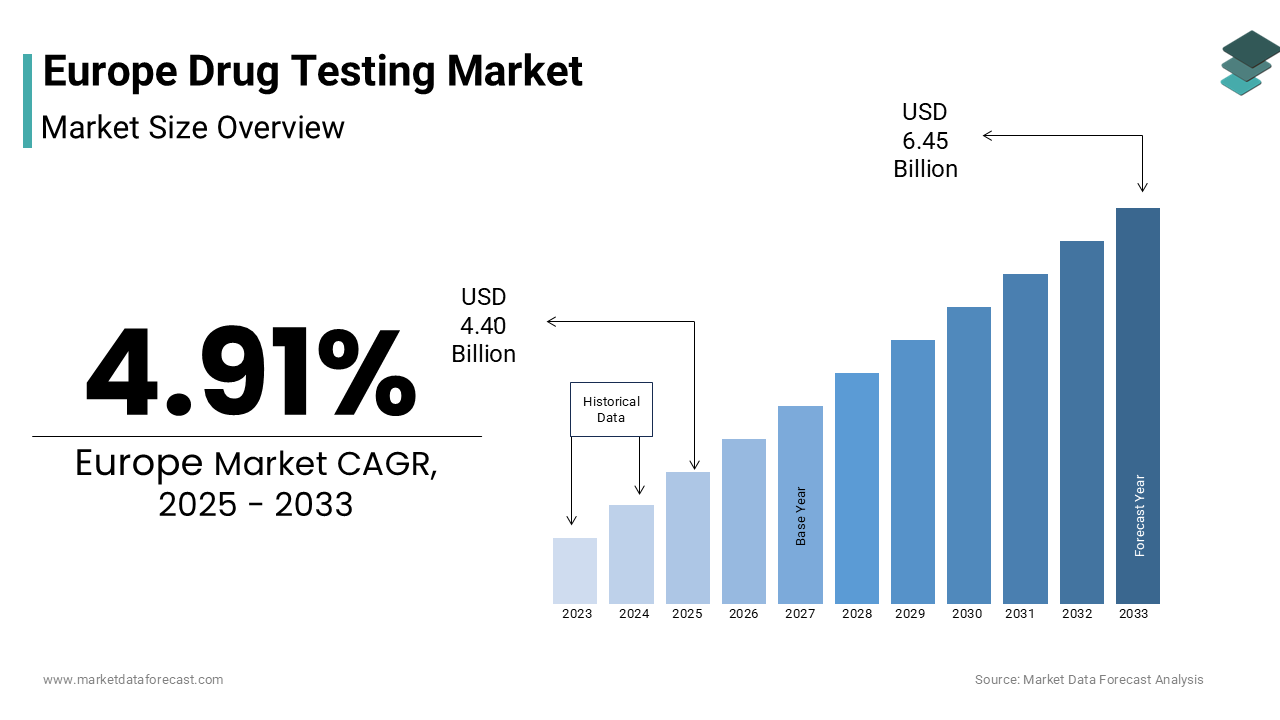
The Europe drug testing market was valued at USD 4.19 billion in 2024, is estimated to reach USD 4.40 billion in 2025, and is projected to reach USD 6.45 billion by 2033, growing at a CAGR of 4.91% during the forecast period from 2025 to 2033. The growth of the Europe drug testing market is driven by mandatory occupational safety regulations, increasing integration of drug testing into clinical and addiction treatment pathways, and rising emphasis on transport and workplace safety across the region. Expanding use of drug testing in forensic investigations, roadside enforcement, and public health monitoring is further fueling market growth. Moreover, growing adoption of oral fluid testing, advancements in confirmatory laboratory analysis, and digital chain-of-custody solutions are strengthening the role of drug testing within Europe’s legal, healthcare, and safety frameworks.
Key Market Trends
- Increasing implementation of routine drug and alcohol screening in safety-critical sectors such as transport, aviation, and energy.
- Growing adoption of oral fluid testing due to its non-invasive nature and suitability for roadside and workplace screening.
- Rising use of drug testing in clinical settings for addiction treatment monitoring and emergency care.
- Advancements in digital chain-of-custody and forensic data management to improve legal defensibility.
- Expanding focus on detecting emerging psychoactive substances through advanced analytical technologies.
Segmental Insights
- Based on product, the consumables segment held the largest share of the Europe drug testing market in 2024. The segment’s dominance is attributed to the high volume and recurring use of single-use test kits, collection devices, and reagents across workplace, forensic, clinical, and roadside testing programs.
- Based on sample, the urine segment dominated the Europe drug testing market in 2024, supported by long-established testing protocols, broad substance detection windows, and widespread acceptance in workplace and clinical testing frameworks.
- Based on drug, the alcohol segment accounted for the largest share of the Europe drug testing market in 2024, driven by strict road safety laws, workplace monitoring requirements, and universal regulatory enforcement across EU member states.
Regional Insights
The Europe drug testing market is witnessing steady growth across major economies, supported by strong regulatory frameworks and public health initiatives.
- Germany was the largest contributor, accounting for 19.4% of the Europe drug testing market share in 2024, driven by comprehensive workplace safety regulations, advanced forensic infrastructure, and widespread roadside testing adoption.
- France followed closely, supported by centralized testing policies, mandatory screening in critical infrastructure sectors, and integration with public health systems.
- The United Kingdom remains a key market, backed by advanced forensic science capabilities, roadside oral fluid testing programs, and strong clinical adoption.
- Nordic countries such as Sweden continue to grow steadily, driven by preventive public health approaches and extensive use in social and child protection services.
Competitive Landscape
The Europe drug testing market is characterized by the presence of global diagnostics leaders and specialized European forensic technology providers competing on analytical accuracy, regulatory compliance, and legal defensibility. Leading companies focus on expanding oral fluid testing portfolios, improving detection of novel psychoactive substances, and integrating digital chain-of-custody platforms aligned with GDPR requirements. Strategic collaborations with law enforcement agencies, healthcare providers, and transport authorities are strengthening market positioning. Prominent players in the Europe drug testing market include Abbott Laboratories, Thermo Fisher Scientific Inc., Quest Diagnostics, Roche Diagnostics, Siemens Healthineers, LabCorp, Bio-Rad Laboratories, Drägerwerk AG & Co. KGaA, OraSure Technologies, Omega Laboratories, Lifeloc Technologies, Premier Biotech, and Medtox Scientific.
Europe Drug Testing Market Size
The europe drug testing market size was valued at USD 4.19 billion in 2024 and is anticipated to reach USD 4.40 billion in 2025 from USD 6.45 billion by 2033, growing at a CAGR of 4.91% during the forecast period from 2025 to 2033.
Drug testing refers to the analytical screening of biological specimens, such as urine, oral fluid, blood, and hair, for the presence of illicit substances, prescription misuse, or performance enhancing compounds across workplace, forensic, clinical, and sports settings. This practice is embedded within a robust legal and public health framework aimed at safeguarding safety, ensuring regulatory compliance, and addressing substance use disorders. According to research, the use of illicit drugs remains a significant public health and security challenge across the EU, with the availability and potency of various substances increasing, and a diverse range of new psychoactive substances emerging on the market. The European Union Agency for Railways mandates drug and alcohol screening for all safety critical rail personnel, while the European Aviation Safety Agency enforces similar protocols for pilots and air traffic controllers. Furthermore, employment levels in the EU remain a key economic indicator, with national variations in workplace health and safety laws permitting employer actions, including substance testing under strict national privacy and safety frameworks. European occupational safety and health (OSH) policies emphasize risk assessment and prevention of harm in the workplace, with the EU continuing to develop strategies and roadmaps to address the broader societal challenges posed by drug trafficking and related health and security risks. These overlapping legal, occupational, and public health imperatives position drug testing not as a punitive measure but as an integrated component of Europe’s safety and well-being infrastructure.
MARKET DRIVERS
Mandatory Occupational Safety Regulations Drive Routine Workplace Screening
Stringent occupational health and safety mandates across high-risk sectors are a primary driver of the Europe drug testing market. The European Agency for Safety and Health at Work identifies transport construction and energy as industries with elevated substance related incident risks and national legislation in key markets reflects this concern. French law and court rulings are increasingly allowing employers, under specific conditions, to implement substance screening, such as oral fluid tests, in safety-sensitive positions, balancing employee consent with workplace safety needs. German occupational safety regulations require employers to conduct general risk assessments and implement appropriate measures to ensure employee health and safety, encouraging comprehensive workplace health initiatives. The European Aviation Safety Agency and national authorities enforce strict regulations against psychoactive substance use, implementing mandatory random testing for flight and cabin crews during routine inspections to enhance aviation safety. In addition, the European Transport Safety Council emphasizes the persistent risk of substance-impaired driving in the EU, prompting European bodies to encourage and research advanced roadside testing technologies for national implementation. These regulatory frameworks create institutionalized demand for reliable rapid and legally defensible testing methods ensuring consistent volume and procedural standardization across the European drug testing landscape.
Integration of Drug Testing in Clinical and Addiction Treatment Pathways
Drug testing has evolved beyond compliance into a clinical tool for monitoring substance use disorders and guiding personalized treatment across Europe’s public health systems, which in turn propels the expansion of the Europe drug testing market. Drug testing plays a role in monitoring health trends across Europe and assessing treatment adherence for conditions like opioid dependence. Both urine and oral fluid testing are utilized for these purposes. National health services in the UK Sweden and Portugal incorporate confirmatory laboratory testing into addiction treatment protocols with results informing therapeutic adjustments. The use of drug testing in emergency departments is a common practice across a significant number of European countries to help identify substances involved in overdose cases. This type of practice has aided in the early awareness of various novel psychoactive substances. Furthermore, hair testing is increasingly employed in child protection cases. Evidence derived from such testing procedures can be considered in legal contexts, provided that specific standards, such as an unbroken chain of custody and the use of accredited methodologies, are consistently maintained. This clinical integration transforms drug testing from a surveillance mechanism into a diagnostic and therapeutic asset reinforcing its role in Europe’s public health response to substance misuse.
MARKET RESTRAINTS
Strict Data Privacy Laws Constrain Testing Scope and Consent Protocols
The region’s comprehensive data protection regime significantly limits the breadth and implementation of drug testing programs, particularly in non-safety critical workplaces, which impedes the growth of the Europe drug testing market. The General Data Protection Regulation classifies toxicology results as sensitive personal health data requiring explicit informed consent and stringent handling safeguards. Employers generally face difficulty implementing random or blanket workplace testing without individualized suspicion in most private sector contexts. Legal precedent across European jurisdictions has indicated that mandatory testing for employees may infringe on personal dignity or privacy rights unless directly tied to specific safety risks. This is reflected in court decisions in several countries regarding tests for office employees. Official guidance on occupational health data typically requires employers to demonstrate that any testing is necessary, proportionate, and non-discriminatory. This legal threshold can be high, which might deter the widespread adoption of testing policies in certain sectors, such as retail or administration. Furthermore, policies involving the transfer of employee test results to laboratories outside of the European Union may encounter restrictions related to data protection regulations. This adds complexity for multinational corporations when developing consistent, cross-border policies. These privacy constraints ensure that drug testing remains narrowly tailored to high risk roles thereby capping market expansion in general employment settings.
Fragmented Legal Frameworks Across Member States Create Operational Complexity
The absence of a unified EU wide drug testing directive results in significant regulatory fragmentation that hinders standardization and cross border implementation, and negatively impacts the expansion of the Europe drug testing market. A stark contrast exists: the ERA promotes unified rail worker testing, yet national laws on screening remain highly divergent Regulations regarding employer-initiated drug testing vary significantly across European nations, with many jurisdictions restricting the practice even when employees provide consent. Certain countries limit drug screening exclusively to safety-critical positions and require formal oversight from labor organizations. In contrast, Italy permits testing in sectors provided it is included in collective labor agreements. This patchwork creates compliance challenges for multinational companies. Logistics companies operating across multiple borders must manage diverse legal frameworks and compliance requirements for screening personnel. International governing bodies have recognized these regulatory inconsistencies but maintain that individual nations should retain the authority to set their own standards. In the absence of a shared legal standard, providers must customize their drug testing solutions for every European country, a process that escalates costs and restricts market scalability.
MARKET OPPORTUNITIES
Expansion of Oral Fluid Testing in Roadside and Workplace Enforcement
Oral fluid testing is emerging as a potential opportunity in the Europe drug testing market. This is due to its non-invasive nature rapid results and alignment with roadside enforcement needs. Unlike urine tests which require supervised collection oral fluid devices can be administered roadside within minutes with minimal privacy intrusion. Several regions have integrated specific testing methods into checkpoint procedures. The effectiveness and reliability of the technology used for these tests have shown considerable enhancement. One jurisdiction has indicated high accuracy rates for identifying certain substances with certified testing tools. Relevant authorities support the use of these testing methods in certain investigation types, noting their ability to indicate recent use of substances within a particular timeframe. Some organizations in private sectors have trialed voluntary safety programs using these methods, incorporating specific data protection measures. In response to modernizing workplace protocols and stricter European road safety strategies, this method is positioned to become the preferred alternative to older and invasive techniques.
Adoption of Digital Chain of Custody and Blockchain for Forensic Integrity
The integration of digital chain of custody systems and blockchain technology offers a major opportunity to enhance the legal defensibility and transparency of drug testing in the region, which is anticipated to boosts the expansion of the Europe drug testing market. Traditional paper-based logs are vulnerable to tampering or loss, issues that can invalidate results in court or labor tribunals. In response, several European testing providers have launched tamper proof digital platforms that timestamp specimen collection transport and analysis using encrypted ledger technology. Blockchain-integrated systems have streamlined legal proceedings by minimizing disagreements regarding the authenticity of forensic evidence. National justice departments are adopting digital custody networks to provide permanent audit trails for family court and probation testing. Data management frameworks within these networks are being designed to maintain compliance with regional privacy and data protection regulations. International forensic quality standards now incorporate digital integrity protocols to ensure the reliability of laboratory results. Digital ledger technology is increasingly utilized to maintain the procedural integrity of confirmatory testing workflows. These innovations not only strengthen evidentiary value but also streamline data management across fragmented national jurisdictions, which addresses a critical pain point in Europe’s legally sensitive testing environment and opening new value added service models for providers.
MARKET CHALLENGES
Detection Gaps for Emerging Psychoactive Substances Undermine Test Reliability
The rapid proliferation of novel psychoactive substances is a persistent scientific challenge to the Europe drug testing market. This compromises the accuracy and relevance of conventional drug tests across the region. Most workplace and roadside tests are calibrated for legacy drugs like THC or amphetamines and fail to identify structurally modified variants. Analytical challenges persist, as many common drug screening methods, including some rapid oral fluid tests, struggle to detect various nitazene compounds effectively due to a lack of antibody cross-reactivity. Even laboratory confirmation using liquid chromatography mass spectrometry requires updated reference standards which take months to develop and validate. This lag creates dangerous blind spots. Public health authorities in Europe, including Ireland and Belgium, documented clusters of unexplained, fatal overdoses in 2024 that were subsequently linked to the presence of potent, previously undetected nitazene synthetic opioids in the illicit drug supply. The vulnerability of Europe's drug testing infrastructure to shifting illicit drug chemistry persists because testing platforms have not yet adopted comprehensive screening methods like broad spectrum screening or adaptive mass spectrometry libraries.
Shortage of Accredited Testing Laboratories Limits Confirmatory Capacity
The region faces a serious issue in the availability of ISO 17025 accredited laboratories capable of performing definitive confirmatory drug testing, particularly for complex matrices like hair or oral fluid, which in turn constrains the expansion of the Europe drug testing market. The number of laboratories that hold specific accreditation for forensic toxicology is limited across the EU. The distribution of these accredited facilities is uneven, with a more pronounced scarcity in Eastern and Southern Europe, where certain countries have only a few accredited facilities serving their entire national populations. This limited capacity contributes to significant delays in analytical processing. In certain custody cases involving specific types of analysis, average turnaround times can extend well beyond a recommended threshold for time-sensitive decisions. Furthermore, the constraint on laboratory capacity can lead some national sports federations to seek testing services from facilities located outside the EU, which may raise concerns regarding data handling and privacy regulations. Europe’s drug testing infrastructure requires synchronized investment in accreditation and regional networks to satisfy the rising demand for legally defensible, high-quality analysis in judicial and clinical sectors.
REPORT COVERAGE
| REPORT METRIC | DETAILS |
| Market Size Available | 2024 to 2033 |
| Base Year | 2024 |
| Forecast Period | 2025 to 2033 |
| CAGR | 4.91% |
| Segments Covered | By Product, Sample, Drug, End-Use, and Region. |
| Various Analyses Covered | Global, Regional, & Country Level Analysis; Segment-Level Analysis, DROC, PESTLE Analysis, Porter’s Five Forces Analysis, Competitive Landscape, Analyst Overview of Investment Opportunities |
| Regions Covered | United Kingdom, France, Spain, Germany, Italy, Russia, Sweden, Denmark, Switzerland, the Netherlands, Turkey, and the Czech Republic. |
| Market Leaders Profiled | Abbott Laboratories, Thermo Fisher Scientific Inc., Quest Diagnostics, Roche Diagnostics, Siemens Healthineers, LabCorp, Bio-Rad Laboratories, Drägerwerk AG & Co. KGaA, Alfa Scientific Designs, OraSure Technologies, Omega Laboratories, Lifeloc Technologies, Express Diagnostics International, Premier Biotech, and Medtox Scientific. |
SEGMENTAL ANALYSIS
By Product Insights
The consumables segment was the largest segment in the Europe drug testing market by accounting for a substantial share in 2024. The dominance of the consumables segment is attributed to the recurring nature of testing needs across workplace, forensic, and clinical settings where single use devices form the operational backbone. Rapid test cups, oral fluid collection devices, and urine specimen kits are deployed at scale in transport safety programs, emergency departments, and addiction treatment centers, each requiring fresh materials per test to ensure hygiene and legal defensibility. Workplace drug screening within the EU results in the use of many disposable items each year, as nearly all tests rely on single-use consumables. National road safety agencies further amplify demand. Enforcement operations on German roadsides used a large number of oral fluid test kits in one recent year. Additionally, the General Data Protection Regulation discourages specimen reuse or long-term storage, reinforcing single use protocols. The low per unit cost combined with high volume turnover ensures consumables remain the financial and logistical cornerstone of Europe’s drug testing infrastructure.
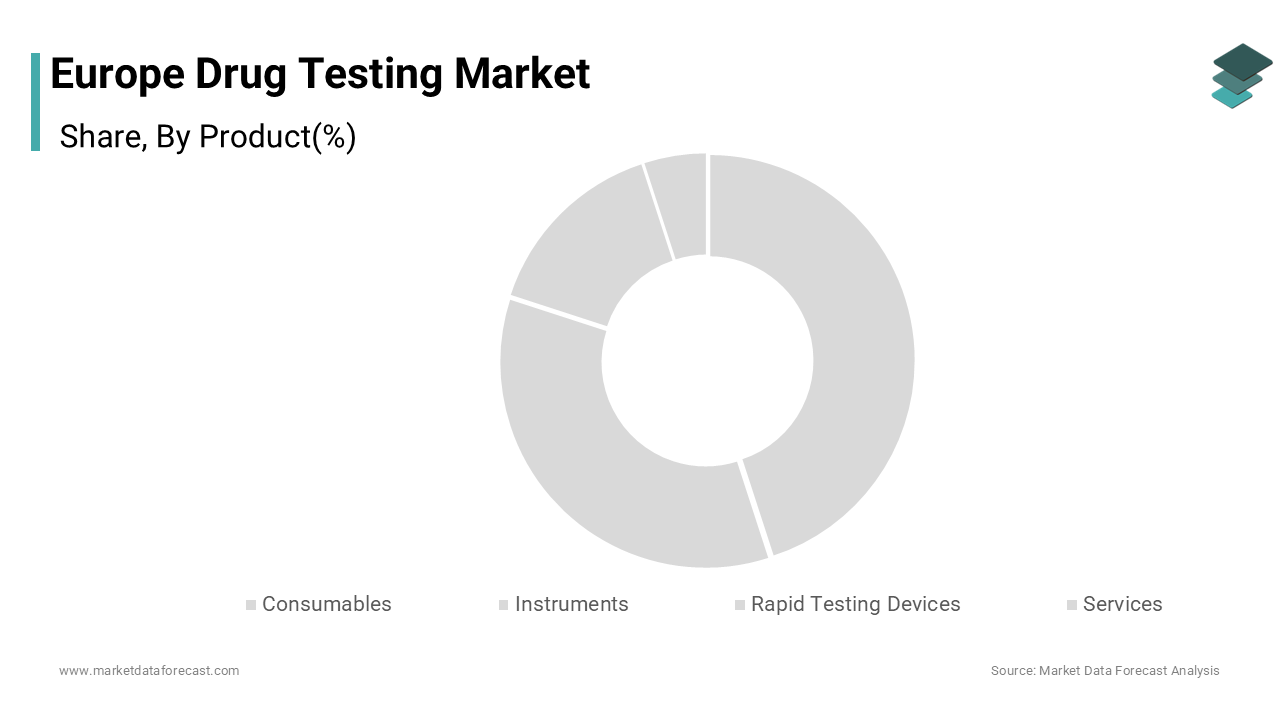
The instruments segment is estimated to register the fastest CAGR of 14.2% from 2025 to 2033 due to rising demand for high accuracy confirmatory analysis in forensic, anti-doping, and clinical toxicology laboratories. Unlike rapid immunoassays consumables, instruments such as liquid chromatography mass spectrometers and gas chromatography systems provide quantitative detection of novel psychoactive substances at trace levels. National forensic institutes in France Sweden and the Netherlands have upgraded their fleets to high resolution mass spectrometers capable of identifying unknown compounds without prior calibration. International regulatory standards require laboratories to utilize highly standardized analytical instrumentation for compliance. The necessity for specific equipment accreditation has led regional facilities to dedicate significant financial resources toward system upgrades. Governmental initiatives are supporting the technical advancement of mobile analytical tools designed for on-site applications. Research and development efforts are increasingly focused on adapting sophisticated laboratory technologies for use in diverse environments. Intensifying regulations and scientific standards in Europe are mandating a shift from basic screening to definitive analysis, fueling steady adoption of advanced instruments.
By Sample Insights
The urine segment led the Europe drug testing market by capturing a significant share in 2024. The prominence of the urine segment is credited to decades of standardized protocols, extensive validation data, and broad detection windows for most substances, several days for cannabis and up to a week for opioids. Urine testing is embedded in national workplace safety laws. Clinical settings also rely heavily on urine due to its non-invasive collection and compatibility with both rapid cups and laboratory confirmation. The European Medicines Agency identifies urine as the primary matrix for monitoring adherence in opioid substitution therapy across numerous member states. Guidelines provided by ISO 21041 establish procedures for supervised urine collection to maintain chain of custody integrity in legal contexts. These regulatory, clinical, and procedural advantages have cemented urine as the default biological specimen across Europe’s institutional testing landscape.
The oral fluid segment is anticipated to witness the fastest CAGR of 18.7% during the forecast period owing to its suitability for roadside enforcement, workplace incident response, and settings where privacy and dignity are paramount. Unlike urine oral fluid collection is observed but non intrusive taking less than two minutes without gender specific facilities. Oral fluid has emerged as a preferred method for roadside drug screening, leading to broader implementation of testing programs across various regions. This testing medium is considered effective for traffic safety because it identifies substance use within a timeframe that corresponds with active impairment. Advancements in screening technology have led to the validation of mobile devices that offer high sensitivity for detecting specific stimulants. The use of these devices allows for immediate testing in official settings, which can reduce the necessity for external laboratory analysis. This method is increasingly favored due to its lower biohazard risk and better alignment with data privacy standards regarding the handling of biological samples. These operational legal and scientific attributes position oral fluid as the vanguard of modern, human centered drug testing in Europe.
By Drug Insights
The alcohol segment dominated the Europe drug testing market in 2024. The supremacy of the alcohol segment is driven by its universal legal status, pervasive workplace presence, and integration into transport safety protocols. Alcohol consumption remains a significant factor in fatal road collisions across the region, leading to the implementation of rigorous monitoring protocols. Regulatory frameworks require that drivers involved in accidents undergo breath or blood alcohol assessments in all member states. Widespread roadside screenings are conducted frequently to detect impaired driving and maintain public safety. Mandatory alcohol testing is required for personnel in safety-critical rail roles prior to beginning their duties. Workplace testing is equally widespread. Breathalyzers are classified as medical devices under the EU Medical Devices Regulation ensuring accuracy and calibration traceability. National health systems also monitor alcohol in addiction treatment. The combination of legal mandate public safety priority and standardized technology ensures alcohol remains the most routinely tested substance across Europe.
The opioids segment is likely to experience the fastest CAGR of 21.3% from 2025 to 2033. The rapid growth of the opioids segment is propelled by the escalating public health crisis involving both prescription misuse and illicit synthetic opioids. As per sources, opioid related deaths in the EU rose, primarily linked to fentanyl analogs and nitazenes. In response national health services have intensified monitoring. Forensic laboratories face rising caseloads. Additionally, the European Medicines Agency has tightened prescribing guidelines requiring periodic toxicology screening for high dose opioid therapies. Workplace testing is also expanding. The demand for sensitive, specific, and timely testing continues to surge across clinical, forensic, and occupational domains as Europe confronts a wave of potent synthetic opioids.
REGIONAL ANALYSIS
Germany Drug Testing Market Analysis
Germany was the top performer in the Europe drug testing market and held a 19.4% share in 2024, with its comprehensive legal framework and advanced forensic capabilities. The national regulatory framework requires mandatory pre-shift alcohol and drug screening for a significant portion of the transportation workforce. Roadside drug testing has transitioned to using oral fluid as the primary standardized method for assessment. Forensic laboratory facilities have obtained international accreditation to ensure the quality of confirmatory drug analyses. The volume of processed confirmatory drug tests indicates an established and active testing infrastructure within the region. The Federal Ministry of Labour enforces strict workplace testing guidelines that permit screening only in safety critical roles but with high compliance. Besides, the Paul Ehrlich Institute oversees quality control of rapid tests ensuring analytical validity. This blend of legal precision scientific capacity and systemic enforcement cements Germany’s position as Europe’s drug testing benchmark.
France Drug Testing Market Analysis
France was the next prominent country in the Europe drug testing market and accounted for a 16.8% share in 2024 because of its centralized testing policies and seamless integration into public health systems. Mandatory urine drug screening is a requirement for certain critical infrastructure employees, such as those in public transport and the energy sector. A substantial number of roadside oral fluid tests are administered annually as part of a national road safety campaign. Forensic and workplace drug confirmations are processed in a consistent manner across the country using a single national protocol. Drug testing is integrated into public health initiatives, specifically within addiction treatment centers as part of established care pathways. All rapid test kits must undergo validation by a national agency before they can be used in the market, ensuring consistent analytical standards. France’s top-down coordination between law enforcement health and labor authorities creates a robust and scalable testing ecosystem unmatched in regulatory cohesion.
The United Kingdom Drug Testing Market Analysis
The United Kingdom is another key player in the Europe drug testing market due to advanced forensic science and agile regulatory adaptation post Brexit. Roadside screening for cannabis and cocaine is conducted through oral fluid testing. Drug testing laboratories are required to maintain specific accreditation standards and prioritize the detection of novel psychoactive substances. Clinics utilize hair and urine testing to monitor patient adherence to treatment programs. Toxicology results are integrated into electronic health records for streamlined data management. The Medicines and Healthcare products Regulatory Agency independently certifies all workplace test kits ensuring alignment with UK data and safety laws. Furthermore, the UK Anti-Doping Agency operates one of Europe’s most sophisticated mass spectrometry labs supporting elite sports. This fusion of scientific excellence regulatory independence and clinical integration ensures the UK remains a high value innovator in Europe’s drug testing landscape.
Sweden Drug Testing Market Analysis
Sweden experienced a consistent growth in the Europe drug testing market owing to its preventive public health approach and widespread use in social and child protection services. In Sweden, the use of drug testing is required within municipal addiction treatment programs. These programs conduct extensive annual testing using both urine and oral fluid analyses. Furthermore, drug testing is a standard practice in evaluations related to custody and foster care. In these specific evaluations, hair analysis is commonly employed to assess potential long-term exposure to substances. The Transport Agency enforces random alcohol and drug screening for commercial drivers with zero tolerance thresholds. Sweden’s strict narcotics policy classifies personal drug use as a social rather than criminal issue, yet testing remains central to rehabilitation and monitoring. All laboratories follow the Swedish Work Environment Authority’s guidelines ensuring ethical and consistent application. This human centered model, balancing public health intervention with individual rights, makes Sweden a distinctive leader in non-punitive testing integration.
Italy Drug Testing Market Analysis
Italy is likely to expand in the Europe drug testing segment from 2025 to 2033 due to strong workplace testing mandates and high judicial demand for forensic evidence. Italian regulations allow for workplace drug screening across various sectors, provided this is negotiated within collective agreements. This approach has been widely incorporated into the policies of many large businesses. A significant number of tests are performed each year, typically utilizing urine and oral fluid samples. The Ministry of Justice relies heavily on accredited toxicology reports in criminal and family court cases. The Italian Medicines Agency maintains a national registry of approved test kits ensuring analytical reliability. Italy’s dual emphasis on labor compliance and legal evidence generation creates a resilient and diversified testing market across public and private domains.
COMPETITIVE LANDSCAPE
Competition in the Europe drug testing market is defined by scientific credibility regulatory alignment and institutional trust rather than price or volume. The market features a mix of global diagnostics giants and specialized European forensic firms each competing through analytical accuracy legal defensibility and seamless integration into public sector workflows. Success hinges on CE certification adherence to ISO 17025 for confirmatory methods and compatibility with national enforcement protocols that vary significantly across member states. Unlike commercial diagnostics here the end user is often a government agency—police transport authority or public health body—making procurement cycles long and validation requirements stringent. Innovation focuses on detecting emerging substances improving oral fluid sensitivity and digitizing custody trails without violating data privacy norms. The General Data Protection Regulation acts as both a constraint and a differentiator as only vendors with robust data governance gain institutional contracts. As Europe intensifies its response to synthetic drugs and workplace safety the market rewards reliability over novelty and partnerships over standalone products creating a high barrier to entry for undifferentiated entrants.
KEY MARKET PLAYERS
Some of the companies that are playing a dominating role in the Europe Drug Testing Market include
- Abbott Laboratories
- Thermo Fisher Scientific Inc.
- Quest Diagnostic
- Roche Diagnostics
- Siemens Healthineers
- LabCorp
- Bio-Rad Laboratories
- Drägerwerk AG & Co. KGaA
- Alfa Scientific Designs
- OraSure Technologies
- Omega Laboratories
- Lifeloc Technologies
- Express Diagnostics International
- Premier Biotech
- Medtox Scientific
Top Players in the Europe Drug Testing Market
Drägerwerk AG & Co KGaA
Drägerwerk is a German medical and safety technology leader with a strong presence in the Europe drug testing market through its high accuracy breathalyzers and oral fluid screening systems. The company supplies law enforcement agencies across Germany France and the Nordic countries with CE marked devices that meet EU forensic standards. Dräger contributes globally by participating in ISO working groups that define performance criteria for roadside drug testing equipment. It also launched a cloud based analytics dashboard for occupational health clients to monitor workforce substance trends while preserving anonymity. These innovations reinforce Dräger’s reputation for reliability regulatory alignment and digital integration in safety critical environments.
Alere (Abbott Rapid Diagnostics)
Alere, now operating under Abbott Rapid Diagnostics, is a major global provider of point of care drug testing solutions widely used in European emergency departments workplaces and addiction clinics. The company’s iCup and Oral Fluid Collector devices are CE certified and validated by multiple national health institutes for detecting opioids cannabinoids and amphetamines. Alere supports Europe’s public health response by supplying high volume consumables to national substance monitoring programs in the UK and Sweden. The company also collaborates with European forensic laboratories to ensure its rapid tests align with confirmatory mass spectrometry protocols. These actions underscore Alere’s commitment to clinical relevance and crisis responsiveness across the region.
Securetec Detektions Systeme AG
Securetec is a German specialist in forensic and roadside drug testing technologies known for its innovative oral fluid and surface screening systems deployed across European law enforcement and transport sectors. The company’s DrugWipe devices are used by police forces in over 15 EU countries for on site detection of cannabis cocaine and new psychoactive substances. Securetec contributes to global standards through its involvement in European Committee for Standardization initiatives on oral fluid testing procedures. It also launched a multi drug hair screening kit validated by the German Federal Police for retrospective analysis in child protection cases. These advancements position Securetec as a nimble technology enabler focused on legal defensibility and field usability in Europe’s evolving drug testing landscape.
Top Strategies Used by the Key Market Participants
Key players in the Europe drug testing market prioritize compliance with EU forensic standards and GDPR through digital chain of custody and encrypted data handling. They invest in enhancing detection capabilities for novel psychoactive substances like fentanyl analogs and nitazenes to address public health emergencies. Companies develop smartphone integrated readers and cloud dashboards to modernize result management while preserving privacy. They also pursue close collaboration with national police health and transport authorities to align products with operational protocols. Additionally firms obtain ISO 17025 accreditation for their reference methods and support regulatory validation studies to ensure legal admissibility of rapid test results across diverse European jurisdictions.
MARKET SEGMENTATION
This research report on the europe atomic layer deposition market has been segmented and sub–segmented into the following categories.
By Product
- Consumables
- Instruments
- Rapid Testing Devices
- Services
By Sample
- Urine Samples
- Oral Fluid Samples
- Hair Samples
- Other Samples
By Drug
- Alcohol
- Cannabis/Marijuana
- Cocaine
- Opioids
- Amphetamine & Methamphetamine
- LSD
- Others
By End-use
- Drug Testing Laboratories
- Workplaces
- Hospitals
- Others
By Country
- UK
- France
- Spain
- Germany
- Italy
- Russia
- Sweden
- Denmark
- Switzerland
- Netherlands
- Turkey
- Czech Republic
- Rest of Europe
Frequently Asked Questions
What is the Europe drug testing market?
The Europe drug testing market involves screening biological samples such as urine, oral fluid, blood, and hair to detect illicit drugs, prescription misuse, alcohol, and performance-enhancing substances across workplace, forensic, clinical, and sports settings.
What factors are driving the Europe drug testing market?
Key drivers include mandatory workplace safety regulations, roadside drug screening programs, clinical use in addiction treatment, and increased focus on public safety in transport and industrial sectors.
Which industries commonly use drug testing in Europe?
Drug testing is widely used in transportation, workplaces, healthcare, law enforcement, sports, and forensic laboratories.
Which sample type dominates the Europe drug testing market?
Urine testing dominates the market due to standardized protocols, wide detection windows, and regulatory acceptance.
Which drugs are most commonly tested in Europe?
Commonly tested substances include alcohol, cannabis, cocaine, opioids, amphetamines, and methamphetamines.
Which drug segment holds the largest market share?
The alcohol testing segment holds the largest share due to strict road safety laws and workplace regulations.
Which drug category is expected to grow the fastest?
The opioids segment is expected to grow fastest due to rising misuse of prescription opioids and synthetic opioids across Europe.
What are the key restraints in the Europe drug testing market?
Major restraints include strict data privacy laws (GDPR), employee consent requirements, and fragmented national regulations across EU member states.
What are the key opportunities in the market?
Key opportunities include expansion of oral fluid testing, digital chain-of-custody systems, blockchain-based forensic tracking, and improved detection of novel psychoactive substances.
What is the future outlook for the Europe drug testing market?
The market is expected to grow steadily, driven by public safety initiatives, clinical integration, technological advancements in testing devices, and increased focus on substance abuse prevention.
Access the study in MULTIPLE FORMATS
Purchase options starting from
$ 2000
Didn’t find what you’re looking for?
TALK TO OUR ANALYST TEAM
Need something within your budget?
NO WORRIES! WE GOT YOU COVERED!
Call us on: +1 888 702 9696 (U.S Toll Free)
Write to us: sales@marketdataforecast.com