- Product Description Description
- Table of Contents TOC
- List of Table & Figure LOT
- Get Free Sample PDF Sample PDF
Market Size, 2025
$5.37 BnMarket Estimate, 2026
$5.61 BnMarket Forecast, 2034
$7.98 BnCAGR, 2026–2034
4.5%Executive Summary: Europe Dust Control Systems Market
- Market Scope: Comprehensive assessment of the European dust control systems sector, covering active product types, mobility options, industrial end-use applications, and country-level regulatory deployment dynamics.
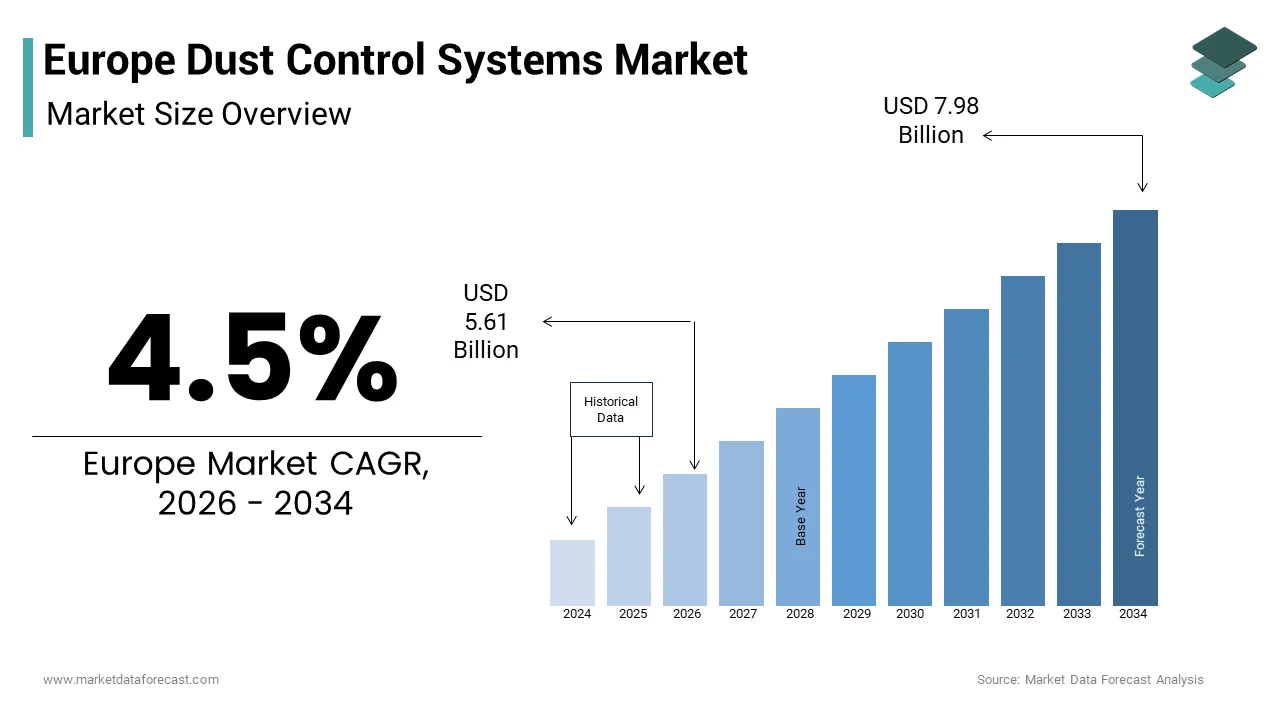
- Market Valuation: Valued at USD 5.37 billion in 2025, reaching USD 5.61 billion in 2026, and projected to expand to USD 7.98 billion by 2034, growing at a compound annual growth rate (CAGR) of 4.5% from 2026 to 2034.
- Primary Growth Drivers: Strict EU air quality regulations (Ambient Air Quality Directives), rising occupational health incidents regarding fine particulate matter (PM2.5, PM10, and silica dust), and intensifying urban industrial environmental compliance.
Key Market Segment Metrics (2026–2034)
| Category | Leading Segment (2025 Position) | Fastest-Growing Segment |
|---|---|---|
| By Product Type | Wet systems segment (occupying 65.5% share in 2025 due to high PM10/PM2.5 suppression efficiency and EU Industrial Emissions Directive recognition) | Dry systems segment (expanding at a CAGR of 8.84% driven by waterless technologies in drought-prone regions and circular economy recycling) |
| By Mobility | Fixed controllers segment (dominating infrastructure applications like cement plants and bulk terminals with economies of scale) | Mobile controllers segment (recording a CAGR of 9.04% due to rapid deployment needs in urban construction and demolition) |
| By End-Use Industry | Construction segment (holding 33.9% share in 2025 driven by intensive earthmoving, demolition, and active urban redevelopment sites) | Pharmaceutical segment (projected to grow at a CAGR of 12.2% due to strict GMP requirements and potent compound containment) |
| By Country / Region | Germany (leading with 23.5% market share in 2025 backed by heavy industrial intensity and strict federal immission control acts) and France | Italy and United Kingdom (expanding steadily with regional manufacturing revivals, infrastructural upgrades, and urban zoning frameworks) |
Major Market Players & Market Structure
Market Structure: Highly competitive landscape combining global filtration giants, regional engineering firms, and mobile suppression providers focusing on IoT integration, eco-friendly filter media, and equipment-as-a-service models.
Key Companies: Nederman Holding AB, Donaldson Company Inc, Wirtz Manufacturing Co. Inc., Dust Solutions Inc., C&W Manufacturing and Sales Co, Dustcontrol Canada Inc., Dust Control Systems Ltd, Camfil APC, EmiControls, and BossTek.
Europe Dust Control Systems Market Size
The Europe dust control systems market size was valued at USD 5.37 billion in 2025 and is anticipated to reach USD 5.61 billion in 2026 to reach USD 7.98 billion by 2034, growing at a CAGR of 4.5% during the forecast period from 2026 to 2034.
Dust control systems include engineered solutions designed to suppress fugitive dust emissions across industrial, construction, mining, and material handling operations. These systems utilize methods such as water spraying, misting, chemical stabilization, and mechanical enclosures to mitigate airborne particulate matter. The European region faces persistent environmental and occupational health pressures linked to particulate pollution, with fine particulate matter (PM2.5) identified by the European Environment Agency as a major contributor to premature deaths across the continent each year. Industrial activities remain significant sources of dust emissions across the continent. The European Union’s Ambient Air Quality Directives enforce strict limits on particulate concentrations, which are compelling industries to adopt compliant dust mitigation mechanisms. Additionally, the European Commission’s Industrial Emissions Directive mandates integrated pollution prevention and control techniques, which further necessitate the deployment of advanced dust control infrastructure. As environmental scrutiny intensifies and workplace safety standards evolve, dust control systems have transitioned from optional add‑ons to essential components of operational compliance and social responsibility across European industrial sectors.
MARKET DRIVERS
Stringent EU Air Quality Regulations Drive Adoption
The European Union’s comprehensive air quality legislation acts as a powerful catalyst for dust control system deployment across member states, which is one of the key factors supporting the dust control systems market growth in Europe. Directive 2008/50/EC on ambient air quality sets legally binding limits for particulate matter, including 25 µg/m³ for PM2.5 as an annual mean and 50 µg/m³ for PM10 as a daily mean not to be exceeded more than 35 times per year. Non‑compliance triggers infringement procedures and potential financial penalties, compelling industrial operators to invest in effective dust suppression. According to the European Environment Agency, more than 120 urban areas in the EU exceeded PM10 daily limits in 2022, underscoring the urgency of emission control. Sectors such as mining, aggregate processing, and logistics hubs located near urban centers face heightened regulatory scrutiny, particularly under the Industrial Emissions Directive, which requires Best Available Techniques (BAT) to minimize environmental impact. This regulatory environment has accelerated procurement of automated dust control technologies, including high‑pressure misting systems and electrostatic dust suppressants. According to Germany’s Federal Environment Agency, a notable increase in dust control equipment installations in bulk handling facilities between 2020 and 2023, which reflects a structural shift where dust management is embedded into environmental permitting processes rather than treated as a discretionary safety measure.
Rising Occupational Health Incidents Spur System Deployment
Workplace exposure to airborne dust remains a critical occupational hazard across European industries, which is directly influencing demand for engineered dust control systems and contributing to the regional market expansion. EU‑OSHA estimates that more than 20 million workers in the EU are exposed to respirable dust in sectors including construction, mining, and manufacturing. Silica dust alone is linked to thousands of new cases of occupational lung disease annually. Chronic exposure to particulate matter below 10 micrometres can lead to silicosis, chronic bronchitis, and lung cancer, prompting stricter enforcement of workplace exposure limits. The EU’s Carcinogens and Mutagens Directive introduced a binding occupational exposure limit of 0.1 mg/m³ for respirable crystalline silica, which came into full effect in 2023. As a result, employers are compelled to implement source‑level dust suppression to remain compliant. In France, the General Directorate for Labour reported a significant rise in workplace inspections targeting dust control in quarries and demolition sites between 2021 and 2024. These interventions have driven demand for real‑time dust monitoring integrated with automated suppression systems, particularly in high‑risk environments such as tunnelling and cement bagging operations. This health‑driven imperative transforms dust control from a peripheral concern into a core component of occupational risk management strategies across the European industrial landscape.
MARKET RESTRAINTS
High Capital and Operational Costs Constrain Widespread Implementation
The significant initial investment and ongoing maintenance expenses associated with advanced dust control systems are a substantial barrier, particularly for small and medium‑sized enterprises across Europe, andares hindering the regional market growth. For instance, a typical centralized dust suppression system with automated sensors and high‑pressure nozzles can require capital outlays exceeding €200,000–€250,000 for mid‑scale industrial sites. Operational costs further accumulate through water consumption, energy use, and chemical additives, with annual maintenance often representing 15–20% of the initial system cost. For industries operating on narrow margins, the financial burden impedes adoption despite regulatory pressure. According to Eurostat, SMEs constitute more than 98% of industrial enterprises in Southern and Eastern Europe, where many operators resort to rudimentary dust control methods such as manual watering, which offer limited efficacy and inconsistent compliance. Additionally, fluctuating energy prices across the EU since 2022 have heightened sensitivity to power‑intensive systems such as misting arrays or electrostatic precipitators. This economic reality creates a divergence in dust control maturity between large multinational facilities and smaller local operations, resulting in uneven environmental performance and regulatory risk across the industrial base.
Fragmented Regulatory Enforcement Across Member States Limits Uniform Adoption
Despite harmonized EU directives, the implementation and enforcement of dust control requirements vary significantly among member states, which is creating uncertainty and inconsistent market demand. The European Commission’s 2023 Environmental Implementation Review found that only 14 of 27 member states fully complied with monitoring and reporting obligations under the Ambient Air Quality Directive. In countries such as Romania and Bulgaria, environmental inspections occur less than once every three years for medium‑sized facilities, according to the European Environmental Compliance and Enforcement Network, whereas in Germany and the Netherlands, inspection frequencies exceed annual cycles. This disparity allows some operators to defer investment in advanced dust control systems by exploiting regulatory gaps or lenient local oversight. Moreover, divergent interpretations of Best Available Techniques under the Industrial Emissions Directive result in inconsistent technical requirements for dust suppression across borders. A quarry in Spain might meet national standards using basic water sprays, while a comparable facility in Sweden is mandated to install closed‑loop dust collection systems. Such fragmentation undermines the creation of a cohesive market for standardized dust control solutions and complicates compliance strategies for multinational operators managing assets across multiple jurisdictions, thereby dampening overall investment momentum in the sector.
MARKET OPPORTUNITIES
Circular Economy Integration Offers New System Deployment Avenues
The European Union’s Circular Economy Action Plan creates novel demand for dust control systems by promoting material recovery and reuse in industrial processes where dust represents a valuable resource rather than waste, which is a promising opportunity in the European dust control systems market. In metal processing and recycling facilities, airborne particulates often contain recoverable metals such as copper, aluminum, or rare earth elements. According to the European Commission, more than 80% of end‑of‑life vehicles are now recycled in the EU, which is generating significant metal‑rich dust streams that can be reclaimed through advanced filtration and collection systems. Similarly, in the cement industry, kiln dust containing unreacted calcium carbonate and clinker residues is increasingly reintegrated into raw meal formulations, which is reducing both waste and raw material costs. The EU’s 2024 Circular Economy Monitoring Framework set a target to double circular material use by 2030, incentivizing investments in closed‑loop dust capture technologies. Companies such as Heidelberg Materials have already implemented dust recirculation systems in their German and Polish plants, reporting a 12% reduction in virgin limestone consumption in their 2024 sustainability disclosure. This shift reframes dust control from a cost center to a value recovery mechanism, compelling industries to adopt high‑efficiency collection systems that preserve material integrity while ensuring emission compliance, thereby opening a dynamic growth corridor for next‑generation dust management solutions.
Expansion Of Urban Industrial Zones Fuels Localized Dust Mitigation Needs
The intensifying proximity of industrial operations to residential and commercial areas in European cities is generating acute demand for precision dust control systems that minimize community impact, which is another potential opportunity in the European dust control systems market. Urban regeneration initiatives have repurposed former industrial brownfields into mixed‑use zones, which are bringing logistics hubs, recycling centers, and construction material depots into closer contact with populations. In Greater London, more than 60 new micro‑distribution centers were established within 5 km of residential neighbourhoods between 2020 and 2024, according to the Greater London Authority. These facilities handle bulk materials that generate fugitive dust during loading, unloading, and storage, which is prompting complaints and regulatory interventions. Similar trends are evident in Amsterdam, Lyon, and Warsaw, where municipal authorities have introduced localized dust ordinances requiring real‑time monitoring and automated suppression. Rotterdam’s 2023 Environmental Zoning Code mandates dust control plans for any industrial activity within 300 meters of housing developments. This urban‑industrial convergence necessitates compact, low‑noise dust suppression technologies such as targeted mist cannons and vegetative barriers, which can operate in constrained spaces without disrupting community life. Consequently, manufacturers are developing modular, scalable systems tailored to dense urban environments, creating a distinct submarket within the broader dust control sector.
MARKET CHALLENGES
Climate‑Induced Drought Conditions Complicate Water‑Based Suppression
Prolonged drought episodes across Southern and Central Europe increasingly challenge the viability of conventional water‑based dust control methods, which account for the majority of current installations, and are one of the significant challenges to the European dust control systems market growth. According to the European Drought Observatory, 43% of EU territory experienced severe or extreme soil moisture deficit in 2023. Countries such as Spain, Italy, and Greece enforced industrial water‑use restrictions during peak drought periods. These constraints directly impact operations reliant on spray bars or misting systems, which can consume thousands of litres of water per day depending on site scale. For example, a medium‑sized quarry in Andalusia reduced its dust suppression watering by 60% during the 2023 summer drought, leading to elevated PM10 levels and non‑compliance notices from regional inspectors. Climate models from the Copernicus Climate Change Service project a 20% increase in drought frequency across Mediterranean Europe by 2035. Industries, therefore,e face mounting pressure to adopt waterless alternatives such as polymer binders or mechanical enclosures. However, these technologies often entail higher capital costs and limited supplier networks, which are delaying the transition. This climate‑water nexus introduces operational unpredictability and forces facilities to redesign dust control strategies around water scarcity rather than regulatory compliance alone.
Lack Of Standardized Performance Metrics Hinders Technology Evaluation
The absence of harmonized testing protocols and performance benchmarks for dust control systems impedes objective comparison and informed procurement across Europe, which is further challenging the expansion of the European dust control systems market. Unlike regulated emissions equipment, dust suppressants are not subject to EU‑wide certification standards, leading to vendor claims that vary widely in methodology and validity. As per a 2024 study by the German Institute for Standardization (DIN), efficiency ratings for identical misting systems ranged from 45% to 88% suppression depending on test environment and particle size distribution. This ambiguity complicates decision‑making for facility managers, particularly in sectors such as mining and bulk logistics, where site‑specific variables (wind speed, material composition, humidity) dramatically influence system efficacy. Without standardized metrics, buyers often rely on vendor demonstrations conducted under idealized conditions, which may not reflect real‑world performance. The European Committee for Standardization (CEN) has initiated preliminary discussions on a dust control performance framework, but no binding standard is expected before 2027. In the interim, inconsistent validation fuels skepticism, especially among public sector procurers who require transparent and auditable performance data. This knowledge gap slows technology adoption and favours legacy solutions with familiar operational profiles over innovative but unproven alternatives, thereby stifling market evolution and performance optimization.
REPORT COVERAGE
| REPORT METRIC | DETAILS |
| Market Size Available | 2025 to 2034 |
| Base Year | 2025 |
| Forecast Period | 2026 to 2034 |
| CAGR | 4.5% |
| Segments Covered | By Product Type, Mobility, End-User, By Country |
| Various Analyses Covered | Global, Regional & Country Level Analysis; Segment-Level Analysis, DROC, PESTLE Analysis, Porter’s Five Forces Analysis, Competitive Landscape, Analyst Overview of Investment Opportunities |
| Regions Covered | UK, France, Spain, Germany, Italy, Russia, Sweden, Denmark, Switzerland, Netherlands, Turkey, Czech Republic,c & Rest of Europe |
| Market Leaders Profiled | Colliery Dust Control (South Africa), Duztech AB (Sweden), Dust Control Technologies (US), Sly Filters (UK), Spraying Systems (US), CW Machine Worx (US), Dust Control Systems (UK), Nederman Holding (Sweden), Donaldson Company (US), and Illinois Tool Works (US), Savic (Belgium), Heylo (Germany), BossTek (US), EmiControls (Italy), and Beltran Technologies (US). |
SEGMENTAL ANALYSIS
By Product Insights
The wet systems segment occupied 65.5% of the European dust control systems market share in 2025. The leading position of the wet systems segment in the European market is attributed to their high suppression efficiency, particularly for PM10 and PM2.5 particles common in mineral processing and bulk material handling. According to the EU Industrial Emissions Directive, water‑based suppression methods such as spray bars and atomized mist cannons are recognized for reducing visible emissions and facilitating compliance with ambient air‑quality standards. Field trials conducted by the Institute of Occupational Medicine in Edinburgh confirm that wet suppression can reduce airborne dispersion by up to 90% under optimal humidity conditions. Germany’s Federal Institute for Materials Research and Testing reported more than 1,200 new wet system deployments in aggregates and cement facilities in 2023. Wet systems are expected to remain dominant as regulatory alignment, operational familiarity, and proven efficacy reinforce their role as the backbone of dust mitigation across Europe.
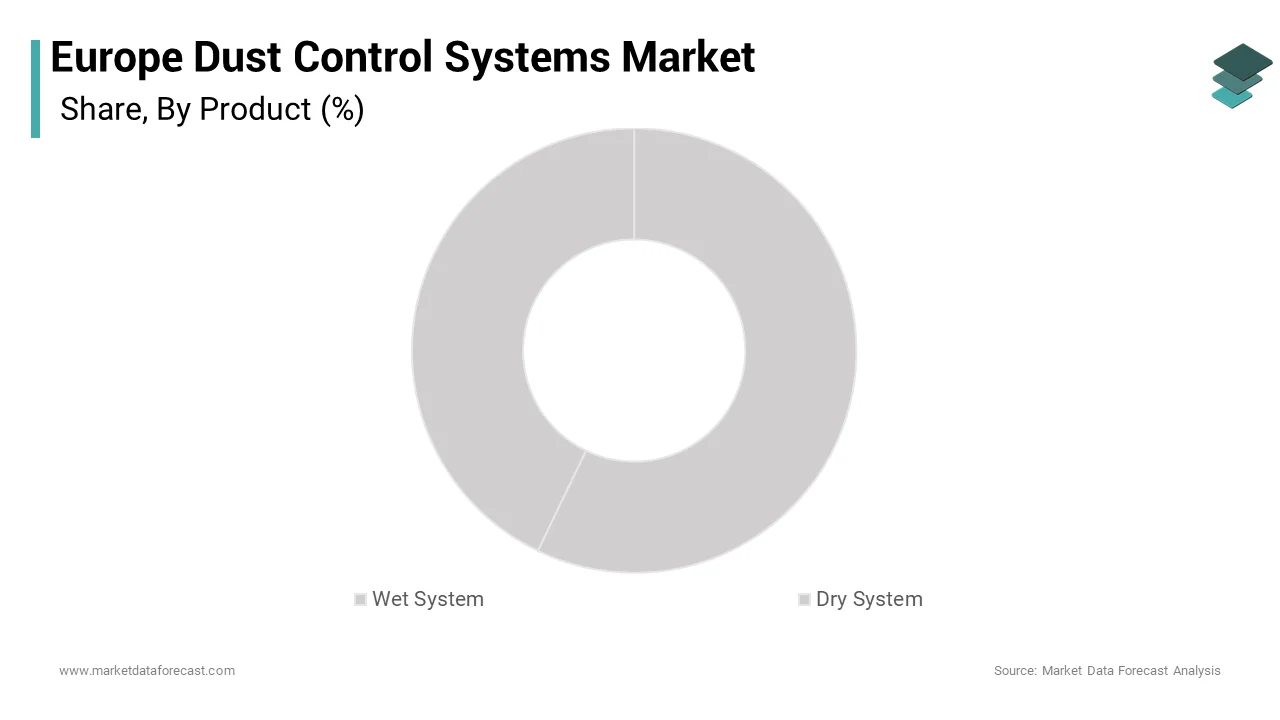
The dry systems segment is expanding rapidly and is predicted to grow at a CAGR of 8.84% over the forecast period due to the rising adoption of waterless technologies in drought‑prone regions and industries where moisture compromises product quality. According to the European Drought Observatory, 42% of the EU experienced severe water stress in 2023, which is prompting industrial water restrictions in 11 member states. This has accelerated investment in polymer‑based binders and mechanical enclosures. Innovations such as self‑cleaning filter cartridges and cyclonic separators have reduced maintenance burdens and improved lifecycle economics. A pilot program by Italy’s Ministry of Ecological Transition recorded a 34% reduction in fugitive dust at ceramic tile plants using dry baghouse filters without water consumption. Dry systems are expected to grow rapidly as circular‑economy principles prioritize material recovery and climate adaptation strategies limit water reliance.
By Mobility Insights
The fixed controllers segment accounted for the dominating share of the European dust control systems market in 2025. The growth of the fixed controllers segment in the European market is attributed to the integration into permanent industrial infrastructure such as cement kilns, mineral processing lines, and bulk storage terminals. According to the German Association of Energy and Water Industries, more than 85% of fixed dust‑control installations in coal handling and power generation facilities are linked to plant‑wide environmental management systems. Fixed systems benefit from economies of scale, offering a lower cost per cubic meter of treated air compared to mobile alternatives. The European Commission’s Best Available Techniques Reference Documents endorse fixed enclosures with integrated suppression for high‑emission processes. Fixed controllers are expected to remain dominant as long‑term operational stability, regulatory compliance, and seamless data logging reinforce their institutional preference.
The mobile controllers segment is anticipated to record a CAGR of 9.04% over the forecast period due to the construction, demolition, and temporary mining operations requiring rapid deployment and spatial flexibility. According to the European Urban Development Monitor, more than two‑thirds of new construction sites in cities such as Paris and Amsterdam are located within 200 meters of residential zones. Municipal authorities are mandating mobile suppression for short‑term permits, with Barcelona requiring mobile dust control for demolition sites exceeding 500 square meters since 2023. Advances in battery‑powered units now allow up to 12 hours of operation with remote telematics. Mobile controllers are expected to grow rapidly as urban air‑quality enforcement and project‑based industrial activity intensify across Europe.
By End‑Use Industry Insights
The construction segment had 33.9% of the European dust control systems market share in 2025. The growth of the construction segment in the European market is driven by the extensive earthmoving, demolition, and material‑handling activities that generate fugitive dust. According to Eurostat, more than 14 million construction sites are active annually across the EU. The European Environment Agency reports that construction‑related dust accounts for up to 23% of urban particulate pollution in major cities. National regulations, such as France’s 2022 Dust Control Decree, require certified suppression measures for large sites. Public complaints have also surged, with the UK’s Local Government Association recording a 41% year‑on‑year increase in dust‑related grievances between 2021 and 2023. Construction is expected to remain dominant as regulatory pressure, public scrutiny, and urban redevelopment sustain demand for dust control systems.
The pharmaceutical segment is projected to grow at a CAGR of 12.2% over the forecast period, od owing to the stringent Good Manufacturing Practice requirements mandating near‑zero particulate contamination. According to the European Medicines Agency, dust‑related manufacturing deviations led to batch rejections worth more than €85 million in 2023. Germany, which accounts for 28% of EU pharmaceutical output as per Destatis, has seen a 22% increase in cleanroom air‑handling upgrades since 2022. The rise of potent compound manufacturing, including oncology drugs, demands closed‑system transfer technologies with advanced dust containment. Pharmaceutical applications are expected to grow rapidly as Europe strengthens its position as a global hub for high‑quality drug manufacturing.
COUNTRY ANALYSIS
Germany Dust Control Systems Market Analysis
Germany led the market by holding 23.5% of the European dust control systems market share in 2025. The country’s industrial intensity, particularly in cement, chemicals, and automotive manufacturing, creates persistent demand for high‑performance dust suppression. More than 15,000 industrial sites in Germany are subject to the Federal Immission Control Act, which enforces strict particulate emission thresholds. The Ruhr region alone hosts more than 800 bulk‑material handling terminals requiring continuous dust monitoring and suppression. In 2,023 Germany invested 1.8 billion euros in industrial air‑quality infrastructure as part of its National Air Pollution Control Programme. This regulatory rigor, combined with technological leadership from domestic manufacturers such as Dürr and Nederman, ensures Germany remains the benchmark for dust‑control adoption and innovation across Europe. With its combination of policy enforcement, industrial scale, and technological expertise, Germany is expected to continue setting the standard for dust‑control systems in the region.
France Dust Control Systems Market Analysis
France commands a promising share of the Europe dust control systems market in 2025. The country’s extensive construction activity, driven by urban densification and energy‑retrofitting projects, has intensified dust‑management requirements. Paris alone approved 240 major demolition permits in 2023, each mandating certified dust‑suppression plans. Additionally, France’s mining heritage in regions such as Lorraine maintains demand for systems in slag and mineral processing. The French Environment and Energy Management Agency recorded a 37% increase in dust‑control equipment procurement by public‑infrastructure contractors between 2021 and 2023. National decrees such as the 2022 Anti‑Nuisance Ordinance further institutionalize dust mitigation at all project phases, solidifying France’s role as a high‑compliance market. With its blend of construction intensity, industrial legacy, and strong regulatory frameworks, France is expected to remain a key driver of demand for advanced dust‑control solutions.
United Kingdom Dust Control Systems Market Analysis
The United Kingdom held a substantial share of the Europe dust control systems market in 2024. The growth of the UK in the European market is driven by dense urban construction and post‑Brexit regulatory autonomy, according to the UK Department for Environment, Food and Rural Affairs. London’s Crossrail legacy and ongoing HS2 developments have mandated continuous dust monitoring across dozens of sites, with suppression systems required within 100 meters of residences. The UK Health and Safety Executive reported that 28% of construction‑site inspections in 2023 cited inadequate dust control as a primary violation. Moreover, the Environment Agency’s 2023 National Emissions Inventory identified construction as the fastest‑growing source of PM10 in urban areas. These pressures have spurred the adoption of hybrid wet‑dry mobile units, with British firms such as Dustcontrol UK expanding their rental fleets by 40% since 2022 to meet demand. With its combination of infrastructure projects, regulatory oversight, and technological adaptation, the UK is expected to remain a dynamic market for dust‑control innovation.
Italy Dust Control Systems Market Analysis
Italy is predicted to showcase a healthy CAGR in the European dust control systems market over the forecast period. The resurgence of manufacturing in southern regions, including Sicily and Puglia, has revived demand for dust control in ceramics, food processing, and recycled‑metal smelting. Italy’s 2023 National Recovery and Resilience Plan allocated 320 million euros to modernize industrial air‑quality systems, with a focus on SMEs. The Italian National Institute for Environmental Protection recorded 1,800 enforcement actions related to dust emissions in 2023, a 29% increase from 2021. Water scarcity in the south has also accelerated the adoption of dry‑polymer systems, particularly in tile and cement plants where process moisture is undesirable. This blend of regulatory tightening and industrial modernization sustains Italy’s robust market position. With continued investment in air‑quality infrastructure and regional industrial revival, Italy is expected to strengthen its role in the European dust‑control landscape.
Netherlands Dust Control Systems Market Analysis
The Netherlands is expected to hold a notable share of the European market over the forecast period due to its role as Europe’s logistics gateway, according to the Dutch Ministry of Infrastructure and Water Management. The Port of Rotterdam, Europe’s largest cargo hub, handles more than 460 million tons of bulk goods annually, generating significant fugitive dust from coal, ore, and biomass terminals. Dutch environmental law requires all bulk terminals to implement Best Available Techniques with real‑time dust monitoring since 2021. The Port Authority reported a 50% increase in dust‑suppression investments between 2020 and 2023, totaling 120 million euros. Additionally, the country’s dense urban planning places industrial zones within proximity to residential areas, intensifying community pressure. This unique confluence of maritime logistics, regulatory stringency, and spatial constraints positions the Netherlands as a high‑intensity niche market for advanced dust‑control solutions. With its infrastructure scale and sustainability focus, the Netherlands is expected to remain a forward‑looking hub for dust‑control innovation in Europe.
COMPETITIVE LANDSCAPE
The Europe Dust Control Systems Market features a competitive landscape characterized by a mix of global filtration specialists, regional engineering firms,s and niche mobile equipment providers. Competition centers not only on product efficacy but also on compliance support service, responsiveness, ness and integration capabilities with existing industrial infrastructure. Leading players differentiate themselves through digitalization,ation sustainability credentials, initiatives, and rapid deployment solutions, particularly in urban and regulated environments. The absence of standardized performance metrics fosters a solutions-based sales approach where vendors demonstratesite-specificc value through pilot installations and data-driven case studies. Regulatory fragmentation across member states further intensifies the need for localized expertise, prompting global companies to establish in-country technical teams. As environmental enforcement tightens and industrial decarbonization progresses, competitive advantage increasingly hinges on the ability to deliver adaptive closed-loop and low-resource dust management systems that align with both operational and policy imperatives across diverse European industrial contexts.
KEY MARKET PLAYERS
A few of the market players in the global dust control systems market include
- Piian Systems
- Donaldson Company Inc
- Wirtz Manufacturing Co Inc
- New Waste Concepts Inc
- Nederman Holding AB
- Dust Solutions Inc.
- C&W Manufacturing and Sales Co
- Dustcontrol Canada Inc.
- Dust Control Systems Ltd
- Sealpump Engineering Limited
- United Air Specialists Inc.
- National Environmental Service Company
- Camfil APC
- EnviroSystems LLC
- Colliery Dust Control (Pty) Ltd.
Top Players In The Market
- Nederman Holding AB is a Swedish industrial air filtration and dust control solutions provider with a substantial footprint across Europe and global operations in over 50 countries. The company specializes in engineered systems for metalworking, woodworking, and mineral processing sectors. In recent years,s Nederman has intensified its focus on digital integration, launching smart dust collectors with IoT-enabled monitoring to optimize filter performance and maintenance cycles. In 2023, the company expanded its service network in Southern Europe,e including new technical support hubs in Spain and Italy to accelerate response times and enhance customer retention through predictive maintenance offerings aligned with industrial automation trends.
- Donaldson Company Inc isUS-basedsed global leader in filtration technologies with a strong presence in the European dust control systems market through its industrial filtration division. The company supplies high-efficiency filter cartridges and dust collection systems to the pharmaceutical,, foodprocessingn,,g and heavy manufacturing sectors across Europe. Donaldson has recently invested in sustainable filter media development, introducingbio-basedd pleated filter elements that reduce lifecycle emissions. In early 2024, the company inaugurated a dedicated R and D center in Germany focused on particulate capture for circular economy applications, reinforcing its commitment to aligning filtration innovation with EU environmental directives.
- Wirtz Manufacturing Co., Inc. is a US-headquartered specialist in mobile dust suppression equipment with growing traction in the European construction and mining sectors. Known for its DustBoss line of misting cannons, the company has tailored solutions for urban demolition, aggregate handling, ng and port logistics in Europe. To strengthen its regional position,tion Wirtz established a European distribution partnership wiNetherlands-basedbased environmental equipment firm in late 2023, enabling faster delivery and localized after-sales support. The company also introduced battery-powered mobile units in 2024, designed specifically for low-emission urban zones in cities like Paris and Berlin, responding to municipal restrictions on diesel-powered equipment.
Top Strategies Used by the Key Market Participants
Key players in the Europe Dust Control Systems Market employ a range of strategic initiatives to reinforce their competitive stance. Product innovation remains central with companies integrating smart sensors and remote diagnostics into suppression systems to enable real-time performance tracking. Geographic expansion through localized service centers and distribution alliances enhances customer proximity and support efficiency. Strategic partnerships with industrial automation firms facilitate seamless integration of dust control into broader plant management ecosystems. Investment in sustainable technologies such as waterless binders and recyclable filter media aligns offerings with EU circular economy mandates. Additionally, companies are increasingly offering equipment as a service model, including leasing and rental options, to lower adoption barriers for small and medium enterprises facing capital constraints.
MARKET SEGMENTATION
This research report on the European dust control systems market is segmented and sub-segmented into the following categories.
By Product Type
- Wet Systems
- Wet Scrubbers
- Wet Electrostatic Precipitators (WEPS)
- Dry Systems
- Bag Dust Collectors
- Cyclone Dust Collectors
- Electrostatic Dust Collectors
- Vacuum Dust Collectors
- Modular Dust Collectors
- Others
By Mobility
- Mobile Controllers
- Handheld
- Self-propelled
- Tractor-mounted
- Trailed
- Fixed Controllers
- Stationary systems installed at fixed locations
By End-Use Industry
- Construction
- Road Construction
- Building Construction
- Mining
- Surface Mining
- Underground Mining
- Oil & Gas
- Exploration
- Drilling
- Refining
- Chemical
- Industrial Chemical Manufacturing
- Specialty Chemicals
- Food & Beverage
- Processing
- Packaging
- Pharmaceutical
- Drug Manufacturing
- Packaging
- Textile
- Weaving
- Spinning
- Dyeing
- Printing
- Finishing
- Others
- Power & Utility
- Metal & Finishing Industries
By Country
- UK
- France
- Spain
- Germany
- Italy
- Russia
- Sweden
- Denmark
- Switzerland
- Netherlands
- Turkey
- Czech Republic
- Rest of Europe