- Product Description Description
- Table of Contents TOC
- List of Table & Figure LOT
- Get Free Sample PDF Sample PDF
Market Size, 2025
$3132 MnMarket Estimate, 2026
$3226 MnMarket Forecast, 2034
$3859 MnCAGR, 2026–2034
5.35%Executive Summary: Europe Electric Lawn Mowers Market
- Market Scope: Comprehensive analysis of the European electric lawn mowers market, covering product categories, end-user applications, and country-level adoption metrics across residential and commercial segments.
- Market Valuation: Valued at USD 3,132 million in 2025, estimated at USD 3,226.9 million in 2026, and projected to reach USD 3,859.826 million by 2034, expanding at a steady CAGR of 5.35% during the forecast period.
- Primary Growth Drivers: Strict EU environmental regulations and Outdoor Noise Directives penalizing gasoline-fueled equipment, alongside surging consumer preferences for sustainable, low-maintenance garden care.
Key Market Segment Metrics
| Category | Leading Segment (Base Position) | Fastest-Growing / High-Growth Segment |
|---|---|---|
| By Product Type | Walk-Behind Electric Lawn Mowers (commanded the largest market share in 2025, ideal for typical urban and suburban European gardens) | Robotic and Autonomous Lawn Mowers (expanding at a high CAGR of 17.7%, driven by app control, smart home integration, and convenience) |
| By End User | Residential (led the market with the major share in 2025, backed by high homeownership rates and private garden spaces across the EU) | Professional Landscaping Services (projected at the fastest CAGR of 13.4%, spurred by corporate sustainability targets and green public procurement rules) |
| By Region / Country | Western & Northern Europe / Germany, Sweden, Netherlands (regional leaders with highest adoption rates due to advanced environmental policies and high disposable incomes) | Broader European Urban Markets (accelerating via green municipal policies, noise ordinances, and rising smart appliance investments) |
Major Market Players & Industry Landscape
Market Structure: Highly competitive landscape characterized by leading multinational brands leveraging extensive battery platforms, autonomous technology investments, and robust distribution dealer networks.
Key Companies: Husqvarna Group, STIHL Group, Greenworks Tools, Ryobi Ltd, The Toro Co, Robert Bosch Engineering & Business Solutions, Honda Motor Co Ltd, and Stanley Black & Decker.
 Download Free Sample Report
Europe Electric Lawn Mowers Market Size
The Europe electric lawn mowers market size was valued at USD 3132 million in 2025 and is anticipated to reach USD 3226.9 million in 2026 from USD 3859.826 million by 2034, growing at a CAGR of 5.35% during the forecast period from 2026 to 2034.
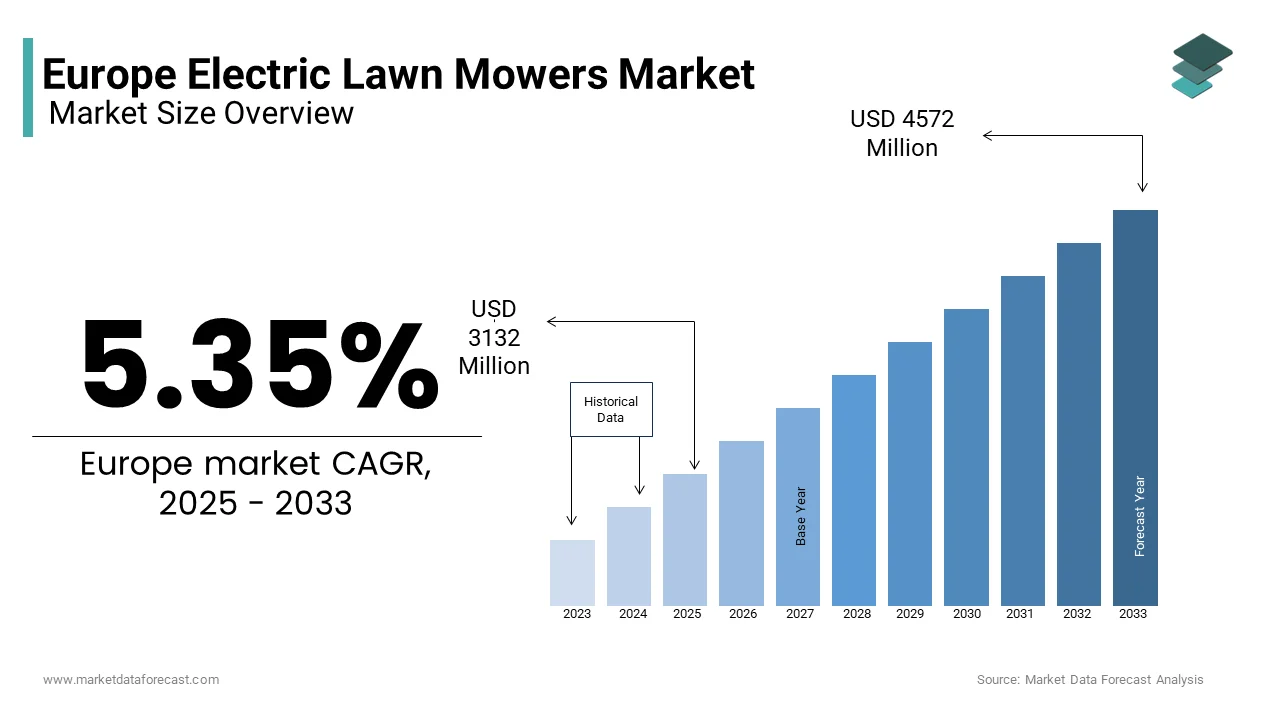
According to Eurostat, 68% of people living in EU households own their home, which provides a substantial base for lawn care equipment adoption among property owners. According to the European Environment Agency, at least one in five people in the EU are exposed to long-term noise levels considered harmful to their health, and household machinery remains a targeted source for stricter regulations due to its impact on residential quiet zones. As per data from the United Nations, more than 20% of Europeans are aged 65 or older, driving demand for low effort and user friendly gardening solutions within the demographic landscape. According to a survey by YouGov, 32% of European consumers choose sustainable and eco-friendly products for their households, reflecting a growing preference for sustainable and quiet operations. Regulatory frameworks such as the EU Ecodesign Directive mandate higher energy efficiency and lower emissions, influencing product design and manufacturing. The market is characterized by rapid technological advancement, including connectivity features and autonomous navigation. As urbanization increases, the need for compact and efficient lawn care solutions becomes more pronounced. This evolution highlights the transition from manual labor to automated, environmentally conscious garden maintenance.
MARKET DRIVERS
Stringent Environmental Regulations and Noise Control Policies
Stringent environmental regulations and noise control policies is a major factor propelling the growth of the European electric lawn movers market. The European Union has implemented rigorous standards under the Outdoor Noise Directive, which limits the sound power levels of lawn mowers and other garden machinery. According to the European Environment Agency, about 92 million people are exposed to harmful day-evening-night noise levels caused by road traffic, which contributes to health issues such as sleep disturbance and cardiovascular diseases. As per the European Environment Agency, it is estimated that long-term exposure to transport noise in Europe causes about 66,000 premature deaths annually, reinforcing the push for quieter residential zones. These health concerns have prompted governments to enforce stricter noise limits, encouraging the shift from noisy gasoline engines to quieter electric motors. The EU Green Deal further supports this transition by promoting zero emission technologies and sustainable consumption patterns. Manufacturers are compelled to innovate and produce electric models that comply with these regulations to maintain market access. Local municipalities are also banning gasoline powered equipment in public parks and residential areas to reduce noise pollution. This regulatory pressure creates a favorable environment for electric lawn mowers, which operate significantly quieter than their fossil fuel counterparts. The alignment with broader climate goals ensures sustained policy support for electric alternatives. This driver fosters a competitive landscape where compliance and sustainability become key differentiators for brands.
Growing Consumer Preference for Sustainable and Low Maintenance Solutions
The growing consumer preference for sustainable and low maintenance solutions is another significant driver for the Europe electric lawn mowers market. European consumers are increasingly aware of the carbon footprint associated with gasoline powered machinery and are seeking cleaner alternatives for garden care. According to a survey by Statista, approximately 70% of Europeans consider environmental impact when making purchasing decisions for home and garden products. This shift in consciousness drives demand for electric mowers, which produce zero direct emissions and require less frequent maintenance than internal combustion engines. According to data from the European Garden Industry Association, over 65% of new garden tool purchases are battery-operated models as users appreciate the convenience of cordless operation. The elimination of fuel mixing, oil changes, and spark plug replacements reduces the hassle and cost of ownership. Younger demographics, particularly Millennials and Gen Z, prioritize ease of use and technological integration, favoring smart electric mowers with app connectivity. The rise of urban living with smaller gardens also favors compact and lightweight electric models. Retailers report higher engagement with educational content around the benefits of electric gardening tools. This consumer driven motivation ensures that electric lawn mowers are viewed as modern and responsible choices. The focus on convenience and sustainability sustains long term market growth.
MARKET RESTRAINTS
High Initial Purchase Cost and Battery Replacement Expenses
High initial purchase cost and battery replacement expenses are hindering the regional market expansion. Electric lawn mowers, particularly those with advanced features and large capacity batteries, often carry a higher price tag compared to traditional gasoline models. According to a market report, purchase prices for premium battery-powered mowers are commonly 40% to 50% higher than comparable gas models. This price disparity discourages price sensitive buyers who may perceive the upfront cost as prohibitive despite long term savings on fuel and maintenance. As per the European Consumer Organisation, economic uncertainty and inflation have reduced disposable income for non-essential household items in several member states. The need to replace batteries after several years adds to the total cost of ownership, as a replacement pack can cost approximately 30% to 40% of the mower original purchase price. Spare batteries are often expensive and proprietary, limiting compatibility across different brands. Small gardens may not justify the investment in high end electric models, leading consumers to opt for cheaper manual or entry level options. The lack of standardized battery platforms across manufacturers further complicates the value proposition. This financial barrier restricts market penetration in lower income segments and developing regions within Europe. Manufacturers struggle to balance advanced features with affordability to reach broader audiences. The economic climate exacerbates this restraint as consumers prioritize essential spending.
Limited Runtime and Charging Infrastructure Challenges
Limited runtime and charging infrastructure challenges are further inhibiting the expansion of the European electric lawn movers market. Many electric lawn mowers, especially cordless models, have limited operating times ranging from 30 to 60 minutes per charge, which may be insufficient for large lawns. According to a study by the UK consumer association Which, 40% of users expressed concern about battery life when considering electric mowers. This limitation necessitates multiple charging cycles or the purchase of additional batteries, which increases costs and inconvenience. As per the International Energy Agency, while residential charging points are increasing, they are not uniformly distributed across all European regions, particularly in rural areas. The time required to fully recharge batteries can delay lawn care tasks, disrupting schedules. Cold weather conditions in Northern Europe can further reduce battery efficiency and runtime, exacerbating the issue. Users with extensive gardens may find electric mowers less reliable than gasoline alternatives, which offer continuous operation with refueling. The lack of fast charging options for garden equipment limits flexibility. This restraint hinders the adoption of electric mowers in properties with large land areas. It requires technological advancements in battery density and charging speed to overcome.
MARKET OPPORTUNITIES
Integration of Smart Technology and Robotics
The integration of smart technology and robotics is a significant opportunity for the European electric lawn movers market. Robotic lawn mowers equipped with GPS sensors, artificial intelligence, and mobile app connectivity allow users to schedule and monitor mowing activities remotely. According to the International Federation of Robotics, service robots for domestic tasks, such as lawn moving, were by far the largest group of consumer robots in 2024. As per Statista, the number of robotic lawn mowers sold in Europe increased by 25% in 2025, driven by demand for convenience and precision. These devices can navigate complex garden layouts, avoid obstacles, and adjust cutting heights automatically, enhancing user experience. The ability to integrate with smart home ecosystems allows for seamless control and automation. Manufacturers are developing models with improved battery management and weather resistance to expand usability. The aging population benefits from the reduced physical effort required by robotic mowers. Urban dwellers with busy lifestyles appreciate the time saving aspects of automated care. Retailers are expanding their offerings of smart garden tools to meet this demand. The trend towards connected homes encourages the adoption of intelligent outdoor equipment. This opportunity allows companies to differentiate themselves through innovation and premium features. The focus on automation ensures sustained growth in the high end segment.
Expansion of Rental and Sharing Economy Models
The expansion of rental and sharing economy models offers a substantial opportunity for the European electric lawn movers market. Consumers who do not wish to invest in expensive electric mowers can rent them for seasonal or occasional use, reducing the barrier to entry. According to a report by McKinsey, the sharing economy in Europe is expected to grow by 10% annually, with tool rental being a key category. As per the European Rental Association, equipment rental services have gained popularity among urban residents with limited storage space. This model allows users to access premium electric mowers without the burden of maintenance and storage. Platforms facilitating peer to peer rentals enable neighbors to share equipment, fostering community engagement and resource efficiency. Manufacturers can partner with rental companies to showcase their latest models and gather user feedback. The subscription based approach provides a steady revenue stream and builds brand loyalty. Environmental benefits of shared usage align with sustainability goals by reducing the number of units produced. This opportunity expands the customer base to include occasional users and apartment dwellers. The focus on accessibility and flexibility ensures broader market penetration.
MARKET CHALLENGES
Supply Chain Disruptions and Raw Material Scarcity
Supply chain disruptions and raw material scarcity is a major challenge to the European electric lawn movers market. The industry relies on global supply chains for critical components such as lithium, cobalt, and rare earth metals used in batteries and motors. According to the European Raw Materials Alliance, the EU currently faces high dependency on imports for materials vital to the green transition, making it vulnerable to geopolitical tensions. As per data from the Institute for Supply Management, 55% of manufacturers faced supply chain delays in 2025, impacting inventory levels and delivery times. The scarcity of semiconductors, essential for smart features, has led to production slowdowns and extended lead times. Fluctuating prices of raw materials such as lithium and copper increase production costs, which are often passed on to consumers. Manufacturers face difficulties in forecasting demand and managing inventory due to unpredictable supply conditions. The reliance on single source suppliers increases vulnerability to disruptions. Small and medium sized enterprises lack the bargaining power to secure favorable terms or alternative sources. This challenge necessitates diversification of supply chains and investment in local recycling initiatives. The ongoing volatility in logistics adds a layer of uncertainty to market operations. Manufacturers must balance cost efficiency with reliability to maintain competitiveness.
Consumer Skepticism Regarding Performance and Durability
Consumer skepticism regarding performance and durability is also challenging the regional market growth. Many consumers remain unconvinced that electric mowers can match the power and endurance of gasoline models, particularly for thick or wet grass. According to a survey by Consumer Reports, 35% of respondents expressed doubts about the cutting power of battery powered mowers compared to gas engines. This perception is rooted in earlier generations of electric tools, which had limited capabilities. As per the European Garden Industry Association, education and demonstration efforts are needed to change these entrenched views. Users worry about battery degradation over time and the availability of replacement parts. The complexity of electronic components raises concerns about repairability and longevity. Negative experiences with early adopters can spread through word of mouth and online reviews, damaging brand reputation. Manufacturers must invest in robust testing and warranty programs to build trust. The lack of standardized performance metrics makes it difficult for consumers to compare products objectively. This challenge requires transparent communication and proof of reliability. Failure to address these concerns can slow down market growth.
REPORT COVERAGE
| REPORT METRIC | DETAILS |
| Market Size Available | 2025 to 2034 |
| Base Year | 2025 |
| Forecast Period | 2026 to 2034 |
| CAGR | 5.35% |
| Segments Covered | By Product, End-User Region. |
| Various Analyses Covered | Global, Regional, and Country Level Analysis; Segment-Level Analysis, DROC; PESTLE Analysis; Porter’s Five Forces Analysis; Competitive Landscape; Analyst Overview of Investment Opportunities |
| Regions Covered | UK, France, Spain, Germany, Italy, Russia, Sweden, Denmark, Switzerland, Netherlands, Turkey, Czech Republic, and the Rest of Europe |
| Market Leaders Profiled | Ryobi Ltd, Husqvarna Group, Ariens, The Toro Co, Robert Bosch Engineering & Business Solutions, Honda Motor Co Ltd, Briggs & Stratton, Stanley Black & Decker. |
SEGMENTAL ANALYSIS
By Product Insights
The walk-behind segment dominated the market by capturing the largest of the European electric lawn movers market in 2025. The dominance of walk-behind segment is driven by their suitability for the predominant residential garden sizes and high consumer preference for maneuverability and ease of storage. The majority of European households possess small to medium sized gardens where large ride on machines are impractical and unnecessary. According to Eurostat, approximately 68% of people in the EU live in owner occupied households where garden plot sizes in urban and suburban areas often range from 50 to 200 square meters. This spatial constraint makes compact walk-behind models the ideal choice for most consumers. As per the European Garden Industry Association, walk-behind units account for over 60% of total electric mower sales in the region, reflecting their widespread adoption. The affordability of these units compared to ride on models further drives their dominance, making them accessible to a broader demographic. Manufacturers focus on lightweight designs and foldable handles to enhance storage convenience in limited spaces such as sheds and balconies. The integration of battery powered technology in walk-behind mowers has improved significantly, offering sufficient runtime for typical residential lawns. Consumer surveys show that ease of use and low maintenance are primary purchasing factors which walk-behind electric mowers fulfill effectively. The availability of diverse cutting widths and features allows users to select models tailored to their specific needs. This combination of practicality, affordability, and suitability for European living standards secures the leading status of the walk-behind segment.
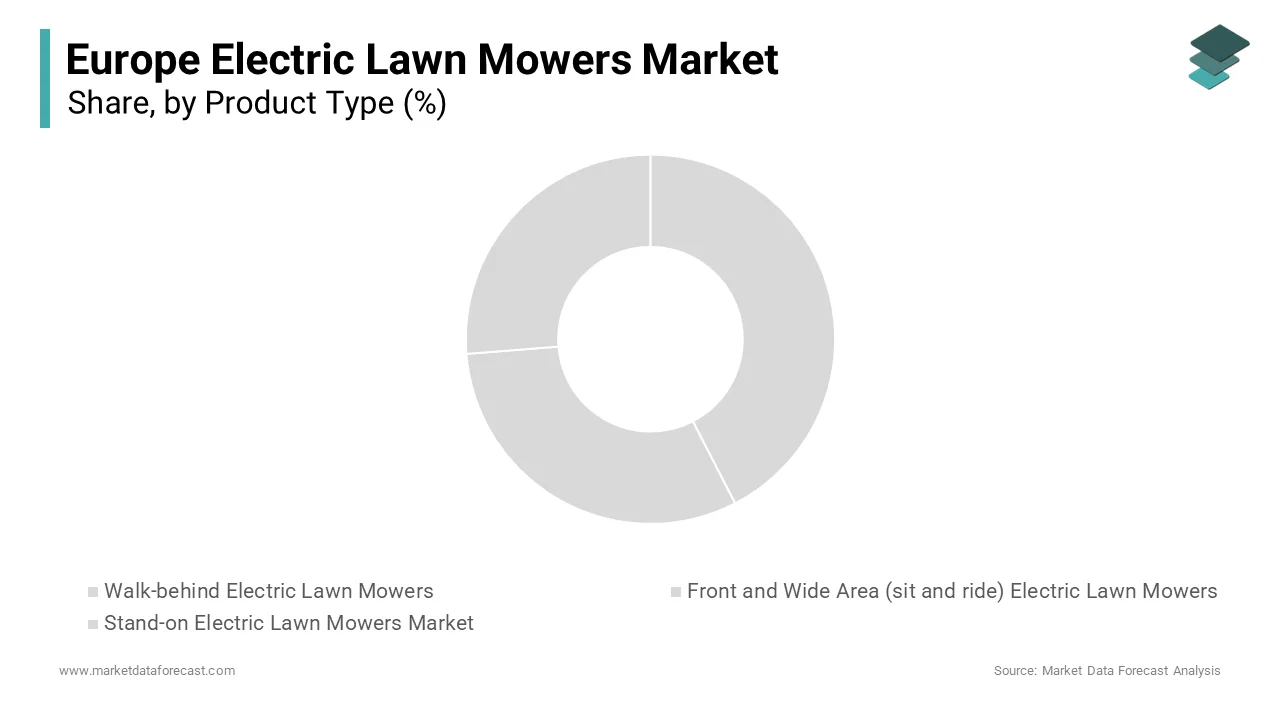
However, the robotic and autonomous lawn mower segment is estimated to grow at a promising CAGR of 17.7% during the forecast period in the European market due to the increasing demand for convenience, automation, and smart home integration among tech savvy European consumers. According to Statista, the number of robotic lawn mowers sold in Europe increased by 25% in 2025, driven by advancements in navigation technology and battery efficiency. The driving force behind this growth is the aging population and busy lifestyles, which reduce the time and physical ability available for manual lawn care. As per the International Federation of Robotics, robots for domestic tasks experienced growth rates of 16% in Europe during 2024. These devices offer scheduled mowing, silent operation, and app based control, aligning with the European preference for quiet and eco-friendly solutions. The development of boundary free navigation systems using GPS and sensors has expanded their applicability to complex garden layouts. Retailers report higher engagement with premium smart gardening products. Government incentives for smart home energy management also support adoption. The trend towards automated household chores ensures that robotic mowers continue to grow at the fastest rate, capturing market share from traditional manual models.
By End User Insights
The residential segment led the market by holding the major share of the European electric lawn movers market in 2025. The growth of the residential segment in the European market can be credited to the high volume of private households with gardens and the strong cultural emphasis on home improvement and outdoor aesthetics. Homeowners are the primary purchasers of electric lawn mowers, seeking quiet, efficient, and environmentally friendly solutions for regular lawn maintenance. According to Eurostat, there are approximately 197 million households in the European Union, with a significant proportion owning private outdoor spaces. As per the European Consumer Organisation, spending on home and garden equipment has remained resilient even during economic downturns as consumers prioritize comfort and property value. The shift towards suburban living and the post pandemic increase in time spent at home have further boosted residential demand. Electric mowers appeal to residents due to their low noise levels, which comply with strict local noise ordinances in densely populated areas. The availability of cordless models enhances convenience, allowing users to mow without being restricted by power cords. Retailers offer a wide range of residential models catering to various budget and feature preferences. Marketing campaigns often target homeowners, emphasizing ease of use and sustainability. The replacement cycle for residential mowers is driven by technological upgrades and battery longevity. This combination of high ownership rates, cultural values, and regulatory compliance secures the leading position of the residential segment.
However, the professional landscaping services segment is expected to showcase the fastest CAGR of 13.4% during the forecast period in the European market owing to the stringent environmental regulations and corporate sustainability goals that mandate the reduction of carbon emissions and noise pollution in commercial operations. According to the European Commission, public procurement rules increasingly favor green technologies, encouraging landscaping companies to adopt electric fleets. As per the European Landscape Contractors Association, 40% of professional firms plan to transition to battery powered equipment by 2027 to meet client demands and regulatory standards. The driving force behind this growth is the operational cost savings associated with electric mowers, including lower fuel and maintenance expenses. Professional users benefit from the quiet operation of electric machines, allowing them to work in noise sensitive areas such as hospitals, schools, and residential neighborhoods during extended hours. Advances in battery technology have improved runtime and power output, making electric models viable for commercial use. Manufacturers are developing heavy duty professional grade electric mowers with fast charging capabilities. Government subsidies for green business investments further incentivize this transition. The focus on sustainability and efficiency ensures that professional landscaping services continue to adopt electric solutions rapidly.
REGIONAL ANALYSIS
Europe stood as the largest and most advanced region in the global electric lawn mowers market in 2025 by holding a significant share of the worldwide market. This dominant position is underpinned by strict environmental regulations, high consumer awareness of sustainability, and a well established infrastructure for electric mobility. According to the European Environment Agency, at least one in five people in the EU are exposed to long-term noise levels considered harmful to their health, driving the rapid replacement of gasoline models with electric alternatives. As per Eurostat, Northern and Western European countries such as Germany, Sweden, and the Netherlands have the highest adoption rates due to strong environmental policies and higher disposable incomes. The region benefits from a dense network of retail outlets and online platforms, facilitating easy access to electric gardening tools. Government initiatives promoting green homes and smart cities further stimulate demand. The presence of leading manufacturers headquartered in Europe fosters local innovation and product development. Consumer preference for quiet and low maintenance equipment aligns perfectly with the benefits of electric mowers. The aging population in Europe also drives demand for user friendly and automated solutions. This combination of regulatory pressure, cultural values, and technological leadership ensures that Europe remains the central pillar of the global electric lawn mower market.
COMPETITIVE LANDSCAPE
The competition in the Europe Electric Lawn Mowers Market is intense and characterized by the presence of established multinational corporations and specialized niche brands. Major players like Husqvarna STIHL and Greenworks dominate the landscape through strong brand recognition and extensive product portfolios. These companies leverage their scale to offer comprehensive solutions that integrate hardware and software services. Smaller competitors focus on specific niches such as compact robotic mowers or budget friendly cordless models. The market sees frequent technological advancements with companies vying to introduce smarter and more efficient devices. Price competition is significant in the mass market segment while premium segments compete on features and reliability. Strategic alliances and joint ventures are common as firms seek to expand their technological capabilities. Regulatory compliance and sustainability standards also play a role in differentiating reputable brands. The rapid pace of innovation requires continuous investment in research and development. This dynamic environment demands agility and strategic foresight to maintain market relevance and profitability.
KEY MARKET PLAYERS
A few of the market players in the Europe electric lawn mowers market include
- Ryobi Ltd
- Husqvarna Group
- Ariens
- STIHL Group
- Greenworks Tools
- The Toro Co
- Robert Bosch Engineering & Business Solutions
- Honda Motor Co Ltd
- Briggs & Stratton
- Stanley Black & Decker
Top Players In The Market
- Husqvarna Group maintains a leading position in the global electric lawn mower market through its extensive portfolio of robotic and battery powered outdoor power equipment. The company is renowned for its innovation in autonomous mowing technology which sets industry standards for efficiency and convenience. Recently Husqvarna has strengthened its market position by expanding its Automower range with advanced connectivity features and improved navigation systems. The corporation invests heavily in research and development to enhance battery life and cutting performance. Its commitment to sustainability is evident in the transition away from fossil fuel powered products. By focusing on smart home integration and user friendly designs Husqvarna appeals to modern consumers. These strategic initiatives reinforce its leadership and drive continuous growth in the competitive landscape.
- STIHL Group contributes significantly to the global electric lawn mower market with its high quality battery powered tools designed for professional and residential use. The company emphasizes durability and performance ensuring that its electric mowers meet the rigorous demands of diverse users. Recent actions include the expansion of its AK System battery platform which offers compatibility across a wide range of garden tools. STIHL invests in sustainable manufacturing practices and promotes the benefits of cordless technology. The firm leverages its strong dealer network to provide expert advice and after sales support. By prioritizing engineering excellence and customer satisfaction STIHL enhances brand loyalty. Its focus on ergonomic design and low noise operation aligns with European regulatory standards. These efforts solidify its reputation as a trusted provider of premium outdoor equipment.
- Greenworks Tools plays a vital role in the global electric lawn mower market by offering affordable and eco friendly battery powered solutions. The company focuses on making electric gardening accessible to a broad audience through competitive pricing and widespread retail availability. Recently Greenworks has strengthened its position by introducing new models with higher voltage batteries and enhanced cutting capabilities. The brand emphasizes zero emissions and low maintenance appealing to environmentally conscious consumers. Its robust distribution strategy includes partnerships with major home improvement retailers across Europe and North America. Greenworks leverages digital marketing to educate users about the benefits of electric mowers. The commitment to innovation and value allows the company to capture significant market interest. These strategies ensure sustained growth and competitiveness in the dynamic outdoor power equipment sector.
Top Strategies Used By Key Market Participants
Key players in the Europe Electric Lawn Mowers Market employ diverse strategies to maintain competitiveness and drive growth in a evolving landscape. Product innovation is a primary focus with companies developing autonomous and high capacity battery powered mowers to meet consumer demand for convenience. Strategic partnerships with technology firms enable integration of smart features and connectivity options. Sustainability initiatives are increasingly important as manufacturers adopt eco friendly materials and promote zero emission operations. Expansion of distribution networks through online and offline channels ensures broader market reach. Investment in research and development leads to improved battery efficiency and cutting performance. Marketing campaigns emphasize environmental benefits and ease of use to attract new customers. These approaches collectively enable market participants to adapt to changing consumer preferences and regulatory requirements.
MARKET SEGMENTATION
This research report on the Europe electric lawn mowers market is segmented and sub-segmented into the following categories.
By Product Type
- Walk-behind Electric Lawn Mowers
- Front and Wide Area (sit and ride) Electric Lawn Mowers
- Stand-on Electric Lawn Mowers Market
By End User
- Residential
- Professional Landscaping Services
- Golf Courses
- Government and Other End Users
By Country
- UK
- Russia
- Germany
- Italy
- France
- Spain
- Sweden
- Denmark
- Poland
- Switzerland
- Netherlands
- Rest of Europe