- Product Description Description
- Table of Contents TOC
- List of Table & Figure LOT
- Get Free Sample PDF Sample PDF
Market Size, 2025
$450.11 MnMarket Estimate, 2026
$506.37 MnMarket Forecast, 2034
$1299 MnCAGR, 2026–2034
12.5%Executive Summary: Europe Electric Three-Wheeler Market
- Market Scope: Overview of the European electric three-wheeler market covering vehicle classifications, power types, battery technologies, key country markets (Germany, France, Italy, UK, Netherlands, etc.), and commercial versus passenger applications.
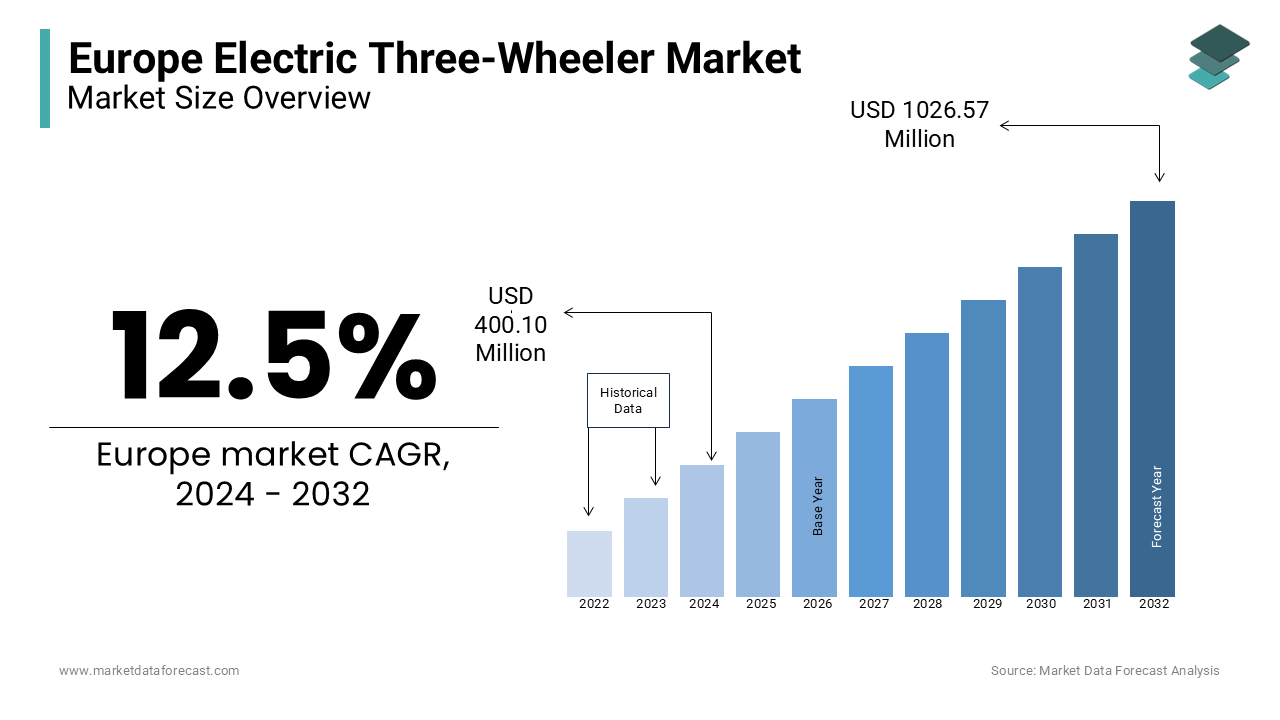
- Market Valuation: Valued at USD 450.11 million in 2025, estimated at USD 506.37 million in 2026, and projected to reach USD 1,299.25 million by 2034, growing at a robust CAGR of 12.5% over the forecast period from 2026 to 2034.
- Primary Growth Drivers: Municipal low-emission zone (LEZ) mandates accelerating urban logistics electrification, aging demographic trends fueling license-free senior/accessible mobility, and expanding micro-logistics hubs.
Key Market Segment Metrics (2026–2034)
| Category | Leading Segment (Base Position) | Fastest-Growing / High-Growth Segment |
|---|---|---|
| By Vehicle Type | Goods Carrier (held a dominant market share driven by surging e-commerce parcel volumes and inner-city freight restrictions) | Passenger Carrier (projected to expand at a steady CAGR of 12.3% backed by aging populations and license-accessible senior micro-mobility) |
| By Power Type | Up to 1000 W (accounted for 52.3% market share due to alignment with L2e/L6e regulatory frameworks and cost-efficient municipal delivery) | Above 1500 W (estimated to witness the fastest CAGR of 14.1% driven by heavy payloads, hilly terrains, and extended range needs) |
| By Battery Type | Lithium-Ion (held a significant market share thanks to high energy density, weight reduction, and declining per-kWh production costs) | Advanced Lithium-Ion / Solid-State & LFP Variants (projected to grow at a CAGR of 13.8% driven by battery swapping and circular economy initiatives) |
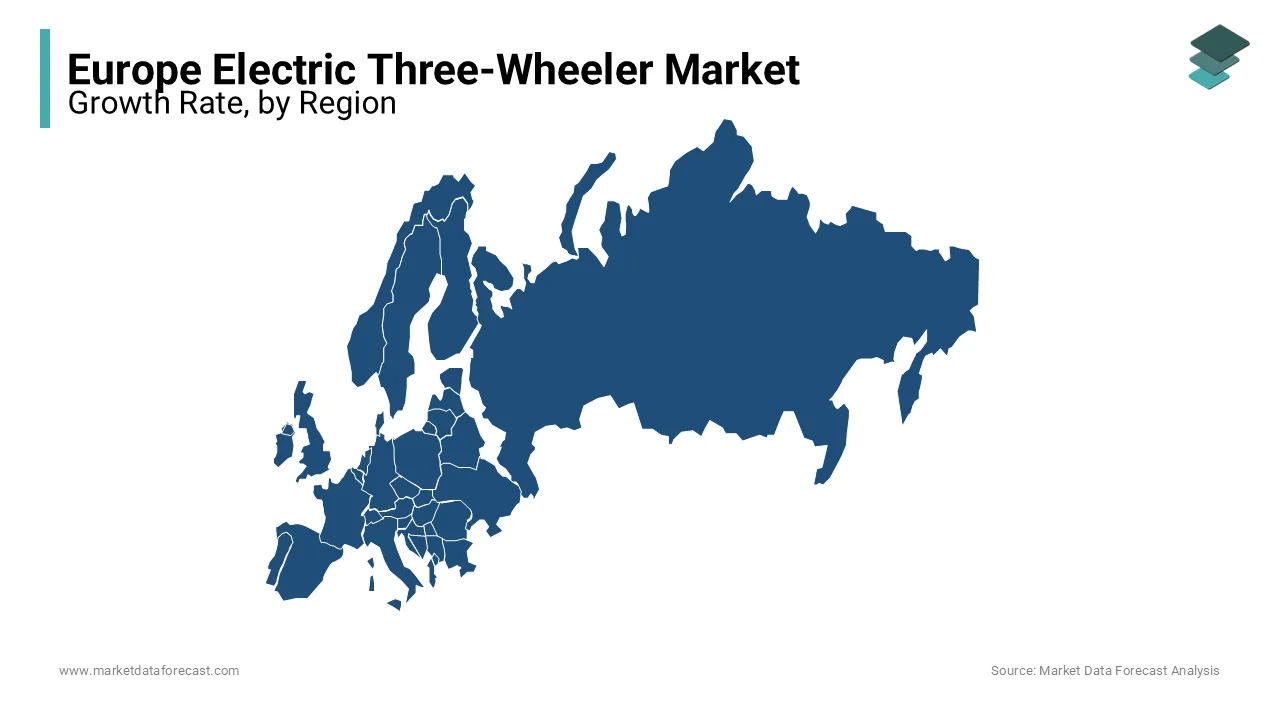
| By Region / Country | Germany (top performer accounting for 22.3% share supported by stringent LEZ policies and robust commercial fleet integration) | France & Netherlands (prominent growth powered by national clean freight quotas like "Plan Vélo" and world-leading cycling infrastructure) |
Major Market Players & Industry Landscape
Market Structure: Highly dynamic ecosystem combining legacy industrial vehicle manufacturers, specialized urban mobility tech firms, and international entrants competing on modular battery swapping, municipal partnerships, and regulatory compliance.
Key Companies: Piaggio Group, Silence Urban Mobility, Kymco Europe, Leon Cycle, Govecs AG, Riese & Muller GmbH, Walberg Urban Electrics GmbH, Zero Motorcycles Inc., MyStromer AG, Energica Motor Company, and Emco Electroroller GmbH.
Europe Electric Three-Wheeler Market Size
The European electric three-wheeler market was valued at USD 450.11 million in 2025 and is anticipated to reach USD 506.37 million in 2026 and USD 1299.25 million by 2034, growing at a CAGR of 12.5% during the forecast period from 2026 to 2034.
Current Introduction of the Europe Electric Three-Wheeler Market
The electric three-wheeler is a battery powered vehicle with three wheels designed primarily for urban last mile delivery, micro mobility, and specialized passenger transport. These vehicles are ranging from enclosed cargo trikes to open cabin passenger models that occupy a regulatory and functional niche between two wheelers and light quadricycles, offering enhanced stability over scooters, while maintaining maneuverability in congested centers. Unlike conventional internal combustion counterparts, electric three wheelers produce zero tailpipe emissions and operate at significantly lower noise levels, aligning with municipal sustainability mandates. Their adoption is particularly relevant in Europe’s dense historic cities where narrow streets and low emission zones restrict larger vehicles. According to the European Environment Agency, over 320 cities across the EU have implemented or planned low emission zones by 2025, directly incentivizing compact zero emission alternatives. Furthermore, as per Eurostat, 78% of the EU population resides in urban areas, creating consistent demand for agile logistics and short distance transit solutions. While still a nascent segment compared to electric cars or e bikes, the electric three-wheeler category is gaining traction among courier services, municipal waste collectors, and elderly mobility users seeking weather protected yet license accessible transport.
MARKET DRIVERS
Urban Logistics Electrification Mandates Driving Commercial Adoption
The municipal policies enforcing zero emission delivery zones in major European cities are accelerating commercial uptake of electric three wheelers, among courier and parcel services, which is propelling the growth of Europe electric three-wheeler market. The urban logistics electrification mandates are additionally prompting the growth of Europe electric three-wheeler market. As per the European Commission’s Urban Mobility Framework, 127 European cities have committed to achieving climate neutral urban logistics by 2030, with Paris, Madrid, and Athens already banning fossil fueled light commercial vehicles under 3.5 tonnes from city centers. This regulatory pressure compels logistics operators to adopt compact, zero emission alternatives capable of navigating pedestrianized zones. Electric three wheelers, such as the Piaggio Ape Elettrico and Silence S04 Cargo offer payload capacities of 200 to 400 kilograms with ranges exceeding 100 kilometers by making them ideal for same day parcel and food delivery. In Amsterdam, PostNL deployed over 500 electric cargo trikes in 2024 to serve its inner-city routes, reducing CO2 emissions by an estimated 1,200 tons annually, according to the company’s sustainability report. Similarly, DHL Express integrated 300 electric three wheelers into its Berlin and Hamburg fleets to comply with local clean air ordinances. These vehicles benefit from reduced parking restrictions, access to bus lanes, and lower registration fees in countries like France and Italy.
Demographic Aging and Demand for License Free Mobility Solutions
The rapidly aging population is fostering demand for accessible, low speed electric three wheelers that provide weather protected mobility without requiring a full automobile license. As per Eurostat, individuals aged 65 and older constituted 21.3 % of the EU population in 2024, with projections indicating this cohort will reach 30 % by 2050. Many seniors face challenges with conventional driving due to declining vision, reaction time, or medical conditions, yet retain a strong desire for independent local travel. In several European countries, electric three wheelers classified as L2e or L6e vehicles can be operated with a moped license or, in some cases, no license at all if limited to 25 km/h. Germany’s Federal Motor Transport Authority reported a 42 % year on year increase in registrations of enclosed electric trikes among drivers over 70 in 2024. Manufacturers like CityEl and smissions, and heated cabins tailored to elderly needs. Municipalities are supporting adoption through subsidy programs; in Sweden, the Rural Mobility Initiative provides up to 50 % reimbursement for seniors purchasing certified electric micro vehicles. This emergence of demographic necessity, regulatory accessibility, and product customization positions the passenger electric three-wheeler as a socially inclusive mobility tool in an aging continent.
MARKET RESTRAINTS
Absence of Harmonized Vehicle Classification Across EU Member States
The lack of uniform regulatory categorization for electric three wheelers to cross border sales, certification, and consumer confidence is impeding the growth of Europe electric three- wheeler market. While the EU defines L2e (two wheeled) and L6e/L7e (light quadricycle) categories, three wheeled configurations fall into ambiguous territory, leading to divergent national interpretations. In France, certain electric trikes are registered as motorized tricycles requiring a standard car license, whereas in the Netherlands, identical models are classified as heavy mopeds operable with an AM license from age 16. According to the European Association of Automotive Suppliers, this fragmentation forces manufacturers to undergo redundant type approval processes in each target market, increasing development costs. Moreover, insurance premiums vary wildly with a trike insured for 300 euros annually in Belgium may cost over 900 euros in Spain due to differing risk assessments. This inconsistency deters small manufacturers from scaling beyond domestic borders and confuses consumers about legal requirev ments.
Limited Public Charging Infrastructure for Light Electric Vehicles
The public charging network remains heavily skewed toward four wheeled vehicles, leaving t1electric three wheelers with inadequate refueling options, which is additionally inhibiting the growth of Europe electric three-wheeler market. As per the European Alternative Fuels Observatory, over 95 % of publicly accessible chargers in the EU are Type 2 or CCS connectors designed for cars, incompatible with the Schuko or Type E plugs commonly used by light electric vehicles. Most electric trikes rely on removable lithium batteries charged via standard household sockets, but commercial fleet operators require faster, centralized solutions. A 2024 survey by the European Cyclists’ Federation found that only 12 % of urban charging hubs in major cities included dedicated points for cargo bikes and trikes. This gap forces delivery companies to retrofit depot facilities or rely on overnight home charging, limiting operational flexibility. In cities like Rome and Lisbon, where off street parking is scarce, riders struggle to find safe, weather protected locations to plug in. Although the EU’s Alternative Fuels Infrastructure Regulation mandates expanded light EV charging by 2026, implementation lags. Without targeted investment in kerbside and logistics hub charging tailored to three wheelers, range anxiety and downtime will continue to constrain both commercial scalability and private adoption.
MARKET OPPORTUNITIES
Integration into Municipal Micro Logistics Hubs
The development of urban micro logistics hubs for electric three wheelers to become central nodes in sustainable city freight ecosystems. This factor is solely to create new opportunities for the growth of Europe electric three-wheeler market. As per the C40 Cities Climate Leadership Group, over 60 European municipalities have launched consolidation centers on city outskirts where long haul trucks transfer parcels to zero emission last mile vehicles. Electric three wheelers with their compact footprint and cargo versatility are ideally suited for these shuttle roles. In Copenhagen, the “Green Mile” initiative uses electric trikes to distribute goods from a central hub to retailers within the historic center, reducing truck traffic by 40%, as per a report. Similarly, Milan’s Area B low emission zone partners with startups like Packfleet to deploy fleets of electric trikes for same day e commerce deliveries. These programs are often co funded by EU cohesion grants, such as the Urban Innovative Actions initiative, which allocated 18 million euros in 2024 to support micro distribution pilots.
Expansion of Adaptive Mobility Services for Persons with Disabilities
The electric three wheelers offer a compelling platform for inclusive transportation solutions tailored to persons with limited mobility, which is additionally enhancing the growth of Europe electric three-wheeler market. Unlike standard wheelchairs or scooters, enclosed trikes provide weather protection, enhanced safety, and greater range for rural or suburban residents with disabilities. The European Disability Forum estimates that over 100 million Europeans live with some form of physical impairment, many of whom face barriers to conventional transport. Companies like Invacare and Kymco have developed ADA compliant electric trikes with ramp access, secure seating, and joystick controls, classified under EU medical device directives, when used for therapeutic mobility. In Germany and Austria, statutory health insurers now partially reimburse such vehicles under assistive technology provisions, following clinical validation of their role in improving social participation. Municipalities are also integrating them into paratransit fleets, Helsinki’s “Mobility for All” program includes 50 electric trikes available for on demand booking by registered users. With the EU’s upcoming European Accessibility Act mandating improved transport equity by 2025, this segment is poised for institutional adoption, transforming electric three wheelers from niche novelties into essential tools of social inclusion and independent living.
MARKET CHALLENGES
Vulnerability to Supply Chain Disruptions in Battery Sourcing
The significant exposure to global lithium-ion battery supply volatility, which directly impacts production costs and vehicle affordability is a challenge for the Europe electric three-wheeler market. Unlike automotive giants with long term cell supply contracts, most three-wheeler manufacturers source batteries from secondary or spot markets by making them susceptible to price swings. According to the European Commission’s 2024 Critical Raw Materials Report, Europe imports over 85 % of its lithium and 98 % of its refined cobalt, primarily from China and the Democratic Republic of Congo. Battery prices spiked by 22 % in early 2024 due to export restrictions and mining delays, squeezing margins for small assemblers. Furthermore, new EU Battery Regulation requirements mandating carbon footprint declarations and recycled content thresholds by 2027, add compliance complexity. Startups lacking in house R&D struggle to meet these standards, risking exclusion from public procurement tenders. While initiatives like the European Battery Alliance aim to localize production, current gigafactories prioritize automotive cells, leaving light EVs dependent on imported pouch or prismatic formats.
Consumer Perception as Niche or Recreational Rather Than Practical Transport
The widespread perception of these vehicles as novelty items or leisure gadgets rather than legitimate daily transport solutions is additionally to impede the growth of Europe electric three-wheeler market. Media portrayals often emphasize retro aesthetics or quirky design, overshadowing functional attributes like cargo capacity or all-weather usability. According to a 2024 pan European mobility survey by Kantar, only 28% of urban residents viewed electric trikes as viable alternatives to cars or public transit, with many associating them with tourism or retirement hobbies. This stigma limits trial among working age demographics who might benefit from their efficiency. Dealership networks are sparse most sales occur online or through specialty shops lacking test drive infrastructure that further reducing experiential engagement. In contrast, e bikes and e-scooters have achieved mainstream status through mass retail presence and ride sharing integration. Without coordinated public awareness campaigns, standardized safety demonstrations, and integration into multimodal trip planning apps like Google Maps or Citymapper, electric three wheelers risk remaining marginalized. Overcoming this perceptual barrier requires reframing the narrative from eccentricity to practicality, emphasizing reliability, cost savings, and urban adaptability to unlock broader societal acceptance.
REPORT COVERAGE
| REPORT METRIC | DETAILS |
| Market Size Available | 2025 to 2034 |
| Base Year | 2025 |
| Forecast Period | 2026 to 2034 |
| CAGR | 12.5% |
| Segments Covered | By Vehicle Type, Power Type, Battery Type, Country, and Region. |
| Various Analyses Covered | Global, Regional, and Country-LevelAnalysis, Segment-Level Analysis, DROC, PESTLE Analysis, Porter’s Five Forces Analysis, Competitive Landscape, Analyst Overview of Investment Opportunities |
| Regions Covered | North America, Europe, APAC, Latin America, Middle East & Africa |
| Market Leaders Profiled | Leon Cycle, Govecs AG, Riese & Muller GmbH, WalbeMülleran Electrics GmbH, Zero Motorcycles Inc., myStromer AG, Energica Motor Company, Emco Electroroller GmbH, and Others. |
SEGMENT ANALYSIS
By Vehicle Insights
The goods carrier segment was accounted in holding a dominant share of Europe Electric Three-Wheeler market in 2024 owing to the urgent need for sustainable last mile delivery solutions in dense urban environments. E-commerce growth has intensified parcel volumes, intra EU parcel deliveries surpassed 9 billion units in 2024, with 70 % destined for city centers where traffic congestion and emission restrictions impede conventional vans. Electric cargo trikes, such as the Piaggio Ape Elettrico and Mopai Cargo, offer payload capacities of 200 to 400 kilograms, while navigating narrow streets and accessing pedestrian zones prohibited to larger vehicles. Municipal policies reinforce this shift, Paris’s “Plan Vélo” mandates that 50 % of all urban freight under 300 kilograms be delivered via zero emission micro vehicles by 2026. Major logistics firms have responded decisively, DHL operates over 400 electric trikes across Berlin and Amsterdam, while La Poste deployed 1,200 units in French cities in 2024 alone. These vehicles benefit from reduced registration fees, access to bus lanes, and exemption from low emission zone charges in countries like Italy and Spain.
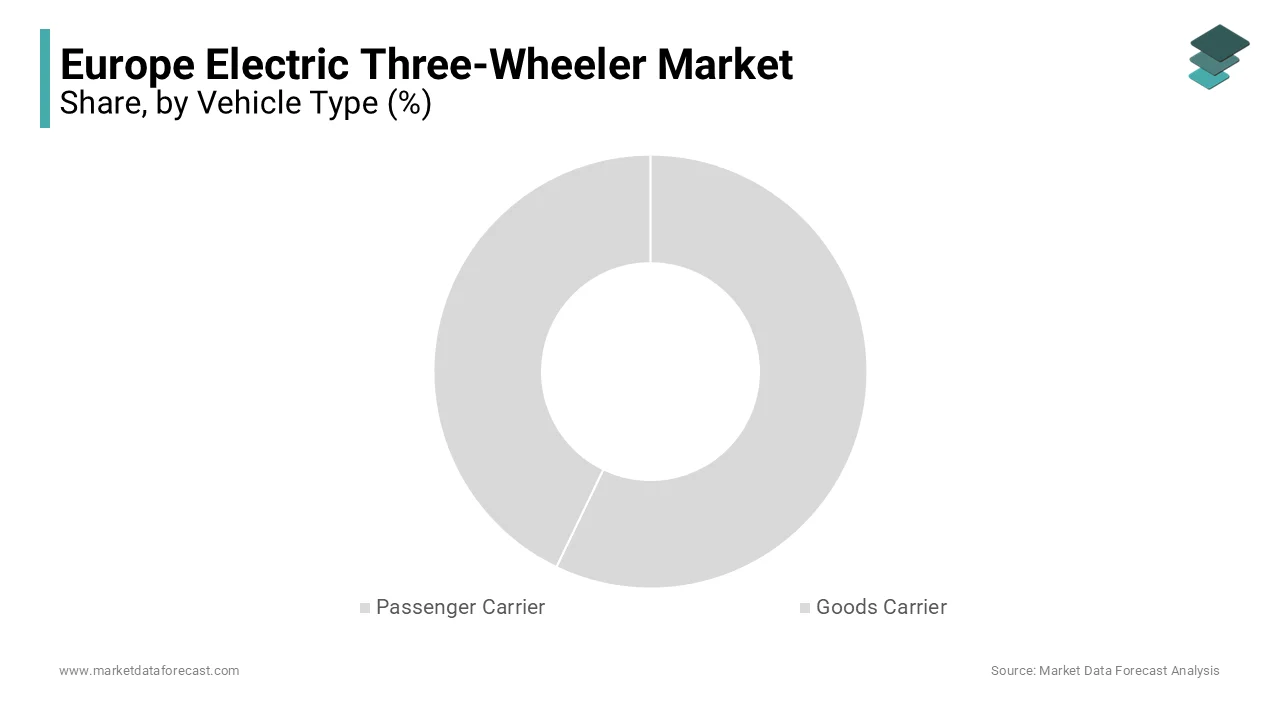
The passenger carrier segment is projected to expand at a CAGR of 12.3 % throughout the forecast period from rising demand among elderly and mobility constrained individuals seeking license accessible, weather protected transport. As per Eurostat, 21.3 % of the EU population was aged 65 or older in 2024, many of whom face driving restrictions due to medical conditions yet desire independent local mobility. In Germany and Austria, electric trikes classified as L6e vehicles can be operated with a moped license or, in some cases, no license if limited to 25 km/h, lowering entry barriers. Manufacturers like CityEl and Eltera have introduced models with step through cabins, automatic transmissions, and heated seats tailored to senior needs. Municipal support is expanding, Sweden’s Rural Mobility Initiative provides up to 50 % subsidies for seniors purchasing certified electric micro vehicles. Additionally, ride hailing startups in Lisbon and Budapest are piloting shared electric trike services for short urban trips, targeting both tourists and residents. This dual focus on social inclusion and micro transit positions passenger carriers as a high potential segment beyond commercial logistics.
By Power Type
The motor power up to 1000 watts segment was accounted in holding 52.3% of the Europe electric three wheeler market share in 2024 due to their alignment with EU light vehicle regulations and cost efficiency. Vehicles in this category fall under the L2e or L6e classification by allowing operation without a full car license in most member states and qualifying for lower registration taxes and insurance premiums. According to the European Commission’s Mobility and Transport Directorate, over 80 % of municipal procurement tenders for micro logistics specify power limits below 1000 W to ensure compatibility with bike lanes and pedestrian zones. These models typically achieve ranges of 60 to 100 kilometers for daily urban delivery routes and retail at 30 to 50 % lower prices than higher powered variants. Companies like Silence and Mopai dominate this segment with fleets adopted by postal services in Spain and the Netherlands. The simplicity of battery design also enables removable packs charged via standard household sockets by eliminating dependence on public charging infrastructure. This regulatory, economic, and operational sweet spot ensures sustained dominance among both commercial operators and private users prioritizing affordability and legal accessibility.
The above 1500 W power segment is esteemed to witness a fastest CAGR of 14.1% throughout the forecast period owing to the demand for enhanced performance in hilly terrains, heavier cargo loads, and extended range requirements beyond city cores. In countries like Switzerland, Austria, and parts of Italy, where urban centers are surrounded by mountainous topography, standard 1000 W motors struggle with gradients exceeding 8%. Higher powered models, such as the Kymco Revo NHT and Arcimoto FUV deliver torque outputs exceeding 45 Nm by enabling reliable operation on inclines and with payloads over 500 kilograms. Additionally, cross border logistics operators require higher speeds to connect suburban hubs, often exceeding the 45 km/h limit of lower powered categories. Though these vehicles face stricter licensing and homologation rules, their functional necessity in geographically challenging markets drives premium adoption and technological investment.
By Battery Type
The lithium-ion batteries segment held a significant share of the Europe Electric Three-Wheeler market in 2024, owing to their superior energy density, longer cycle life, and declining costs. Compared to lead acid alternatives, lithium-ion packs offer 60 to 70 % weight reduction for equivalent capacity, crucial for vehicle maneuverability and payload efficiency. According to the European Battery Alliance, average lithium-ion cell prices fell to 98 euros per kilowatt hour in 2024, down from 156 euros in 2020, making them increasingly accessible even for small manufacturers. Fleet operators prioritize lithium-ion for operational reliability, DHL reports that its lithium powered trikes achieve 1,200 charge cycles versus 300 for lead acid, reducing total cost of ownership by 35 % over five years. Regulatory trends further accelerate adoption, where the EU Battery Regulation mandates recycled content and carbon footprint labeling by 2027, more easily met by advanced lithium chemistries.
The lithium-ion battery segment is expected to grow at a fastest CAGR of 13.8% from 2025 to 2033 owing to the technological advancements and circular economy initiatives. Solid state and lithium iron phosphate variants are gaining traction for their enhanced safety and thermal stability for enclosed urban vehicles operating in variable climates. According to the Fraunhofer Institute for Systems and Innovation Research, European production of lithium-ion cells for light EVs is projected to increase fivefold by 2027, supported by gigafactories in Germany and Poland. Recycling infrastructure is also scaling, where Northvolt’s Revolt facility in Sweden now recovers 95 % of raw materials from end-of-life batteries bby aligning with EU sustainability mandates. Fleet operators benefit from second life applications used trike batteries are repurposed for stationary storage in micro grids, creating residual value streams. Moreover, removable lithium packs enable battery swapping networks; Silence’s pilot in Madrid allows couriers to exchange depleted units in under 90 seconds, minimizing downtime.
COUNTRY ANALYSIS
Germany Electric Three Wheeler Market Analysis
Germany was the top performer of the Europe electric three wheeler market by occupying 22.3% of share in 2024 from stringent urban emission regulations, a dense network of logistics operators, and strong support for micro mobility innovation. Over 70 German cities have implemented low emission zones that restrict fossil fueled light commercial vehicles, directly incentivizing electric trike adoption. According to the Federal Motor Transport Authority, registrations of electric three wheelers rose by 48 % in 2024, with DHL, Deutsche Post, and local courier services accounting for over 60 % of commercial purchases. The country also hosts key manufacturers like StreetScooter and Silence’s European assembly hub, benefiting from engineering expertise and supply chain integration. Government incentives, including 2,000 euro subsidies for commercial buyers under the Climate Protection Program further stimulate demand.
France Electric Three Wheeler Market Analysis
France electric three wheeler market growth is likely to have prominent growth opportunities during the forecast period with its proactive urban mobility policies and extensive postal logistics network. The government’s “Plan Vélo” mandates that 50 % of urban freight under 300 kilograms be delivered via zero emission micro vehicles by 2026, creating structured demand for electric cargo trikes. Paris alone has banned diesel vans under 3.5 tonnes from the city center by accelerating fleet electrification among private couriers. Additionally, France offers a 1,500 euro ecological bonus for businesses purchasing certified electric light vehicles. The country’s flat urban topography and high population density make it ideal for three wheeler operations, while regional cities like Bordeaux and Toulouse are investing in dedicated micro logistics hubs.
Italy Electric Three Wheeler Market Analysis
Italy electric three wheeler market growth is anticipated to driven by its historic city centers and legacy of three wheeler manufacturing. Urban cores like Rome, Florence, and Venice feature narrow medieval streets inaccessible to conventional vans, creating natural demand for compact electric trikes. Piaggio, headquartered in Pontedera, leverages its iconic Ape heritage to dominate the domestic market with modern electric variants widely adopted by artisans, florists, and food vendors. Cities like Milan offer free parking and tax exemptions for zero emission three wheelers, while Naples provides grants covering up to 40% of purchase costs. Tourism also drives passenger model sales, electric rickshaws are increasingly used for eco-friendly city tours. Italy’s unique urban fabric, combined with industrial continuity and local policy support, sustains steady, culturally embedded growth in both goods and passenger segments.
United Kingdom Electric Three Wheeler Market Analysis
The United Kingdom electric three-wheeler market growth is likely to grow with the regulatory autonomy and dynamic private sector innovation. The UK maintains ambitious clean air targets, with 15 cities implementing ultra-low emission zones that penalize fossil fueled deliveries. Companies like ZIGZAG and EcoChariot have launched UK specific electric trikes optimized for British weather and road conditions. The government’s Plug In Van Grant offers up to 5,000 pounds for eligible micro vehicles, though uptake remains modest due to limited model availability. However, rising fuel costs and congestion charges are driving courier SMEs toward electric alternatives.
Netherlands Electric Three Wheeler Market Analysis
The Netherlands electric three wheeler market growth is likely to grow with its world leading cycling infrastructure and progressive urban freight policies. Dutch cities like Amsterdam and Utrecht prioritize zero emission logistics, with municipal contracts requiring all inner-city deliveries under 200 kilograms to use cargo bikes or trikes by 2025. The country’s flat terrain, extensive bike lanes, and high population density create ideal operating conditions.
COMPETITIVE LANDSCAPE
The Europe Electric Three-Wheeler market features a dynamic mix of legacy manufacturers, agile startups, and international entrants competing on regulatory compliance, terrain adaptability, and total cost of ownership. Unlike mass market EVs, success here hinges on niche specialization, whether for alpine cargo, elderly mobility, or historic city logistics. Competition is less about brand prestige and more about functional integration into municipal frameworks and small business workflows. Regulatory fragmentation across member states creates both barriers and opportunities, favoring companies with agile homologation capabilities. While Asian imports offer lower prices, European brands counter with localized service, weather resilience, and policy alignment. Innovation centers on battery logistics, not just vehicle design, with swapping and second life applications becoming key differentiators.
KEY MARKET PLAYERS
Some of the major key players are involved in the European electric three-wheeler market.
- Leon Cycle
- Govecs AG
- Silence Urban Mobility
- Kymco Europe
- Piaggio Group
- Riese & Muller GmbH
- Walberg Urban Electrics GmbH
- Zero Motorcycles Inc
- MyStromer AG
- Energica Motor Company
- Emco Electroroller GmbH
Top Players In The Market
- Piaggio Group is an Italian automotive manufacturer renowned for its Ape series, which has evolved from a post war utility vehicle into a modern electric three-wheeler platform. The company contributes globally by exporting its Ape Elettrico to over 40 countries while maintaining engineering and production centered in Europe. Piaggio leverages its heritage to build trust among urban logistics operators and small business owners. In 2024 the company expanded its electric lineup with the Ape Cargo Max featuring enhanced payload capacity and modular battery packs compatible with depot swapping systems. It also partnered with municipal authorities in Rome and Milan to integrate its vehicles into public micro logistics hubs reinforcing its role as a key enabler of sustainable urban freight across Southern Europe.
- Silence Urban Mobility is a Spanish innovator specializing in compact electric vehicles including the S04 three-wheeler designed for both passenger and light cargo use. The company plays a significant role in advancing battery swapping technology and smart fleet management software used by courier services across Western Europe. Globally Silence exports its solutions to Latin America and Southeast Asia promoting European standards in micro mobility. Silence launched a subscription-based fleet service for last mile operators in Paris and Berlin offering maintenance charging and insurance in a single monthly fee. This model reduces upfront costs and accelerates adoption among small logistics businesses seeking turnkey electrification solutions.
- Kymco Europe a subsidiary of Taiwan based Kwang Yang Motor Co brings advanced electric powertrain technology to the European three wheeler market through its Revo NHT and Ionex platforms. The company differentiates itself with high torque motors and lithium iron phosphate batteries suited for hilly terrains and heavy loads. Kymco contributes to global standards by participating in EU type approval working groups for L6e vehicles. It established an assembly and service center in Vienna to support Central and Eastern European markets and introduced a dual mode passenger cargo trike tailored for alpine tourism and rural delivery. Its focus on performance reliability and after sales infrastructure strengthens its position in geographically demanding regions.
Top Strategies Used By The Key Market Participants
Key players in the Europe Electric Three-Wheeler market focus on developing modular battery systems that support swapping or removable charging to overcome infrastructure gaps. They form strategic partnerships with municipal governments and logistics firms to embed vehicles into public and commercial micro mobility ecosystems. Companies invest in localized assembly and service networks to ensure rapid maintenance and parts availability. Product portfolios are diversified to serve both goods and passenger segments with shared platform architectures. Additionally, they leverage digital fleet management software to offer subscription based models that reduce upfront costs and enhance operational efficiency for small business users across urban and rural landscapes.
MARKET SEGMENTATION
This research report on the European electric three-wheeler market is segmented and sub-segmented into the following categories.
By Vehicle Type
- Passenger Carrier
- Goods Carrier
By Power Type
- Up to 1000 W
- Up to 1000 W to 1500 W
- Above 1500 W
By Battery Type
- Lithium-Ion
- Lead Acid
By Country
- Germany
- France
- Switzerland
- Italy
- UK
- Spain
- Russia
- Belgium
- Netherland
- Others