Europe Endoscopes Market Size, Share, Trends, & Growth Forecast Report By Product (Flexible Endoscopes, Capsule Endoscopes, Robot-Assisted Endoscopes, Disposable Endoscopes, Rigid Endoscopes, Cystoscopes, Urology Endoscopes, Arthroscopes, Laparoscopes, Gynecology Endoscopes, Neuroendoscopes, Other Rigid Endoscopes), Application, End-User and Country (UK, France, Spain, Germany, Italy, Russia, Sweden, Denmark, Switzerland, Netherlands, Turkey, Czech Republic and Rest of Europe), Industry Analysis From 2026 to 2034
Market Size, 2025
$6.85 BnMarket Estimate, 2026
$7.12 BnMarket Forecast, 2034
$9.71 BnCAGR, 2026–2034
3.95%Europe Endoscopes Market Report Summary
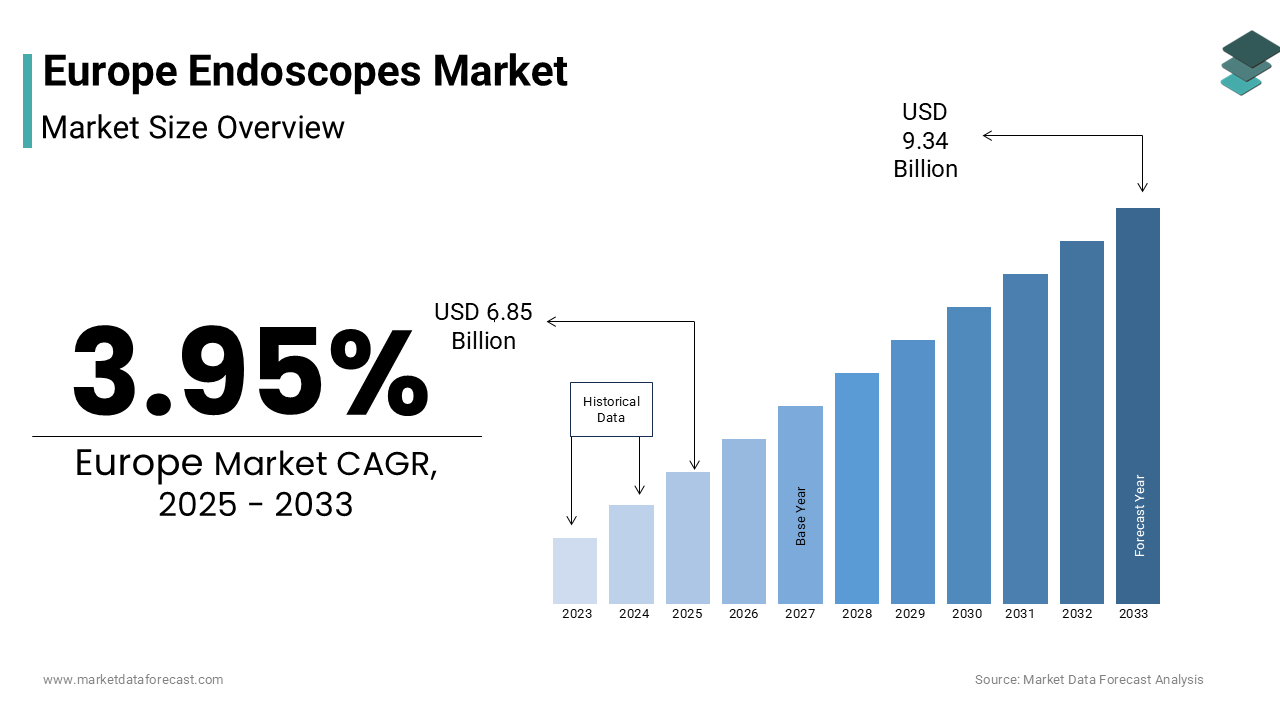
The Europe endoscopes market was valued at USD 6.85 billion in 2025, is estimated to reach USD 7.12 billion in 2025, and is projected to reach USD 9.71 billion by 2034, growing at a CAGR of 3.95% during the forecast period from 2026 to 2034. The growth of the Europe endoscopes market is driven by the rising burden of gastrointestinal and colorectal cancers, expanding adoption of minimally invasive surgical procedures, and increasing emphasis on early disease detection through organized screening programs. Advancements in high-definition visualization technologies, including narrow band imaging, chromoendoscopy, and AI-assisted diagnostics, are further enhancing clinical outcomes and procedural efficiency. Additionally, Europe’s aging population and growing demand for low-trauma diagnostic and therapeutic interventions continue to sustain long-term demand for advanced endoscopic systems across hospitals and outpatient settings.
Key Market Trends
- Increasing adoption of high-definition and visualization-enhanced endoscopy platforms to improve early lesion detection.
- Rapid integration of artificial intelligence for real-time polyp detection, diagnostic accuracy, and workflow optimization.
- Rising demand for disposable and single-use endoscopes to reduce infection risks and eliminate reprocessing complexity.
- Shift toward outpatient and ambulatory endoscopy centers to reduce hospital burden and healthcare costs.
- Growing focus on infection control compliance and traceability under stringent European reprocessing regulations.
Segmental Insights
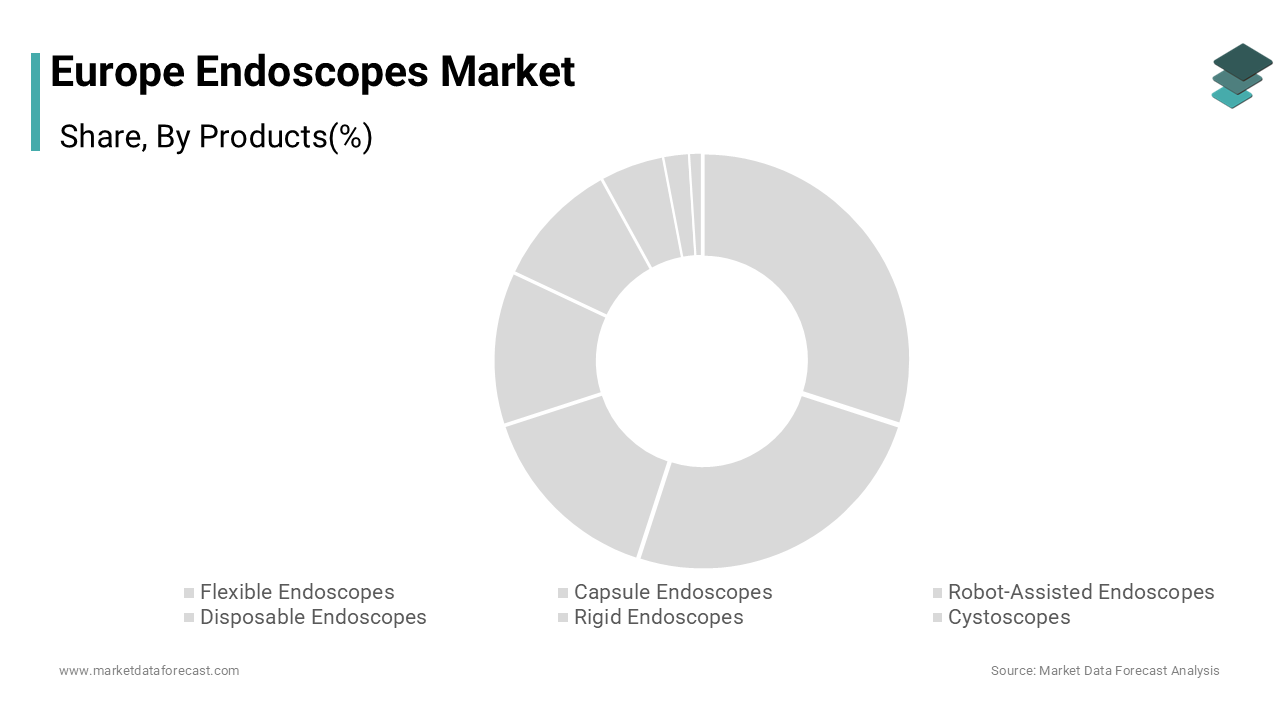
- Based on product, the flexible endoscopes segment dominated the Europe endoscopes market by holding a 58.6% share in 2025. The segment’s dominance is attributed to its extensive use in high-volume diagnostic and therapeutic procedures, particularly colonoscopy and bronchoscopy, supported by national colorectal cancer screening programs and improved patient comfort compared to rigid scopes.
- The disposable endoscopes segment is expected to witness the fastest CAGR of 14.2% from 2026 to 2034 driven by heightened infection control concerns, regulatory scrutiny over reprocessing failures, and operational efficiencies gained by eliminating sterilization infrastructure, especially in emergency and outpatient settings.
- Based on end user, the hospitals segment led the market in 2024, supported by the concentration of complex endoscopic procedures, advanced therapeutic interventions, and centralized procurement frameworks.
Meanwhile, outpatient facilities are anticipated to grow at the fastest pace due to Europe’s strategic shift toward ambulatory care and the increasing availability of disposable endoscopy solutions.
Regional Insights
The Europe endoscopes market shows strong performance across major healthcare economies, supported by screening initiatives, reimbursement structures, and early technology adoption.
- Germany dominated the market, accounting for 22.9% of the Europe endoscopes market share in 2025, driven by high procedural volumes, a well-established colorectal cancer screening program, and favorable reimbursement for advanced endoscopic interventions.
- France held a 17.5% share in 2024, supported by centralized cancer screening mandates, strict reprocessing regulations, and growing adoption of disposable endoscopes in high-risk procedures.
- The United Kingdom continues to be a key market due to strong NHS-led screening programs, increasing use of disposable cystoscopes, and efforts to reduce diagnostic waiting times.
- Italy remains an important innovation hub, particularly in advanced therapeutic and laparoscopic endoscopy, despite regional disparities in equipment modernization.
- Spain is expanding steadily, driven by efficient referral pathways, integrated primary care endoscopy units, and improved access to diagnostic procedures.
Competitive Landscape
The Europe endoscopes market is highly competitive and technologically driven, with established multinational players and specialized European manufacturers competing on imaging quality, regulatory compliance, and clinical performance rather than price. Market leaders focus on AI integration, high-definition imaging, disposable device innovation, and physician training to strengthen adoption. Stringent EU MDR requirements and complex procurement processes create high entry barriers, favoring companies with strong regulatory expertise and long-standing clinical relationships. Prominent players in the Europe endoscopes market include Olympus Corporation, Karl Storz SE & Co. KG, Boston Scientific Corporation, PENTAX Medical (HOYA Corporation), FUJIFILM Holdings Corporation, Stryker Corporation, Medtronic plc, Smith & Nephew plc, Ambu A/S, STERIS plc, Richard Wolf GmbH, B. Braun Melsungen AG, and Ethicon Endo-Surgery.
Europe Endoscopes Market Size
The europe endoscopes market size was valued at USD 6.85 billion in 2025 and is anticipated to reach USD 7.12 billion in 2026 from USD 9.71 billion by 2034, growing at a CAGR of 3.95% during the forecast period from 2026 to 2034.
Endoscopy refers to the visual examination of internal body cavities using flexible or rigid optical instruments equipped with illumination and imaging systems. Endoscopes enable real-time visualization with reduced patient trauma and accelerated recovery. The European clinical landscape has witnessed a paradigm shift toward high definition and visualization-enhanced platforms including narrow band imaging and chromoendoscopy which improve mucosal lesion detection. Gastrointestinal endoscopic procedures are being performed in high volumes, with screening colonoscopies representing a significant portion of these examinations. The region is experiencing a demographic shift toward an older population that is more prone to gastrointestinal and urological conditions necessitating endoscopic assessment. Regional health initiatives are placing a greater emphasis on early disease detection, leading to the broader implementation of organized screening programs across numerous countries. This confluence of demographic pressure clinical protocol evolution and public health policy shapes a dynamic environment where technological sophistication and procedural volume drive sustained demand for advanced endoscopic systems.
MARKET DRIVERS
Rising Burden of Gastrointestinal and Colorectal Cancers
The escalating incidence of colorectal and upper gastrointestinal malignancies across the region serves as a primary driver of the Europe endoscopes market. According to sources, colorectal cancer represents a significant health challenge as one of the most frequently diagnosed malignancies across the European region. National screening programs have responded aggressively with colonoscopy as the gold standard diagnostic and therapeutic tool. National healthcare frameworks have implemented statutory screening programs to facilitate colonoscopy procedures for aging populations. Similarly, organized screening initiatives contribute to the early detection and clinical management of precancerous adenomas among eligible citizens. These programs not only increase procedural volume but also drive demand for high resolution endoscopes with advanced imaging capabilities to distinguish subtle dysplastic changes. Surveillance protocols for patients with inflammatory bowel disease involve specialized endoscopic techniques that require advanced imaging functionality. This clinical imperative ensures consistent endoscope deployment across public and private healthcare settings.
Expansion of Minimally Invasive Surgical Protocols
The institutionalization of minimally invasive techniques across European surgical specialties has significantly amplified endoscope dependency beyond diagnostics, which in turn fuels the expansion of the Europe endoscopes market. In urology, many prostatectomies and most kidney stone removals in the European Union are now performed endoscopically. Similarly, laparoscopic cholecystectomy has become the standard approach for gallbladder disease, with a significant number of procedures conducted annually across Europe. This shift is reinforced by national health technology assessment bodies which consistently affirm shorter hospital stays lower complication rates and reduced postoperative pain with endoscopic approaches. Additionally, training mandates from bodies require proficiency in hysteroscopic and laparoscopic techniques for board certification ensuring sustained institutional investment in endoscopic infrastructure. As surgical guidelines continue to favor minimally invasive pathways endoscope utilization becomes embedded in routine operative workflows across multiple disciplines.
MARKET RESTRAINTS
Stringent Reprocessing and Infection Control Regulations
The rigorous regulatory landscape governing endoscope reprocessing in Europe imposes significant operational and financial constraints on healthcare facilities, which restricts the growth of the Europe endoscopes market. Healthcare associated infections are sometimes linked to endoscopes that have been disinfected inadequately. Because of this, hospitals must follow specific reprocessing guidelines and regulations. Compliance often requires hospitals to invest in various tools such as automated reprocessors, leak testers, and software for tracking the devices. The equipment needed for a single reprocessing suite can be costly for institutions. Audits conducted at various healthcare facilities sometimes reveal that a percentage of them do not meet updated standards for drying and storing flexible endoscopes. These findings triggered mandatory facility upgrades and staff retraining. Furthermore, the shift toward single use bronchoscopes and duodenoscopes in high risk settings adds recurring procurement costs. The need for patient safety necessitates these regulations. However, they drive up costs and deployment complexity, particularly where resources are scarce, creating a structural impediment to the free flow of the market.
Persistent Shortage of Skilled Endoscopy Personnel
A serious deficit in trained endoscopists and reprocessing technicians constrains procedural throughput and equipment utilization across the region, which hampers the growth of the Europe endoscopes market. There is a significant deficit of medical professionals capable of performing endoscopic procedures relative to the current needs for patient screening and diagnosis. Geographic disparities exist in medical staffing, with certain regions facing more severe shortages of specialized practitioners than others. Patient access to diagnostic procedures is hindered by extended waiting periods within public healthcare systems. The length and complexity of advanced endoscopic techniques contribute to the overall strain on clinical capacity. The requirement for specialized certification and the time-intensive nature of certain procedures further limit the availability of services. Maintaining equipment safety standards is challenging due to the need for regular competency assessments among support staff. A lack of standardized training programs across various jurisdictions creates inconsistencies in the professional development of the healthcare workforce. Modern endoscopic equipment remains underutilized without a skilled workforce to operate it. This workforce gap not only limits patient access but also discourages investment in high throughput systems in regions where skilled operators are scarce thereby dampening overall market momentum.
MARKET OPPORTUNITIES
Adoption of Disposable Endoscope Technologies
The clinical and economic appeal of single-use endoscopes provides a major opportunity for the Europe endoscopes market. This is due to the elimination of reprocessing risks and the ability to enable point-of-care deployment. The use of disposable flexible cystoscopes has grown across European hospitals, a trend associated with enhanced infection control measures and improved operational efficiency. Recent Dutch guidelines now support the use of single-use bronchoscopes for specific patient populations in intensive care units, a policy widely adopted within academic hospitals in the country. In the United Kingdom, certain high-volume centers have been encouraged to use disposable duodenoscopes for specific procedures, a practice linked to a notable decrease in the potential for cross-contamination incidents during initial evaluations. These devices also reduce capital expenditure on reprocessing infrastructure allowing smaller clinics to offer endoscopic services. Disposable endoscopes have emerged as one of the most rapidly integrated medical technologies within hospital environments. This shift reflects a growing pattern of adoption for single-use devices in acute care settings. The trend indicates an increasing preference for these novel instruments compared to traditional reusable alternatives This shift not only addresses safety concerns but also opens new care settings such as ambulatory surgery centers and emergency departments previously excluded due to reprocessing complexity.
Integration of Artificial Intelligence in Real Time Endoscopic Diagnosis
The embedding of artificial intelligence algorithms into endoscopic imaging platforms offers unprecedented diagnostic precision and workflow enhancement, which is expected to propel the expansion of the Europe endoscopes market. Regulators have certified artificial intelligence systems designed to identify and analyze polyps during endoscopic procedures. The integration of these digital tools has been associated with higher detection rates for adenomas and a decrease in the frequency of overlooked lesions. Widespread implementation of assisted colonoscopy technology has been linked to a decline in the occurrence of interval cancers within screening programs. Automated detection modules for bladder cancer have shown an increased ability to recognize specific lesions that are difficult to visualize using traditional white light. These tools not only improve clinical outcomes but also shorten interpretation time enabling higher procedural volumes. As European healthcare systems prioritize value based care AI enhanced endoscopy aligns with efficiency and quality imperatives creating a fertile ground for rapid adoption.
MARKET CHALLENGES
Environmental Impact of Endoscope Manufacturing and Disposal
The ecological footprint associated with endoscope production and single use device waste is emerging as a significant sustainability challenge in the region’s healthcare sector, which in turn constrains the growth of the Europe endoscopes market. Reusable endoscopes contain rare earth metals and complex polymer composites that are energy intensive to manufacture. Conversely the rise of disposable endoscopes has intensified medical waste streams. In France, a significant amount of single-use endoscopic waste is generated by hospitals, a figure that is expected to increase in the coming years. The water and chemical usage in reprocessing reusable scopes offsets some of the environmental benefits gained from reducing landfill contributions. Hospitals in the region are facing operational challenges as new environmental regulations require them to report metrics on the environmental impact of their medical devices. Balancing infection control clinical performance and environmental responsibility remains a complex and unresolved tension shaping future procurement and design strategies.
Fragmented Reimbursement Policies Across European Health Systems
Divergent coverage mechanisms for advanced endoscopic procedures and next generation devices impede the expansion of the Europe endoscopes market. Reimbursement for high-definition chromoendoscopy varies across the European Union, with several member states lacking a standardized national funding framework. Funding for advanced endoscopic procedures often depends on regional or hospital-level decisions rather than uniform national policies. Discrepancies in regional healthcare coverage result in some areas fully funding specialized treatments for early gastric cancer while others require patient contributions. Similarly, the adoption of disposable endoscopes faces reimbursement uncertainty. National tariff structures sometimes cover the costs of reprocessing reusable medical equipment but do not extend to single-use alternatives. The lack of coverage for disposable medical devices may lead to healthcare facilities bearing the additional financial burden of these procedural costs. These inconsistencies discourage manufacturers from launching advanced platforms uniformly and limit clinician access to cutting edge tools based solely on geography. The expansion of the market for endoscopic innovations will remain fragmented and subject to individual countries' funding choices rather than their actual clinical value until a unified health technology assessment system is established by the European Commission.
REGIONAL ANALYSIS
| REPORT METRIC | DETAILS |
| Market Size Available | 2025 to 20334 |
| Base Year | 2025 |
| Forecast Period | 2026 to 2034 |
| CAGR | 3.95% |
| Segments Covered | By Product, Application, End-User, and Region. |
| Various Analyses Covered | Global, Regional, and Country Level Analysis, Segment-Level Analysis, DROC, PESTLE Analysis, Porter’s Five Forces Analysis, Competitive Landscape, Analyst Overview of Investment Opportunities |
| Regions Covered | United Kingdom, France, Spain, Germany, Italy, Russia, Sweden, Denmark, Switzerland, the Netherlands, Turkey, and the Czech Republic. |
| Market Leaders Profiled | Olympus Corporation, Karl Storz SE & Co. KG, Boston Scientific Corporation, PENTAX Medical (HOYA Corporation), FUJIFILM Holdings Corporation, Stryker Corporation, Medtronic plc, Smith & Nephew plc, Ambu A/S, STERIS plc, Richard Wolf GmbH, B. Braun Melsungen AG, and Ethicon Endo-Surgery |
SEGMENTAL ANALYSIS
By Product Insights
The flexible endoscopes segment held the prominent share of the Europe endoscopes market and accounted for a 58.6% share in 2025. The prominence of the flexible endoscopes segment is credited toits indispensable role across high volume diagnostic and therapeutic procedures particularly in gastroenterology and pulmonology. A key driver is the widespread implementation of national colorectal cancer screening programs which rely almost exclusively on colonoscopy, a procedure requiring flexible endoscopes. In Germany, a significant number of colonoscopies were performed during 2024 within the framework of the established screening program. An additional reinforcing factor is the clinical versatility of modern flexible platforms which now integrate high-definition imaging narrow band illumination and therapeutic channels for polypectomy or stent placement. A substantial majority of diagnostic cystoscopies performed in 2024 utilized flexible scopes, a trend attributed to improved patient comfort and a decreased requirement for anesthesia. These attributes ensure consistent procurement and replacement demand across public hospitals and private clinics alike solidifying flexible endoscopes as the procedural backbone of minimally invasive care in Europe.
The disposable endoscopes segment is anticipated to witness the fastest CAGR of 14.2% from 2026 to 2034 due to converging clinical safety imperatives and operational efficiency gains. One key factor is the European Centre for Disease Prevention and Control’s intensified focus on endoscope associated infections which prompted national health authorities to endorse single use devices in high risk scenarios. In Dutch intensive care units, there has been a significant move towards using single-use bronchoscopes for various procedures. This change reflects a growing consensus within the medical community on best practices for specific hospital environments. A different driver is the elimination of reprocessing infrastructure costs. Across numerous healthcare facilities, analysis indicates that the implementation of disposable scopes in certain procedures can lead to a noticeable decrease in the time required between uses. This approach may also help hospitals avoid certain costs associated with ensuring medical equipment meets strict safety and hygiene standards. These advantages are particularly compelling for outpatient and emergency settings where speed and sterility outweigh capital investment considerations fueling rapid adoption beyond traditional endoscopy suites.
By End Use Insights
The hospitals segment led the Europe endoscopes market and captured a substantial share in 2025. The leading position of the hospitals segment is attributed to its role as the primary site for complex endoscopic interventions including therapeutic ERCP laparoscopic surgery and advanced cancer staging all of which require integrated operating room infrastructure and multidisciplinary teams. A major contributing factor is the concentration of high acuity cases in tertiary centers. Besides, national screening programs for colorectal cancer are predominantly executed within hospital endoscopy units due to the need for sedation monitoring and immediate intervention capability. Furthermore, hospitals benefit from centralized procurement frameworks and access to capital grants under the EU’s Recovery and Resilience Facility enabling systematic upgrades to high definition and AI enabled platforms. These structural advantages ensure hospitals remain the core deployment environment for both reusable and advanced disposable endoscopes.
The outpatient facilities segment is likely to experience the fastest CAGR of 9.8% over the forecast period owing to Europe’s strategic shift toward ambulatory care to alleviate hospital congestion and reduce public health expenditure. One principal driver is the proliferation of diagnostic and low risk therapeutic endoscopies that no longer require inpatient admission. In the UK, there has been a noticeable increase in endoscopies and flexible sigmoidoscopies performed in specialized, independent facilities rather than traditional hospitals. A further accelerator of this segment is policy support for decentralized care. In Germany, recent changes in health coverage have led to more individuals having procedures like polypectomies and hemorrhoid banding done in outpatient clinics. Moreover, the advent of disposable endoscopes has lowered the barrier to entry by eliminating reprocessing requirements enabling smaller clinics to offer sterile endoscopic services without dedicated sterilization suites. This operational agility positions outpatient facilities as critical nodes in Europe’s evolving minimally invasive care delivery model.
REGIONAL ANALYSIS
Germany Endoscopes Market Analysis
Germany dominated the Europe endoscopes market by capturing a 22.9% share in 2025 The dominance of the German market is driven by its robust healthcare infrastructure high procedural volumes and early adoption of technological innovations. Endoscopic activity in the country is largely comprised of colonoscopies and upper gastrointestinal procedures. The implementation of a national screening initiative significantly influences the demand for these medical examinations. Age-based eligibility for preventative screenings serves as a primary factor in the volume of procedures performed. Public participation in established health screening programs contributes to the overall frequency of endoscopic evaluations. Additionally, Germany’s hospital reimbursement system under the G DRG framework includes specific codes for advanced endoscopic interventions such as endoscopic submucosal dissection ensuring financial viability for high end platforms. These structural and policy advantages sustain Germany’s position as the region’s most dynamic and technologically advanced endoscopy market.
France Endoscopes Market Analysis
France was the second-largest country in the European endoscopes market by holding a 17.5% share in 2025 with a centralized public health system and aggressive cancer screening mandates. A significant number of colonoscopies are performed in France within a national screening framework. This program focuses on a specific age demographic for early detection efforts. Nearly half of the eligible population participates in this cancer screening initiative. A distinctive strength is the integration of endoscopy into primary care pathways through the Maison des Médecins network where gastroenterologists conduct diagnostic scopes in community based multidisciplinary clinics. Furthermore, France enforces some of Europe’s strictest reprocessing standards. An audit previously revealed contamination in reusable duodenoscopes, which prompted a national shift toward disposable alternatives in high risk procedures. The government’s medical device strategy also prioritizes AI enhanced endoscopy, with substantial funding earmarked for pilot deployments in public hospitals. These coordinated clinical regulatory and investment measures solidify France’s role as a core market driver.
United Kingdom Endoscopes Market Analysis
The United Kingdom experienced a steady growth in the Europe endoscopes market because of a high reliance on the National Health Service for endoscopic care and strong emphasis on early cancer detection. Healthcare services are prioritizing efficiency in diagnostic procedures, such as gastroscopies and colonoscopies, likely in response to efforts to reduce patient waiting periods. A key factor influencing demand for these services is the comprehensive bowel cancer screening program, which invites eligible adults for regular screenings, with positive outcomes leading to prompt referrals for further examination. This structured approach generates a substantial number of colonoscopy referrals annually, which drives the need for high-capacity systems in healthcare networks. Additionally, the United Kingdom is a pioneer in adopting disposable cystoscopes with a portion of urology departments now using single use devices for outpatient diagnostics. These systemic efficiencies sustain the UK’s leadership despite budgetary constraints.
Italy Endoscopes Market Analysis
Italy remains a significant player in the European endoscopes market due to a high burden of gastrointestinal disease and regionally driven innovation in endoscopic techniques. A significant volume of endoscopic procedures has been noted, with a particular focus on therapeutic interventions for conditions like early gastric cancer. The nation demonstrates a leadership position in advanced endoscopic surgery, where many common surgical procedures are often performed using minimally invasive laparoscopic techniques. Market dynamics are characterized by fragmentation, largely due to regional differences in healthcare procurement processes. There is a clear disparity in technological investment across different regions; some areas have heavily invested in high-definition and AI-integrated scopes, while others experience a lag in equipment renewal. Despite these internal differences, the country maintains an important role as a center for clinical innovation, hosting numerous trials for novel endoscopic devices, including robotic platforms and capsule robots. This blend of clinical expertise and procedural volume ensures Italy’s continued relevance in the European landscape.
Spain Endoscopes Market Analysis
Spain is predicted to expand in the Europe endoscopes market over the forecast period owing to its efficient primary care referral system and growing adoption of minimally invasive diagnostics. The observation indicates a significant volume of gastrointestinal procedures performed nationally. A key characteristic is the integrated network of local health centers that incorporate endoscopy clinics, which helps in reducing diagnostic delays for concerning symptoms. This approach is exemplified by a system where individuals with urgent indications receive procedures within a short timeframe, a protocol applied across several regional communities. Furthermore, there is an increased use of advanced diagnostic methods for evaluating gastrointestinal issues. The system also reflects a commitment to quality improvement through the introduction of mandatory standards for procedure units. These coordinated efforts enhance both access and quality reinforcing Spain’s position among Europe’s top five markets.
COMPETITIVE LANDSCAPE
The Europe endoscopes market features intense competition among established multinational corporations and specialized European manufacturers vying for influence in a highly regulated and clinically sophisticated environment. Leadership is determined not by price but by technological differentiation clinical evidence regulatory compliance and service reliability. Olympus KARL STORZ and Fujifilm dominate through decades of innovation in imaging fidelity while Boston Scientific and Cook Medical compete via advanced therapeutic accessories. New entrants face significant barriers including stringent EU MDR requirements complex hospital procurement cycles and entrenched clinician preferences. Competition is further shaped by national healthcare policies with Germany France and the United Kingdom serving as strategic strongholds due to high procedural volumes and early adoption of advanced modalities. Collaborative rather than confrontational dynamics prevail as companies co develop training standards participate in multicenter trials and align with public health initiatives to expand the overall procedural base and clinical utility of endoscopy across the region.
KEY MARKET PLAYERS
- Olympus Corporation
- Karl Storz SE & Co. KG
- Boston Scientific Corporation
- PENTAX Medical (HOYA Corporation)
- FUJIFILM Holdings Corporation
- Stryker Corporation
- Medtronic plc
- Smith & Nephew plc
- Ambu A/S
- STERIS plc
- Richard Wolf GmbH
- B. Braun Melsungen AG
- Ethicon Endo-Surgery
Top Players in the Europe Endoscopes Market
Olympus Corporation
Olympus Corporation maintains a strong presence in the Europe endoscopes market through its comprehensive portfolio of high definition gastrointestinal and surgical endoscopes. The company has significantly contributed to global standardization of endoscopic practice by developing narrow band imaging and endocytoscopy technologies now widely adopted in European clinical guidelines. It also launched the EVIS X1 platform across European hospitals featuring AI enabled lesion detection and improved ergonomics. These initiatives reinforce Olympus’s commitment to clinical excellence and technological leadership while deepening integration into Europe’s diagnostic and therapeutic care pathways.
KARL STORZ SE & Co KG
KARL STORZ SE & Co KG is a key European player renowned for its rigid and flexible endoscopy systems used extensively in urology gynecology and thoracic surgery. Headquartered in Germany the company supplies advanced visualization platforms to over ninety percent of European university hospitals. In recent years KARL STORZ has accelerated innovation in 4K and 3D endoscopy integrating these into its IMAGE1 S platform. It also introduced a new generation of reusable suction insufflation tubes compliant with EU MDR reprocessing requirements. These actions strengthen its reputation for quality reliability and regulatory compliance across the region.
Boston Scientific Corporation
Boston Scientific Corporation has solidified its footprint in the Europe endoscopes market through its focus on therapeutic endoscopy devices including biliary stents stone retrieval systems and advanced resection tools. While not a primary scope manufacturer the company complements imaging platforms with high value interventional accessories used in ERCP and EUS procedures across European tertiary centers. It also launched a digital platform for real time procedural analytics in collaboration with select German and Dutch hospitals. These strategic moves position Boston Scientific as an essential enabler of complex endoscopic interventions throughout Europe.
Top Strategies Used by the Key Market Participants
Key players in the Europe endoscopes market prioritize continuous technological innovation through development of high definition 4K imaging artificial intelligence integration and ergonomic improvements to enhance diagnostic accuracy and procedural efficiency. They invest heavily in physician training and accreditation programs to drive adoption of advanced techniques and ensure proper device utilization. Companies actively pursue compliance with the European Union Medical Devices Regulation by upgrading reprocessing protocols and enhancing device traceability. Strategic collaborations with academic hospitals and surgical societies facilitate clinical validation and guideline inclusion. Additionally firms are expanding their portfolio of single use and environmentally optimized endoscopic accessories to address infection control concerns and sustainability mandates across European healthcare systems.
MARKET SEGMENTATION
This research report on the europe endoscopes market has been segmented and sub–segmented into the following categories.
By Products
- Flexible Endoscopes
- Colonoscopes
- Laryngoscopes
- Pharyngoscopes
- Duodenoscopes
- Upper Gastrointestinal Endoscopes
- Colonoscopes
- Rhinoscopes
- Sigmoidoscopes
- Bronchoscopes
- Nasopharyngoscopes
- Other Flexible Endoscopes
- Capsule Endoscopes
- Robot-Assisted Endoscopes
- Disposable Endoscopes
- Rigid Endoscopes
- Cystoscopes
- Urology Endoscopes
- Arthroscopes
- Laparoscopes
- Gynecology Endoscopes
- Neuroendoscopes
- Other Rigid Endoscopes
By Application
- Laparoscopy
- Arthroscopy
- Bronchoscopy
- Otoscopy
- Laryngoscopy
- Mediastinoscopy
- Arthroscopy
- Obstetrics/Gynecology Endoscopy
- Gastrointestinal (GI) endoscopy
- Urology endoscopy (Cystoscopy)
- Other Applications
By End-User
- Hospitals
- Outpatient Facilities
By Country
- UK
- France
- Spain
- Germany
- Italy
- Russia
- Sweden
- Denmark
- Switzerland
- Netherlands
- Turkey
- Czech Republic
- Rest of Europe
Frequently Asked Questions
What is the Europe Endoscopes Market?
The Europe Endoscopes Market covers medical devices used for minimally invasive diagnostic and surgical procedures across hospitals, clinics, and specialty centers in Europe.
What types of endoscopes are included in this market?
The market includes flexible endoscopes, rigid endoscopes, capsule endoscopes, disposable endoscopes, and video endoscopes.
Which medical applications use endoscopes most in Europe?
Endoscopes are widely used in gastroenterology, pulmonology, urology, gynecology, orthopedics, ENT procedures, and general surgery.
Why is demand for endoscopes increasing in Europe?
Rising prevalence of chronic diseases, an aging population, and growing preference for minimally invasive procedures are driving demand.
What role does technology play in market growth?
Advancements such as HD and 4K imaging, AI-assisted visualization, robotic integration, and disposable endoscopes are accelerating adoption.
Which countries dominate the Europe Endoscopes Market?
Germany, the UK, France, Italy, and Spain are major contributors due to advanced healthcare infrastructure and high procedure volumes.
Are disposable endoscopes gaining popularity in Europe?
Yes, disposable endoscopes are gaining traction due to reduced infection risk, lower reprocessing costs, and improved patient safety.
How does regulation impact the market?
Endoscopes must comply with EU Medical Device Regulation (MDR), ensuring product safety, performance, and quality standards.
What are the major challenges faced by the market?
High equipment costs, strict regulatory requirements, and complex reprocessing procedures for reusable endoscopes are key challenges.
What is the future outlook for the Europe Endoscopes Market?
The market is expected to grow steadily due to technological innovation, increasing diagnostic procedures, and rising healthcare expenditure.
Access the study in MULTIPLE FORMATS
Purchase options starting from
$ 2000
Didn’t find what you’re looking for?
TALK TO OUR ANALYST TEAM
Need something within your budget?
NO WORRIES! WE GOT YOU COVERED!
Call us on: +1 888 702 9696 (U.S Toll Free)
Write to us: sales@marketdataforecast.com