- Product Description Description
- Table of Contents TOC
- List of Table & Figure LOT
- Get Free Sample PDF Sample PDF
Market Size, 2025
$13.91 BnMarket Estimate, 2026
$15.14 BnMarket Forecast, 2034
$29.96 BnCAGR, 2026–2034
8.9%Executive Summary: Europe Essential Oils Market
- Market Scope: Comprehensive Europe essential oils market analysis covering product types, application verticals, sales channels, country-level frameworks, and industry supply chain challenges.
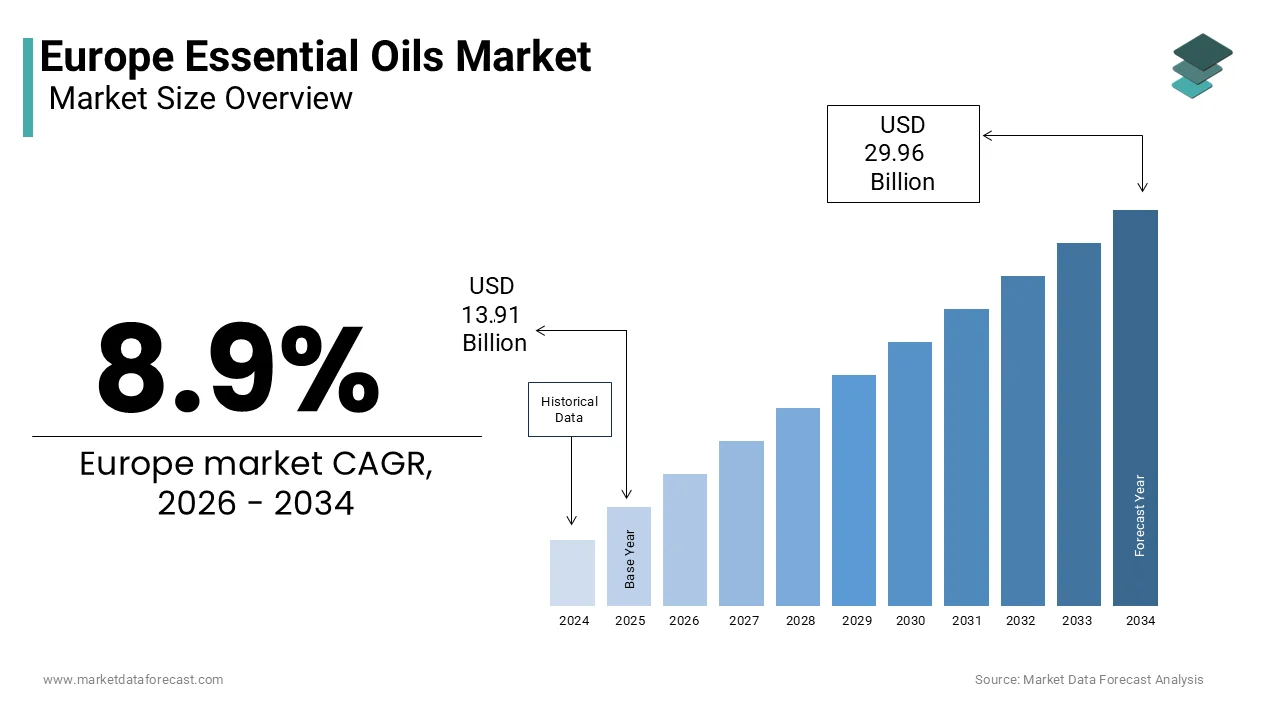
- Market Valuation: Valued at USD 13.91 billion (2025), estimated at USD 15.14 billion (2026), and projected to reach USD 29.96 billion by 2034, registering a robust CAGR of 8.9% (2026–2034).
- Primary Growth Drivers: Increasing consumer preference for natural and organic personal care products, rising adoption of aromatherapy and wellness practices, expanding applications in food, beverages, and home care products, and growing demand for clean-label botanical ingredients. Key restraints include stringent regulatory requirements and raw material supply volatility.
Key Market Segment Metrics (2026–2034)
| Category | Leading Segment (2025 Position) | Fastest-Growing Segment |
|---|---|---|
| By Product | Orange and Cornmint oils (dominated consumption volume backed by widespread industrial and cosmetic use) | Specialty botanical extracts and lavender-based premium essential oils |
| By Application & Sales Channel | Cleaning and Home care applications and Indirect Sales channels (held the largest market share) | Medical and wellness applications alongside Direct Selling digital channels |
| By Country | Germany (led the European market owing to a strong natural cosmetics industry and organic personal care demand) | France, United Kingdom, Italy, and Spain (accelerating via wellness trends and sustainable home care innovations) |
Major Market Players & Market Structure
Market Structure: Highly competitive natural ingredient and fragrance landscape characterized by continuous product innovation, sustainable sourcing initiatives, expansion of organic product portfolios, high-purity extraction technologies, and strict compliance with European regulatory standards.
Key Companies: doTERRA International LLC, Young Living Essential Oils, Givaudan SA, Symrise AG, Firmenich SA, Robertet Group, MANE Group, Biolandes, Ernesto Ventós S.A., and Essential Oils of Tasmania (European distribution network).
Europe Essential Oils Market Size
The europe essential oils market was valued at USD 13.91 billion in 2025, is expected to have an 8.9% CAGR from 2026 to 2034, and be worth USD 29.96 billion by 2034 from USD 15.14 billion in 2025.
Essential oils are aromatic compounds extracted from botanical sources such as flowers, leaves, bark, and roots, primarily used in aromatherapy, personal care, food and beverage flavouring, and natural cleaning products. Unlike synthetic fragrances, essential oils are valued for their bioactive constituents and perceived therapeutic benefits that align with Europe’s growing consumer preference for clean label and plant-based solutions. Regulatory frameworks such as the European Union’s REACH and the Cosmetics Regulation EC No 1223/2009 significantly shape product formulations and labeling requirements across member states. According to a recent industry report, nearly 68% of consumers actively seek out skincare products made with “clean” ingredients. The broader trend of natural and organic personal-care products reflects deeper consumer interest in botanical ingredients and wellness routines. Additionally, surveys show that roughly 26% of adults in Europe had used complementary or alternative medicine modalities in the past year.
MARKET DRIVERS
Rising Consumer Preference for Natural and Organic Personal Care Products
The structural shift toward natural and organic personal care formulations is one of the major factors driving the europe essential oils market growth. According to the Soil Association’s 2025 report, the certified organic beauty and wellbeing market in the UK was valued at approximately £136 million, which is reflecting a modest change amid challenging conditions. The German market shows growing consumer interest in natural and organic beauty offerings, and thisindicatese rising demand for plant-derived alternatives. This behavioral trend is reinforced by regulatory developments. The European Commission’s 2023 update to the EU Ecolabel criteria now encourages the use of naturally-sourced volatile compounds in certified products. Countries such as France, Italy and Spain have also registered double-digit growth in natural cosmetics retail channels, with essential oils like lavender, tea, thym,e and rosemary playing central roles. According to the European Cosmetic, Toiletry and Perfumery Association, a large proportion of new personal-care launches featured at least one essential oil ingredient in 2025. This convergence of consumer ethics, regulatory support, and product innovation establishes natural personal-care as a primary demand catalyst for theessential oilss market across the continent.
Expansion of Aromatherapy and Integrative Wellness Practices in Clinical and Domestic Settings
Aromatherapy has transitioned from niche alternative practice to a mainstream wellness modality across Europe, which is further fuelling the growth of the European essential oils market. As per a recent industry-analysis, Europe accounted for more than 1/3rd of the global essential oils market in 2025, which confirms strong regional demand for aromatherapy and natural wellness products. Institutions in countries like Sweden and the Netherlands have integrated essential oil diffusion into palliative and mental health care protocols. According to the Swedish National Board of Health and Welfare, 38% of hospice facilities used lavender or bergamot oil for anxiety reduction in 2025. Concurrently, home use has surged, with Euromonitor International reporting that 57% of European households owned at least three types of essential oils for daily wellness routines in 2025. Furthermore, the European Medicines Agency acknowledged in its 2025 reflection paper that certain monoterpenes found in essential oils exhibit measurable pharmacological activity, whichlendsg scientific credibility to their therapeutic applications. This dual adoption in professional and domestic spheres is also boosting the expansion of the European essential oils market.
MARKET RESTRAINTS
Stringent Regulatory Compliance and Ingredient Disclosure Requirements
The rigorous regulatory frameworks governing ingredient safety, labeling, and environmental impact is primarily impeding the European market growth. Under the Regulation (EU) No 1223/2009 and its subsequent amendments governing cosmetics, manufacturers must declare specific fragrance allergens when they exceed defined threshold concentrations. Companies producing essential oils and fragranced products face growing regulatory burdens related to documentation and labeling. Additionally, the European Food Safety Authority maintains a restrictive list of botanicals permitted in food applications, excluding several traditionally used essential oils due to insufficient toxicological data. In 2023, a food additive restriction was suspended for a specific oil following regulatory review, which is disrupting supply chains for herbal-liqueur manufacturers in France and Italy. Furthermore, the Green Deal Chemicals Strategy for Sustainability proposed enhanced scrutiny of naturally-derived substances if they demonstrate persistence or bioaccumulation potential. These overlapping regulatory layers create significant entry barriers, particularly for artisanal distillers lacking resources for extensive safety dossiers, thereby constraining the market growth in Europe.
Volatility in Raw Material Availability and Climatic Vulnerability of Botanical Sources
Essential oil production in Europe is acutely sensitive to agricultural disruptions caused by climate variability and geopolitical instability in sourcing regions, which is also a considerable restraint for the regional market expansion. Lavender is one of the continent’s most economically significant essential‐oil crops that exemplifies this vulnerability. For example, according to recent reports, in Provence growers experienced accelerated flowering and reduced yields due to prolonged drought and unseasonal frosts, which directly reduced oil output. Similarly, rose cultivation in Bulgaria, which is responsible for a major share of the world’s rose oil, faced a severe harvest disruption in 2025 that is attributed to erratic spring rainfall and heat stress. Beyond domestic production, Europe relies heavily on imports for oils like eucalyptus and citrus, with a substantial share sourced from North Africa and South America. Political unrest in key supplier nations, such as Morocco and Argentina, has intermittently disrupted logistics and inflated procurement costs. Moreover, the European Environment Agency reported that a significant portion of EU agricultural land is now classified as facing water-stress conditions, which is threatening long-term cultivation of water-intensive botanicals like peppermint and clary sage. This ecological and geopolitical fragility is also negatively impacting the regional market growth.
MARKET OPPORTUNITIES
Integration of Essential Oils into Sustainable Home Care Product Innovation
The European home care sector is undergoing a green transformation, which is creating a strategic opening for essential oils as biodegradable, nontoxic alternatives to synthetic fragrances and antimicrobials. For instance, a rising majority of new household-cleaning product launches in Europe featured plant-based or botanical fragrances such as citrus, pine, and eucalyptus. Regulatory tailwinds further support this shift. The EU Ecolabel, awarded to over 20,000 cleaning products by mid-202,4 mandates the exclusion of persistent synthetic musks, whics indirectly favour volatile natural compounds. As per the Federal Environment Agency, households in Germany using eco-labelled cleaning products increased from 49% in 2021 to 63% in 2025, which signals robust consumer adoption. Companies such as Ecover and Frosch have reformulated entire product lines to incorporate regionally distilled essential oils to enhance both scent profiles and perceived efficacy. Additionally, as per the European Bioplastics Association, essential oils are being explored as natural preservatives in biodegradable packaging films in 2025, which is likely to open cross-sectoral applications. This convergence of regulatory standards, brand innovation, and consumer demand positions sustainable home-care are expected to provide several growth opportunities to the market participants in the European essential oils market.
Emergence of Precision Aromatherapy Through Digital Health Platforms
Digital health technologies are enabling personalized aromatherapy experiences, and this is anticipated to unlock new commercial pathways for essential oil applications in mental wellness and sleep optimization. Many digital-health platforms in Europe now incorporate scent-based interventions within broader wellness applications. Start-ups on the continent have developed smart diffusers that sync with biometric wearables to release tailored essential oil blends based on real-time stress or sleep metrics. According to recent research, around 46% of EU adults experienced an emotional or psychosocial problem in the past twelve months. Clinical studies are also advancing, as a systematic review on Chamomile found it may reduce sleep onset latency and improve overall sleep quality in adults. Institutional funding supports this direction with EU programmes allocating substantial grants to research on olfactory neuromodulation and digital therapeutics. This convergence of neuroscience, digital hardware, and botanical science is redefining essential oils as dynamic components of precision-wellness ecosystems.
MARKET CHALLENGES
Adulteration and Lack of Standardized Quality Certification Across Supply Chains
The persistent quality inconsistencies stemming from widespread adulteration and the absence of harmonized certification protocols is majorly challenging the growth of the essential oils market in Europe. Many essential oil samples inspected across EU customs checkpoints have been found to contain undeclared synthetic diluents or artificial fragrance compounds. Oversight is fragmented, and while voluntary standards (such as those fromthe International Organization for Standardization for oils like lavender and peppermint) exist, national pharmacopoeias differ significantly in purity thresholds. For example, minimum concentration requirements for terpinen-4-ol in tea tree oil are documented in the literature, though specific failure rates from supplier investigations are scarce. The absence of a central EU-wide certification body comparable to the United States Department of Agriculture Organic programme aggravates traceability challenges for consumers and formulators. Consequently, brand reputations and therapeutic outcomes face risk, which is challenging the expansion of the essential oils market in Europe.
Limited Clinical Evidence and Regulatory Ambiguity for Therapeutic Claims
Despite widespread consumer belief in the health benefits of essential oils, the expansion of the European market is also being challenged by the insufficient clinical validation and restrictive regulatory boundaries on health-related messaging. The European Medicines Agency maintains that essential oils cannot be marketed as medicinal products unless they undergo full pharmaceutical evaluation, which is a process prohibitively expensive for most botanical suppliers. According to a systematic review published in 2022, only a small fraction of randomized controlled trials on essential oils met rigorous methodological standards with many lacking adequate sample sizes or placebo controls. Consequently, the Health Claims Regulation prohibits any explicit therapeutic assertions such as “reduces anxiety” or “supports immunity” unless substantiated by dossiers approved by the European Food Safety Authority, which to date none have achieved. This regulatory silence forces brands to rely on vague phrasing like “promotes relaxation,” which is limiting marketing differentiation. Furthermore, as per a survey by the European Consumer Organisation, a majority of respondents believed essential oils had proven medical benefits, which indicate a dangerous knowledge gap between perception and scientific reality. Without coordinated investment in robust clinical research and clearer regulatory pathways for botanical actives, the European market risks reputational erosion and consumer disillusionment.
REPORT COVERAGE
| REPORT METRIC | DETAILS |
| Market Size Available | 2025 to 2034 |
| Base Year | 2025 |
| Forecast Period | 2026 to 2034 |
| Segments Covered | By Product, Application, Sales Channel and Region. |
| Various Analyses Covered | Global, Regional and Country-Level Analysis, Segment-Level Analysis, Drivers, Restraints, Opportunities, Challenges; PESTLE Analysis; Porter’s Five Forces Analysis, Competitive Landscape, Analyst Overview of Investment Opportunities |
| Countries Covered | UK, France, Spain, Germany, Italy, Russia, Sweden, Denmark, Switzerland, Netherlands, Turkey, Czech Republic, and the Rest of Europe |
| Market Leaders Profiled | Givaudan SA, International Flavors & Fragrances Inc. (IFF), Symrise AG, Robertet Group, Firmenich SA, doTERRA International LLC, Young Living Essential Oils LC, MANE SA, Cargill, Incorporated, Biolandes SAS, Lebermuth, Inc., The Essential Oil Company, Flavex Naturextrakte GmbH, Ungerer & Company, Inc., AOS Products Pvt. Ltd., Now Foods, Edens Garden, Plant Therapy Essential Oils, Sydney Essential Oils Co. (SEOC), Treatt PLC |
SEGMENTAL ANALYSIS
By Product Insights
The orange segment dominated the market by accounting for 33.8% of the European market share in 2025. The growth of the orange segment is primarily driven by its dual utility in flavoring and fragrance applications, coupled with abundant citrus cultivation in Southern Europe. One leading driver is its extensive use in the food and beverage industry as a natural flavoring agent compliant with EU purity standards. According to recent reports, orange oil is a leading segment in the global citrus oil market, and this reflects strong formulation demand.
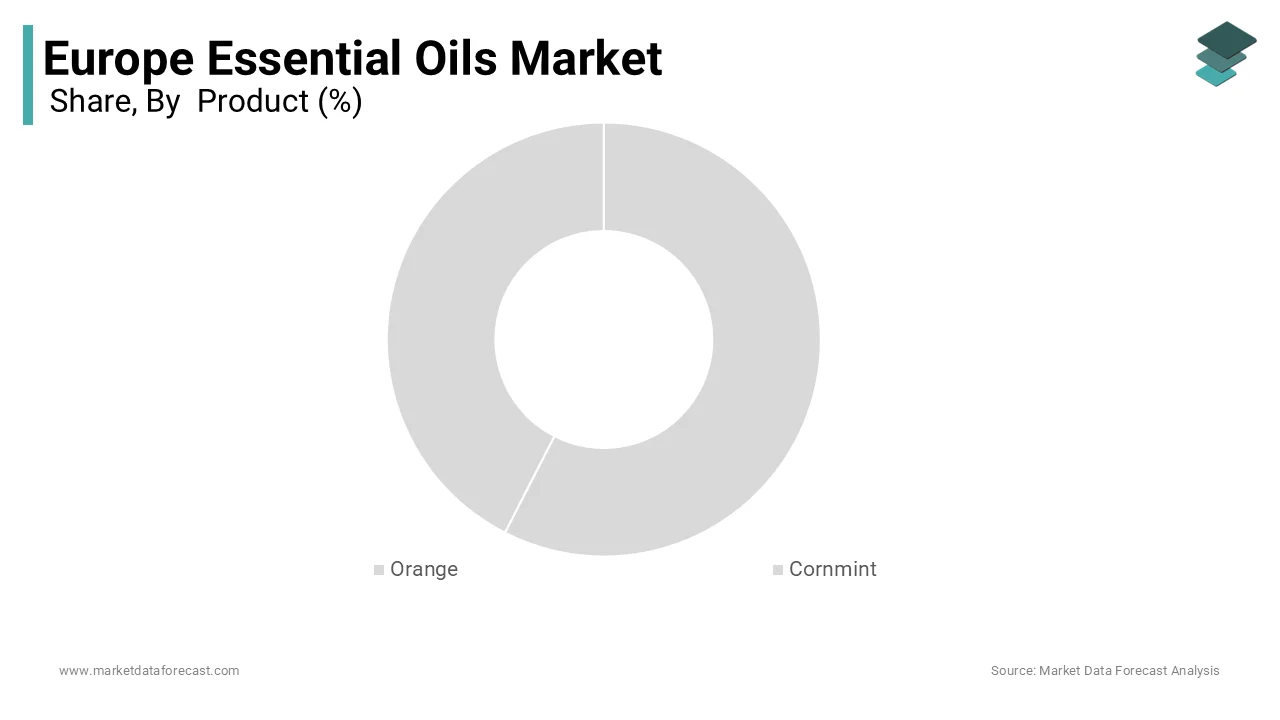
The cornmint segment is projected to expand at a lucrative CAGR of 9.5% over the forecast period due to rising demand for natural menthol in oral care and topical analgesics. According to recent reports, natural menthol crystals accounted for a sizeable share of the global menthol crystal market in 2025, and this indicates strong demand for botanical cooling agents. India remains the primary global supplier, but European manufacturers are increasingly investing in local cornmint (Mentha arvensis) distillation to mitigate import dependency. Furthermore, the European Medicines Agency’s 2025 guidance on botanical active substances acknowledged menthol’s established efficacy in respiratory relief, which is further enabling broader therapeutic positioning. These converging regulatory, supply-chai,n and consumer trends are majorly contributing to the rapid growth of the cornmint segment in the European market.
By Application Insights
The cleaning and home application segment commanded the largest share of 37.5% of the Europe essential oils market in 2025. The growth of the cleaning and home segment in the European market is majorly attributed to the continent-wide shift toward non-toxic, biodegradable household products aligned with the EU Green Deal’s chemical safety objectives. The regulatory pressure on synthetic surfactants and fragrances is also boosting the expansion of the cleaning and home application segment in the European market. According to the European Chemicals Agency, several new chemicals of concern were added to the list of substances subject to authorisation under REACH in 2025, which is reflecting regulatory pressure on conventional formulation ingredients. Consumer behaviour further amplifies this trend. According to the European Commission’s Directorate‑General for Environment data, the number of products certified with the EU Ecolabel for cleaning products grew significantly and this indicates rising demand for verified green-cleaning options. Additionally, major retailers such as Carrefour and Edeka have implemented private-label sustainability standards requiring natural fragrance content that directly boost essential-oil procurement. The integration of essential oils into refillable and concentrated cleaning formats that are endorsed by the European Environment Agency as waste-reduction strategies is also driving the dominance of the cleaning and home application segment in the European market.
The medical segment is expected to exhibit the fastest CAGR of 11.4% over the forecast period in te European essential oils market over the forecast period due to the increasing integration of essential oils into evidence based complementary therapies within European healthcare systems. According to recent research, essential oils such as tea-tree and eucalyptus are increasingly recognised for their antimicrobial and anti-biofilm properties iclinical wound carere settings. Additionally, the Horizon Europe programme allocated multi-million-euro funding in 2025 to botanical active-substance research for wound-care applications with eucalyptus and lavender oils among the focal candidates. Pharmacovigilance frameworks are also evolving and the European Directorate for the Quality of Medicines & HealthCare updated its monographs in 2025 to include standardized quality parameters for key essential oils used in hospital-grade antiseptics. These institutional endorsements are transforming the medical segment from marginal to mainstream.
By Sales Channel Insights
The direct selling segment accounted for 22.7% of the Europe essential oils market in 2025. The alignment of the direct selling model with experiential marketing and trust-based consumer education, critical for premium botanical products, drives the growth of the direct selling segment. Many direct-selling networks in Europe rely on high engagement intensity through independent representatives who facilitate personalised demonstrations of aroma profiles and therapeutic uses. According to reports, the demand for essential oils is estimated to grow significantly in the next few years. Direct selling representatives often operate within community-based wellness ecosystems and leverage social proof and repeat-purchase loyalty. As per the data from France’s national statistics institute, direct-selling customers exhibited higher annual spend on essential oils compared to retail shoppers. Furthermore, leading brands such as Young Living and doTERRA have localised their compensation structures to comply with EU consumer-protection directives to enhance regulatory legitimacy. The channel’s resilience during economic volatility evidenced by consistent year-on-year sales increases despite inflationary pressures, which is also driving the growth of the direct selling segment in the European market.
COUNTRY LEVEL ANALYSIS
Germany Essential Oils Market Analysis
Germany led the market and occupied 21.4% of the European market share in 2025 due to its robust pharmaceutical and natural cosmetics industries. The Germany’s regulatory rigor under the German Medicinal Products Act ensures high-quality standards for botanical actives, which is fostering trust among B2B buyers. According to the latest reports, the German essential oils market was valued at approximately USD 3.3 billion in 2025, which reflects strong domestic and export-driven demand. Domestic demand is equally strong, and the German natural cosmetics market is evolving from niche to mainstream, with over half of German consumers now purchasing natural-certified skincare products. Furthermore, Germany hosts Europe’s largest aromatherapy certification body, which trained over 4,200 practitioners in 2025 alone. This ecosystem of production, regulation, and professional practiceise expected to contribute to the domination of Germany in the European market over the forecast period.
France Essential Oils Market Analysis
France had the second largest share of the European essential oils market in 2025. The historic lavender and rosemary cultivation in Provence and strong integration into luxury fragrance and gastronomy are majorly driving the essential oils market in France. France produced a substantial volume of lavender essential oil in 2025, which is reinforcing its strong regional output and premium positioning. The French National Institute for Origin and Quality granted Protected Geographical Indication status to “Lavande de Haute Provence” in 2023 and this is enhancing premium pricing power. Additionally, the French food industry leverages orange and lemon oils extensively, and the French Ministry of Agriculture confirmed that many beverage SKUs launched in 2025 used citrus essential oils as natural flavorings. The convergence of agricultural heritage, culinary tradition, and regulatory distinction are driving the essential oils market in France.
United Kingdom Essential Oils Market Analysis
The United Kingdom is expected to command a notable share of the European essential oils market over the forecast period due to its dynamic direct selling and wellness retail landscape. According to the UK’s Office for National Statistics, sales of essential oils through multi-level marketing channels grew by 11.3% in 2025, outpacing overall retail growth. The National Health Service’s 2025 pilot program in 12 mental health trusts incorporated lavender and bergamot diffusion for anxiety management, signaling institutional validation. According to the Soil Association, over 950 essential-oil-based personal-care products were certified in 2025, reflecting stringent organic compliance. Post-Brexit, the UK’s independent regulatory autonomy has enabled faster approvals for novel botanical applications, which is attracting niche producers. This blend of consumer activism, clinical experimentation, and agile regulation is propelling the UK essential oils market growth.
Italy Essential Oils Market Analysis
Italy held a considerable share of the European market in 2025 and is predicted to continue growing at a healthy CAGR over the forecast period, owing to its dual strength in citrus oil production and artisanal cosmetics. According to the Italian National Institute of Statistics, Sicily and Calabria produced citrus essential oils in 2025, which is primarily bergamot and bitter orange and account for the vast majority of the EU’s citrus oil output. Bergamot oil from Reggio Calabria enjoys protected designation of origin status to ensure premium market access. According to the Italian Trade Agency, Italy’s “Made in Italy” beauty exports, which include essential-oil infused formulations grew significantly in 2025. Small batch distillers collaborate with luxury brands like Santa Maria Novella and preserve traditional extraction methods while meeting global demand. This synergy of terroir, craftsmanship, and export orientation is boosting the essential oils market in Italy.
Spain Essential Oils Market Analysis
Spain is predicted to showcase a prominent CAGR in the European market during the forecast period due to its expanding rosemary and sage oil production and growing domestic wellness culture. The output of rosemary essential oil in Spain has shown strong growth following cultivation advantages in regions such as Andalusia. The Spanish ddrug regulatorapproved several new topical analgesic formulations containing rosemary oil in recent years, which reflects therapeutic adoption. Additionally, the rise of eco-tourism in regions like Catalonia has spurred demand for locally sourced spa products, and the Spanish aromatherapy industry recorded a meaningful increase in certified spa facilities using native essential oils between 2022 and 2025. The climatic advantage, regulatory responsiveness, and cultural embrace of holistic wellness are propelling the essential oils market in Spain.
COMPETITIVE LANDSCAPE
The Europe essential oils market features a competitive landscape characterized by a mix of historic family-owned distillers, multinational fragrance conglomerates, and agile niche producers. Competition centers on purity, traceability, sustainability credentials, and compliance with evolving EU chemical and cosmetic regulations. Larger players leverage scale and R&D to dominate B2B supply chains, while artisanal producers differentiate through geographical indications and heritage extraction methods. Price pressure is moderate due to the premium positioning of certified natural oils, but adulteration risks intensify scrutiny across the value chain. Cross-border consolidation is accelerating, with strategic acquisitions targeting regional botanical expertise. Innovation in extraction efficiency, climate-resilient cultivation, and digital customer engagement increasingly defines competitive advantage. Regulatory agility and supply chain transparency have become decisive factors in maintaining brand trust and market relevance across diverse European consumer and industrial segments.
KEY MARKET PLAYERS
Some of the companies that are playing a dominating role in the global europe essential oils market include
- Givaudan SA
- International Flavors & Fragrances Inc. (IFF)
- Symrise AG
- Robertet Group
- Firmenich SA
- doTERRA International LLC
- Young Living Essential Oils LC
- MANE SA
- Cargill, Incorporated
- Biolandes SAS
- Lebermuth, Inc.
- The Essential Oil Company
- Flavex Naturextrakte GmbH
- Ungerer & Company, Inc.
- AOS Products Pvt. Ltd.
- Now Foods
- Edens Garden
- Plant Therapy Essential Oils
- Sydney Essential Oils Co. (SEOC)
- Treatt PLC
TOP LEADING PLAYERS IN THE MARKET
- Firmenich SA is a globally influential player in the Europe essential oils market through its extensive portfolio of natural fragrance ingredients and strategic partnerships with cosmetic and food manufacturers. Headquartered in Geneva, the company leverages advanced extraction technologies and sustainable sourcing networks across the Mediterranean basin. In 2025, Firmenich intensified its commitment to traceability by launching a blockchain-enabled platform for citrus oil supply chains, ensuring authenticity from farm to formulation. Its integration with DSM to form dsm firmenich further expanded R&D capabilities in bio based aroma molecules, reinforcing its leadership in clean label innovation across European markets.
- Robertet Group maintains a strong presence in the Europe essential oils market as a vertically integrated producer specializing in floral and herbal extracts. Based in Grasse, France, the company controls over 3000 hectares of aromatic plantations and operates distillation facilities in key regions, including Bulgaria and Spain. In early 2025, Robertet inaugurated a new green extraction unit in Provence dedicated tosolvent-freee lavender and rosemary oils, aligning with EU sustainability directives. The company also deepened collaborations with European organic certifiers to streamline compliance for its B2B clients, enhancing its reputation for premium, ethically sourced botanicals.
- Bontoux SAS is a historic French essential oil producer renowned for its expertise in rose, jasmine, and immortelle extracts. The company supplies high-purity oils to luxury fragrance houses and natural skincare brands across Europe. In 2025, Bontoux invested in solar-powered distillation infrastructure at its Grasse facility, reducing carbon emissions by an estimated 35 percent. It also launched a digital aroma profiling service enabling formulators to assess olfactory and chemical consistency in real time. These initiatives reflect its focus on combining heritage craftsmanship with modern sustainability and quality assurance standards.
TOP STRATEGIES USED BY THE KEY MARKET PARTICIPANTS
Key players in the Europe essential oils market prioritize vertical integration to secure raw material supply and ensure quality control from cultivation to distillation. They invest heavily in sustainable and organic certification to meet stringent EU regulatory and consumer expectations. Strategic partnerships with academic institutions and clinical research bodies enhance scientific validation of therapeutic claims. Companies also deploy digital traceability tools such as blockchain to authenticate origin and purity. Additionally, they expand product portfolios through green extraction innovations like supercritical CO2 and molecular distillation to cater to clean label demand in cosmetics and food sectors.
EUROPE ESSENTIAL OILS MARKET NEWS
- In March 2025, Firmenich launched a blockchain-based traceability platform for citrus essential oils sourced from Spain and Italy to enhance supply chain transparency in the Europe essential oils market.
- In May 2025, Robertet Group inaugurated a solar-powered distillation facility in Provence, Franc,e dedicated to organic lavender and rosemary oil production to align with EU green manufacturing standards in the Europe essential oils market.
- In February 2025, Bontoux SAS introduced a digital aroma profiling service enabling real-time chemical and olfactory analysis for European cosmetic formulators to strengthen quality assurance in the Europe essential oils market.
- In June 2025, dsm firmenich partnered with the University of Vienna to conduct clinical trials on the anxiolytic effects of bergamot oil to support evidence based applications in the Europe essential oils market.
- In January 2025, Robertet acquired a Bulgarian rose oil distillery to secura e supply of Rosa damascena extracts and reinforce its position in luxury fragrance sourcing in the Europe essential oils market.
MARKET SEGMENTATION
This research report on the europe essential oils market is segmented and sub-segmented into the following categories:
By Product
- Orange
- Cornmint
- Others
By Application
- Cleaning and Home
- Medical
- Others
By Sales Channel
- Direct Selling
- Indirect Sales
- Others
By Country
- Germany
- France
- United Kingdom
- Italy
- Spain
- Rest of Europe