- Product Description Description
- Table of Contents TOC
- List of Table & Figure LOT
- Get Free Sample PDF Sample PDF
Market Size, 2025
$6.58 BnMarket Estimate, 2026
$6.83 BnMarket Forecast, 2034
$9.21 BnCAGR, 2026–2034
3.80%Europe Ethylene Dichloride Market Report Summary
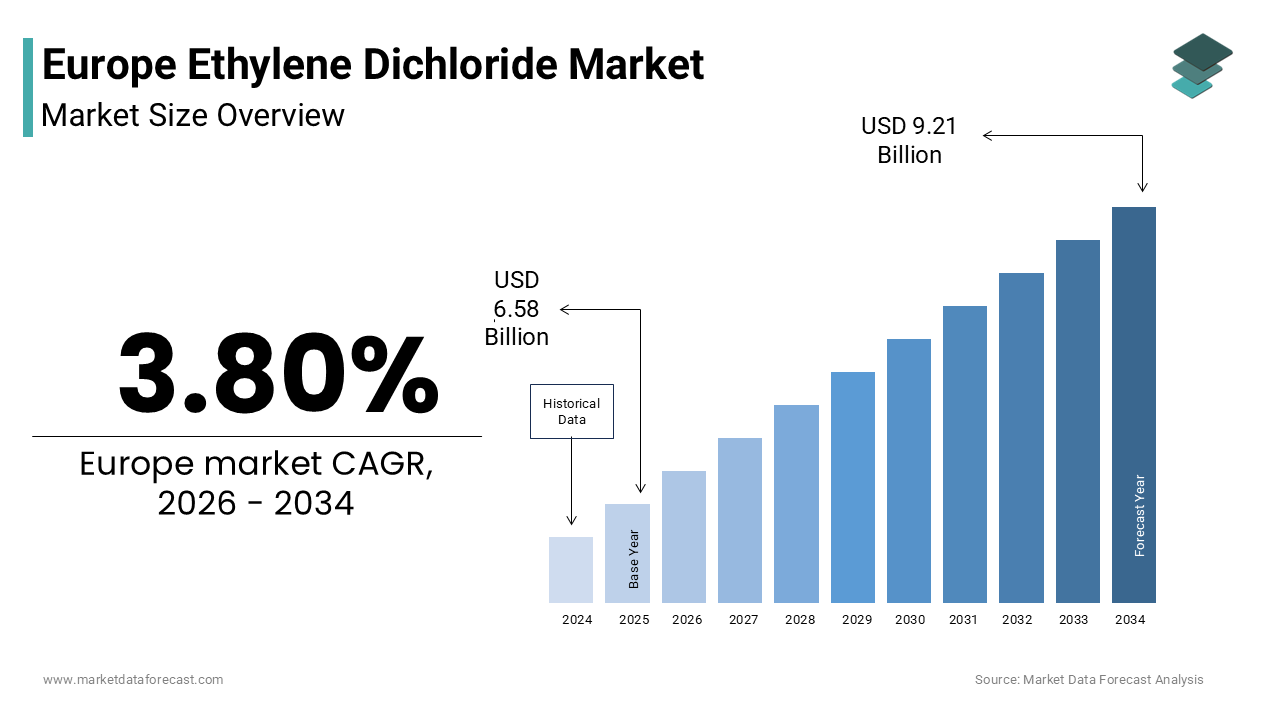
The Europe ethylene dichloride market was valued at USD 6.58 billion in 2025, is estimated to reach USD 6.83 billion in 2026, and is projected to reach USD 9.21 billion by 2034, growing at a CAGR of 3.80% during the forecast period from 2026 to 2034. The growth of the Europe ethylene dichloride market is driven by strong demand from the polyvinyl chloride (PVC) industry, particularly in construction and infrastructure applications. Ethylene dichloride serves as a key precursor for vinyl chloride monomer production, making it an essential component in the chlor-alkali value chain. Additionally, increasing infrastructure development, renovation initiatives under sustainability programs, and the expansion of chemical manufacturing activities are further supporting market growth. However, strict environmental regulations and volatility in energy and feedstock prices continue to influence market dynamics.
Key Market Trends
- Rising demand for polyvinyl chloride (PVC) in construction applications such as pipes, fittings, and window profiles.
- Increasing integration with the chlor-alkali industry, ensuring efficient utilization of chlorine and stable production cycles.
- Growing emphasis on circular economy initiatives, including PVC recycling and sustainable material usage.
- Expansion into specialty chemical derivatives, including pharmaceutical and high-performance applications.
- Strengthening focus on environmental compliance and emission reduction technologies due to stringent EU regulations.
Segmental Insights
- Based on application, the vinyl chloride monomer segment was the largest and held a significant share of the Europe ethylene dichloride market in 2025. The dominance of this segment is attributed to the critical role of ethylene dichloride as a primary feedstock in PVC production, which is widely used in construction and infrastructure sectors.
- The solvent segment is expected to witness the fastest growth during the forecast period. The growth of this segment is driven by increasing demand for high-purity solvents in pharmaceutical manufacturing and specialty chemical applications.
Regional Insights
The Europe ethylene dichloride market is witnessing stable growth across major economies, supported by strong industrial infrastructure and demand from the construction and chemical sectors.
- Germany was the largest contributor, accounting for 22.7% of the European ethylene dichloride market share in 2025, driven by its advanced chemical industry and integrated production facilities.
- Italy holds a significant position in the market, supported by strong demand from construction, packaging, and export-oriented PVC industries.
- France is a key market driven by its industrial base, infrastructure development, and energy transition initiatives.
- The Netherlands plays a crucial role as a logistics and chemical processing hub, supported by the Port of Rotterdam and integrated chemical clusters.
- Belgium is emerging as an important market due to its dense chemical industry cluster in Antwerp and the presence of major multinational producers.
Competitive Landscape
The Europe ethylene dichloride market is characterized by a consolidated competitive landscape dominated by large integrated chemical companies focusing on operational efficiency, sustainability, and regulatory compliance. Key players leverage vertical integration, advanced production technologies, and long-term supply agreements to maintain market stability. Increasing investments in energy efficiency, circular economy practices, and specialty chemical diversification are shaping competitive strategies. Prominent players in the Europe ethylene dichloride market include INEOS Group Holdings S.A., Occidental Petroleum Corporation (OxyChem), Westlake Corporation, Formosa Plastics Corporation, Dow Inc., BASF SE, Shell plc, SABIC, LG Chem Ltd., and Reliance Industries Limited.
Europe Ethylene Dichloride Market Size
The Europe ethylene dichloride market size was valued at USD 6.58 billion in 2025 and is anticipated to reach USD 6.83 billion in 2026 from USD 9.21 billion by 2034, growing at a CAGR of 3.80% during the forecast period from 2026 to 2034.
Ethylene dichloride (EDC), or 1,2-dichloroethane, is a clear, colorless, flammable liquid with a chloroform-like odor. This organochlorine compound is predominantly manufactured through the direct chlorination of ethylene or the oxychlorination process utilizing hydrogen chloride and ethylene. The strategic importance of ethylene dichloride lies in its integral role within the chlor alkali value chain where it helps balance chlorine production demands. Eurostat indicates the European Union chemical industry remains a manufacturing powerhouse, with the sold production value of chemicals exceeding 700 billion euros in 2023, while extra-EU exports for the sector stood at approximately 523 billion euros. The operational landscape is heavily influenced by energy dynamics given that chlor alkali processes are energy intensive. Energy analysis for Europe highlights the intensive nature of the sector, with the chemical and petrochemical industry remaining the top industrial consumer, accounting for over one-fifth of final industrial energy use. The handling and market access of ethylene dichloride are strictly managed under the REACH regulation due to its hazardous classification, while its industrial emission limits are rigorously controlled under the Industrial Emissions Directive. The European Environment Agency notes that industrial emissions of volatile organic compounds have decreased by 35 percent since 2005, reflecting the successful implementation of tighter environmental controls. These regulatory pressures necessitate advanced containment technologies and continuous monitoring systems within production facilities. The market operates within a mature industrial ecosystem where capacity utilization rates are closely tied to downstream polyvinyl chloride demand in construction and automotive sectors.
MARKET DRIVERS
Robust Demand from the Polyvinyl Chloride Construction Sector
The sustained demand for polyvinyl chloride in the construction industry is one of the key drivers for the growth of the Europe ethylene dichloride market. Ethylene dichloride is the exclusive precursor for vinyl chloride monomer which is polymerized to produce polyvinyl chloride resin. This material is extensively used in pipes fittings window profiles and cable insulation due to its durability and cost effectiveness. According to Plastics Europe the European plastics industry produced approximately 57 million tons of plastics in 2022 with polyvinyl chloride representing a significant share particularly in building and construction applications. The ongoing urbanization and infrastructure development projects across major European economies fuel the consumption of polyvinyl chloride products. As per the European Construction Industry Federation the construction sector contributes around 9 percent to the European Union gross domestic product indicating its pivotal role in economic activity. Renovation waves initiated under the European Green Deal aim to improve energy efficiency in buildings which often involves replacing old windows and piping systems with modern polyvinyl chloride alternatives. This legislative push creates a steady baseline demand for ethylene dichloride as manufacturers ramp up production to meet the needs of retrofitting programs. Furthermore, the longevity and recyclability of polyvinyl chloride align with circular economy goals encouraging its continued use in sustainable building practices. The integration of recycled polyvinyl chloride into new products also supports the value chain although virgin resin production remains dominant for high performance applications. Consequently, the health of the construction sector directly correlates with ethylene dichloride consumption patterns.
Integration within the Chlor Alkali Industry Value Chain
The intrinsic link between ethylene dichloride production and the chlor alkali industry further propels the expansion of the Europe ethylene dichloride market. Ethylene dichloride production consumes large quantities of chlorine which is a co product of caustic soda manufacturing. This symbiotic relationship ensures that ethylene dichloride plants serve as a crucial outlet for chlorine thereby balancing the chlor alkali market. According to the European Chlor Alkali Industry Association the production of caustic soda and chlorine in Europe around 8 to 9 million tons annually demonstrating the massive scale of this industrial complex. The demand for caustic soda in various sectors such as pulp and paper alumina production and water treatment drives chlorine output which in turn necessitates efficient conversion into ethylene dichloride. As per the United States Geological Survey global chlorine production capacity continues to expand with Europe maintaining a sophisticated network of integrated chemical sites. This integration allows producers to optimize costs and manage supply fluctuations effectively. When demand for caustic soda rises chlorine production increases and ethylene dichloride facilities absorb the excess chlorine preventing market imbalances. This operational synergy provides a structural advantage to integrated producers who can adjust ethylene dichloride output based on chlorine availability rather than solely relying on vinyl chloride monomer demand. The strategic importance of this balance means that ethylene dichloride production levels are often dictated by the broader dynamics of the chlor alkali sector ensuring consistent operational rates even during periods of moderate downstream demand.
MARKET RESTRAINTS
Stringent Environmental Regulations and Compliance Costs
Strict environmental regulations concerning hazardous air pollutants and waste management are restricting the growth of the Europe ethylene dichloride market. Ethylene dichloride is classified as a toxic substance with potential carcinogenic effects requiring rigorous control measures during production storage and transport. The Industrial Emissions Directive mandates the use of best available techniques to minimize emissions from chemical installations. According to the European Environment Agency compliance with these directives requires substantial capital investment in abatement technologies such as thermal oxidizers and scrubbers. These compliance costs increase the overall production expenses making European ethylene dichloride less competitive compared to regions with laxer environmental standards. Under the European Green Deal, the European Commission has established legally binding targets to drastically lower greenhouse gas emissions and reduce the health risks associated with air and water pollution by the end of the decade. Producers must continuously upgrade their facilities to meet evolving emission limits which can lead to temporary shutdowns or reduced capacity utilization. Additionally, the handling of by products such as heavy ends and tars generated during ethylene dichloride production poses disposal challenges. Regulatory frameworks restrict landfilling of hazardous waste forcing companies to invest in specialized treatment or incineration processes. These regulatory burdens not only increase operational expenditures but also limit the flexibility of producers to respond quickly to market changes. The constant need for regulatory adherence creates a barrier to entry for new players and constrains the expansion capabilities of existing facilities thereby restraining market growth potential.
Volatility in Raw Material Prices and Energy Costs
Fluctuations in the prices of key raw materials such as ethylene and chlorine along with soaring energy costs are greatly hampering the expansion of the Europe ethylene dichloride market. Ethylene is derived from naphtha or natural gas liquids whose prices are linked to crude oil and natural gas markets. According to the International Energy Agency natural gas prices in Europe experienced extreme volatility in recent years due to geopolitical tensions and supply disruptions. This instability directly impacts the production costs of ethylene and subsequently ethylene dichloride. High energy costs are particularly detrimental because the oxychlorination process is energy intensive requiring significant amounts of steam and electricity. Eurostat indicates that the cost of producing chemicals within the European Union underwent an unprecedented spike, largely as a result of the extreme surge in the prices of energy and raw material inputs. These cost pressures squeeze profit margins for ethylene dichloride producers who may struggle to pass on the full extent of price increases to downstream customers. The competitiveness of European production is further challenged by imports from regions with lower energy costs such as the Middle East and North America. The reliance on imported feedstocks exposes the market to currency exchange rate risks and logistical uncertainties. Additionally, the intermittent nature of renewable energy sources complicates the stable operation of continuous chemical processes. Producers face difficulties in long term planning and contracting due to unpredictable input costs. This economic uncertainty discourages investment in new capacity and may lead to the rationalization of existing assets thereby restraining the overall market expansion.
MARKET OPPORTUNITIES
Development of Circular Economy Initiatives for Vinyl Products
Circular economy initiatives are creating a major opportunity for the Europe ethylene dichloride market. Key to this growth are improved polyvinyl chloride recycling technologies. The European Union’s Circular Economy Action Plan emphasizes the need to increase recycling rates for plastics including polyvinyl chloride. According to VinylPlus and Plastics Europe, the long-term trend for polyvinyl chloride recycling in Europe reflects a significant recovery effort, although annual volumes can fluctuate based on broader economic conditions in the construction sector. This growing focus on recycling creates opportunities for ethylene dichloride producers to engage in closed loop systems where recycled vinyl chloride monomer is reintegrated into production processes. Innovations in chemical recycling technologies allow for the depolymerization of waste polyvinyl chloride back into its constituent monomers which can then be used to produce new high-quality materials. As per the European Commission the strategy for plastics in a circular economy aims to ensure that all plastic packaging placed on the EU market is reusable or recyclable by 2030. Ethylene dichloride producers can leverage these developments by investing in facilities that accept recycled feedstocks or by partnering with waste management companies. This alignment with sustainability goals enhances the social license to operate and opens up new revenue streams. Furthermore, the demand for certified recycled content in construction and automotive applications is rising driving the need for robust supply chains. By participating in these circular initiatives ethylene dichloride manufacturers can differentiate their products and meet the evolving preferences of eco conscious customers. This transition towards a circular model offers a pathway for sustainable growth and resilience against regulatory pressures.
Expansion into High Performance Specialty Derivatives
The diversification into high performance specialty derivatives based on ethylene dichloride offers a lucrative prospect for Europe ethylene dichloride market participants. Beyond its primary use in vinyl chloride monomer production ethylene dichloride serves as a solvent and intermediate in the synthesis of other chemicals such as ethylenediamine and triethanolamine. These derivatives find applications in pharmaceuticals agrochemicals and personal care products which are less sensitive to economic cycles than construction materials. According to the European Chemical Industry Council the specialty chemicals sector in Europe generates significant value added due to its innovation intensity and high margin profile. Developing capabilities in producing high purity ethylene dichloride for these niche applications allows producers to tap into higher value markets. As per the German Chemical Industry Association the demand for specialty chemicals is expected to grow at a faster rate than bulk chemicals driven by technological advancements and consumer trends. Ethylene dichloride producers can invest in purification technologies to meet the stringent quality requirements of pharmaceutical and electronic grade applications. This strategic shift reduces dependence on the volatile polyvinyl chloride market and enhances overall profitability. Additionally, the growing interest in green chemistry encourages the development of safer and more efficient synthesis routes for these derivatives. Collaborations with research institutions and downstream users can facilitate the introduction of innovative products. Ethylene dichloride manufacturers can capture new growth opportunities by expanding into specialized segments. Doing so will strengthen their competitive position in the European chemical landscape.
MARKET CHALLENGES
Supply Chain Disruptions and Geopolitical Instability
Geopolitical instability and associated supply chain disruptions remain a major challenge to the Europe ethylene dichloride market. The region relies on a complex network of pipelines and shipping routes for the transportation of ethylene chlorine and finished products. Conflicts and trade tensions can disrupt these flows leading to shortages and price spikes. According to the International Energy Agency energy security concerns have prompted European countries to reassess their supply dependencies affecting the availability of natural gas and naphtha. These disruptions ripple through the chemical value chain impacting ethylene dichloride production schedules. As per the European Central Bank supply chain bottlenecks have been identified as a key factor contributing to inflationary pressures in the manufacturing sector. The reliance on imported feedstocks makes the market vulnerable to external shocks such as port closures or sanctions. Additionally, the transportation of hazardous chemicals like ethylene dichloride requires strict safety protocols which can be compromised during times of instability. Insurance costs for shipping and storage may increase further adding to operational burdens. Producers must maintain higher inventory levels to mitigate supply risks which ties up capital and increases storage costs. The unpredictability of geopolitical events makes it difficult to establish long term supply contracts and plan capacity expansions. This environment of uncertainty hampers investment decisions and slows down market growth. Companies must develop robust risk management strategies and diversify their supply sources to navigate these challenges effectively.
Competition from Alternative Materials and Substitutes
The emergence of alternative materials and substitutes in end use applications is constraining the expansion of the Europe ethylene dichloride market. In the construction sector materials such as cross-linked polyethylene polypropylene and aluminum are increasingly used as alternatives to polyvinyl chloride for pipes and profiles. According to Plastics Europe the market share of polyvinyl chloride faces pressure from these alternatives due to perceptions regarding environmental impact and recyclability. Cross linked polyethylene offers superior thermal resistance and flexibility making it preferred for certain plumbing and heating applications. As per the European Aluminium Association aluminum profiles are gaining popularity in window frames due to their durability and aesthetic appeal. In the packaging sector biodegradable plastics and paper-based materials are replacing polyvinyl chloride films and blister packs driven by consumer preference for sustainable options. The European Union’s Single Use Plastics Directive restricts the use of certain plastic products encouraging the adoption of alternatives. This shift in material preference reduces the demand for vinyl chloride monomer and consequently ethylene dichloride. Producers must contend with the loss of market share in traditional applications and compete on performance and cost metrics. The development of bio-based plastics further threatens the dominance of petroleum derived chemicals. Ethylene dichloride manufacturers need to innovate and demonstrate the environmental benefits of their products through improved recycling and lifecycle assessments. Failure to adapt to these changing material trends could result in long term decline in demand.
REPORT COVERAGE
| REPORT METRIC | DETAILS |
| Market Size Available | 2025 to 2034 |
| Base Year | 2025 |
| Forecast Period | 2026 to 2034 |
| CAGR | 3.80% |
| Segments Covered | By Application and Region. |
| Various Analyses Covered | Global, Regional & Country Level Analysis, Segment-Level Analysis, DROC, PESTLE Analysis, Porter’s Five Forces Analysis, Competitive Landscape, Analyst Overview of Investment Opportunities |
| Country Covered | UK, France, Spain, Germany, Italy, Russia, Sweden, Denmark, Switzerland, the Netherlands, Turkey, the Czech Republic, and the Rest of Europe. |
| Market Leaders Profiled | INEOS Group Holdings S.A., Occidental Petroleum Corporation (OxyChem), Westlake Corporation, Formosa Plastics Corporation, Dow Inc., BASF SE, Shell plc, SABIC (Saudi Basic Industries Corporation), LG Chem Ltd., and Reliance Industries Limited |
SEGMENTAL ANALYSIS
By Application Insights
The vinyl chloride monomer segment continued to hold the majority share of the Europe ethylene dichloride market in 2025. This dominance of the segment is driven by the fact that ethylene dichloride serves as the primary and almost exclusive feedstock for the production of vinyl chloride monomer through thermal cracking. The resulting vinyl chloride monomer is then polymerized into polyvinyl chloride which is a fundamental material in the European construction industry. According to Plastics Europe the demand for polyvinyl chloride in the building and construction sector remains robust with pipes and profiles constituting over 60 percent of polyvinyl chloride usage. The extensive infrastructure renewal programs across the European Union particularly those focused on water management and energy efficient housing drive consistent demand for polyvinyl chloride products. As per the European Construction Industry Federation the renovation wave initiative aims to double annual energy renovation rates in the next ten years which necessitates large volumes of window profiles and insulation materials made from polyvinyl chloride. This legislative support ensures a stable and growing downstream market for vinyl chloride monomer thereby sustaining high consumption levels of ethylene dichloride. Furthermore, the integrated nature of chlor alkali plants in Europe means that ethylene dichloride production is optimized to meet the steady requirements of vinyl chloride monomer facilities. The lack of viable alternative feedstocks for vinyl chloride monomer production further cements the position of ethylene dichloride in this application. The scalability of polyvinyl chloride production and its cost effectiveness compared to alternative materials like copper or aluminum in piping applications also contribute to the sustained leadership of this segment.
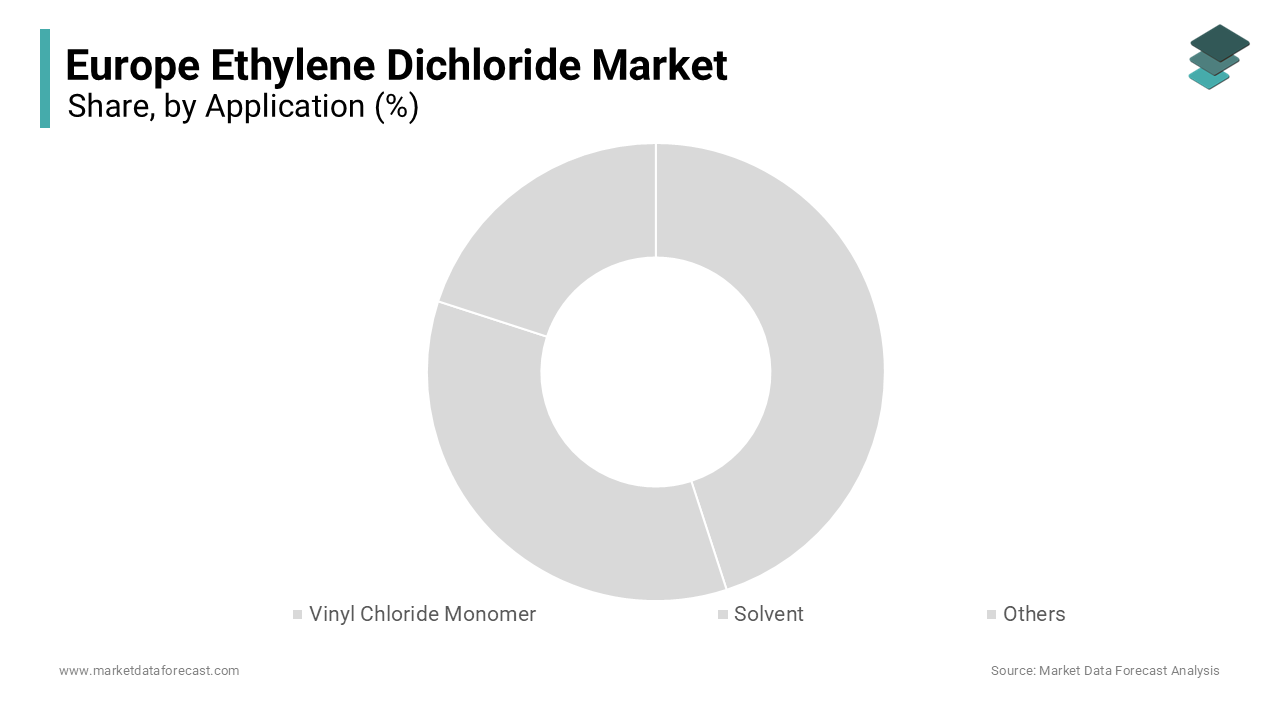
The solvent segment is predicted to witness the highest CAGR of 4.2% from 2026 to 2034 due to its specialized applications in pharmaceuticals and chemical synthesis. Although this segment holds a smaller volume share compared to vinyl chloride monomer its growth is fueled by the increasing demand for high purity solvents in the life sciences sector. Ethylene dichloride is used as an extraction solvent and reaction medium in the production of various active pharmaceutical ingredients due to its ability to dissolve a wide range of organic compounds. According to the European Federation of Pharmaceutical Industries and Associations the European pharmaceutical industry is the largest exporter of medicines globally with a trade surplus of over 100 billion euros in 2022. This strong export performance drives continuous investment in manufacturing capacity and research and development activities which in turn increases the consumption of specialized solvents. As per the German Chemical Industry Association the specialty chemicals sector including pharmaceutical intermediates is experiencing steady growth driven by an aging population and increased healthcare spending. The shift towards continuous flow chemistry and green synthesis methods also creates opportunities for ethylene dichloride as a process solvent that can be efficiently recovered and recycled. Additionally, the use of ethylene dichloride in the production of other chlorinated solvents and degreasers for industrial cleaning applications contributes to its growth. The stringent quality standards in the pharmaceutical sector require high purity grades of ethylene dichloride which command higher margins and encourage suppliers to focus on this niche. The resilience of the healthcare sector against economic downturns further supports the steady expansion of the solvent application segment.
REGIONAL ANALYSIS
Germany Ethylene Dichloride Market Analysis
Germany dominated the Europe ethylene dichloride market by capturing a 22.7% share in 2025. Its massive chemical processing infrastructure propels the dominance of the German market. The country’s market has a highly integrated chlor alkali industry with major production sites located in Ludwigshafen and Marl. A key driving factor is the presence of global chemical giants such as BASF and Covestro which operate large scale vinyl chloride monomer and polyvinyl chloride production facilities. The strong domestic demand for polyvinyl chloride in the construction sector particularly for energy efficient building renovations supports high utilization rates of ethylene dichloride plants. Germany’s advanced logistics network facilitates the efficient distribution of ethylene dichloride to downstream users across Central Europe. The country’s strict adherence to environmental regulations drives innovation in production processes leading to lower emissions and higher efficiency. The integration of renewable energy sources into chemical production also aligns with national sustainability goals. Germany’s position as a technology leader in chemical engineering ensures that its ethylene dichloride market remains at the forefront of operational excellence and environmental compliance in the region.
Italy Ethylene Dichloride Market Analysis
Italy was the second largest country in the Europe ethylene dichloride market and occupied a 15.8% share in 2025. This position of the Italian market is fuelled by its strong construction and packaging industries. The market in Italy reveals a robust demand for polyvinyl chloride products particularly in the southern regions where infrastructure development is ongoing. A key driving factor is the Italian construction sector’s reliance on polyvinyl chloride for piping systems and window frames due to its durability and resistance to seismic activity. The Superbonus scheme although modified has left a lasting impact on the demand for building materials including polyvinyl chloride components. Italy’s strategic location in the Mediterranean also makes it a hub for polyvinyl chloride exports to North Africa and the Middle East. The presence of major polyvinyl chloride producers such as Versalis ensures a steady demand for ethylene dichloride feedstock. The country’s emphasis on design and aesthetics in construction drives the use of high-quality polyvinyl chloride profiles. Additionally, the packaging sector’s use of polyvinyl chloride for blister packs and bottles contributes to market stability. Italy’s combination of domestic demand and export orientation sustains its prominent position in the European ethylene dichloride market.
France Ethylene Dichloride Market Analysis
France plays a major role in the Europe ethylene dichloride market due to a balanced mix of construction and industrial applications. The country’s market is known for a mature chemical industry with significant production capabilities in the Rhône Alpes region. One of the major growth enablers is the French government’s ambitious energy transition policies which promote the renovation of existing building stock to improve energy efficiency. The country’s extensive railway network expansion projects also contribute to demand for polyvinyl chloride cables and components. France’s commitment to nuclear energy provides a stable and low carbon electricity supply which is beneficial for energy intensive chlor alkali operations. The presence of major players such as Arkema and Orkla supports the local supply chain for ethylene dichloride and its derivatives. Additionally, the agricultural sector’s use of polyvinyl chloride for irrigation systems and greenhouse structures adds to the demand base. France’s regulatory framework encourages sustainable production practices leading to investments in cleaner technologies. The combination of policy support and industrial capability ensures that France remains a key consumer of ethylene dichloride in Western Europe.
Netherlands Ethylene Dichloride Market Analysis
The Netherlands is moving ahead steadfastly in the European market and leverages its strategic port infrastructure and chemical clusters. Its market shows the presence of the Port of Rotterdam which serves as a major entry point for raw materials and a hub for chemical processing. A primary driving factor is the integrated chemical complex in the Rotterdam area where companies such as Dow and Shin Etsu operate large scale chlor alkali and vinyl chloride monomer facilities. The port’s connectivity allows for efficient import of ethylene and export of polyvinyl chloride products to global markets. The Netherlands’ focus on circular economy initiatives drives innovation in polyvinyl chloride recycling which influences the demand for virgin ethylene dichloride. The country’s advanced wastewater treatment infrastructure also utilizes polyvinyl chloride pipes extensively. The Dutch government’s investment in hydrogen infrastructure may eventually impact chlor alkali production methods but currently supports stable operations. The proximity to major European markets enables quick delivery of ethylene dichloride and derivatives. The Netherlands’ role as a logistical and processing hub ensures its continued importance in the European ethylene dichloride supply chain.
Belgium Ethylene Dichloride Market Analysis
Belgium is predicted to grow notably in the Europe ethylene dichloride market from 2026 to 2034 owing to its dense chemical industry cluster in Antwerp. The market status is characterized by one of the largest integrated chemical sites in the world which hosts multiple producers of ethylene dichloride and vinyl chloride monomer. A key driving factor is the presence of major multinational corporations such as INEOS and Solvay which operate sophisticated chlor alkali complexes in the Antwerp port area. The Antwerp cluster benefits from excellent pipeline connections for ethylene and chlorine which optimize production efficiency and reduce logistics costs. Belgium’s central location in Europe facilitates the distribution of polyvinyl chloride products to neighboring countries such as Germany and France. The country’s strong focus on research and development leads to continuous improvements in production technologies and product quality. Belgium’s regulatory environment aligns with European Union standards ensuring high environmental performance. The integration of utilities and shared infrastructure within the cluster enhances competitiveness. Belgium’s strategic position and industrial density make it a critical node in the European ethylene dichloride market.
COMPETITIVE LANDSCAPE
The competition in the Europe ethylene dichloride market is characterized by a consolidated landscape dominated by a few large integrated chemical companies. These players benefit from economies of scale and established infrastructure which create high barriers to entry for new competitors. Competitive dynamics are driven by cost efficiency operational reliability and adherence to stringent environmental regulations. Companies differentiate themselves through sustainability initiatives and the ability to provide consistent quality products. Price competition is moderate due to the integrated nature of the chlor alkali value chain where ethylene dichloride production is linked to caustic soda demand. Strategic alliances and long-term supply agreements are common practices to ensure market stability. Innovation in production technologies and waste reduction methods serves as a key competitive factor. The market sees limited threat from substitutes due to the unique properties of ethylene dichloride as a precursor for vinyl chloride monomer. However, pressure from alternative materials in end use applications influences downstream demand. Regulatory compliance and environmental performance are critical differentiators. Companies must continuously invest in modernization and sustainability to maintain their competitive edge in this mature and regulated market environment.
KEY MARKET PLAYERS
Some of the companies that are playing a dominating role in the Europe Ethylene Dichloride Market include
- INEOS Group Holdings S.A.
- Occidental Petroleum Corporation (OxyChem)
- Westlake Corporation
- Formosa Plastics Corporation
- Dow Inc.
- BASF SE
- Shell plc
- SABIC (Saudi Basic Industries Corporation)
- LG Chem Ltd.
- Reliance Industries Limited
Top Players in the Market
INEOS
INEOS stands as a dominant force in the European chlor vinyls sector operating large scale integrated production sites across the continent. The company utilizes advanced oxychlorination technologies to produce ethylene dichloride efficiently while maintaining strict environmental standards. Recent strategic initiatives include significant investments in energy efficiency upgrades at its Antwerp and Lavéra facilities to reduce carbon footprint and operational costs. INEOS actively participates in industry wide sustainability programs promoting the circular economy for polyvinyl chloride. Their global supply chain network ensures reliable delivery of high-quality intermediates to downstream customers. By focusing on operational excellence and digitalization INEOS strengthens its competitive position. The company also engages in long term contracts with key polyvinyl chloride producers ensuring stable demand. Their commitment to safety and regulatory compliance reinforces their reputation as a trusted supplier in the European chemical landscape.
Solvay
Solvay is a leading specialty chemicals company with a strong presence in the European ethylene dichloride market through its extensive chlor alkali operations. The company leverages its expertise in sustainable chemistry to optimize production processes and minimize environmental impact. Recent actions include the implementation of innovative recycling technologies and the development of low carbon production methods at its sites in France and Germany. Solvay focuses on creating value through high performance materials and essential chemicals serving various industrial sectors. Their investment in research and development drives innovation in product quality and process efficiency. Solvay collaborates with stakeholders to advance the circular economy for plastics including polyvinyl chloride. The company’s strategic partnerships enhance its market reach and customer engagement. By prioritizing sustainability and innovation Solvay maintains a robust position in the European market. Their dedication to responsible sourcing and production aligns with evolving regulatory requirements and customer expectations.
Dow Chemical
Dow Chemical operates as a major player in the European ethylene dichloride market utilizing its integrated manufacturing assets to produce high volume chlorinated intermediates. The company emphasizes sustainability and circularity in its operations aiming to reduce waste and emissions. Recent efforts include the expansion of recycled content capabilities and the adoption of renewable energy sources at its European facilities. Dow invests in advanced technologies to improve the efficiency of ethylene dichloride production and downstream polyvinyl chloride manufacturing. Their global expertise allows them to offer tailored solutions to diverse customer needs. Dow actively engages in industry collaborations to promote best practices in safety and environmental stewardship. The company’s focus on innovation drives the development of new applications for chlor vinyls. By strengthening its supply chain resilience and enhancing customer relationships Dow solidifies its market position. Their commitment to sustainability goals supports long term growth and competitiveness in the European region.
Top Strategies Used by Key Market Participants
Key players in the Europe ethylene dichloride market primarily focus on vertical integration to secure raw material supplies and optimize production costs. Companies invest heavily in energy efficiency technologies to mitigate the impact of volatile energy prices and reduce carbon emissions. Strategic partnerships with downstream polyvinyl chloride producers ensure stable demand and long-term contracts. Participants also prioritize sustainability by adopting circular economy principles and increasing the use of recycled feedstocks. Innovation in production processes such as advanced oxychlorination techniques enhances operational efficiency and product quality. Regulatory compliance is a central strategy with firms investing in state-of-the-art emission control systems. Diversification into specialty chemicals and high value derivatives helps mitigate risks associated with bulk commodity markets. Digitalization of supply chains improves logistics and inventory management. These strategies collectively enable companies to maintain competitiveness and adapt to changing market dynamics in the European region.
MARKET SEGMENTATION
This research report on the Europe Ethylene Dichloride Market has been segmented and sub-segmented based on the following categories.
By Application
- Vinyl Chloride Monomer
- Solvent
- Others
By Country
- UK
- France
- Spain
- Germany
- Italy
- Russia
- Sweden
- Denmark
- Switzerland
- Netherlands
- Turkey
- Czech Republic
- Rest of Europe