- Product Description Description
- Table of Contents TOC
- List of Table & Figure LOT
- Get Free Sample PDF Sample PDF
Market Size, 2025
$0.29 BnMarket Estimate, 2026
$0.35 BnMarket Forecast, 2034
$1.53 BnCAGR, 2026–2034
20.26%Executive Summary: Europe Exoskeleton Market
- Market Scope: Comprehensive European exoskeleton market analysis covering technology segments, mobility models, body part applications, hardware/software/services components, and country-level frameworks across Germany, France, the UK, and the wider region.
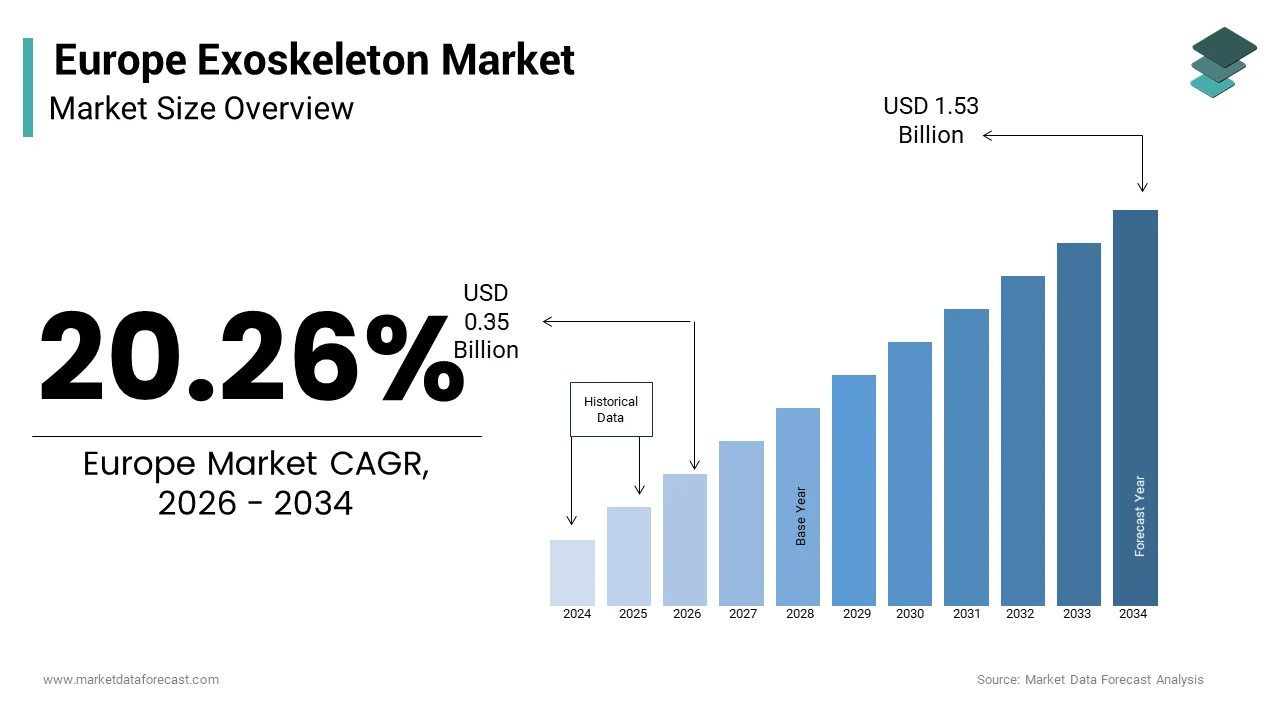
- Market Valuation: Valued at USD 0.29 billion (2025), estimated at USD 0.35 billion in 2026, and projected to reach USD 1.53 billion by 2034, registering a robust CAGR of 20.26% (2026–2034).
- Primary Growth Drivers: Aging demographics and rising prevalence of mobility impairments, stringent occupational health and safety regulations mandating physical strain reduction, expansion of neurorehabilitation infrastructure, and growing human-robot collaboration under Industry 4.0.
Key Market Segment Metrics (2026–2034)
| Category | Leading Segment (2025 Position) | Fastest-Growing Segment |
|---|---|---|
| By Technology | Powered / Active (capturing 62.2% share in 2024 for clinical and industrial outcomes) | Passive Exoskeletons (witnessing a 24.3% CAGR from 2025 to 2033 due to cost efficiency and simplicity) |
| By Mobility | Mobile Exoskeletons (occupying the majority share in 2024 for versatility across rehabilitation and workplace tasks) | Stationary Exoskeletons (exhibiting a 19.7% CAGR for acute care and standardized gait training) |
| By Component | Hardware (accounting for 64.1% share in 2024 as the foundational structural delivery mechanism) | Services (witnessing the highest CAGR of 26.8% driven by maintenance, training, and IoT diagnostics) |
| By Country | Germany (top performer accounting for 28.1% share in 2024 via advanced industrial and medtech hubs) | France & Italy (driven by workplace safety enforcement, neurorehabilitation reform, and unique reimbursement models) |
Major Market Players & Market Structure
Market Structure: Dynamic and fragmented market featuring specialized medtech firms, industrial automation providers, and research startups, navigating reimbursement barriers, standard deficits, and integration challenges through clinical validation and public-private partnerships.
Key Companies: CYBERDYNE Inc., Össur hf, Ekso Bionics Holdings Inc., Ottobock SE & Co. KGaA, German Bionic Systems GmbH, Parker Hannifin Corp., ReWalk Robotics Ltd., Bioservo Technologies AB, and Fourier Intelligence.
Europe Exoskeleton Market Size
The Europe exoskeleton market size was valued at USD 0.29 billion in 2025 and is anticipated to reach USD 0.35 billion in 2026 to reach USD 1.53 billion by 2034, growing at a CAGR of 20.26% during the forecast period from 2026 to 2034.
Exoskeleton refers to the wearable robotic systems designed to augment, enhance, or restore human physical capability across medical, industrial, and defense applications. These devices integrate electromechanical actuators, sensors, and control algorithms to support movement, reduce fatigue, or facilitate rehabilitation. Europe has emerged as a critical innovation hub driven by advanced healthcare infrastructure, aging demographics, and strong occupational safety mandates. According to Eurostat, the proportion of Europeans aged 65 and over reached 21.3 percent in 2023 and is projected to exceed 25 percent by 203,0, increasing demand for mobility assistance and rehabilitation technologies. As per the European Agency for Safety and Health at Work, over three out of five workers in the EU report musculoskeletal problems, which are a major work-related ailment in sectors such as logistics, manufacturing, and healthcare. Meanwhile, the European Commission's Horizon Europe program allocated €180 million in 2023 to fund research in cutting-edge digital technologies, including human-centric robotics and wearable assistive devices. These structural and policy-level factors position the exoskeleton market at the intersection of demographic necessity, technological advancement, and regulatory support, shaping a distinct regional trajectory grounded in human-centered innovation rather than pure commercial scale.
MARKET DRIVERS
Aging Population and Rising Prevalence of Mobility Impairments
The rapidly aging demographic is accelerating the expansion of the Europe exoskeleton market. It is increasing the adoption of medical exoskeletons as mobility impairments become increasingly prevalent among older adults. According to sources, A significant portion of the population in the European Union lives with movement-related disabilities. As per research, Osteoarthritis and stroke are major contributors to these disabilities. Many stroke survivors experience persistent motor deficits and require intensive rehabilitation. Exoskeletons such as those cleared by the European Medicines Agency enable task-specific gait training that accelerates neuroplastic recovery. Hospital-based rehabilitation centers in several major European countries have integrated robotic gait therapy into their specialized clinics, as per studies. Apart from these, national health systems are beginning to recognize long-term cost benefits. This convergence of clinical evidence, demographic pressure, and health economic rationale is driving sustained institutional demand for medical exoskeletons across Europe.
Stringent Occupational Health and Safety Regulations
Robust workplace safety framework in the region compels industries to adopt this wearable robotic system aa a preventive tool against work-related musculoskeletal injuries, which further boosts the growth of the Europe exoskeleton market. As per studies, a considerable number of EU workers experience back or limb pain due to repetitive lifting and overhead tasks. The EU Framework Directive 89/391 requires employers to address and reduce physical strain using technical or organizational solutions. Besides, studies in countries like Germany indicate that using passive upper body exoskeletons can decrease shoulder fatigue in assembly line workers. Similarly, Research in France shows that lumbar support exoskeletons reduce spinal compression for warehouse workers handling pallets. Rigorous national enforcement, as seen in Italy, links the use of exoskeletons in high-risk jobs to lower insurance premiums for employers. These regulatory and economic incentives transform exoskeletons from optional aids into compliance tools, accelerating adoption across manufacturing logistics and construction sectors.
MARKET RESTRAINTS
Limited Reimbursement and Funding Accessibility
Inconsistent and often absent reimbursement coverage for medical devices across national healthcare systems is one of the major impediments to the Europe exoskeleton market. Despite clinical validation, most European countries do not classify exoskeletons as essential medical equipment eligible for full public funding. Only a few countries, such as Germany and Italy, offer partial reimbursement. Coverage is generally restricted to specific neurological conditions and certified treatment centers. Even in the UK, the number of covered therapy sessions each year is very low. Other systems, like France's, prevent personal ownership, limiting access to clinical settings only. This financial barrier severely limits patient access, with notable out-of-pocket costs for a personal medical exoskeleton. Overall, very few eligible patients across the continent can afford or access this therapy beyond a small number of pilot programs. Market scalability is stifled because, without harmonized reimbursement policies, adoption of the technology is limited to research hospitals and affluent private users.
High Cost and Complex Integration in Industrial Settings
The substantial acquisition and operational costs of industrial exoskeletons are a barrier to the Europe exoskeleton market. Active exoskeletons equipped with powered joints and real-time sensors typically cost thousands of euros per unit, while even passive models require a notable amount. According to research, Budget allocation for these technologies is low among small and medium enterprises in the EU, driven by uncertainty about return on investment. Integration into existing workflows adds complexity and cost, which requires extensive engineering hours for customization per deployment. Compatibility with personal protective equipment and digital factory systems adds another layer of complexity. Moreover, worker acceptance remains inconsistent, as discomfort or restricted movement often leads to inconsistent use among frontline employees. These combined cost integration and usability challenges hinder scalability, particularly among cost-sensitive sectors and smaller firms lacking dedicated innovation budgets.
MARKET OPPORTUNITIES
Expansion of Neurorehabilitation Infrastructure
Strategic investment in advanced neurorehabilitation centers introduces a potential opportunity for the Europe exoskeleton market. The European Commission's Recovery and Resilience Facility has directed over EUR 8.1 billion in funding toward strengthening and building resilient long-term care systems across Member States, which includes the construction or renovation of hundreds of care facilities. According to sources, new robotic rehabilitation units were inaugurated featuring integrated exoskeleton platforms. These centers prioritize data-driven therapy with exoskeletons providing real-time kinematic feedback to clinicians, enabling personalized recovery protocols. Europe's transition to value-based care models and corresponding reimbursement reform creates a fertile environment for the clinical adoption of exoskeletons, whose ability to deliver measurable functional outcomes is a key advantage.
Growth in Human Robot Collaboration in Advanced Manufacturing
The evolution of Industry 4.0 in the region is fostering a new paradigm of human-robot collaboration, where these wearable robotic devices serve as essential interfaces between workers and intelligent production systems, which is setting up new growth possibilities for the expansion of the Europe exoskeleton market. According to research, many automotive and aerospace factories in some European countries have initiated human augmentation pilots as part of their digital transformation roadmaps. These initiatives prioritize worker augmentation over replacement, preserving skilled labor while enhancing precision and endurance. The European Institute of Innovation and Technology supports these efforts through the Symbiotic Human Robot Interaction program, which funds SMEs developing adaptive exoskeletons that learn user behavior and adjust assistance in real time. This convergence of smart manufacturing safety imperatives and workforce retention strategies positions industrial exoskeletons as critical enablers of sustainable advanced production in Europe.
MARKET CHALLENGES
Interoperability and Standardization Deficits
Absence of universal technical and safety standards impedes interoperability, ty clinical validation, and regulatory clarity, which acts as an obstacle for the Europe exoskeleton market. Unlike medical imaging or infusion devices, exoskeletons lack harmonized performance benchmarks across the European Union. The regulatory ambiguity delays market entry with an average approval timeline of several months for Class IIa medical exoskeletons due to inconsistent clinical trial requirements across member states. Furthermore, data protocols vary widely, preventing integration with hospital electronic health records. The absence of unified standards for safety data exchange and performance validation leads to a fragmented market, thereby hindering large-scale procurement and cross-border clinical adoption.
User Acceptance and Psychological Barriers
User acceptance remains a persistent challenge, despite technological advances, due to psychological and ergonomic barriers that long-term adoption of exoskeletons in both medical and industrial settings. This holds back the expansion of the Europe exoskeleton market. Many stroke survivors discontinued exoskeleton therapy within a few weeks, citing discomfort, loss of autonomy, and anxiety about device dependency, as per research. In industrial contexts, a share of workers in logistics and assembly expressed reluctance to use exoskeletons, fearing they would be perceived as physically incapable or replaceable. Design limitations exacerbate this resistance, with many devices still bulky, heavy, and incompatible with standard workwear or mobility aids. The average donning time for current lower limb exoskeletons exceeds several minutes, which reduces practicality in time-sensitive workflows. Moreover, the lack of customizable aesthetics, particularly in medical devices,, es contributes to stigma, especially among younger users. The behavioral adoption of exoskeletons across Europe will be limited until issues of seamless integration into daily routines and identity-related concerns are resolved.
REPORT COVERAGE
| REPORT METRIC | DETAILS |
| Market Size Available | 2025 to 2034 |
| Base Year | 2025 |
| Forecast Period | 2026 to 2034 |
| CAGR | 20.26% |
| Segments Covered | By Technology, Mobility, Component, Body Part, By Country |
| Various Analyses Covered | Global, Regional & Country Level Analysis; Segment-Level Analysis, DROC, PESTLE Analysis, Porter’s Five Forces Analysis, Competitive Landscape, Analyst Overview of Investment Opportunities |
| Regions Covered | UK, France, Spain, Germany, Italy, Russia, Sweden, Denmark, Switzerland, Netherlands, Turkey, Czech Republic & Rest of Europe |
| Market Leaders Profiled | CYBERDYNE Inc. , Ekso Bionics Holdings Inc., Ottobock SE & Co. KGaA, Parker Hannifin Corp, Sarcos Technology & Robotics Corp, ReWalk Robotics Ltd., BIONIK Laboratories Corp., Bioservo Technologies AB, Gogoa Mobility Robots, Rehab-Robotics Co. Ltd, Bioness Inc. (Bioventus), B-Temia Inc., Myomo Inc., Lockheed Martin Corp, Seismic Powered Clothing, RB3D SAS, Wearable Robotics SRL, Fourier Intelligence, Panasonic Corp. (Atoun) |
SEGMENTAL ANALYSIS
By Technology Insights
The powered or active exoskeletons segment was the top performer in the Europe exoskeleton market by capturing a 62.2% share in 2024. The prominence of the powered or active exoskeletons segment is attributable to its capacity to deliver measurable clinical and industrial outcomes through motorized assistance. In medical rehabilitation, active exoskeletons enable intensive gait training for stroke and spinal cord injury patients by generating joint torque that passive systems cannot replicate. In industrial contexts, active exoskeletons are increasingly deployed in high-precision sectors such as aerospace and automotive assembly, where fatigue reduction directly impacts quality control. Besides, the European Commission’s Horizon Europe program prioritizes funding for autonomous assistive robotics, with millions of euros allocated specifically for sensor-integrated active exoskeletons. These factors, clinical necessity in industrial performance gain,s, and policy support, consolidate the segment’s dominance across both therapeutic and occupational domains.
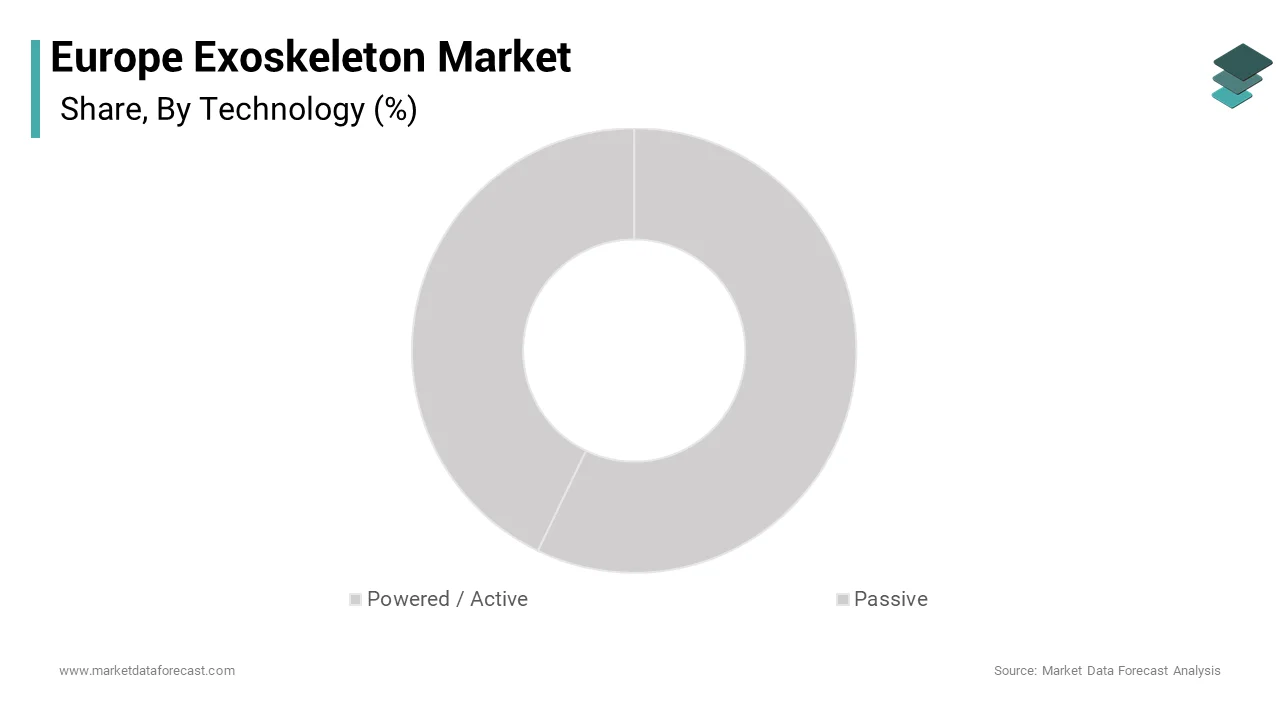
The passive exoskeleton segment is on the rise and is expected to be the fastest-growing segment in the market by witnessing a CAGR of 24.3% between 2025 and 2033. The swift expansion of the passive exoskeleton segment is driven by its simplicity, cost efficiency, and immediate ergonomic benefits in manual labor environments. Unlike powered systems, passive exoskeletons use springscounterbalances, nd elastic elements to redistribute load without requiring batteries or complex electronics, making them ideal for small and medium-sized enterprises with limited capital. According to research, a portion of warehouse workers expressed a higher willingness to use passive versus powered devices due to lighter weight and faster donning time. The EU is increasing regulatory pressure to reduce musculoskeletal disorders. In response, passive exoskeletons provide a scalable and low-barrier solution for widespread ergonomic intervention.
By Mobility Insights
The mobile exoskeletons segment occupied the majority share of the Europe exoskeleton market in 2024. The supremacy of the mobile exoskeletons segment is because of its versatility across clinical rehabilitation, home care, and industrial mobility applications. Unlike stationary systems, which are confined to fixed therapy rooms, mobile exoskeletons enable over-ground walking task-specific training and real-world functional use, vital for neuroplastic recovery and workplace integration. In industrial settings, mobile exoskeletons allow workers to move freely across assembly lines, warehouses, and construction sites without tethering. Furthermore, national health strategies increasingly emphasize home-based recovery. This alignment with functional independence clinical best practices and operational flexibility ensures mobile exoskeletons remain the backbone of European adoption.
The stationary exoskeleton segment is expected to exhibit a noteworthy CAGR of 19.7% from 2025 to 2033, owing to the rising demand for standardized high-intensity rehabilitation in acute care settings where controlled environments are essential. Stationary systems such as end effector gait trainers provide quantifiable metrics on step symmetry, cadence, and weight bearing—data increasingly required by European health authorities for therapy reimbursement. Apart from these, these systems integrate seamlessly with virtual reality modules, enhancing patient engagement during repetitive exercises. Stationary exoskeletons offer the rigor and reproducibility needed for clinical validation and regulatory compliance, which aligns with Europe's shift toward evidence-based and value-driven care.
By Component Insights
The hardware segment led the Europe exoskeleton market and accounted for a share of 64.1% in 2024. The growth of the hardware segment is fuelled by the physical device’s role as the foundational delivery mechanism for assistance. The hardware includes frames, actuators, sensors batteries, , batteries, and structural elements that define performance, durability, and user fit. According to research, a share of exoskeleton procurement budgets in hospitals and factories is allocated to hardware due to its direct impact on safety and functionality. In the medical domain, hardware customization is critical with the European Medicines Agency requiring anatomical adaptability for Class IIa certification. Industrial buyers similarly prioritize ruggedized frames capable of withstanding harsh conditions. Despite advances in software, the physical interface remains the primary determinant of user acceptance and operational effectiveness, anchoring hardware as the market’s core expenditure segment.
The services segment is predicted to witness the highest CAGR of 26.8% over the forecast period, owing to the increasing complexity of exoskeleton deployment, which demands specialized training, maintenance, therapy planning, and data interpretation. Hospitals in certain EU nations increasingly require certified therapists to operate advanced medical equipment. Industrial clients similarly rely on vendor-provided services. Industrial workplaces are integrating expert consultation and specialized worker training programs when deploying new technology. The European Commission is funding technology to support remote healthcare services for patients using medical devices. Apart from these, service contracts now often include predictive maintenance using IoT diagnostics, reducing downtime. The value chain is shifting decisively toward ongoing service ecosystems as exoskeletons evolve from standalone devices into integrated care and productivity systems.
COUNTRY-LEVEL ANALYSIS
Germany Exoskeleton Market Analysis
Germany outperformed other countries in the Europe exoskeleton market by occupying a 28.1% share in 2024. The prominence of the German market is primarily driven by its advanced manufacturing base, strong occupational safety culture, and robust medtech innovation. The country is home to leading industrial adopters such as B, MW Sieme, and Bosch, which have integrated exoskeletons into production lines to combat musculoskeletal disorders. According to sources, a large number of industrial exoskeletons were deployed across German factories. In healthcare, Germany hosts certified robotic rehabilitation centers. National policy supports this ecosystem through the Federal Ministry of Education and Research.. The presence of technical universities and standardization bodies further accelerates commercialization. Germany’s dual focus on industrial ergonomics and clinical rehabilitation establishes it as Europe’s most comprehensive and mature exoskeleton market.
France Exoskeleton Market Analysis
France followed closely in the Europe exoskeleton market by capturing a 19.8% share in 2024. The growth of France in the regional market is propelled by proactive national policies linking workplace safety and neurorehabilitation reform. The country’s National Research and Safety Institute has mandated ergonomic risk assessments in all logistics and manufacturing facilities, resulting in passive exoskeletonDEX Exoskeleton-assistedpy thera is retherapy rapy py sed for spinal cord injury patients undergoing intensive rehabilitation within months of injury. Major industrial players have launched internal exoskeleton pilot programs with documented reductions in shoulder and back strain. Additionally, France hosts key European Union initiatives that fund SMEs developing adaptive wearable robotics. This blend of regulatory enforcement, clinical investment, nd industrial innovation positions France as a policy-led growth engine in the European landscape.
Italy Exoskeleton Market Analysis
Italy is also a major player in the Europe exoskeleton market, with strong medical adoption supported by the continent’s only partial public reimbursement system for personal medical exoskeletons. The Italian National Institute for Insurance against Accidents at Work covers a significant portion of exoskeleton costs for workers with occupational spinal injuries, and exoskeleton therapy is becoming more common in public hospitals, with regional uptake expanding, particularly in Northern Italy. The Ministry of Health is also expanding national robotic rehabilitation infrastructure by certifying new units, focusing on specific conditions like stroke and multiple sclerosis recovery. Industrial use remains modest but is growing in automotive clusters. Italy’s unique reimbursement approach, combined with the high prevalence of neurological conditions, creates sustained demand in the medical segment. The Thhealthcare-centricodel model distinguishes Italy as a key therapeutic market within Europe.
Sweden Exoskeleton Market Analysis
Sweden witnessed moderate growth in the European exoskeleton market due to its integration of wearable robotics into universal public health and home-based recovery models. Sweden’s emphasis on functional independence aligns with its aging demographic, where a portion of the population is over 6,5 as per Statistics Sweden. Industrial adoption is led by Volvo Carswhichch depurposesodskeletonsiin n its Gothenburg plant, reducing shoulder injuries. The Swedish Innovation Agency Vinnova allocated funds to support startups developing lightweight exoskeletons for elderly mobility. This dual track of public health inclusion and ergonomic innovation positions Sweden as a forward-looking market prioritizing accessibility and real-world usability.
The Netherlands Exoskeleton Market Analysis
The Netherlands is predicted to expand in the Europe exoskeleton market between 2025 and 2033 owing to its academic clinical trials and value-based healthcare procurement. Dutch university hospitals, including those in Rotterdam and Leiden, operate advanced neurorehabilitation centers that serve as European reference sites for exoskeleton efficacy studies. The country’s small size is offset by high per capita investment. This focus on evidence outcomes and cross-sector collaboration makes the Netherlands a high-impact niche market in Europe.
COMPETITIVE LANDSCAPE
The Europe exoskeleton market features dynamic competition between specialized medtech firms, industrial automatproviderseandemergingng startups. Unlike mass consumer markets, competition here centers on clinical validation, regulatory expertise, and integration into institutional workflows. Medical exoskeleton competition is dominated by companies with strong rehabilitation networks and CE-certified devices, while industrial rivalry focuses on ergonomics data analytics and compatibility with existing production systems. The market is fragmented, with no single player controlling broad dominance, allowing niche innovators to thrive through targeted solutions. National healthcare policies and occupational safety laws significantly influence competitive advantage, with companies tailoring offerings to country-specific reimbursement and compliance landscapes. Academic institutions play a pivotal role as innovation partners, creating a tightly coupled ecosystem of research, commercialization, nd clinical adoption. Barriers to entry remain high due to regulatory complexity and the need for long-term clinical or ergonomic validation. Nevertheless, the convergence of aging demographics, digital health, and workplace safety ensures sustained competitive intensity and continuous technological advancement across the European exoskeleton landscape.
KEY MARKET PLAYERS
A few of the market players tht are dominating the Europe exoskeleton marker are
- CYBERDYNE Inc.
- Össur hf
- Ekso Bionics Holdings Inc.
- Ottobock SE & Co. KGaA
- German Bionic Systems GmbH
- Parker Hannifin Corp.
- Sarcos Technology & Robotics Corp.
- ReWalk Robotics Ltd.
- BIONIK Laboratories Corp.
- Bioservo Technologies AB
- Gogoa Mobility Robots
- Rehab-Robotics Co., Ltd.
- Bioness Inc. (Bioventus)
- B-Temia Inc.
- Myomo Inc.
- Lockheed Martin Corp.
- Seismic Powered Clothing
- RB3D SAS
- Wearable Robotics SRL
- Fourier Intelligence
- Panasonic Corp. (Atoun)
Top Players In The Market
- Össur hf is a pioneering force in the Europe exoskeleton market, renowned for its Proprio Foot and later its acquisition of Mobius Bionics to launch the PROPS bionic exoskeleton platform. The company focuses on lightweight passive and semi-active lower limb solutions tailored for both clinical rehabilitation and daily mobility. Össur has strengthened its European presence through strategic partnerships with national health services in Sweden and the Netherlands to integrate its devices into public rehabilitation pathways. Össur’s commitment to biomimetic design and real-world usability has positioned it as a leader in human-centric mobility solutions with significant influence on global standards for wearable assistive devices.
- ReWalk Robotics Ltd plays a critical role in the Europe exoskeleton market through its FDA and CE-marked ReStore and ReWalk Personal systems designed for stroke and spinal cord injury rehabilitation. The company has deepened its footprint by collaborating with over 30 certified rehabilitation clinics across Germany, France, and Italy to deliver standardized gait training protocols. The firm also expanded its training academy in Munich to certify European therapists on device operation and patient progression metrics. ReWalk’s evidence-based approach and regulatory compliance have made it a trusted name in both institutional and personal medical exoskeleton adoption globally.
- German Bionic Systems GmbH is a key innovator in the industrial exoskeleton segment across Europe, offering the Cray X powered exoskeleton with real-time AI-driven ergonomic analytics. The company has established strong adoption in automotive logistics and aerospace sectors through deployments at BMW, DHL, and Airbus. It also launched a subscription-based service model in France and the Netherlands, lowering entry barriers for small and medium enterprises. The company actively contributes to EU standardization efforts through the European Committee for Standardization, shaping safety and interoperability frameworks. Its focus on oOdata-driven occupational health has positioned German Bionic as a leader in smart human augmentation worldwide.
Top Strategies Used by the Key Market Participants
Key players in the Europe exoskeleton market pursue multifaceted strategies to enhance competitiveness and drive adoption. Product differentiation through lightweight materials, adaptive control algorithms, and modular designs caters to diverse clinical and industrial needs. Strategic collaborations with hospitals, national health agencies, and industrial giants facilitate pilot deployments and reimbursement pathway development. Companies invest heavily in regulatory compliance, securing CE marking and aligning with the EU Medical Device Regulation to ensure market access. Service-oriented business models, including leasing telehealth support and predictive maintenance, improve affordability and user retention. Additionally, firms actively engage in clinical trials and ergonomic studies to generate real-world evidence supporting efficacy and cost-benefit claims. Participation in European Union-funded research consortia further accelerates innovation and standardization. These strategies collectively address cost, uusabilityyynd validation barriers critical to scaling exoskeleton adoption across Europe.
MARKET SEGMENTATION
This research report on the Europe exoskeleton market is segmented and sub-segmented into the following categories.
By Technology
- Powered / Active
- Passive
By Mobility
- Mobile
- Stationary
By Body Part
- Upper Limb
- Hand Exoskeleton
- Arm Exoskeleton
- Lower Limb
- Hip
- Knee
- Ankle & Foot
- Full Body
By Component
- Hardware
- Software
- Services
By Country
- UK
- France
- Spain
- Germany
- Italy
- Russia
- Sweden
- Denmark
- Switzerland
- Netherlands
- Turkey
- Czech Republic
- Rest of Europe