- Product Description Description
- Table of Contents TOC
- List of Table & Figure LOT
- Get Free Sample PDF Sample PDF
Market Size, 2025
$32.52 BnMarket Estimate, 2026
$35.56 BnMarket Forecast, 2034
$72.64 BnCAGR, 2026–2034
9.34%Europe Fantasy Sports Market Report Summary
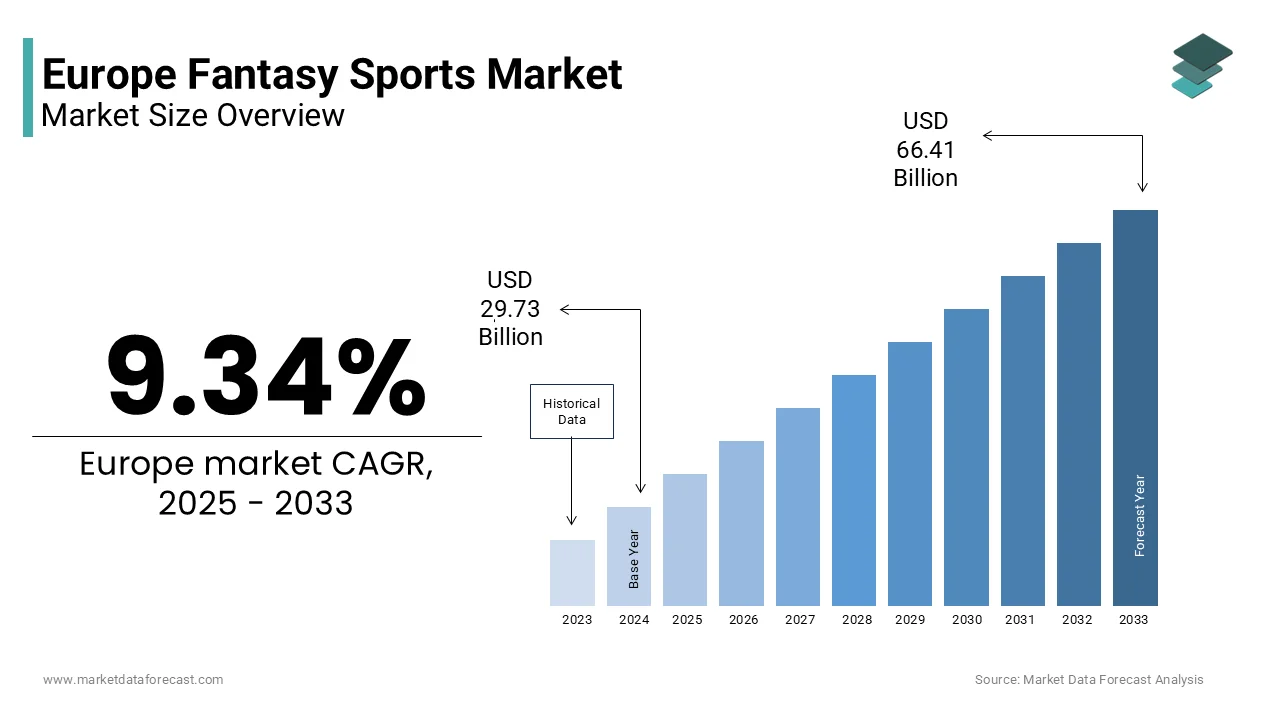
The Europe fantasy sports market was valued at USD 32.52 billion in 2025, is estimated to reach USD 35.56 billion in 2026, and is projected to reach USD 72.64 billion by 2034, growing at a CAGR of 9.34% from 2026 to 2034. The market’s growth is driven by the surging popularity of online sports gaming, increasing smartphone penetration, and the integration of advanced technologies such as AI and data analytics into fantasy sports platforms. Rising youth engagement, growing investments in digital infrastructure, and the expansion of partnerships between fantasy platforms and sports leagues are further supporting market expansion across Europe.
Key Market Trends
- Increasing participation in fantasy football fueled by major European leagues such as the Premier League, La Liga, and Bundesliga.
- Growing preference for mobile-based fantasy platforms offering real-time analytics, seamless UX, and instant reward mechanisms.
- AI-driven recommendations and predictive analytics enhancing user engagement and gaming experience.
- Expansion of cross-border fantasy sports platforms through partnerships with broadcasters and online betting operators.
- Rising demand for social and interactive fantasy leagues that foster community engagement among users.
Segmental Insights
- By Sports Type: The football segment dominated the Europe fantasy sports market in 2025, owing to the sport’s massive fan base, strong league culture, and continuous match calendars that drive player engagement.
- By Platform: The mobile applications segment led the market in 2025, driven by the convenience of app-based gameplay, in-app purchases, and improved connectivity through 5G networks.
- By Demographics: The 25–40 years age group accounted for 54.8% of the market share in 2025, reflecting the dominance of tech-savvy millennials and Gen Z users who actively participate in competitive online gaming.
Regional Insights
- The United Kingdom led the Europe fantasy sports market in 2025, holding a 31.5% market share, supported by widespread sports fandom, regulatory support for online gaming, and strong presence of major fantasy sports operators.
- Germany and France are emerging markets with growing adoption of mobile fantasy applications and strategic collaborations between sports organizations and gaming firms.
- Southern Europe countries, particularly Italy and Spain, are witnessing rising engagement in fantasy football and cricket leagues, driven by mobile accessibility and digital media promotion.
Competitive Landscape
The Europe fantasy sports market is highly competitive, featuring a blend of global leaders and regional innovators focusing on user retention, gamification, and advanced analytics. Companies are emphasizing real-time data integration, AI-based player performance prediction, and interactive user interfaces to enhance player engagement. Strategic mergers, brand sponsorships, and partnerships with major sports leagues are also shaping the competitive landscape. Key players include AskGamblers, Office Football Pool, MyFantasyLeague (MFL10s), RotoWire, Fantacalcio, Games24x7, FantasyPros, NBC Sports, GD Culture Group Ltd, Flutter Entertainment PLC, FanDuel, Dream Sports, CBS Sports Network, and DraftKings Inc.
Europe Fantasy Sports Market Size
The Europe fantasy sports market size was valued at USD 32.52 billion in 2025 and is projected to reach USD 72.64 billion by 2034 from USD 35.56 billion in 2026, growing at a CAGR of 9.34%.
Fantasy sports refer to the skill-based online gaming platforms where participants assemble virtual teams of real athletes and earn points based on their statistical performance in actual matches across football, basketball, and other sports. Unlike traditional games of chance, there is a general trend towards classifying fantasy sports as games of skill, often contingent on specific criteria such as transparency and fairness. The consumption of live sports content online is widespread among young to middle-aged adults in Europe. According to studies, there is a significant and growing trend among younger football viewers to use second-screen applications, with fantasy sports emerging as a popular companion activity during matches. National regulatory divergences persist. A regulatory divergence exists whereby some European countries consider fantasy sports to be low-risk games of skill, but others are increasingly applying stricter rules and aligning them with general gambling frameworks. This complex yet dynamic environment positions fantasy sports at the intersection of entertainment technology and regulated digital gaming in Europe.
MARKET DRIVERS
Legal Recognition as a Game of Skill in Key Jurisdictions
The formal classification of fantasy sports as a game of skill rather than gambling in several European countries has been driving the growth of the European fantasy sports market. In the United Kingdom, free-to-play fantasy contests without monetary value prizes are generally exempt from full gambling licensing, while most real-money fantasy sports are considered a form of remote gambling and require a license, a stance that has remained consistent. As per sources, regulatory frameworks for fantasy sports vary significantly across European Union member states, with some national jurisdictions applying differentiated treatment based on the predominance of skill. This recognition reduces compliance burdens, lowers entry barriers, and permits broader marketing channels, including social media and sports broadcasts. This regulatory clarity has attracted venture capital.
Deep Integration with Official Sports Leagues and Broadcasters
Strategic partnerships between fantasy platforms and professional sports organisations have significantly enhanced user engagement and product legitimacy in the region, which fuels the expansion of the European fantasy sports market. The English Premier League’s official fantasy game attracts over 11 million registered accounts each season, though the number of players who remain actively engaged for the entire duration is typically lower. Similarly, UEFA integrated fantasy elements into its Euro 2025 mobile app, allowing fans to build teams and compete using official real-time statistics, often sourced from data providers like Opta. Broadcasters embed fantasy leaderboards and player projections directly into live match streams, creating seamless second-screen experiences. A common trend in the fantasy sports industry is that participants report watching more live matches and engaging more deeply with sports content due to their involvement in fantasy leagues. Clubs are also leveraging fantasy data for fan insights. Sports teams, including major clubs like FC Barcelona, are increasingly leveraging digital data and artificial intelligence to personalise fan experiences, optimise e-commerce, and tailor marketing offers. These symbiotic relationships transform fantasy sports from a standalone game into an embedded layer of the sports media ecosystem, driving retention monetisation through officially sanctioned channels.
MARKET RESTRAINTS
Fragmented and Inconsistent Regulatory Frameworks Across Member States
The absence of a harmonised EU-level regulatory framework for fantasy sports creates significant operational complexity and market access barriers for operators, which restricts the growth of the European fantasy sports market. Fantasy sports are regulated differently across the world: many countries see them as low-risk skill games, but Germany and Belgium treat them as gambling requiring expensive licenses and tight advertising restrictions. As per research, only a few member states have issued clear guidance on fantasy sports classification. This forces operators to either withdraw from high-potential markets or maintain separate product versions with different rules. The absence of a unified EU skill gaming directive will perpetuate a legal vacuum, thereby hindering investment and innovation in this area.
Concerns Over Youth Engagement and Problem Gaming Behaviours
Growing scrutiny over the potential for fantasy sports to normalise gambling behaviours among adolescents poses a significant reputational and regulatory risk, which in turn impedes the expansion of the European fantasy sports market. The European Consumer Organisation has called for stricter advertising codes banning fantasy promotions during youth-oriented sports broadcasts. These concerns have led major football clubs to pause fantasy partnerships pending ethical reviews. Mainstream acceptance and public sector collaboration for fantasy sports will remain out of reach until the industry implements universal responsible gaming standards and robust age verification.
MARKET OPPORTUNITIES
Expansion into Women’s Sports and Niche Leagues
The rise of women’s football and regional competitions offers an opportunity for the growth of the European fantasy sports market. Moreover, platforms have introduced fantasy contests for lower-tier leagues, enabling fans of local clubs to engage year-round. The European Handball Federation and Euroleague Basketball have also partnered with fantasy developers to launch position-specific scoring models. This shift toward inclusivity and depth not only expands the addressable audience but also fosters long-term loyalty among underserved fan communities.
Adoption of Blockchain and NFT-Based Player Cards
The integration of blockchain technology and non-fungible tokens is generating potential prospects for the expansion of the European fantasy sports market. This helps in creating new monetisation and engagement models. Platforms leverage Ethereum-based NFTs to represent digital player cards that users collect, trade, and deploy in weekly contests. As per sources, there has been substantial transaction volume in the secondary market for European football NFTs, with a majority of buyers located within the EU.. The transparency of blockchain enables verifiable scarcity and ownership while smart contracts automate royalty payments to leagues and players. Apart from these, EU regulatory bodies are developing clear distinctions between NFT-based games and securities, primarily based on the intent of investment. These innovations transform fantasy sports from a free-to-play model into a digital collectables ecosystem where engagement drives asset value and community participation.
MARKET CHALLENGES
Data Privacy and Consent Management Under GDPR
The collection and processing of vast amounts of user and athlete data for fantasy sports operations lead to compliance challenges under the EU’s General Data Protection Regulation, which holds back the growth of the European fantasy sports market. Platforms routinely gather behavioural data, tch preferences, payment details and device identifiers while also licensing real-time player performance feeds that may include biometric or health-related metrics. As per studies, regulatory bodies are increasingly imposing significant financial penalties on major operators found to have inadequate consent mechanisms for player data processing. Data protection authorities across Europe are emphasising the mandatory need for specific, granular, opt-in consent for every individual data use case, such as personalised advertising and third-party analytics. Besides, the use of AI for player projections must comply with GDPR’s automated decision-making provisions requiring human oversight and explanation rights. "Operators face potential enforcement actions and user distrust, which could undermine platform scalability, until they implement privacy-by-design architectures and transparent consent flows.
Dependence on Third-Party Data Licenses and Sports Calendar Volatility
High vulnerability towards disruptions in official sports data supply and seasonal scheduling gaps constrain the expansion of the European fantasy sports market. Real-time player statistics are licensed from entities like Stats Perform Opta and league data arms under agreements that can be revoked or repriced with little notice. The German Football League has significantly raised its data licensing costs, impacting all fantasy operators who depend on official Bundesliga feeds. Furthermore, major sports calendars contain extended off-seasons. Major football leagues experience substantial, predictable seasonal drops in user engagement during their off-season periods. Attempts to fill this void with international leagues face licensing hurdles and lower fan interest. Major international football tournaments provide a significant but infrequent increase in summer user engagement, which occurs only on a biennial basis. This structural seasonality forces platforms to invest heavily in alternative content like esports or prediction games to retain users during lulls. Market volatility and unstable revenue are unavoidable until multi-sport data is integrated and available throughout the year.
REPORT COVERAGE
| REPORT METRIC | DETAILS |
| Market Size Available | 2025 to 2034 |
| Base Year | 2025 |
| Forecast Period | 2026 to 2034 |
| CAGR | 9.34% |
| Segments Covered | By Sport Type, Platform, Demographics, and Region |
| Various Analyses Covered | Global, Regional, & Country Level Analysis; Segment-Level Analysis; DROC, PESTLE Analysis; Porter’s Five Forces Analysis; Competitive Landscape; Analyst Overview of Investment Opportunities |
| Regions Covered | UK, France, Spain, Germany, Italy, Russia, Sweden, Denmark, Switzerland, Netherlands, Turkey, and the Czech Republic |
| Market Leaders Profiled | AskGamblers, Office Football Pool, MyFantasyLeague (MFL10s), RotoWire, Fantacalcio, Games24x7, FantasyPros, NBC Sports, GD Culture Group Ltd, Flutter Entertainment PLC, FanDuel, Dream Sports, CBS Sports Network, and DraftKings Inc. |
SEGMENTAL ANALYSIS
By Sports Type Insights
The football segment captured the majority share of the European fantasy sports market in 2025. The supremacy of the football segment is attributed to football’s cultural ubiquity, broadcast penetration,, year-round competitive calendar across the continent. UEFA’s Champions League and domestic competitions in Spain, Germany, and Italy further sustain engagement with weekly match cycles from August to May. The sport’s statistical richness, goals, assists, clean sheets and defensive actions, enables nuanced scoring systems that reward strategic depth. Furthermore, football’s strong digital ecosystem provides real-time data feeds from official partners like Opta, ensuring accuracy and immediacy. This unmatched combination of reach structure and data integrity ensures football remains the cornerstone of European fantasy sports.
The cricket segment is likely to experience the fastest CAGR of 32.7% from 2026 to 2034 during the forecast period due to the expanding South Asian diaspora and the global popularity of T20 leagues such as the Indian Premier League and The Hundred. Platforms like Dream11 and My11Circle have localised their interfaces for European users, offering GBP transactions and Premier League-style scoring adapted to batting strike rates and economy bowling metrics. Apart from these streaming services, like Ky Sports and Disney+Star, now integrate fantasy dashboards directly into live cricket broadcasts, enhancing second-screen engagement. Cricket's Olympic inclusion for the 2028 LA Games, combined with a growing European audience from franchise leagues, positions the sport for substantial growth.
By Platform Insights
In 2025, the mobile applications segment led the European fantasy sports market and occupied a significant share 2025. The prominence of the mobile applications segment is driven by the on-the-go nature of sports fandom and the seamless integration of push notifications, live scoring, and anone-tapap squad updates that only native apps can deliver. Official league apps embed fantasy modules directly into their user journeys, reducing friction and increasing retention. Besides, mobile platforms enable biometric authentication and secure payment gateways compliant. The rise of 5G connectivity across Western Europe has further improved real-time data delivery during live matches, allowing instant point updates and trade execution. App stores also provide discoverability through sports and gaming categories, where fantasy titles consistently rank in top downloads during major tournaments. These technical and behavioural advantages solidify mobile as the primary access point for European fantasy players.
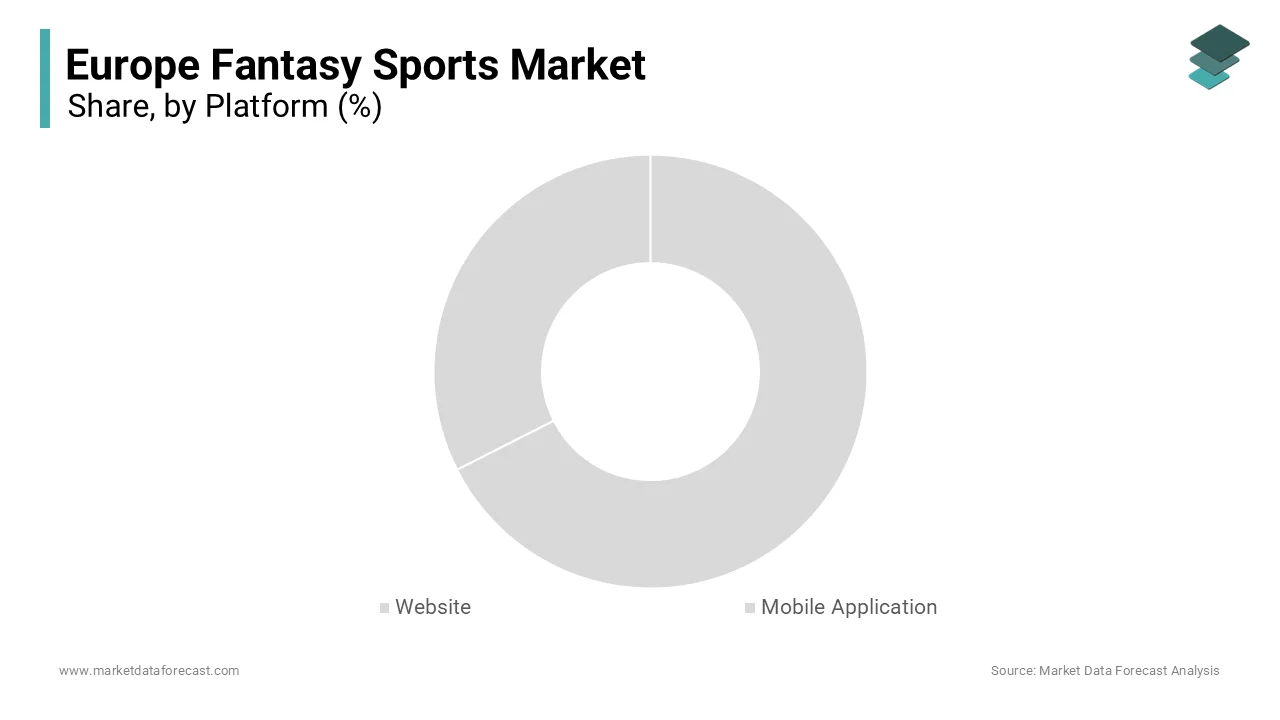
The mobile application segment is also on the rise and is expected to be the fastest-growing segment in the regional market by witnessing a CAGR of 18.4% from 2026 to 2034. The rapid expansion of the mobile application segment is due to deeper integration with device ecosystems and emerging technologies. Platforms leverage device machine learning to offer personalised trade suggestions based on usage patterns and match schedules. Furthermore, the rollout of RCS messaging enables instant league invites and score alerts within native messaging apps, enhancing social virality. The evolution of mobile operating systems toward richer real-time experiences and stricter privacy controls has led to fantasy apps becoming more immersive, secure, and socially connected, which supports their market leadership in Europe..e
By Demographics Insights
The 25 to 40-year age group segment dominated the European fantasy sports market and held a 54.8% share in 2025. Its optimal convergence of disposable income, digital literacy, and sustained sports fandom has mainly contributed to the growth of the 25 to 40-year age group segment. Individuals in this cohort grew up during the rise of fantasy sports in the 2000s and now possess the financial means to participate in paid contests while maintaining strong emotional ties to clubs and national teams. They also exhibit high cross-platform usage, which balances work laptops for draft planning and smartphones for in-game management. Employers in tech finance and media sectors increasingly tolerate fantasy as a social bonding activity. This blend of nostalgia, purchasing power,,e and workplace acceptance ensures the 25 to 40 cohort remains the core demographic engine of the market.
The under-25 years segment is expected to exhibit a noteworthy CAGR of 24.3% over the forecast period. The rapid expansion of the under-25 years segment is fuelled by digital nativity, social media integration, and the gamification of sports consumption. Platforms like Sorare and Dream11 have redesigned onboarding with witTikTok-stylele tutorials in in-app challenges and influencer-led leagues that resonate with Gen Z users. The rise of free-to-play formats with cosmetic rewards lowers financial barriers while maintaining engagement. Apart from these, fantasy contests are increasingly embedded in streaming platforms where users can draft teams before kickoff without leaving the broadcast. Despite regulatory concerns, this cohort views fantasy as interactive entertainment rather than gambling, aligning with their preference for skill-based digital experiences. This demographic segment is the primary future growth driver of the European fantasy sports market, particularly as their spending power increases.
REGIONAL ANALYSIS
United Kingdom Market Analysis
The United Kingdom outperformed other countries in the European fantasy sports market and occupied a 31.5% share in 2025. Its dominance in the regional market is attributed to early regulatory clarity, cultural affinity for football, and a mature digital sports ecosystem. The Premier League’s official fantasy game accounts for billions of active users annually, with spin-offs for women’s football and Euro tournaments. Major platforms maintain UK headquarters to leverage talent and access the English-speaking European audience. Apart from these, the UK’s large South Asian community has fueled cricket fantasy growth with millions of users participating in IPL-based contests. This combination of regulatory support, sport infrastructure, and demographic diversity solidifies the UK’s position as Europe’s fantasy sports hub.
Germany Market Analysis
Germany followed closely in the European fantasy sports market and captured an 18.7% share in 2025. The growth of the German market is propelled by its passionate football culture, Bundesliga digital innovation, and high smartphone penetration. Recent legal developments have provided a clearer operational framework for skill-based season-long fantasy sports, which enables their licensed operation. Official fantasy sports games are experiencing significant growth and are increasingly integrated directly into major sports broadcast experiences. German users show high engagement with data-driven formats. A majority of users in the region are adopting sophisticated data and advanced metrics for team selection in fantasy sports. Apart from these, the rise of fantasy esports in games like FIFA and Football Manager has expanded the user base among younger demographics. These factors position Germany as a high engagement market with strong growth potential despite initial regulatory caution.
Spain Market Analysis
Spain grew steadily in the European fantasy sports market because of fervent La Liga fandom, increased digital adoption, and regulatory openness to skill-based gaming. Spain has established specific legislation that separates fantasy sports from traditional betting, provided fantasy sports platforms meet certain transparency and skill-based requirements. Participation in fantasy football is significant, particularly in major events, which indicates strong public interest in fantasy sports related to La Liga. The country also leads in mobile-first design. Apart from these, Spanish broadcasters integrate live fantasy leaderboards into match streams, creating immersive second-screen experiences. This blend of regulatory clarity, football passion, and mobiloptimisation sustains Spain’s robust and growing fantasy sports ecosystem.
France Market Analysis
France expanded gradually in the European fantasy sports. The country’s growth is fuelled by its balanced regulatory approach, strong football infrastructure and youth engagement. It is establishing a more straightforward regulatory process to encourage the adoption of responsible gaming practices among fantasy operators. The popularity and user engagement of official fantasy sports games are experiencing significant growth. French platforms emphasise social features. There is a strong preference among the majority of fantasy sports users for participating in private leagues with social connections like friends or colleagues. This coordinated policy and cultural strategy ensures France remains a stable and innovative market.
Italy Market Analysis
Italy is likely to grow in the European fantasy sports market between 2026 and 2034 due to deep Serie A loyalty, regulatory innovation, and mobile gaming adoption. Italian users show w strong preference for free-to-play formats with cosmetic upgrades. Apart from these, the integration of fantasy elements into DAZN’s Italian broadcast feed during matchdays has boosted second-screen usage. These regulatory and behavioural dynamics position Italy as a model for sustainable fantasy sports growth in Southern Europe.
COMPETITIVE LANDSCAPE
KEY MARKET PLAYERS
Some of the notable key players in the European fantasy sports market are
- AskGamblers
- Office Football Pool
- MyFantasyLeague (MFL10s)
- RotoWire
- Fantacalcio
- Games24x7
- FantasyPros
- NBC Sports
- GD Culture Group Ltd
- Flutter Entertainment PLC
- FanDuel
- Dream Sports
- CBS Sports Network
- DraftKings Inc.
TOP STRATEGIES USED BY THE KEY MARKET PLAYERS
Key players in the European fantasy sports market prioritise official league and club licensing to ensure data authenticity and user trust. They develop free-to-play and skill-based formats to comply with national regulatory frameworks that distinguish fantasy from gambling. Platforms invest in mobile-first design with real-time scoring, push notifications and broadcast integrations to enhance second-screen engagement during live matches. Companies also expand into women’s sports and niche leagues to diversify content and reduce seasonality risks. Additionally, they adopt responsible gaming tools such as session limits and age verification to align with EU consumer protection standards and maintain positive regulatory relationships across fragmented jurisdictions.
COMPETITION OVERVIEW
Competition in the European fantasy sports market is shaped by regulatory fragmentation, technological innovation, and exclusive sports partnerships rather than price alone. The landscape features a mix of global platforms like Sora, regional operators such as LaLiga Fan, tasty and international entrants like FanDuel, each navigating divergent national rules on skill gaming. Success hinges on securing official data and branding rights from top leagues, which act as both a differentiator and barrier to entry. Mobile experience dominates user preference with real-time updates and social features driving retention. The market is further segmented by sport, with football commanding the majority, but cricket and women’s football emerging as strategic growth vectors. Companies must strike a balance between engaging youth and ensuring compliance, especially as regulators intensify their scrutiny of data practices and minor access. In this environment, the ability to offer authentic licensed immersive and responsible fantasy experiences determines long-term leadership across Europe’s diverse digital sports ecosystem.
TOP PLAYERS IN THE MARKET
- Sorare is a Paris-based fantasy sports platform that has redefined the European market through its integration of blockchain technology and officially licensed NFT player cards. The company holds partnerships with over 350 football clubs globally, including European giants like Manchester City, Real Madrid, and Bayern, as well as official leagues such as the Bundesliga and La Liga. It also introduced real-time scoring for women’s football and expanded into basketball with Euroleague licensing. These moves enhance accessibility and diversify its sports portfolio while reinforcing its position as a global leader in digital collectable-based fantasy sports.
- FanDuel Group operates a significant fantasy sports presence in Europe through its international division, focused on football and cricket contests tailored for UK and Irish audiences. The company leverages its parent company Flutter Entertainment’s extensive sports betting infrastructure to offer seamless cross-product experiences while maintaining clear regulatory separation between skill and chance offerings. It also introduced a dedicated fantasy cricket platform for The Hundred and IPL seasons, featuring GBP transactions and localised UX. These initiatives strengthen its foothold in Europe’s two largest fantasy sports verticals while aligning with regional payment and engagement preferences.
- LaLiga Fantasy is the official fantasy platform of Spain’s top football division, operated by the Liga Nacional de Fútbol Profesional. It serves as a direct engagement channel for over 20 million global LaLiga fans with a strong concentration in Southern and Western Europe. The platform offers real-time scoring based on official Opta data, weekly prize draws, and exclusive club content to drive retention. It also launched a youth league mode for under-16 players in partnership with Spanish schools to promote digital literacy and fair play. These innovations transform the platform from a game into a holistic fan engagement ecosystem that supports LaLiga’s broader global branding and grassroots development goals.
MARKET SEGMENTATION
This research report on the European fantasy sports market has been segmented and sub-segmented based on categories.
By Sports Type
- Football
- Baseball
- Basketball
- Hockey
- Cricket
- Others
By Platform
- Website
- Mobile Application
By Demographics
- Under 25 Years
- 25-40 Years
- Above 40 Years
By Country
- UK
- France
- Spain
- Germany
- Italy
- Russia
- Sweden
- Denmark
- Switzerland
- Netherlands
- Turkey
- Czech Republic
- Rest of Europe