- Product Description Description
- Table of Contents TOC
- List of Table & Figure LOT
- Get Free Sample PDF Sample PDF
Market Size, 2025
$0.71 BnMarket Estimate, 2026
$0.73 BnMarket Forecast, 2034
$0.91 BnCAGR, 2026–2034
2.84%Europe Feed Pigment Market Size, Growth, Trends & Forecast (2026–2034)
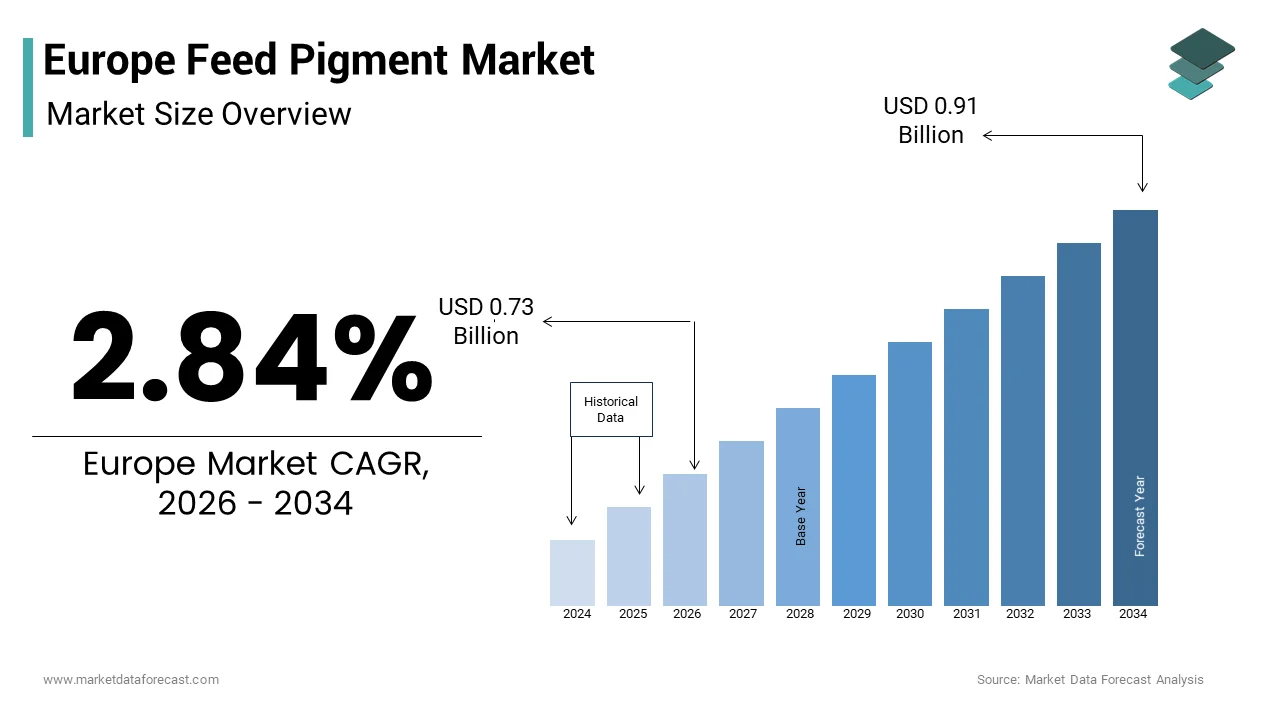
The Europe feed pigment market size was valued at USD 0.71 billion in 2025, is anticipated to reach USD 0.73 billion in 2026, and is projected to scale up to USD 0.91 billion by 2034, registering a compound annual growth rate (CAGR) of 2.84% during the forecast period from 2026 to 2034. Driven by shifting consumer preferences toward naturally pigmented animal products, expanding aquaculture demand for flesh coloration, and strict European Union sustainability initiatives, the regional market continues steady expansion.
Key Executive Metrics (At-a-Glance)
- 2025 Base Valuation: USD 0.71 Billion
- 2026 Current Valuation: USD 0.73 Billion
- 2034 Forecast Valuation: USD 0.91 Billion
- Compound Annual Growth Rate (CAGR): 2.84% (2026–2034)
- Dominant Type Segment: Carotenoids (holding the largest share due to their essential dual role as visual colorants and functional nutrients in poultry and aquaculture diets)
- Fastest-Growing Type Segment: Spirulina (surging via increasing demand for sustainable, clean-label, protein-rich natural algae pigments)
- Dominant Source Segment: Synthetic Feed Pigments (commanding majority volume due to cost-efficiency and decades of regulatory approval)
- Fastest-Growing Source Segment: Natural Feed Pigments (accelerating rapidly due to strict retailer sourcing policies and organic livestock expansion)
- Dominant Livestock Segment: Poultry (leading through vast European egg and broiler production volumes demanding specific yolk and skin hues)
- Fastest-Growing Livestock Segment: Aquatic Animals (expanding via thriving salmonid farming in Norway, the UK, and premium seafood trends)
- Dominant Regional Country Markets: Germany, France, and Spain (leading regional consumption backed by advanced poultry sectors and strong cultural preferences for deep pigmentation)
Core Market Drivers
- Consumer Preferences for Natural Pigmentation: European shoppers increasingly associate deep orange egg yolks and vibrant aquaculture flesh with high nutritional quality, animal welfare, and freshness.
- Aquaculture Expansion: Rising demand for dietary astaxanthin in salmon farming to replicate wild coloration and meet rigorous retail standards.
Primary Market Restraints & Challenges
- Regulatory Pressure & Price Volatility: Stringent EU controls on synthetic additives alongside price fluctuations and supply chain vulnerabilities for natural botanical extracts like marigold.
Europe Feed Pigment Market Segmentation Breakdown
| Segment Category | Largest (Dominant) Sub-Segment | Fastest-Growing Sub-Segment |
|---|---|---|
| By Type | Carotenoids | Spirulina |
| By Carotenoids Source | Synthetic Feed Pigments | Natural Feed Pigments |
| By Livestock | Poultry | Aquatic Animals |
| By Country | Germany & France | Spain & United Kingdom |
Major Industry Players Profiled
Key corporations steering the European market include Royal DSM N.V., Guangzhou Leader Bio-Technology Co., Ltd, Kemin Industries, Inc., DSM Firmenich AG, BASF SE, Vitafor NV., D.D. Williamson & Co., Inc. (DDW), Innovad AD NV/SA, Novus International, Inc., Behn Meyer Group, and Synthite Industries Ltd.
Europe Feed Pigment Market Size
The Europe feed pigment market size was valued at USD 0.71 billion in 2025 and is anticipated to reach USD 0.73 billion in 2026 to reach USD 0.91 billion by 2034, growing at a CAGR of 2.84% from 2026 to 2034.
Feed Pigment refers to the natural and synthetic compounds added to animal diets primarily to enhance the visual appeal of animal products such as egg yolks, poultry skin, and fish flesh. These pigments include carotenoids like lutein, zeaxanthin, canthaxanthin, and astaxanthin, which cannot be synthesized by animals and must be supplied through feed. Broiler production in the European Union is substantial. A significant number of table eggs are produced within the European Union. The poultry industry is an important sector of the agricultural economy in the EU. Consumer expectations for golden yolk hues and vibrant flesh tones in aquaculture products continue to shape formulation strategies among feed producers. The European Food Safety Authority maintains stringent guidelines on permissible pigment concentrations, influencing both ingredient selection and compliance protocols across member states. Growing sustainability concerns are driving a measurable shift towards natural pigment sources, such as those derived from algae, marigold extracts, and fermentation processes. This transition aligns with broader EU initiatives such as the Farm to Fork Strategy, which promotes reduced synthetic inputs in the food chain.
MARKET DRIVERS
Rising Consumer Preference for Naturally Pigmented Animal Products
European consumers increasingly associate yolk color intensity with nutritional quality and animal welfare standards, and this accelerates the growth of the Europe feed pigment market. Consumer preference for eggs with deep orange yolks is notable across several European countries, driven by the belief that this coloration indicates healthier hens and superior feed quality. This perception drives poultry producers to incorporate natural carotenoid sources such as marigold meal and paprika extract into layer diets. Natural pigments like lutein and zeaxanthin not only meet aesthetic demands but also offer antioxidant benefits that enhance egg stability and shelf life. Regulations governing feed additives now feature more streamlined approval pathways for pigments derived from plants. In parallel, retail chains including Carrefour and Aldi have introduced labeling standards that highlight natural feeding practices, reinforcing consumer trust. Consequently, the procurement of natural pigments by feed mills across Western Europe has increased significantly. This behavioral shift underscores how end-user perceptions directly influence upstream ingredient demand within the feed pigment value chain.
Growth in European Aquaculture and Demand for Flesh Pigmentation
Salmonid farming in the region relies heavily on dietary astaxanthin to achieve the characteristic pink flesh expected by consumers, thereby boosting the expansion of the Europe feed pigment market. Atlantic salmon production in a major producing nation involves a significant need for pigment supplementation to meet consumer color preferences. Unlike poultry, salmon cannot deposit carotenoids without exogenous sources, making pigment inclusion non-negotiable in commercial feeds. Farmed salmon imports within the European Union are substantial, originating primarily from key salmon-producing countries. Synthetic astaxanthin has traditionally dominated due to cost efficiency, but regulatory pressure and sustainability certifications such as the Aquaculture Stewardship Council are accelerating adoption of biofermented and algal-based alternatives. European salmon producers are increasingly adopting the use of natural pigment sources in feed as an alternative to synthetic options. Furthermore, funding initiatives at the European level are supporting the exploration and development of sustainable ingredients for aquaculture feed, including natural coloring agents. This strategic investment reflects a structural shift toward environmentally responsible aquaculture practices that directly influence pigment sourcing decisions across the sector.
MARKET RESTRAINTS
Stringent Regulatory Restrictions on Synthetic Pigments
The European Union enforces rigorous controls on synthetic feed additives through Regulation EC No 1831/2003, which mandates full reevaluation of all feed pigments every ten years, and restricts the growth of the Europe feed pigments market. In addition, Authorization for a specific feed additive was maintained, but a reduced maximum inclusion level was put in place for certain livestock. Such regulatory tightening increases compliance costs and formulation complexity for feed manufacturers. Besides, synthetic pigments face growing scrutiny under the EU’s Chemicals Strategy for Sustainability, which aims to eliminate substances of very great concern from the food chain by 2030. As per sources, several commonly used synthetic substances are currently being evaluated for potential endocrine-disrupting properties. These regulatory uncertainties deter long-term investment in synthetic pigment infrastructure. Orders for synthetic pigments among some feed producers have shown a decline in recent times. The regulatory landscape thus acts as a persistent brake on synthetic pigment use, compelling the industry to adapt quickly despite higher costs and supply chain volatility associated with natural sources.
Price Volatility and Supply Chain Fragility of Natural Pigments
Natural feed pigments sourced from botanicals or microbial fermentation exhibit significant price fluctuations due to climatic and geopolitical factors. This restrains the expansion of the Europe feed pigment market. Marigold, a primary source of lutein, is primarily grown in certain regions that have experienced adverse weather conditions, leading to reduced availability. This reduced availability has an effect on the global price of lutein. Similarly, algal astaxanthin production depends on controlled fermentation facilities concentrated in Scandinavia and the United States, with energy landscape fluctuations in Europe have contributed to an increase in production costs for certain products. Unlike synthetic alternatives produced through stable petrochemical pathways, natural pigments lack buffer stocks and face longer lead times, making just-in-time feed formulation risky. A recent assessment indicated that a portion of European compound feed producers encountered extended receipt times for essential natural pigments. This supply instability forces nutritionists to maintain dual sourcing strategies, which increases operational complexity and reduces margin predictability across the feed value chain.
MARKET OPPORTUNITIES
Expansion of Organic Livestock Production Under EU Certification
Expansion of organic livestock production under EU certification provides new opportunities for the growth of the Europe feed pigment market. The area dedicated to organic farming in the European Union has seen continued expansion, now representing a significant portion of the total agricultural land. Under EU organic regulations, synthetic feed additives, including artificial pigments, are prohibited, creating a captive market for natural alternatives. Sectors such as organic poultry and aquaculture are experiencing ongoing growth trends. Major retailers have indicated intentions to increase available organic shelf space in the near future. Natural pigments derived from certified organic marigold petals or non-genetically modified algae align with these certification requirements, offering feed additive suppliers a differentiated growth corridor. Furthermore, Policy measures are supporting innovation in organic feed ingredients, with a focus on specific technology areas. Several companies have introduced certified organic pigment lines designed for the European market, with production activities underway. This structural shift toward certified organic animal protein not only expands addressable market volume but also establishes natural pigments as a prerequisite rather than a value-added option, thereby embedding long-term demand resilience within a regulated and expanding segment.
Advancements in Microbial Fermentation for Sustainable Pigment Production
Biotechnological innovations are enabling cost-competitive production of natural carotenoids through engineered yeast and bacteria strains, and ultimately offer fresh prospects for the expansion of the Europe feed pigment market. A notable fermentation facility has been established in Slovakia for producing bio astaxanthin. There is a growing presence of fermentation-derived pigments in the European natural carotenoid market. These processes offer consistent quality, lower land use, and reduced water consumption compared to plant extraction. Assessments indicate that microbial astaxanthin production methods have a reduced environmental impact compared to certain plant-based alternatives. Significant funding has been allocated to support several pigment-specific fermentation projects within Europe. Fermentation-derived pigments offer measurable carbon and water footprint benefits, which help feed manufacturers looking for verifiable sustainability metrics for corporate ESG reporting. This technological evolution transforms natural pigments from a premium input into a scalable, environmentally accountable solution aligned with Europe’s bioeconomy strategy, opening new adoption pathways beyond niche organic applications.
MARKET CHALLENGES
Geopolitical Disruptions Affecting Raw Material Imports
The region depends heavily on imported raw materials for natural pigment production, particularly marigold oleoresin from India and paprika from Spain and Hungary, which majorly challenge the growth of the Europe feed pigment market. A shift in supply caused by the Indian export situation led to a significant, albeit temporary, price increase for lutein in the European market. Persistent dry conditions in southern Spain contributed to a noticeable decrease in paprika harvests. These supply shocks are exacerbated by Europe’s limited domestic cultivation infrastructure for pigment-bearing crops. A recent review of feed input dependencies highlights carotenoid precursors as vulnerable due to high reliance on external sourcing. Shipping disruptions in the Red Sea region have resulted in prolonged delivery schedules and logistical challenges. Such disruptions force feed mills to reformulate or absorb cost increases, undermining pricing stability. The feed industry in Europe faces an ongoing operational risk because, without diversified sourcing or strategic reserves, its pigment supply chain is susceptible to agricultural and trade policies set by other nations.
Technical Limitations in Pigment Stability and Bioavailability
Natural feed pigments often suffer from oxidative degradation during feed processing and storage, which reduces efficacy and requires over formulation, and as a result, constrains the expansion of the Europe feed pigment market. Pelleting processes that use temperatures above 80 degrees Celsius may potentially reduce lutein content. Encapsulation technologies exist to improve stability but add to ingredient costs, deterring adoption among price-sensitive producers. Furthermore, bioavailability varies significantly by animal species and diet composition. When included in high fiber rye-based diets, lutein deposition in egg yolks might be lower compared to corn soy formulations. Such variability complicates precise dosing and outcome prediction, leading to inconsistent product appearance and consumer dissatisfaction. In aquaculture, astaxanthin retention in salmon muscle is variable, influenced by factors such as the amount of lipid present and how long the fish are fed the diet. Color consistency is difficult to achieve without standardized delivery matrices and real-time monitoring tools. These inherent biochemical constraints limit the performance reliability of natural pigments, slowing their full substitution of synthetics despite favorable consumer sentiment.
REPORT COVERAGE
| REPORT METRIC | DETAILS |
| Market Size Available | 2025 to 2034 |
| Base Year | 2025 |
| Forecast Period | 2026 to 2034 |
| CAGR | 2.84% |
| Segments Covered | By Type And By Country |
| Various Analyses Covered | Global, Regional & Country Level Analysis; Segment-Level Analysis, DROC, PESTLE Analysis, Porter’s Five Forces Analysis, Competitive Landscape, Analyst Overview of Investment Opportunities |
| Regions Covered | UK, France, Spain, Germany, Italy, Russia, Sweden, Denmark, Switzerland, Netherlands, Turkey, Czech Republic & Rest of Europe |
| Market Leaders Profiled | Royal DSM N.V., Guangzhou Leader Bio-Technology Co., Ltd, Kemin Industries, Inc., BASF SE, Vitafor NV., D.D. Williamson & Co., Inc. (DDW), Innovad AD NV/SA, Novus International, Inc., Behn Meyer Group, and Synthite Industries Ltd. |
SEGMENTAL ANALYSIS
By Type Insights
The carotenoids segment held the largest share of the Europe feed pigment market in 2025. The leading position of the carotenoids segment is driven by its dual role as pigments and functional nutrients in poultry and aquaculture diets. Carotenoids such as lutein and zeaxanthin are indispensable for achieving the golden yolk hue demanded by European consumers. Consumer perception in Germany and the Netherlands strongly links a deep yolk color with desirable qualities like higher nutritional value and better hen welfare. The large volume of egg production across Europe means that achieving a consistent yolk color is a critical requirement in the market. Carotenoids represent a significant investment within the microingredient budgets of Western European feed mills, highlighting their importance in crafting layer feed formulations. Astaxanthin and canthaxanthin are authorized for use in salmonid feeds to achieve the desired flesh coloration, simulating the appearance found in wild fish. Regulatory bodies periodically assess and reinforce the safety of these compounds for this application. The practice of supplementing salmonid feed with carotenoids is widespread across significant production volumes in the industry. Besides, carotenoids act as antioxidants, improving fish immune response and survival rates, a critical consideration as the EU pushes for antibiotic reduction under its Animal Health Law.
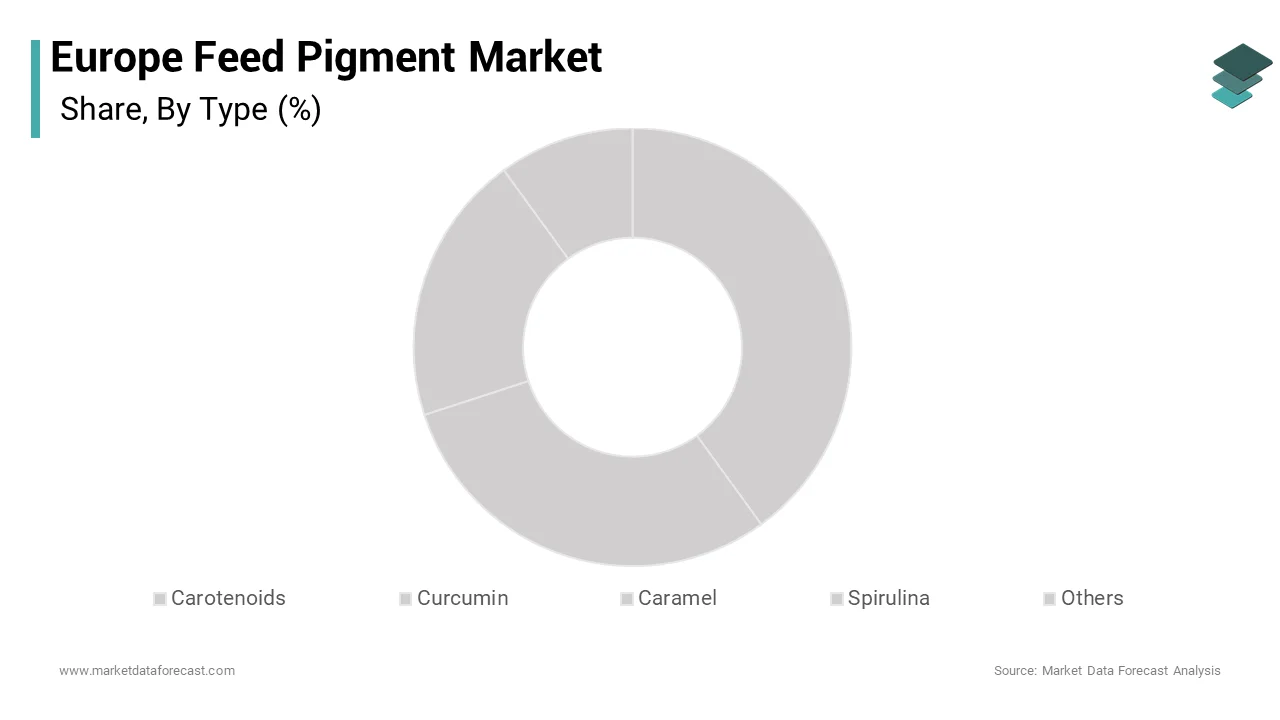
The spirulina segment is anticipated to witness the fastest CAGR of 9.4% between 2025 and 2033. The rapid expansion of the spirulina segment is driven by the rising demand for sustainable and protein-rich natural pigments, and alignment with organic and clean label trends. Spirulina offers phycocyanin and beta carotene that impart green-blue to golden hues while delivering a portion of crude protein, making it attractive for integrated feed solutions. The regulatory status of spirulina as a feed ingredient has been updated, allowing for broader application beyond highly specialized agricultural practices. Public and private support has helped foster the development and commercial availability of algae-based feed components in the market. Organic poultry producers in France and Denmark increasingly substitute synthetic pigments with spirulina to comply with EU organic standards that prohibit artificial additives. Feature spirulina-fed eggs with premium shelf placement, reinforcing farmer adoption. The pigment’s natural origin and traceability resonate with consumers seeking transparency, fueling downstream demand and justifying its premium pricing.
By Carotenoids Source Insights
The synthetic feed pigments segment led the Europe feed pigment market and held a share of 58.8% in 2025. The growth of the synthetic feed pigments segment is propelled by cost efficiency and consistent supply. Synthetic canthaxanthin and astaxanthin cost less than natural equivalents, a critical margin driver for intensive poultry integrators. Broiler producers commonly aim for standardized color targets in their products. The pursuit of tight profit margins often influences decisions regarding feed additives. Many producers in key European poultry markets continue to use synthetic carotenoids. Synthetic pigments have decades of safety dossiers accepted by the European Food Safety Authority, enabling precise dosing with predictable deposition rates. A recent EFSA reevaluation confirmed the continued authorization of synthetic canthaxanthin at existing levels, while also assessing the equivalence and safety of a fermentation-derived alternative. The assessments highlighted potential concerns regarding cumulative consumer exposure from all dietary sources, which may prompt a future revision of maximum residue limits (MRLs), rather than an immediate reduction in authorized levels for synthetic canthaxanthin.
The natural feed pigments segment is likely to experience the fastest CAGR of 8.7% from 2025 to 2033 due to consumer pressure and retailer sourcing policies, and advancements in extraction and stabilization technologies. Major European retailers, including Lidl and Tesco, now require natural pigmentation for private-label eggs and poultry. As per a study, a portion of EU retailers have formal policies favoring natural feed additives. This top-down demand compels integrators to reformulate, directly boosting natural pigment procurement. Innovations such as supercritical CO2 extraction and lipid encapsulation have improved the stability and bioavailability of natural carotenoids. Companies offer stabilized natural pigment blends tailored for European feed mills, narrowing the performance gap with synthetics.
By Livestock Insights
The poultry segment dominated the Europe feed pigment market and accounted for a share of 54.5% in 2024. The prominence of the poultry segment is attributed to aesthetic consumer expectations and high production volumes. In Southern and Western Europe, consumers consistently reject pale yolks, linking color to freshness and feed quality. Consumer preference in certain European markets indicates a strong preference for eggs with deep yellow or orange yolks. Achieving a consistent, rich yellow skin color in poultry is also considered crucial for market success. Modern layer and broiler operations operate on narrow margins, necessitating cost-effective pigment solutions with immediate visual impact. Synthetic carotenoids provide rapid deposition within a few days, aligning with short production cycles.
The aquatic animals segment is on the rise and is expected to be the fastest-growing segment in the market by witnessing a CAGR of 10.2% between 2025 and 2033, owing to the expansion of salmon farming in Norway and the UK, and the premiumization of farmed seafood and export demand. Production trends are evident in specific regions of the aquaculture industry. Aquaculture output in one particular region experienced an upward trend. Pigment inclusion in salmon diets is standard practice due to the fish's physiological inability to synthesize necessary compounds. Funding initiatives support the exploration of feed innovation, including alternative pigment sources.
Farmed salmon must match wild coloration to command premium prices in EU and global markets. A significant number of imported salmon within the EU originates from farms where pigments are added to the feed. The use of pigment in feed is a common practice in certain types of salmon aquaculture. Certification schemes require documentation of pigment sourcing, pushing producers toward traceable natural options and driving volume growth in the segment.
COUNTRY ANALYSIS
Germany Feed Pigment Market Analysis
Germany led the Europe feed pigment market and captured an 18.3% share in 2024. The leading position of the German market is due to its advanced poultry and pig sectors, coupled with stringent consumer standards. The production of eggs in a specific region is substantial. A majority of these eggs are associated with premium or organic labels. The specifications for these particular labels include a requirement for natural pigmentation. Retail giants like REWE and Aldi enforce strict feed transparency policies, compelling integrators to adopt certified natural carotenoids. Additionally, Germany hosts major pigment producers such as BASF and Evonik, which invest heavily in R&D for stabilized natural formulations. Efforts are in place to support the development and use of novel feed ingredients. Research is focused on the potential of algae-based components in animal feed. The region demonstrates a general interest in advancing feed technology and related innovative approaches.
France Feed Pigment Market Analysis
France followed closely in the Europe feed pigment market and accounted for a 15.1% share in 2024. The nation’s strong cultural preference for deeply pigmented eggs and artisanal poultry drives consistent pigment demand. Consumers demonstrate a consistent interest in specific egg characteristics, with yolk color often influencing purchasing decisions. The organic poultry sector is notable in size, operating within guidelines that require the use of naturally derived pigments in feed. Certain producer groups have incorporated natural extracts like marigold and paprika into all their feed mixtures. There is ongoing research into optimizing the use of natural coloring agents within diverse feeding programs. Efforts aim to address potential variations in pigment performance associated with alternative diets.
Spain Feed Pigment Market Analysis
Spain maintained a consistent growth rate in the Europe feed pigment market. Poultry production is high in a key European region, leading to significant and ongoing demand for pigments. The country is also the EU’s largest paprika producer, supplying zeaxanthin-rich raw material for pigment extraction. A major portion of a specific paprika crop is produced locally, which offers advantages in terms of regional sourcing for pigment supply. Spanish integrators operate under tight export margins, favoring cost-efficient synthetic carotenoids for standard lines while reserving natural options for premium EU markets. Recent adverse weather conditions have impacted paprika harvests, increasing the need for imports; this has, in turn, encouraged investment in agricultural methods that are less dependent on consistent water availability to help secure future supply.
United Kingdom Feed Pigment Market Analysis
The United Kingdom expanded moderately in the Europe feed pigment market. Post Brexit, the UK has accelerated its focus on premium and traceable animal products, elevating pigment importance. The nation's egg production includes a significant portion from systems such as free range or organic. These production methods generally necessitate the use of natural pigments. Major retailers like Tesco and Sainsbury’s enforce farm assurance schemes that mandate natural feed additives for premium lines. The expansion of salmon farming in Scotland has led to an increased need for essential feed additives like astaxanthin. Investment has been directed toward fostering the development of domestically produced feed ingredients, specifically carotenoids made through fermentation processes. This aims to support national supply chains and align with general sustainability objectives.
Netherlands Feed Pigment Market Analysis
The Netherlands is predicted to grow in the Europe feed pigment market from 2025 to 2033. Despite its modest land area, the country is Europe’s leading agricultural exporter, with highly intensive poultry and aquaculture operations. The Netherlands is a significant producer of eggs, which are primarily intended for export to neighboring countries like Germany and Belgium. Trade with these main partners continues despite an increasing focus on diversification. The market in the primary export destinations has specific color standards. Dutch feed mills like ForFarmers prioritize pigment consistency to meet diverse EU retailer specifications. The country also serves as a logistics and formulation hub for multinational pigment suppliers. The Netherlands is developing advanced methods for enhancing the color stability of feed ingredients. This work centers on new technologies involving algae and fermentation processes. The initiative helps establish the country as a leader in creating innovative systems for delivering feed pigments.
COMPETITIVE LANDSCAPE
Competition in the Europe Feed Pigment Market is characterized by a blend of established multinational chemical and nutrition companies alongside agile biotech firms specializing in natural alternatives. The market exhibits moderate concentration with players differentiating through technological innovation, regulatory compliance, and sustainability credentials rather than price alone. Incumbents leverage decades of safety data and large-scale production capabilities, while newer entrants gain traction via algae fermentation and circular economy-aligned sourcing. Intense rivalry is evident in poultry and aquaculture segments where color consistency directly impacts marketability. Companies increasingly compete on traceability, formulation stability, and alignment with retailer sustainability requirements. Collaborations with research institutions and participation in EEU-funded bioeconomy initiatives further intensify strategic competition. This dynamic fosters continuous product evolution and accelerates the transition from synthetic to natural pigments without compromising performance or cost efficiency across diverse livestock applications.
KEY MARKET PLAYERS
Major players listed in the report are
- Royal DSM N.V.
- Guangzhou Leader Bio-Technology Co., Ltd
- Kemin Industries, Inc.
- DSM Firmenich AG
- BASF SE
- Vitafor NV.
- D.D. Williamson & Co., Inc. (DDW)
- Innovad AD NV/SA
- Novus International, Inc.
- Behn Meyer Group
- Synthite Industries Ltd.
Top Players In The Market
- BASF SE is a leading innovator in feed pigment solutions with a strong presence across Europe and globally. The company specializes in both synthetic and natural carotenoids, including Lucantin and Carophyll product lines, widely used in poultry and aquaculture. In recent years, BASF has intensified its focus on sustainable sourcing and bio-based pigment development. BASF also collaborates with EU research institutions to enhance pigment stability in pelleted feeds, reinforcing its technological leadership and commitment to regulatory compliance in evolving feed additive landscapes.
- DSM Firmenich AG plays a pivotal role in the Europe feed pigment sector through its extensive portfolio of natural and synthetic carotenoids under the Carophyll brand. The company leverages its expertise in nutritional science to develop pigment solutions that address both coloration and animal health. The firm also strengthened its algae-based pigment pipeline through a strategic partnership with a Norwegian biotech startup. These initiatives underscore its commitment to innovation and sustainability in alignment with EU feed and food safety standards.
- Kemin Industries has established itself as a key contributor to the Europe feed pigment market through its natural pigment offerings derived from marigold and other botanical sources. The company emphasizes clean-label and organic-compliant solutions tailored to European consumer preferences. It also introduced a digital traceability platform enabling feed mills to verify the origin and processing conditions of natural pigments. These actions reflect Kemin’s strategy to differentiate through transparency, sustainability, and localized manufacturing in response to tightening EU regulations on feed additives.
Top Strategies Used By The Key Market Participants
Key players in the Europe Feed Pigment Market primarily pursue strategies centered on product innovation through bio-based and fermentation-derived pigments to align with EU sustainability mandates. They invest heavily in encapsulation and stabilization technologies to improve pigment efficacy during feed processing. Strategic partnerships with aquaculture and poultry integrators ensure co-development of customized solutions. Companies also expand regional manufacturing footprints to secure supply chains and reduce import dependency. Additionally, they actively engage in regulatory advocacy and certification programs to accelerate approval of natural alternatives and reinforce consumer trust in pigment-derived animal products.
MARKET SEGMENTATION
This research report on the Europe feed pigment market is segmented and sub-segmented into the following categories.
By Type
- Carotenoids
- Beta-Carotene
- Canthaxanthin
- Lutein
- Astaxanthin
- Lycopene
- Zeaxanthin
- Other Carotenoids
- Curcumin
- Caramel
- Spirulina
- Others
By Carotenoids Source
- Natural Feed Pigments
- Synthetic Feed Pigments
By Livestock
- Swine
- Ruminants
- Poultry
- Aquatic Animals
- Others
By Country
- UK
- France
- Spain
- Germany
- Italy
- Russia
- Sweden
- Denmark
- Switzerland
- Netherlands
- Turkey
- Czech Republic
- Rest of Europe