- Product Description Description
- Table of Contents TOC
- List of Table & Figure LOT
- Get Free Sample PDF Sample PDF
Market Size, 2025
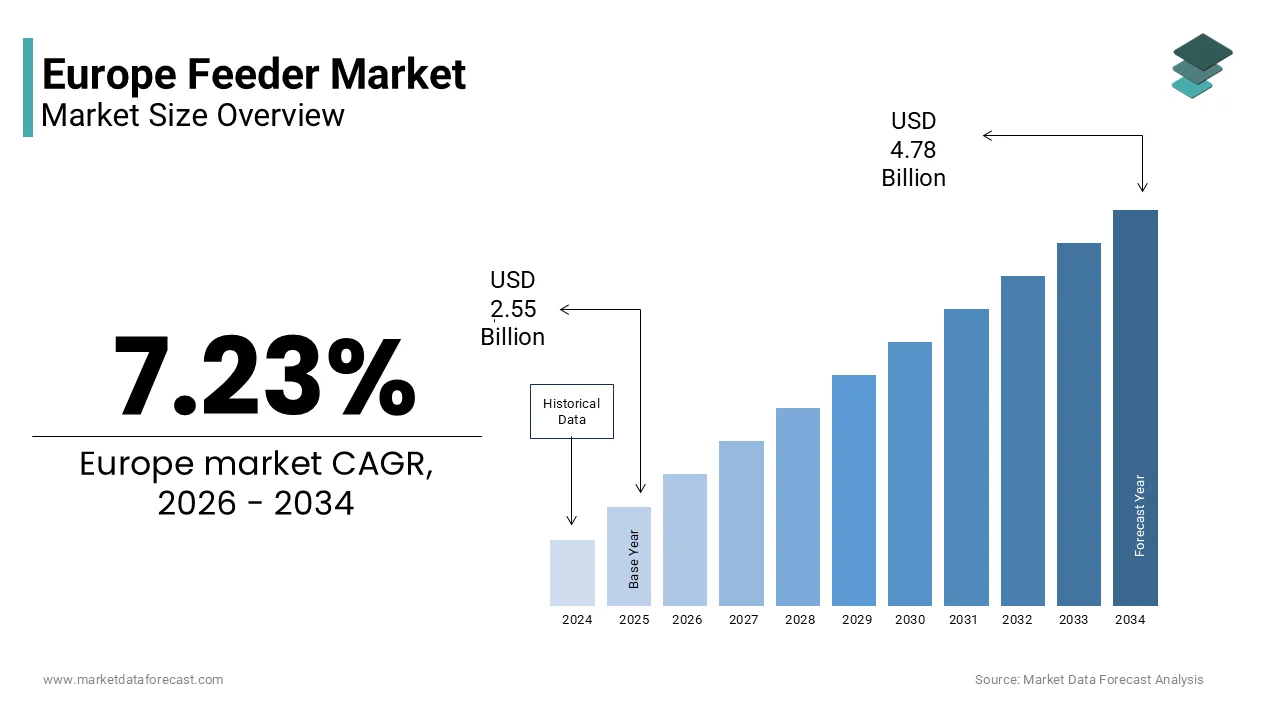
$2.55 BnMarket Estimate, 2026
$2.73 BnMarket Forecast, 2034
$4.78 BnCAGR, 2026–2034
7.23%Europe Feeder Market Report Summary
The Europe feeder market size was valued at USD 2.55 billion in 2025 and is projected to reach USD 4.78 billion by 2034 from USD 2.73 billion in 2026, growing at a CAGR of 7.23% during the forecast period. The growth of the Europe feeder market is driven by increasing demand for precision material handling systems across manufacturing industries, rising automation in industrial processes, and the expansion of food processing, pharmaceuticals, and plastics sectors. The need for accurate dosing, improved production efficiency, and reduced material wastage is further accelerating the adoption of advanced feeder systems across Europe.
Key Market Trends
- Rising adoption of automated feeding systems integrated with digital monitoring and control technologies in industrial production lines.
- Growing demand for gravimetric and volumetric feeders in food, pharmaceutical, and chemical manufacturing applications.
- Increasing focus on process optimization, material consistency, and quality control across end use industries.
- Expansion of smart manufacturing and Industry 4.0 practices driving investment in intelligent feeder solutions.
- Development of energy efficient and compact feeder systems to support space optimized industrial facilities.
Segmental Insights
- Based on application, the institutes segment was the largest in the Europe feeder market and accounted for a 58.7% share in 2025. The dominance of this segment is attributed to the extensive use of feeders in research institutions, laboratories, and industrial training facilities for material testing, formulation development, and process experimentation.
Regional Insights
- Germany dominated the Europe feeder market by capturing a 22.5% share in 2025. The country’s leadership is supported by its strong industrial base, advanced manufacturing ecosystem, and high adoption of automation technologies across sectors such as automotive, chemicals, food processing, and pharmaceuticals. Germany’s emphasis on engineering excellence and smart factory implementation further strengthens its position in the regional market.
- Other European countries are also witnessing steady growth, driven by industrial modernization initiatives, increasing production capacities, and growing investments in precision material handling equipment.
Competitive Landscape
The Europe feeder market is characterized by the presence of established global and regional manufacturers focusing on technological innovation, customization capabilities, and integration of digital control systems. Companies are emphasizing research and development, strategic partnerships, and expansion of product portfolios to cater to diverse industrial requirements. Prominent players in the Europe feeder market include Coperion K Tron, FLSmidth, Brabender, WAMGROUP, Schenck Process, Motan colortronic, Kubota, DSM Firmenich, Wuxi Lingood Machinery Technology Corp, Acrison, MERRICK Industries, Thayer Scale, Gericke Group, Glanbia Nutritionals, AViTEQ, Amix Nutrition, Hapman, Funken Powtechs Inc, Movacolor, Novatec, and Sonner.
Europe Feeder Market Size
The Europe feeder market size was valued at USD 2.55 billion in 2025 and is projected to reach USD 4.78 billion by 2034 from USD 2.73 billion in 2026, growing at a CAGR of 7.23%.
Feeders are precision engineered to meet narrow physiological windows, supporting immune development, gut maturation, and metabolic programming. According to FEFAC (European Feed Manufacturers' Federation) forecasts for 2025/2026, total industrial compound feed production in the EU-27 is projected to be around 146.1 to 147.5 million tonnes, with the sector maintaining stability despite regulatory and environmental pressures. Regulatory constraints define this market uniquely. The EU’s ban on antimicrobial growth promoters since 2006 has compelled innovation in alternatives such as organic acids, phytogenics, and functional proteins. Furthermore, the Farm to Fork Strategy mandates a 50% reduction in nutrient losses by 2030, pushing feed formulators toward digestibility-enhancing enzymes and precise amino acid balancing to minimize environmental excretion. Consequently, the Europe feeder market operates at the intersection of nutritional science, regulatory compliance, and sustainability, serving not merely as sustenance but as a strategic tool for health optimization and environmental stewardship across intensive and organic production systems alike.
MARKET DRIVERS
Precision Livestock Farming Drives Demand for Phase Specific Feeder Formulations
The integration of precision livestock farming technologies across the region is a major booster for the Europe feeder market. This shift is driven by hyper-targeted nutritional interventions aligned with individual animal physiology. Modern dairy and pig operations now deploy real time monitoring systems, such as ear tag sensors, automated weighing gates, and milk composition analyzers, that generate granular data on growth rates, feed conversion efficiency, and health biomarkers. This intelligence allows producers to segment herds into micro cohorts and administer customized feeder rations that adjust protein density, energy content, and additive inclusion based on developmental stage or metabolic stress. According to research, Dutch dairy farms using automated calf rearing systems have improved labor efficiency by 23% and increased average daily gain (ADG) compared to conventional restricted group feeding. In broiler production, companies like Hubbard and Cobb have partnered with feed mills to develop sex specific starter feeds that account for divergent growth trajectories between male and female chicks from day one. Through the Common Agricultural Policy (2023-2027) and Digital Europe Programme, the European Commission is investing billions of euros to support the adoption of smart farming technologies, with significant focus on precision feeding in nations like Germany, France, and Denmark. According to 2025 Global Automated Feeding System reports, smart feeding systems (using IoT and automated portion control) are rapidly increasing, with automated systems gaining major market share in poultry, driven by efficiency and labor reduction, especially in Western Europe. This convergence of digitalization and nutritional science ensures that feeder formulations are no longer static commodities but dynamic components of data informed animal management strategies.
EU Protein Autonomy Agenda Accelerates Adoption of Alternative Feeder Ingredients
The region’s strategic push to reduce dependence on imported soybean meal is enabling rapid reformulation of feeder diets with locally produced alternative proteins, which further propels the expansion of the Europe feeder market. Soyabean meal is a commodity historically sourced from deforestation linked supply chains in South America. The European Commission is driving initiatives to increase domestic plant protein production, resulting in higher policy support and increased acreage for protein crops to strengthen the EU's food supply and feed independence. Insect meal, single cell protein, and processed animal proteins have emerged as viable replacements, particularly in piglet and weanling calf feeds where digestibility and palatability are paramount. Feedering French insect biotech firms are scaling up industrial production, providing mealworm and black soldier fly larvae protein as high-performance alternatives to traditional fishmeal in aquafeed and pet food. Regulatory approval for using non-ruminant processed animal proteins in feed has unlocked new circular,, high-quality protein sources from abattoir byproducts, reducing dependency on imported proteins. Simultaneously, the EU’s Deforestation Regulation requires full traceability for soy imports, increasing compliance costs and incentivizing substitution. German feed manufacturers are increasing the inclusion of locally produced legumes and rapeseed oil cakes in piglet starter diets. This shift is driven by the need for more regional protein sources. Hence, this policy driven ingredient shift not only enhances supply chain resilience but also aligns feeder formulations with consumer expectations for sustainable and ethical animal production.
MARKET RESTRAINTS
Stringent Feed Additive Authorization Process Delays Innovation Commercialization
The European Union’s approach to feed additive approval under Regulation EC 1831/2003 is both centralized and precautionary, which poses a major barrier to the Europe feeder market. This system imposes significant time and cost barriers that stifle the timely commercialization of novel feeder solutions. Unlike regions with streamlined pathways, the European Food Safety Authority requires comprehensive dossiers covering efficacy, safety, environmental impact, and residue analysis, often taking significant number of months for evaluation. During this period, promising innovations such as next generation phytogenics, bacteriophages, and microbiome modulators remain inaccessible to European producers despite proven success elsewhere. For instance, while the United States approved a novel yeast derived immunostimulant for piglet feed in 2022, its EU counterpart remains under assessment as of early 2026. According to FEFANA, high data generation costs and complex, evolving regulatory requirements create significant financial barriers for small and medium enterprises seeking new additive authorizations. This regulatory bottleneck forces feed manufacturers to rely on a limited portfolio of legacy additives, many of which offer diminishing returns due to microbial adaptation. Furthermore, European specialty feed ingredient producers report that regulatory delays for new product approvals constitute a primary bottleneck for developing next-generation antibiotic-free solutions. Consequently, Europe risks falling behind global competitors in feeder innovation, undermining both animal health outcomes and export competitiveness of its livestock products.
Fragmented National Implementation of EU Feed Regulations Creates Market Inefficiencies
Inconsistent transposition and enforcement of feed regulations across member states generates operational friction and compliance uncertainty for pan-European feeder producers, thereby restricting the expansion of the European feeder market. This is the case despite harmonized EU legislation. Variations in permitted additive concentrations, labeling requirements, and sampling protocols force companies to maintain multiple product formulations for what should be a single market. Copper sulfate is authorized in piglet feed by the EU at different maximum levels depending on the weeks after weaning, with stricter limits for older piglets and a lower overall limit for older pigs, rather than a single 150 mg/kg limit for all piglets, with uniform EU surveillance. According to research, these discrepancies result in an estimated increase in administrative and logistics costs for multinational feed mills operating in five or more countries. Moreover, national authorities differ in their interpretation of novel ingredient classifications, Belgium permits certain algal oils in poultry starter feeds under “traditional use” exemptions, whereas Spain requires full novel food authorization. This fragmentation discourages investment in standardized production lines and complicates cross border distribution. The European Commission is implementing new digital customs measures in 2025 to harmonize trade procedures and reduce delays across the EU. The European feeder market will keep facing inefficiency-driven cost increases and product shortages until binding, uniform regulations and centralized audits are implemented.
MARKET OPPORTUNITIES
Expansion of Organic and Antibiotic Free Production Systems Creates Premium Feeder Niche
The rapid growth of certified organic and antibiotic-free livestock systems across the region is creating a new niche in the Europe feeder market. This niche is for specialized feeder formulations that meet stringent compositional and sourcing criteria. EU organic regulations prohibit synthetic amino acids, chemically extracted proteins, and most conventional feed additives, compelling formulators to develop complex blends based on fermented cereals, legume concentrates, and botanical extracts. In parallel, retailer driven antibiotic free pledges, such as those from Carrefour and REWE, require verifiable absence of prophylactic medications from day one, elevating the importance of gut health supporting starter feeds. According to FiBL, organic poultry production in the EU has shown strong growth compared to other animal sectors, driven by rising demand for organic products. This expansion has spurred investment in dedicated organic feed mills. De Heus Animal Nutrition is expanding its global production capacity, with significant new manufacturing investments in Asia and Africa focusing on specialized animal feed. Similarly, Trouw Nutrition’s NutriOpt Organic platform uses predictive modeling to balance essential amino acids using only EU approved organic sources like sunflower meal and pea protein. According to Eurostat and market reports, premium and organic meat and egg segments generally command higher prices compared to conventional, allowing producers to offset the higher feed and management costs involved in these sectors. This trend positions the organic and antibiotic free feeder segment not as a marginal alternative but as a scalable, high margin frontier aligned with evolving consumer ethics.
Circular Bioeconomy Integration Enables Waste Derived Feeder Ingredients
The region’s advancing circular bioeconomy framework is opening novel feedstock streams for feeder production within the Europe feeder market. It achieves this by valorizing agri-food and industrial side streams that were previously landfilled or incinerated. Under the EU Circular Economy Action Plan, byproducts such as brewers’ spent grain, potato pulp, citrus peel, and bakery waste are being reprocessed into high fiber, protein rich ingredients suitable for inclusion in starter and grower feeds. Lallemand Animal Nutrition’s Progut product line, for instance, utilizes fermented distillers’ grains from bioethanol plants to deliver live yeast and metabolites that enhance gut barrier function in weaned piglets. A significant portion of the hundreds of biorefineries operating across the European Union now integrate the production of animal feed into their chemical and material processing workflows to maximize resource efficiency. The Netherlands continues to expand its national efforts to reduce food waste, specifically by scaling up the repurposing of surplus bakery products into high-value animal nutrition. Regulatory support is accelerating adoption. Recent European Union legislative updates have facilitated a more circular bioeconomy by allowing the cross-species use of certain safe animal-derived proteins in feed for non-ruminant livestock. These circular ingredients not only reduce reliance on virgin crops but also lower feed carbon footprints. Waste-derived feeders provide a scalable solution to align high productivity with planetary boundaries amid growing decarbonization pressures.
MARKET CHALLENGES
Climate Induced Feed Ingredient Volatility Disrupts Feeder Cost Stability
Extreme weather events linked to climate change are increasingly destabilizing the supply and pricing of core cereal and oilseed inputs, which is a major slowdown factor for the Europe feeder market. These inputs are vital for European feeder formulations. This instability is creating unpredictable cost structures for producers. Severe weather, including droughts in 2022 and excessive rain in 2024, significantly reduced French and German wheat and barley production, with France experiencing a particularly sharp drop in 2024. Simultaneously, excessive rainfall in Eastern Europe damaged maize quality, increasing mycotoxin contamination levels and rendering large volumes unsuitable for young animal feeds without costly detoxification. These disruptions trigger cascading effects. Despite localized weather events affecting specific regions, European compound feed production in 2024 remained relatively stable, with some countries experiencing production growth rather than broad price spikes. Feed mills lack sufficient hedging instruments for minor ingredients like specialty proteins or organic acids, leaving them exposed to spot market volatility. Climate-related risks, including droughts, are increasingly threatening agricultural productivity in Southern Europe, putting pressure on farm margins. The lack of diversified sourcing strategies and climate-resilient insurance mechanisms exposes feeder manufacturers to recurring financial instability, which hampers long-term investment in innovation.
Labor Shortages Impair On Farm Feeder Management and Uptake of Advanced Protocols
Persistent labor scarcity across regional livestock farms is constraining the effective implementation of sophisticated feeder programs and the expansion of the Europe feeder market. These programs require precise timing, mixing accuracy, and observational monitoring. The European Union is experiencing a long-term, significant decline in its agricultural labour force due to structural changes, mechanization, and an aging population, with few young people entering the sector, according to Eurostat. This deficit forces remaining staff to manage larger animal groups with less attention to individual needs, feedering to suboptimal feeder delivery, such as delayed transition from starter to grower diets or inconsistent water medication integration. Research from Danish universities, including the University of Copenhagen, indicates that high pre-weaning piglet mortality in intensive systems is strongly linked to inadequate staffing and management, which impairs the ability to manage sow health and piglet feeding, especially in high-prolificity herds. Similarly, poultry integrators report that contract growers often skip recommended multi phase feeding steps to simplify operations, reducing feed efficiency. While automation offers a solution, high capital costs and technical complexity limit adoption outside large corporate farms. The European Commission’s Long Term Vision for Rural Areas acknowledges this bottleneck but lacks targeted funding for labor saving feeder technologies. Workforce challenges must be addressed through mechanization incentives or vocational training. Until then, the full potential of advanced feeder science will remain unrealized on a significant portion of European farms.
REPORT COVERAGE
| REPORT METRIC | DETAILS |
| Market Size Available | 2025 to 2034 |
| Base Year | 2025 |
| Forecast Period | 2026 to 2034 |
| CAGR | 7.23% |
| Segments Covered | By Application, Product, and Region |
| Various Analyses Covered | Global, Regional, & Country Level Analysis; Segment-Level Analysis; DROC, PESTLE Analysis; Porter’s Five Forces Analysis; Competitive Landscape; Analyst Overview of Investment Opportunities |
| Regions Covered | UK, France, Spain, Germany, Italy, Russia, Sweden, Denmark, Switzerland, Netherlands, Turkey, and the Czech Republic |
| Market Leaders Profiled | Coperion K Tron, FLSmidth, Brabender, WAMGROUP, Schenck Process, Motan colortronic, Kubota, DSM Firmenich, Wuxi Lingood Machinery Technology Corp, Acrison, MERRICK Industries, Thayer Scale, Gericke Group, Glanbia Nutritionals, AViTEQ, Amix Nutrition, Hapman, Funken Powtechs Inc, Movacolor, Novatec, and Sonner |
SEGMENTAL ANALYSIS
By Application Insights
In 2025, the institutes segment was the largest segment in the Europe feeder market and accounted for a 58.7% share. This position of the segment is driven by the institutionalization of structured sports development pathways across national education systems and public sports academies. In countries like Germany, France, and Sweden, government funded sports high schools and Olympic training centers operate year round programs that mandate individualized nutrition protocols, including phase specific feeder supplements for adolescent athletes undergoing rapid growth spurts. European sport policies emphasize that governments should promote healthy nutrition and education within youth sporting environments as part of a broader commitment to athlete well-being, rather than requiring specific, mandated, or branded nutritional products. Elite sports schools in Germany work with sports science institutions to provide tailored nutritional advice to young athletes, aimed at meeting nutritional needs through balanced diets rather than mandatory supplementation. Similarly, France’s INSEP integrates tailored, personalized nutritional strategies developed by specialists to optimize the performance and recovery of its elite athletes within the national talent pipeline, focusing on individualized nutrition plans. These institutions prioritize traceability, doping free certification, and batch consistency, criteria that favor established European brands with ISO 22000 and NSF Certified for Sport credentials. Institutes will continue anchoring demand through standardized, large-scale procurement frameworks, driven by increasing public investment in grassroots sports under EU guidelines.
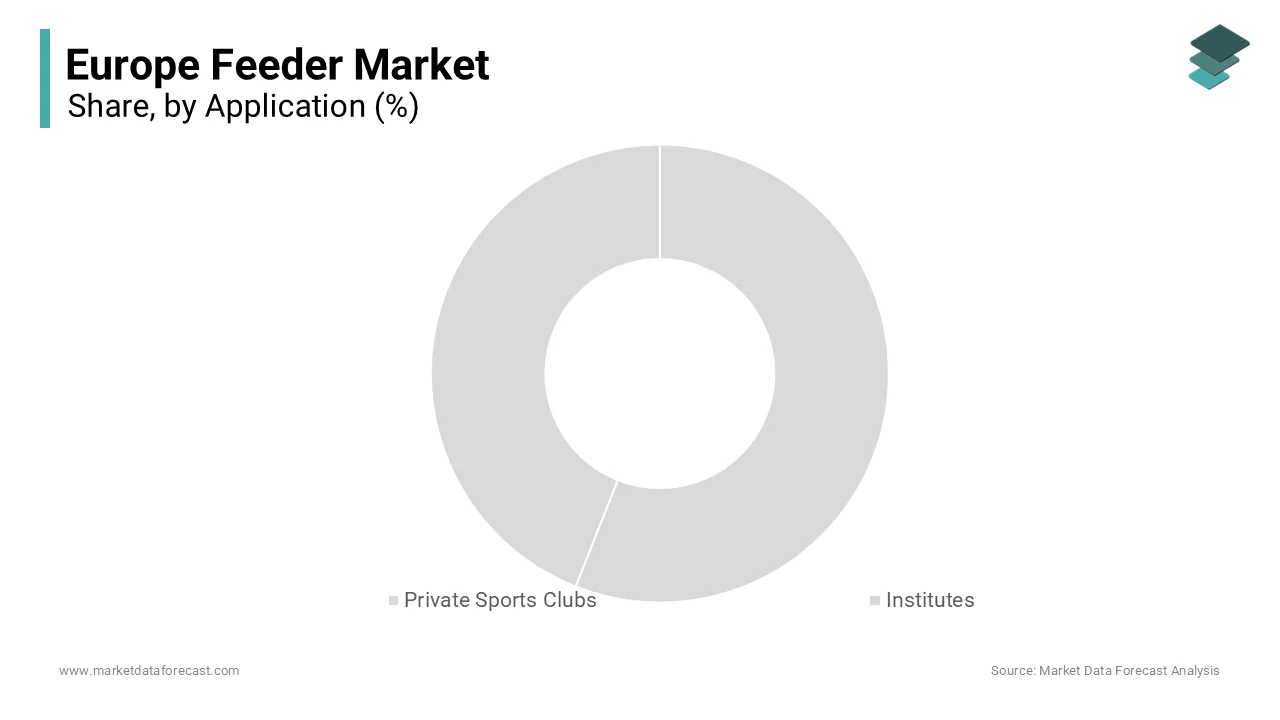
The private sports clubs segment is estimated to register the fastest CAGR of 9.4% between 2026 and 2034 due to the commercialization of amateur athletics, rising parental investment in youth performance, and the proliferation of boutique fitness ecosystems targeting semi professional athletes. Unlike public institutes, private clubs operate with greater flexibility to adopt premium, branded feeder solutions tailored to sport specific demands, such as creatine enriched formulas for rugby academies or collagen peptide blends for gymnastics clubs. In the United Kingdom, elite football academies are increasingly formalizing partnerships with nutrition providers to deliver tailored nutritional support to young players, particularly within high-tier academy structures. Spain is seeing a rise in professional-grade nutritional protocols within private academies, with many adopting holistic development models similar to those used by top-tier professional clubs. Digital engagement further amplifies growth: apps integrate e commerce links to feeder subscriptions, enabling seamless replenishment. Reports on consumer trends in sport indicate that parents of young athletes are increasingly willing to pay a premium for specialized products and services that promise to enhance performance and health. This convergence of commercialization, personalization, and digital enablement positions private clubs as the vanguard of premium feeder adoption.
REGIONAL ANALYSIS
Germany Feeder Market Analysis
Germany dominated the Europe feeder market and captured a 22.5% share in 2025. The dominance of Germany in the regional market is attributed to a deeply embedded dual system of elite sports development that integrates public sports schools, Olympic training centers, and club academies under a unified nutritional framework. The country operates a network of elite sports schools that integrate academic education with high-performance training, where student nutrition is supported to meet the high energy demands of daily training. The German Olympic Sports Confederation mandates that all national team preparation camps use only Doping Authority Germany certified products, creating a high barrier to entry that favors domestic manufacturers like Multipower and Body Attack. Additionally, Germany’s strong vocational sports culture, evident in Bundesliga youth academies, drives consistent demand. Professional German football clubs and their youth academies (including top-tier clubs like Bayern Munich) commonly provide nutritional support and supplementation, often managed by sport scientists and nutritionists, to aid recovery and performance. Regulatory rigor further shapes the market. The German Food Code (Lebensmittelbuch) imposes stricter limits on stimulants and novel ingredients than EU baseline standards, ensuring product safety but limiting innovation speed. The German sports system, through the Deutscher Olympische Sportbund (DOSB) and federal initiatives, prioritizes investment in regional talent development, with a focus on structured support, rigorous quality standards for food supply, and performance-based procurement.
United Kingdom Feeder Market Analysis
The United Kingdom followed closely in the Europe feeder market and occupied a 17.1% share in 2025. The demand for feeder in the UK is supported by a highly commercialized private sports academy network that treats feeder nutrition as a value added service rather than a commodity. Numerous private football and sports academies across the UK charge substantial monthly tuition fees that frequently include the cost of branded training kits. The Elite Player Performance Plan requires Category One academies to provide nutritional support to players, with many top clubs employing qualified staff to manage dietary intake, particularly for older age groups. Beyond football parental spending on youth athletic development has surged. Families with children involved in competitive sports in England frequently face significant annual expenditures on coaching, equipment, and nutrition. This willingness to pay supports premium imports from the United States and domestic innovators. Sports nutrition companies are increasingly focusing on third-party tested products, with some expanding their ranges to appeal to younger, active demographics. Although Brexit initially disrupted supply chains UK regulators have fast tracked mutual recognition agreements for sports nutrition products easing import bottlenecks. The market thus thrives on consumer led premiumization and service integration rather than public subsidy.
France Feeder Market Analysis
France is also a key player in the Europe feeder market due to centralized state control through institutions like INSEP (National Institute of Sport Expertise and Performance) which oversees feeder distribution to 28 regional poles of excellence and 15 Olympic disciplines. INSEP’s nutrition department provides customized dietary guidelines and support for elite athletes to optimize performance and recovery. The French Ministry of Sports mandates that publicly funded youth programs adhere to the “Nutrition et Performance” guidelines which prohibit proprietary blends and require full ingredient transparency, a policy that has elevated demand for domestically produced single ingredient feeders from companies like Nutrisens Sport. Grassroots penetration is equally robust. The French Football Federation (FFF) oversees a structured youth development network through its Pôles Espoirs and accredited clubs to train young players, focusing on holistic development. The French Agency for Food, Environmental and Occupational Health & Safety (ANSES) works to ensure the safety of food products and dietary supplements, while the AFNOR group provides voluntary certification for certain services. This top down standardization creates a stable predictable market insulated from fads but slower to adopt emerging ingredients like adaptogens or nootropics.
Italy Feeder Market Analysis
Italy expanded steadily in the Europe feeder market owing to cultural priorities that blend athletic performance with physique aesthetics particularly in gymnastics swimming and football youth systems. Italian sports federations emphasize lean mass development and injury resilience feedering to high uptake of collagen enriched and joint support feeders among adolescents. Serie A clubs such as AC Milan and Juventus integrate feeder protocols into their youth academies with daily distribution of customized sachets containing hydrolyzed whey peptides and vitamin D3. The expansive Italian fitness industry, growing in popularity among younger demographics, is experiencing increased interest in wellness, fitness, and nutritional supplements, including protein powders, within private training facilities. Italian sporting authorities enforce strict anti-doping protocols, which include monitoring the usage of nutritional supplements, with athletes in official training required to ensure products comply with national anti-doping regulations to avoid prohibited substances. Consumer trust is further reinforced by the “Made in Italy” label. Domestic producers like Yamamoto Nutrition leverage local sourcing of Alpine whey to command price premiums. This fusion of aesthetic aspiration functional training and regulatory oversight sustains steady mid tier growth anchored in cultural identity.
Spain Feeder Market Analysis
Spain is predicted to grow in the Europe feeder market during the forecast period due to the unparalleled density of youth football infrastructure with thousands of registered clubs providing structured training to large number of children under age 16. Inspired by FC Barcelona’s La Masia model local academies increasingly adopt basic feeder protocols focusing on post session recovery and growth support. While elite setups use premium imported blends most grassroots clubs rely on cost effective domestic formulations from brands like Amix Nutrition which offers bulk 20 kilogram sacks of maltodextrin whey concentrate blends priced for municipal budgets. The Royal Spanish Football Federation has implemented various coach training programs focused on youth development and nutrition, with studies exploring their impact on coaching methodologies. Regional governments amplify reach. The Catalan government subsidizes a significant portion of school dining and canteen costs to assist families with the expenses of educational services. Unlike Northern Europe Spain’s market thrives on volume accessibility and federation led education rather than premiumization making it a critical entry point for scalable feeder distribution across Southern Europe.
COMPETITIVE LANDSCAPE
The Europe feeder market features a dual tier competitive landscape where global science driven companies compete alongside agile regional specialists. At the premium end DSM Firmenich Glanbia and international brands dominate institutional channels through clinical backing regulatory compliance and doping free certification. In contrast local players like Amix Nutrition and Yamamoto Nutrition capture grassroots volume via sport specific affordability and federation partnerships. Competition is less about price and more about trust scientific credibility and integration into official training frameworks. Barriers to entry include navigating country specific food safety rules anti doping regulations and the need for longitudinal efficacy data. Differentiation arises from age appropriate formulation digestibility focus and digital engagement such as app linked dosing guides. Unlike generic sports nutrition the feeder segment demands ethical responsibility developmental safety and alignment with public health goals making reputation and transparency decisive factors in long term market positioning.
KEY MARKET PLAYERS
Some of the notable key players in the Europe feeder market are
- Coperion K-Tron
- FLSmidth
- Brabender
- WAMGROUP
- Schenck Process
- Motan-colortronic
- Kubota
- DSM Firmenich
- Wuxi Lingood Machinery Technology Corp
- Acrison
- MERRICK Industries
- Thayer Scale
- Gericke Group
- Glanbia Nutritionals
- AViTEQ
- Amix Nutrition
- Hapman
- Funken Powtechs Inc
- Movacolor
- Novatec
- Sonner
Top Players in the Market
- DSM Firmenich is a science driven global feederer in nutritional solutions with a strong footprint in the Europe feeder market through its specialty sports nutrition and youth performance ingredients. The company supplies bioactive peptides, vitamin premixes, and amino acid complexes to institutional and private sports academies across Germany, France, and the Nordic region. In recent years DSM Firmenich has expanded its Peptan collagen peptide portfolio with clinical data supporting bone and muscle development in adolescents. These actions reinforce its strategy of embedding scientific validation and safety into every feeder product, aligning with Europe’s stringent regulatory expectations and institutional procurement standards.
- Glanbia Nutritionals leverages its integrated dairy supply chain to deliver high purity whey protein isolates and casein hydrolysates tailored for young athlete development in Europe. The company operates specialized blending facilities in Ireland and the Netherlands that produce customized feeder blends for national sports institutes and private football academies. In 2025 Glanbia introduced its ProYouth platform featuring stage specific protein carbohydrate ratios backed by longitudinal growth studies conducted with European universities. It also secured NSF Certified for Sport accreditation for its entire European youth portfolio enhancing trust among federations and parents. Glanbia strengthens its position as a premium feeder supplier by combining traceable Irish dairy sourcing with sport science partnerships. This strategic approach focuses on delivering developmental efficacy and clean label integrity.
- Amix Nutrition is a Spain based innovator specializing in accessible yet scientifically formulated feeder products for grassroots sports clubs and amateur athletes across Southern and Eastern Europe. Known for its cost effective bulk formats and sport specific sachets Amix serves over 3000 youth academies in football basketball and swimming. The company recently upgraded its Madrid facility to include real time allergen testing and batch serialization enabling compliance with EU school nutrition tenders. Amix’s strength lies in democratizing performance nutrition through localized pricing formulation simplicity and federation endorsed protocols that resonate with mass participation sports ecosystems.
Top Strategies Used by the Key Market Participants
Key players in the Europe feeder market are prioritizing scientific validation through clinical studies and university collaborations to substantiate developmental claims for adolescent athletes. They are securing third party certifications such as NSF Certified for Sport and national anti doping registry approvals to meet institutional procurement requirements. Companies are tailoring formulations by sport age and growth phase rather than offering generic protein blends enhancing physiological relevance. Investment in clean label production with full ingredient transparency addresses parental and regulatory concerns about additives and proprietary blends. Additionally firms are building direct partnerships with national federations sports schools and private academies to embed their products into standardized training protocols ensuring recurring demand and brand loyalty.
MARKET SEGMENTATION
This research report on the European feeder market has been segmented and sub-segmented based on categories.
By Application
- Private Sports Clubs
- Institutes
By Product
- 200 Shuttlecocks
- 150 Shuttlecocks
- 30 Shuttlecocks
- Others
By Country
- UK
- France
- Spain
- Germany
- Italy
- Russia
- Sweden
- Denmark
- Switzerland
- Netherlands
- Turkey
- Czech Republic
- Rest of Europe