- Product Description Description
- Table of Contents TOC
- List of Table & Figure LOT
- Get Free Sample PDF Sample PDF
Market Size, 2025
$249.65 MnMarket Estimate, 2026
$284.35 MnMarket Forecast, 2034
$805.46 MnCAGR, 2026–2034
13.9%Executive Summary: Europe Fennel Seeds Market
- Market Scope: Regional analysis of the European fennel seeds market covering product varieties, application types, end-user industries, and country-level performances across key European nations.
- Market Valuation: Valued at USD 249.65 million in 2025, estimated at USD 284.35 million in 2026, and projected to reach USD 805.46 million by 2034, registering a strong CAGR of 13.9% during the forecast period (2026–2034).
- Primary Growth Drivers: Rising European consumer preference for natural and functional food ingredients, expansion of organic farming practices supporting domestic production, and increasing integration of fennel extracts in herbal medicine and personal care.
Key Market Segment Metrics (2026–2034)
| Category | Leading Segment (2025 Position) | Fastest-Growing Segment |
|---|---|---|
| By Product | Conventional (dominated market share backed by cost-effectiveness and high-volume food processing demand) | Organic (growing at a 9.1% CAGR, driven by clean-label trends and European sustainable agriculture policies) |
| By Application | Flavor and Seasoning Ingredients (captured 58.3% share via extensive use in breads, cured meats, and regional dishes) | Essential Oil Production (fastest-growing at a 9.6% CAGR, propelled by natural cosmetics and wellness formulations) |
| By End User | Households (held a dominant share due to traditional home cooking habits and accessible online grocery platforms) | Personal Care Industry (projected at a 10.3% CAGR from 2025 to 2033, driven by clean beauty and skincare demand) |
| By Country | Italy (market leader accounting for 22.3% share, driven by deep culinary integration and extensive domestic cultivation) | France (fastest-growing regional market supported by rich gastronomic culture, herbal medicine approval, and organic trends) |
Major Market Players & Market Structure
Market Structure: Moderately fragmented landscape featuring regional agricultural producers, global flavor suppliers, and specialty wellness brands competing through product diversification, sustainability, and rigorous regulatory compliance.
Key Companies: Symrise AG, BASF SE, Givaudan (Frutarom Industries Ltd.), McCormick & Company, Inc., Gregg’s Company, Willmar Schwabe GmbH & Co. KG, Steenbergs Organic, Just Ingredients, and Mangalam Seeds Ltd.
Europe Fennel Seeds Market Size
The Europe fennel seeds market size was valued at USD 249.65 million in 2025 and it is anticipated to reach a valuation of USD 284.35 million in 2026 and USD 805.46 million by 2034, growing at a CAGR of 13.9% from 2026 to 2034.
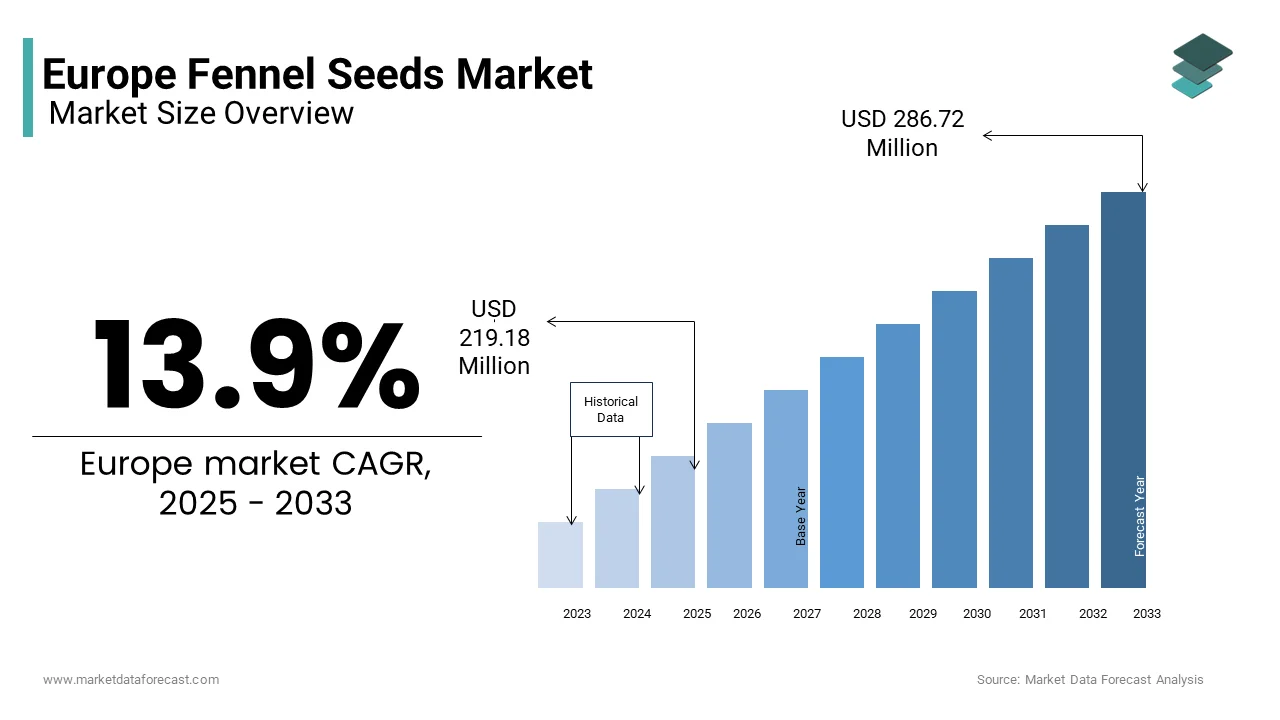
The fennel seeds have long been integral to traditional cuisines in Mediterranean countries such as Italy, Spain, and Greece, where they are used to flavor breads, sausages, and liquors like ouzo and sambuca. Fennel seeds are also utilized in herbal medicine due to their rich content of antioxidants, essential oils, and compounds like anethole, which exhibit anti-inflammatory and digestive properties. According to Eurostat, the European Union has seen a steady increase in the cultivation area under aromatic and medicinal plants, including fennel, with member states such as France and Germany expanding domestic production to reduce reliance on imports. Consumer interest in natural ingredients and functional foods is further reinforcing demand. The European Food Safety Authority has recognized several health benefits linked to fennel seed extracts, encouraging their inclusion in dietary supplements and herbal teas.
MARKET DRIVERS
Rising Demand for Natural Ingredients in Functional Foods and Beverages
The growing consumer preference for natural and functional ingredients in food and beverage products is expected to fuel the growth of the Europe fennel seeds market. According to the European Natural Health Products Organisation (ENHPO), over 60% of European consumers actively seek out products containing plant-based ingredients with perceived health benefits. Fennel seeds are known for their digestive, anti-inflammatory, and antimicrobial properties, and are increasingly being incorporated into herbal teas, energy bars, plant-based snacks, and functional beverages. Moreover, the European herbal tea market, which includes blends containing fennel seeds, has experienced robust growth. Additionally, regulatory support from bodies such as the European Medicines Agency (EMA) and EFSA has validated the therapeutic potential of fennel seed extracts, further legitimizing their use in food formulations.
Expansion of Organic Farming Practices Supporting Domestic Production
The expansion of organic farming practices across the continent, which has led to increased domestic cultivation and reduced dependency on imported raw materials, is leveraging the growth of the market. According to the Research Institute of Organic Agriculture (FiBL), the total organic agricultural land in the EU reached over 16 million hectares in 2023, reflecting a consistent upward trend in sustainable agriculture. Furthermore, the European Commission's policy incentives for local agro-food industries have encouraged small-scale farmers and cooperatives to cultivate fennel under organic standards.
MARKET RESTRAINTS
Seasonal Cultivation Cycles Limiting Year-Round Availability
The seasonal nature of fennel cultivation, which limits the availability of fresh and high-quality seeds, is limiting the growth of the Europe fennel seeds market. As per the European Environment Agency, fennel is primarily harvested once a year, typically between late summer and early autumn, depending on regional climate conditions. This seasonality results in fluctuations in supply, which is creating challenges for manufacturers and retailers who require consistent raw material inputs. Moreover, unpredictable weather patterns caused by climate change have introduced additional risks to fennel production cycles. Storage limitations further exacerbate this issue.
Intense Competition from Alternative Herbal Ingredients
The intense competition from alternative herbal ingredients that offer similar flavor profiles or health benefits is additionally restricting the growth of the Europe fennel seeds market. According to the European Natural Health Products Organisation (ENHPO), ingredients such as cumin, anise, and star anise are often used interchangeably with fennel in culinary and medicinal applications due to overlapping aromatic properties and digestive benefits. This substitution effect is particularly evident in the food and beverage sector, where manufacturers prioritize cost efficiency and sensory appeal. Furthermore, consumer preferences are evolving rapidly, with younger demographics showing a greater inclination toward exotic spices and global flavors, many of which are sourced from outside Europe.
MARKET OPPORTUNITIES
Growing Integration of Fennel Seeds in Personal Care and Aromatherapy Products
The increasing incorporation of fennel-derived essential oils and extracts into personal care and aromatherapy products is likely to create new opportunities for the Europe fennel seeds market. According to the European Federation of Essential Oils (EFEO), the demand for plant-based ingredients in skincare, haircare, and fragrance formulations has surged in recent years, driven by consumer interest in clean beauty and holistic wellness. Fennel essential oil, extracted from fennel seeds, is known for its anti-inflammatory, antibacterial, and antioxidant properties, making it a valuable ingredient in natural cosmetics and dermatological treatments. Moreover, the rise of aromatherapy and home fragrance products has created new avenues for fennel seed derivatives. Retailers such as Lush and The Body Shop have introduced fennel-infused massage oils and steam inhalants aimed at promoting respiratory health and relaxation.
Increasing Use of Fennel Seeds in Traditional and Modern Herbal Medicine
The expanding utilization of fennel in both traditional and contemporary herbal medicine is also expected to expand the growth of the Europe fennel seeds market. According to the European Scientific Cooperative on Phytotherapy (ESCOP), fennel has been officially recognized for its efficacy in treating digestive disorders, menstrual discomfort, and respiratory ailments, reinforcing its role in phyto-pharmaceutical formulations. Pharmaceutical companies across Europe, particularly in Germany and Austria, have been incorporating fennel seed extracts into over-the-counter herbal remedies, digestive syrups, and lactation-support supplements. Additionally, academic institutions and research organizations are conducting clinical studies to validate the pharmacological effects of fennel constituents.
MARKET CHALLENGES
Regulatory Hurdles in Labeling and Health Claims for Fennel-Based Products
The complex regulatory framework governing health claims, labeling, and marketing of herbal ingredients in food and supplement products is a key challenging factor for the Europe fennel seeds market players. According to the European Food Safety Authority (EFSA), stringent regulations under the Nutrition and Health Claims Regulation (NHCR) limit the ability of manufacturers to promote specific health benefits associated with fennel seeds unless backed by rigorous scientific validation.
This has resulted in inconsistencies in how fennel-containing products are marketed across different EU member states. For example, while certain fennel-based digestive aids are permitted to make specific claims in Germany, similar products in France face restrictions due to differing national interpretations of EU directives. Moreover, the Novel Food Regulation has imposed additional scrutiny on new fennel-derived ingredients entering the market, requiring extensive safety assessments before approval. According to the European Commission, the average time for novel food authorization exceeds two years, delaying product launches and stifling innovation. These regulatory complexities pose a significant barrier to market expansion for fennel seeds in both food and nutraceutical applications.
Limited Consumer Awareness Outside Traditional Culinary Regions
The relatively low consumer awareness and usage of fennel seeds outside traditional culinary regions is hindering the growth of the Europe fennel seeds market. According to the European Consumer Organisation (BEUC), surveys conducted in Northern and Eastern Europe in 2023 revealed that less than 25% of respondents were familiar with fennel seeds or their uses beyond liquor flavoring. Furthermore, limited representation in popular food media and recipe platforms reduces exposure among younger generations. According to the European Food Information Council (EUFIC), fennel was featured in fewer than 5% of trending recipes on major digital cooking platforms in 2023. Efforts to introduce fennel into fusion cuisine and ready-to-eat meals could help bridge this awareness gap.
REPORT COVERAGE
| REPORT METRIC | DETAILS |
| Market Size Available | 2025 to 2033 |
| Base Year | 2025 |
| Forecast Period | 2026 to 2034 |
| CAGR | 13.9% |
| Segments Covered | By Product, Application, End-User, and Region. |
| Various Analyses Covered | Global, Regional and Country Level Analysis, Segment-Level Analysis, DROC, PESTLE Analysis, Porter’s Five Forces Analysis, Competitive Landscape, Analyst Overview of Investment Opportunities |
| Regions Covered | U.K,. France, Germany, Spain, Italy, Sweden, Russia and Denmark, Switzerland, Netherlands, Turkey, Czech Republic, and the Rest of Europe |
| Market Leaders Profiled | McCormick & Company, Inc., Gregg’s Company, Willmar Schwabe GmbH & Co. KG, Steenbergs Organic, Just Ingredients, Mangalam Seeds Ltd. |
SEGMENTAL ANALYSIS
By Product Insights
The conventional fennel seeds segment was the largest with a dominant share of the Europe fennel seeds market in 2025. According to Eurostat, over 85% of fennel seed consumption in Southern Europe is directed toward culinary applications, with a strong preference for cost-effective sources that meet commercial kitchen demands. Additionally, the food processing industry’s reliance on conventional fennel seeds remains high due to their consistent flavor profile and wide-scale availability. The European Spices Association reports that in 2023, over 70% of spice blends and processed meat seasonings produced in Germany and Poland included conventional fennel seeds as a core ingredient.
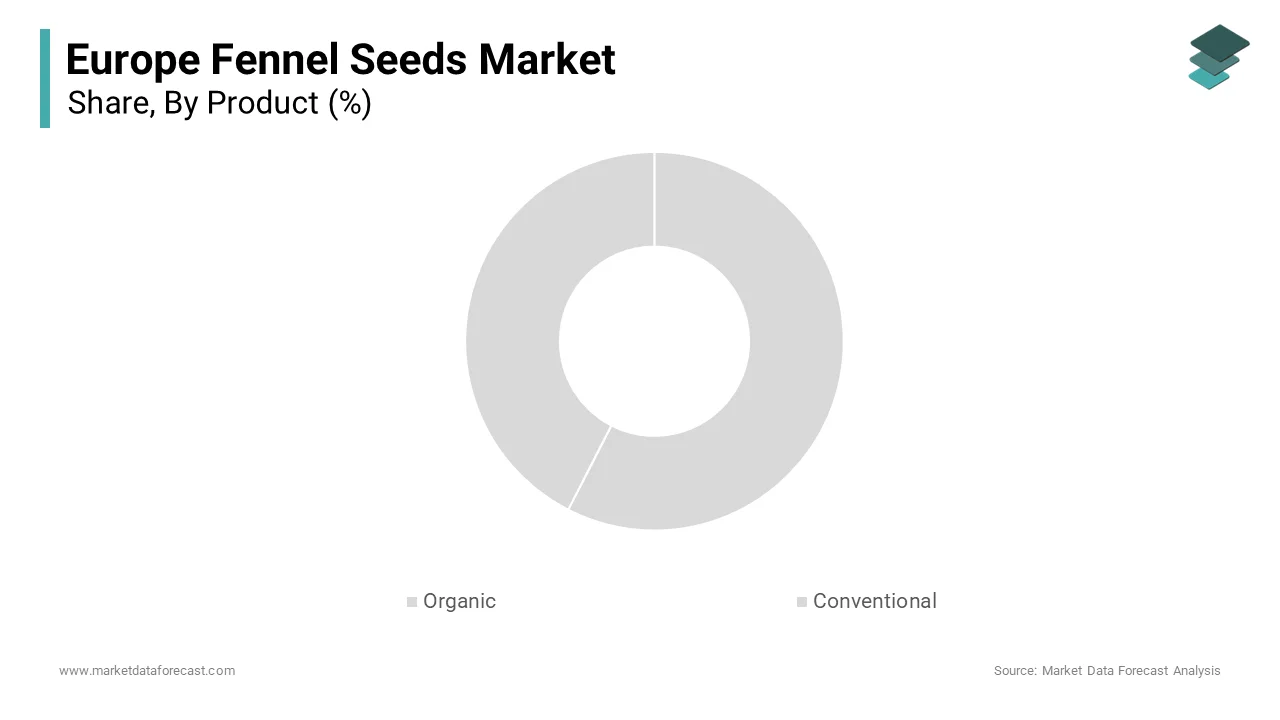
The organic fennel seeds segment is likely to grow with an expected CAGR of 9.1% in the coming years, with the rising demand for certified organic products in the food, herbal medicine, and personal care sectors According to the Research Institute of Organic Agriculture (FiBL), organic herb sales in Europe increased by 11% in 2023, with fennel among the top-performing botanicals. Countries like Austria, Sweden, and Denmark have seen particularly strong adoption of organic fennel-based supplements and teas. Moreover, the European Green Deal and Farm to Fork Strategy have incentivized farmers to transition to organic cultivation methods. Additionally, health-conscious urban populations in Germany and the UK are driving retail demand for organic-certified fennel seeds, with premium pricing no longer acting as a barrier.
By Application Insights
The flavor and seasoning ingredient application segment dominated the Europe fennel seeds market by capturing 58.3% of the market share in 2025. Fennel seeds are extensively used in breads, cured meats, cheeses, and pickling mixtures due to their distinct anise-like flavor and aromatic properties. According to the European Spices Association, over 12,000 tons of fennel seeds were utilized in industrial food seasoning blends across Europe in 2023, with Italy and Spain being the largest contributors. Furthermore, the expansion of ready-to-use spice mixes and gourmet food markets in Western Europe has boosted commercial demand. Retail giants such as Carrefour and Lidl have introduced specialty spice kits featuring fennel seeds, catering to home cooks seeking authentic flavors.
The essential oil production category is expected to grow with a CAGR of 9.6% in the coming years. Fennel essential oil, derived through steam distillation of dried fennel seeds, contains high concentrations of anethole, which is valued for its anti-inflammatory, antimicrobial, and digestive-stimulant properties. The growing integration of plant-based ingredients in personal care and cosmetics is additionally to promote the growth of the Europe fennel seeds market. Euromonitor International notes that in 2023, over 20 new skincare products containing fennel oil were launched across Europe in premium natural beauty brands based in Scandinavia and the UK. Additionally, the herbal medicine sector is leveraging fennel oil for respiratory and digestive health treatments, which is supported by clinical research from institutions like the University of Vienna.
The household consumer segment held a dominant share of the Europe fennel seeds market in 2025. According to Eurostat, home cooking remains a dominant food preparation method across Europe, with over 68% of consumers preferring to prepare meals at home rather than relying on processed or restaurant-sourced options. Another key driver is the increasing consumer interest in natural remedies and herbal teas, especially among aging populations and health-conscious individuals. Furthermore, the expansion of online grocery platforms such as Amazon Fresh and Picnic.nl has made fennel seeds more accessible to a broader audience, including younger generations exploring traditional ingredients.
By End User Insights
The personal care industry is anticipated to witness a CAGR of 10.3% from 2025 to 2033. Fennel seed oil is increasingly valued for its antioxidant, anti-inflammatory, and antimicrobial properties, making it a sought-after ingredient in natural and organic beauty products. The growing consumer shift toward clean beauty and plant-based ingredients among environmentally conscious millennials and Gen Z consumers is enhancing the growth of the segment. Brands such as Weleda, Lush, and The Body Shop have integrated fennel seed derivatives into massage oils, toners, and anti-aging creams, citing benefits such as improved skin tone and reduced inflammation. Additionally, the regulatory push for safer and more sustainable cosmetic ingredients in the EU has further encouraged the use of fennel seed oil as a natural alternative to synthetic compounds.
COUNTRY-LEVEL MARKET ANALYSIS
Italy
Italy was the top performer in the Europe fennel seeds market by accounting for 22.3% of shathe re in 2025, with the widespread use of fennel in traditional cuisine, particularly in pasta dishes, sausages, and liqueurs like Sambuca. According to the Italian Agricultural Confederation (Confagricoltura), fennel cultivation covered over 14,000 hectares in 2023, with Sicily and Puglia serving as the main growing regions. Additionally, the Italian herbal medicine industry continues to integrate fennel seeds into dietary supplements and digestive remedies, aligning with the growing demand for plant-based healthcare solutions.
Germany
Germany's fennel seeds market ranked second with 14.3% of share in 2025, with the high demand from the food processing industry, particularly in the production of spice blends, baked goods, and meat seasonings. According to the German Spice Industry Association (DGE), over 1,200 tons of fennel seeds were used in industrial food manufacturing in 2023, reflecting steady growth in commercial applications. Additionally, the German nutraceutical sector has increasingly adopted fennel-based supplements due to their recognized digestive and hormonal benefits. Moreover, consumer interest in organic and functional foods has spurred demand for fennel-infused herbal teas and wellness beverages. Retail chains such as dm-drogerie markt and Alnatura have expanded their offerings of organic fennel products, catering to health-conscious shoppers.
France
The French fennel seeds market is likely to grow with the highest CAGR in the coming years. As fennel seed consumption in France is a part of the country’s rich gastronomic culture, where fennel is widely used in Mediterranean-inspired dishes, charcuterie, and herbal liqueurs. According to the French National Institute for Agricultural Research (INRAE), fennel features prominently in PProvençalcuisine, which is influencing both restaurant menus and home cooking trends. In addition to culinary uses, the French herbal medicine and wellness industry has embraced fennel seeds for their therapeutic properties. The National Agency for the Safety of Medicines and Health Products (ANSM) reported that in 2023, several over-the-counter herbal remedies containing fennel extract received regulatory approval for digestive and respiratory health applications. Moreover, France’s growing organic and clean-label food movement has led to increased demand for natural ingredients, including fennel. Supermarkets such as Carrefour and Franprix have expanded their selection of organic fennel tea bags and spice blends, catering to eco-conscious consumers.
Spain
Spain's fennel seeds market is more likely to grow in the coming years with the deep integration of fennel seeds into traditional Spanish cuisine, including dishes such as paella, embutidos (cured meats), and herbal infusions. According to the Spanish Ministry of Agriculture, Fisheries, and Food (MAPA), domestic fennel production reached nearly 8,000 metric tons in 2023, with a significant portion consumed locally and the remainder exported to neighboring European countries. Additionally, the Spanish herbal tea and dietary supplement industries have increasingly incorporated fennel seeds into wellness-focused products. Moreover, Spain’s role as a hub for Mediterranean culinary exports enhances its influence in the regional fennel trade. Processed foods and spice blends produced in Spain often include fennel seeds, further boosting inter-European distribution.
United Kingdom
The United Kingdom fennel seeds market growth is expected to have steady growth opportunities with the consumption in the UK, the popularity of Indian and Middle Eastern cuisines, which frequently feature fennel in spice blends such as garam masala and panch phoron. Additionally, the UK herbal tea and wellness market has seen a surge in fennel-infused products, particularly those targeting digestion and women’s health. Moreover, retail expansion of organic and natural product chains such as Holland & Barrett and Waitrose has increased fennel seed visibility and accessibility.
KEY MARKET PLAYERS
McCormick & Company, Inc., Gregg’s Company, Willmar Schwabe GmbH & Co. KG, Steenbergs Organic, Just Ingredients, and Mangalam Seeds Ltd. are the market players that are dominating the Europe fennel seeds market.
Top Players In The Market
Tymrise AG is a global supplier of natural ingredients for food, fragrance, and pharmaceutical industries. The company has a strong presence in sourcing and processing aromatic botanicals, including fennel seeds, which are used in flavor formulations and herbal extracts. Symrise emphasizes sustainable sourcing and innovation, which is contributing significantly to both European and global markets through its extensive R&D capabilities and partnerships with local farmers.
Another key player is BASF SE, which operates in the agri-food and nutraceutical sectors, integrating fennel seed derivatives into functional foods, dietary supplements, and cosmetic products. BASF’s expertise in bioactives and plant-based compounds enhances the commercial value of fennel seeds, particularly in health-focused applications. Its strategic collaborations with research institutions support product development and market expansion across Europe. Frutarom Industries Ltd. (now part of Givaudan) also plays a major role in the fennel seeds market by leveraging its expertise in natural flavors and aromatics.
Top Strategies Used By Key Market Participants
The product diversification and formulation innovation, where companies develop new applications for fennel seeds in functional foods, herbal medicine, and personal care products to meet changing consumer demands, is one of the key strategies used by the Europe fennel seeds market players.
Another important approach is strategic partnerships and supply chain integration with firms collaborating with local farmers, cooperatives, and processors to ensure a stable supply of high-quality fennel seeds while promoting sustainable agricultural practices.
Companies are increasingly focusing on brand positioning and consumer education, launching awareness campaigns and marketing initiatives to promote the culinary and health benefits of fennel seeds, thereby enhancing their appeal among both traditional and emerging customer segments across Europe.
COMPETITION OVERVIEW
The competition in the Europe fennel seeds market is shaped by a mix of regional producers, global ingredient suppliers, and specialty food companies vying for market share through differentiation and value addition. While some firms emphasize organic certification and sustainability, others focus on technological innovation in extraction, formulation, and application development. The market remains moderately fragmented, with a balance between large multinational corporations and smaller niche players offering localized or premium products.
Consumer demand for clean-label and plant-based ingredients has intensified competitive activity, prompting companies to enhance their product portfolios and strengthen supply chains. Brand positioning and traceability have become crucial differentiators, especially as end users in the food, wellness, and personal care sectors seek reliable and ethically sourced raw materials. Additionally, regulatory standards and labeling requirements influence how companies market fennel-derived products across different EU countries.
New entrants face challenges related to sourcing consistency, regulatory compliance, and brand recognition. However, opportunities exist for those who can innovate in formulation, expand into underpenetrated applications, and align with broader trends in holistic wellness and sustainable agriculture. This dynamic environment ensures continuous evolution in how fennel seeds are cultivated, processed, and marketed across Europe.
RECENT HAPPENINGS IN THE MARKET
- In March 2024, Symrise AG launched a new line of natural flavor enhancers derived from fennel seeds, which is targeting the growing demand for clean-label food products across Europe.
- In June 2024, BASF SE partnered with a German herbal research institute to explore the therapeutic potential of fennel seed extracts in digestive health supplements by aiming to expand its nutraceutical offerings.
- In August 2024, Givaudan (formerly Frutarom) introduced a sustainably sourced fennel-based seasoning blend for use in artisanal bread and charcuterie, which is catering to gourmet and specialty food manufacturers.
- In October 2024, a major European spice cooperative based in Spain initiated direct export agreements with Nordic and Eastern European distributors to improve market access and reduce supply chain delays.
- In December 2024, a French organic personal care brand incorporated fennel seed oil into a new range of anti-inflammatory skincare products by leveraging the ingredient’s rising popularity in natural beauty formulations.
MARKET SEGMENTATION
This research report on the European fennel seeds market is segmented and sub-segmented into the following categories.
By Product
- Organic
- Conventional
By Application
- Essential Oil
- Flavor and Seasoning Ingredients
- Beverages
By End User
- Households
- Food Industry
- Personal Care Industry
By Country
- KSA
- UAE
- IsraelThe
- rest of the GCC countries
- SouthAfrica
- Ethiopia
- Kenya
- Egypt
- Sudan
- rest of MEA