Europe Financial Guarantee Market Size, Share, Trends, & Growth Forecast Report By Guarantee Type (Loan Guarantees, Bond Guarantees, Insurance Guarantees, Financial Risk Guarantees, Other Guarantee Types), Issuer Type , Application Area, Guarantee Duration, Credit Rating and Country (UK, France, Spain, Germany, Italy, Russia, Sweden, Denmark, Switzerland, Netherlands, Turkey, Czech Republic and Rest of Europe), Industry Analysis From 2026 to 2034
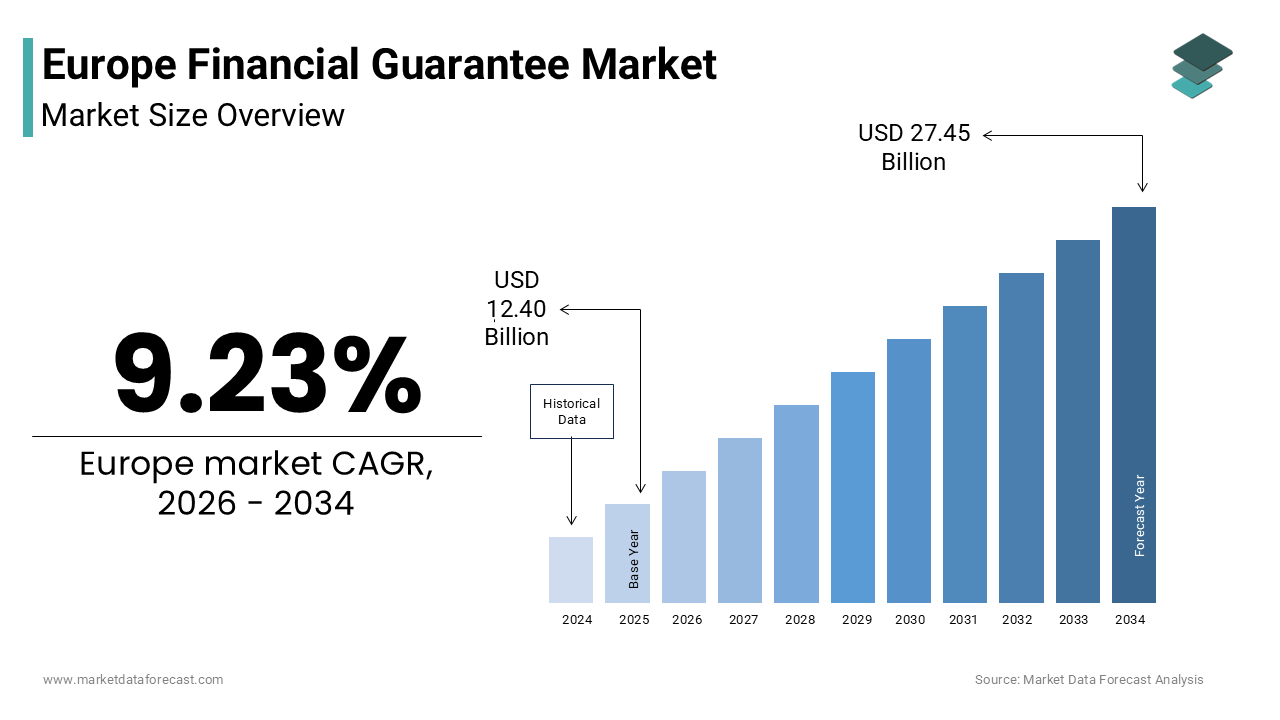
Market Size, 2025
$12.40 BnMarket Estimate, 2026
$13.54 BnMarket Forecast, 2034
$27.45 BnCAGR, 2026–2034
9.23%Europe Financial Guarantee Market Report Summary
The Europe financial guarantee market was valued at USD 12.40 billion in 2025, is expected to reach USD 13.54 billion in 2026, and is projected to grow to USD 27.45 billion by 2034, registering a CAGR of 9.23% from 2026 to 2034. The market growth is driven by increasing infrastructure investments, rising adoption of public-private partnerships, and growing demand for credit enhancement mechanisms amid stringent regulatory frameworks. Additionally, financial guarantees play a critical role in improving creditworthiness and facilitating capital access across corporate and public sectors in Europe.
Key Market Trends
- Increasing demand for credit enhancement in infrastructure and PPP projects
- Rising adoption of financial guarantees for capital optimization under Basel III and Solvency II
- Growth of green bond guarantees supporting sustainable finance initiatives
- Expansion of trade credit and digital guarantee solutions using blockchain
- Increasing reliance on government-backed guarantee schemes for SMEs
Segmental Insights
- Based on guarantee type, the bond guarantees segment held the largest share of 42.2% in 2025. This dominance is driven by the ability of bond guarantees to enhance credit ratings and reduce borrowing costs for municipalities and corporations accessing capital markets.
- Based on guarantee type, the financial risk guarantees segment is projected to grow at the fastest CAGR of 9.5% during the forecast period. This growth is attributed to rising counterparty risks, global trade uncertainties, and increasing demand for protection against defaults and payment failures.
- Based on issuer type, the private insurance companies segment accounted for the largest share of 55.9% in 2025, supported by their strong underwriting expertise, capital reserves, and ability to manage long-term risks.
- Based on issuer type, the government-sponsored entities segment is expected to grow at a CAGR of 11.4%, driven by increasing public guarantee programs aimed at supporting SMEs and economic recovery initiatives.
- Based on application area, the infrastructure segment dominated the market with 37.5% share in 2025, due to the critical role of guarantees in enabling large-scale public-private partnership projects.
- Based on application area, the energy segment is anticipated to grow at a CAGR of 12.7%, fueled by rising investments in renewable energy and decarbonization projects across Europe.
Regional Insights
The Europe financial guarantee market shows strong growth across key economies, supported by financial stability, regulatory frameworks, and investment activity.
- Germany led the market with 24.9% share in 2025, driven by a strong industrial base, state-backed guarantee institutions, and high demand for SME financing.
- United Kingdom held the second-largest share, supported by its global leadership in insurance, reinsurance, and trade credit guarantees.
- France is witnessing steady growth due to strong government involvement and expansion of public financial institutions like Bpifrance.
- Italy is growing with its extensive network of SME-focused guarantee institutions (Confidi) and state-backed support mechanisms.
- Spain is expanding rapidly due to increased renewable energy investments, infrastructure projects, and public guarantee initiatives.
Competitive Landscape
The Europe financial guarantee market is moderately consolidated, with competition between global monoline insurers, private insurance companies, and government-backed institutions. Market participants focus on credit rating strength, risk management capabilities, and sector specialization to maintain competitiveness. Increasing adoption of digital underwriting and partnerships with public institutions are shaping the competitive landscape. Key players in the Europe financial guarantee market include Assured Guaranty Ltd., MBIA Inc., Ambac Financial Group, Inc., CIFG Holding Ltd., Société Générale, BNP Paribas, Crédit Agricole S.A., Deutsche Bank AG, Allianz SE, and AXA S.A.
Europe Financial Guarantee Market Size
The Europe financial guarantee market size was valued at USD 12.40 billion in 2025 and is anticipated to reach USD 13.54 billion in 2026 from USD 27.45 billion by 2034, growing at a CAGR of 9.23% during the forecast period from 2026 to 2034.
Financial guarantee encompasses a specialized sector of risk transfer where a third party, typically an insurer or a monoline provider, pledges to assume the debt obligations of a borrower in the event of default. These instruments, ranging from bond insurance and loan guarantees to trade credit protection, serve as vital credit enhancers that facilitate capital flow by elevating the creditworthiness of issuers who might otherwise face prohibitive borrowing costs. The market functions as a critical stabilizer within the European financial architecture, particularly for infrastructure projects and municipal financing where long term certainty is paramount. According to data from the European Insurance and Occupational Pensions Authority, the exposure of European insurers to credit and suretyship lines remains substantial, which is reflecting the deep integration of guarantees in corporate finance strategies. Furthermore, as per the European Central Bank, during periods of monetary tightening, the reliance on external credit enhancement mechanisms increases as banks become more risk averse in their lending practices. The regulatory landscape, heavily influenced by Solvency II directives, dictates the capital reserves providers must hold, which is shaping the supply dynamics of these guarantees. This ecosystem operates at the intersection of banking, insurance, and public policy, enabling entities to access liquidity even when traditional collateral is insufficient. The market is not merely a safety net but a proactive tool that lowers the cost of capital across the continent, fostering economic development by bridging the gap between borrower risk profiles and lender requirements.
MARKET DRIVERS
Escalating Infrastructure Investment Needs and Public Private Partnerships
The massive surge in infrastructure investment required to modernize aging assets and meet the ambitious goals of the European Green Deal are propelling the European financial guarantee market. Governments across the continent are increasingly relying on Public Private Partnerships to fund renewable energy grids, high speed rail networks, and sustainable urban developments, all of which necessitate robust credit enhancement to attract private capital. According to the European Investment Bank, the investment gap for infrastructure in Europe exceeds several hundred billion euros annually, which is creating a fertile ground for guarantee providers who can de risk these long-term projects. Private investors often hesitate to commit funds to large scale ventures without the security of a payment guarantee that ensures debt service continuity regardless of project cash flow volatility. The complexity of cross border financing within the EU further amplifies the need for guarantees that can navigate diverse legal jurisdictions and credit ratings. According to the data from the Organisation for Economic Cooperation and Development, guaranteed bonds often achieve investment grade ratings two to three notches higher than their underlying issuer rating, which is significantly reducing interest costs for developers. This ability to unlock capital for essential public works drives sustained demand for guarantee products, which is positioning them as indispensable components of the European development finance landscape.
Stringent Capital Adequacy Regulations and Bank De risking Trends
The rigorous regulatory environment under Basel III and Solvency II frameworks that compels banks and institutional investors to optimize their capital usage through credit risk mitigation techniques is further contributing to the European financial guarantee market expansion. Financial institutions face steep capital charges for holding unhedged corporate loans and lower rated bonds, which is incentivizing them to seek financial guarantees that transfer risk to insurers with favorable capital treatment. According to analysis by the European Banking Authority, banks have systematically reduced their exposure to small and medium sized enterprises and speculative grade issuers to maintain compliance, creating a vacuum that guarantee provider’s fill. By purchasing a financial guarantee, a lender can treat the exposure as having the credit rating of the guarantor, often a highly rated monoline insurer, thereby freeing up significant regulatory capital. This regulatory arbitrage makes guarantees a cost-effective solution for maintaining lending volumes without breaching capital limits. The trend of de risking is particularly pronounced in sectors perceived as volatile, such as commercial real estate and leveraged finance, where guarantees provide the necessary comfort for continued participation. As per the data from Moody's Analytics, the volume of guaranteed transactions has risen in direct correlation with the implementation of stricter liquidity coverage ratios. As regulators continue to tighten prudential standards, the utility of financial guarantees as a capital management tool will remain a dominant force driving market expansion.
MARKET RESTRAINTS
Heightened Counterparty Risk Aversion Post Institutional Failures
The lingering skepticism regarding the solvency and claims paying ability of guarantee providers following historical instances of monoline distress during global financial crises are hampering the European financial guarantee market expansion. Investors and lenders remain acutely aware that a guarantee is only as strong as the entity backing it, which is leading to a flight to quality where only the highest rated insurers are accepted, thereby constricting market supply. According to reports from Standard and Poor's, the downgrading of several major guarantee providers in the past decade has made counterparties extremely diligent in their due diligence, which is often rejecting guarantees from firms with anything less than a top tier credit rating. This risk aversion limits the pool of eligible guarantors and increases the cost of obtaining coverage, as premium rates for lower rated providers become prohibitive. The concentration of the market among a few dominant players creates a bottleneck where capacity may be unavailable during periods of systemic stress. According to the International Monetary Fund, during times of economic uncertainty, the spread between guaranteed and non-guaranteed debt widens if the guarantor's own creditworthiness is questioned, undermining the very purpose of the instrument. This pervasive fear of counterparty failure forces many potential users to seek alternative collateral arrangements, which is stifling the growth of the guarantee market despite the clear theoretical benefits.
Complex Regulatory Compliance and Capital Charge Volatility
The intricate and often volatile regulatory landscape governing the recognition of credit risk mitigation tools that creates uncertainty for both providers and users of financial guarantees is further negatively impact the growth of the European financial guarantee market. The rules surrounding the eligibility of guarantees for capital relief under Solvency II and Basel III are subject to frequent interpretation changes by national supervisors, which is leading to inconsistencies across European jurisdictions. According to guidance from the European Securities and Markets Authority, the criteria for recognizing a guarantee as a valid hedge can shift based on macroeconomic stress tests, which is causing sudden spikes in the capital charges required to hold these instruments. This regulatory unpredictability discourages long term planning and investment in guarantee structures, as the economic benefit may evaporate if the rules change. The administrative burden of demonstrating compliance with diverse national implementations of EU directives adds significant operational costs that erode the profitability of guarantee transactions. As per the data from Deloitte, the cost of regulatory reporting and legal validation for cross border guarantees has increased substantially, which is making smaller transactions economically unviable. Furthermore, the requirement for guarantors to hold substantial capital reserves against potential claims limits their capacity to underwrite new business, which is creating a supply constraint. This regulatory friction acts as a dampener on market activity, which is preventing the seamless flow of credit enhancement solutions across the single market.
MARKET OPPORTUNITIES
Expansion of Green Bond Guarantees for Sustainable Finance
The burgeoning market for green bond guarantees that can accelerate the transition to a low carbon economy by providing credit enhancement for sustainable projects issued by lower rated entities is a promising opportunity in the European market. As the European Union aggressively pursues its climate neutrality targets, there is a growing issuance of green bonds by municipalities and smaller corporations that lack the credit profile to access capital markets efficiently. According to the Climate Bonds Initiative, the volume of sustainable debt in Europe is expanding rapidly, yet a significant portion of potential issuers remain on the sidelines due to high borrowing costs. Financial guarantee providers can step in to elevate these bonds to investment grade status, unlocking billions in latent capital for renewable energy, energy efficiency, and clean transport initiatives. The alignment of guarantee products with the EU Taxonomy for sustainable activities offers a clear framework for standardization, reducing due diligence costs and increasing investor confidence. According to the European Commission, blended finance structures involving guarantees could leverage up to fifteen times the amount of public funding deployed, which is creating a multiplier effect for green investment. By specializing in environmental risk assessment and offering tailored green guarantees, insurers can capture a first mover advantage in this high growth niche while contributing directly to continental sustainability goals.
Digitalization of Trade Credit and Supply Chain Guarantees
The integration of blockchain technology and smart contracts into trade finance presents a lucrative opportunity in the European financial guarantee market. Traditional trade credit guarantees are often bogged down by paper intensive processes and slow verification times, which hinder the fluidity of cross border commerce within Europe. By utilizing distributed ledger technology, guarantee providers can issue instant, tamper proof digital guarantees that execute automatically upon the fulfillment of predefined shipping or payment conditions. According to research by the World Economic Forum, digitizing trade finance documents could reduce processing times by up to eighty percent and lower costs significantly, making guarantees viable for smaller transaction values previously deemed uneconomical. This technological leap allows insurers to tap into the vast market of SMEs that struggle to secure working capital due to a lack of collateral. The transparency of blockchain also mitigates fraud risks, a major concern in trade finance, thereby lowering loss ratios for providers. As per the data from the International Chamber of Commerce, the trade finance gap in Europe is substantial, with millions of requests rejected annually, which is representing a massive untapped reservoir for digital guarantee solutions. Embracing this digital transformation enables providers to scale operations and serve a broader client base with unprecedented speed and security.
MARKET CHALLENGES
Pricing Volatility Amidst Macroeconomic Uncertainty and Inflation
The extreme difficulty in accurately pricing risk amidst a backdrop of soaring inflation, fluctuating interest rates, and geopolitical instability is challenging the expansion of the European financial guarantee market. The core business model of guarantee providers relies on predicting default probabilities over long time horizons, which is a task that becomes exponentially harder when economic fundamentals are shifting rapidly. According to data from the European Central Bank, the rapid ascent of interest rates to combat inflation has altered the debt servicing capabilities of borrowers, rendering historical default models less reliable. This uncertainty forces guarantors to widen their pricing spreads to build larger safety margins, which in turn reduces the affordability of guarantees for issuers and dampens demand. The correlation between different asset classes also breaks down during crises, which is leading to unexpected clustering of losses that can threaten the solvency of providers. Insurers face the dilemma of either charging premiums that price themselves out of the market or under-pricing risk and facing potential insolvency. As per the data from Swiss Re Institute, the volatility in credit spreads has reached levels not seen in decades, complicating the hedging strategies that guarantors use to protect their own balance sheets. This pricing dilemma creates a standoff where capacity exists but is withheld due to the inability to determine a fair value, which is stalling market growth.
Concentration Risk in Systemic Sectors and Geographic Regions
The market faces a critical challenge from the high concentration of exposure in specific systemic sectors such as commercial real estate and sovereign debt, which creates vulnerability to localized economic shocks. Many European guarantee providers have accumulated significant portfolios tied to the property market, which is currently undergoing a severe correction due to rising borrowing costs and changing work patterns. According to analysis by Fitch Ratings, the exposure of mono line insurers to commercial real estate in major European cities represents a disproportionate share of their total capital, raising concerns about their ability to absorb widespread defaults. This concentration limits the diversification benefits that are essential for the stability of the insurance model. Furthermore, the geographic concentration in certain peripheral Eurozone nations exposes guarantors to sovereign risk spikes that can cascade through the financial system. The interconnectedness of the European economy means that distress in one key sector or region can quickly propagate, overwhelming the capital buffers of guarantee providers. As per the data from the European Systemic Risk Board, the clustering of risks in non-bank financial intermediaries, including guarantee insurers, poses a systemic threat that regulators are closely monitoring. This lack of diversification forces providers to restrict underwriting in precisely the areas where demand is highest, which is creating a paradox that hampers market development and threatens financial stability.
REPORT COVERAGE
| REPORT METRIC | DETAILS |
| Market Size Available | 2025 to 2034 |
| Base Year | 2025 |
| Forecast Period | 2026 to 2034 |
| CAGR | 9.23% |
| Segments Covered | By Guarantee Type, Issuer Type , Application Area, Guarantee Duration, Credit Rating and Region. |
| Various Analyses Covered | Global, Regional & Country Level Analysis, Segment-Level Analysis, DROC, PESTLE Analysis, Porter’s Five Forces Analysis, Competitive Landscape, Analyst Overview of Investment Opportunities |
| Country Covered | UK, France, Spain, Germany, Italy, Russia, Sweden, Denmark, Switzerland, the Netherlands, Turkey, the Czech Republic, and the Rest of Europe. |
| Market Leaders Profiled | Assured Guaranty Ltd., MBIA Inc., Ambac Financial Group, Inc., CIFG Holding Ltd., Société Générale, BNP Paribas, Crédit Agricole S.A., Deutsche Bank AG, Allianz SE, and AXA S.A. |
SEGMENTAL ANALYSIS
By Guarantee Type Insights
The bond guarantees segment dominated the market by accounting for 42.2% of the European market share in 2025. The dominance of bond guarantees segment in the European market is attributed to the critical role these instruments play in enabling municipal and corporate entities to access capital markets at investment grade rates despite having lower standalone credit ratings. The growth of bond guarantees segment in the European market is also attributed to the unparalleled ability of bond guarantees to elevate the credit rating of debt issuances, thereby significantly reducing borrowing costs for entities that would otherwise face prohibitive interest rates. In a high-interest rate environment, the difference between a BBB and an AAA rating can translate into millions of euros in saved interest over the life of a bond. According to data from Moody's Investors Service, a guaranteed bond often achieves a rating equal to or higher than that of the guarantor, which is allowing smaller municipalities and mid cap corporations to tap into institutional investor pools that are restricted to investment grade assets. According to the European Central Bank, during periods of monetary tightening, the demand for such credit enhancement surges as issuers seek to lock in favorable terms before rates climb further. This mechanism is particularly vital in Southern and Eastern Europe where sovereign debt pressures can spill over into local government financing. The assurance of principal and interest payment provided by monoline insurers creates a safe haven for conservative pension funds and insurance companies, ensuring deep liquidity for guaranteed issues. This fundamental utility in bridging the gap between issuer risk and investor appetite secures the leading position of bond guarantees.
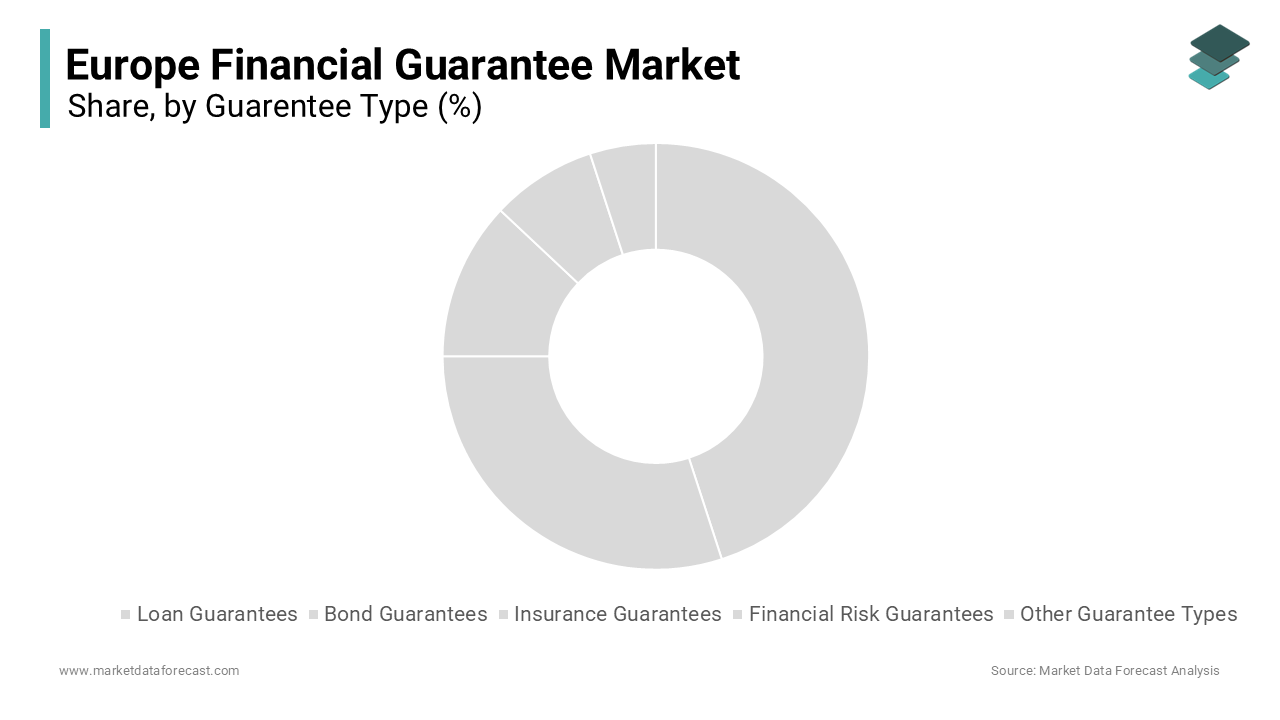
However, the financial risk guarantees segment is anticipated to record a CAGR of 9.5% over the forecast period in this regional market owing to the increasing complexity of global trade and the rising need for protection against currency fluctuations and counterparty defaults in volatile sectors. The escalating incidence of counterparty defaults and payment failures in an increasingly unstable global trade environment is further propelling the expansion of financial risk guarantees segment in the European market. As geopolitical tensions disrupt supply chains and inflation erodes the solvency of weaker market participants, companies are turning to financial risk guarantees to secure their receivables and ensure cash flow stability. According to reports from Euler Hermes, insolvencies in Europe have risen sharply in recent years, particularly in the retail and construction sectors, which is prompting businesses to seek robust protection mechanisms beyond traditional credit insurance. Financial risk guarantees offer a more comprehensive coverage scope that can include non-payment due to political events, currency inconvertibility, and protracted default, which are becoming more common risks. The ability to transfer these specific risks to a specialized guarantor allows exporters and service providers to enter new markets with confidence. According to the data from the International Chamber of Commerce, the trade finance gap has widened, with many transactions stalled due to perceived counterparty risk, which is creating a massive opportunity for guarantee providers to step in and facilitate commerce. This urgent need for security in uncertain times drives the accelerated adoption of financial risk guarantees across diverse industries.
By Issuer Type Insights
The private insurance companies segment held the dominant position in the Europe financial guarantee market in 2025 by holding 55.9% of the regional market share. The dominance of private insurance companies segment in the European market is driven by their specialized underwriting expertise, substantial capital reserves, and the ability to offer long term commitment that other financial institutions cannot match. The overwhelming dominance of private insurance companies segment is largely attributable to their unique capability to underwrite complex, long duration risks with a level of specialization that commercial banks and other issuers lack. Unlike banks that are constrained by short term liability structures and strict lending limits, monoline insurers and diversified carriers can commit capital for decades, which is aligning perfectly with the lifecycle of infrastructure projects and municipal bonds. According to data from the European Insurance and Occupational Pensions Authority, private insurers hold significant reserves specifically allocated for surety and credit lines, allowing them to absorb large scale losses that would destabilize other entities. Their business model is built on rigorous actuarial analysis and sector specific knowledge, enabling them to price risks accurately even in niche markets like renewable energy or cross border trade. This expertise fosters trust among investors who rely on the insurer's rating rather than the underlying issuer's strength. The ability to provide irrevocable guarantees that survive economic cycles makes private insurers the preferred choice for high stakes transactions. Furthermore, their global reach allows them to diversify risk pools across different geographies and sectors, enhancing their stability and capacity to issue large volumes of guarantees. This combination of longevity, specialization, and financial strength cements their status as the primary drivers of the market.
On the other side, the government-sponsored entities segment is emerging as the fastest growing issuer category and is estimated to witness a CAGR of 11.4% over the forecast period owing to the aggressive state intervention strategies aimed at stimulating economic recovery and supporting strategic sectors through public credit enhancement programs. The extensive deployment of public guarantee schemes designed to unlock credit for small and medium sized enterprises struggling with post pandemic recovery and inflationary pressures is further boosting the expansion of the government-sponsored segment in the European market. Governments across Europe have established dedicated agencies to issue guarantees that cover a significant portion of loan defaults, encouraging commercial banks to lend to riskier borrowers they would otherwise reject. According to the European Investment Fund, the volume of guarantees issued by public bodies to support SMEs has reached record highs, with billions of euros deployed to stabilize the real economy. These initiatives are often part of broader fiscal stimulus packages that prioritize job preservation and business continuity. The backing of the sovereign state provides an implicit rating that is virtually risk free, allowing these entities to issue massive volumes of guarantees without the capital constraints faced by private insurers. The speed and scale at which governments can mobilize resources during crises far exceed the capacity of the private sector, which is leading to a temporary but significant shift in market share. Data from the Organisation for Economic Cooperation and Development shows that public guarantee programs have leveraged private lending by a factor of ten, which is demonstrating their immense effectiveness and driving their rapid growth. As economic uncertainty persists, the reliance on state backed guarantees is expected to remain elevated.
By Application Area Insights
The infrastructure segment dominated the market by accounting for 37.5% of the European market share in 2025 due to the capital-intensive nature of infrastructure projects and the absolute necessity of credit enhancement to attract long term institutional funding. The supremacy of the infrastructure segment in the European market can be credited to the indispensable role financial guarantees play in structuring viable Public Private Partnerships, which are the preferred vehicle for delivering major public works across Europe. These projects involve massive upfront costs and long concession periods, creating risks that private lenders are unwilling to bear without substantial credit support. According to data from the European Investment Bank, a significant majority of successful PPP deals in Europe rely on some form of financial guarantee to secure the debt tranche to ensure that lenders receive payment even if traffic revenues or user fees fall short of projections. Guarantees often cover completion risks, operating deficits, and termination payments, effectively transforming a risky project finance deal into a bankable asset. The complexity of coordinating multiple stakeholders including governments, contractors, and operators necessitates a robust risk allocation framework where guarantees act as the glue holding the structure together. The ability to achieve non-recourse or limited recourse financing through guarantees allows public authorities to keep debt off their balance sheets while still delivering essential services. This structural dependency ensures that infrastructure remains the largest consumer of financial guarantee products, with demand closely tied to the pipeline of major transport, utility, and social infrastructure projects.
However, the energy segment is identified as the fastest growing segment and is anticipated to register a CAGR of 12.7% over the forecast period owing to the urgent imperative to decarbonize the European economy and the massive investment required to build new renewable energy capacities. The unprecedented pace of renewable energy project deployment driven by the European Green Deal and the REPowerEU plan that require extensive credit enhancement to manage technology and execution risks. As Europe races to replace fossil fuels with wind, solar, and hydrogen, developers are launching projects with novel technologies and aggressive timelines that carry higher perceived risks for traditional lenders. According to the International Renewable Energy Agency, investment in renewable energy in Europe needs to triple by 2030 to meet climate targets, which is creating a massive demand for financial guarantees that can cover performance shortfalls and grid connection delays. Guarantees are increasingly used to secure power purchase agreements and bridge the gap between project costs and available equity and is enabling faster financial closure. The volatility of energy prices and the intermittency of renewable sources add layers of complexity that guarantees help to mitigate, making projects bankable. According to the data from BloombergNEF, the volume of guaranteed green energy bonds and loans has surged and is reflecting the critical role of these instruments in unlocking the capital required for the energy transition. This policy driven boom ensures that the energy sector will remain the highest growth avenue for financial guarantee providers.
REGIONAL ANALYSIS
Germany Financial Guarantee Market Analysis
Germany dominated the financial guarantee market in Europe in 2025 with 24.9% of the regional market share. The growth of Germany in the European market is primarily attributed to its robust industrial base and the pivotal role of state backed guarantee banks in supporting its export-oriented economy. The nation benefits from a unique dual system where private monoline insurers coexist with a dense network of regional guarantee banks that specialize in backing small and medium sized enterprise loans. According to data from the German Association of Guarantee Banks, these institutions have facilitated tens of billions of euros in lending annually, which is acting as a crucial buffer during economic downturns. The German market is characterized by a high degree of sophistication in structured finance, with heavy usage of guarantees in the automotive and renewable energy sectors to secure supply chains and project finance deals. The stability of the German legal framework and the strong credit rating of the sovereign enhance the effectiveness of these guarantees, which is making them highly liquid in international markets. The country's aggressive push towards industrial decarbonization has further spurred demand for guarantees in the hydrogen and battery manufacturing sectors. The deep integration of German banks with the real economy ensures a constant flow of guarantee requirements, which is solidifying its position as the largest and most mature market in the region.
United Kingdom Financial Guarantee Market Analysis
The United Kingdom had the second largest share of the European financial guarantee market in 2025 due to its status as a global hub for specialty insurance and reinsurance centered in London. The UK market is heavily influenced by the presence of Lloyd's of London and major monoline insurers who underwrite complex financial guarantees for international projects and trade finance. According to reports from the London Market Group, the UK accounts for a disproportionate share of global trade credit and political risk guarantees, leveraging its English law framework which is the global standard for financial contracts. Despite Brexit, the UK retains its dominance in high value, cross border guarantee structures, particularly in the energy and infrastructure sectors involving emerging markets. The domestic market is also active, with significant usage of guarantees in the real estate and private equity sectors to facilitate leveraged transactions. The regulatory environment, overseen by the Prudential Regulation Authority, maintains high standards of solvency that bolster confidence in UK issued guarantees. The concentration of global talent and capital in London allows the UK to innovate rapidly in product design, catering to niche risks that other markets cannot address. This unique combination of domestic strength and global reach ensures the UK remains a critical pillar of the European guarantee landscape.
France Financial Guarantee Market Analysis
France is predicted to account for a promising share of the European financial guarantee market during the forecast period owing to the active involvement of public financial institutions like Bpifrance and a strong tradition of state intervention in strategic industries. The French market is characterized by a close collaboration between the state and private insurers to support large scale infrastructure and energy transitions, particularly in nuclear and renewable power. According to data from Bpifrance, the agency issues billions of euros in guarantees annually to support innovation and international expansion of French companies, playing a countercyclical role in the economy. The market is also notable for its focus on export credits, where French guarantees help domestic champions secure contracts in Africa and the Middle East. The regulatory framework encourages the use of guarantees to protect employment and foster industrial sovereignty, leading to sustained government backing. Paris serves as a key center for structured finance in the Eurozone, with major banks and insurers collaborating on complex guarantee vehicles for municipal and corporate debt. The emphasis on sustainability has led to a surge in green guarantees, aligning with national climate goals. This blend of public muscle and private expertise creates a resilient market that is deeply integrated into the fabric of the French economic strategy.
Italy Financial Guarantee Market Analysis
Italy is estimated to hold a substantial share of the European financial guarantee market during the forecast period owing to its extensive network of mutual guarantee institutions known as Confidi to support its vast base of small and medium sized enterprises. The Italian market is unique in its reliance on these localized, member driven organizations that provide guarantees to access bank financing, particularly in the manufacturing and agricultural sectors. According to the Central Guarantee Fund, the volume of guarantees issued through this ecosystem has grown significantly as a response to economic fragility and banking sector caution. The state plays a crucial role by providing counter guarantees to Confidi, amplifying their capacity to support local businesses. The market is also active in the tourism and luxury goods sectors, where guarantees are used to secure working capital and export deals. The high level of public debt in Italy necessitates creative financial engineering, with guarantees often used to enhance the rating of local government bonds and project finance deals. The fragmentation of the guarantee market into hundreds of small entities presents challenges but also ensures deep penetration into the real economy. Recent reforms aim to consolidate these entities to improve efficiency and risk management, positioning Italy for more robust growth in the guarantee sector.
Spain Financial Guarantee Market Analysis
Spain is expected to showcase a notable CAGR in the European financial guarantee market during the forecast period due to a dynamic mix of public support mechanisms and a growing private insurance sector focused on infrastructure and renewable energy. The Spanish market has seen a surge in guarantee activity driven by the massive rollout of solar and wind projects, which require credit enhancement to secure long term financing. According to data from the Official Credit Institute, public guarantees have been instrumental in revitalizing the construction sector and supporting the internationalization of Spanish firms. The country's strategic location as a gateway to Latin America also drives demand for export credit guarantees and political risk insurance. The real estate sector, recovering from past crises, utilizes guarantees to unlock development funding and assure buyers of completion. The regulatory environment is evolving to facilitate greater participation of private capital in public infrastructure through guarantee structures. The presence of major Spanish banks with strong international networks further boosts the issuance of guarantees for cross border transactions. The alignment of national recovery plans with EU funding priorities ensures a steady pipeline of guaranteed projects, making Spain a vibrant and growing market within the European context.
COMPETITIVE LANDSCAPE
The competition within the Europe financial guarantee market is characterized by a distinct bifurcation between highly rated global monoline insurers and state backed public guarantee institutions. Incumbent private players compete fiercely on credit ratings, pricing precision, and sector specialization to attract high value infrastructure and corporate bond issuances. Public entities leverage sovereign backing to offer guarantees at subsidized rates for small and medium sized enterprises, creating a competitive pressure on pricing in the lower end of the market. The landscape is further complicated by varying national regulations that fragment the single market, forcing operators to maintain localized compliance teams and tailored product offerings. Differentiation is increasingly achieved through digital capabilities, with firms investing in automated underwriting platforms to reduce turnaround times and serve smaller clients profitably. Trust and financial strength remain the ultimate differentiators, as borrowers and lenders prioritize guarantors with impeccable balance sheets capable of weathering systemic shocks. The exit of several weaker players following past financial crises has consolidated the market among a few strong survivors, raising barriers to entry for new competitors. This environment fosters a focus on risk discipline and innovation rather than pure volume growth, ensuring stability but limiting aggressive expansion.
KEY MARKET PLAYERS
Some of the companies that are playing a dominating role in the Europe Financial Guarantee Market include
- Assured Guaranty Ltd.
- MBIA Inc.
- Ambac Financial Group, Inc.
- CIFG Holding Ltd.
- Société Générale
- BNP Paribas
- Crédit Agricole S.A.
- Deutsche Bank AG
- Allianz SE
- AXA S.A.
Top Players in the Europe Financial Guarantee Market
Assured Guaranty Ltd
Assured Guaranty Ltd stands as a premier provider of financial guarantee insurance with a significant footprint in the European infrastructure and public finance sectors. The company contributes to the global market by offering credit enhancement that enables municipalities and project developers to access capital at investment grade rates. Its involvement in Europe focuses heavily on wrapping bonds for renewable energy projects and transport infrastructure to de risk them for institutional investors. Recent actions to strengthen its market position include expanding its underwriting capacity specifically for green bonds aligned with European Union taxonomy standards. The firm has also forged strategic alliances with local development banks to co guarantee large scale cross border initiatives. By leveraging its high credit rating and decades of expertise, Assured Guaranty continues to facilitate vital economic development while maintaining a robust balance sheet that instills confidence in global counterparties seeking stable long term protection.
Munich Re Group
Munich Re Group operates as a global reinsurance giant that plays a pivotal role in the Europe financial guarantee market through its specialized surety and credit insurance divisions. The company supports the global economy by providing the underlying capital capacity that allows primary insurers to issue vast volumes of financial guarantees without exceeding their risk limits. Its European operations are deeply integrated into trade finance and construction surety, offering solutions that protect against default and non performance risks. Recent strategic moves involve the deployment of advanced data analytics and artificial intelligence to refine risk assessment models for small and medium sized enterprise lending. Munich Re has also launched innovative digital platforms that streamline the issuance of trade credit guarantees, reducing turnaround times for clients. These initiatives enhance its ability to respond rapidly to market volatility and regulatory changes. By acting as a stabilizing force in the reinsurance layer, Munich Re ensures the continuity of credit flow across European supply chains and infrastructure projects.
Euler Hermes SA
Euler Hermes SA, a member of the Allianz Group, is a world leader in trade credit insurance and financial guarantees that safeguards businesses against customer insolvency and payment defaults. The company makes a substantial global contribution by enabling exporters and suppliers to extend credit with confidence, thereby facilitating international trade flows. In Europe, Euler Hermes is deeply embedded in the manufacturing and retail sectors, providing guarantees that secure working capital and support business growth. Recent actions to strengthen its market position include the acquisition of niche competitors to broaden its geographic coverage and sector specialization within the European Union. The firm has also invested heavily in digital tools that offer real time monitoring of buyer creditworthiness, allowing clients to make informed lending decisions instantly. By integrating its guarantee products with comprehensive debt collection and risk management services, Euler Hermes provides a holistic solution that protects corporate balance sheets. This proactive approach cements its status as an essential partner for European companies navigating complex economic landscapes.
Top Strategies Used by the Key Market Participants
Key players in the Europe financial guarantee market primarily employ strategies focused on portfolio diversification and technological integration to mitigate risk and enhance operational efficiency. Companies actively expand their underwriting into emerging sectors such as renewable energy and digital infrastructure to reduce reliance on traditional cyclical industries. This sectoral shift allows them to capture growth driven by the European Green Deal while spreading exposure across uncorrelated assets. Another major strategy involves the adoption of artificial intelligence and big data analytics to improve the accuracy of credit scoring and default prediction models. By leveraging real time data, insurers can price risks more precisely and detect early warning signs of borrower distress. Firms also pursue strategic partnerships with government agencies and development banks to participate in large scale public guarantee schemes that offer stable volume. Enhancing capital adequacy through retrocession agreements with global reinsurers ensures they maintain high credit ratings essential for client trust. These combined approaches enable participants to navigate regulatory complexities and economic volatility effectively.
MARKET SEGMENTATION
This research report on the Europe Financial Guarantee Market has been segmented and sub-segmented based on the following categories.
By Guarantee Type
- Loan Guarantees
- Bond Guarantees
- Insurance Guarantees
- Financial Risk Guarantees
- Other Guarantee Types
By Issuer Type
- Government-Sponsored Entities
- Private Insurance Companies
- Commercial Banks
- Investment Banks
- Other Issuers
By Application Area
- Real Estate
- Infrastructure
- Public Finance
- Energy
- Other Application Areas
By Credit Rating
- AAA
- AA
- A
- BBB
- Below BBB
By Guarantee Duration
- Short-Term (less than 1 year)
- Medium-Term (1-5 years)
- Long-Term (over 5 years)
By Country
- UK
- France
- Spain
- Germany
- Italy
- Russia
- Sweden
- Denmark
- Switzerland
- Netherlands
- Turkey
- Czech Republic
- Rest of Europe
Access the study in MULTIPLE FORMATS
Purchase options starting from
$ 2000
Didn’t find what you’re looking for?
TALK TO OUR ANALYST TEAM
Need something within your budget?
NO WORRIES! WE GOT YOU COVERED!
Call us on: +1 888 702 9696 (U.S Toll Free)
Write to us: sales@marketdataforecast.com