- Product Description Description
- Table of Contents TOC
- List of Table & Figure LOT
- Get Free Sample PDF Sample PDF
Europe Fish Protein Concentrate Market Summary
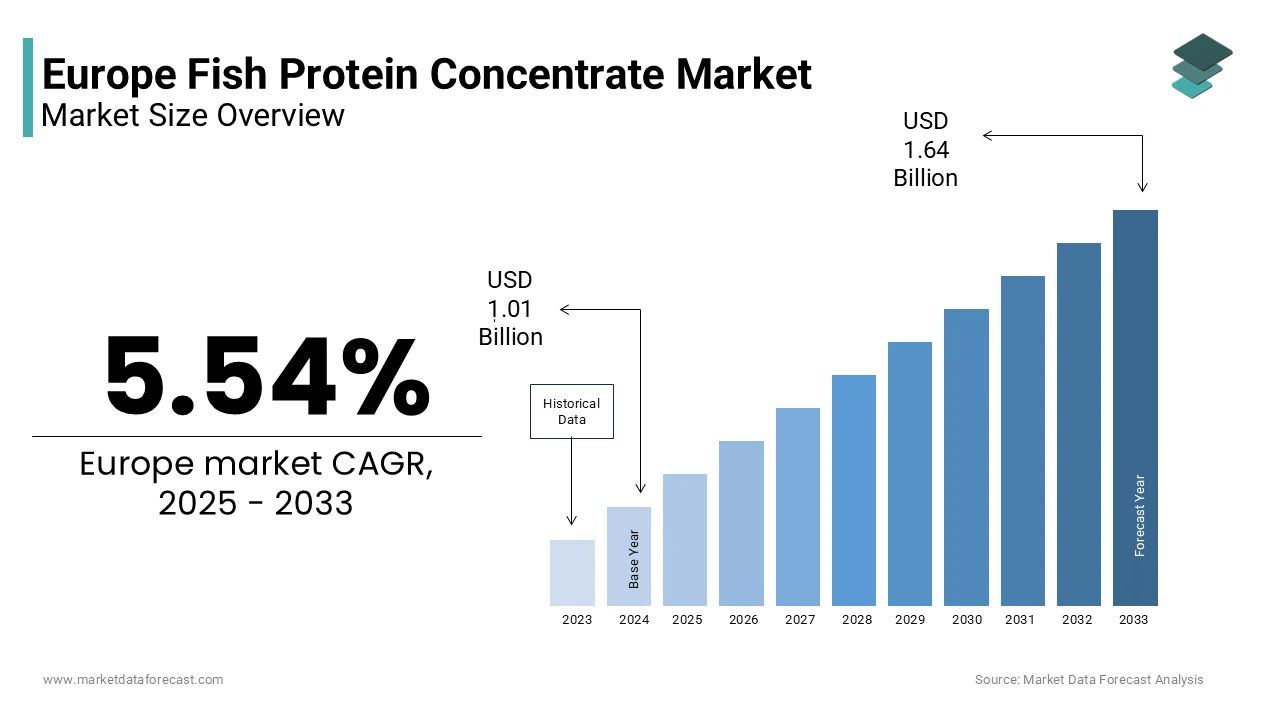
The Europe fish protein concentrate market size was estimated at USD 1.01 billion in 2024 and is projected to reach USD 1.64 billion by 2033, growing at a CAGR of 5.54% from 2025 to 2033. The Europe fish protein concentrate market is the increasing demand for sustainable and alternative protein sources driven by environmental concerns and dietary shifts.
Key Market Trends & Insights
The United Kingdom plays a notable role in the Europe Fish Protein Concentrate Market.
Germany is expected to expand at the fastest growth rate from 2025 to 2033.
Based on type, Type A held the largest market share, accounting for 45% of the European market in 2024.
Based on form, the liquid form of Fish Protein Concentrate is anticipated to grow at the fastest CAGR of 10.2% during the forecast.
Market Size & Forecast
2024 Market Size: USD 1.01 Billion
2033 Projected Market Size: USD 1.64 Billion
CAGR (2025-2033): 5.54%
United Kingdom: Largest market in 2024
Germany: Fastest growing market
Europe Fish Protein Concentrate Market Size
The Europe fish protein concentrate market is estimated to grow from USD 1.01 billion in 2024 to USD 1.64 billion in 2033, representing a CAGR of 5.54%.
The Europe fish protein concentrate market covers the production and utilization of concentrated protein derived from fish processing by-products such as filleting waste, heads, bones, and viscera. These materials, often underutilized or discarded, are transformed into high-value fish protein concentrate (FPC) through various extraction and drying techniques. FPC is rich in essential amino acids, highly digestible, and increasingly used in food formulations, animal feed, aquaculture diets, and functional food products.
This market has gained traction in recent years due to rising environmental awareness, growing demand for sustainable protein sources, and advancements in marine bioprocessing technologies. As per the Food and Agriculture Organization (FAO), nearly 20% of global fish production generates non-edible by-products, much of which remains underexploited in Europe despite its nutritional potential.
Additionally, the increasing emphasis on circular economy principles across the EU has prompted both regulatory support and industry investment in valorizing these resources through FPC production.
Furthermore, as per the European Maritime and Fisheries Fund (EMFF), several research initiatives have been launched to scale up FPC applications in human nutrition and feed industries. With shifting consumer preferences toward clean-label ingredients and alternative proteins, the European Fish Protein Concentrate Market is poised for steady development within a sustainability-focused framework.
MARKET DRIVERS
Rising Demand for Sustainable and Alternative Protein Sources
A main driver of the Europe fish protein concentrate market is the increasing demand for sustainable and alternative protein sources driven by environmental concerns and dietary shifts.
According to the European Environment Agency, approximately 40% of all fish caught or farmed in Europe results in by-products, most of which were previously discarded or used for low-value applications such as animal feed or fertilizer.
Moreover, fish protein concentrate offers a high-quality, nutrient-dense alternative that aligns with the EU’s circular economy goals. It provides a complete amino acid profile and is easily digestible, making it suitable for use in sports nutrition, clinical nutrition, and fortified food products.
Besides, the European Commission’s Farm to Fork Strategy encourages the efficient use of marine resources, promoting innovation in bio-refining technologies. This policy environment supports the integration of fish protein concentrate into mainstream food and feed supply chains, fostering market expansion across multiple sectors including aquafeed, pet food, and functional foods.
Technological Advancements in Fish By-Product Utilization
A further driver boosting the Europe fish protein concentrate market is the rapid advancement in technologies that enhance the extraction, preservation, and application of fish-derived proteins. Innovations such as enzymatic hydrolysis, membrane filtration, and freeze-drying have significantly improved the yield, purity, and shelf life of fish protein concentrates.
Besides, the Nordic Innovation Centre has funded several projects aimed at scaling up industrial FPC production using eco-friendly processing techniques.
Furthermore, as per the Fraunhofer Institute for Process Engineering and Packaging , improvements in thermal stabilization and microbial control have made it possible to produce FPC that meets stringent food safety regulations, thereby expanding its applicability in human consumption. These technological strides are enabling manufacturers to convert what was once considered waste into a valuable, high-margin product, reinforcing the economic viability of fish protein concentrate in the European market.
MARKET RESTRAINTS
High Production Costs and Limited Economies of Scale
A key restraint affecting the Europe Fish Protein Concentrate Market is the relatively high cost of production compared to conventional protein sources. According to the Institute of Food Research , the processing of fish by-products into high-quality protein concentrate involves multiple steps—including washing, enzymatic treatment, separation, concentration, and drying—all of which require specialized equipment and energy-intensive operations.
Moreover, as per the University of Iceland’s School of Health Sciences , small-scale producers face challenges in achieving economies of scale due to fluctuating raw material availability and seasonal variations in fish catches. This inconsistency makes it difficult to maintain stable production volumes and pricing structures, limiting market penetration.
Additionally, the European Marine Biological Resource Centre (EMBRC) shows that while advanced processing technologies improve product quality, they also increase capital expenditure. Many smaller processors lack the financial capacity to invest in these systems, leading to fragmented market growth and limited commercial scalability across the region.
Regulatory and Labeling Challenges in Food Applications
Another key constraint hindering the widespread adoption of fish protein concentrate in Europe is the complex regulatory landscape governing its use in food products. According to the European Food Safety Authority (EFSA), FPC intended for human consumption must undergo rigorous safety assessments before approval, particularly concerning allergenicity, microbiological contamination, and heavy metal content.
Furthermore, as per the European Commission’s Novel Foods Regulation, any new ingredient derived from unconventional sources must meet strict documentation and labeling requirements, complicating market entry. The inconsistent interpretations of these rules across EU member states create additional barriers for manufacturers seeking pan-European distribution.
In addition, consumer perception plays a role. Some buyers remain skeptical about products derived from fish by-products, associating them with lower quality or off-putting sensory characteristics. Overcoming these misconceptions requires extensive marketing efforts and education, further slowing the uptake of fish protein concentrate in mainstream food applications.
MARKET OPPORTUNITIES
Expansion into Functional and Fortified Food Products
Among the most promising opportunities for the Europe fish protein concentrate market lies in its growing application in functional and fortified food products. There has been a surge in demand for nutrient-enriched foods, particularly those supporting muscle health, immune function, and weight management.
Fish protein concentrate, being rich in essential amino acids and bioactive peptides, aligns well with this trend.
Moreover, FPC exhibits superior digestibility compared to many plant-based proteins, making it an attractive option for senior nutrition and medical food formulations. Several startups and established food companies are now exploring its incorporation into ready-to-drink shakes, bars, and meal replacements.
So, with ongoing product development and increasing consumer awareness, the fish protein concentrates market stands to benefit from expanding applications in the premium health and wellness sector across Europe.
 Increasing Use in Aquafeed and Pet Food Industries
Another significant opportunity driving the Europe fish protein concentrate market is the rising demand for high-quality protein in aquafeed and pet food industries. According to the Global Aquaculture Alliance, aquaculture production in Europe is projected to grow steadily, requiring sustainable and nutritious feed alternatives to replace traditional fishmeal.
Fish protein concentrate serves as an ideal substitute due to its high biological value, palatability, and ability to enhance growth performance in farmed fish species. As per the Norwegian Seafood Council, trials conducted in salmon feed formulations showed improved feed conversion ratios when FPC was included, prompting interest from major aquafeed producers.
Similarly, in the pet food sector, there is a growing preference for natural, meat-based ingredients in premium pet diets. Fish protein concentrate offers a hypoallergenic and highly digestible protein source, particularly beneficial for dogs and cats with sensitivities to common allergens like chicken or beef.
With increasing regulatory support and product innovation, the adoption of FPC in animal nutrition markets presents a lucrative growth avenue for the European fish protein industry.
MARKET CHALLENGES
Seasonal Availability and Supply Chain Volatility
A serious challenge facing the Europe fish protein concentrate market is the seasonal nature of fish catches and the associated volatility in raw material supply. According to the International Council for the Exploration of the Sea (ICES), fluctuations in fishing quotas, weather conditions, and marine ecosystem changes significantly impact the availability of raw fish by-products used in FPC production.
Additionally, logistical constraints in collecting and transporting perishable fish waste from processing plants to FPC manufacturing units pose operational difficulties. Delays in raw material handling can compromise protein integrity and lead to higher spoilage rates.
Furthermore, as per the Centre for Environment, Fisheries and Aquaculture Science (Cefas), geopolitical tensions and trade restrictions—such as those related to Brexit—have disrupted cross-border seafood supply chains, affecting consistency in sourcing and pricing. These factors collectively hinder the stability and scalability of fish protein concentrate production in Europe.
Consumer Perception and Acceptance Barriers
A different pressing challenge impacting the Europe fish protein concentrate market is consumer perception and acceptance, particularly regarding the origin and sensory attributes of FPC-based products. According to the European Consumer Organisation (BEUC), many consumers associate fish by-products with waste or inferior quality, which affects their willingness to purchase food items containing fish protein concentrate.
Also, certain FPC formulations may carry residual fishy odors or tastes that limit their application in mainstream food products. Overcoming these sensory challenges requires formulation adjustments and extensive consumer education campaigns.
Without strategic branding and clear communication on the nutritional benefits and sustainability credentials of fish protein concentrate, market penetration in consumer-facing food categories may remain slow despite strong technical and environmental advantages.
REPORT COVERAGE
| REPORT METRIC | DETAILS |
| Market Size Available | 2024 to 2033 |
| Base Year | 2024 |
| Forecast Period | 2025 to 2033 |
| CAGR | 5.54% |
| Segments Covered | By Type, Form, End-Use, and Region |
| Various Analyses Covered | Global, Regional, & Country Level Analysis; Segment-Level Analysis; DROC; PESTLE Analysis; Porter’s Five Forces Analysis; Competitive Landscape; Analyst Overview of Investment Opportunities |
| Regions Covered | UK, France, Spain, Germany, Italy, Russia, Sweden, Denmark, Switzerland, Netherlands, Turkey, Czech Republic, Rest of Europe |
| Market Leaders Profiled | Bio Marine Ingredients Ireland Ltd., Colpex International, Bio Phoenix Formulations, Bevenovo Co., Aroma NZ, Ltd., S.A. de C.V., Apelsa Guadalajara, Advance International, Inc., Ingredients, Inc., Scanbio Marine Group AS, BioOregon Protein, and others. |
SEGMENT ANALYSIS
By Type Insights
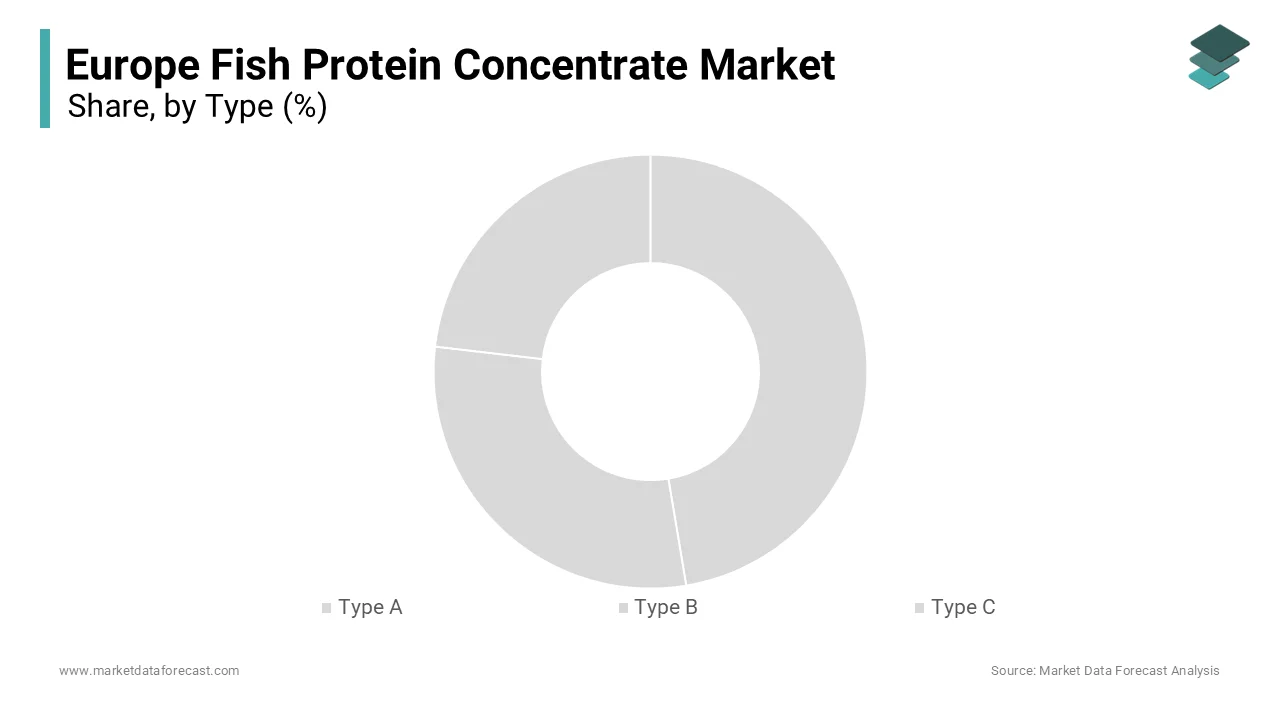
Type A held the largest market share, accounting for 45% of the European market in 2024. Type A FPC is typically produced through mild processing methods that preserve native proteins while removing fats and moisture, resulting in a product with high digestibility and minimal denaturation.
One key factor driving its dominance is its widespread use in aquafeed formulations. According to the Norwegian Seafood Council , over 60% of salmon feed in Norway now includes high-quality protein sources like Type A FPC to enhance growth performance and reduce reliance on traditional fishmeal.
This versatility has led to increasing adoption in both human nutrition and pet food sectors across Western Europe, further reinforcing its leadership position in the overall market.
The Type C Fish Protein Concentrate segment is projected to grow at the highest CAGR of around 9.7%. Type C FPC undergoes extensive hydrolysis, breaking down proteins into smaller peptides and amino acids, which enhances solubility, bioavailability, and functional properties in food and supplement applications.
This rapid growth is primarily driven by rising demand in the sports nutrition and clinical nutrition sectors. Also, hydrolyzed marine proteins are gaining popularity due to their fast absorption rates and ability to support muscle recovery and immune function.
With ongoing innovations in formulation and expanded application areas, this segment is poised for accelerated expansion across Europe.
By Form Insights
The powder form of Fish Protein Concentrate accounted for the majority of market share, capturing 68.2% of total consumption in Europe in 2024. The powder format offers advantages such as longer shelf life, ease of storage, and greater flexibility in formulation, making it highly preferred in both food and feed industries.
One major driver behind its dominance is its applicability in dry-blended nutritional products. Powdered FPC is extensively used in meal replacement shakes, protein bars, and infant formula due to its stability and compatibility with other ingredients.
Additionally, It is widely adopted in aquafeed and pet food production because of its easy incorporation into extruded pellets and kibble. The convenience of transport and handling also makes it ideal for large-scale industrial applications, reinforcing its leading position in the European market.
The liquid form of Fish Protein Concentrate is anticipated to grow at the fastest CAGR of 10.2% during the forecast. It is often used in ready-to-use formulations such as broths, marinades, liquid supplements, and injectable meat enhancers, offering immediate usability without reconstitution.
A key factor fueling this growth is the rising preference for convenience foods among urban consumers. Moreover, as per the French Agency for Food, Environmental and Occupational Health & Safety (ANSES), liquid fish protein derivatives are being explored for use in medical nutrition products due to their high bioavailability and gentle digestion profile. These attributes are expected to drive broader adoption in clinical and dietary supplement markets across Europe.
By End-Use Insights
The animal feed segment represented the leading end-use category , holding 55.1% of the total Europe Fish Protein Concentrate Market in 2024. This dominance is largely attributed to the widespread use of FPC in aquafeed and pet food formulations due to its high biological value and palatability.
Moreover, aquaculture production in Europe is expanding, particularly in countries like Norway and Scotland, where sustainable feed alternatives are actively sought to replace conventional fishmeal. Trials conducted by the Norwegian Institute of Food, Fisheries and Aquaculture Research (Nofima) have shown that diets enriched with FPC significantly improve growth rates and disease resistance in farmed fish species.
Additionally, as per the Pet Food Manufacturers' Association (PFMA), pet food producers in Germany and the UK are increasingly incorporating marine-based proteins to meet rising consumer demand for hypoallergenic and high-digestibility pet diets. This growing acceptance reinforces the animal feed sector’s continued leadership in FPC consumption across Europe.
The biomedical applications segment is predicted to rise at the highest CAGR of 11.5% between 2025 and 2033. Fish protein concentrate is increasingly being explored for use in wound healing, tissue engineering, nutraceuticals, and drug delivery systems due to its biocompatibility, antimicrobial properties, and rich amino acid composition.
A key driver is the growing body of research supporting the therapeutic potential of bioactive peptides derived from marine proteins. Also, studies have demonstrated that certain FPC fractions exhibit anti-inflammatory and antioxidant effects, making them valuable in pharmaceutical and cosmeceutical applications.
Furthermore, there is increasing regulatory interest in novel marine-derived biomaterials for use in regenerative medicine. Several startups and academic institutions across Scandinavia and the Netherlands are actively developing FPC-based formulations for clinical nutrition and biomedical implants, signaling strong future growth potential for this segment.
REGIONAL ANALYSIS
United Kingdom
The United Kingdom plays a notable role in the Europe Fish Protein Concentrate Market . The country's seafood industry generates substantial volumes of fish processing by-products, providing a steady raw material base for FPC production.
A primary driver is the growing demand from the aquaculture and pet food sectors. Additionally, premium pet food brands in the UK are increasingly adopting marine-derived proteins for their digestibility and hypoallergenic properties. With government initiatives promoting circular economy practices and resource efficiency, the UK remains a key player in the development and utilization of fish protein concentrate within the broader European landscape.
Germany
Germany held the leading position in the Europe fish protein concentrate market, accounting for 18.6% of total regional market share in 2024. The country’s advanced food processing industry, combined with strong demand from the functional food and feed sectors, supports robust FPC consumption.
One key factor is Germany’s emphasis on alternative and sustainable protein sources. Moreover, domestic food manufacturers are actively reformulating products to include nutrient-rich marine proteins, aligning with national sustainability goals.
Also, there is growing awareness regarding the health benefits of bioavailable proteins, prompting increased use of FPC in sports nutrition and senior wellness products. With strong R&D investments and a well-established supply chain, Germany continues to lead in both production and application innovation in the European fish protein concentrate market.
France
France is positioning itself as a key emerging player. The country’s growing focus on clean-label ingredients and functional nutrition is driving increased interest in marine-derived proteins like FPC.
A major driver is the rising adoption in clinical nutrition and dietary supplements. Also, government-backed initiatives promoting blue economy strategies have encouraged seafood processors to explore valorization of by-products through FPC production. With increasing consumer demand for premium health products and regulatory support for sustainable sourcing, France is strengthening its foothold in the evolving European fish protein market.
Italy
Italy is playing a growing role in the region. The country’s strong culinary heritage and rising demand for protein-enriched food items have fueled interest in FPC applications within the food processing industry.
A key factor is the increasing integration of fish protein concentrate into pasta, sauces, and ready-to-eat meals. Consumer preferences are shifting toward nutrient-dense ingredients, especially those derived from natural sources with minimal processing.
Moreover, local seafood processors are exploring ways to repurpose fish waste into high-value protein products, aligning with national sustainability targets. With rising investment in food technology and ingredient innovation, Italy is steadily expanding its presence in the European fish protein concentrate space.
Spain
Spain is maintaining a steady growth trajectory in 2023 , as per NielsenIQ. The country’s expanding aquaculture industry and seafood processing sector serve as key drivers for FPC adoption, particularly in feed and pet food applications. Additionally, domestic pet food companies are increasingly integrating marine proteins into premium product lines to cater to evolving consumer expectations. With ongoing advancements in fish by-product valorization and regulatory backing for sustainable practices, Spain is enhancing its contribution to the regional fish protein concentrate market.
KEY MARKET PLAYERS AND COMPETITIVE LANDSCAPE
Key players in the Europe Fish Protein Concentrate Market are Bio Marine Ingredients Ireland Ltd., Colpex International, Bio Phoenix Formulations, Bevenovo Co., Aroma NZ, Ltd., S.A. de C.V., Apelsa Guadalajara, Advance International, Inc., Ingredients, Inc., Scanbio Marine Group AS, BioOregon Protein, Inc., and others.
The competitive landscape of the Europe Fish Protein Concentrate Market is characterized by a mix of established ingredient suppliers, emerging biotechnology firms, and vertically integrated seafood processors seeking to add value to underutilized resources. While some players focus on niche applications such as clinical nutrition or aquafeed, others emphasize broad industrial scalability and integration across the value chain.
Market competition is driven by technological innovation, sustainability positioning, and the ability to meet stringent food safety and traceability standards. Larger firms leverage their research capabilities and global networks to develop high-purity, functional fish protein products tailored for premium markets. Meanwhile, regional players capitalize on proximity to raw material sources and local regulatory familiarity to maintain cost efficiency and responsiveness.
Collaboration is a common theme, with industry participants frequently engaging in joint ventures, academic partnerships, and government-supported innovation programs aimed at enhancing processing techniques and expanding market access. As consumer awareness around sustainable protein sources grows, companies are intensifying marketing efforts to position fish protein concentrate as a clean-label, eco-friendly alternative to traditional protein ingredients.
Despite increasing interest, challenges remain in standardizing product quality, overcoming sensory limitations, and navigating complex regulatory frameworks. Nevertheless, the market continues to evolve with new entrants and diversified applications, fostering a dynamic and highly adaptive competitive environment.
TOP PLAYERS IN THIS MARKET
Aker BioMarine
One of the leading players is Aker BioMarine, a Norwegian biotech innovator specializing in sustainable marine ingredients. The company has expanded its expertise into fish protein concentrate by developing advanced extraction technologies that maximize protein yield while minimizing environmental impact. Aker BioMarine plays a crucial role in supplying high-quality FPC for use in aquafeed, pet food, and human nutrition products, supporting global sustainability goals.
CP Kelco
Another key player is CP Kelco, a global leader in specialty hydrocolloids with growing involvement in marine-derived proteins. CP Kelco leverages its extensive R&D capabilities to refine fish protein concentrate formulations for use in functional foods and pharmaceutical applications. Its strategic partnerships with seafood processors across Scandinavia enable efficient sourcing and large-scale production of value-added marine proteins.
Barentz International
Barentz International, a prominent distributor of specialty ingredients, also plays an influential role in the market. Through its acquisition-driven strategy, Barentz has strengthened its portfolio of marine-based proteins, including fish protein concentrate, catering to both feed and food industries. The company’s strong distribution network and technical support services make it a key intermediary between producers and end-users across Europe.
TOP STRATEGIES USED BY THE KEY MARKET PLAYERS
A major strategy among leading players is investing in sustainable sourcing and circular economy initiatives . Companies are increasingly partnering with fisheries and seafood processors to secure raw materials from by-products rather than dedicated catches, aligning with environmental regulations and consumer demand for responsible sourcing.
Another key approach is expanding R&D efforts to enhance product functionality and application scope . Market participants are focusing on improving sensory attributes, solubility, and bioavailability of fish protein concentrate to make it more attractive for use in premium food, dietary supplements, and medical nutrition products.
Lastly, strengthening regional supply chains and forming strategic alliances is a critical growth tactic. By collaborating with local producers, distributors, and regulatory bodies, companies are able to scale operations efficiently, reduce logistical complexities, and better meet the evolving needs of European customers in both the food and feed sectors.
RECENT HAPPENINGS IN THE MARKET
- In February 2024, Aker BioMarine announced a strategic partnership with a leading aquafeed manufacturer to integrate its fish protein concentrate into next-generation salmon diets, aiming to improve feed efficiency and reduce reliance on fishmeal.
- In June 2023, CP Kelco launched a new line of odor-neutralized fish protein concentrate designed specifically for use in plant-based meat alternatives, targeting health-conscious consumers seeking high-quality animal-free protein sources.
- In October 2023, a major European seafood processor collaborated with a biotech startup to pilot a closed-loop system for converting fish waste into high-value protein concentrates, aligning with EU circular economy objectives and reducing operational waste.
- In March 2024, Barentz International expanded its marine ingredients division by opening a dedicated FPC distribution center in the Netherlands, enhancing logistics efficiency and customer accessibility across Western Europe.
- In September 2024, a Scandinavian bioproducts firm introduced a novel enzymatic hydrolysis technique that significantly improves the digestibility and functional properties of fish protein concentrate, setting a new benchmark in product performance for food and supplement manufacturers.
MARKET SEGMENTATION
This research report on the Europe Fish protein concentrate market is segmented and sub-segmented into the following categories.
By Type
- Type A
- Type B
- Type C
By Form
- Liquid
- Powder
By End-Use
- Biomedical Applications
- Animal Feed
- Cosmetics & Personal Care
- Food Processing
By Country
- UK
- France
- Spain
- Germany
- Italy
- Russia
- Sweden
- Denmark
- Switzerland
- Netherlands
- Turkey
- Czech Republic
- Rest of Europe