- Product Description Description
- Table of Contents TOC
- List of Table & Figure LOT
- Get Free Sample PDF Sample PDF
Market Size, 2025
$4.18 BnMarket Estimate, 2026
$4.39 BnMarket Forecast, 2034
$6.47 BnCAGR, 2026–2034
4.98%Executive Summary: Europe Fishmeal and Fish Oil Market
- Market Scope: Comprehensive regional European fishmeal and fish oil market analysis covering source materials, application sectors, industrial use-cases, country-level leadership frameworks, and circular bio-economy transition metrics.
- Market Valuation: Valued at USD 4.18 billion (2025), estimated at USD 4.39 billion (2026), and projected to reach USD 6.47 billion by 2034, registering a steady CAGR of 4.98% (2026–2034).
- Primary Growth Drivers: Expanding European aquaculture production demanding high-quality marine nutrients and regulatory endorsement of omega-3 fatty acids. Key trends include circular by-product-based production models, pharmaceutical-grade fish oil clinical validation, and pet food premiumization.
Key Market Segment Metrics (2026–2034)
| Category | Leading Segment (2025 Position) | Fastest-Growing Segment |
|---|---|---|
| By Source Segment | Marine Fish (largest source segment in 2025) | Salmon and Trout (projected to grow at a CAGR of 7.9% from 2026 to 2034) |
| By Livestock / Animal Application | Aquatic Animals (led livestock applications in 2025) | Pets and Other Applications (expected to grow at a CAGR of 8.3%) |
| By Industrial Application | Aquaculture (held the majority industrial application share in 2025) | Pharmaceutical Applications (forecast to grow at a CAGR of 9.2% from 2026 to 2034) |
| By Country Leadership | Spain (led regionally with a 22.1% share in 2025) | France (16.7% share, alongside emerging sustainable processing hubs across Europe) |
Major Market Players & Market Structure
Market Structure: Highly competitive European marine ingredients landscape featuring established global fishmeal processors and specialized lipid refiners competing on circular by-product valorization, pharmaceutical-grade purity, and sustainable blue economy compliance.
Key Companies: Pesquera Exalmar, Corpesca S.A., Coppens International BV, FMC Corporation, Soprole SA, Omega Protein, Sürsan A.& സെക്രട്ടر, FF Skagen A/S, Copeinca, Complex International S.A.S., Orizon, Pioneer Fishing, TripleNine Group A/S, GC Rieber Oils AS, The TASA Group, Austevoll Seafood, Croda International Plc, Oceana Group Limited, and Mukka Sea Food Industries.
Europe Fishmeal and Fish Oil Market Size
The Europe fishmeal and fish oil market size was valued at USD 4.18 billion in 2025 and is anticipated to reach a valuation of USD 4.39 billion in 2026 and USD 6.47 billion by 2034, growing at a CAGR of 4.98% from 2026 to 2034.

Current Introduction of the Europe Fishmeal and Fish Oil Market
Fishmeal is a protein-rich powder made from whole fish or fish trimmings, while fish oil is a liquid fat extracted during the same production process. Both are highly nutritious, valued for their high-quality protein and essential omega-3 fatty acids, and are primarily used in animal feeds and human nutritional supplements. These products serve as critical components in aquaculture feeds, pet food formulations, and nutraceutical applications due to their unparalleled amino acid profiles and long chain polyunsaturated fatty acids, particularly eicosapentaenoic acid (EPA) and docosahexaenoic acid (DHA). While Europe produces a modest volume domestically, it remains a major importer and processor, with strategic relevance anchored in its position as the world’s second largest aquaculture producer. European aquaculture production maintains a stable volume focused on a narrow range of species, with shellfish and a few specific finfish varieties dominating the regional market output. Environmental and industry monitors observe that although alternative proteins are increasingly used, marine-sourced components remain essential for the growth and health of farmed aquatic species. This dependency persists even as sustainability pressures intensify, reflecting the irreplaceable nutritional role these marine resources play in high performance animal and human nutrition systems across the region.
MARKET DRIVERS
Expanding European Aquaculture Production Demands High Quality Marine Nutrients
The sustained growth of aquaculture across the region directly fuels the growth of the Europe fishmeal and fish oil market. These essential feed ingredients support fish health, growth, and fillet quality. Norwegian seafood exports, including salmon, continue to dominate European markets, with Norway’s extensive aquaculture production heavily influencing European, regional, and feed standards despite not being an EU member. Farmed carnivorous species continue to require specific marine ingredients for optimal growth and nutrition, but fishmeal and fish oil inclusion levels are being reduced in favor of alternative, sustainable raw materials. Research from the Norwegian Institute of Marine Research confirms that reducing marine ingredient inclusion below physiological thresholds compromises immune function and increases susceptibility to diseases such as pancreas disease. Furthermore, consumer expectations for “ocean raised” nutritional profiles pressure producers to retain marine lipids. New European consumer labeling guidelines emphasizing the inclusion of key fatty acids in seafood are encouraging the continued use of marine-derived ingredients to maintain high nutritional standards. This biological necessity, coupled with market incentives for premium nutritional quality, ensures continued demand for marine ingredients despite alternative protein innovations.
Regulatory Endorsement of Omega 3 Fatty Acids in Human and Animal Nutrition
Official recognition of the health benefits of EPA and DHA by European regulatory bodies sustains demand for fish oil across both feed and human consumption channels, which further contributes to the expansion of the Europe fishmeal and fish oil market. The European Food Safety Authority has validated several key health claims for Omega-3 fatty acids, with authorized claims highlighting their role in maintaining normal heart function, brain development, and eye health. Fish oil continues to be utilized in animal nutrition as a functional ingredient, with ongoing evaluation of its benefits for reproductive health in livestock and developmental support in animals. In human nutrition, the European Directorate for the Quality of Medicines lists pharmaceutical grade fish oil as a reference substance for cardiovascular supplements. This scientific and regulatory validation creates dual demand streams: one from pet food manufacturers formulating premium diets and another from nutraceutical companies producing concentrated omega 3 capsules. Rising consumer awareness regarding the health benefits of omega-3s, supported by regulatory recognition, is driving increased consumption of fish oil supplements across Europe, expanding its market beyond traditional animal feed uses.
MARKET RESTRAINTS
Stringent Quotas on Pelagic Fisheries Limit Raw Material Availability
The availability of raw material for fishmeal and fish oil production in the region is tightly constrained by science based catch limits imposed under the EU Common Fisheries Policy, which restricts the growth of the Europe fishmeal and fish oil market. According to sources, 2025 Management decisions for Northeast Atlantic mackerel led to a significant, negotiated reduction in the total catch allowance, while Bay of Biscay anchovy fishing opportunities remained restricted despite positive indicators in stock recovery. These restrictions reflect precautionary management aimed at ecosystem balance but directly limit domestic processing capacity. Spain and France, the EU’s largest fishmeal producers, rely heavily on these small pelagics, and quota volatility disrupts supply planning. Scientific committees reported that a significant portion of the European fish processing industry, specifically fishmeal producers, operates well below maximum efficiency due to limited and inconsistent access to raw materials. Unlike countries with access to large industrial fisheries such as Peru or Chile, European producers cannot scale output in response to demand surges, creating structural supply bottlenecks that elevate import dependency and price sensitivity in the regional market.
Consumer and Retailer Pressure to Eliminate Marine Ingredients from Animal Feeds
Growing environmental advocacy and retailer sustainability commitments are driving a systematic reduction of fishmeal and fish oil in livestock and aquaculture feeds, particularly in Western Europe, which poses a serious hindrance to the Europe fishmeal and fish oil market. Major seafood retailers including Edeka in Germany and Carrefour in France have adopted “marine ingredient reduction” targets, requiring suppliers to demonstrate progressive substitution with algae insect meal or algal oil. Major European seafood retailers are increasingly adopting strict, proactive targets to reduce reliance on wild-caught fish in farmed salmon feed, shifting towards alternative ingredients by the mid-2020s. This shift is amplified by consumer perception. A significant portion of European citizens express skepticism regarding the environmental sustainability of feeding wild-caught fish to farmed species, reflecting growing demand for more sustainable aquaculture practices. Consequently, feed manufacturers face commercial pressure to reformulate, even when nutritional trade offs occur. Reputational risks associated with high marine inclusion are forcing companies to scale back, curbing market growth because total replacement remains technically impossible, regardless of regulatory approval and biological needs.
MARKET OPPORTUNITIES
Development of By-Product-Based Circular Production Models
Shifting fishmeal and fish oil production from whole fish to processing byproducts, such as heads, guts, and trimmings, from the EU’s extensive seafood industry is providing a key growth area for the European fishmeal and fish oil market. European processing plants produce a substantial amount of fish waste annually, with a majority of this material currently lacking full conversion into high-value marine ingredients. Northern European nations are leading in the circularity of marine ingredients by sourcing most of their fish oil from processing byproducts, which results in high-quality products rich in omega-3 fatty acids. The European Commission is revising its waste legislation to strongly encourage the reduction of fish waste and promote the conversion of byproducts, aiming for increased sustainability within the blue economy. Efforts are underway in Western Europe to improve the environmental footprint of fish processing through localized rendering, reducing transportation emissions and enhancing the efficiency of waste management. This circular model not only alleviates pressure on wild stocks but also aligns with EU Green Deal objectives, positioning byproduct derived marine ingredients as a sustainable and socially acceptable solution within the evolving protein economy.
Expansion of Pharmaceutical Grade Fish Oil for Clinical Applications
The rising clinical validation of high-purity omega-3 concentrates opens a premium opportunity for refined fish oil in the region’s pharmaceutical sector, which is expected to boost the expansion of the Europe fishmeal and fish oil market. Prescription omega 3 formulations, such as those containing ethyl EPA are now approved in several EU countries for managing severe hypertriglyceridemia and cardiovascular risk. The European Medicines Agency continues to review and approve specialized cardiovascular therapies, with a strong focus on high-purity, ultra-refined omega-3 formulations. This segment commands prices up to ten times higher than feed grade oil, incentivizing investment in molecular distillation and chromatography infrastructure. Companies like Epax in Norway and Croda in the UK have expanded EU based refining capacity to meet pharmacopeial standards. Moreover, recent European cardiovascular guidelines have expanded the recommendation for high-dose, prescription-only omega-3 therapy, particularly for high-risk patients needing additional triglyceride management alongside statin treatment. The maturation of approval processes and rising clinical trust have positioned high-purity fish oil as a premium niche, effectively shielding its demand from the price swings typical of industrial feed markets.
MARKET CHALLENGES
Volatility in Global Supply Chains and Import Dependency
Heavy reliance on imports from distant regions, such as South America and Southeast Asia, exposes it to geopolitical and logistical disruptions and negatively impacts the growth of the Europe fishmeal and fish oil market. European Union fishmeal consumption has continued a long-term decline, with the union shifting away from South American suppliers like Peru toward regional suppliers, resulting in significantly lower import volumes than previously recorded. Following the severe disruption of fishing activities during the 2023 El Niño, Peruvian anchoveta landings staged a strong recovery in 2024, leading to a significant increase in global supply and easing price pressures. Simultaneously, Red Sea shipping disruptions increased freight costs for Asian shipments, delaying deliveries to Dutch and Spanish ports. Unlike agricultural commodities with diversified sourcing, marine ingredients lack fungible alternatives, making inventory management difficult. Feed mills often face sudden rationing or formulation changes, undermining production consistency. This structural import dependency, compounded by climate and trade route instability, creates chronic uncertainty that hampers long term planning and investment in the European market.
Competition from Algal and Single Cell Omega 3 Alternatives
The rapid advancement of algal and microbial omega 3 production constitutes a formidable technological challenge to traditional fish oil dominance, particularly in high margin segments, and the Europe fishmeal and fish oil market. Companies like Corbion and DSM have scaled fermentation based DHA and EPA production using non genetically modified microalgae, achieving cost parity with refined fish oil in certain applications. The European algal oil industry is experiencing expansion in production capacity, accompanied by increasing adoption of algal-based ingredients in premium pet food product lines by major manufacturers. These alternatives offer key advantages: consistent year round supply absence of oceanic contaminants and vegan certification, attributes increasingly demanded by European consumers. Scientific evidence in, and around, the year 2025 has supported the technical feasibility of using algal EPA in salmon feed, demonstrating that it results in comparable tissue nutrient profiles to conventional fish oil. Scaled production and wider regulatory acceptance allow bioengineered oils to challenge the core value proposition of natural fish oil in both feed and nutraceutical sectors.
REPORT COVERAGE
| REPORT METRIC | DETAILS |
| Market Size Available | 2025 to 2034 |
| Base Year | 2025 |
| Forecast Period | 2026 to 2034 |
| CAGR | 4.98% |
| Segments Covered | By Source, Livestock Application, Industrial Application, and By Country |
| Various Analyses Covered | Global, Regional & Country Level Analysis, Segment-Level Analysis, DROC, PESTLE Analysis, Porter’s Five Forces Analysis, Competitive Landscape, Analyst Overview on Investment Opportunities |
| Regions Covered | UK, France, Spain, Germany, Italy, Russia, Sweden, Denmark, Switzerland, Netherlands, Turkey, the Czech Republic, and the Rest of Europe |
| Market Leaders Profiled | Pesquera Exalmar, Corpesca S.A., FMC Corporation, Omega Protein, Sürsan A.Ş, FF Skagen A/S, Copeinca, Complex International S.A.S., Orizon, Pioneer Fishing, TripleNine Group A/S, GC Rieber Oils AS, The TASA Group, Austevoll Seafood, Croda International Plc, Oceana Group Limited, Mukka Sea Food |
SEGMENTAL ANALYSIS
By Source Insights
The marine fish segment was the largest segment in the Europe fishmeal and fish oil market by accounting for a substantial share in 2025. The supremacy of the marine fish segment is attributed to the high lipid and protein content of small pelagic species such as anchovy sardine mackerel and herring, which are biologically optimized for conversion into nutrient dense marine ingredients. A key driver is the unmatched nutritional profile these species offer for aquaculture and pet nutrition. Marine-based fishmeal and oil offer superior, higher-density protein and beneficial long-chain fatty acids compared to byproducts from processed farmed species, according to findings from The Marine Ingredients Organisation (IFFO). European feed formulators rely on this consistency to meet precise dietary specifications for carnivorous fish like salmon and seabass. Additionally, decades of established supply chains from fisheries in the Northeast Atlantic and Mediterranean ensure predictable availability despite quota constraints. Data from national fisheries indicate that European nations, including Spain and France, contribute significantly to the production of fishmeal and oil by processing pelagic species, although total volume from these specific regions is part of a smaller, fluctuating European total. This combination of biochemical superiority logistical maturity and regulatory acceptance solidifies marine fish as the foundational source for Europe’s marine ingredient industry.
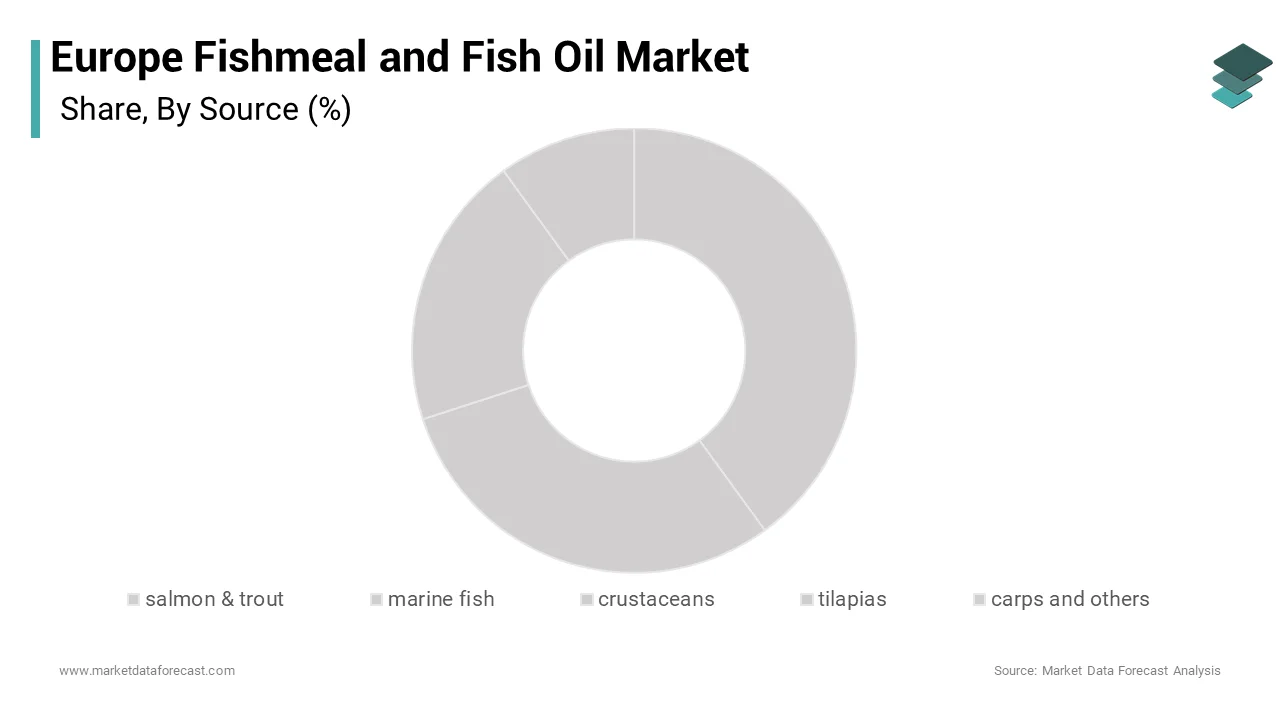
The salmon and trout segment is anticipated to witness the fastest CAGR of 7.9% between 2026 and 2034 due to Europe’s strategic shift toward circular economy principles in seafood processing. Unlike traditional reliance on wild-caught pelagics, this segment utilizes heads viscera and trimmings from Europe’s massive salmonid farming sector. Driven by high Norwegian output, the European aquaculture sector produces substantial amounts of salmon and trout, resulting in a large, consistent stream of processing byproducts. Historically discarded or used for low value applications, these byproducts are now being valorized through advanced rendering technologies that preserve heat sensitive omega 3 fatty acids. Most Norwegian salmon processors now prioritize on-site, advanced extraction techniques to convert waste into high-quality fish oil, producing superior concentrations of Omega-3 fatty acids compared to traditional whole fish sources. Furthermore, under the European Green Deal and new 2024 Fishery Control regulations, the European Commission is actively incentivizing the utilization of byproducts, encouraging, particularly in Northern European regions, a shift toward circular, sustainable, and less wasteful, on-site processing methods. This transformation of waste into premium marine ingredients aligns with sustainability mandates while enhancing supply resilience independent of wild stock fluctuations.
By Livestock Application Insights
The aquatic animals segment led the Europe fishmeal and fish oil market by capturing a significant share in 2025. The supremacy of the aquatic animals segment is credited to the biological necessity of marine nutrients for carnivorous and omnivorous farmed fish and shrimp. Salmonids in particular require high levels of digestible protein and long chain omega 3 fatty acids to support rapid growth skeletal development and fillet quality. Commercial salmon diets continue to rely on significant, albeit reduced, amounts of fish-based ingredients during crucial growth stages, despite ongoing industry efforts to incorporate alternative proteins and oils. Research indicates that excessively reducing fishmeal and fish oil in salmon diets can hinder fish health and reduce the nutritional quality of the final product, potentially affecting its commercial appeal. Moreover, consumer demand for “naturally rich” seafood drives producers to maintain marine lipid content. A high proportion of European consumers now prioritize the nutritional value, specifically Omega-3 content, as a primary driver in their decision to purchase fish products. This physiological and commercial imperative ensures aquatic animals remain the primary destination for Europe’s fishmeal and fish oil supply.
The pets and other applications segment is on the rise and is expected to be the fastest growing segment in the market by witnessing a CAGR of 8.3% over the forecast period owing to premiumization in pet food and expanding recognition of marine ingredients’ functional benefits. European pet owners increasingly seek human grade nutrition for companion animals, driving demand for high protein diets enriched with omega 3 fatty acids for skin coat and cognitive health. The European Pet Food Industry Federation reports a strong industry focus on producing nutritious, high-quality pet food, with a growing market interest in utilizing marine-based ingredients like fishmeal and fish oil to support the health of dogs, particularly targeting specific life stages and sensitivities. Research published by veterinary institutions indicates that including fish oil in dog diets, particularly for managing chronic inflammation, helps reduce inflammatory markers compared to diets lacking these fatty acids. Additionally, regulatory clarity helps. The European Feed Materials Register explicitly lists fishmeal and fish oil as safe for all pet species, facilitating formulation. The high-margin pet market in the EU, driven by emotional connection and millions of households, presents better growth opportunities than traditional livestock.
By Industrial Application Insights
The aquaculture segment held the majority share of the Europe fishmeal and fish oil market in 2025. The leading position of the aquaculture segment is credited to the irreplaceable role of marine ingredients in supporting intensive fish farming systems. Unlike terrestrial livestock, farmed fish cannot synthesize EPA and DHA from plant based precursors efficiently, making direct inclusion of marine lipids essential for health and product quality. Due to the high nutritional demands of marine fish, a significant portion of marine oil ingredients produced or imported into Europe is utilized within the aquaculture feed sector to ensure sufficient omega-3 content. Furthermore, certification schemes such as the Aquaculture Stewardship Council mandate minimum marine inclusion levels to ensure nutritional integrity, indirectly sustaining demand. Even as alternative oils gain traction, complete replacement remains unfeasible without compromising fillet composition. Evidence suggests that substituting fish oil with high-inclusion algal oil in salmon diets can maintain essential fatty acid levels and fish performance without significantly reducing fillet quality. This biological constraint, combined with market expectations for ocean derived nutrition, cements aquaculture as the core industrial application for marine ingredients in Europe.
The pharmaceutical segment is expected to exhibit a noteworthy CAGR of 9.2% between 2026 and 2034. The rapid expansion of the pharmaceutical segment is propelled by clinical validation and regulatory approval of high purity omega 3 concentrates for cardiovascular and neurological conditions. Prescription omega 3 formulations, particularly those rich in ethyl eicosapentaenoic acid, are now indicated for severe hypertriglyceridemia and secondary prevention of myocardial infarction in multiple EU countries. The European Medicines Agency continues to authorize high-purity fish-oil-based medicinal products, with approved treatments increasingly requiring stringent, ultra-refined manufacturing standards for contaminant levels. These pharmaceutical grade oils commands a substantial price premium over feed-grade alternatives, fueling investment in advanced molecular distillation technologies to meet strict purity standards. Companies like Croda Health Sciences in the UK and BASF in Germany have expanded EU based refining capacity to meet pharmacopeial standards. Moreover, Updated European Society of Cardiology guidelines are broadening the recommended usage of prescription omega-3, positioning these therapies for a wider patient population with high cardiovascular risk. High-value fish oil is carving out a niche that operates independently of commodity feed markets, propelled by mounting evidence and improved reimbursement structures.
COUNTRY ANALYSIS
Spain Fishmeal And Fish Oil Market Analysis
Spain was the top performer in the Europe fishmeal and fish oil market by accounting for a 22.1% share in 2025 by functioning as the continent’s primary processing and import gateway. Its position is also supported by extensive port infrastructure along the Cantabrian and Atlantic coasts, proximity to Northwest African fisheries, and a century old tradition of fishmeal production. Galicia dominates Spain's marine ingredient sector, hosting a substantial number of active plants that process vast amounts of raw materials into fishmeal and fish oil. A critical advantage is access to both domestic mackerel and horse mackerel catches and imported Peruvian anchoveta, enabling flexible sourcing during quota restrictions. Additionally, Spanish producers have invested heavily in byproduct valorization. The majority of fish oil produced in Spain is derived from the by-products of the canning industry, specifically from tuna and sardines, rather than from direct fishing, highlighting a strong shift toward circular manufacturing. This dual stream model, combining whole fish and processing residues, ensures consistent supply for Europe’s aquaculture and pet food sectors while complying with EU circular economy directives.
France Fishmeal And Fish Oil Market Analysis
France was the second largest country in the Europe fishmeal and fish oil market by occupying a share of 16.7% in 2025. The expansion of the French market is fuelled by vertically integrated operations that link fishing fleets processing plants and feed manufacturers. French vessels in the Bay of Biscay harvest significant amounts of sardines and anchovies, which are quickly processed to preserve oil quality, with the industry responding to fluctuating stock levels. Due to their environmental habitat and rapid processing protocols, French sardine and anchovy oils are recognized for their high concentration of essential fatty acids. A defining feature is the close collaboration between producers like Soprole and aquafeed giants such as Veramaris to develop customized marine ingredient blends for salmon and seabass farms in Brittany, the EU’s top aquaculture region. Furthermore, French marine bioresource management heavily prioritizes traceability and reducing the industry's carbon footprint, with an increasing number of processing facilities adopting standardized greenhouse gas management certifications. This emphasis on quality integration and sustainability secures France’s role as a premium supplier in the European market.
Denmark Fishmeal And Fish Oil Market Analysis
Denmark is another key player in the Europe fishmeal and fish oil market by emerging as a pioneer in circular marine ingredient production. Unlike countries reliant on whole fish, Denmark sources a significant share of its raw material from byproducts of its massive whitefish and salmon processing industry. According to studies, a significant portion of fish processing side-streams is, through advanced enzymatic and extraction technologies, successfully valorized into high-value fishmeal and oil products, ensuring nearly complete utilization of raw materials and reducing environmental impact. Companies like FF Skagen and BioMar leverage this stream to produce specialty ingredients with enhanced digestibility and amino acid profiles tailored for larval fish and premium pet foods. The Danish Technological Institute has also developed real time lipid monitoring systems that optimize oil extraction yields while minimizing oxidation. Supported by national green transition funds, Denmark’s model demonstrates how industrial symbiosis can reduce pressure on wild stocks while maintaining nutritional performance, making it a blueprint for sustainable marine ingredient production in Europe.
Netherlands Fishmeal And Fish Oil Market Analysis
The Netherlands expanded gradually in the Europe fishmeal and fish oil market by serving as the continent’s central logistics and trading hub. The Port of Rotterdam continues to function as a crucial European logistics node for the receipt and handling of marine ingredients, catering to demand through specialized storage facilities, even as the primary sourcing regions for these materials have shifted away from South America. Dutch agricultural traders maintain a leading role in the international, multi-continent distribution of marine ingredients, providing comprehensive logistical, processing, and quality control services to feed markets across Europe, Africa, and the Middle East. A unique strength is the integration with the Dutch aquafeed industry; companies like Nutreco and Trouw Nutrition formulate feeds using just in time delivery of marine ingredients from Rotterdam warehouses, minimizing inventory costs. Additionally, the Netherlands hosts the European headquarters of major certification bodies such as MarinTrust ensuring rapid compliance verification. This combination of port efficiency distribution reach and feed industry proximity positions the Netherlands as the indispensable circulatory system of Europe’s marine ingredient trade.
United Kingdom Fishmeal And Fish Oil Market Analysis
The United Kingdom is likely to grow in the Europe fishmeal and fish oil market from 2026 to 2034 by focusing on high value applications in pet food nutraceuticals and specialty aquaculture. Despite leaving the EU, the UK maintains strong ties through mutual recognition agreements on feed safety standards. According to sources, a significant portion of the total annual Scottish salmon harvest is converted into byproducts, which are increasingly re-valorized into high-quality fish oil for both human and pet consumption. Companies like Croda Health Sciences in Hull produce pharmaceutical grade omega 3 concentrates that supply several European markets under UK MHRA oversight. Post Brexit, the UK has accelerated bilateral trade deals with Norway and Iceland to secure sustainable raw material flows outside EU quota systems. Additionally, DEFRA’s Sustainable Protein Strategy allocates funding for marine ingredient innovation in alternative feed applications. This pivot toward quality differentiation and strategic autonomy allows the UK to retain relevance despite reduced access to EU common fisheries policy mechanisms.
COMPETITIVE LANDSCAPE
The competition in the Europe fishmeal and fish oil market is characterized by a blend of traditional processors and innovative biotech oriented firms competing on quality sustainability and functional performance rather than price alone. While large integrated players dominate volume through established fisheries access smaller specialized producers differentiate via byproduct valorization enzymatic processing and ultra refined outputs for high margin applications. The market is highly sensitive to regulatory shifts particularly around fisheries quotas circular economy mandates and contaminant thresholds which create both barriers and opportunities. Competition extends beyond product composition to include carbon footprint documentation supply chain resilience and alignment with retailer sustainability scorecards. As algal and microbial alternatives gain traction companies that combine marine origin authenticity with verifiable eco credentials and scientific validation are gaining strategic advantage in this increasingly values driven and technically demanding market landscape.
KEY MARKET PLAYERS
Some of the key players of European fishmeal and Fish Oil market are
- Pesquera Exalmar
- Corpesca S.A.
- Coppens International BV
- FMC Corporation
- Soprole SA
- Omega Protein
- Sürsan A.Ş
- FF Skagen A/S
- Copeinca
- Complex International S.A.S.
- Orizon
- Pioneer Fishing
- TripleNine Group A/S
- GC Rieber Oils AS
- The TASA Group
- Austevoll Seafood
- Croda International Plc
- Oceana Group Limited
- Mukka Sea Food Industries
Top Players In The Market
- Coppens International is a leading European producer of specialty fishmeal and fish oil based in the Netherlands with a strong emphasis on sustainable sourcing and high quality marine ingredients for aquaculture and pet food. The company operates advanced processing facilities that utilize both whole fish and byproducts from certified fisheries to produce premium grade meals and oils rich in omega 3 fatty acids. Coppens actively participates in global sustainability initiatives including MarinTrust certification and collaborates with feed manufacturers across Europe to develop customized formulations. Its innovation reinforces its commitment to nutritional science and strengthens its position as a technology driven supplier in the Europe Fishmeal and Fish Oil Market.
- FF Skagen is a Denmark based pioneer in circular marine ingredient production specializing in fishmeal and fish oil derived exclusively from byproducts of the whitefish and salmon processing industry. The company supplies high purity omega 3 rich oils to nutraceutical and pet food sectors across Europe and maintains stringent traceability from raw material to finished product. FF Skagen invests heavily in cold processing technologies to preserve lipid integrity and minimize oxidation during production. Its strategic moves aligns with rising clinical applications of marine omega 3s and enhances FF Skagen’s role as a premium supplier in the Europe Fishmeal and Fish Oil Market.
- Soprole is a major French fishmeal and fish oil producer with deep integration into the Bay of Biscay pelagic fishery and aquafeed value chain. The company sources primarily sardines and anchovies under strict EU quota management and processes them within hours of landing to ensure optimal nutrient retention. Soprole supplies both standard and specialty marine ingredients to aquaculture operations in France Spain and Norway and maintains long term partnerships with feed integrators like Veramaris. Its initiative supports customer sustainability reporting requirements and reinforces Soprole’s leadership in environmentally responsible marine ingredient production in the Europe Fishmeal and Fish Oil Market.
Top Strategies Used By The Key Market Participants
Key players in the Europe fishmeal and fish oil market prioritize vertical integration by securing direct access to sustainable raw material streams including both wild caught pelagics and seafood processing byproducts. They invest in advanced refining and hydrolysis technologies to enhance nutrient bioavailability and meet pharmaceutical or pet food grade specifications. Companies actively pursue international sustainability certifications such as MarinTrust and ISO 14064 to assure traceability and environmental compliance. Strategic collaborations with aquafeed manufacturers and nutraceutical brands enable co development of application specific formulations. Additionally they leverage digital tools for supply chain transparency including blockchain based tracking and real time carbon accounting to align with EU Green Deal objectives and evolving customer expectations.
MARKET SEGMENTATION
This research report on the European fishmeal and Fish Oil Market is Segmented and sub-segmented into the following categories.
By Source
- salmon & trout
- marine fish
- crustaceans
- tilapias
- carps and others
By Livestock Application
- swine
- aquatic animals
- poultry
- cattle
- pets and other applications
By Industrial Application
- fertilizers
- aquaculture
- pharmaceutical
By Country
- UK
- France
- Spain
- Germany
- Italy
- Russia
- Sweden
- Denmark
- Switzerland
- Netherlands
- Turkey
- Czech Republic
- Rest of Europe