- Product Description Description
- Table of Contents TOC
- List of Table & Figure LOT
- Get Free Sample PDF Sample PDF
Market Size, 2025
$992.72 MnMarket Estimate, 2026
$1144 MnMarket Forecast, 2034
$3566 MnCAGR, 2026–2034
15.27%Europe Flax Seed Market Size, Share, Trends & Forecast (2026–2034)
- Market Scope: Comprehensive market analysis of the European flax seed market covering product formats, food and pet care applications, country-level agricultural production, and sustainability regulatory drivers.
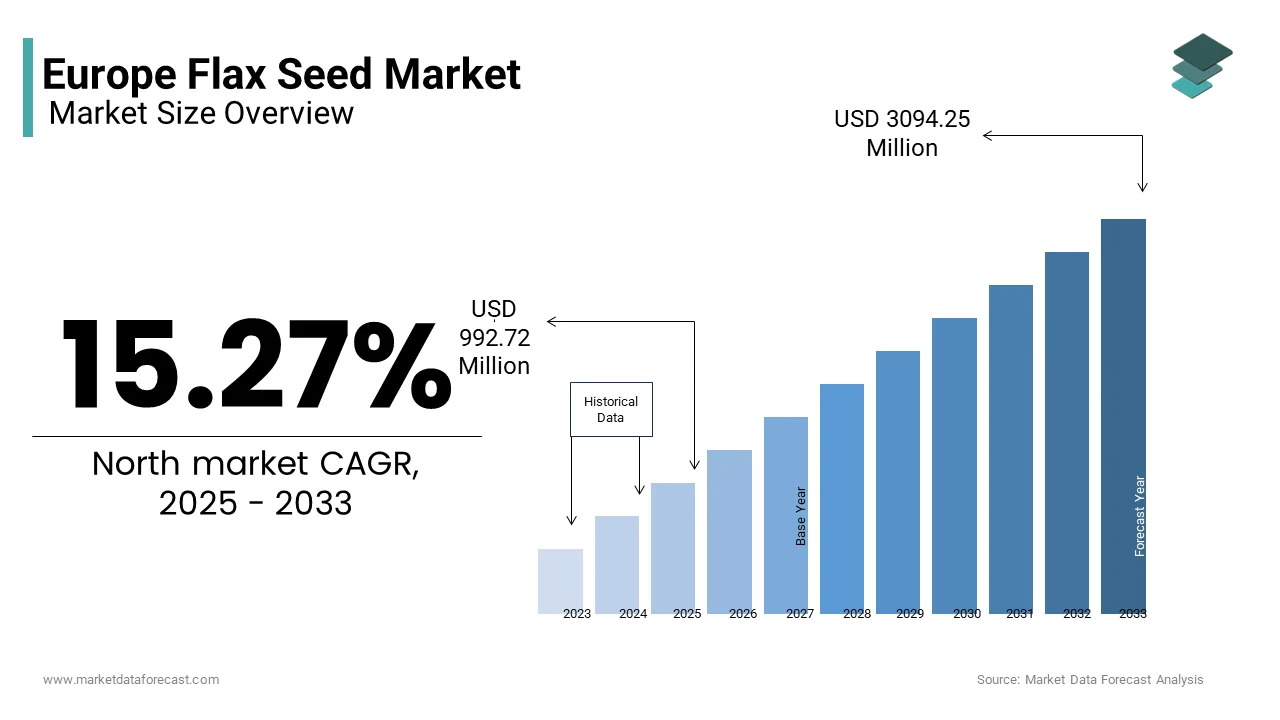
- Market Valuation: Valued at USD 992.72 million (2025), estimated at USD 1,144.31 million (2026), and projected to reach USD 3,566.76 million by 2034, growing at a strong compound annual growth rate (CAGR) of 15.27% (2026–2034).
- Primary Growth Drivers: Increasing consumer preference for plant-based omega-3 sources (alpha-linolenic acid), regulatory support for sustainable crop rotation and biodiversity under the European Green Deal, and the expansion of functional foods and bio-composites.
Europe Flax Seed Market Segment Metrics (2026–2034)
| Category | Leading Segment (2025 Position) | Fastest-Growing Segment |
|---|---|---|
| By Product | Whole Flax Seed (holding 34.2% market share due to extended shelf life and versatility) | Ground Flax Seed (projected at a 7.2% CAGR for enhanced nutrient bioavailability) |
| By Application | Food Segment (accounting for 46.8% market share via functional food integrations) | Pet Food Segment (estimated at an 8.5% CAGR driven by premium pet wellness trends) |
| By Country / Region | France (capturing 30.3% share as Europe's top flax cultivation and processing hub) | Belgium & Netherlands (accelerating through trade logistics and textile/agri-tech innovation) |
Major Industry Players & Market Structure
Market Structure: Competitive European landscape comprising agricultural cooperatives, global grain processors, and specialized health brands focusing on vertical integration, traceability, and organic certifications.
Key Companies: Archer Daniels Midland (ADM), Cargill Incorporated, Linwoods Ltd, AGT Food and Ingredients Inc, Flax Farm GmbH, BioPlanète SAS, Linseed Company Ltd., TA Foods Ltd, Richardson International Limited, Johnson Seeds, AgMotion, Inc., CanMar Foods Ltd, Simosis, Stokes Seeds, and Bioriginal Food & Science Corp.
Europe Flax Seed Market Size
The European flax seed market size was valued at USD 992.72 million in 2025 and is anticipated to reach USD 1144.31 million in 2026 from USD 3566.76 million by 2034, growing at a CAGR of 15.27% during the forecast period from 2026 to 2034.
MARKET OVERVIEW
The flax seed are primarily for their nutritional oil and fiber content. This agricultural sector is deeply rooted in European tradition particularly in France Belgium and the Netherlands, which are global leaders in flax production. According to the Food and Agriculture Organization of the United Nations, Europe accounts for approximately 75% of global flax fiber production highlighting the region's dominance in this specific agricultural niche. The flax cultivation supports rural economies and promotes biodiversity due to its low requirement for pesticides and fertilizers compared to other crops. The rising consumer awareness regarding plant-based omega 3 fatty acids has further amplified the demand for flaxseed oil and meal. The importance of alpha linolenic acid found abundantly in flax seeds for cardiovascular health, which aligns with public health initiatives across the continent. Furthermore, the European Green Deal encourages sustainable cropping systems where flax plays a pivotal role in crop rotation strategies.
MARKET DRIVERS
Increasing Consumer Preference For Plant Based Omega 3 Sources
The increasing consumer preference for plant-based omega 3 sources is greatly influencing the growth of the Europe Flax Seed Market. Health-conscious individuals are actively seeking alternatives to fish oil due to concerns about mercury contamination sustainability and dietary restrictions such as veganism. Flax seeds are one of the richest plant sources of alpha linolenic acid an essential omega 3 fatty acid that supports heart and brain health. The adequate intake of alpha linolenic acid contributes to the maintenance of normal blood cholesterol levels, which has led to widespread endorsement by health professionals. The recommended daily intake of omega 3s is increasingly being met through plant sources in European diets. The rise in vegetarian and vegan populations across countries like Germany and the United Kingdom has further accelerated this trend. Retailers are responding by expanding their offerings of flaxseed oils milled seeds and fortified products. The convenience of incorporating flax into daily meals through smoothies baked goods and salads makes it an attractive option for modern consumers. Additionally, the clean label movement favors simple natural ingredients over synthetic supplements driving demand for whole flax seeds. This shift in dietary habits is not merely a fleeting trend but a structural change in consumer behavior that sustains long term growth for the flax seed industry in Europe.
Regulatory Support For Sustainable Crop Rotation And Biodiversity
The regulatory support for sustainable crop rotation and biodiversity is another major driver propelling the Europe Flax Seed Market. The European Union’s Common Agricultural Policy incentivizes farmers to adopt practices that enhance soil health and reduce environmental impact. Flax is an ideal candidate for crop rotation as it breaks disease cycles for cereals and improves soil structure due to its deep root system. The Eco schemes under the new CAP provide financial rewards for crops that contribute to climate mitigation and biodiversity conservation. The flax cultivation requires significantly fewer inputs, such as water and pesticides compared to conventional crops, making it a cornerstone of sustainable farming initiatives. The crop’s ability to thrive in temperate climates without extensive irrigation aligns with water conservation goals prevalent in regions facing drought risks. Furthermore, flax fields support pollinators and other beneficial insects enhancing overall farm ecosystem resilience. Governments in Belgium and the Netherlands actively promote flax as part of their national sustainability strategies recognizing its role in reducing the carbon footprint of agriculture. The alignment of flax farming with regulatory frameworks ensures stable demand from agricultural producers, who seek to comply with environmental standards while maintaining profitability.
MARKET RESTRAINTS
Vulnerability To Climate Variability And Extreme Weather Events
The vulnerability to climate variability and extreme weather events is restricting the growth of the Europe Flax Seed Market. Flax is a sensitive crop that requires specific climatic conditions during its growth cycle particularly during flowering and maturation. Excessive rainfall or humidity can lead to fungal diseases, such as pasmo and rust, which severely impact yield and fiber quality. Europe is experiencing increased frequency of extreme weather events, including heavy precipitation and heatwaves, which disrupt agricultural productivity. Changes in precipitation patterns have affected flax growing regions in Northern France and Belgium leading to inconsistent harvests. Drought conditions during the early growth stages can stunt plant development, while wet conditions at harvest time complicate retting and extraction processes. These climatic uncertainties increase the risk for farmers making them hesitant to allocate large areas to flax cultivation. The unpredictability of yields affects the supply chain stability for processors and exporters who rely on consistent volumes. Furthermore, the lack of resilient varieties that can withstand diverse stressors limits the adaptability of the crop to changing climates. Insurance costs for flax farming are also rising due to these risks adding to the financial burden on producers.
High Labor Costs And Complexity In Harvesting And Processing
The high labor costs and complexity in harvesting and processing is additionally hindering the growth of the Europe Flax Seed Market. Unlike many other crops flax requires specialized machinery and precise timing for harvesting to ensure optimal fiber and seed quality. The process involves pulling the plants rather than cutting them to preserve fiber length which demands specific equipment and skilled operators. The labor costs in Western European countries, such as France and Belgium are among the highest globally increasing the overall production expenses for flax. As per the European Flax and Hemp Confederation, the separation of fibers from the woody core through retting and scutching is an energy intensive and technically complex process that requires significant capital investment. Small and medium sized farms often struggle to afford the necessary infrastructure leading to consolidation in the sector. The shortage of skilled labor in rural areas further exacerbates operational challenges causing delays and inefficiencies. Additionally, the need for careful handling to prevent damage to the delicate fibers adds to the logistical burden. These high operational costs reduce the profit margins for growers and processors making flax less competitive compared to less labor intensive crops. The economic pressure from rising wages and technical requirements thus restrains the broader adoption of flax cultivation in the region.
MARKET OPPORTUNITIES
Expansion Of Flax Based Bio Composites In Automotive And Construction
The expansion of flax based bio composites in automotive and construction sectors is one of the major factors to set up new opportunities for the growth of the Europe Flax Seed Market. Industries are increasingly seeking sustainable lightweight materials to replace synthetic fibers and reduce carbon emissions. Flax fibers offer high strength to weight ratios and excellent acoustic insulation properties making them ideal for automotive interiors and building materials. There is a growing demand for eco-friendly insulation materials where flax wool is gaining traction due to its thermal efficiency and recyclability. Major automotive brands in Germany and France are integrating flax reinforced plastics into door panels dashboards and trunk liners. The construction industry is also adopting flax based insulation boards as a sustainable alternative to glass wool. Government incentives for green building projects further accelerate this adoption. The versatility of flax fibers in creating durable and lightweight composites opens new revenue streams beyond traditional textile and food applications. This industrial diversification reduces dependency on volatile food markets and enhances the overall value proposition of flax cultivation. The shift towards circular economy principles ensures sustained demand for flax based industrial materials.
Growth In Functional Foods And Nutraceuticals Incorporating Flax Derivatives
The growth in functional foods and nutraceuticals incorporating flax derivatives is also to create new opportunities for the growth of the Europe Flax Seed Market. Consumers are increasingly prioritizing preventive health measures driving demand for products with added nutritional benefits. Flaxseed oil lignans and protein isolates are being incorporated into a wide range of functional foods including beverages snacks and dietary supplements. As per the Global Innovation Network for Aging, flax lignans are being studied for their potential role in hormone balance and cancer prevention attracting interest from the pharmaceutical and wellness sectors. Food manufacturers are launching innovative products such as flax enriched breads cereals and plant-based milk alternatives to cater to health conscious demographics. The clean label trend supports the use of whole flax seeds and cold pressed oils as natural ingredients. Regulatory approvals for health claims related to omega 3 fatty acids further validate the efficacy of flax products. The integration of flax into everyday food items makes it accessible to a broader audience beyond niche health stores.
MARKET CHALLENGES
Competition From Synthetic Fibers And Alternative Natural Fibers
The competition from synthetic fibers and alternative natural fibers is a primary challenge for the growth of the Europe Flax Seed Market. In the textile and composite industries, flax faces stiff competition from cheaper synthetic alternatives such as polyester and nylon which offer consistent quality and lower production costs. While demand for bioplastics is growing synthetic materials remain the default choice for many applications due to established supply chains and processing infrastructure. Additionally, flax competes with other natural fibers such as hemp and jute which are gaining popularity due to similar sustainability credentials and sometimes lower cultivation costs. Hemp in particular is benefiting from relaxed regulations and aggressive marketing campaigns in Europe. The perception of flax as a premium and sometimes difficult to process material limits its widespread adoption in mass market applications. Price volatility of flax fibers compared to stable synthetic prices makes it less attractive for cost sensitive manufacturers. Furthermore, the lack of standardized grading systems for flax fibers complicates procurement for industrial buyers. Overcoming these competitive pressures requires continuous innovation in processing technologies and cost reduction strategies.
Supply Chain Fragmentation And Lack Of Standardized Processing Infrastructure
The supply chain fragmentation and lack of standardized processing infrastructure is also to decline the growth of the Europe Flax Seed Market. The flax supply chain involves multiple stakeholders including farmers retters scutchers and spinners often operating in silos with limited coordination. The fragmentation leads to inefficiencies in quality control and traceability affecting the final product consistency. Variations in retting practices across different regions result in inconsistent fiber quality, which hinders industrial adoption. The lack of centralized processing facilities forces small scale farmers to transport raw materials over long distances increasing logistics costs and carbon footprint. Furthermore, the absence of uniform standards for flax seed and fiber grading creates barriers to international trade and customer confidence. Investors are hesitant to fund large scale processing units due to the fragmented nature of raw material supply. This infrastructural gap limits the ability of the industry to scale up and meet growing industrial demand. The need for integrated supply chain models that connect farmers directly with processors is evident but challenging to implement.
REPORT COVERAGE
| REPORT METRIC | DETAILS |
| Market Size Available | 2025 to 2034 |
| Base Year | 2025 |
| Forecast Period | 2026 to 2034 |
| CAGR | 15.27% |
| Segments Covered | By Product, Application and Country |
| Various Analyses Covered | Global, Regional and Country Level Analysis; Segment-Level Analysis; DROC, PESTLE Analysis; Porter’s Five Forces Analysis, Competitive Landscape; Analyst Overview of Investment Opportunities |
| Regions Covered | UK, France, Spain, Germany, Italy, Russia, Sweden, Denmark, Switzerland, Netherlands, Turkey, Czech Republic and Rest of Europe |
| Market Leaders Profiled | Archer Daniels Midland (ADM), Cargill Incorporated, TA Foods Ltd, RICHARDSON INTERNATIONAL LIMITED, Johnson SeedS, AgMotion, Inc., CanMar Foods Ltd, Simosis; Stokes Seeds, Bioriginal Food & Science Corp. |
SEGMENTAL ANALYSIS
By Product Insights
The whole flax seed segment was accounted in holding 34.2% of the Europe Flax Seed Market share in 2025 due to its superior shelf life and versatility in both industrial and culinary applications. Whole seeds possess a hard outer hull that protects the internal oil from oxidation allowing them to remain stable for extended periods without refrigeration. The whole flax seeds can retain their nutritional integrity for up to twelve months when stored in cool dry conditions whereas ground flax begins to degrade within weeks. This stability is crucial for manufacturers and retailers who require longer inventory turnover times. The intact structure of whole seeds prevents the release of volatile compounds that lead to rancidity ensuring consistent quality for consumers. In the industrial sector whole seeds are preferred for oil extraction processes where fresh grinding is performed immediately before pressing to maximize oil yield and quality. The versatility of whole seeds allows them to be used in baking as a topping for breads and crackers or incorporated into granola mixes without altering the texture significantly. Furthermore, whole seeds are easier to transport and store in bulk reducing logistical costs for suppliers. The ability to process whole seeds on demand provides flexibility for food processors who can customize the form of the ingredient based on specific product requirements.
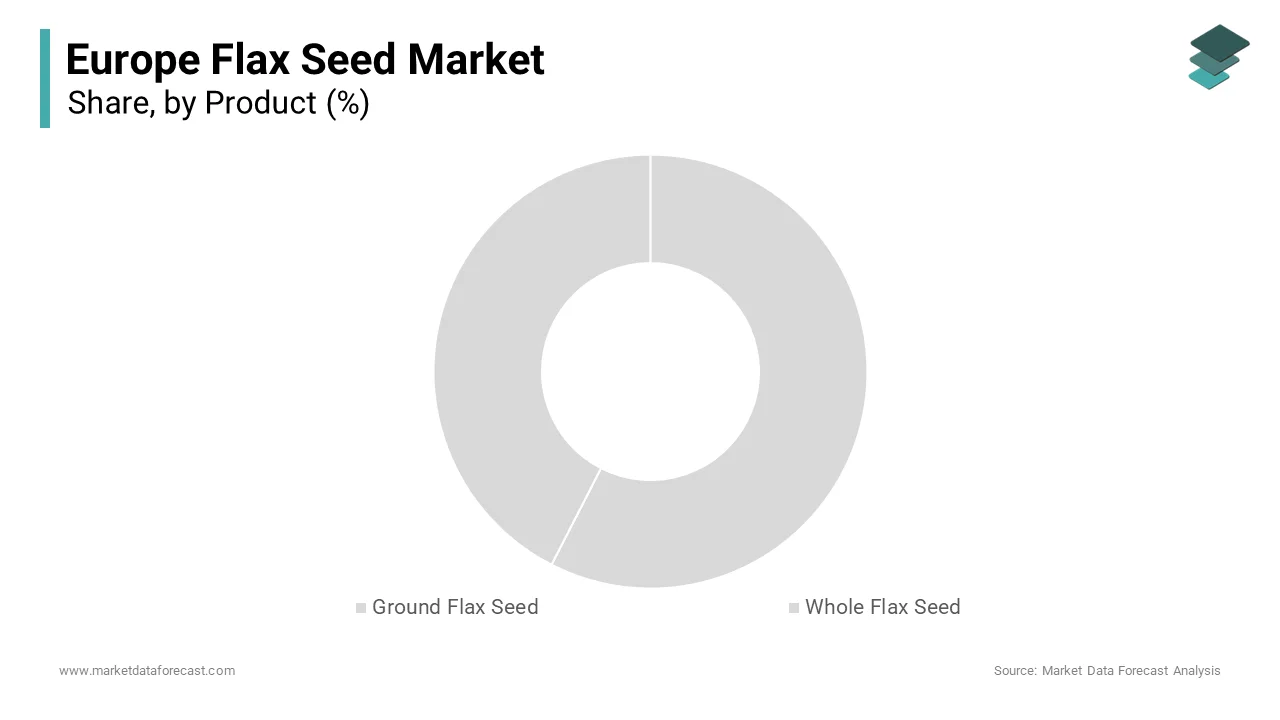
The ground flax seed segment is projected to register a fastest CAGR of 7.2% during the forecast period with the enhanced bioavailability of nutrients and ease of incorporation into daily diets. Grinding flax seeds breaks down the hard outer shell making the internal oils and lignans more accessible for absorption by the human body. The bioavailability of alpha linolenic acid is significantly higher in ground flax compared to whole seeds, which often pass through the digestive tract intact. The improved digestibility of ground flax ensures that consumers receive the full spectrum of health benefits including improved cholesterol levels and digestive health. The convenience of using pre ground flax meal appeals to busy consumers who seek quick and easy ways to boost their nutritional intake. Ground flax can be seamlessly mixed into smoothies yogurt oatmeal and batters without altering the texture drastically. This ease of use lowers the barrier to entry for new consumers who may find whole seeds difficult to chew or digest. Food manufacturers are also increasingly incorporating ground flax into fortified products such as protein bars and gluten free baked goods to enhance their nutritional profile. The growing awareness of the importance of nutrient absorption drives the rapid adoption of ground flax seeds.
By Application Insights
The food segment was accounted in holding 46.8% of the Europe Flax Seed Market share in 2025 with the extensive integration of flax into functional foods and dietary supplements. Consumers are actively seeking foods that offer health benefits beyond basic nutrition leading to the fortification of everyday products with flax seeds. The rising incidence of lifestyle related diseases in Europe has prompted a shift towards preventive nutrition, where flax is valued for its heart healthy properties. The flax seeds are recommended as part of a balanced diet to manage blood pressure and cholesterol levels. Food manufacturers are incorporating flax into a diverse range of products including breads cereals snack bars and beverages to meet this demand. The regulatory environment in Europe supports health claims related to omega 3 fatty acids encouraging companies to highlight flax content on packaging. The versatility of flax allows it to be used in both sweet and savory applications expanding its reach across different meal occasions. Retailers are dedicating more shelf space to functional foods featuring flax reflecting strong consumer interest. The established presence of flax in the mainstream food industry ensures its dominance in the market.
The pet food segment is esteemed to grow at a fastest CAGR of 8.5% during the forecast period with the increasing humanization of pets and demand for premium nutrition. Pet owners are treating their animals as family members and are willing to invest in high quality diets that promote longevity and vitality. Omega 3 fatty acids found in flax seeds are recognized for improving coat health reducing inflammation and supporting joint mobility in dogs and cats. Flax seed is increasingly included in high end kibble wet food and treats as a natural source of these essential nutrients. The shift away from synthetic additives towards natural ingredients favors the inclusion of flax in pet food formulations. Manufacturers are marketing flax enriched products as holistic solutions for pet wellness appealing to conscientious owners. The emotional bond between humans and pets drives spending on specialized nutrition creating a lucrative niche for flax seed suppliers. This trend is particularly strong in Western Europe where pet ownership rates are high. The alignment of pet food trends with human health consciousness fuels the rapid growth of this segment.
COUNTRY ANALYSIS
France Flax Seed Market Analysis
France was the top performer in the Europe Flax Seed Market by accounting for 30.3% of the share in 2025. The country possesses ideal climatic conditions in regions like Normandy and Hauts de France for cultivating high quality flax. France produces over 100000 hectares of flax annually supplying both domestic and international markets. The strong infrastructure for retting and scutching ensures efficient processing of seeds and fibers. The domestic demand for flaxseed oil and meal in the food and feed sectors is also robust supported by health-conscious consumers. Government initiatives promoting sustainable agriculture further bolster flax cultivation. The presence of major cooperatives and processors facilitates seamless supply chain management. France’s leadership in both fiber and seed production solidifies its dominant position in the European market. The integration of flax into circular economy models enhances its economic viability.

Netherlands Flax Seed Market Analysis
The Netherlands flax seed market was positioned second by capturing 15.3% of the share in 2025 by advanced processing technologies and trade logistics. The port of Rotterdam facilitates the import and export of large volumes of agricultural commodities, including flax. The Netherlands focuses on high value-added processing such as cold pressed oil extraction and micronized flax production. The presence of innovative agri-tech companies drives efficiency in seed cleaning and packaging. The domestic demand for flax in the food and supplement industries is supported by a health-conscious population. The country’s strategic location enables efficient delivery to neighboring markets. The emphasis on sustainability and traceability in Dutch agriculture enhances the quality reputation of its flax products. Collaborative research initiatives between universities and industry players foster innovation in flax applications. The Netherlands’ role as a logistical and technological center strengthens its market position.
Belgium Flax Seed Market Analysis
Belgium flax seed market growth is likely to have a fastest growth opportunities in coming years with its traditional flax growing regions and strong textile heritage. The country has a long history of flax cultivation particularly in Flanders where the climate is suitable for high quality fiber production. According to the Belgian Federal Public Service Economy flax remains an important crop for rural economies supporting local farmers and processors. Belgium is known for producing premium flax fibers used in luxury textiles. The government supports sustainable farming practices that benefit flax cultivation. The presence of specialized scutching mills ensures efficient separation of seeds and fibers. Belgium’s focus on quality and craftsmanship distinguishes its flax products in the global market. The integration of flax into regional cultural identity promotes its continued production. The collaboration between farmers and textile manufacturers creates a resilient supply chain.
Germany Flax Seed Market Analysis
Germany flax seed market growth is likely to grow with the high demand for healthy food ingredients and animal feed. The country has a large population of health-conscious consumers who incorporate flax seeds into their daily diets. The flax seeds are widely recommended for their omega 3 content and digestive benefits. The food industry in Germany extensively uses flax in bakery products cereals and snacks. The pet food sector also contributes to demand as premium brands include flax for coat health. The country’s robust regulatory framework ensures high quality standards for flax products. The presence of major food manufacturers drives consistent procurement of flax seeds. Germany’s role as a processing and consumption center makes it a key player in the market. The emphasis on organic and non GMO flax aligns with consumer preferences. The strong retail network facilitates wide availability of flax products.
Italy Flax Seed Market Analysis
Italy flax seed market growth is propelled with the increasing interest in healthy eating and Mediterranean diet adaptations. The consumption of functional foods has risen leading to greater use of flax in culinary products. As per the Italian Society of Human Nutrition flax seeds are gaining popularity as a supplement to the traditional Mediterranean diet. The cosmetic industry in Italy also utilizes flaxseed oil for its moisturizing properties in skincare products. The country’s strong fashion and textile sectors are exploring flax fibers for sustainable fabric innovations. The demand for organic flax is particularly strong among discerning consumers. Import channels are well established ensuring steady supply from Northern European producers. Italy’s focus on quality and design extends to food and personal care products featuring flax. The growing awareness of health benefits drives market expansion.
COMPETITIVE LANDSCAPE
The competition in the Europe Flax Seed Market is characterized by a mix of large agricultural cooperatives and specialized private companies who compete on quality sustainability and innovation. Leading players differentiate themselves by offering certified organic and traceable products that meet stringent European regulatory standards. The market sees intense rivalry in terms of product differentiation with firms developing unique blends and value added ingredients for food and industrial uses. Cooperatives in France and Belgium hold significant influence due to their control over production volumes and processing infrastructure. Private companies often compete by focusing on niche segments such as premium culinary oils or specialized textile fibers. Price competition is moderate as buyers prioritize quality and sustainability credentials over cost. Strategic collaborations between growers processors and retailers are common to streamline supply chains and enhance market access. Innovation in processing technologies and sustainable packaging also drives competitive dynamics.
KEY MARKET PLAYERS
These are the market players that are dominating the Europe flax seeds market.
- Archer Daniels Midland (ADM)
- Cargill Incorporated
- Linwoods Ltd
- Agt Food and Ingredients Inc
- Flax Farm GmbH
- BioPlanète SAS
- Linseed Company Ltd.
- TA Foods Ltd
- RICHARDSON INTERNATIONAL LIMITED
- Johnson Seeds
- AgMotion, Inc.
- CanMar Foods Ltd
- Simosis
- Stokes Seeds
- Bioriginal Food & Science Corp
Top Players In The Market
- Linwoods Ltd is a prominent player in the global flax seed market renowned for its high quality cold pressed flaxseed oil and milled flax products. The company sources its raw materials primarily from sustainable farms in Europe ensuring premium quality and traceability. Recently Linwoods has strengthened its market position by expanding its distribution network into key Asian and North American markets. The company also invests in eco friendly packaging solutions to align with global sustainability trends. Their commitment to ethical sourcing and transparent supply chains enhances brand loyalty. This strategic expansion and focus on sustainability solidify Linwoods reputation as a trusted provider of nutritious flax products worldwide.
- Agt Food and Ingredients Inc contributes significantly to the global flax seed market through its extensive processing capabilities and global supply chain. The company specializes in cleaning conditioning and value added processing of flax seeds for food feed and industrial applications. Recently Agt has strengthened its position by upgrading its processing facilities in Canada and Europe to enhance efficiency and product quality. The company also develops innovative flax based ingredients for the health food and animal nutrition sectors. Agt collaborates with farmers to ensure consistent supply of high quality raw materials. Their focus on research and development leads to new product formulations that meet evolving market demands.
- Cargill Incorporated plays a vital role in the global flax seed market by offering a comprehensive range of flax products including oil meal and whole seeds. The company leverages its vast agricultural network to source and process flax efficiently. Recently Cargill has strengthened its market position by integrating digital tools to optimize supply chain logistics and improve traceability. The company also focuses on sustainable farming practices encouraging suppliers to adopt environmentally friendly methods. Cargill collaborates with food manufacturers to develop customized flax ingredients for various applications. Their investment in research helps create value added products with enhanced nutritional profiles.
Top Strategies Used By Key Market Participants
Key players in the Europe Flax Seed Market primarily employ strategies focused on vertical integration and sustainability certification to strengthen their competitive position. Companies are increasingly controlling the supply chain from farm to fork to ensure quality and traceability which appeals to conscious consumers. This approach allows firms to guarantee organic and non GMO status which is highly valued in European markets. Additionally, manufacturers are investing in research and development to create value added products such as fortified foods and specialized industrial fibers. Strategic partnerships with local farmers help secure consistent raw material supplies while supporting rural economies. Digitalization is another major strategy with firms using blockchain technology to enhance transparency and build consumer trust. Expansion into emerging applications like bio composites and pet nutrition diversifies revenue streams. These combined efforts enable key participants to differentiate their offerings and capture greater value in the competitive European landscape.
MARKET SEGMENTATION
This research report on the Europe flaxseeds market is segmented and sub-segmented into the following categories.
By Product
- Ground Flax Seed
- Whole Flax Seed
By Application
- Food
- Pet Food
- Others
By Country
- UK
- France
- Spain
- Germany
- Italy
- Russia
- Sweden
- Denmark
- Switzerland
- Netherlands
- Turkey
- Czech Republic
- Rest of Europe