- Product Description Description
- Table of Contents TOC
- List of Table & Figure LOT
- Get Free Sample PDF Sample PDF
Market Size, 2025
$38.12 BnMarket Estimate, 2026
$41.08 BnMarket Forecast, 2034
$74.69 BnCAGR, 2026–2034
7.76%Europe Flexible Packaging Market Report Summary
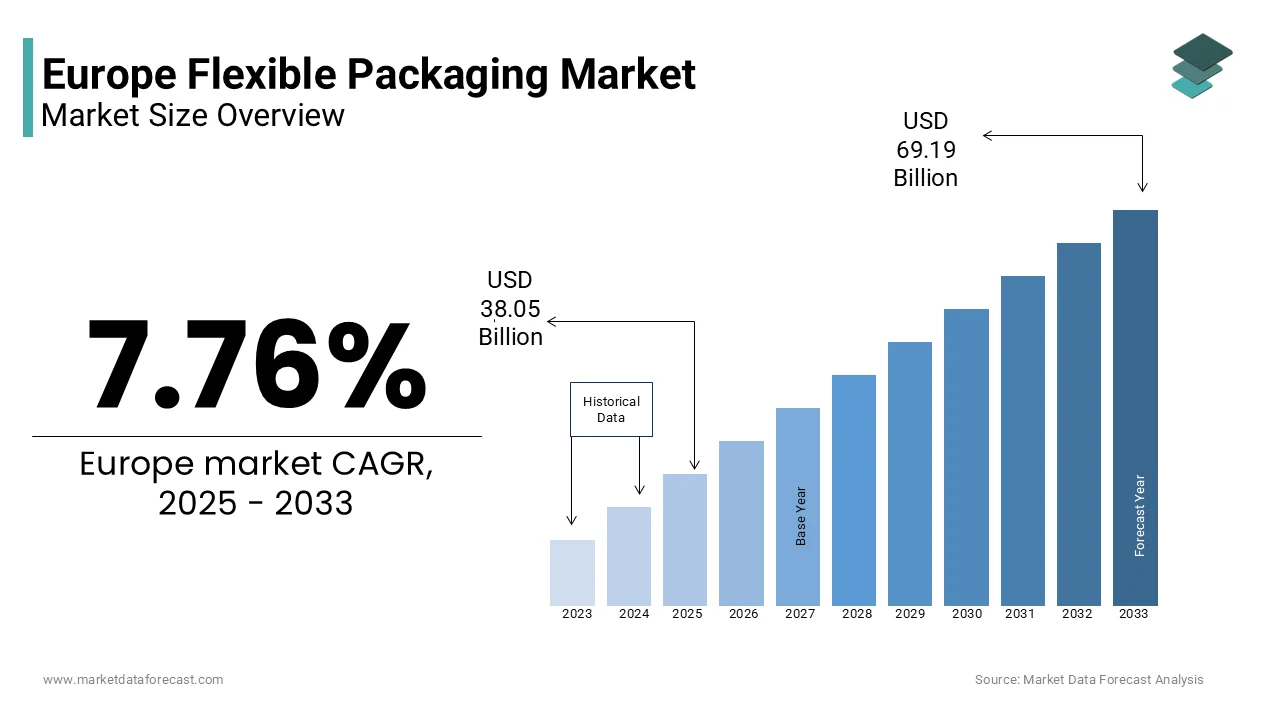
The Europe flexible packaging market was valued at USD 38.12 billion in 2025, is estimated to reach USD 41.08 billion in 2026, and is projected to reach USD 74.69 billion by 2034, growing at a CAGR of 7.76% during the forecast period from 2026 to 2034. The growth of the European flexible packaging market is driven by increasing demand for lightweight, cost-effective, and sustainable packaging solutions across various industries. Rising consumption of packaged food and beverages, growing preference for convenience products, and advancements in packaging materials and technologies are further supporting market expansion. Additionally, the increasing focus on reducing packaging waste, improving product shelf life, and enhancing recyclability is accelerating the adoption of flexible packaging solutions across Europe.
Key Market Trends
-
Growing demand for sustainable and recyclable packaging materials is driving innovation in flexible packaging solutions.
-
Increasing consumption of packaged and convenience foods is boosting the adoption of lightweight and high-performance packaging formats.
-
Rising preference for stand-up pouches and resealable packaging due to their convenience and improved product protection.
-
Advancements in barrier technologies and printing capabilities are enhancing packaging functionality and brand appeal.
-
Expanding e-commerce activities are increasing demand for durable, lightweight, and cost-efficient packaging solutions.
Segmental Insights
-
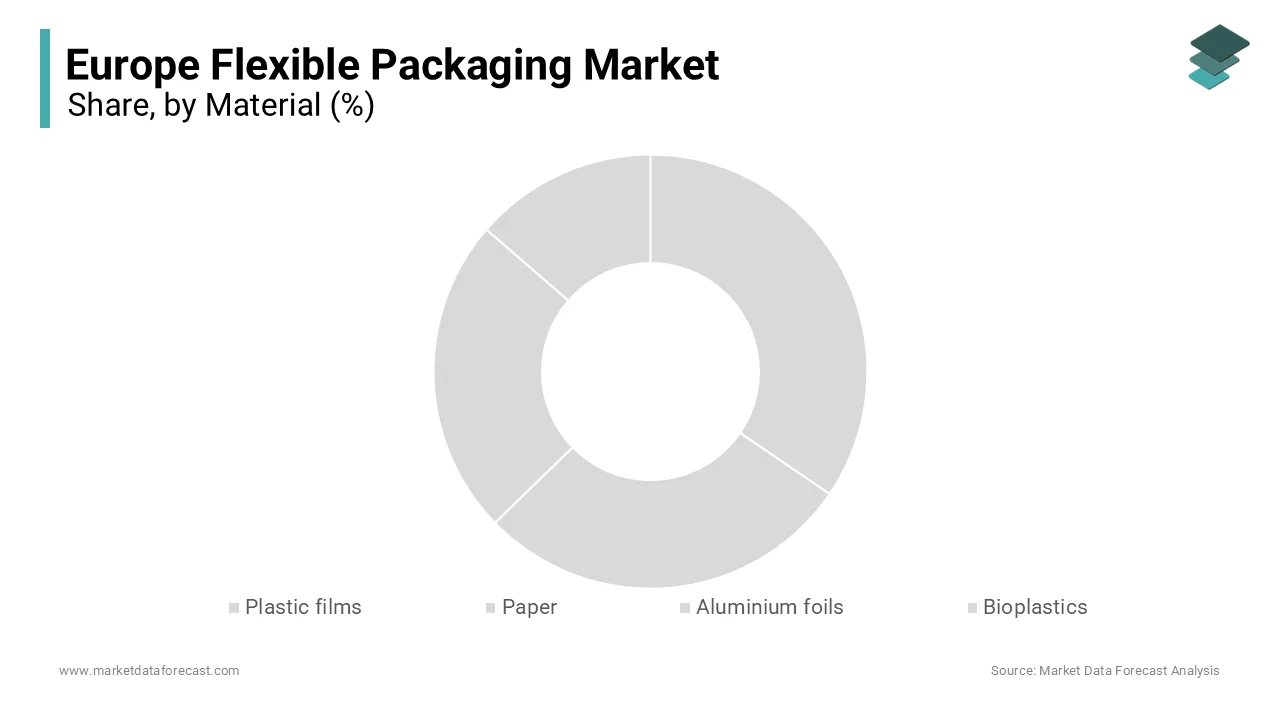
Based on material, the plastic films segment dominated the Europe flexible packaging market in 2025. The segment's leadership is attributed to its versatility, durability, lightweight nature, and superior barrier properties that help preserve product quality and extend shelf life.
-
Based on product type, the stand-up pouches segment held the largest share of 42.2% of the Europe flexible packaging market in 2025. The segment's dominance is driven by increasing demand for convenient, portable, and visually appealing packaging solutions across food, beverage, and personal care applications.
-
Based on application, the food and beverages segment accounted for 58.1% of the Europe flexible packaging market share in 2025. The segment's growth is supported by rising consumption of packaged foods, growing demand for extended shelf life, and the need for cost-effective packaging solutions that ensure product freshness and safety.
Regional Insights
-
The European flexible packaging market is witnessing robust growth due to increasing demand for sustainable packaging, changing consumer lifestyles, and the expansion of the food and beverage industry.
-
Germany led the Europe flexible packaging market by accounting for 22.7% of the regional market share in 2025. The country's dominance is supported by its strong manufacturing sector, advanced packaging industry, and growing demand for innovative and sustainable packaging solutions.
-
The United Kingdom remains a key market due to increasing demand for convenience foods, rising sustainability initiatives, and a well-established retail sector.
-
France is experiencing steady growth driven by stringent environmental regulations and increasing adoption of recyclable packaging materials.
-
Italy is witnessing growing demand for flexible packaging across food processing, pharmaceuticals, and consumer goods industries.
Competitive Landscape
The Europe flexible packaging market is highly competitive, with manufacturers focusing on sustainable material development, product innovation, advanced barrier technologies, and strategic partnerships to strengthen their market positions. Companies are increasingly investing in recyclable and mono-material packaging solutions, expanding production capacities, and enhancing printing and customization capabilities to meet evolving consumer and regulatory requirements. Key players operating in the Europe flexible packaging market include Amcor plc, Mondi plc, Constantia Flexibles Group GmbH, Huhtamäki Oyj, Coveris Holdings S.A., Sealed Air Corporation, Berry Global Group, Inc., Sonoco Products Company, Clondalkin Group Holdings BV, Schur Flexibles Group, DS Smith Plc, RKW Group, Smurfit Kappa Group, UFlex Limited, Wipak Group, Flex Films (Europe) Ltd., Taghleef Industries Group, Bischof + Klein SE & Co. KG, and Plastopil Europe BVBA.
Europe Flexible Packaging Market Size
The Flexible Packaging market size in Europe was valued at USD 38.12 billion in 2025. The European market is estimated to be worth USD 74.69 billion by 2034 from USD 41.08 billion in 2026, growing at a CAGR of 7.76% from 2026 to 2034.
Flexible packaging refers to materials that can be shaped or molded to fit the contents they enclose, typically comprising plastic films, aluminum foil, paper, and multi-layered laminates. These materials are widely used in industries such as food and beverage, pharmaceuticals, personal care, and industrial goods due to their ability to extend shelf life, reduce material waste, and enhance product convenience. According to the European Flexible Packaging Association (EFPA), the market witnessed a steady growth trajectory driven by consumer demand for eco-friendly and innovative packaging solutions.
Europe’s stringent environmental regulations have positioned the region as a leader in adopting sustainable practices within the flexible packaging sector. The European Union’s Circular Economy Action Plan has mandated increased recycling rates and reduced plastic waste, prompting manufacturers to innovate with biodegradable and recyclable materials. For instance, the use of bio-based plastics in flexible packaging grew by 15% in 2022, as reported by the European Bioplastics Association. Additionally, the rise of e-commerce and on-the-go consumption patterns has further fueled demand for flexible packaging, particularly in stand-up pouches and resealable formats. Germany, France, and Italy are among the top contributors to this market, collectively accounting for over 60% of Europe’s total flexible packaging revenue. The European flexible packaging market is poised to expand significantly because of the growing emphasis on sustainability and functionality, reflecting both technological advancements and shifting consumer preferences.
MARKET DRIVERS
Sustainability and Environmental Regulations
The increasing focus on sustainability is primarily propelling the development of the European flexible packaging market. It is driven by stringent environmental regulations. The European Union’s Circular Economy Action Plan mandates a reduction in plastic waste and promotes recyclable and biodegradable packaging solutions. According to the European Environment Agency, more than 30% of plastic packaging waste was recycled in 2021 which is reflecting the region’s commitment to sustainable practices. This regulatory push has encouraged manufacturers to adopt innovative materials like bio-based plastics, which are projected to grow considerably, as per the European Bioplastics Association. Consumers are also favouring eco-friendly packaging, with a Nielsen report indicating that 73% of European consumers are willing to pay more for sustainable products. These factors collectively drive demand for flexible packaging that aligns with environmental goals.
Growing E-commerce and Convenience Trends
The rapid expansion of e-commerce and changing consumer lifestyles are significant growth drivers for the Europe flexible packaging market. With online retail sales in Europe reaching EUR 822 billion in 2022, there is an increased need for durable yet lightweight packaging solutions to protect goods during transit, as reported by Eurostat. Flexible packaging such as stand-up pouches and resealable bags offers convenience and portability that is making it ideal for on-the-go consumption. According to the European Food Safety Authority, flexible packaging extends the shelf life of perishable goods by up to **30%**, reducing food waste. Furthermore, its lightweight nature lowers transportation costs and carbon emissions, aligning with sustainability goals. These advantages have made flexible packaging indispensable for industries like food, beverages, and personal care, ensuring steady market growth amidst evolving consumer demands.
MARKET RESTRAINTS
High Costs of Sustainable Materials
The high cost associated with sustainable and recyclable materials is hindering the growth of the European flexible packaging market. The European Union’s Circular Economy Action Plan encourages the adoption of eco-friendly alternatives. However, the transition to biodegradable or bio-based plastics remains expensive. According to the European Commission, producing bioplastics can be 20-50% more costly than conventional plastics due to limited production capacity and higher raw material costs. This price gap poses challenges for small and medium-sized enterprises (SMEs) that struggle to absorb these additional expenses. Furthermore, the European Bioplastics Association notes that only 1% of global plastic production currently comes from bioplastics, indicating slow adoption rates. These financial barriers hinder widespread implementation, especially in price-sensitive industries like food and beverages, where profit margins are already narrow.
Stringent Recycling Infrastructure Requirements
The inadequate recycling infrastructure across many European countries which limits the effective processing of flexible packaging materials is notably restraining the market growth. As per the European Environment Agency, only 42% of plastic packaging waste was recycled in 2021 which is leaving a significant portion unrecycled due to technical challenges posed by multi-layered laminates commonly used in flexible packaging. These materials are difficult to separate and recycle, creating inefficiencies in waste management systems. Additionally, Eurostat reports that investment in recycling infrastructure varies widely across member states with Eastern European nations lagging behind Western counterparts. This disparity creates inconsistencies in compliance with EU recycling mandates, increasing operational complexities for manufacturers. As a result, companies face both regulatory pressure and logistical hurdles, slowing market growth despite rising demand for sustainable solutions.
MARKET OPPORTUNITIES
Innovation in Smart and Active Packaging
The development of smart and active packaging solutions enhances product safety and consumer engagement presents major growth prospect for the market players. The European Food Safety Authority stated that active packaging, such as oxygen scavengers and moisture absorbers, can extend the shelf life of perishable goods by up to 25% and is reducing food waste significantly. Additionally, smart packaging technologies like QR codes and NFC tags are gaining traction, with 60% of European consumers prefer interactive packaging for better traceability and product information. These innovations align with the EU’s focus on sustainability and digital transformation which is creating a lucrative market for manufacturers. Demand for real-time monitoring and enhanced functionality is growing. Therefore, companies investing in these technologies are poised to capture a competitive edge in the flexible packaging sector.
Expansion of Biodegradable and Compostable Solutions
The growing emphasis on environmental sustainability provides a key opportunity through the expansion of biodegradable and compostable flexible packaging. The European Bioplastics Association projects that the global production capacity for bioplastics will increase by 30% by 2026 and that is driven by advancements in bio-based materials. In Europe, countries like Germany and France are leading this shift, with the French Ministry of Ecology reporting that compostable packaging adoption grew by 18% in 2022 alone. Furthermore, the European Commission’s Single-Use Plastics Directive mandates the reduction of conventional plastics and is encouraging businesses to adopt eco-friendly alternatives. These regulatory tailwinds coupled with rising consumer awareness, create a fertile ground for innovation and market growth in biodegradable solutions, positioning them as a key revenue stream for the market.
MARKET CHALLENGES
Balancing Cost and Sustainability
Balancing the cost of sustainable materials with affordability for businesses and consumers is largely hampering the expansion of the European flexible packaging market. The European Commission reported that transitioning to eco-friendly alternatives such as biodegradable plastics can increase production costs by 20% to 50% compared to traditional plastics. This financial burden disproportionately affects small and medium-sized enterprises (SMEs), which account for more than 99% of businesses in the EU, according to Eurostat. Additionally, the European Environment Agency notes that only 30% of plastic packaging waste is currently recycled and is leaving a significant gap in achieving circular economy goals. Demand for sustainable packaging is rising but high costs deter widespread adoption. This creates a challenge for manufacturers who want to meet regulatory requirements without compromising profitability.
Addressing Recycling Infrastructure Gaps
The lack of adequate recycling infrastructure to process flexible packaging materials effectively is notably derailing the growth of the European flexible packaging market. The European Environment Agency reports that multi-layered laminates, commonly used in flexible packaging, are difficult to recycle due to their complex composition, resulting in only 42% of plastic packaging waste being recycled in 2021. Furthermore, Eurostat reveals disparities in recycling capabilities across member states with Eastern European countries lagging behind Western Europe in terms of infrastructure investment. This inconsistency creates compliance hurdles for manufacturers aiming to meet EU recycling mandates. The French Ministry of Ecology emphasizes that inadequate sorting and processing facilities hinder the scalability of recyclable packaging solutions, posing a barrier to achieving sustainability targets and reducing environmental impact.
REPORT COVERAGE
| REPORT METRIC | DETAILS |
| Market Size Available | 2025 to 2034 |
| Base Year | 2025 |
| Forecast Period | 2026 to 2034 |
| CAGR | 7.76% |
| Segments Covered | By Material, Product Type, Application, and Region |
| Various Analyses Covered | Global, Regional, & Country Level Analysis; Segment-Level Analysis; DROC; PESTLE Analysis; Porter’s Five Forces Analysis; Competitive Landscape; Analyst Overview of Investment Opportunities |
| Regions Covered | UK, France, Spain, Germany, Italy, Russia, Sweden, Denmark, Switzerland, Netherlands, Turkey, Czech Republic, Rest of Europe |
|
Market Leaders Profiled | Amcor plc, Mondi plc, Constantia Flexibles Group GmbH, Huhtamäki Oyj, Coveris Holdings S.A., Sealed Air Corporation, Berry Global Group, Inc., Sonoco Products Company, Clondalkin Group Holdings BV, Schur Flexibles Group, DS Smith Plc, RKW Group, Smurfit Kappa Group, UFlex Limited, Wipak Group, Flex Films (Europe) Ltd., Taghleef Industries Group, Bischof + Klein SE & Co. KG and Plastopil Europe BVBA, and others. |
SEGMENTAL ANALYSIS
By Material Insights
The plastic films segment led the Europe flexible packaging market and captured a substantial share in 2025. This leading position of the segment was attributed to its unparalleled barrier properties and mechanical durability. Modern polymer engineering allows manufacturers to create microscopic layers that completely block oxygen, moisture, and ultraviolet light, which are the primary catalysts for product degradation. To ensure compliance with strict food-contact safety standards evaluated by the European Food Safety Authority, packaging engineers utilize multi-layer polyethylene and polypropylene barrier architectures. These advanced food contact structures restrict oxygen and moisture ingress to prevent spoilage, preserving organic properties and maintaining strict safety compliance along the entire retail chain. This exceptional protective capability is particularly crucial for sensitive items like dairy products, processed meats, and aromatic beverages, which require stringent environmental isolation to maintain their nutritional value and sensory profiles. Furthermore, the inherent flexibility of these films allows them to conform tightly to the product, eliminating internal void spaces that could lead to physical damage during transit. Technological innovations in Biaxially Oriented Polypropylene (BOPP) films enable extreme mechanical downgauging without sacrificing essential tensile strength or puncture resistance. This progressive downgauging enables European plastics converters to minimize total material footprints, helping consumer package goods (CPG) brands meet target plastic-reduction metrics while preserving package resilience under stressful logistics conditions. This continuous enhancement in material science guarantees that plastic films remain the indispensable foundation of the flexible packaging industry across the continent.
A key factor cementing the supremacy of plastic films is their superior lightweight nature and the resulting logistical efficiency they provide to supply chains. Flexible plastic formats weigh a fraction of their rigid counterparts, such as glass bottles or metal cans, which drastically reduces the overall mass of packaged goods. Comprehensive Life Cycle Assessments (LCAs) confirm that transitioning from heavy rigid containers to lightweight flexible pouches significantly minimizes Scope 3 logistics emissions. The geometric and weight efficiency of un-filled flexible materials allows far fewer delivery trucks to handle the same packaging volume, dramatically slashing transport-related fuel demand and carbon footprints. This massive reduction in transport weight allows logistics companies to maximize cargo capacity per shipment, significantly lowering fuel consumption and distribution costs. Furthermore, the compact nature of empty plastic films and rollstock enables highly efficient warehouse storage, optimizing spatial utilization before the packaging is even filled. The International Road Transport Union indicates that logistics decarbonization relies heavily on maximizing vehicle load optimization, deploying high-capacity vehicles, and curbing empty return runs. Integrating lightweight, space-saving flexible packaging formats indirectly reinforces these targets by allowing high-density palettization and removing unnecessary dead-weight from regional transport routes. This profound logistical advantage ensures that brand owners and supply chain managers consistently prioritize plastic films, reinforcing their overwhelming market leadership.
The bioplastics segment is on the rise and is expected to be the fastest growing segment in the market by witnessing a CAGR of 9.4% from 2026 to 2034 due to stringent legislative mandates favoring renewable and circular resources. The European Union has aggressively accelerated its transition toward a circular economy, implementing comprehensive frameworks that penalize fossil fuel derived packaging and incentivize biological alternatives. Under the EU Packaging and Packaging Waste Regulation (PPWR), all packaging placed on the market must achieve a mandatory 100% design-for-recycling standard by 2030, alongside strict minimum thresholds for post-consumer recycled plastic content. The European Commission continues to evaluate bio-based, biodegradable, and compostable plastics as specialized solutions, provided they originate from sustainable feedstocks and match circular recycling systems. This binding legislation forces fast moving consumer goods companies to rapidly reformulate their packaging portfolios, creating an explosive demand for bio based polyethylene and polylactic acid films. Furthermore, national governments across the region have introduced specific taxes on non recycled plastic waste, making traditional petroleum based flexible films financially less attractive. This powerful regulatory push removes the historical cost barriers associated with biological materials, compelling manufacturers to adopt bioplastics at an unprecedented pace and securing the segment as the fastest growing material category.
The rapid advancements in compostable polymer synthesis and industrial scaling capabilities further propel the bioplastics segment to the forefront of market expansion. Historically, biological packaging materials suffered from inferior mechanical properties and limited thermal stability, restricting their application to niche markets. However, recent breakthroughs in biochemical engineering have enabled the production of high performance bioplastics that perfectly mimic the durability and barrier characteristics of conventional polymers. European Bioplastics shows that global bioplastics production capacity is on track to scale up to approximately 6.3 million tonnes by 2027, up from 2.2 million tonnes in 2022. This major expansion is heavily supported by the industrial commercialization of polyhydroxyalkanoates (PHAs) and polylactic acid (PLA) to meet structural market demand. This massive scale up has drastically reduced the unit cost of biological resins, making them commercially viable for mass market flexible packaging applications. Furthermore, the development of fully home compostable films that meet strict industrial certification standards allows brands to offer genuinely sustainable end of life solutions for consumers. These technological triumphs eliminate previous performance limitations, driving rapid adoption.
By Product Type Insights
The stand up pouches segment dominated the Europe flexible packaging market and accounted for a 42.2% share in 2025. This dominance of the segment was driven by its exceptional shelf presence and consumer convenience features. Modern retail environments demand packaging that not only protects the product but also actively engages the shopper through vibrant graphics and ergonomic designs. Stand up pouches provide a massive, uninterrupted billboard effect on store shelves, allowing brands to maximize their visual impact and communicate essential product information clearly. Studies confirm that stand-up pouches provide superior on-shelf visibility, vibrant branding real estate, and billboarding effects. This highly functional structural design maximizes consumer engagement and brand differentiation on crowded retail shelves compared to traditional flat bags. Furthermore, the integration of advanced closure mechanisms, such as resealable zippers, screw caps, and ergonomic spouts, transforms these flexible packages into highly functional household items. Surveys highlight that end-users strongly favor resealable packaging formats for dry goods, pet care, and snack products. The addition of closure features like zippers or sliders directly addresses consumer demands for convenience, portion control, and extended product freshness after opening. This perfect synergy of striking aesthetic appeal and practical daily utility ensures that stand up pouches remain the absolute favorite among brand owners seeking to capture consumer loyalty and dominate retail shelves across Europe.
A different factor securing the dominance of stand up pouches is its optimal material reduction and superior source optimization capabilities compared to rigid alternatives. Brands are under immense pressure to minimize their environmental footprint, and stand up pouches offer a dramatic reduction in overall plastic usage without sacrificing package volume. According to sources, switching from rigid plastic containers to flexible stand-up pouches can reduce packaging material weight by up to 70% or more. This significant reduction in raw material volume helps brands lower their total packaging waste footprint right at the source. This massive source reduction directly translates to lower carbon emissions during manufacturing and significantly decreases the volume of waste generated at the end of the product lifecycle. Furthermore, the efficient geometry of stand up pouches allows for highly compact palletization, maximizing the number of units that can be transported in a single shipment. Validated Lifecycle Assessments (LCAs) demonstrate that flexible stand-up pouches yield a substantially lower global warming potential than glass or metal alternatives. The extreme weight savings and space efficiency during transport minimize fuel consumption, helping consumer goods companies shrink their aggregate supply chain carbon emissions. This compelling combination of extreme lightweight design and material efficiency makes stand up pouches the undisputed leader in the sustainable packaging transition.
The rollstock segment is expected to exhibit a noteworthy CAGR of 8.2% during the forecast period owing to its seamless integration with high speed automated packaging lines. Modern manufacturing facilities prioritize maximum throughput and minimal downtime, requiring packaging materials that can be processed continuously at extreme velocities without tearing or jamming. Rollstock provides the perfect continuous web format for form fill seal machinery, enabling the automated creation of customized packages directly on the production floor. A study demonstrates that continuous, rollstock-fed Vertical and Horizontal Form-Fill-Seal (VFFS/HFFS) lines achieve significantly higher throughput and production speeds than lines handling pre-made pouches. This structural speed advantage makes rollstock the preferred choice for high-volume consumer goods packaging operations. This dramatic enhancement in operational efficiency allows manufacturers to meet the massive volume demands of large scale retail contracts while significantly reducing labor costs. Furthermore, the precise tension control and consistent gauge thickness of modern rollstock ensure flawless sealing and minimal material wastage during high speed runs. This critical alignment with the automation imperatives of modern food and consumer goods producers guarantees the rapid and sustained expansion of the rollstock segment.
The unparalleled versatility of rollstock in custom form fill seal applications further accelerates its rapid growth. Unlike pre made bags, rollstock allows manufacturers to create bespoke package dimensions and shapes in real time, perfectly matching the exact volume and geometry of the specific product being packaged. This eliminates the need for maintaining vast inventories of various pre formed pouch sizes, drastically reducing warehousing costs and minimizing material waste. The on demand packaging capability is particularly vital for seasonal products, limited edition runs, and highly variable agricultural outputs, where package sizes must fluctuate rapidly. Furthermore, advanced digital printing technologies integrated directly onto rollstock lines enable short run, highly customized graphics without the need for expensive physical printing plates. This ultimate flexibility in design and production cements rollstock as the fastest growing product format.
By Application Insights
The food and beverages segment was the largest in the Europe flexible packaging market and occupied a 58.1% share in 2025. This supremacy of the segment was supported by the critical requirement for extended product freshness and spoilage prevention. The European food supply chain relies heavily on advanced flexible packaging to protect perishable goods from microbial contamination, oxidation, and moisture loss during prolonged distribution cycles. According to official data from Eurostat, the European Union generates approximately 58 million tonnes of food waste annually. To mitigate this massive environmental and economic loss, the European Commission supports eco-designed, high-barrier flexible packaging solutions that safely extend product shelf life while actively aligning with the waste-reduction targets of the PPWR. By utilizing modified atmosphere packaging and vacuum sealing techniques within flexible formats, manufacturers can extend the shelf life of sensitive products like fresh meats, cheeses, and baked goods by several weeks. This absolute necessity to preserve nutritional value, ensure consumer safety, and drastically reduce supply chain waste guarantees that the food and beverage sector remains the undisputed dominant application for flexible packaging solutions across the continent.
The proliferation of portion control and single serve consumption trends further solidifies the market leadership of this segment. Modern European demographics are characterized by a rise in single person households and increasingly mobile lifestyles, driving a massive demand for convenient, on the go food formats. Eurostat reveals that single-person households constitute nearly one-third of all households in the European Union. This structural shift in household composition is fundamentally reshaping consumer behavior, accelerating the commercial demand for smaller, portioned, or resealable flexible packaging options that prevent food spoilage for solo consumers. Flexible packaging perfectly addresses this shift by enabling the economical production of single serve snack bags, instant beverage sachets, and portion controlled condiment packets. Furthermore, the rising health consciousness among consumers has accelerated the demand for precisely measured nutritional portions, which are easily achieved through automated flexible filling technologies. This profound alignment with contemporary dietary habits and busy urban lifestyles ensures that the food and beverage sector continues to drive the overwhelming majority of flexible packaging consumption across Europe.
The healthcare segment is predicted to witness the highest CAGR of 8.7% between 2026 and 2034. This quick surge of the segment is fuelled by the strict necessity for sterile containment and absolute moisture protection in pharmaceutical applications. Medical devices, diagnostic kits, and sensitive pharmaceutical compounds require packaging that maintains an impeccable sterile barrier throughout their entire shelf life, regardless of environmental fluctuations. To comply with the rigorous safety protocols mandated by the EU Medical Device Regulation (MDR) and validated under international ISO 11607 standards, healthcare manufacturers rely on high-specification flexible laminates. These engineered barrier materials provide a verifiable sterile barrier system, ensuring complete isolation from microbial ingress and atmospheric moisture until the point of care. Flexible blister packs and sterile peel pouches utilize advanced cold seal technologies and high barrier films to ensure that critical medical supplies remain completely uncontaminated until the moment of use. Furthermore, the expansion of home healthcare and remote patient monitoring requires robust, lightweight flexible packaging that can safely transport sensitive diagnostic reagents and injectable medications. A study highlights a steady, continuous increase in the global demand for sterile flexible barrier systems. This ongoing growth is heavily reinforced by the global transition toward minimally invasive surgical techniques, which require highly specialized, pre-packaged, and durable sterile device trays and pouches. This uncompromising requirement for absolute product integrity and regulatory compliance makes healthcare the fastest expanding application sector in the flexible packaging market.
The rapid expansion of over the counter medicinal products and dietary supplements further catalyzes the accelerated growth of this segment. European consumers are increasingly taking proactive roles in managing their personal health, leading to a massive surge in the consumption of vitamins, minerals, herbal remedies, and preventative health supplements. The Association of the European Self-Care Industry (AESGP) confirm a sustained interest in consumer-led healthcare, preventive medicine, and self-care solutions across Europe. Driven by an aging population seeking to preserve long-term health, this market trend is fueling the development of user-friendly, highly protective flexible packaging formats for vitamins and wellness products. These health products are highly susceptible to degradation from light, oxygen, and moisture, necessitating the use of premium flexible packaging formats like child resistant stand up pouches and high barrier foil laminates. Furthermore, the modernization of pharmacy retail environments requires visually appealing, resealable flexible packages that protect the product while offering excellent shelf visibility. Research shows strong, consistent volume growth in consumer health and dietary supplement segments within European community pharmacies. This market expansion directly influences packaging procurement, with a strong emphasis on child-resistant, senior-friendly, and lightweight flexible formats that ensure safe dosage compliance. This booming consumer health trend ensures the healthcare segment maintains its rapid growth trajectory.
REGIONAL ANALYSIS
Germany Flexible Packaging Market Analysis
Germany outperformed other countries in the Europe flexible packaging market and accounted for a 22.7% share in 2025. This prominence of the country’s market was propelled by the massive domestic food processing sector and the rigorous environmental mandates that compel manufacturers to adopt highly efficient material formats. It functions as the primary industrial powerhouse and manufacturing hub for advanced containment solutions. the German Federal Ministry for the Environment (BMUV) indicates that the country’s waste management and resource infrastructure framework generates roughly 80 billion euros in annual turnover across 14,500 facilities. To comply with the strict mandates of the German Packaging Act (VerpackG), manufacturers are actively scaling back material weight, prioritizing highly recyclable formats to minimize steep national eco-modulation fees. Furthermore, according to research from the Fraunhofer Institute, Germany generates approximately six million tonnes of total plastic waste every year, with only around half successfully routed into mechanical recycling streams. To elevate these circular economy recovery figures, a consortium of eight Fraunhofer institutes is actively engineering advanced sorting and material technologies to optimize the processing of complex flexible structures. The presence of world class engineering firms and specialized chemical producers ensures a steady supply of high performance polymers. This robust industrial ecosystem, relentless focus on material efficiency, and continuous technological innovation cement Germany as the undisputed leader in the continental flexible packaging sector.
United Kingdom Flexible Packaging Market Analysis
The United Kingdom followed closely behind in the Europe flexible packaging market and held a significant share in 2025. It acts as a pioneer in sustainable retail packaging and rapid consumer goods innovation. The main force moving this market is the intense collaboration between major grocery retailers and material scientists to eliminate problematic plastics. In addition, the British market secures a substantial share of the total regional revenue, anchored by its highly concentrated supermarket sector and aggressive environmental policies. Under the strategic framework of the UK Packaging Pact facilitated by WRAP, leading retailers and brands are collaborating to eliminate problematic, single-use formats from grocery shelves. Current initiatives prioritize reducing virgin plastic mass and investing heavily in supermarket front-of-store collection networks to capture and reprocess flexible household bags and wrapping. Moreover, the Office for National Statistics reveal that the UK's advanced e-commerce market consistently commands a massive share of national retail activity, accounting for roughly 27% of total retail sales. This sustained digital transaction volume is pressuring retail supply chains to adopt lightweight, right-sized, and highly recyclable paper mailers to satisfy consumer environmental demands and reduce shipping volum. This proactive regulatory environment, strong corporate commitment to waste reduction, and rapid adoption of digital printing technologies ensure the United Kingdom remains a critical and highly dynamic territory for flexible packaging advancements.
France Flexible Packaging Market Analysis
France plays a key role in the European market due to its world-renowned gastronomy and extensive dairy and wine industries. A key reason behind this market is the absolute necessity to protect delicate artisanal products from oxidation and moisture loss during international export. It functions as a major agricultural and culinary processing center within the continent, guiding the development of high barrier films essential for premium food preservation. According to reports tracking the sector, the French food processing industry commands an annual revenue between €200 billion and €215 billion ($215–$230 billion USD), solidifying its place as a cornerstone of the national economy. In addition, the Ministry of Agriculture and Food Sovereignty noted that after decades of growth, organic food sales have declined slightly or stagnated, representing roughly 6% of total national household food purchases. This profound intersection of culinary excellence, sustainable material innovation, and stringent national environmental legislation guarantees that France remains a vital and rapidly evolving hub for advanced flexible containment solutions across the entire continent.
Italy Flexible Packaging Market Analysis
Italy occupies a significant position within the regional market by focusing heavily on the premiumization of food exports and the preservation of traditional culinary heritage. It is also driven by the massive global demand for authentic Mediterranean products like olive oil, cured meats, and specialty coffees. The dominant factor for the technology in this region is the critical need for modified atmosphere packaging to extend the shelf life of highly perishable artisanal goods without using artificial preservatives. Italian food and beverage exports have soared past the 60 billion euro mark, officially breaking records by hitting €73 billion according to aggregated national trade indicators and Coldiretti data. Apart from this, driven by market demands for personalization and rapid inventory rotation, European flexible packaging converters are heavily adopting on-demand digital inkjet and flexo technologies. This shift enables brands to execute agile, customized, and zero-waste short print runs without the financial overhead of traditional plate setups. This relentless pursuit of export excellence, aesthetic superiority, and continuous material optimization secures Italy as a prominent and growing force in the regional landscape.
Spain Flexible Packaging Market Analysis
Spain is anticipated to expand significantly in the regional market during the forecast period due to the urgent need to transport highly perishable fruits and vegetables across vast European distances. One of the main forces in this market the immense volume of fresh produce exported to northern nations, which requires advanced micro perforated flexible films to regulate respiration rates and prevent spoilage. Spain is the most dynamic and rapidly expanding fresh produce export destination within the southern region, with its performance closely tied to massive agricultural outputs and advanced greenhouse cultivation. Research indicates that Spain's agri-food sector commands over €74 billion in international sales, positioning it as the fourth-largest agrifood exporter in the European Union. This massive distribution network leverages advanced cold chain tech and optimized transport wrapping to curb food spoilage during regional transit. According to studies, transitioning to highly optimized, lightweight packaging structures can achieve fuel and logistics energy savings of up to 20%. This weight reduction helps Spanish exporters minimize their aggregate Scope 3 supply chain carbon footprints while maintaining structural transport stability. This massive scale of fresh food logistics, intense focus on transport efficiency, and rapid modernization of agricultural supply chains ensure Spain remains a vital and rapidly growing territory in the market.
COMPETITIVE LANDSCAPE
The competitive landscape of the market is characterized by intense technological rivalry among multinational material conglomerates and specialized converting enterprises. These organizations continuously strive to outpace their rivals by integrating advanced polymer science, barrier coating technologies, and automated sealing machinery into their core research pipelines. The industry exhibits a highly consolidated structure at the top tier, where a few dominant corporations control the majority of regional revenue through extensive product portfolios and robust manufacturing networks. However, the innovation segment remains highly dynamic, featuring numerous agile startups that introduce disruptive bio based resins and novel recycling techniques. To maintain their competitive edge, industry leaders heavily prioritize continuous scientific research, ensuring their platforms meet the evolving demands of sustainable and circular economy mandates. Strategic joint ventures also play a pivotal role, allowing established players to rapidly access local market expertise and secure favorable regulatory approvals. Furthermore, companies are increasingly focusing on developing customized solutions that cater specifically to the unique logistical and preservation requirements of regional food producers. This relentless pursuit of scientific innovation ensures that the competitive environment remains dynamic, forcing all participants to continuously upgrade their capabilities to secure long term contracts across the continent.
KEY MARKET PLAYERS
The following companies are playing a leading role in the Europe flexible packaging market
- Amcor plc
- Mondi plc
- Constantia Flexibles Group GmbH
- Huhtamäki Oyj
- Coveris Holdings S.A.
- Sealed Air Corporation
- Berry Global Group, Inc.
- Sonoco Products Company
- Clondalkin Group Holdings BV
- Schur Flexibles Group
- DS Smith Plc
- RKW Group
- Smurfit Kappa Group
- UFlex Limited
- Wipak Group
- Flex Films (Europe) Ltd.
- Taghleef Industries Group
- Bischof + Klein SE & Co. KG
- Plastopil Europe BVBA
Top Players in the Market
- Amcor operates as a vital contributor to the global packaging landscape by providing cutting edge flexible containment solutions and advanced material science research. The company focuses heavily on leveraging polymer engineering to create sustainable and highly protective formats for the food and healthcare industries worldwide. To strengthen its position, the enterprise recently expanded its mono material production capabilities by inaugurating dedicated centers of excellence for circular packaging. This strategic facility accelerates the development of fully recyclable flexible structures, enabling the production of complex barrier films without compromising end of life recovery. By integrating advanced processes with deep material expertise, the firm establishes a highly innovative environment for developing next generation solutions.
- Mondi contributes extensively to the global market through the engineering of proprietary paper and plastic hybrid platforms designed to support sustainable containment creation. The company focuses on bridging the gap between traditional fiber based materials and modern barrier innovations to optimize product development for international manufacturers. To expand its footprint, the organization recently launched a comprehensive portfolio of bio based flexible ingredients that replicate the protective qualities of traditional polymers. This advanced collection utilizes specific coating pathways to produce highly authentic barrier properties, ensuring exceptional product safety and environmental sustainability. By embedding these biological solutions directly into their creative portfolios, the firm provides brands with unique options across diverse international markets.
- Sealed Air significantly impacts the global market by merging extensive protective packaging research capabilities with highly specialized commercial manufacturing operations. The company works to transform complex scientific discoveries into scalable and reliable flexible formats that support modern food and medical supply chains. The enterprise has recently expanded its technological ecosystem by integrating advanced automated sealing machinery and smart sensor technologies into its core production facilities. These sophisticated pipelines assist development teams in creating intelligent and secure containment profiles that meet the stringent demands of global logistics networks. By leveraging a vast library of polymer formulations and proprietary sealing techniques, the firm delivers exceptional product protection and functional benefits across the international landscape today.
Top Strategies Used by the Key Market Participants
Key participants in the market primarily focus on strategic capacity expansions to meet the escalating global demand for sustainable and circular materials. By investing heavily in local mono material manufacturing facilities, these corporations significantly reduce supply chain vulnerabilities and ensure consistent product availability. Furthermore, industry leaders actively collaborate with regional academic institutions and chemical suppliers to accelerate the discovery of novel polymer blends tailored to specific barrier requirements. Collaborative partnerships with major retail brands also form a crucial strategy, enabling companies to co develop customized biological solutions that address specific formulation challenges. Finally, organizations are increasingly prioritizing the enhancement of their regulatory affairs teams to navigate the complex and diverse approval pathways across different national jurisdictions, thereby facilitating the rapid commercialization of innovative portfolios throughout the continent.
MARKET SEGMENTATION
This research report on the Europe flexible packaging market is segmented and sub-segmented into the following categories.
By Material
- Plastic films
- Polypropylene
- Polyethylene
- HDPE
- LDPE
- Polyvinyl chloride (PVC)
- (biaxially oriented polyethylene terephthalate (BOPET)
- Ethylene vinyl alcohol (EVOH)
- Polyamide
- polystyrene
- Paper
- Aluminium foils
- Bioplastics
By Product Type
- Stand-Up Pouches
- Standard Stand-Up Pouches
- Retort Stand-Up Pouches
- Flat Pouches
- Standard Flat Pouches
- Retort Flat Pouches
- Gusseted Bags
- Wicketed Bags
- Wraps
- Rollstock
By Application
- Food And Beverages
- Healthcare
- Cosmetics And Toiletries
- Other
By Country
- UK
- France
- Spain
- Germany
- Italy
- Russia
- Sweden
- Denmark
- Switzerland
- Netherlands
- Turkey
- Czech Republic
- Rest of Europe