- Product Description Description
- Table of Contents TOC
- List of Table & Figure LOT
- Get Free Sample PDF Sample PDF
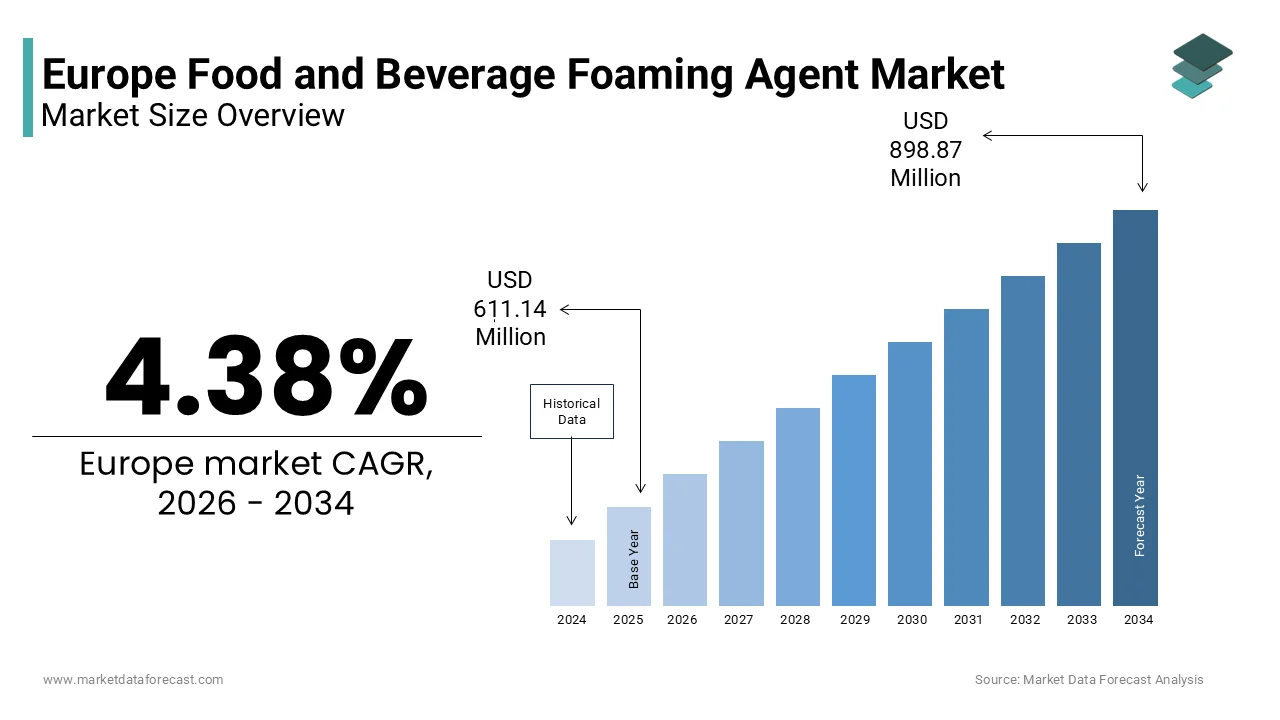
Market Size, 2025
$611.1 MnMarket Estimate, 2026
$637.9 MnMarket Forecast, 2034
$898.8 MnCAGR, 2026–2034
4.38%Europe Food and Beverage Foaming Agent Market Size
The Europe food and beverage foaming agent market size was valued at USD 611.14 million in 2025 and is estimated to reach USD 898.87 million by 2034 from USD 637.91 million in 2026, growing at a CAGR of 4.38%.
As per Eurostat, the European Union produced 162 million hectoliters of beer in 2023, which establishes a massive foundational demand for foam-stabilizing agents such as hydrolysed proteins and alginates within the beverage sector. According to the European Commission, the dairy industry processed over 158 million tons of milk in 2022, which is creating substantial requirements for whipping agents in cream and mousse applications across member states. This market is defined by its critical role in delivering sensory satisfaction through mouthfeel and aesthetic presentation in products ranging from cappuccinos to mousses. Regulatory frameworks under the European Food Safety Authority strictly govern the approval of these additives, ensuring safety while driving innovation toward natural sources. The sector distinguishes itself through high technical barriers related to foam stability under varying temperature and pH conditions. Manufacturers focus on plant-based alternatives to meet evolving consumer preferences for clean-label ingredients. The integration of these agents into ready-to-drink beverages and instant desserts reflects broader trends toward convenience without compromising quality.
MARKET DRIVERS
Surging Demand for Premium Coffee and Specialty Beverages
The proliferation of specialty coffee shops and home-brewing enthusiasts is driving the Europe food and beverage foaming agent market forward by increasing the need for stable microfoam in lattes and cappuccinos. According to the European Coffee Federation, coffee consumption in Europe reached 5.3 kilograms per capita in 2023, with a significant portion consumed as milk-based espresso drinks that require robust foam structures. The Speciality Coffee Association of Europe reports that the number of independent specialty cafes increased by 12% in major urban centers like London, Berlin, and Paris during the last two years. This growth necessitates consistent foaming performance from barista milks and plant-based alternatives, which rely on added stabilizers like gellan gum or methylcellulose to maintain bubble integrity. Consumers expect dense, creamy foam that persists throughout the drinking experience, driving manufacturers to optimize formulations for high-pressure steam environments. The rise of home espresso machines further expands retail demand for consumer-friendly foaming agents that work with standard kitchen appliances. Dairy and non-dairy producers invest heavily in research to balance foam volume with stability, ensuring their products meet the exacting standards of professional baristas. This trend transforms foaming agents from niche industrial inputs into essential components of the daily coffee ritual for millions of Europeans.
Growth of Plant-Based Dairy Alternatives
The rapid expansion of plant-based dairy alternatives further contributes to the Europe food and beverage foaming agent market expansion because vegetable proteins inherently lack the foaming capabilities of casein and whey found in cow milk. As per the Plant Based Foods Association Europe, sales of plant-based milk alternatives grew by 14% in 2023, reaching 2.1 billion euros in total value across the region. The Good Food Institute states that 33% of European consumers now actively reduce their intake of animal-derived products, creating a sustained shift toward oat-, almond-, and soy-based beverages. These plant matrices often produce weak or unstable foam due to lower surface activity, requiring the addition of specialized foaming agents such as pea protein isolates or modified starches. Manufacturers must incorporate these functional ingredients to replicate the airy texture of traditional whipped cream and frothed milk, which is crucial for consumer acceptance. The technical challenge of achieving stable foam in low-protein plant liquids drives innovation in enzyme-treated proteins and emulsifier blends. Regulatory approval for novel plant-based foaming agents in the EU encourages suppliers to develop clean-label solutions that align with vegan certifications. This structural necessity ensures that foaming agents remain integral to the formulation of next-generation dairy-free products that aim to match the sensory experience of conventional dairy.
MARKET RESTRAINTS
Stringent Regulatory Scrutiny on Synthetic Additives
Strict regulatory oversight by European authorities hampers the Europe food and beverage foaming agent market expansion by limiting the use of synthetic surfactants and requiring extensive safety data for novel natural alternatives. According to the European Food Safety Authority, the re-evaluation process for existing food additives can take several years and involves rigorous toxicological assessments that increase development costs for manufacturers. The European Commission maintains a positive list of approved food additives under Regulation EC No 1333/2008, which excludes many effective foaming agents used in other regions due to insufficient safety data. This regulatory fragmentation forces companies to reformulate products specifically for the European market, removing efficient but non-compliant ingredients like certain polysorbates. The burden of compliance discourages smaller ingredient suppliers from entering the market, reducing competition and innovation potential. Consumers increasingly read labels and avoid E numbers associated with synthetic foaming agents, pushing brands toward more expensive natural options that may offer inferior performance. The uncertainty surrounding the approval status of new bio-based foaming agents creates hesitation among formulators who prefer established ingredients despite their limitations. This environment slows the adoption of advanced foaming technologies and restricts the variety of textures available to product developers seeking to differentiate their offerings in a crowded marketplace.
Consumer Preference for Clean Label and Minimal Processing
Growing consumer demand for clean-label products hinders the expansion of the Europe food and beverage foaming agent market as shoppers increasingly reject ingredients perceived as artificial or highly processed. According to a survey by Mintel, 62% of European food shoppers check ingredient lists for recognizable names and avoid products with long lists of chemical-sounding additives. The European Consumer Organisation highlights that transparency in sourcing and processing methods is a top priority for 70% of millennials when selecting packaged foods and beverages. Traditional foaming agents such as mono- and diglycerides of fatty acids are often viewed negatively despite their natural origin, leading to formulation challenges for manufacturers. Companies face pressure to replace these effective stabilizers with whole-food alternatives like aquafaba or egg whites, which offer less consistency and higher cost. The technical difficulty of achieving stable foam with minimal processing limits the shelf life and quality of final products. Brands that fail to adapt risk losing market share to competitors who successfully market their products as free from additives. This trend forces ingredient suppliers to invest in expensive extraction technologies to produce pure natural foaming agents that meet clean-label standards. The resulting higher production costs are often passed to consumers, potentially dampening demand for premium foamed products in price-sensitive segments.
MARKET OPPORTUNITIES
Innovation in Upcycled Agricultural Byproducts
The utilization of upcycled agricultural byproducts is a significant opportunity for the Europe food and beverage foaming agent market by transforming waste streams into valuable functional ingredients. According to the Food and Agriculture Organization of the United Nations, approximately one-third of all food produced globally is lost or wasted, including protein-rich residues from juice and oil extraction processes. The European Circular Economy Action Plan encourages the recovery of these byproducts, promoting the extraction of foaming proteins from potato pulp, apple pomace, and sunflower meal. These sustainable sources offer unique foaming properties while aligning with corporate sustainability goals and consumer expectations for eco-friendly products. Manufacturers can leverage these low-cost raw materials to create competitive pricing structures while reducing environmental impact. Research institutions in Germany and the Netherlands are developing enzymatic treatments to enhance the foaming capacity of these waste-derived proteins, making them viable alternatives to conventional agents. This approach not only addresses waste management issues but also creates a new category of green foaming agents that appeal to environmentally conscious brands. Partnerships between food processors and ingredient suppliers facilitate the scalable production of these novel ingredients. The regulatory support for circular economy initiatives in the EU further accelerates adoption, providing a favorable environment for market entry and growth.
Expansion into Ready-To-Drink Cocktail Segment
The growing popularity of ready-to-drink cocktails offers a major opportunity for the Europe food and beverage foaming agent market as consumers seek bar-quality experiences at home. As per IWSR Drinks Market Analysis, the premium ready-to-drink cocktail segment in Western Europe grew by 18% in 2023, driven by demand for convenient yet sophisticated alcoholic beverages. According to the European Spirits Organisation, younger consumers are increasingly experimenting with mixology at home, creating demand for products that replicate the visual and textural appeal of freshly prepared drinks. Foaming agents are essential for creating the signature head on nitro cold brew cocktails and shaken martinis that define this premium category. Suppliers can develop specialized stabilizers that withstand pasteurization and long shelf-life requirements while maintaining foam integrity upon pouring. This application allows brands to differentiate their products in a crowded market through superior sensory attributes. The trend toward low-alcohol and no-alcohol cocktails further expands the addressable market, as these beverages often rely on foam for mouthfeel and flavor release. Collaborations between spirit producers and ingredient manufacturers can lead to proprietary foaming solutions that enhance brand identity. This niche segment offers higher margins and less price sensitivity compared to mass-market beverages, providing a lucrative avenue for growth.
MARKET CHALLENGES
Technical Instability in Low-Sugar Formulations
The industry shift toward low-sugar and reduced-calorie formulations challenges the Europe food and beverage foaming agent market because sugar plays a critical role in stabilizing foam structures. According to the World Health Organization, excessive sugar consumption remains a public health concern in Europe, prompting many manufacturers to reduce sugar content by up to 30% in beverages and desserts. The European Society for Clinical Nutrition and Metabolism states that sugar contributes to viscosity and surface tension, which are essential for maintaining bubble stability in foamed products. Removing sugar compromises foam longevity and texture, requiring the addition of alternative stabilizers that may alter taste or mouthfeel. Finding replacements that mimic the functional properties of sugar without adding calories is technically difficult and often expensive. Hydrocolloids and proteins used as substitutes can interact negatively with other ingredients, leading to phase separation or grittiness. Manufacturers must conduct extensive trials to optimize these complex formulations, increasing time to market and development costs. Consumer acceptance of these reformulated products remains uncertain, as they may not match the sensory experience of traditional high-sugar versions. This technical barrier limits the ability of brands to quickly respond to health trends while maintaining product quality.
Supply Chain Volatility for Natural Protein Sources
Fluctuations in the supply of natural protein sources used as foaming agents challenge the Europe food and beverage foaming agent market by creating unpredictability in production schedules and costs. According to Eurostat, agricultural production in the EU declined by 5% in 2023 due to extreme weather events affecting crop yields of peas, potatoes and eggs. The European Drought Observatory reports that prolonged droughts in Southern Europe reduced the availability of key raw materials for plant-based protein extraction by 15% in the last year. This scarcity drives up prices for egg white powder and pea protein isolates, which are primary natural foaming agents, forcing manufacturers to seek alternative sources. Supply chain disruptions also affect the consistency of raw material quality, leading to variations in foaming performance that complicate standardization. Dependence on seasonal crops makes it difficult to secure long-term contracts at stable prices. Manufacturers face the risk of production delays if specific protein sources become unavailable, requiring rapid reformulation which can compromise product integrity. Geopolitical tensions further exacerbate supply risks for imported ingredients like coconut or soy proteins. These factors create an unstable operating environment that hinders strategic planning and investment in new product development.
REPORT COVERAGE
| REPORT METRIC | DETAILS |
| Market Size Available | 2025 to 2034 |
| Base Year | 2025 |
| Forecast Period | 2026 to 2034 |
| CAGR | 4.38% |
| Segments Covered | By Nature, Application, Type, and Region |
| Various Analyses Covered | Global, Regional, & Country Level Analysis; Segment-Level Analysis; DROC, PESTLE Analysis; Porter’s Five Forces Analysis; Competitive Landscape; Analyst Overview of Investment Opportunities |
| Regions Covered | UK, France, Spain, Germany, Italy, Russia, Sweden, Denmark, Switzerland, Netherlands, Turkey, and the Czech Republic |
| Market Leaders Profiled | Kerry Group plc, Ingredion Incorporated, Archer Daniels Midland Company (ADM), Döhler Group, Corbion N.V., Naturex S.A., Lonza Group, BASF SE, Puratos Group, and FrieslandCampina Kievit |
SEGMENTAL ANALYSIS
By Nature Insights
The solid foaming agents segment had the major share of the European market in 2025 and is expected to maintain their position as the leading segment in the regional market during the forecast period due to their exceptional stability during storage and transport, which minimizes degradation risks. According to the European Federation of Food Additives and Food Enzymes Industries, solid forms such as powdered egg whites and dried plant proteins account for over 60% of industrial foaming ingredient purchases because they offer consistent performance across varying humidity levels. As per the German Society for Fat Science, solid surfactants like lecithin powders exhibit a shelf life exceeding 24 months compared to 12 months for liquid variants, reducing waste and inventory costs for large-scale manufacturers. This longevity is critical for supply chain efficiency in Europe, where cross-border logistics can introduce delays. Solid agents are easier to dose accurately in automated mixing systems used by major bakery and confectionery producers, ensuring uniform foam quality in high-volume production lines. The lower water content in solid formulations also reduces shipping weight and volume, lowering carbon footprints associated with transportation. Regulatory compliance is often simpler for dry ingredients, as they pose less risk of microbial contamination during transit. Manufacturers prefer solid formats for creating custom premixes that combine foaming agents with other dry ingredients like flour or sugar, streamlining the production process for end users who value operational simplicity and reliability in their formulation workflows.
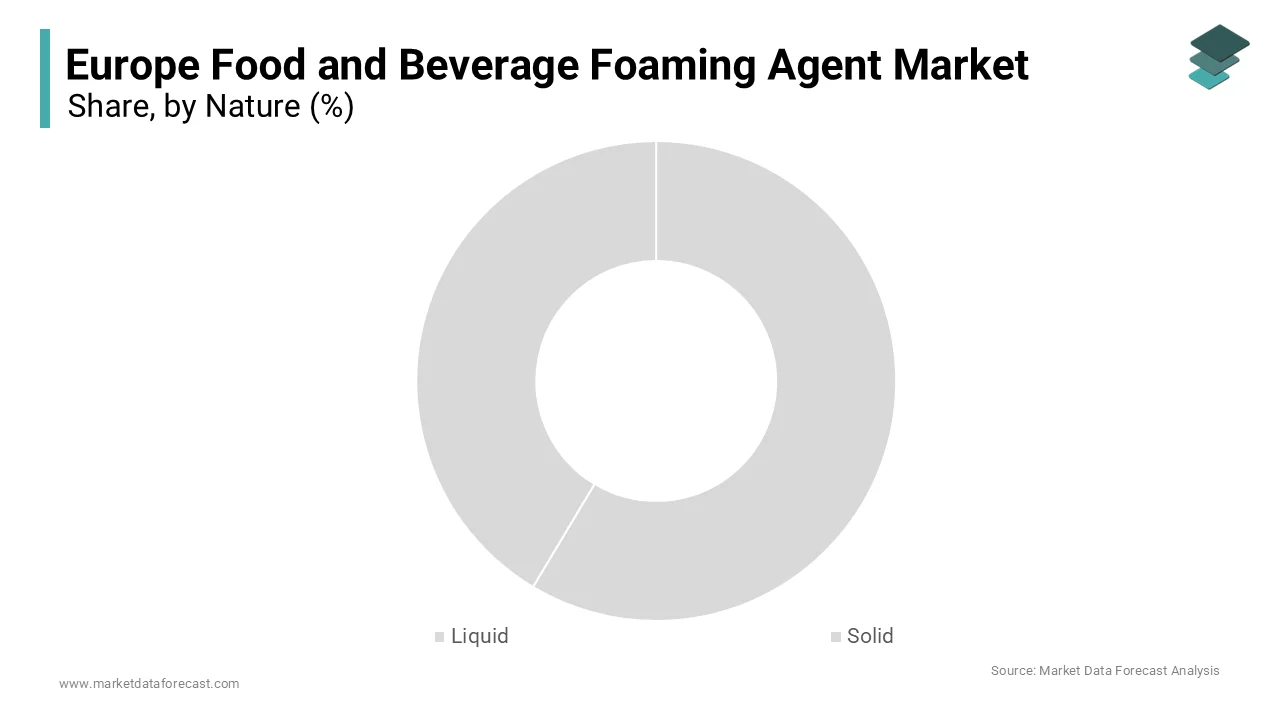
On the other end, the liquid foaming agent segment is estimated to register a notable CAGR of 6.4% during the forecast period owing to the growing demand for ease of use and rapid integration in small-batch and artisanal production environments. As per the European Specialty Food Association, the number of small-scale craft breweries and boutique bakeries increased by 18% in 2023, favoring liquid foaming solutions that require no pre-hydration or complex mixing steps. According to the Institute of Brewing and Distilling, liquid stabilizers reduce preparation time by up to 40% in beverage applications, allowing operators to respond quickly to fluctuating customer demands in fast-paced service settings. Liquid formats ensure immediate dispersion in cold liquids, which is essential for ready-to-drink cocktails and cold brew coffees where heat activation is not feasible. This convenience appeals to the growing sector of home consumers using professional-grade equipment who seek restaurant-quality results without technical expertise. Suppliers are innovating with concentrated liquid blends that offer higher potency per unit volume, reducing storage space requirements for retailers and foodservice providers. The rise of automated dispensing systems in commercial kitchens further supports this trend, as liquid pumps provide precise control over foam density and texture. These factors collectively drive the shift toward liquid formats despite their higher logistical costs compared to solid alternatives.
By Application Insights
The beverage segment dominated the market by holding 44.7% of the European market share in 2025 because beer and coffee are staple consumables in European culture, requiring consistent foam quality for consumer satisfaction. According to The Brewers of Europe, the EU beer market produced 162 million hectoliters in 2023, with premium lagers and ales relying heavily on foam stabilizers like propylene glycol alginate to maintain head retention during serving. The Speciality Coffee Association of Europe states that over 2 billion cups of coffee are consumed annually in Europe, with milk-based drinks comprising 45% of total sales, necessitating robust foaming agents for textural appeal. Beer foam serves as a protective barrier against oxidation, preserving flavor integrity, while coffee foam enhances mouthfeel and aroma release. These functional roles make foaming agents indispensable rather than optional additives in these high-volume categories. The proliferation of craft breweries and specialty coffee shops drives demand for specialized agents that perform well under specific pH and temperature conditions. Regulatory standards for beer purity in countries like Germany and Belgium encourage the use of natural foaming aids derived from hops or barley. The sheer volume of beverage consumption ensures steady baseline demand for foaming ingredients, making this segment the primary revenue driver for market participants who supply both industrial breweries and independent cafes.
The food products segment exhibits the fastest growth and is expected to witness a CAGR of 6.4% over the forecast period in the European market as manufacturers innovate in the dessert and ready-to-eat meal categories to meet evolving consumer preferences for texture and convenience. As per Eurostat, the production of prepared meals and dishes in the EU increased by 9% in 2023, which is reflecting a shift toward convenient dining solutions that rely on foaming agents for light, airy textures in mousses and soufflés. The European Confectionery Industry Association reports that sales of aerated chocolate and marshmallow products grew by 7% year over year, driven by consumer interest in novel sensory experiences and reduced-calorie perceptions associated with airy structures. Foaming agents enable the creation of stable air cells in these products, enhancing mouthfeel without adding significant fat or sugar content. The rise of plant-based desserts further accelerates demand as manufacturers seek effective alternatives to egg whites for creating vegan meringues and whipped toppings. Technical advancements in protein isolation allow for better foam stability in low-fat dairy alternatives, expanding the application scope beyond traditional confectionery. Retailers are dedicating more shelf space to premium textured snacks and desserts that utilize advanced foaming technologies to differentiate from standard offerings. This innovation cycle creates continuous opportunities for ingredient suppliers to introduce new formulations that address specific textural challenges in diverse food matrices.
By Type Insights
The lecithin segment occupied the highest share of the Europe food and beverage foaming agent market in 2025 and is anticipated to maintain its position as the leading segment over the forecast period due to its dual functionality as an emulsifier and foaming agent derived from natural sources like soy and sunflower. According to the European Oilseed Processors Association, Europe produced over 1.2 million tons of vegetable oil in 2023, generating substantial lecithin byproducts that are cost-effectively utilized in food applications. The European Food Safety Authority recognizes lecithin as a safe additive with no specified acceptable daily intake limit, facilitating its widespread use across various food categories, including chocolate, baked goods, and instant powders. Its ability to reduce surface tension allows for easy bubble formation while stabilizing the interface between air and liquid phases. Sunflower lecithin is particularly favored in Europe due to non-GMO preferences and allergen concerns related to soy, driving investment in local processing facilities. Manufacturers value lecithin for its clean-label appeal, as it can be listed as a simple ingredient rather than a chemical additive. The versatility of lecithin allows it to function effectively in both high-fat and low-fat systems, making it indispensable for diverse product formulations. Its established supply chain and competitive pricing compared to novel plant extracts ensure its continued dominance in mass-market applications where cost efficiency and regulatory compliance are paramount considerations for large-scale food producers.
On the other side, the Quillaja Saponaria segment is projected to record a healthy CAGR of 8.1% during the forecast period owing to its superior foaming stability and natural origin, which aligns with premium clean-label trends. As per the European Natural Soap and Detergent Organization, interest in plant-based saponins has surged as manufacturers seek alternatives to synthetic surfactants for high-end beverages and desserts. The Journal of Agricultural and Food Chemistry highlights studies showing that Quillaja saponins provide up to 30% better foam stability than traditional protein-based agents in acidic environments such as fruit juices and soft drinks. This performance advantage makes it ideal for ready-to-drink beverages that undergo pasteurization and long shelf-life storage. The extract is derived from the bark of the Quillaja tree, offering a sustainable and renewable source that appeals to environmentally conscious brands. Regulatory approval in the EU for Quillaja saponins as a food additive has opened new avenues for its use in beer foam stabilization and dairy alternatives. Premium beverage brands are increasingly adopting this ingredient to differentiate their products through superior visual appeal and texture. The high cost of extraction is offset by the low usage levels required for effective performance, making it economically viable for niche and premium segments. This combination of efficacy and natural positioning drives rapid adoption among innovators seeking to elevate product quality.
REGIONAL ANALYSIS
Germany Market Analysis
Germany dominated the market by holding the largest share of the Europe food and beverage foaming agent market in 2025 and is likely to experience continued market expansion and increased automation in food processing over the next few years due to its robust brewing industry and strict adherence to food quality standards. According to The Brewers of Europe, Germany produced approximately 9.1 billion liters of beer in 2023, maintaining its status as the largest beer producer in the EU, which creates immense demand for foam stabilizers. The German Federal Ministry of Food and Agriculture reports that the country has over 1,500 registered breweries, many of which are adopting natural foaming agents to comply with the Reinheitsgebot purity law while enhancing product consistency. The strong culture of beer consumption ensures steady demand for agents that maintain head retention and visual appeal. Additionally, the German bakery sector is one of the largest in Europe, driving demand for solid foaming agents in bread and cake production. Consumers in Germany prioritize natural and non-GMO ingredients, pushing manufacturers toward sunflower lecithin and plant-based proteins. The presence of major chemical and ingredient suppliers in the region facilitates innovation and rapid distribution. Regulatory clarity and high technical standards encourage the adoption of advanced foaming technologies that improve efficiency and reduce waste. This mature market environment supports continuous investment in high-quality foaming solutions that meet the exacting expectations of both industrial producers and discerning consumers.
France Market Analysis
France is expected to maintain robust growth in gourmet culinary applications and clean-label transitions in the near future owing to its renowned culinary traditions and strong demand for premium dairy and confectionery products. As per the French Dairy Interbranch Organization, France processed over 25 billion liters of milk in 2023, with a substantial portion used for creams, cheeses, and desserts that require effective whipping and foaming agents. The National Confederation of French Pastry Chefs highlights that the patisserie sector relies heavily on stable foams for macarons, mousses, and meringues, driving demand for high-performance egg-white substitutes and plant-based alternatives. The trend toward gourmet home cooking has increased retail sales of specialized foaming ingredients for consumer use. French consumers value authenticity and quality, leading to a preference for natural foaming agents derived from local sources such as pea protein. The wine and champagne industry also contributes to demand for agents that enhance mousse stability in sparkling wines. Regulatory support for organic farming encourages the use of certified organic foaming ingredients in premium product lines. The concentration of luxury food brands in France drives innovation in texture and presentation, requiring advanced foaming solutions. This sophisticated market environment fosters collaboration between ingredient suppliers and culinary experts to develop next-generation products that uphold French gastronomic standards.
United Kingdom Market Analysis
The United Kingdom is poised for steady plant-based product adoption and coffee culture expansion over the coming years and occupying a key position in the Europe Food And Beverage Foaming Agent Market influenced by its vibrant cafe culture and growing plant-based food sector. According to the British Beer and Pub Association, the UK has over 40,000 pubs and bars, many of which serve craft beers and ales that require consistent foam quality for customer satisfaction. The Plant Based Foods Association UK reports that sales of plant-based milk alternatives grew by 20% in 2023, creating a surge in demand for foaming agents that work effectively in oat and almond milks for cappuccinos and lattes. The rise of specialty coffee chains has standardized the expectation for microfoam, driving adoption of barista-specific formulations. UK consumers are highly aware of health and sustainability trends, preferring clean-label and vegan-friendly foaming ingredients. The post-Brexit regulatory landscape requires separate approvals for food additives, prompting suppliers to adapt their portfolios for the UK market. Innovation in ready-to-drink cocktails and mocktails further expands application opportunities for stable foaming agents. The presence of leading research institutions supports the development of novel plant-based foaming solutions. This dynamic market environment encourages continuous product innovation to meet the evolving preferences of health-conscious and ethically driven consumers.
Italy Market Analysis
Italy is likely to experience resilient demand for traditional aerated desserts and high-end espresso formulations in the coming years, playing a vital role in the Europe Food And Beverage Foaming Agent Market driven by its extensive coffee culture and traditional dessert manufacturing industry. As per the Italian Union of Food Industries, Italy consumes over 1.4 billion kilograms of coffee annually, with espresso and cappuccino being daily staples that rely on stable milk foam for authentic taste and texture. The National Association of Italian Confectioners reports that the production of tiramisu, zabaione, and other aerated desserts remains strong, requiring high-quality foaming agents to maintain structural integrity. Italian consumers are deeply connected to food heritage, leading to a preference for natural ingredients like egg whites and traditional stabilizers. However, the growing trend toward convenience foods is introducing modern foaming agents into industrial production of ready-to-eat desserts. The dairy sector in Italy is highly developed, providing a base for innovation in whipped cream and mousse products. Regulatory alignment with EU standards ensures access to a wide range of approved foaming agents. The emphasis on quality and tradition drives demand for premium ingredients that enhance rather than mask natural flavors. This market values technical performance that supports artisanal quality at scale, enabling local producers to compete globally with authentic Italian food products.
Spain Market Analysis
Spain is expected to witness accelerated adoption of modern gastronomic foams and tourist-driven hospitality innovations in the near future owing to its expanding tourism sector and increasing adoption of international food trends. According to the Spanish Federation of Food and Beverage Industries, the hospitality sector recovered strongly in 2023, with hotel and restaurant sales increasing by 15%, driving demand for consistent quality in beverages and desserts served to tourists. Spain also held a notable regional market share of 18.2% in 2025. The rise of craft beer brewing in Spain has introduced new requirements for foam stabilizers as local breweries compete on quality and presentation. Spanish consumers are becoming more health-conscious, leading to increased demand for plant-based and low-calorie foaming options in snacks and drinks. The olive oil industry provides a source of lecithin and other emulsifiers, supporting local supply chains for natural foaming agents. Regulatory frameworks encourage sustainable production practices, aligning with global trends. The popularity of tapas and small plates featuring aerated textures and foams in modern gastronomy drives innovation in culinary applications. Collaboration between chefs and ingredient suppliers fosters the development of unique foaming solutions for creative dishes. This evolving market landscape offers opportunities for suppliers who can provide versatile and high-quality foaming agents that meet the diverse needs of both traditional and modern Spanish cuisine.
COMPETITIVE LANDSCAPE
The competitive landscape of the Europe food and beverage foaming agent market et features a mix of global ingredient giants and specialized regional suppliers competing on innovation and quality. Large multinational corporations leverage their extensive distribution networks and R&D capabilities to offer comprehensive portfolios of natural and synthetic foaming agents. Smaller niche players focus on specific plant based extracts such as Quillaja saponaria or aquafaba to cater to the growing demand for clean label and vegan products. Competition intensifies as companies strive to differentiate through superior technical performance and sustainability credentials. Regulatory compliance remains a critical barrier to entry with firms investing significantly in safety assessments and approval processes. Price pressure from private label manufacturers forces established brands to justify premiums through unique functional benefits and service excellence. Strategic alliances with food and beverage producers facilitate joint development of innovative textures and formats. The market is characterized by continuous innovation as suppliers respond to evolving consumer trends toward health consciousness and environmental responsibility. Success depends on balancing cost efficiency with high quality standards and maintaining strong relationships with key industry stakeholders across diverse European markets.
Key Market Players
Some of the key players in the Europe food and beverage foaming agent market are
- Kerry Group plc
- Ingredion Incorporated
- Archer Daniels Midland Company (ADM)
- Döhler Group
- Corbion N.V.
- BASF SE
- Puratos Group
- FrieslandCampina Kievit
- Cargill Incorporated
- Tate & Lyle
- Palsgaard A/S
- Roquette Frères
- Givaudan
- Symrise AG
- IFF (International Flavors & Fragrances)
Top Players in the Market
- Ingredion Incorporated leverages its extensive expertise in texturants to provide high performance foaming agents derived from plant proteins and starches. The company focuses on developing clean label solutions that meet the stringent regulatory requirements of the European market while delivering superior foam stability. Recent initiatives include expanding their research capabilities in pea and fava bean protein isolation to create effective alternatives to egg whites for vegan applications. Ingredion collaborates closely with major beverage and dairy manufacturers to co create customized formulations that enhance mouthfeel and visual appeal. Their technical service teams provide critical support to clients optimizing processing parameters for consistent foam quality. By prioritizing sustainability and non GMO sourcing Ingredion strengthens its reputation as a trusted partner for premium food brands. This strategic focus on innovation and customer collaboration ensures they remain at the forefront of functional ingredient development in Europe.
- Cargill Incorporated utilizes its global agricultural network to supply a diverse range of foaming agents including lecithin and specialized protein blends. The company emphasizes sustainable sourcing practices ensuring that raw materials like sunflower and soy are procured responsibly to meet European consumer expectations. Recent actions involve investing in advanced extraction technologies to produce high purity lecithin powders that offer enhanced foaming properties for confectionery and bakery applications. Cargill actively engages in partnerships with local farmers to secure consistent supply chains for key ingredients. Their comprehensive portfolio allows them to serve various segments from industrial brewing to artisanal baking. By integrating digital tools for supply chain transparency Cargill enhances trust and efficiency for its clients. This holistic approach enables them to deliver reliable and high quality foaming solutions that support product innovation across the European food and beverage landscape.
- Tate and Lyle PLC specializes in premium texturizing solutions including stabilizers and emulsifiers that significantly improve foam formation and retention. The company is renowned for its scientific approach to ingredient functionality providing robust data to support health claims and performance benefits. Recent efforts focus on developing plant based foaming agents that mimic the texture of dairy without compromising on stability or taste. Tate and Lyle invests heavily in clinical research to validate the efficacy of their ingredients in complex food matrices. They work directly with leading brands to launch innovative products such as airy desserts and stable beer heads. Their commitment to clean label principles drives the removal of synthetic additives from formulations. By offering tailored technical support and high quality ingredients Tate and Lyle maintains a strong position in the competitive European market for functional food components.
Top Strategies Used by Key Market Participants
Key players in the Europe food and beverage foaming agent market et primarily focus on product innovation to develop natural and clean label foaming solutions that align with consumer preferences. Companies invest heavily in research and development to extract functional proteins from underutilized crops such as peas and lentils. Strategic partnerships with local agricultural suppliers ensure sustainable and traceable raw material sources which are critical for meeting European regulatory standards. Expansion into niche segments like plant based dairy alternatives and craft beverages allows firms to capture high value opportunities. Technical support services are enhanced to help customers optimize formulation processes and achieve consistent foam quality. Sustainability initiatives are central to corporate strategies with brands highlighting eco friendly production methods and reduced carbon footprints. Digital transformation improves supply chain visibility and customer engagement through data driven insights. These combined approaches enable companies to differentiate their offerings and maintain competitive advantages in a dynamic and regulated market environment.
MARKET SEGMENTATION
This research report on the Europe food and beverage foaming agent market is segmented and sub segmented into following categories
By Nature
- Liquid
- Solid
By Application
- Food Products
- Beverages
By Type
- Yucca Schidigera
- Quillaja Saponaria
- Agar
- Lecithin
- Others
By Country
- UK
- France
- Spain
- Germany
- Italy
- Russia
- Sweden
- Denmark
- Switzerland
- Netherlands
- Turkey
- Czech Republic
- Rest of Europe