- Product Description Description
- Table of Contents TOC
- List of Table & Figure LOT
- Get Free Sample PDF Sample PDF
Market Size, 2025
$8.16 BnMarket Estimate, 2026
$8.46 BnMarket Forecast, 2034
$11.29 BnCAGR, 2026–2034
3.67%Europe Freeze-Dried Food Market Report Summary
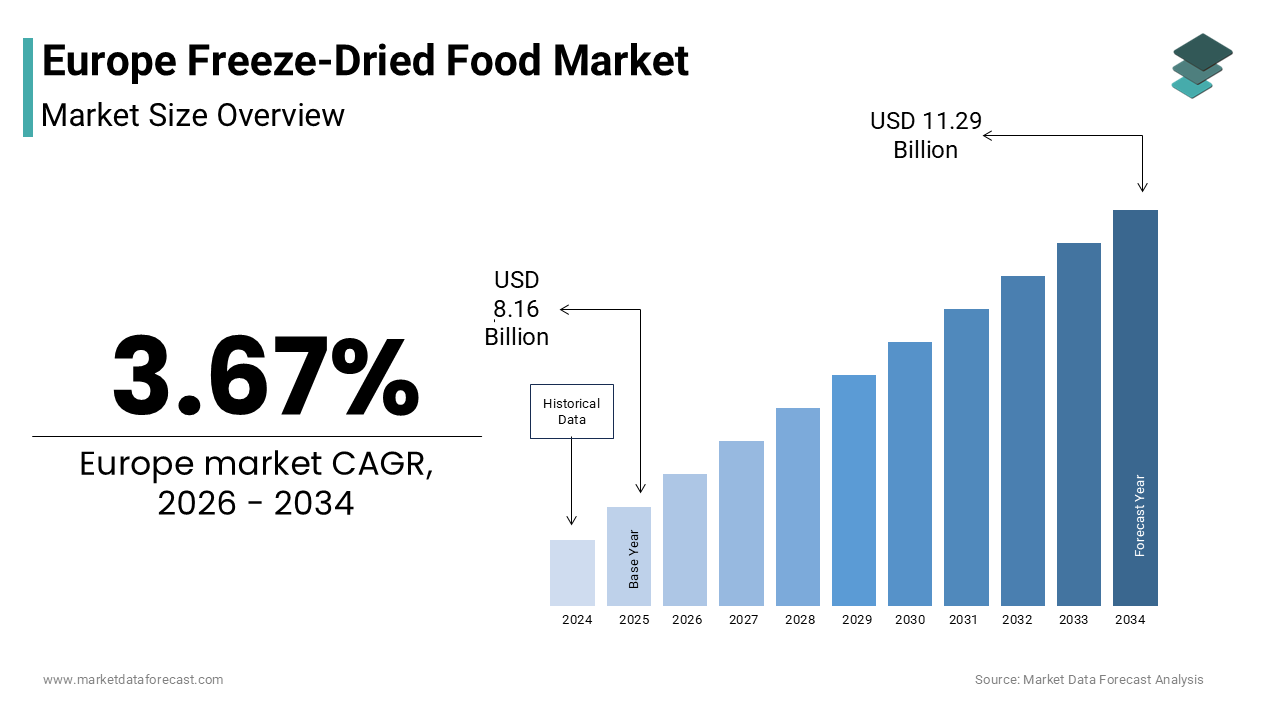
The Europe freeze-dried food market was valued at USD 8.16 billion in 2025, is estimated to reach USD 8.46 billion in 2026, and is projected to reach USD 11.29 billion by 2034, growing at a CAGR of 3.67% during the forecast period from 2026 to 2034. The growth of the Europe freeze-dried food market is driven by rising demand for clean-label convenience foods, long shelf-life nutrition, and sustainable food preservation technologies aligned with the European Union’s circular economy goals. Freeze-drying technology preserves up to 98% of nutrients while maintaining flavor and texture, making it increasingly popular across premium snacks, functional ingredients, and emergency food reserves. Additionally, the expansion of urban lifestyles, growing focus on reducing food waste, and increasing adoption of freeze-dried fruits, vegetables, and ready meals across retail and institutional channels are further fueling market growth across Europe.
Key Market Trends
- Rising demand for clean-label freeze-dried fruits and vegetables as natural alternatives to processed snacks.
- Increasing use of freeze-dried meals in civil preparedness programs and emergency food reserves across Nordic countries.
- Expansion of functional nutrition applications, including clinical supplements, sports nutrition, and plant-based ingredient powders.
- Growing adoption of upcycled produce streams to reduce agricultural waste and support circular economy initiatives.
- Strong growth of online retail and direct-to-consumer channels, enabling niche premium and organic freeze-dried product launches.
Segmental Insights
- Based on product type, the freeze-dried fruits segment was the largest and held a significant share of the Europe freeze-dried food market in 2025. The segment’s dominance is attributed to increasing consumer preference for healthy snacking options, natural sweetness, and strong alignment with clean-label dietary trends across European markets.
- Based on distribution channel, the supermarkets and hypermarkets segment accounted for the largest share of the Europe freeze-dried food market in 2025. The growth of this segment is driven by strong private-label expansion, mainstream retail placement, and increasing consumer awareness through weekly grocery shopping channels.
- Based on form, the sliced and granule/flake formats are gaining popularity due to their versatility in smoothies, bakery applications, ready meals, and clinical nutrition formulations, supporting broader adoption across foodservice and retail sectors.
Regional Insights
The Europe freeze-dried food market is witnessing steady expansion across key countries, supported by sustainability initiatives, advanced food processing infrastructure, and increasing health-focused consumption patterns.
- Germany was the largest contributor to the Europe freeze-dried food market, driven by strong organic food demand, advanced processing capabilities, and a highly health-conscious consumer base.
- The United Kingdom continues to grow due to retail innovation, increasing flexitarian diets, and rising demand for convenient plant-based snacks and ingredients.
- France is emerging as a significant market supported by national anti-waste policies, culinary innovation, and strong agricultural valorization initiatives.
- The Netherlands is gaining momentum through energy-efficient freeze-drying facilities and its role as a major logistics hub for distributing preserved foods across Europe.
- Sweden is witnessing steady growth driven by civil preparedness programs, sustainability awareness, and strong integration of freeze-dried foods into emergency supply systems.
Competitive Landscape
The Europe freeze-dried food market is characterized by competition between premium artisanal brands, large-scale food processors, and sustainability-focused startups emphasizing upcycling and functional nutrition. Leading companies are investing in solar-powered freeze-drying facilities, circular sourcing strategies, and clean-label product innovation to meet evolving European consumer preferences. Strategic partnerships with retailers, e-commerce platforms, and institutional buyers are strengthening market presence, while transparency in sourcing and climate footprint labeling is becoming a key differentiator. Prominent players in the Europe freeze-dried food market include European Freeze Dry Ltd., Katadyn Group, LYO Food Sp. z o.o., AMG Group Ltd., Harmony House Foods, Chaucer Foods Ltd., Kerry Group PLC, Asahi Group Holdings Ltd., Ajinomoto Co., Inc., Nestlé S.A., Orkla ASA, Barry Callebaut AG, Thrive FreezeDry Group, Lyovit, Berrifine A/S, Expedition Foods, Spacefruits, LOOV Organic OÜ, and Van Drunen Farms.
Europe Freeze-Dried Food Market Size
The europe freeze-dried food market size was valued at USD 8.16 billion in 2025 and is anticipated to reach USD 8.46 billion in 2026 from USD 11.29 billion by 2034, growing at a CAGR of 3.67% during the forecast period from 2026 to 2034
Freeze-dried food refers to perishable agricultural or prepared food items that undergo sublimation, which is resulting in lightweight, shelf-stable products that retain up to 98% of their original nutritional content, aroma, and structure. Unlike conventional dehydration, freeze drying preserves heat sensitive vitamins, enzymes, and phytochemicals, making it particularly valuable for premium fruits, vegetables, meals, and functional ingredients. In the European context, this technology has evolved beyond emergency rations and astronaut provisions to serve mainstream consumer demand for clean label convenience, nutrition, and waste reduction. According to Eurostat, household food waste in the European Union amounted to around 69 kilograms per capita in 2023, with households generating more than half of the total food waste, which is creating a strong impetus for preservation methods that extend usability. Furthermore, as per the European Food Safety Authority, the importance of fruits in daily dietary intake, which is emphasizing their role in providing essential nutrients and polyphenols. As per the European Commission’s Farm to Fork Strategy, reducing post-harvest losses is integral to achieving sustainable food systems by 2030. This convergence of nutritional science, circular economy principles, and changing consumption patterns positions freeze-dried food not as a niche novelty but as a strategic enabler of resilient and health-oriented food supply chains across Europe.
MARKET DRIVERS
Rising Demand for Clean Label Convenience Without Compromise
European consumers increasingly reject artificial preservatives, additives, and ultra processed formulations, yet still seek time saving meal solutions, which is a paradox effectively resolved by freeze-dried foods that require no chemical stabilizers and rehydrate rapidly while preserving whole food integrity. According to the European Food Information Council, many EU shoppers actively avoid products with unrecognizable ingredients, driving preference for single origin freeze-dried fruits, vegetables, and ready meals labeled as “100% natural.” This trend is amplified by urbanization, as per Eurostat, the EU urban population in 2023 was over 339 million people, which is reflecting the majority of citizens living in cities where kitchen space and cooking time are limited, yet health consciousness remains high. Brands like Crunchy Fruits in Germany and Crispy Green in the Netherlands market freeze-dried berry mixes and vegetable crisps as guilt free snacks with no added sugar or oil. Moreover, school and workplace wellness programs now include freeze-dried fruit cups as alternatives to sugary snacks, following World Health Organization sugar intake guidelines adopted by several EU member states. The absence of sulfites or colorants also makes these products compliant with strict organic certification standards, further broadening appeal among eco conscious demographics seeking both convenience and purity.
Integration into Emergency Preparedness and Civil Resilience Frameworks
The growing focus of Europe on civil protection and supply chain resilience in the wake of pandemics, energy crises, and extreme weather events has institutionalized demand for long shelf-life nutritious food stocks, including freeze-dried meals, which is further boosting the European freeze-dried food market expansion. As per the European Civil Protection and Humanitarian Aid Operations department, EU civil protection reserves have been strengthened in recent years to ensure preparedness for emergencies. Countries like Sweden, Finland, and Switzerland maintain mandatory household emergency kits recommending at least 72 hours of non-perishable food per person, guidelines that explicitly list freeze-dried meals as optimal due to rapid rehydration with cold water. The Swedish Civil Contingencies Agency updated its citizen preparedness manual in 2023 to include freeze-dried pasta and soup pouches as core components, citing caloric density and nutrient retention during prolonged storage. Similarly, NATO’s Allied Command Transformation has standardized freeze-dried field rations for multinational exercises held across Eastern Europe, where refrigerated logistics are unreliable. Beyond government procurement, humanitarian organizations like the Red Cross use freeze-dried food in disaster response due to ease of air transport and compatibility with local water sources.
MARKET RESTRAINTS
High Production Costs and Energy Intensity Limit Scalability
The freeze-drying process remains significantly more expensive and energy demanding than alternative preservation methods such as air drying or canning, creating barriers to mass market adoption, particularly for price sensitive categories, which is a significant impediment to the European freeze-dried food market growth. According to the European Institute of Food Technology, a standard industrial freeze dryer consumes between 1,200 and 1,800 kilowatt hours per ton of product, nearly five times the energy required for hot air drying. As per Eurostat, industrial electricity prices in the EU averaged above 0.22 euros per kilowatt hour in 2023. Production costs for freeze-dried fruits can reach 15 to 20 euros per kilogram compared to 3 to 5 euros for sun dried equivalents. Furthermore, the capital investment for a mid-scale freeze drying facility exceeds 2 million euros, which is deterring small agri-processors from entering the market. For instance, access to freeze drying facilities remains limited for many EU fruit growers, leading to reliance on centralized facilities with high transport emissions.
Consumer Misconceptions About Nutritional Value and Processing
Despite scientific evidence supporting its nutritional fidelity, many European consumers erroneously equate freeze-dried food with heavily processed or nutritionally depleted products similar to instant noodles or powdered meals, which is further hindering the European freeze-dried food market growth. According to reports, a significant share of consumers in Southern and Eastern Europe believes freeze-dried fruits contain added sugars or lose most vitamins during processing, which is reflecting persistent knowledge gaps. This misperception stems from visual and textural unfamiliarity, as freeze-dried strawberries resemble puffed snacks rather than fresh berries, and ambiguous labeling that fails to differentiate freeze drying from spray drying or extrusion. Retail placement exacerbates confusion, as in many supermarkets freeze-dried items sit alongside candy or diet shakes rather than with dried fruits or health foods. The European Food Safety Authority permits claims like “high in vitamin C” only if post processing levels meet thresholds, yet few brands invest in third party verification or educational packaging. Consequently, trial rates remain low outside health enthusiast circles. Studies highlight that consumer recognition of freeze-dried fruits remains weak compared to fresh or air-dried versions, indicating limited sensory familiarity. Without coordinated industry efforts to demystify the technology through transparent communication and experiential marketing, freeze-dried food risks being overlooked despite its alignment with EU nutritional and sustainability goals
MARKET OPPORTUNITIES
Expansion into Functional and Clinical Nutrition Applications
Freeze-dried food presents a high value opportunity in Europe’s growing clinical and sports nutrition sectors, where precise macronutrient delivery, bioactive retention, and portability are critical. Unlike thermal processing, which degrades heat sensitive compounds like anthocyanins, omega 3s, and probiotics, freeze drying preserves these functional elements, enabling therapeutic applications. According to the European Society for Clinical Nutrition and Metabolism, hospitals across the EU incorporate oral nutritional supplements for elderly and post-operative patients, with freeze-dried fruit powders and vegetable blends increasingly used to enhance palatability and micronutrient density without altering texture. Similarly, elite sports institutes in Germany and France utilize custom freeze-dried meal packs for athletes requiring exact calorie and protein ratios during training camps, products that retain enzymatic activity crucial for recovery. As per the European Commission’s Horizon Europe program, the “NutriFreeze” project was funded in 2023 to develop freeze-dried berry capsules standardized for polyphenol content as natural alternatives to synthetic antioxidants. Data from the European Food Supplements Association shows that sales of plant based functional ingredients derived from freeze-dried sources grew by 28% in 2023, driven by clean label demand in capsules, smoothie mixes, and fortified bars.
Leveraging Circular Economy Through Upcycled Produce Streams
Europe’s stringent food waste reduction targets create a compelling opportunity to source freeze-dried ingredients from surplus or cosmetically imperfect produce that would otherwise be discarded, which is another prominent opportunity in the European freeze-dried food market. According to the European Environment Agency, a significant share of harvested fruits and vegetables in the EU are rejected at farm or packing level due to size, shape, or color deviations, representing millions of tons annually. Freeze drying offers an ideal valorization pathway, as it masks visual imperfections while locking in nutrients before spoilage occurs. Companies like Rejuice in the UK and Frugally Sustainable in Denmark already partner with cooperatives in Spain and Italy to transform “ugly” peaches, apricots, and tomatoes into premium freeze-dried snacks and powders. The European Commission’s Circular Economy Action Plan explicitly encourages such upcycling models and provides grant eligibility under the LIFE Programme for projects diverting agricultural surplus. A pilot by the Dutch Ministry of Agriculture demonstrated that freeze drying reduced post-harvest losses of soft fruits while generating new revenue for growers. Moreover, consumers respond positively to waste reduction narratives, and reports show that products with “upcycled” claims achieved higher repeat purchase rates in Western Europe in 2023.
MARKET CHALLENGES
Limited Cold Chain Independence Despite Shelf Stability
Although freeze-dried foods are shelf stable at ambient temperatures, their quality and safety remain vulnerable during distribution if exposed to high humidity, which is a critical vulnerability in Europe’s variable climate and fragmented logistics network and challenging the regional market growth. Moisture reabsorption triggers microbial growth, texture degradation, and lipid oxidation even in sealed packaging if barrier materials are inadequate. According to the European Food Safety Authority, relative humidity above 60% accelerates spoilage in porous freeze-dried matrices, particularly for high fat items like dairy or meat analogs. Data from the European Logistics Association shows that many ambient warehouse facilities in Southern Europe exceed 65% humidity during summer months, risking product integrity without climate control. Unlike canned goods, freeze-dried items cannot withstand prolonged exposure to damp conditions, necessitating costly multilayer packaging with aluminum or EVOH barriers, adding 15 to 25% to material costs as per the European Packaging Federation. Furthermore, last mile delivery via non refrigerated vans in Mediterranean regions exposes products to temperature spikes that compromise seal integrity. A 2023 recall by a German brand affected thousands of units of freeze-dried soup due to mold growth linked to humidity infiltration.
Fragmented Regulatory Classification Across Member States
The absence of a harmonized EU regulatory definition for freeze-dried food creates inconsistencies in labeling, health claims, and category placement that hinder cross border trade and consumer clarity, which is further challenging the European freeze-dried food market expansion. While Regulation EC No 1169 2011 mandates ingredient listing, it does not specify how freeze-dried items should be described, leading some countries to classify them as “dried fruit,” others as “processed food,” and a few as “novel food” if recombined into meals. According to the European Commission’s Food Law Compliance Unit, member states apply divergent rules on whether freeze-dried fruit can count toward the “five a day” recommendation, confusing both retailers and shoppers. In France, freeze-dried berries qualify as fruit portions, whereas in Poland they are considered snacks unless rehydrated. Similarly, health claims related to vitamin retention require individual dossiers per country under national competent authorities, delaying pan European launches. As per a review by FoodDrinkEurope, compliance costs for multi country freeze-dried product registration averaged 85,000 euros per SKU due to redundant testing and documentation. This regulatory patchwork disadvantages small producers lacking legal resources and fragments innovation incentives. Until the EU establishes a unified technical standard for freeze-dried foods under the upcoming revision of the General Food Law Regulation, market participants will navigate a labyrinth of national interpretations that stifle scale and coherence.
REPORT COVERAGE
| REPORT METRIC | DETAILS |
| Market Size Available | 2025 to 2034 |
| Base Year | 2025 |
| Forecast Period | 2026 to 2034 |
| CAGR | 3.67% |
| Segments Covered | By Product Type, Nature, Form, Distribution Channel and Region |
| Various Analyses Covered | Regional & Country Level Analysis, Segment-Level Analysis, DROC, PESTLE Analysis, Porter’s Five Forces Analysis, Competitive Landscape, Analyst Overview on Investment Opportunities |
| Countries Covered | UK, France, Spain, Germany, Italy, Russia, Sweden, Denmark, Switzerland, the Netherlands, Turkey, the Czech Republic, and the Rest of Europe. |
| Market Leaders Profiled | European Freeze Dry Ltd., Katadyn Group, LYO Food Sp. z o.o., AMG Group Ltd., Harmony House Foods, Chaucer Foods Ltd., Kerry Group PLC, Asahi Group Holdings Ltd., Ajinomoto Co., Inc., Nestlé S.A., Orkla ASA, Barry Callebaut AG, Thrive FreezeDry Group, Lyovit, Berrifine A/S, Expedition Foods, Spacefruits, LOOV Organic OÜ, and Van Drunen Farms. |
SEGMENTAL ANALYSIS
By Product Type Insights
The freeze-dried fruits segment led the Europe freeze-dried food market and accounted for 56.5% of the European market share in 2025. The dominance of freeze-dried fruits segment in the European market is attributed to the strong consumer familiarity, versatility across applications, and alignment with clean label snacking trends. Berries, apples, bananas, and tropical fruits like mango and pineapple are particularly popular due to their natural sweetness, vibrant color retention, and high antioxidant content after sublimation. One key driver is the integration of freeze-dried fruits into everyday wellness routines as sugar free alternatives to conventional snacks. According to the European Food Information Council, many EU consumers aged 18 to 45 seek snacks with no added sugars, a demand met by single ingredient freeze-dried fruit crisps. Retailers have responded actively, and reports show that supermarkets in Germany and the Netherlands increased shelf space for freeze-dried fruit between 2022 and 2023, often placing them alongside fresh produce rather than confectionery to reinforce their nutritional positioning. Moreover, school wellness policies in countries like Sweden and France now permit freeze-dried fruit cups in vending machines as compliant “healthy snacks” under national sugar reduction frameworks. As per the European Commission’s School Fruit Scheme, millions of portions of fruit were distributed to primary schools in 2023, which is citing extended shelf life and reduced logistics costs compared to fresh equivalents.

The freeze-dried vegetables segment is the fastest growing and is estimated to progress at a CAGR of 14.4% over the forecast period owing to the growing demand for nutrient dense, convenient ingredients in plant forward cooking, meal kits, and clinical nutrition formulations. A major factor is the shift toward vegetable centric diets driven by environmental and health imperatives. According to the European Environment Agency, livestock contributes significantly to the EU’s greenhouse gas emissions, prompting public health bodies to promote plant-based eating. Freeze-dried vegetables such as peas, carrots, spinach, and mushrooms retain heat sensitive nutrients like folate and vitamin C far better than canned or air-dried counterparts, making them ideal for premium ready meals. As per the European Commission’s Farm to Fork Strategy, preservation technologies that reduce food waste are encouraged. Research from Wageningen University indicates that freeze drying can cut post-harvest vegetable losses compared to traditional cold chain reliance. Meal kit companies like HelloFresh and Marley Spoon now feature freeze-dried vegetable blends in their recipes to ensure consistent quality year-round without preservatives. Additionally, hospitals in Germany and Denmark use freeze-dried vegetable powders to fortify soups and purees for elderly patients requiring high micronutrient density in small volumes.
By Distribution Channel Insights
The supermarkets and hypermarkets segment commanded for the highest share of 61.6% of the regional market in 2025. The dominance of supermarkets and hypermarkets segment in the European market is driven by their role as primary weekly grocery destinations where consumers discover and repurchase pantry staples, including premium preserved foods. A primary driver is strategic category placement and private label expansion. Major retailers like Carrefour, Edeka, and Tesco have moved freeze-dried products from niche health aisles into mainstream snack, produce, and baking sections based on shopper behavior data. According to Eurostat, the majority of EU households shop at supermarkets at least once per week, providing consistent exposure. Private label programs further boost accessibility, and Mintel reports that private label freeze-dried fruit accounted for a significant share of off-trade sales in Western Europe in 2023, priced below branded equivalents while maintaining quality standards. Seasonal promotions also drive trial, such as Christmas-themed freeze-dried berry mixes or summer hiking snack packs, aligning with lifestyle moments. Furthermore, supermarkets leverage loyalty data to target flexitarians and health-conscious shoppers with personalized coupons, increasing repeat purchase rates. The European Consumer Organisation notes that supermarket shoppers are more likely to try new food formats when featured in end cap displays, a tactic widely used for freeze-dried items during wellness campaigns.
The online retail segment is the fastest growing and is projected to register a CAGR of 19.4% over te forecast period owing to the digital native consumers, demand for specialty formats, and direct to consumer brand strategies that bypass traditional gatekeepers. E-commerce enables access to premium niche products such as organic freeze-dried heirloom tomatoes or functional mushroom blends that rarely secure shelf space in physical stores. According to the European Commission’s Digital Economy and Society Index, a large share of EU citizens shopped online for groceries in 2023, with specialty foods among the fastest growing categories. Brands like Crunchy Fruits and Rejuice use online platforms and subscription models to offer customizable bundles with educational content on rehydration techniques and recipe ideas. Social media platforms amplify discovery, and TikTok and Instagram reels demonstrating freeze-dried fruit in smoothie bowls or cocktails generated widespread impressions across Europe in 2023. Moreover, online channels facilitate direct feedback loops, allowing brands to rapidly iterate flavors and packaging based on real time reviews. During extreme weather events, online sales of emergency freeze-dried meal kits spiked in Switzerland and Austria, highlighting e commerce’s role in resilience-driven purchasing. This agility and personalization make online retail the highest velocity channel for innovation and customer engagement.
REGIONAL ANALYSIS
Germany Freeze Dried Food Market Analysis
Germany dominated the market and held 24.2% of the regional market share in 2025. The dominance of Germany in the European market is driven by its large health-conscious population, advanced food processing infrastructure, and strong organic movement. The country hosts domestic freeze-drying facilities including those operated by leading brands like Crunchy Fruits and KoRo, which supply both retail and food service sectors. According to the Federal Ministry of Food and Agriculture, organic food sales reached over 15 billion euros in 2023, with freeze-dried fruits among the popular categories due to clean label appeal. German consumers prioritize transparency, and many check origin labels before purchasing preserved foods as per the German Consumer Protection Association, enabling locally sourced freeze-dried produce to command premium pricing. Furthermore, Germany’s civil protection framework recommends household emergency kits containing 10 days of non-perishable food, guidelines that endorse freeze-dried meals for their long shelf life and nutritional retention. With high e commerce penetration and a culture of sustainability, German shoppers readily adopt freeze-dried options as part of zero waste lifestyles, making it Europe’s most mature and diversified market.
United Kingdom Freeze Dried Food Market Analysis
The United Kingdom captured the second largest share of the European freeze-dried food market in 2025. The growth of the UK in the European market is attributed to the dynamic retail innovation, flexitarian dietary shifts, and post Brexit supply chain localization. Despite economic pressures, UK consumers continue to seek convenient yet healthy snacks. Reports show that freeze-dried fruit sales grew in 2023, outpacing other preserved formats. Supermarkets like Tesco and Sainsbury’s launched own label freeze-dried berry mixes positioned as “no nasties” alternatives to sugary snacks, appealing to parents and fitness enthusiasts alike. The National Health Service promotes plant-based eating for heart health, further embedding freeze-dried vegetables in public discourse. Moreover, the UK’s departure from the EU accelerated investment in domestic freeze-drying capacity to reduce reliance on imported preserved goods, with the Department for Environment Food and Rural Affairs approving new agri tech grants for dehydration infrastructure in 2023. London’s vibrant food scene also drives culinary experimentation, such as freeze-dried raspberry dust in cocktails or pea powder in vegan sauces, normalizing these ingredients beyond health stores.
France Freeze Dried Food Market Analysis
France is projected to account for a prominent share of the European freeze-dried food market during the forecast period owing to the state led nutrition policies, gastronomic reinterpretation, and agricultural valorization initiatives. The French National Nutrition and Health Program actively encourages consumption of preserved fruits and vegetables with minimal processing, aligning with freeze drying’s gentle sublimation method. According to France’s Ministry of Agriculture, large volumes of cosmetically imperfect soft fruits were diverted to freeze drying in 2023 under the “Anti Waste for a Circular Economy” law, reducing farm level losses. Retailers like Carrefour feature French made freeze-dried apricots and peaches with labeling emphasizing terroir and traceability. School canteens increasingly use freeze-dried vegetable powders to enhance micronutrient content in purées without altering taste, a practice endorsed by the High Council for Public Health. Moreover, Parisian chefs incorporate freeze-dried elements into haute cuisine, elevating perception from utilitarian to artisanal.
Netherlands Freeze Dried Food Market Analysis
The Netherlands is predicted to register a healthy CAGR in the European freeze-dried food market during the forecast period owing to its role as a European logistics and agri tech hub. The country operates energy efficient freeze-drying facilities powered partially by renewable sources in line with national climate targets. According to Wageningen University, the Netherlands processes tens of thousands of tons of surplus fruits and vegetables annually through sublimation, much of it sourced from neighboring Belgium and Germany under circular economy partnerships. Dutch retailers like Albert Heijn prominently display freeze-dried snacks in “sustainable choice” sections with carbon footprint labels that resonate with eco literate consumers. The RIVM National Institute for Public Health includes freeze-dried produce in its dietary guidelines for elderly care homes due to retained nutrient density and ease of rehydration. Furthermore, the Netherlands serves as a distribution gateway for Scandinavian and Baltic markets where cold chain limitations make ambient stable foods essential.
Sweden Freeze Dried Food Market Analysis
Sweden is projected to witness a steady CAGR in the European freeze-dried food market over the forecast period owing to the deep integration of freeze-dried foods into civil preparedness and sustainable living norms. The Swedish Civil Contingencies Agency mandates that every household maintain a 72-hour emergency food supply and explicitly recommends freeze-dried meals for their long shelf life, low weight, and no cook preparation, guidelines followed by many households as per Statistics Sweden. Public institutions lead adoption, as Stockholm’s school system includes freeze-dried berry cups in daily fruit provisions while state hospitals use vegetable powders in therapeutic diets. Domestically grown berries, particularly cloudberries and lingonberries, are increasingly freeze-dried to capture seasonal abundance and support Sami and rural economies. The Swedish Board of Agriculture reports that investment in decentralized freeze-drying units in Norrland rose in 2023 to reduce post-harvest losses in remote areas. Moreover, Swedish consumers exhibit high trust in functional foods, with freeze-dried sea buckthorn and rosehip products marketed for vitamin C content supported by scientific studies. This fusion of civic duty, ecological awareness, and nutritional science embeds freeze-dried food as a cultural staple rather than a commercial novelty.
COMPETITITVE LANDSCAPE
Competition in the Europe freeze-dried food market is characterized by a dynamic interplay between artisanal producers large scale processors and mission driven startups each carving distinct niches within a rapidly expanding landscape. Established brands leverage decades of processing expertise reliable supply chains and retail relationships to dominate mainstream channels with consistent quality. New entrants differentiate through upcycling narratives functional formulations or digital native engagement targeting flexitarians and eco conscious millennials. Private label offerings from major retailers exert price pressure yet often lack the traceability and innovation of branded players creating space for premiumization. Regulatory complexity around health claims origin labeling and novel food status raises barriers favoring companies with robust compliance capabilities. Competition extends beyond product attributes into storytelling as these are the brands that effectively link freeze drying to food waste reduction climate action and culinary heritage gain disproportionate loyalty. Despite growing demand distribution remains uneven due to high production costs and moisture sensitivity during logistics. Ultimately success hinges on balancing authenticity scalability and education while navigating Europe’s diverse mosaic of dietary values policy frameworks and consumer expectations around preserved foods.
KEY MARKET PLAYERS
Some of the companies that are playing a dominating role in the Europe Freeze Dried Food Market include
- European Freeze Dry Ltd.
- Katadyn Group
- LYO Food Sp. z o.o.
- AMG Group Ltd.
- Harmony House Foods
- Chaucer Foods Ltd.
- Kerry Group PLC
- Asahi Group Holdings Ltd.
- Ajinomoto Co., Inc.
- Nestlé S.A.
- Orkla ASA
- Barry Callebaut AG
- Thrive FreezeDry Group
- Lyovit
- Berrifine A/S
- Expedition Foods
- Spacefruits
- LOOV Organic OÜ
- Van Drunen Farms
Top Players in the Europe Freeze-dried Food Market
Crunchy Fruits GmbH
Crunchy Fruits is a German pioneer in premium freeze-dried fruit snacks with a strong presence across Europe and exports to North America and Asia. The company specializes in single origin organic fruits processed without additives or sulfites preserving natural color flavor and nutrient density. It sources directly from European orchards in Germany Poland and Spain ensuring traceability and supporting regional agriculture. Recently Crunchy Fruits invested in a solar powered freeze-drying facility in Bavaria to reduce its carbon footprint and comply with EU green manufacturing standards. It also launched a line of functional blends fortified with vitamin C from acerola cherry targeting immune health-conscious consumers. These initiatives reinforce its reputation as a leader in clean label sustainable preserved foods aligned with European wellness and environmental values.
KoRo Handels GmbH
KoRo is a Berlin based e commerce driven food brand offering an extensive range of bulk freeze-dried ingredients including fruits vegetables herbs and ready meal components. Known for transparent pricing and minimalist packaging KoRo caters to home cooks meal kit developers and small food businesses seeking cost-efficient high-quality inputs. The company leverages direct sourcing from global cooperatives while maintaining EU food safety compliance through rigorous batch testing. In recent years KoRo expanded its private label services allowing restaurants and startups to co-develop custom freeze-dried formulations. It also introduced climate impact labels on all products detailing water usage and CO2 emissions per kilogram. By combining digital agility with supply chain transparency KoRo has redefined accessibility and education around freeze-dried foods for a new generation of conscious consumers.
Rejuice Ltd
Rejuice is a UK based innovator focused on upcycling surplus produce into premium freeze-dried fruit and vegetable powders and crisps. The company partners with farms across Southern Europe to rescue cosmetically imperfect or over harvested crops that would otherwise go to waste. Its products are used in smoothie mixes bakery applications and clinical nutrition formulas emphasizing circular economy principles. Rejuice recently collaborated with the University of Reading to validate the polyphenol retention rates in its freeze-dried berry powders enhancing scientific credibility. It also secured certification under the Upcycled Food Association standard enabling clear consumer communication. Through its mission driven model Rejuice bridges food waste reduction, nutritional science and commercial viability positioning freeze-dried food as a tool for systemic sustainability rather than mere convenience.
Top Strategies Used by the Key Market Participants
Key players in the Europe freeze-dried food market pursue integrated strategies centred on sustainability transparency and culinary relevance. Sourcing from local or rescued agricultural streams reduces environmental impact and aligns with EU anti waste directives. Product innovation emphasizes clean labels single ingredients and functional fortification to meet health-conscious demand. Direct to consumer e commerce models enable rapid iteration personalized bundles and educational content that demystify rehydration and usage. Strategic retail partnerships secure prominent placement in mainstream supermarkets rather than niche health aisles broadening accessibility. Climate footprint labeling and third-party certifications such as organic upcycled or non-GMO build trust in an increasingly discerning marketplace. Collaborations with chefs nutritionists and institutions embed freeze-dried foods in professional and public contexts normalizing their use beyond emergency or novelty applications. These approaches collectively position freeze-dried food as a credible pillar of Europe’s future food system.
MARKET SEGMENTATION
This research report on the Europe freeze dried food market has been segmented and sub-segmented based on following categories.
By Product Type
- Freeze-Dried Fruits
- Strawberry
- Pineapple
- Apple
- Mango
- Other Fruits
- Freeze-Dried Vegetables
- Pea
- Corn
- Carrot
- Potato
- Mushroom
- Other Vegetables
- Freeze-Dried Meat and Seafood
- Freeze-Dried Dairy Products
- Freeze-Dried Beverages (Instant Coffee, Tea)
- Prepared Meals
By Nature
- Conventional
- Organic
By Form
- Whole
- Sliced
- Granule/Flakes
By Distribution Channel
- Supermarkets/Hypermarkets
- Convenience Stores
- Online Retail Stores
- Other Distribution Channels