- Product Description Description
- Table of Contents TOC
- List of Table & Figure LOT
- Get Free Sample PDF Sample PDF
Market Size, 2025
$10.35 BnMarket Estimate, 2026
$11.93 BnMarket Forecast, 2034
$37.11 BnCAGR, 2026–2034
15.24%Europe Fuel Cell Market Size, Growth, Trends & Forecast (2026–2034)
The Europe fuel cell market size was calculated to be USD 10.35 billion in 2025, is estimated to reach USD 11.93 billion in 2026, and is anticipated to be worth USD 37.11 billion by the end of 2034, registering a compound annual growth rate (CAGR) of 15.24% during the forecast period from 2026 to 2034. Driven by the European Union’s aggressive clean energy policy frameworks, heavy industrial decarbonization requirements, and surging adoption in heavy-duty mobility and stationary power, the European fuel cell market is rapidly scaling from pilot installations to commercial-grade infrastructure.
Key Executive Metrics (At-a-Glance)
- 2025 Base Valuation: USD 10.35 Billion
- 2026 Current Valuation: USD 11.93 Billion
- 2034 Forecast Valuation: USD 37.11 Billion
- Compound Annual Growth Rate (CAGR): 15.24% (2026–2034)
- Largest Application Segment: Stationary (52.7% share in 2025)
- Fastest-Growing Application Segment: Transportation (38.7% CAGR)
- Largest Product Segment: PEMFC (61.5% share in 2025)
- Fastest-Growing Product Segment: SOFC (32.4% CAGR)
- Largest Regional Market: Germany (28.3% share in 2025)
Core Market Drivers
- EU Policy Mandates: Implementation of REPowerEU targets, Alternative Fuels Infrastructure Regulation (AFIR), and national hydrogen strategies promoting clean energy integration in hard-to-abate sectors.
- Industrial Decarbonization: Rising EU Emissions Trading System (ETS) costs compelling steel and chemical manufacturers to adopt hydrogen-based solutions and fuel cell energy recovery.
Primary Market Restraints & Challenges
- Underdeveloped Refueling Infrastructure: Nascent and unevenly distributed hydrogen refueling stations limiting long-range commercial viability for mobile and heavy transport applications.
- High System Costs: Expensive precious metal catalysts (such as platinum) and limited economies of scale keeping upfront capital expenditures significantly higher than diesel or battery alternatives.
Europe Fuel Cell Market Segmentation Breakdown
| Segment Category | Dominant / Leading Segment | Fastest-Growing / High-Potential Segment |
|---|---|---|
| By Application | Stationary (52.7% share in 2025) | Transportation (38.7% CAGR) |
| By Product | PEMFC (61.5% share in 2025) | SOFC (32.4% CAGR) |
| By Region | Germany (28.3% share in 2025) | France, Netherlands, Sweden |
Major Industry Players Profiled
Key enterprises shaping the European fuel cell market include Ballard Power Systems, Plug Power, Bloom Energy, FuelCell Energy, Doosan Fuel Cell, Hydrogenics (Cummins Inc.), SFC Energy AG, Nedstack Fuel Cell Technology, Toshiba Energy Systems & Solutions, Panasonic Corporation, Ceres Power, SOLIDpower, and AFC Energy.
Europe Fuel Cell Market Size
The Europe fuel cell market size was calculated to be USD 10.35 billion in 2025 and is anticipated to be worth USD 37.11 billion by 2034, from USD 11.93 billion in 2026, growing at a CAGR of 15.24% during the forecast period.
A fuel cell refers to the electrochemical device that converts hydrogen and oxygen into electricity, heat, and water with high efficiency and no carbon emissions at the point of use. These systems serve diverse applications, including heavy-duty transportation, material handling, stationary power for critical infrastructure, and portable backup energy. Europe’s leadership in the global hydrogen economy is anchored in its itspolicy-drivenn decarbonization agenda and industrial innovation capacity. According to sources, the EU is observing substantial momentum in the upstream renewable hydrogen sector, with widespread capacity announcements signaling a strong market shift. This is mirrored in a systemic shift toward clean energy carriers, as a significant portion of the EU's final energy consumption is now sourced from renewables. The European Green Deal and REPowerEU plan explicitly designate fuel cells as a strategic technology for sectors where direct electrification is impractical, such as long-haul trucking, maritime transport, and steel manufacturing. Furthermore, fuel cell deployment is transitioning from pilot projects to commercial-scale infrastructure, supported by the increasing number of operational or planned hydrogen refueling stations across the continent, which are underpinned by cross-national regulatory alignment and industrial consortia.
MARKET DRIVERS
EU Policy Mandates Accelerating Hydrogen Adoption in Hard-to-Abate Sectors
The European Union’s comprehensive policy framework actively propels fuel cell deployment in industries where battery electrification is insufficient or technically unfeasible, which accelerates the growth of the Europe fuel cell market. The REPowerEU plan targets 10 million tonnes of domestic renewable hydrogen production and an additional 10 million tonnes of imports by 2030 to help decarbonize energy-intensive industries and transport sectors. According to research, heavy-duty transport is widely considered a difficult sector to decarbonize, leading to the exploration of alternative fuels like hydrogen to overcome the weight and range limitations of batteries. In response, the EU’s Alternative Fuels Infrastructure Regulation mandates that hydrogen refueling stations be installed every 200 kilometers along the Trans European Transport Network core corridors by 2030. The German government's National Hydrogen Strategy, adopted in June 2020, allocated a total of €9 billion for the overall promotion of hydrogen generation, infrastructure, and use across various sectors, including transport and industry. Similarly, the Netherlands is deploying fuel cell barges for inland waterway freight as part of its decarbonization efforts. These coordinated policy actions create a predictable demand signal that de risks private investment in fuel cell manufacturing and deployment across the continent.
Industrial Decarbonization Pressure in Steel and Chemical Manufacturing
The region’s heavy industries face existential pressure to reduce emissions under the EU Emissions Trading System, which also boosts the expansion of the Europe fuel cell market. This saw carbon allowance prices exceed a notable amount per tonne. This economic signal makes high-temperature process heat from fossil fuels increasingly uncompetitive, prompting steel and chemical producers to adopt hydrogen-based alternatives where fuel cells play a dual role in power and heat recovery. According to studies, across the EU, numerous pilot projects for green steel production are active, utilizing hydrogen direct reduction methods. These initiatives often integrate fuel cells to manage off-gases and generate onsite electricity. In Sweden, a consortium including SSAB and Vattenfall has successfully produced the world's first fossil-free steel by using hydrogen from renewable electricity, with future plans to deploy fuel cells for auxiliary power at their production facilities. These industrial use cases demonstrate that fuel cells are not merely an energy source but a critical enabler of circular energy integration in Europe’s net-zero industrial transformation.
MARKET RESTRAINTS
Underdeveloped Hydrogen Refueling and Distribution Infrastructure
The physical infrastructure required to support widespread fuel cell adoption remains nascent, particularly for mobile applications, which impedes the growth of the Europe fuel cell market. According to research, a limited number of operational refueling stations are concentrated primarily in a few key member states, such as Germany, France, and the Netherlands, leaving large geographic areas underserved. For heavy-duty transport, the lack of refueling points along secondary routes severely limits operational range and commercial viability. Assessments have indicated that a substantial majority of these vital infrastructure projects are behind schedule, often due to recurring obstacles like permitting delays and difficulties with grid connections. Spain, for instance, has a small operational network of public hydrogen stations, a number significantly short of its stated national objectives for the end of the decade, highlighting the gap between current reality and ambitious future targets. This infrastructure gap creates a classic chicken and egg problem where low vehicle deployment discourages station investment and vice versa, stalling market take off, particularly for commercial fleets requiring predictable refueling availability across cross-border routes.
High System Costs and Limited Economies of Scale
Fuel cell systems remain significantly more expensive than incumbent diesel or battery alternatives due to costly materials such as platinum catalysts and a complex balance of plant components, thereby hampering expansion of the Europe fuel cell market. According to sources, upfront costs for heavy-duty fuel cell trucks are currently significantly higher compared to their diesel counterparts. Although the total cost of ownership is projected to converge by 2030 through scale and learning effects, current economics deter fleet operators with tight margins. Most transport SMEs believe that, without considerable subsidies, fuel cell vehicles are not yet a financially viable option, as per studies. Furthermore, European manufacturing capacity for fuel cells remains fragmented, which limits the ability to standardize components and achieve supply chain maturity. Widespread adoption will remain limited to niche applications, supported only by public funding or corporate mandates, until production scales to gigawatt levels, largely through initiatives.
MARKET OPPORTUNITIES
Integration of Fuel Cells into Renewable Energy Microgrids and Critical Facilities
These cells offer a compelling solution for resilient and clean backup power in hospitals, data centers, and remote communities where grid reliability is paramount, and this provides new opportunities for the expansion of the Europe fuel cells market. Unlike diesel generators, they produce zero local emissions and can run continuously as long as hydrogen is supplied. Microgrid projects are increasingly incorporating hydrogen storage and fuel cells across Europe, as per studies. Moreover, a major technology company's data center in Dublin is piloting a fuel cell backup system to help meet Ireland's strict air quality regulations in urban zones. Fuel cells will become a strategic asset for European energy security due to the rising demand for resilient, emission-free power sources amidst increasing climate-induced grid instability.
Expansion of Fuel Cell Use in Maritime and Inland Waterway Transport
The region’s extensive coastline and dense inland waterway network offer an opportunity for the growth of the Europe fuel cell market. This opens a pathway for decarbonizing maritime logistics. The EU's FuelEU Maritime regulation mandates a significant greenhouse gas intensity reduction for ships calling at EU ports, creating strong incentives for zero-emission propulsion. According to research, numerous hydrogen-powered vessel projects are underway across Europe, encompassing ferries, tugboats, and cargo ships. In Norway, the world's first liquid hydrogen ferry is now operational on the Hjelmeland route, utilizing a substantial fuel cell system. On the Rhine River, a project funded by a prominent EU program aims to deploy fuel cell-powered barges to transport goods between Rotterdam and Basel. These initiatives benefit from lower regulatory hurdles compared to aviation and the ability to refuel at fixed terminals, making inland and short sea shipping the most viable near-term maritime segment for fuel cell commercialization in Europe.
MARKET CHALLENGES
Regulatory Fragmentation in Hydrogen Quality and Certification Standards
National divergences in hydrogen purity requirements, safety codes, and origin certification complicate cross-border fuel cell deployment of these cells; despite EU-level initiatives, this in turn hinders the growth of the Europe fuel cell market. The European Committee for Standardization has yet to finalize unified specifications for hydrogen used in fuel cells, leading to operational inefficiencies. This lack of harmonization increases compliance costs and deters investment in pan-European fuel cell logistics networks. The absence of a single market for hydrogen quality and certification in Europe could lead to inefficiencies, ultimately hindering the economies of scale required for cost reduction and broad adoption.
Skilled Workforce Shortage in Hydrogen and Fuel Cell Technologies
The rapid scaling of fuel cell deployment is outpacing the availability of technicians, engineers, and safety specialists trained in hydrogen systems, which slows down the expansion of the Europe fuel cell market. Moreover, Europe faces a skills gap in the burgeoning hydrogen sector, as training systems currently struggle to keep pace with demand. This potential workforce deficit is a significant concern for the industry's growth. In Italy, a lack of certified personnel is already causing project delays in fuel cell installations. This gap is particularly acute in southern and eastern Europe, where vocational systems are less aligned with emerging clean tech sectors. Europe's expanding fuel cell infrastructure will face operational readiness and safety constraints unless there is urgent investment in standardized training programs, certification frameworks, and cross-border mutual recognition of qualifications.
REPORT COVERAGE
| REPORT METRIC | DETAILS |
| Market Size Available | 2025 to 2034 |
| Base Year | 2025 |
| Forecast Period | 2026 to 2034 |
| CAGR | 15.24% |
| Segments Covered | By Application, Product, and Region |
| Various Analyses Covered | Global, Regional & Country Level Analysis; Segment-Level Analysis; DROC, PESTLE Analysis; Porter’s Five Forces Analysis; Competitive Landscape; Analyst Overview of Investment Opportunities |
| Regions Covered | UK, France, Spain, Germany, Italy, Russia, Sweden, Denmark, Switzerland, Netherlands, Turkey, and the Czech Republic |
| Market Leaders Profiled | Ballard Power Systems, Plug Power, Bloom Energy, FuelCell Energy, Doosan Fuel Cell, Hydrogenics (Cummins Inc.), SFC Energy AG, Nedstack Fuel Cell Technology, Toshiba Energy Systems & Solutions, Panasonic Corporation, Ceres Power, SOLIDpower, AFC Energy |
SEGMENTAL ANALYSIS
By Application Insights
The stationary segment dominated the Europe fuel cell market by accounting for a 52.7% share in 2025. The dominance of the stationary segment is attributed to its critical role in providing,g clean, resilient power for industrial, commercial, and critical infrastructure use. European governments and regulators are increasingly mandating zero-emission backup systems for facilities where grid reliability is non-negotiable. These installations benefit from long operational lifespans, high efficiency, and silent operation, attributes unmatched by diesel generators. The EU’s Innovation Fund also allocated funds for stationary hydrogen projects, reinforcing this segment’s policy-anchored growth. In addition, stationary fuel cells are increasingly deployed in combined heat and power configurations at manufacturing sites to offset grid dependence and reduce Scope 1 emissions. Apart from these, stationary systems participate in frequency regulation markets. This dual revenue stream from energy savings and ancillary services enhances economic viability, making stationary applications the most mature and widely adopted segment.
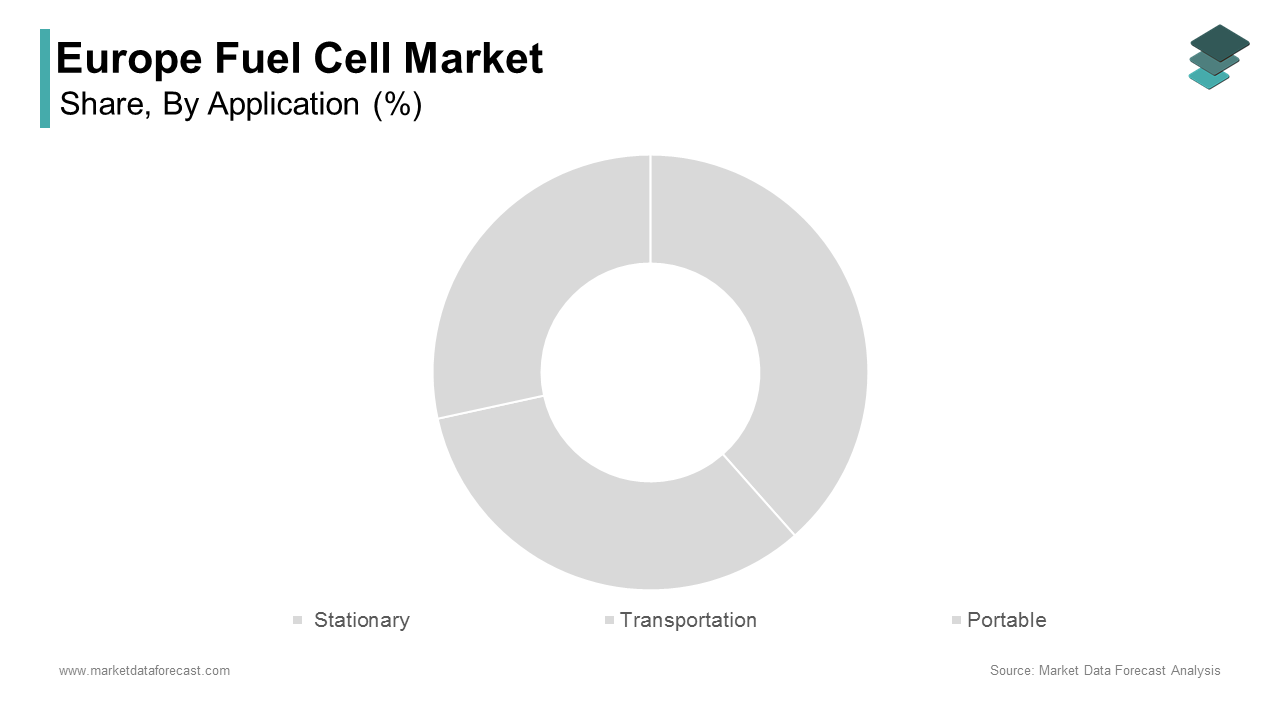
The transportation segment is expected to exhibit a noteworthy CAGR of 38.7% from 2026 to 2034. The rapid expansion of the transportation segment is fuelled by regulatory pressure and infrastructure momentum in heavy mobility. The European Parliament has introduced a regulation requiring a significant reduction in CO2 emissions from new heavy-duty vehicles, establishing ambitious targets for the coming decades that are widely considered unachievable for long-haul operations using batteries alone. Major manufacturers are actively delivering prototype vehicles to leading logistics companies. Rail operators on non-electrified lines are turning to fuel cell trains as a zero-emission alternative. These deployments benefit from centralized depot refueling and EU urban zero-emission zones, accelerating commercial validation and driving the segment’s exceptional growth trajectory.
By Product Insights
The PEMFC segment led the Europe fuel cell market by capturing a 61.5% share in 2025. The growth of the PEMFC segment is driven by its versatility, rapid startup, and suitability for mobile and light stationary applications. PEMFCs operate at low temperatures between 60 and 80 degrees Celsius, enabling quick startup and dynamic load response, important for vehicles and portable systems. The technology’s compatibility with intermittent renewable hydrogen supply further enhances its appeal in decentralized applications where reliability and responsiveness are paramount. Europe hosts a mature PEMFC component industry, including membrane electrode assembly producers and bipolar plate manufacturers. The investments reduce import dependency and ensure alignment with EU safety and recycling standards. The presence of automotive OEMs co-developing PEMFC systems further anchors this technology as the default choice for near-term commercialization across multiple sectors.
The SOFC segment is predicted to witness the highest CAGR of 32.4% during the forecast period, owing to high efficiency and industrial decarbonization needs. SOFCs operate at high temperatures between 600 and 1000 degrees Celsius, which enables electrical efficiencies and total system efficiencies exceeding those when waste heat is utilized. The EU’s Energy Efficiency Directive prioritizes technologies achieving notable total efficiency, making SOFCs eligible for enhanced subsidies and carbon contracts for different schemes. Unlike PEMFCs, SOFCs can internally reform methane, biogas, and ammonia without external fuel processors, simplifying system design. The EU’s Renewable Energy Directive II explicitly recognizes SOFCs as eligible for renewable fuel accounting when using biogas or green hydrogen, further incentivizing deployment in circular economy projects and accelerating adoption beyond niche applications into mainstream industrial energy systems.
REGIONAL ANALYSIS
Germany Fuel Cell Market Analysis
Germany outperformed others in the Europe fuel cell market by occupying a 28.3% share in 2025 by firmly establishing itself as the continent’s hydrogen innovation and deployment hub. The country’s National Hydrogen Strategy, backed by funds in public funding, has catalyzed end-to-end ecosystem development from electrolysis to fuel cell integration. Industrial adoption is equally robust, with ThyssenKrupp and Salzgitter implementing fuel cells in green steel pilot plants. The nationwide H2 Mobility consortium coordinates infrastructure rollout while research institutions drive material innovation. Germany’s dense manufacturing base, energy transition urgency, and regulatory coherence make it the undisputed center of gravity for fuel cell commercialization in Europe.
France Fuel Cell Market Analysis
France followed closely in the Europe fuel cell market by capturing a 17.5% share in 2025, with a strong state-led industrial policy and a focus on green mobility. The French government allocates funds to hydrogen, with fuel cells prioritized for heavy transport and rail. Automotive partnerships are also advancing. Apart from these, France leverages its nuclear-powered low-carbon hydrogen potential with EDF piloting SOFC systems at nuclear sites for grid balancing. This blend of public investment, industrial collaboration, and clean hydrogen advantage sustains France’s leadership position.
United Kingdom Fuel Cell Market Analysis
The United Kingdom is steadily growing in the Europe fuel cell market because of its focus on maritime applications and innovation funding. Despite Brexit, the UK remains aligned with European hydrogen safety standards and actively participates in North Sea hydrogen corridors. The UK’s strong materials science base and offshore wind resources position it as a key developer of next-generation fuel cell technologies with global export potential.
Netherlands Fuel Cell Market Analysis
The Netherlands moderately expanded in the Europe fuel cell market due to its strategic port infrastructure and cross-border hydrogen pipeline ambitions. The Port of Rotterdam aims to handle millions of tonnes of hydrogen annually by 2050, with Shell and Air Liquide already operating large-scale electrolyzers feeding fuel cell applications. The country also hosts the European Hydrogen Backbone secretariat, coordinating pipeline development across multiple nations. Inland waterway logistics is a unique Dutch strength. This integration of port logistics, renewable energy, and international cooperation cements the Netherlands’ role as a hydrogen gateway for Europe.
Sweden Fuel Cell Market Analysis
Sweden is likely to grow in the Europe fuel cell market between 2026 and 2034, owing to its pioneering role in fossil-free steel and renewable hydrogen production. The country’s abundant hydropower and wind resources enable some of the lowest-cost green hydrogen in Europe. In transportation, Vattenfall and Scania are testing fuel cell trucks on the Malmbanan iron ore railway line. Sweden also leads in residential micro combined heat and power. This combination of industrial decarbonization leadership, clean power abundance, and targeted policy support makes Sweden a high-impact niche player with disproportionate technological influence in the European fuel cell landscape.
COMPETITION OVERVIEW
The Europe fuel cell market features a dynamic mix of global technology leaders, European industrial champions, and agile startups competing across diverse applications under a unified policy framework. Competition is less about price and more about system integration, reliability, and compliance with evolving EU regulations on hydrogen sourcing safety and emissions. Large players leverage established industrial relationships and global scale, while niche innovators differentiate through application-specific engineering, such as maritime or rail optimization. The market remains fragmented by technology type, with PEMFC dominating mobility and SOFC gaining ground in stationary power, creating parallel competitive arenas. National hydrogen strategies further shape regional advantages, with Germany, France, and the Netherlands attracting the bulk of manufacturing and pilot activity. As the EU harmonizes certification and builds cross-border infrastructure, competition is gradually shifting from isolated demonstrations to integrated value chain leadership, where partnerships and policy alignment determine market influence more than standalone product performance.
KEY MARKET PLAYERS
A few major players of the Europe fuel cell market include
- Ballard Power Systems
- Plug Power
- Bloom Energy
- FuelCell Energy
- Doosan Fuel Cell
- Hydrogenics (Cummins Inc.)
- SFC Energy AG
- Nedstack Fuel Cell Technology
- Toshiba Energy Systems & Solutions
- Panasonic Corporation
- Ceres Power
- SOLIDpower
- AFC Energy
Top Strategies Used by the Key Market Participants
Key players in the Europe fuel cell market pursue vertical specialization by focusing on high-impact segments such as heavy-duty transport, maritime logistics, and industrial stationary power, where regulatory pressure and technical suitability align. They invest in localized manufacturing and engineering centers to ensure compliance with EU safety, environmental, and grid interconnection standards. Strategic partnerships with national rail operators, port authorities, and industrial conglomerates de-risk deployment and enable co-development of application-specific solutions. Companies also actively participate in EU-funded innovation consortia like Important Projects of Common European Interest to access non-dilutive capital and shape technical roadmaps. Additionally they prioritize fuel flexibility and integration with renewable hydrogen sources to align with the EU’s Green Deal and circular economy objectives, enhancing long-term market relevance.
Leading Players in the Market
Ballard Power Systems
Ballard Power Systems is a global leader in proton exchange membrane fuel cell technology with deep engagement across European heavy-duty transport and rail sectors. The company supplies fuel cell engines to manufacturers such as Alstom for hydrogen trains and VDL for zero-emission buses operating in the Netherlands and Germany. In Europe, Ballard emphasizes localized support through its engineering center in Copenhagen, which provides application integration and validation services tailored to EU safety and performance standards. This strategic alignment with European infrastructure priorities and its commitment to regional technical presence reinforce Ballard’s role as a key enabler of the continent’s clean mobility transition.
Ceres Power
Ceres Power is a UK-based innovator specializing in solid oxide fuel cell and electrolyzer technology with significant global licensing partnerships and a strong foothold in European stationary power markets. The company’s SteelCell technology enables high-efficiency conversion of hydrogen and biogas into electricity and is deployed in data centers, hospitals, and industrial facilities across Germany, France, and Italy. The company actively participates in EU innovation programs such as Horizon Europe to advance reversible fuel cell systems that support grid balancing and renewable integration. Its focus on efficiency, durability, and fuel flexibility positions Ceres as a critical contributor to Europe’s industrial decarbonization and energy resilience strategies.
Nedstack
Nedstack is a Dutch fuel cell technology company focused exclusively on maritime applications and a pioneer in high-power PEM fuel cell systems for inland and coastal shipping. The company’s 1200-kilowatt fuel cell power plant is integrated into vessels operating on the Rhine under the EU-funded Flagships project, making it one of the few providers delivering megawatt-scale marine solutions. Nedstack collaborates closely with Dutch shipyards Damen and Port of Rotterdam to develop standardized hydrogen propulsion packages that accelerate vessel retrofits and new builds. Nedstack has secured a niche leadership position by prioritizing the maritime sector, a key focus of the EU’s FuelEU Maritime regulation, and is expanding its engineering team to manage deployments across Northern and Southern Europe.
MARKET SEGMENTATION
This research report on the Europe fuel cell market has been segmented and sub-segmented based on application, product, and region.
By Application
- Stationary
- Transportation
- Portable
By Product
- PEMFC
- PAFC
- SOFC
By Region
- UK
- France
- Spain
- Germany
- Italy
- Russia
- Sweden
- Denmark
- Switzerland
- Netherlands
- Turkey
- Czech Republic
- Rest of Europe