- Product Description Description
- Table of Contents TOC
- List of Table & Figure LOT
- Get Free Sample PDF Sample PDF
Europe Garden Tools Market Size, Growth, Trends & Forecast (2026–2034)
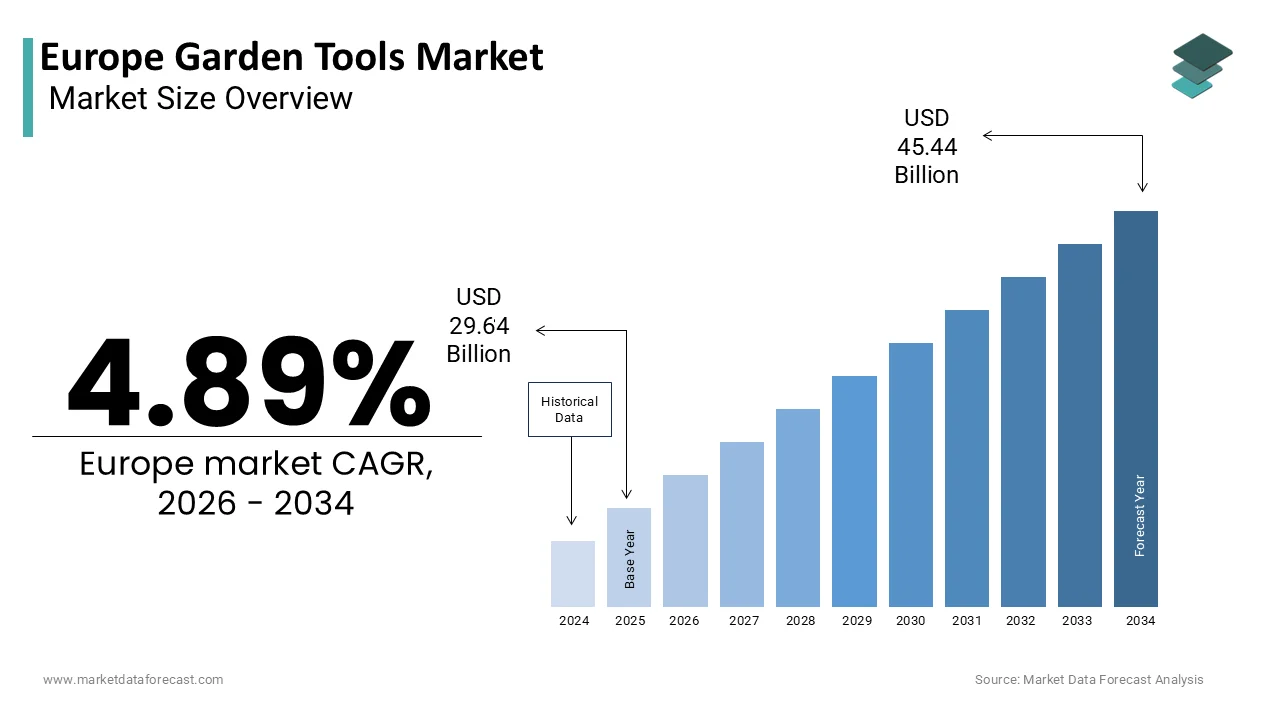
The Europe garden tools market was valued at USD 29.64 billion in 2025, is estimated to reach USD 31.09 billion in 2026, and is projected to reach USD 45.44 billion by 2034, registering a compound annual growth rate (CAGR) of 4.89% during the forecast period from 2026 to 2034. Driven by rising urban gardening trends, municipal green infrastructure expansion, and technological shifts toward smart and battery-powered equipment, the regional market continues to expand steadily.
Key Executive Metrics (At-a-Glance)
- 2025 Base Valuation: USD 29.64 Billion
- 2026 Current Valuation: USD 31.09 Billion
- 2034 Forecast Valuation: USD 45.44 Billion
- Compound Annual Growth Rate (CAGR): 4.89% (2026–2034)
- Leading Price Segment: Mid-Range Price Segment (58.3% share in 2025)
- Leading End-Use Segment: Residential Segment
- Leading Country Market: Germany (24.6% share)
Core Market Drivers
- Rising Urban Gardening & Balcony Cultivation: Proliferation of urban green spaces, rooftop gardening, and small-scale cultivation driving demand for compact, portable tools.
- Municipal Green Infrastructure Initiatives: Increased public investments in urban forestry, parks, and climate resilience planning boosting professional tool procurement.
Primary Market Restraints & Challenges
- Stringent EU Chemical & Material Regulations: Strict compliance frameworks under REACH and RoHS directives limiting chemical formulations and increasing R&D costs.
- Professional Labor Shortages: Persistent deficits of skilled landscaping and agricultural personnel slowing adoption rates of advanced professional equipment.
Europe Garden Tools Market Segmentation Breakdown
| Segment Category | Largest / Dominant Segment | Fastest-Growing Segment |
|---|---|---|
| By Price Range | Mid-Range Segment (58.3% Share in 2025) | High-End Segment (7.2% CAGR) |
| By End Use | Residential Segment | Commercial Segment (6.9% CAGR) |
| By Distribution Channel | Offline Channels | Online Channels (9.1% CAGR) |
Major Industry Players Profiled
Key market participants shaping the European garden tools sector include Bosch, STIHL Holding AG, Husqvarna Group, Gardena, Makita Corporation, Black & Decker, DeWalt, Einhell Germany AG, Flymo, Honda Power Equipment, AL-KO KOBER SE, Wolf-Garten, Fiskars Group, Greenworks Tools, Mountfield Ltd., Cub Cadet, Ryobi, and Tabor Tools.
Europe Garden Tools Market Size
The Europe garden tools market was valued at USD 29.64 billion in 2025, is estimated to reach USD 31.09 billion in 2026, and is projected to reach USD 45.44 billion by 2034, growing at a CAGR of 4.89% from 2026 to 2034.
Garden tools are specialized implements designed for gardening, landscaping, and agriculture. These tools range from traditional hand trowels and rakes to advanced battery-powered hedge trimmers and robotic mowers, reflecting a convergence of heritage craftsmanship and modern ergonomics. Unlike generic hardware, European garden tools are increasingly shaped by sustainability mandates, ergonomic standards, and consumer preferences for durability and aesthetic integration with outdoor living spaces. There is a notable consumer shift toward sustainable gardening practices and urban cultivation across Europe, with an increasing demand for compact, space-saving tools for smaller city gardens. Furthermore, Major Central and Northern European cities generally maintain higher levels of green coverage and more equitable access to nature than Southern European cities. However, recent urban development has led to an overall loss of green space across many metropolitan areas. The market is also influenced by the EU’s Green Public Procurement criteria, which prioritize eco-labeled, long-lasting tools for municipal use. This blend of cultural affinity for gardening, regulatory frameworks, and urban greening policies defines the unique character of the European garden tools market.
MARKET DRIVERS
Rising Urban Gardening and Balcony Cultivation Trends
The proliferation of urban gardening, particularly on balconies, rooftops, and community plots, has propelled the growth of the European garden tools market. This trend has emerged as a powerful driver of demand for compact and multifunctional garden tools across Europe. According to sources, a significant majority of the population lives in cities and urban areas, with a rising interest in small-scale cultivation to enhance personal well-being and local food resilience. The European Commission is encouraging the development of urban nature plans, which include increasing the prevalence of green spaces and rooftop/balcony gardens to improve biodiversity and urban resilience. This shift necessitates specialized tools such as foldable trowels, telescopic pruners, and lightweight watering cans designed for confined spaces. In cities like Paris and Amsterdam, municipal programs distribute subsidized seed kits alongside ergonomic hand tools to encourage participation. Additionally, the rise of vertical gardening systems has spurred demand for precision tools like micro shears and soil moisture probes. Retailers such as Hornbach and Leroy Merlin have dedicated urban gardening sections featuring space-saving tool sets with modular storage. This demographic and spatial transformation redefines tool functionality, prioritizing portability, precision, and aesthetic appeal over traditional heavy-duty designs, thereby reshaping product development strategies across the continent.
Expansion of Municipal Green Infrastructure Initiatives
European cities are investing heavily in green infrastructure as part of climate resilience and public health strategies, which fuels the expansion of the European garden tools market. This directly boosts demand for professional-grade garden tools used in park and street tree maintenance. Many European cities are actively implementing urban greening action plans to enhance biodiversity and increase tree canopy cover, driven by EU nature restoration initiatives and climate adaptation strategies. These initiatives require specialized equipment such as pole saws, root barrier cutters,s and soil aerators for maintaining thousands of newly planted trees and bioswales. The city of Berlin has committed substantial, multi-year funding to maintain and expand urban green spaces and park infrastructure as part of its environmental commitment. Similarly, Copenhagen’s climate adaptation strategy prioritizes nature-based solutions and blue-green infrastructure to manage stormwater, requiring regular maintenance of public green spaces and sustainable drainage systems. The European Union promotes Green Public Procurement, encouraging municipalities to select tools and products based on environmental criteria, such as repairability, durability, and the use of sustainable materials. This institutional demand not only ensures volume stability but also elevates performance expectations, pushing manufacturers to innovate in durability and environmental compliance.
MARKET RESTRAINTS
Stringent EU Chemical and Material Restrictions
Evolving regulations governing material composition and chemical treatments, particularly under the REACH and RoHS directives,s are restraining the growth of the European garden tools market. This is a significant constraint for the regional garden tool manufacturers. These frameworks restrict the use of certain phthalates, cadmium,m and lead in plastic and metal components, limiting design flexibility and increasing production costs. According to the European Chemicals Agency, the Candidate List of Substances of Very High Concern (SVHC) continues to expand, imposing increasing regulatory compliance obligations on the use of common tool coatings and handle polymers. For instance, traditional anti-rust oil formulations containing alkylphenol ethoxylates are now prohibited, compelling companies to adopt more expensive bio-based alternatives. Research indicates that European garden machinery manufacturers are experiencing increased R&D costs associated with product reformulation due to ongoing regulatory compliance pressures. Additionally, wood-handled tools must now comply with FSC or PEFC certification for forest sourcing, adding supply chain verification layers. These measures enhance environmental and user safety. However, they simultaneously raise barriers to entry and compress margins, especially for artisanal producers lacking compliance expertise, thereby acting as a structural restraint on market inclusivity.
Labor Shortages in Professional Landscaping Services
A persistent shortage of skilled landscaping personnel across the region is indirectly dampening demand for high-end professional garden tools and inhibiting the expansion of the European garden tools market. This is occurring despite growing green space mandates. According to Cedefop, the EU is experiencing growing labor shortages across various sectors, including skilled crafts and agricultural roles, driven by demographic aging, with several member states facing acute gaps. Municipalities and private landscaping firms struggle to fill positions requiring expertise in arboriculture and turf management, leading to deferred maintenance and reduced tool procurement. The German Federal Employment Agency indicates that shortages in skilled crafts, including garden and landscape construction, are severe, resulting in long vacancy periods for employers. Consequently, many contractors delay investments in premium ergonomic or battery-powered tools, opting instead for basic manual implements that require less training. This human capital bottleneck undermines the adoption of advanced tools designed to enhance productivity, as their value proposition hinges on consistent, skilled operation. The professional segment’s growth potential is restricted by a skill gap, which in turn limits innovation pull from key customers until unified training initiatives are implemented.
MARKET OPPORTUNITIES
Integration of Smart and Connected Garden Tools
The emergence of smart garden tools equipped with sensors, connectivity, and data analytics offers a transformative opportunity for the European garden tools market. This aligns with broader digital home trends. Battery-powered tools now feature Bluetooth integration, allowing users to monitor battery health,h blade wear, ar and usage patterns via smartphone apps. Major garden tool manufacturers are increasingly integrating handheld equipment into digital ecosystems to provide users with maintenance advice driven by environmental data. Younger homeowners are showing a growing preference for outdoor maintenance equipment that can be managed through centralized smart home platforms. Furthermore, municipalities are piloting AI-assisted pruning tools that use computer vision to identify diseased branches in urban trees, reducing manual inspection costs by up to 30 percent, as verified by trials in Utrecht. European Union digital initiatives are providing financial support for the development of intelligent environmental technologies, which encourages the growth of businesses specializing in connected outdoor hardware. This fusion of digital intelligence and horticultural practice opens new value streams beyond hardware, including subscription-based agronomic advice and predictive maintenance services.
Growth of Circular and Repairable Tool Design
The EU’s push toward a circular economy is catalyzing innovation in modular and repairable garden tool design, which creates fresh prospects for brands that prioritize longevity over disposability. This is anticipated to drive the expansion of the European garden tools market. Under the new EU Ecodesign framework, a wider range of products, including potential garden tools, will face stricter, future-mandated requirements for repairability and component replacement using common tools. Companies like Bahco and Wolf Garten have responded by launching tool systems with interchangeable heads and lifetime warranty shafts, reducing waste and enhancing customer loyalty. The European Environmental Bureau emphasizes that designing products to be repairable and durable is essential for increasing their service life and significantly reducing their environmental footprint. Retailers such as Bauhaus now offer in-store repair stations where customers can replace worn blades or tighten loose joints, supported by EU-funded Right to Repair initiatives. In France, the Anti-Waste Law mandates visible repairability scores on an expanding list of products, which is observed to positively influence consumer preference for more repairable items, despite potential price differences. This regulatory and cultural shift transforms tools from consumables into durable assets, opening avenues for service-based business models and strengthening brand trust in sustainability-conscious markets.
MARKET CHALLENGES
Fragmented Safety and Ergonomic Certification Standards
Disparities in national interpretations of ergonomic and safety standards persist, despite EU harmonization efforts, which slow down the growth of the European garden tools market. This creates significant compliance complexity for garden tool manufacturers operating across borders. While the Machinery Directive covers powered tools, manual implements fall under the General Product Safety Directive, which allows member states to impose supplementary requirements. For example, Sweden mandates vibration testing for all pruning shears under its national work environment authority guidelines, whereas Italy requires specific grip diameter tolerances for senior users. Diverging national interpretations of international safety standards for non-electric power tools create inconsistencies, requiring manufacturers to perform additional testing and documentation to ensure compliance across different markets. Tool exporters are experiencing rising costs due to the need for multiple, country-specific certifications for their product lines, reducing efficiency in international trade. This fragmentation delays time to market and inflates costs, particularly for SMEs lacking legal resources, ultimately stifling cross-border innovation. The European garden tools sector's scalability and competitiveness will remain constrained by a patchwork of regulations until deeper alignment is achieved through initiatives such as the Single Market Enforcement Action Plan.
Volatility in Raw Material Costs for Tool Manufacturing
Mounting pressure from fluctuating prices of critical raw materials such as stainless steel, aluminum, and engineering plastics is limiting the expansion of the European garden tools market. This trend affects cost predictability and pricing stability. Eurofer reports that European steel-using sectors continued to face a severe downturn in the first half of 2025 due to ongoing energy-related production challenges and weak demand, leading to a projected contraction in overall consumption. Simultaneously, European plastics manufacturers experienced a challenging market in early 2025, characterized by high production costs, elevated energy prices, and the introduction of new import taxes, despite an overall increase in global supply. According to Roland Berger, manufacturing companies are facing intense pressure on production costs and margins, necessitating initiatives to optimize material costs, production processes, and supply chain efficiency to maintain competitiveness. Smaller manufacturers without hedging capabilities are forced to absorb losses or pass costs to consumers, risking demand erosion. The German tooling industry experienced a decline in domestic demand in the second quarter of 2025, with industry bodies projecting a challenging year without a significant recovery in production. Moreover, the EU’s Carbon Border Adjustment Mechanism adds indirect costs for imported components, further complicating sourcing strategies. This external fragility not only squeezes margins but also discourages investment in new product development, posing a systemic challenge to market resilience and innovation capacity.
REPORT COVERAGE
| REPORT METRIC | DETAILS |
| Market Size Available | 2025 to 2034 |
| Base Year | 2025 |
| Forecast Period | 2026 to 2034 |
| Segments Covered | By Price Range, End Use, Distribution Channel, and Region. |
| Various Analyses Covered | Global, Regional, and Country-Level Analysis, Segment-Level Analysis, Drivers, Restraints, Opportunities, Challenges; PESTLE Analysis; Porter’s Five Forces Analysis, Competitive Landscape, Analyst Overview of Investment Opportunities |
| Countries Covered | UK, France, Spain, Germany, Italy, Russia, Sweden, Denmark, Switzerland, Netherlands, Turkey, Czech Republic, Rest of Europe |
| Market Leaders Profiled | Bosch, STIHL, Husqvarna Group, Gardena, Makita Corporation, Black & Decker, DeWalt, Einhell Germany AG, Flymo, Honda Power Equipment, AL-KO KOBER SE, Wolf-Garten, Fiskars Group, Greenworks Tools, Mountfield Ltd., Razor-USA LLC, Cub Cadet, Ryobi, Tabor Tools |
SEGMENTAL ANALYSIS
By Price Range Insights
The mid-range price segment dominated the European garden tools market and accounted for a 58.3% share in 2025. The dominance of the segment is driven by a broad consumer preference for balanced value, offering reliable performance and moderate durability without premium pricing. European households, particularly in Germany, France, and Italy, prioritize tools that last multiple seasons but remain affordable for occasional use. According to Eurostat, the median equivalised disposable income in the EU has seen an increase. Mid-priced tools generally represent a popular, accessible, and high-volume segment for many consumers. Retailers like Obi and Kingfisher have optimized private label offerings in this bracket, featuring stainless steel blades,s ergonomic handles, es and basic weather resistance. Additionally, municipal procurement guidelines under the EU Green Public Procurement framework often specify tiered tools for community garden programs due to their cost efficiency and adequate lifespan. The segment also benefits from seasonal promotions during spring planting peaks. The European garden machinery market experiences its highest sales volume during spring, with April and May being critical, high-activity months for retail sales, as indicated by industry trends. This alignment of affordability functionality and institutional demand solidifies the mid-range as the market’s core.
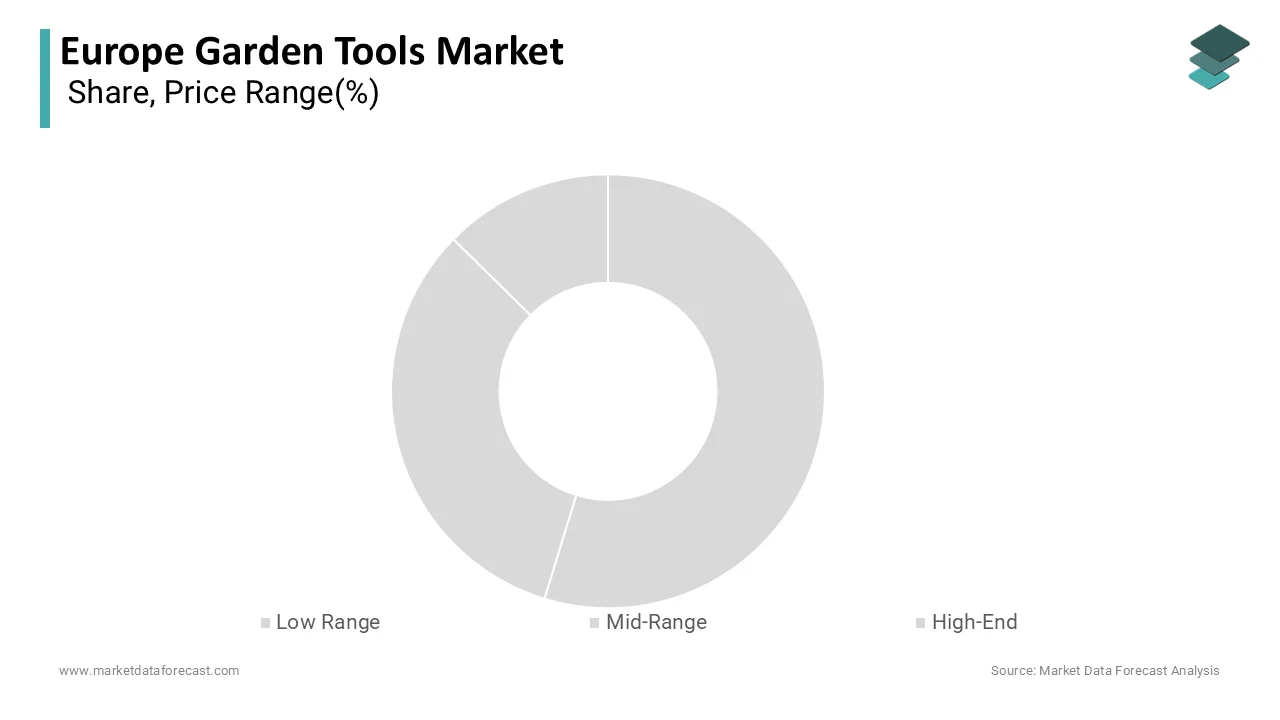
The high-end price segment is anticipated to witness the fastest CAGR of 7.2% from 2026 to 2034 due to rising demand for professional-grade durability, smart features,s and sustainable materials among affluent urban gardeners. Consumers in countries like Switzerland, nd Sweden, and the Netherlands are increasingly investing in premium tools priced that offer lifetime warranties, precision engineering, and aesthetic integration with outdoor living spaces. European homeowners with higher disposable incomes are increasingly investing in premium gardening equipment, prioritizing product durability and the long-term sustainability of their tools to avoid frequent replacements. Brands like Felco and Bahco report growing sales of forged steel pruners with replaceable parts and FSC-certified wooden handles, aligning with circular economy values. Furthermore, the rise of therapeutic gardening among retirees has amplified interest in ergonomically certified tools that reduce joint strain. There is a growing preference in the German market for ergonomic and accessible product designs that accommodate users with joint conditions, reflecting a broader shift toward inclusive and health-conscious consumer goods. This convergence of wellness consciousness, sustainability, and disposable income positions the high-end segment as the most dynamic growth frontier in the European market.
By End Use Insights
The residential segment led the European garden tools market and captured a substantial share in 2025. The leading position of the segment is attributed to deep-rooted cultural traditions of home gardening across the continent. According to various sources, a significant portion of European households actively engage in residential gardening, utilizing both private gardens and balcony spaces, with interest in home gardening continuing to drive the market for equipment. This widespread participation drives consistent demand for hand trowels, rakes,s pruning shears, rs and watering cans tailored for non-professional use. High rates of single-family home ownership in the UK and Germany create a stable, large-scale consumer base for gardening equipment and maintenance products. Seasonal spikes are pronounced. Gardening equipment sales in Europe are highly seasonal, with a significant surge in consumer demand and purchases concentrated during the spring and early summer months. Retail chains such as Leroy Merlin and Hornbach dedicate extensive shelf space to beginner-friendly kits and decorative tool sets that appeal to lifestyle-oriented buyers. Moreover, post pandemic trends have sustained elevated interest in home cultivation as a form of recreation and food security, ensuring residential demand remains resilient even during economic uncertainty.
The commercial end-use segment is likely to experience the fastest CAGR of 6.9% during the forecast period, owing to aggressive urban greening mandates and professional landscaping expansion across European cities. European cities are increasingly required to adopt strategic urban planning that mandates the development of green spaces and infrastructure, creating higher demand for specialized maintenance equipment. Green infrastructure plans are becoming common in European cities, driving an increase in the professional, high-grade landscaping equipment market. The city of Berlin is significantly increasing its investment in urban greening and climate adaptation measures to improve city resilience. Additionally, the rise of managed residential complexes and corporate campuses has expanded private commercial demand. Increased awareness of climate risks and urban sustainability is driving a growing demand for landscaping and maintenance services in Western Europe. These institutional buyers prioritize tool longevity and ergonomic certification, driving adoption of high-performance models with extended warranties and modular repairability, thereby accelerating commercial segment growth.
By Distribution Channel Insights
The offline channels retain segment was the largest segment in the European garden tools market and occupied a significant share in 2025. The prominence of the segment is credited to consumers’ preference for tactile evaluation of weight balance, material quality,y and ergonomics before purchasing tools they expect to use for years. Major European home improvement retailers, including Bauhaus, OBI, and Kingfisher, operate a vast network of stores across the continent, focusing on in-store customer experience through physical, hands-on product displays, demonstration zones, and expert staff advice. According to studies, a significant portion of older consumers, particularly in the garden tools segment, maintains a strong preference for purchasing in-store to physically examine products, ensure quality, and receive immediate possession. Seasonal garden centers also play a crucial role during spring peaks, with temporary pop-ups in parking lots and town squares generating significant impulse purchases. Furthermore, municipal and professional buyers rely on established trade relationships with local distributors for bulk orders and after-sales support. This combination of sensory engagement, convenience, and institutional procurement ensures offline channels remain the primary route to market despite digital advances.
The online distribution channel segment is on the rise and is expected to be the fastest-growing segment in the market by witnessing a CAGR of 9.1% over the forecast period. The rapid segment is fuelled by digital adoption among younger demographics and enhanced e-commerce capabilities. Platforms like Amazon, ManoMan,o and Hornbach’s online store now offer detailed product videos, 360-degree views, and AI-powered recommendation engines that simulate in-store guidance. According to Eurostat, a significant majority of European internet users engage in online shopping, with home improvement and gardening products consistently ranking among the top categories for online purchases. Subscription models are emerging. ManoMano is a leading European online marketplace for home improvement. The company continues to grow its presence by enhancing user engagement with curated gardening content and expert advice through its digital platforms. Additionally, rural consumers benefit from home delivery of bulky items like wheelbarrows and lawn edgers that were previously inaccessible due to limited local stock. The integration of augmented reality apps, such as Leroy Merlin’s AR tool visualizer, allows users to preview how a trowel or pruner fits in their hand, bridging the tactile gap. These innovations position online channels as the primary engine of future market expansion.
COUNTRY LEVEL ANALYSIS
Germany Garden Tools Market Analysis
Germany led the European garden tools market and held a 24.6% share in 2024. The dominance of the German market is driven by a culture that deeply values horticultural excellence and engineering precision. The market status here is characterized by an early and aggressive shift towarbattery-powereded equipment as consumers and professionals alike prioritize noise reduction and zero emissions over traditional gasoline models. Private gardening remains a beloved pastime in Germany, with millions of households investing significantly in the maintenance and beautification of their outdoor spaces. Leading domestic brands like Bosch and STIHL continue to set global benchmarks by integrating smart technology such as app connectivity and automated cutting adjustments into their product lines. German consumers are increasingly shifting toward battery-powered garden equipment, valuing the convenience and reduced noise of cordless technology over traditional petrol models. The government supports this transition through subsidies for electric garden machinery in urban areas to improve air quality. Furthermore, the robust DIY culture ensures a steady demand for ergonomic hand tools and specialized pruning equipment throughout the year. This unique blend of environmental consciousness, technological leadership,p and passionate gardening traditions secures Germany's position as the primary revenue generator and innovation hub for the entire region.
United Kingdom Garden Tools Market Analysis
The United Kingdom followed closely in theEuropeane garden tools market and accounted for a 17.3% share in 2025. The growth of the UK market is propelled by the unique constraints of British urban living, where smaller garden sizes and terrace spaces drive demand for co,mpact ligh,tweight and versatile tools. Interest in automated garden maintenance is rising in the UK, with more homeowners turning to robotic solutions to save time on lawn care. Gardening is a deeply ingrained part of British culture, with a vast majority of the population actively participating in the cultivation of plants and maintenance of green spaces. Urbanization is driving demand for space-saving gardening solutions, leading to increased interest in compact tools and vertical planters suitable for smaller outdoor areas. The government initiative to promote biodiversity has also influenced purchasing behavior,ior with increased sales of tools specifically designed for creating wildlife-friendly habitats and managing native plants. Major retailers like B&Q and Homebase have expanded their ranges of sustainable products made from recycled materials,s catering to eco-conscious buyers. This focus on space efficiency, automation, and ecological responsibility creates a distinct market dynamic that prioritizes innovation in form factor and functionality.
France Garden Tools Market Analysis
France maintained a significant share of the European garden tools market due to a resurgence in interest in self-sufficiency and outdoor living among the population. The market status is heavily influenced by the growing popularity of family allotments known as jardins familiaux, which have seen a waiting list increase in major cities like Paris and Lyon. French consumers are increasingly investing in high-quality manual and power tools to cultivate vegetables and fruits at home, driven by concerns over food safety and a desire for organic produce. Gardening continues to be a primary leisure activity in France, with a consistent level of engagement that supports the steady retail demand for traditional manual cultivation tools. The rise of "green thumbs" among younger demographics has spurred demand for aesthetically pleasing and ergonomically designed tools that blend functionality with style. Local manufacturers are responding by launching lines made from sustainable wood and recycled plastics to appeal to environmentally aware buyers. The government tax incentives for installing rainwater harvesting systems have also boosted sales of associated gardening equipment like watering cans and hose reels. This convergence of culinary interests,t environmental awareness,reness and community gardening initiatives ensures France remains a stable and growing pillar of the European market.
Italy Garden Tools Market Analysis
Italy emerges as a vital growth engine in Europeanope garden tools market due to its deep-rooted agricultural heritage and passion for ornamental landscaping. The market status is distinct due to the dual demand from professional olive grove and vineyard managers who require robust, specialized pruning equipment and residential users who maintain elaborate decorative gardens. Italian families view garden maintenance as a cultural tradition leading to consistent demandfor high-durabilityy tools capable of handling tough Mediterranean vegetation. Regulatory pressure regarding noise and emissions in urban areas is gradually shifting consumer preference toward electric and battery-operated equipment over traditional combustion engines. The tourism sector also contributes significantly as hotels and agritourism farms upgrade their groundskeeping fleets to maintain pristine landscapes for visitors. Domestic production clusters in the north continue to innovate with lightweight carbon fiber handles and advanced cutting blades that offer superior performance. Italian consumers are increasingly discerning about the long-term reliability and service support offered by manufacturers when investing in high-value outdoor power equipment. This blend of professional agricultural needs and residential aesthetic pride ensures that Italy maintains a resilient and specialized demand profile within the broader European context.
Spain Garden Tools Market Analysis
Spain exhibits one of the fastest growth rates in the European market due to its favorable climate and strong outdoor living culture. The Spanish market status is characterized by a long gardening season that extends almost year-round in southern regions, driving continuous consumption of maintenance tools and irrigation accessories. The boom in residential construction along the coast has created thousands of new private gardens requiring initial outfitting with m trimmers and blowers. The expansion of community green spaces and rooftop cultivation in major Spanish cities is creating a specialized market for smaller, quieter, and more portable gardening solutions. The severe drought conditions in recent years have shifted focus towarwater-efficientnt gardening practices, ices boosting demand for precision watering tools and soil moisture meters. Local retailers are adapting by offering bundled packages that includdrought-resistantnt plant care equipment to help consumers manage water restrictions. The growing expatriate community brings diverse gardening habits that further diversify the product mix and raise expectations for quality. This combination of climatic advantages, construction g,rowth and evolving sustainability practices positions Spain as a critical emerging market for future expansion.
COMPETITIVE LANDSCAPE
The competition in the European garden tools market is characterized by a dynamic interplay between global industrial brands, heritage European manufacturers, and agile digital natives. Established players leverage decades of engineering expertise and extensive distribution networks to offer integrated ecosystems of powered and manual tools, while smaller artisans compete through craftsmanship, aesthetic design, and localized sustainability narratives. Intense rivalry centers on innovation in battery technology, noise reduction, and smart functionality, particularly as urban regulations restrict combustion engines and mandate quieter operations. Regulatory compliance, especially under REACH, Ecodesign, and Right to Repair frameworks, acts as both a barrier and a differentiator, favoring companies with robust compliance infrastructure. Simultaneously, consumer expectations are shifting toward durability and circularity, pressuring brands to move beyond disposability. Online channels intensify price transparency but also enable niche players to reach eco-conscious audiences directly. This multifaceted environment rewards adaptability, authenticity, and alignment with Europe’s broader green transition, making the market both challenging and rich with opportunity for differentiated value propositions.
KEY MARKET PLAYERS
Some of the companies that are playing a dominating role in the global European Garden Tools Market include
- Bosch (Robert Bosch GmbH)
- STIHL Holding AG
- Husqvarna Group
- Gardena (part of Husqvarna)
- Makita Corporation
- Black & Decker (Stanley Black & Decker)
- DeWalt (Stanley Black & Decker)
- Einhell Germany AG
- Flymo (Tecumseh Products)
- Honda Power Equipment
- AL-KO KOBER SE
- Wolf-Garten (Wolf GmbH)
- Fiskars Group
- Greenworks Tools (Global Garden Products)
- Mountfield Ltd.
- Razor-USA LLC
- Cub Cadet (by MTD Products)
- Ryobi (Techtronic Industries)
- Tabor Tools
TOP LEADING PLAYERS IN THE MARKET
- Bosch Power Tools is a globally recognized leader in garden and outdoor equipment, with deep integration across European consumer and professional markets. The company leverages its engineering heritage to deliver battery-powered garden tools that emphasize ergonomics, quiet operation, and smart connectivity. It also launched a modular tool platform allowing users to interchange heads for edging, trimming, and blowing using a single battery system. Through partnerships with urban greening initiatives in cities like Stuttgart and Utrecht, Bosch provides municipalities with low-noise electric tools compliant with EU environmental directives. These actions reinforce its global reputation for innovation while strengthening its foothold in Europe’s sustainability-driven garden tools landscape.
- Husqvarna Group plays a pivotal role in shaping the future of garden maintenance through its focus on robotic and battery-powered solutions tailored for European landscapes. The company is a pioneer in automated lawn care, with its Automower series widely adopted in residential and commercial settings across Scandinavia, Germany, and the UK. It also enhanced its EPOS satellite navigation system to enable precise boundary recognition without perimeter wires. By aligning product development with EU Green Deal objectives and investing in circular design, such as repairable motors and recyclable casings, Husqvarna strengthens its position as a sustainability leader while influencing global standards in smart gardening technology.
- Fiskars Corporation is a heritage brand with enduring influence in the European hand tool segment, renowned for its ergonomic design and durable craftsmanship. Originating in Finland, the company supplies a wide range of pruning shears, spades, and watering tools that blend functionality with Scandinavian aesthetics. It also introduced a new line of garden tools made from recycled ocean-bound plastics and FSC-certified wood handles, aligning with EU circular economy mandates. Through collaborations with community gardening programs in Paris and Helsinki, Fiskars supports urban cultivation while reinforcing its brand ethos of sustainability, quality, and timeless design on the global stage.
TOP STRATEGIES USED BY THE KEY MARKET PARTICIPANTS
Key players in the European garden tools market employ several strategic approaches to maintain competitiveness and align with regional priorities. First, they prioritize electrification and battery platform standardization to meet urban noise and emission regulations while enhancing user convenience. Second, do they integrate digital features such as Bluetooth connectivity, smart scheduling,g and usage analytics to appeal totech-savvyy consumers. Third, they adopt circular design principles, including modular construction,n repairability, and use of recycled materials to comply with EU sustainability mandates. Fourth, they expand service ecosystems through warranty tool maintenance programs and recycling take-back schemes to build brand loyalty. Fifth, they collaborate with municipal greening projects and horticultural associations to demonstrate real-world impact and secure institutional procurement. These strategies collectively enable companies to differentiate beyond price and respond effectively to Europe’s unique regulatory, cultural, and environmental landscape.
MARKET SEGMENTATION
This research report on the European garden tools market is segmented and sub-segmented into the following categories.
By Price Range
- Low Range
- Mid-Range
- High-End
By End Use
- Residential
- Commercial
By Distribution Channel
- Offline (Specialty Stores, Garden Centers, DIY Retailers)
- Online (E-commerce Platforms, Brand Websites)
By Country
- Germany
- France
- United Kingdom
- Italy
- Spain
- Netherlands
- Sweden
- Rest of Europe