- Product Description Description
- Table of Contents TOC
- List of Table & Figure LOT
- Get Free Sample PDF Sample PDF
Market Size, 2025
$1.42 BnMarket Estimate, 2026
$1.47 BnMarket Forecast, 2034
$1.92 BnCAGR, 2026–2034
3.41%Europe Gelatin Market Report Summary
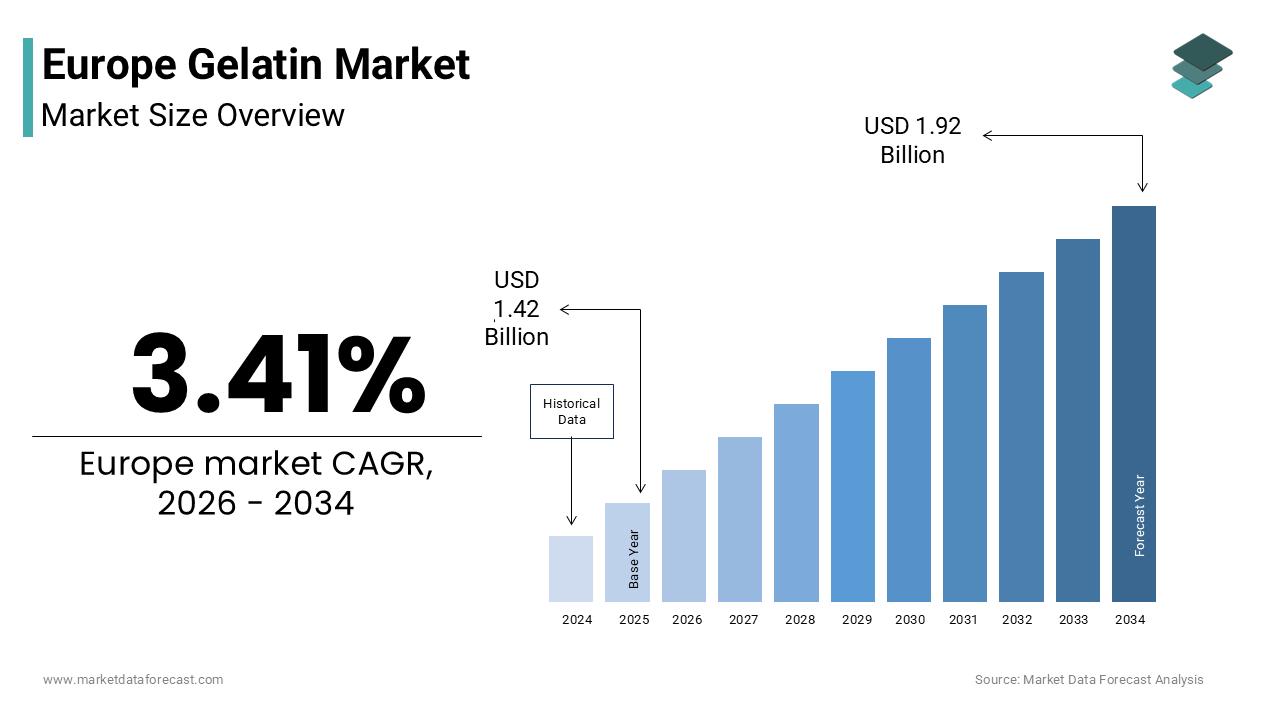
The Europe gelatin market was valued at USD 1.42 billion in 2025, is estimated to reach USD 1.47 billion in 2026, and is projected to reach USD 1.92 billion by 2034, growing at a CAGR of 3.41% during the forecast period from 2026 to 2034. The growth of the Europe gelatin market is driven by increasing demand across food, pharmaceutical, and nutraceutical industries, along with the rising use of gelatin as a functional ingredient due to its gelling, stabilizing, and binding properties. The expanding consumption of nutraceuticals and collagen-based supplements, supported by the growing aging population, is further accelerating market growth. Moreover, the widespread use of gelatin in pharmaceutical capsule manufacturing and its role in sustainable utilization of animal by-products are contributing to market expansion across Europe.
Key Market Trends
- Rising demand for collagen peptides and nutraceuticals, driven by increasing awareness of joint health, skin care, and preventive healthcare.
- Growing application of gelatin in pharmaceutical capsules, supported by its superior compatibility, bioavailability, and safety profile.
- Increasing innovation in bioactive collagen peptides for functional foods and beverages targeting health and wellness benefits.
- Expansion of gelatin use in cosmetics and personal care products, driven by clean-label and anti-aging trends.
- Emerging applications in tissue engineering and regenerative medicine, leveraging gelatin’s biocompatibility and biodegradability.
Segmental Insights
- Based on form, the animal-based gelatin segment was the largest and held a significant share of the Europe gelatin market in 2025. The dominance of this segment is attributed to the abundant availability of collagen-rich raw materials from the meat processing industry and its superior functional properties for food and pharmaceutical applications.
- The marine-based gelatin segment is expected to witness the fastest growth during the forecast period. The growth of this segment is driven by increasing demand for non-mammalian alternatives due to religious dietary requirements, sustainability concerns, and rising preference for clean-label ingredients.
- Based on end user, the food and beverages segment was the largest, occupying a prominent share of the Europe gelatin market in 2025. The dominance of this segment stems from the extensive use of gelatin in confectionery, dairy products, and processed foods due to its unique texturizing and stabilizing properties.
Regional Insights
The Europe gelatin market is witnessing steady growth across major economies, supported by strong demand from food, pharmaceutical, and cosmetic industries.
- Germany was the largest contributor, accounting for 24.3% of the European gelatin market share in 2025, driven by its robust pharmaceutical manufacturing sector and strong presence of gelatin producers.
- France holds a significant position in the market, supported by its well-established food, cosmetics, and leather industries, along with strong demand for high-quality gelatin.
- The United Kingdom is experiencing notable growth due to rising demand for gelatin-based confectionery and nutraceutical products.
- Italy is emerging as a key market driven by its food processing, leather, and pharmaceutical industries.
- Spain is also witnessing growth, supported by its large meat processing industry and increasing adoption of collagen supplements in the wellness sector.
Competitive Landscape
The Europe gelatin market is characterized by strong competition among global and regional players focusing on product innovation, sustainability, and high-quality production. Leading companies are investing in bioactive collagen peptides, expanding production capacities, and strengthening supply chain traceability to meet regulatory requirements and evolving consumer preferences. Strategic collaborations with food, pharmaceutical, and cosmetic companies are further enhancing market presence. Prominent players in the Europe gelatin market include Darling Ingredients Inc., Gelita AG, Gelatines Weishardt SAS, Italgelatine S.p.A., Lapi Gelatine S.p.A., Ewald-Gelatine GmbH, Trobas Gelatine B.V., Juncà Gelatines S.L., Jellice Group, and Reinert Gruppe International GmbH.
Europe Gelatin Market Size
The Europe gelatin market size was valued at USD 1.42 billion in 2025 and is anticipated to reach USD 1.47 billion in 2026 from USD 1.92 billion by 2034, growing at a CAGR of 3.41% during the forecast period from 2026 to 2034.
The gelatin is derived primarily from the partial hydrolysis of collagen found in bovine hides, porcine skins, and bones. This natural biopolymer serves as a functional ingredient across the food, pharmaceutical, and photographic industries, valued for its unique gelling, foaming, and stabilizing properties. In 2024, the European Union produced approximately 165,000 metric tons of gelatin, with Germany, France, and Spain accounting for nearly 70% of this output, as per study. The circular economy, as gelatin production utilizes slaughterhouse by-products that would otherwise constitute waste, thereby contributing to resource efficiency. As per Eurostat, the meat processing industry in Europe generates over 4 million tons of collagen-rich raw materials annually, providing a substantial feedstock base. Furthermore, the rising prevalence of an aging population in Europe has intensified demand for gelatin in pharmaceutical capsules and nutraceuticals for joint health.
MARKET DRIVERS
Expanding Demand for Nutraceuticals and Joint Health Supplements
The surging demand for nutraceuticals and dietary supplements, particularly those targeting joint health, skin vitality, and bone density, among an aging population is majorly propelling the growth of Europe gelatin market. Gelatin and its hydrolyzed form, collagen peptides, are scientifically proven to stimulate cartilage regeneration and improve skin elasticity, making them indispensable ingredients in the wellness sector. The individuals over the age of 60 now comprise 21% of the EU population by creating a massive addressable market for products that mitigate osteoarthritis and age-related mobility issues. As per the European Federation of Pharmaceutical Industries and Associations, the consumption of collagen peptides for musculoskeletal health has doubled in the last five years, driven by clinical studies validating their efficacy. Furthermore, the trend toward preventive healthcare has encouraged younger consumers to adopt collagen supplements for beauty-from-within benefits, broadening the consumer base beyond the elderly. The versatility of gelatin allows it to be incorporated into various delivery formats, including powders, gummies, and ready-to-drink beverages, enhancing consumer accessibility.
Indispensable Role in Pharmaceutical Capsule Manufacturing
The irreplaceable function of gelatin for manufacturing hard and soft shell capsules, which remain the preferred dosage form for pharmaceuticals and vitamins is additionally propelling the growth of Europe gelatin market. The gelatin capsules offer superior mechanical strength, dissolution profiles, and compatibility with a wide range of active pharmaceutical ingredients by making them the industry standard for over 70% of oral solid dosages. In 2025, the European pharmaceutical production volume exceeded 250 billion units, with capsule formulations accounting for a significant portion of this output due to their ease of swallowing and precise dosing capabilities, according to the study. As per the European Association of Pharmaceutical Full-service Manufacturers, the production of soft gelatin capsules for lipid-based formulations, such as Omega-3 fatty acids and Vitamin D, grew by 9% in 2024, thereby reflecting the high bioavailability advantages of this delivery system. Additionally, the stringent regulatory requirements for medical devices and drug delivery systems favor gelatin due to its long history of safe use and well-established supply chain traceability.
MARKET RESTRAINTS
Rising Consumer Preference for Plant-Based and Vegan Alternatives
The accelerating shift in consumer preferences toward plant-based, vegan, and vegetarian lifestyles, which directly animal-derived ingredients like gelatin is majorly degrading the growth of Europe gelatin market. This cultural and ethical movement has gained significant momentum across Northern and Western Europe, where a growing segment of the population actively seeks non-animal substitutes for food and pharmaceutical products. In 2024, sales of plant-based food products in the European Union surged by 15%, with gummy confectionery and dessert categories seeing a notable migration from gelatin to pectin, agar-agar, and starch-based gelling agents according to data from the European Vegetarian Union. The rise of "flexitarian" diets, where consumers reduce but do not eliminate meat consumption, has also led to increased scrutiny of hidden animal ingredients in processed foods, prompting major brands to reformulate products to avoid alienating this demographic. As per a survey by the European Consumer Organisation, 34% of European consumers now actively check labels for animal-derived additives, with many willing to pay a premium for certified vegan alternatives. This sentiment extends to the pharmaceutical sector, where patient advocacy groups are increasingly demanding plant-based capsule options for religious or ethical reasons, forcing manufacturers to diversify their portfolios. The perception of gelatin as an outdated or unethical ingredient among younger generations poses a structural threat to its market share, compelling producers to invest heavily in marketing campaigns to its sustainability credentials as a upcycled by-product, though the stigma remains a significant barrier to volume growth in consumer-facing applications.
Stringent Regulatory Compliance and Religious Dietary Restrictions
The complex web of regulatory requirements and religious dietary restrictions that limit the sourcing is additionally limiting the growth of Europe gelatin market. The European Union enforces rigorous regulations under Regulation (EC) No 1069/2009 regarding animal by-products, mandating strict traceability from the slaughterhouse to the final product to ensure freedom from pathogens like BSE, which increases production costs and administrative burdens. In 2025, the cost of compliance with these traceability and safety protocols increased by 18% for small and medium-sized gelatin manufacturers by squeezing margins and creating barriers to entry according to the European Food Safety Authority. Furthermore, the presence of significant Muslim and Jewish populations in Europe necessitates Halal and Kosher certifications, which restrict the source of raw materials to specific animal species slaughtered according to religious rites. As per the European Halal Certification Body, only 40% of European gelatin production currently holds valid Halal certification, limiting its usability in products targeted at these communities and in export markets to the Middle East. The fragmentation of religious standards across different member states and the lack of a unified European certification framework create logistical complexities for manufacturers aiming for broad market access.
MARKET OPPORTUNITIES
Innovation in Bioactive Collagen Peptides for Functional Foods
The advanced development and commercialization of bioactive collagen peptides tailored for specific functional food and beverage applications is greatly influencing the growth of Europe gelatin market. Unlike traditional gelatin used solely for texture, these hydrolyzed peptides offer targeted health benefits such as blood pressure regulation, satiety enhancement, and muscle recovery, opening new revenue streams in the high-value functional food sector. Research institutions and gelatin producers are collaborating to identify specific peptide sequences that trigger biological responses by allowing for the creation of specialized ingredients for sports nutrition, weight management, and healthy aging. As per the Journal of Nutrition and Metabolism, clinical trials have demonstrated that specific collagen peptides can significantly reduce muscle damage after exercise, attracting the attention of major sports drink manufacturers. Furthermore, the clean-label trend favors gelatin as a natural, non-GMO, and allergen-free protein source compared to synthetic additives or soy-derived proteins. The ability to incorporate these bioactive peptides into everyday products like yogurt, dairy drinks, and bakery items without altering taste or texture provides a unique value proposition.
Expansion of Gelatin Applications in Tissue Engineering and Regenerative Medicine
The burgeoning field of tissue engineering and regenerative medicine by leveraging its biocompatibility and biodegradability for advanced medical scaffolds and drug delivery systems is another factor limiting the growth of Europe gelatin market. Gelatin, particularly in the form of gelatin methacryloyl (GelMA), has emerged as a gold-standard biomaterial for 3D bioprinting human tissues, offering a matrix that supports cell adhesion and proliferation similar to the natural extracellular matrix. The unique chemical structure of gelatin allows for easy modification and cross-linking, enabling scientists to tune the mechanical properties of scaffolds for specific organ regeneration projects. As per the Horizon Europe research program, several multi-million euro grants have been awarded to consortia focusing on gelatin-based bio-inks for printing vascularized tissues, signaling strong governmental support for this application. Furthermore, the use of gelatin microspheres for controlled release of growth factors and drugs offers a sophisticated solution for targeted therapy in cancer treatment and wound healing. The transition from low-value food additives to high-value medical devices allows gelatin producers to enter the prestigious biomedical sector, where pricing power is significantly higher and demand is driven by life-saving innovations rather than consumer whims, ensuring long-term sustainable growth.
MARKET CHALLENGES
Volatility in Raw Material Supply and Feedstock Costs
The inherent volatility in the supply and cost of raw materials, specifically bovine hides and porcine skins, which are dependent on the fluctuating dynamics of the meat industry is merely to inhibit the growth of Europe gelatin market. Since gelatin is a co-product of meat production, its availability is inextricably linked to livestock slaughter rates, which are influenced by feed costs, disease outbreaks, and shifting consumer meat consumption patterns. As per the European Hide and Skin Trade Association, the price volatility of raw hides has increased by 30% over the last three years by making cost forecasting extremely difficult for producers who often operate on long-term fixed-price contracts with food and pharma clients. This supply insecurity threatens production continuity and forces manufacturers to maintain high inventory levels, tying up capital. Furthermore, the inability to pass these sudden cost increases downstream to price-sensitive customers in the confectionery sector squeezes profit margins, creating a precarious financial environment that hinders investment in capacity expansion and technological upgrades.
Complexity in Waste Management and Environmental Sustainability Pressures
The intense environmental footprint of the gelatin production process, particularly regarding water consumption, wastewater generation, and odor control, which subjects the industry to increasing regulatory and community scrutiny. The complexity in waste management and environmental sustainability pressures is also to slowdown the growth of Europe gelatin market. The extraction of gelatin requires vast quantities of water for washing, liming, and boiling collagenous materials, resulting in effluent streams with high biochemical oxygen demand (BOD) and chemical oxygen demand (COD) that require sophisticated and costly treatment before discharge. In 2025, the European Union's Industrial Emissions Directive imposed stricter limits on nitrogen and phosphorus discharge, forcing several older gelatin plants to invest millions of euros in upgrading their wastewater treatment facilities to avoid shutdowns according to the European Environment Agency. Additionally, the handling and storage of raw animal by-products generate significant odors, often leading to conflicts with local communities and zoning restrictions that limit the expansion of existing facilities or the construction of new ones. As per the European Gelatine Manufacturers Association, compliance with emerging carbon reporting standards and the push for net-zero emissions require producers to decarbonize their energy-intensive drying and evaporation processes, a transition that demands substantial capital expenditure. The perception of the industry as a polluter, despite its role in upcycling waste, creates reputational risks and complicates the acquisition of environmental permits. Balancing the economic necessity of production with the imperative of environmental stewardship remains a complex and costly endeavor that tests the resilience of market participants.
REPORT COVERAGE
| REPORT METRIC | DETAILS |
| Market Size Available | 2025 to 2034 |
| Base Year | 2025 |
| Forecast Period | 2026 to 2034 |
| CAGR | 3.41% |
| Segments Covered | By Form, End User and Region. |
| Various Analyses Covered | Global, Regional & Country Level Analysis, Segment-Level Analysis, DROC, PESTLE Analysis, Porter’s Five Forces Analysis, Competitive Landscape, Analyst Overview of Investment Opportunities |
| Country Covered | UK, France, Spain, Germany, Italy, Russia, Sweden, Denmark, Switzerland, the Netherlands, Turkey, the Czech Republic, and the Rest of Europe.. |
| Market Leaders Profiled | Darling Ingredients Inc., Gelita AG, Gelatines Weishardt SAS, Italgelatine S.p.A., and Lapi Gelatine S.p.A., along with other companies such as Ewald-Gelatine GmbH, Trobas Gelatine B.V., Juncà Gelatines S.L., Jellice Group and Reinert Gruppe International GmbH |
SEGMENTAL ANALYSIS
By Form Insights
The animal based gelatin segment was accounted in holding a dominant share of the Europe gelatin market in 2025 owing to the region's massive livestock industry which provides a consistent and cost effective supply of collagen rich raw materials such as bovine hides and porcine skins. The well-established infrastructure of the European meat processing sector, which generates over 4 million tons of animal by products annually that serve as the primary feedstock for gelatin production, according to Eurostat data. This abundant availability ensures that animal-based gelatin remains significantly cheaper to produce than marine alternatives by making it the default choice for price sensitive applications in confectionery and pharmaceuticals. The superior functional performance of mammalian gelatin with its high gel strength and specific melting point is also driving the growth of segment. As per the European Gelatine Manufacturers Association, over 90% of hard and soft capsules produced in Europe utilize bovine or porcine gelatin due to these unmatched technical characteristics. Furthermore, the long history of safe use and regulatory acceptance under EU food safety laws reinforces consumer and manufacturer trust.
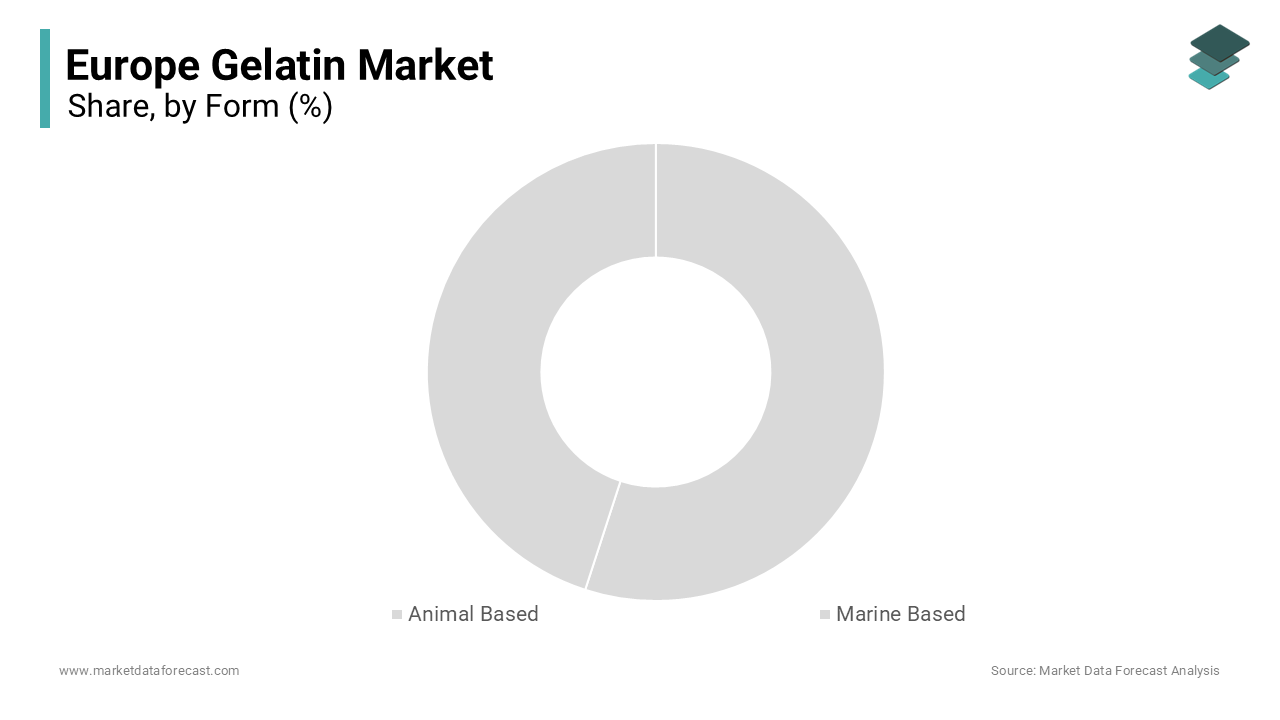
The marine based gelatin segment is likely to witness a fastest CAGR of 8.7% from 2026 to 2034 with the rising demand for non-mammalian protein sources driven by religious dietary requirements, pescatarian lifestyles, and concerns over animal diseases. The growing Muslim and Jewish populations in Europe, who strictly adhere to Halal and Kosher dietary laws, which often prohibit the consumption of porcine gelatin and require stringent certification for bovine sources that is difficult to guarantee. The increasing consumer preference for sustainable and allergen free ingredients, as fish derived gelatin is perceived as a cleaner label option free from the risk of Bovine Spongiform Encephalopathy is also driving the growth of segment. Additionally, advancements in extraction technologies have improved the yield and quality of fish skin gelatin by making it competitive for high value applications in nutraceuticals and premium cosmetics. The emergence of religious inclusivity, safety perceptions, and technological improvements positions marine based gelatin as the most dynamic growth engine in the form segmentation.
By End User Insights
The food and beverages sector segment was accounted in holding a dominant share of the Europe gelatin market in 2025 with the ubiquitous use of gelatin as a gelling, thickening, and stabilizing agent in a vast array of culinary products ranging from confectionery and dairy to meat processing. The first major driver is the enduring popularity of gummy confectionery and jelly desserts across Europe, where gelatin provides the unique elastic texture and melt in the mouth sensation that synthetic alternatives struggle to replicate. In 2024, the European confectionery market generated revenue exceeding 45 billion euros, with gummy candies representing the fastest growing sub category consuming over 40,000 metric tons of gelatin annually, according to data from Caobisco. The extensive application of gelatin in the dairy and meat industries, where it acts as a fat replacer and water binder to improve texture and reduce costs in products like yogurt, cream cheese, and processed meats is additionally elevating the growth of Europe gelatin market. Furthermore, the clarity and foam stabilizing properties of gelatin make it indispensable in beverage clarification and wine fining processes. The deep integration of gelatin into traditional European recipes and industrial food manufacturing processes ensures a stable and massive baseline demand that far exceeds other sectors.
The personal care and cosmetics sector segment is lucratively growing at a fastest CAGR of 7.4% throughout the forecast period with the booming demand for natural, bio active ingredients in skincare and haircare formulations, driven by the clean beauty movement and aging population. The first major driver is the proven efficacy of hydrolyzed collagen peptides in improving skin elasticity, hydration, and reducing wrinkles, leading to their widespread incorporation in anti-aging creams, serums, and sheet masks. In 2025, the European natural and organic cosmetics market grew by 14%, with collagen identified as a top trending ingredient due to its biocompatibility and ability to form protective films on the skin according to Cosmetics Europe. The rise of sustainable and biodegradable packaging solutions, where gelatin is increasingly used to create edible or compostable film coatings for cosmetic products by aligning with the European Green Deal's plastic reduction goals is also boosting the growth of Europe gelatin market. As per the European Bioplastics Association, the development of gelatin based biofilms for single use sachets and masks has surged by 20% as brands seek to eliminate microplastics. Additionally, the use of gelatin in hair care products for repair and shine enhancement is gaining traction among consumers seeking protein rich treatments.
REGIONAL ANALYSIS
Germany Gelatin Market Analysis
Germany was the largest contributor in the Europe gelatin market by capturing 24.3% of share in 2025 with its robust pharmaceutical, food, and chemical industries. The nation's dominance is anchored by its status as a global leader in pharmaceutical manufacturing, where German companies produce billions of hard and soft gelatin capsules annually for domestic use and export. In 2024, the German pharmaceutical sector consumed over 35,000 metric tons of gelatin by reflecting the country's pivotal role in drug delivery systems according to the German Association of Research-Based Pharmaceutical Companies. The country also hosts a strong confectionery industry, with major manufacturers relying on high quality gelatin for gummy production. Furthermore, Germany is at the forefront of research into bioactive collagen peptides, with numerous institutes developing advanced applications for nutraceuticals and medical devices. The presence of major gelatin producers and a dense network of downstream users creates a highly integrated value chain.
France Gelatin Market Analysis
France gelatin market was ranked second by holding 18.4% of share in 2025 with its world renowned culinary traditions and leading cosmetics industry. The high consumption of gelatin in gastronomy, including classic desserts, charcuterie, and wine clarification, where texture and clarity are paramount. France is a global hub for luxury cosmetics, where gelatin and collagen are key ingredients in anti-aging formulations from major houses in Paris. The "Made in France" label in beauty drives demand for high purity and sustainably sourced gelatin. Additionally, the country's strong agricultural base provides a steady supply of bovine and porcine raw materials. The combination of culinary heritage, beauty innovation, and agricultural strength maintains France's strong position as a key consumer and trendsetter in the regional gelatin market.
United Kingdom Gelatin Market Analysis
The United Kingdom gelatin market growth is likely to have prominent opportunities in coming years with its massive confectionery sector and growing focus on health and wellness supplements. The deep cultural affinity for gummy sweets and jelly desserts by making it one of the highest per capita consumers of gelatin based confectionery in the world. Furthermore, the nutraceutical sector, with a rising demand for collagen supplements targeting joint health and beauty from within, fueled by an aging population and health conscious consumers. The country's strong retail sector and emphasis on clean label products also drive demand for transparently sourced gelatin.
Italy Gelatin Market Analysis
Italy gelatin market growth is driven by its diverse food processing industry and historical expertise in leather processing which often intersects with gelatin production. The Italian market is driven by the extensive use of gelatin in traditional foods such as mortadella, prosciutto, and various cheeses, where it acts as a binding and texturizing agent. The country also boasts a sophisticated cosmetics and pharmaceutical sector that utilizes high grade gelatin for specialized applications. Furthermore, Italy's strong tradition in leather tanning generates significant amounts of collagen rich by products, although strict regulations govern their conversion to food grade gelatin. The "Made in Italy" brand's emphasis on quality and tradition ensures a steady demand for premium gelatin grades. The fusion of culinary artistry, industrial capability, and resource availability defines Italy's distinct and resilient position in the European gelatin landscape.
Spain Gelatin Market Analysis
Spain gelatin market growth is driven by its powerful meat processing industry and rapidly expanding wellness sector. The production of cured meats and sausages, where gelatin is extensively used as a binder and fat replacer to ensure texture and yield is also boosting the growth of spain gelatin market. In 2024, Spain produced over 5 million tons of meat products, making it one of the largest consumers of industrial gelatin in Southern Europe according to the Spanish Meat Industry Federation. The country's warm climate also boosts the consumption of gelatin based desserts and dairy products. Additionally, Spain is seeing a surge in the nutraceutical market, with increasing adoption of collagen supplements for sports nutrition and anti-aging, mirroring broader European trends. The government's support for the bioeconomy has spurred investment in extracting value from animal by products.
COMPETITIVE LANDSCAPE
The competition in the Europe gelatin market is characterized by intense rivalry among established multinational corporations and specialized regional producers who vie for dominance through product quality and technological innovation. Major players leverage their extensive research and development capabilities to introduce advanced bioactive collagen peptides and sustainable production methods that address specific consumer health needs. Competitive pressure drives continuous investment in sustainability initiatives as companies strive to meet rigorous European Union regulations regarding animal by products and environmental impact. Pricing strategies remain complex due to volatility in raw material costs forcing firms to balance margin protection with volume retention in price sensitive sectors like confectionery. Strategic alliances with end users are common tactics used to secure long term contracts and foster collaborative product development. The threat of substitution from plant based gelling agents requires incumbent companies to constantly demonstrate the unique functional and health benefits of gelatin. Maintaining regulatory compliance and proving supply chain transparency becomes paramount as customers increasingly prioritize ethical sourcing and safety credentials in their procurement decisions within this sophisticated marketplace.
KEY MARKET PLAYERS
Some of the companies that are playing a dominating role in the Europe gelatin market include
- Darling Ingredients Inc.
- Gelita AG
- Gelatines Weishardt SAS
- Italgelatine S.p.A.
- Lapi Gelatine S.p.A.
- Ewald-Gelatine GmbH
- Trobas Gelatine B.V.
- Juncà Gelatines S.L.
- Jellice Group
- Reinert Gruppe International GmbH
Top Players in the Europe Gelatin Market
Gelita AG
Gelita AG stands as a global leader in the collagen and gelatin industry with its headquarters located in Germany. The company contributes significantly to the worldwide market by supplying high quality bovine and porcine gelatin for food, pharmaceutical, and technical applications. Recent actions to strengthen its market position include the expansion of its production facilities in Eberbach to increase capacity for bioactive collagen peptides. Gelita actively invests in research and development to create innovative health solutions targeting joint mobility and skin beauty. The firm collaborates with major pharmaceutical companies to develop advanced capsule technologies and drug delivery systems. These strategic initiatives reinforce its reputation as a technology driven partner capable of meeting diverse global customer needs while maintaining strict quality and safety standards across its extensive international supply chain.
Rousselot
Rousselot operates as a premier global producer of gelatin and proteins derived from natural sources with a strong footprint across Europe. The company plays a critical role in the international market by offering tailored solutions for the food, nutrition, and pharmaceutical sectors. Recent efforts to bolster its market presence involve the launch of new functional collagen peptides designed specifically for sports nutrition and healthy aging applications. Rousselot has expanded its manufacturing capabilities in France and Belgium to ensure reliable supply amidst growing demand. The corporation emphasizes sustainable sourcing and transparency throughout its value chain to meet evolving consumer expectations. Furthermore, Rousselot partners with research institutions to validate the health benefits of its ingredients through clinical studies.
Nitta Gelatin Inc
Nitta Gelatin Inc functions as a leading Japanese multinational with a significant and growing influence in the Europe gelatin market through its specialized high grade products. The company serves the global sector by providing premium gelatin for pharmaceutical capsules, medical devices, and gourmet food applications. Recent strategic actions include the acquisition of European distribution networks to enhance local service and reduce delivery times for key clients. Nitta Gelatin actively invests in advanced processing technologies to produce low endotoxin gelatin essential for sensitive biomedical uses. The firm focuses on developing marine based gelatin alternatives to cater to specific dietary and religious requirements in the European region. These targeted investments in technology and market access underscore its dedication to excellence and its role as a key provider of specialized gelatin solutions worldwide.
Top Strategies Used by Key Market Participants
Key players in the Europe gelatin market predominantly employ product innovation strategies to develop bioactive collagen peptides and specialized functional ingredients that address specific health and wellness trends. Companies frequently pursue vertical integration to secure reliable access to high quality raw materials from slaughterhouses ensuring supply chain stability and traceability. Strategic partnerships with pharmaceutical and food manufacturers enable co development of customized solutions tailored to unique application requirements and regulatory standards. Expansion of production facilities in key European hubs allows firms to reduce logistics costs and improve responsiveness to local market demands. Sustainability leadership acts as a core differentiator with corporations investing heavily in circular economy initiatives and waste reduction technologies to appeal to eco conscious buyers. Mergers and acquisitions are utilized to consolidate market positions and acquire specialized technologies or niche product lines rapidly. Digital transformation of manufacturing processes enhances operational efficiency and quality control while reducing environmental impact.
MARKET SEGMENTATION
This research report on the Europe gelatin market has been segmented and sub-segmented based on the following categories.
By Form
- Animal Based
- Marine Based
By End User
- Personal Care and Cosmetics
- Food and Beverages
By Country
- UK
- France
- Spain
- Germany
- Italy
- Russia
- Sweden
- Denmark
- Switzerland
- Netherlands
- Turkey
- Czech Republic
- Rest of Europe