- Product Description Description
- Table of Contents TOC
- List of Table & Figure LOT
- Get Free Sample PDF Sample PDF
Market Size, 2025
$16.70%Market Estimate, 2026
$17.84%Market Forecast, 2034
$30.17%CAGR, 2026–2034
6.79%Europe Genetically Modified Food Market Report Summary
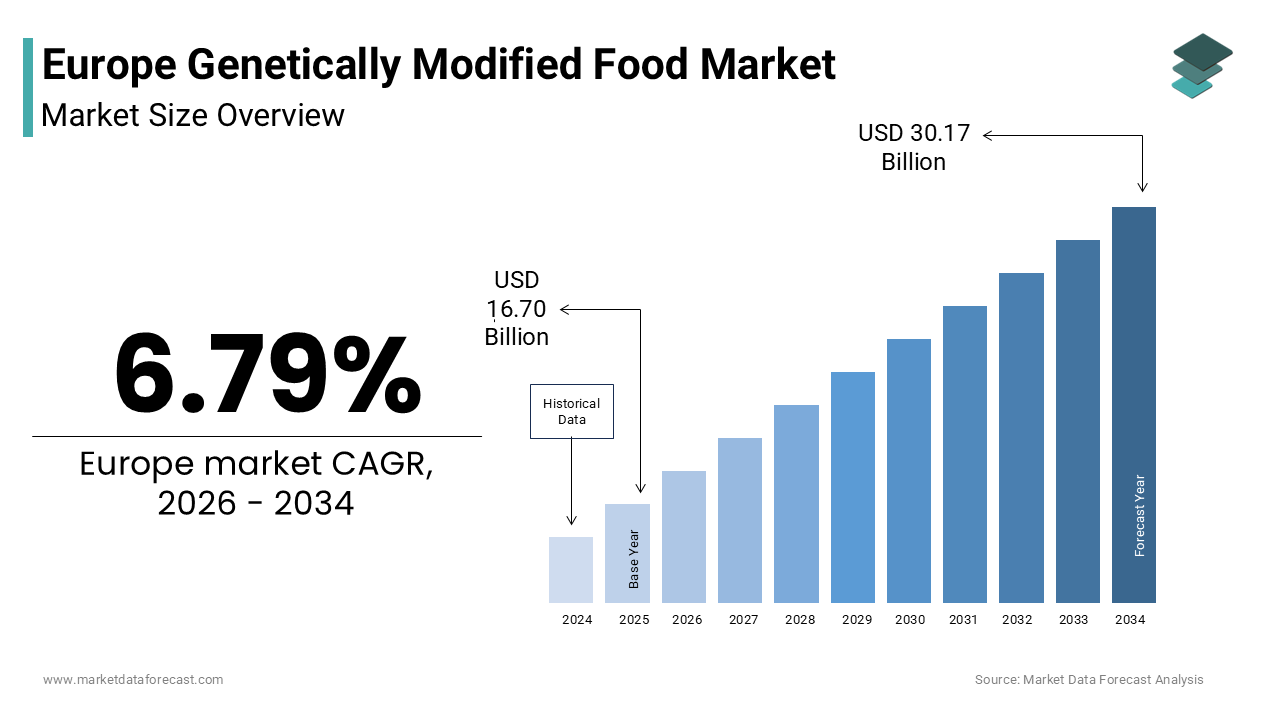
The Europe genetically modified food market was valued at USD 16.70 billion in 2025, is estimated to reach USD 17.84 billion in 2026, and is projected to reach USD 30.17 billion by 2034, growing at a CAGR of 6.79% during the forecast period from 2026 to 2034. The growth of the Europe genetically modified food market is driven by the increasing dependence on imported genetically modified feed, advancements in gene-editing technologies, and the rising need for sustainable and climate-resilient agriculture. Additionally, the demand for efficient livestock production and food security is further supporting market expansion. However, stringent regulatory frameworks and strong consumer resistance toward genetically modified products continue to impact market dynamics.
Key Market Trends
- High reliance on imported genetically modified soybean and maize for animal feed.
- Rising adoption of gene-editing technologies such as CRISPR.
- Increasing focus on sustainable agriculture and reduced pesticide usage.
- Growing interest in biofortified and nutrient-enhanced crops.
- Strong regulatory oversight and strict labeling and traceability requirements.
Segmental Insights
- Based on type, the crops segment was the largest and held a dominant share of the Europe genetically modified food market in 2025. The segment’s dominance is attributed to the heavy dependence on imported genetically modified crops such as soybean and maize to sustain the region’s livestock and feed industries.
- Based on type, the vegetables segment is projected to witness the fastest growth during the forecast period. This growth is driven by advancements in gene-editing technologies and increasing research into climate-resilient and nutrient-enhanced vegetable varieties.
- Based on product type, the herbicide tolerance segment dominated the market due to its widespread use in global agricultural practices, ensuring consistent and cost-effective supply for European imports.
- Based on crop type, the soybean segment accounted for the largest share owing to its critical role as a primary protein source in animal feed across Europe.
Regional Insights
The Europe genetically modified food market exhibits varied dynamics across countries due to differences in regulatory frameworks, agricultural practices, and consumer perception.
- Spain was the largest contributor, accounting for 24.3% of the Europe genetically modified food market share in 2025, driven by its adoption of genetically modified maize cultivation and strong agricultural support.
- Germany holds a significant share due to its large livestock industry and heavy reliance on imported genetically modified feed despite restrictions on domestic cultivation.
- United Kingdom is emerging as a potential growth market with evolving regulations supporting gene-editing technologies and innovation in agriculture.
- The Netherlands plays a crucial role as a major import and distribution hub for genetically modified commodities across Europe.
- France shows a unique dynamic with strict opposition to cultivation but continued reliance on imports to support its agricultural sector.
Competitive Landscape
The Europe genetically modified food market is highly regulated and competitive, dominated by a limited number of multinational biotechnology and agribusiness companies. Market participants focus on innovation in gene editing, sustainability initiatives, and regulatory compliance to maintain their positions. Strategic collaborations, investments in research and development, and advancements in precision breeding technologies are key approaches adopted by leading players. Key players in the Europe genetically modified food market include Bayer AG, Corteva Agriscience, Syngenta Group, BASF SE, Groupe Limagrain, KWS SAAT SE & Co. KGaA, Inari Agriculture, Tropic Biosciences, Pairwise, and Origin Agritech Limited.
Europe Genetically Modified Food Market Size
The Europe genetically modified food market size was valued at USD 16.70 billion in 2025 and is anticipated to reach USD 17.84 billion in 2026 from USD 30.17 billion by 2034, growing at a CAGR of 6.79% during the forecast period from 2026 to 2034.
The genetically modified food, whose genetic material has been altered using biotechnology to introduce specific traits such as pest resistance, herbicide tolerance, or enhanced nutritional profiles. The sector operates under the stringent oversight of the European Food Safety Authority, which mandates rigorous risk assessments before any genetically modified organism can enter the supply chain. As per data from the European Commission, only one genetically modified crop, a specific type of maize, is currently authorized for cultivation within the European Union, highlighting the restrictive nature of local production. Conversely, the region remains heavily dependent on imports, with the European Feed Manufacturers Federation indicating that over 30 million tons of genetically modified soybean meal are imported annually to sustain the livestock industry. The European Environment Agency notes that public perception remains a critical variable, with surveys consistently showing that a majority of European citizens express hesitation regarding the consumption of genetically modified foods directly. Furthermore, the World Health Organization emphasizes that safety evaluations in Europe are among the most comprehensive globally, ensuring that approved products meet high standards for human and environmental health. These dynamics create a unique market environment, where technological potential clashes with socio-political caution and regulatory prudence.
MARKET DRIVERS
Dependence on Imported Protein for Livestock Sustainability
The undeniable reliance of the livestock sector on imported genetically modified protein sources is majorly fuelling the growth of Europe genetically modified food market. European agriculture faces a significant deficit in domestic protein crops by making genetically modified soybean meal from the Americas an indispensable component for feeding poultry, swine, and cattle efficiently. As per the European Commission, the European Union produces less than 15% of the protein feed it requires, necessitating massive imports to prevent the collapse of its meat and dairy industries. This structural gap forces the market to absorb millions of tons of genetically modified commodities annually, as non-GM alternatives are often insufficient in volume and significantly higher in cost. Data from the European Feed Manufacturers Federation reveals that approximately 90% of the soybean meal used in European compound feed is genetically modified, underscoring its role as the backbone of animal nutrition. Furthermore, the consistency and quality of genetically modified soy ensure optimal growth rates and health outcomes for livestock, which is crucial for meeting the high food safety standards demanded by European consumers.
Advancements in Gene Editing for Climate Resilient Agriculture
The emergence of sophisticated gene editing technologies, particularly CRISPR-Cas9 by offering solutions to urgent climate challenges is also levelling up the growth of Europe genetically modified food market. Unlike traditional genetic modification, these new techniques allow for precise alterations to plant genomes without introducing foreign DNA, potentially bypassing some regulatory hurdles and public skepticism associated with older methods. As per the Joint Research Centre of the European Commission, gene editing could enable the development of crop varieties that are resistant to drought, salinity, and emerging pests, which are becoming increasingly prevalent due to changing weather patterns across the continent. This technological evolution addresses the critical need for food security and yield stability in a region where agricultural productivity is threatened by extreme weather events. Data from the European Plant Science Organisation indicates that over 200 research projects are currently utilizing gene editing to enhance traits in wheat, potatoes, and tomatoes by signaling a robust pipeline of future innovations. The ability to reduce pesticide usage through inherent pest resistance aligns with the European Green Deal objectives by offering a sustainable pathway that appeals to environmentally conscious stakeholders. Furthermore, the potential to biofortify crops with essential vitamins and minerals presents a compelling public health argument that could shift consumer perception.
MARKET RESTRAINTS
Stringent Regulatory Frameworks and Authorization Bottlenecks
The highly rigorous and often protracted regulatory approval process is impeding the growth of Europe genetically modified food market. The authorization procedure involves multiple layers of scientific assessment by the European Food Safety Authority followed by a political decision-making process among member states, which frequently results in significant delays or deadlocks. As per the European Commission, the average time required to approve a new genetically modified organism for cultivation or food use can exceed five years by creating a disincentive for biotechnology companies to invest in the European market compared to faster jurisdictions like the Americas. This bureaucratic complexity is compounded by the ability of individual member states to opt out of cultivating approved crops, fragmenting the single market and undermining the economic viability of widespread adoption. Data from the European Parliament shows that despite numerous applications pending, very few new genetically modified traits have received final authorization in the last decade, stifling innovation and limiting product availability. The requirement for extensive traceability and labeling further increases operational costs for supply chain operators, who must maintain strict segregation between genetically modified and non-genetically modified streams to comply with the law. These regulatory hurdles create an environment of uncertainty that discourages investment in research and development, effectively capping the market growth and preventing the commercialization of potentially beneficial agricultural innovations.
Persistent Public Skepticism and Consumer Resistance
The deep-seated public awareness and widespread consumer resistance toward genetically modified organisms constitute a major psychological and commercial barrier is limiting the growth of Europe genetically modified food market. Decades of controversy, media scrutiny, and activism have fostered a prevailing narrative that associates genetic modification with unnatural practices and potential long-term health risks, regardless of scientific consensus on safety. As per the Eurobarometer survey conducted by the European Commission, over 60% of European citizens believe that genetically modified foods are fundamentally unsafe, leading to a strong preference for organic and non-GM labeled products. This negative perception drives retailers to adopt strict non-GM policies for their private label ranges, effectively excluding genetically modified ingredients from a vast portion of the consumer food market. Data from the European Consumer Organisation indicates that a significant majority of shoppers actively avoid products containing genetically modified ingredients, forcing food manufacturers to reformulate recipes to exclude them even when they are legally permitted. The stigma extends to the farming community, where many growers fear reputational damage or market rejection if they adopt genetically modified crops. Furthermore, the influence of non-governmental organizations and environmental groups continues to amplify these concerns, shaping public policy and maintaining a hostile environment for the acceptance of biotech foods.
MARKET OPPORTUNITIES
Development of Biofortified Crops for Nutritional Enhancement
The potential to develop and commercialize biofortified genetically modified crops to address specific public health deficiencies is creating new opportunities for the growth of Europe genetically modified food market. By engineering crops to produce higher levels of essential vitamins, minerals, and antioxidants, biotechnology can provide a cost-effective solution to malnutrition and chronic diseases without requiring changes in consumer dietary habits. As per the World Health Organization, micronutrient deficiencies affect a significant portion of the European population, particularly in vulnerable groups by creating a compelling case for nutrient-dense food solutions. Innovations such as golden rice enriched with vitamin A or potatoes with enhanced iron content could revolutionize public health strategies and open new market segments focused on wellness and prevention. Data from the European Food Safety Authority suggests that there is growing interest in functional foods, and genetically modified biofortification represents the next frontier in this category. The ability to deliver targeted health benefits through staple foods could help shift public perception by demonstrating tangible personal value beyond agricultural efficiency. Furthermore, aligning these developments with European health initiatives could garner support from policymakers and healthcare providers, creating a favorable regulatory pathway.
Integration of Sustainable Traits to Support Green Deal Objectives
The alignment of genetically modified traits with the sustainability goals of the European Green Deal to reposition itself as a key enabler of environmental protection is additionally prompting new opportunities for the growth of Europe genetically modified food market. Developing crops that require fewer chemical inputs, utilize water more efficiently, or sequester more carbon can directly contribute to the European Union's ambitious targets for reducing pesticide use and greenhouse gas emissions. As per the European Commission, the Farm to Fork Strategy aims to reduce the use of chemical pesticides by 50% by 2030, a goal that is difficult to achieve with conventional breeding alone but feasible through genetic engineering of pest-resistant varieties. This strategic fit offers a pathway for regulatory acceptance and public support, as genetically modified crops can be framed as essential tools for sustainable agriculture rather than just profit drivers. Data from the European Plant Science Organisation highlights that insect-resistant maize varieties have already demonstrated a significant reduction in mycotoxin contamination and insecticide application, providing empirical evidence of environmental benefits. The opportunity extends to developing cover crops and rotation species with enhanced traits that improve soil health and biodiversity.
MARKET CHALLENGES
Complex Coexistence and Supply Chain Segregation Issues
The logistical and economic challenge of maintaining strict coexistence between genetically modified and non-genetically modified supply chains is one of the challenges for the growth of Europe genetically modified food market. The requirement to prevent cross-contamination at levels exceeding the 0.9% labeling threshold demands sophisticated infrastructure, dedicated storage facilities, and specialized transport logistics that increase operational costs substantially. As per the European Commission, member states must implement national coexistence measures to ensure that farmers can choose between production types without economic loss, yet the fragmentation of land ownership in Europe makes physical separation difficult. Data from the European Grain Association indicates that the cost of testing, cleaning, and segregating supply chains can add to the final price of genetically modified commodities, eroding their cost advantage. The risk of accidental admixture leads to legal liabilities and market rejection, creating a high-stakes environment for traders and processors. Furthermore, the lack of harmonized coexistence rules across different European countries complicates cross-border trade, forcing companies to navigate a patchwork of regulations. This complexity discourages the handling of genetically modified products by smaller operators who lack the resources for such rigorous control systems, consolidating the market among a few large players and limiting overall liquidity.
Legal Liabilities and Intellectual Property Disputes
The intricate web of legal liabilities and intellectual property rights surrounding genetically modified seeds and traits creates a challenging environment that stifles dynamism and innovation. The legal liabilities and intellectual property disputes is also to impede the growth of Europe genetically modified food market. Biotechnology companies hold patents on specific genetic traits, leading to complex licensing agreements and potential disputes over unauthorized use or accidental presence in non-GM crops. As per the Court of Justice of the European Union, rulings on the patentability of essentially biological processes and the liability for adventitious presence have created legal uncertainties that deter investment. The burden of proof often falls on the technology provider to demonstrate that their product did not cause contamination, leading to costly legal battles and reputational damage. Furthermore, the divergence in national laws regarding liability regimes means that a company operating across Europe faces inconsistent legal risks, complicating risk management strategies. The high cost of defending intellectual property and managing liability claims diverts resources away from research and development, slowing the pace of innovation.
REPORT COVERAGE
| REPORT METRIC | DETAILS |
| Market Size Available | 2025 to 2034 |
| Base Year | 2025 |
| Forecast Period | 2026 to 2034 |
| CAGR | 6.79% |
| Segments Covered | By Type, Product type, Crop Type and Region. |
| Various Analyses Covered | Global, Regional & Country Level Analysis, Segment-Level Analysis, DROC, PESTLE Analysis, Porter’s Five Forces Analysis, Competitive Landscape, Analyst Overview of Investment Opportunities |
| Country Covered | UK, France, Spain, Germany, Italy, Russia, Sweden, Denmark, Switzerland, the Netherlands, Turkey, the Czech Republic, and the Rest of Europe. |
| Market Leaders Profiled | Bayer AG, Corteva Agriscience, Syngenta Group, BASF SE, Groupe Limagrain, KWS SAAT SE & Co. KGaA, Inari Agriculture, Tropic Biosciences, Pairwise, and Origin Agritech Limited. |
SEGMENTAL ANALYSIS
By Type Insights
The crops segment was the largest by holding a dominant share of the Europe genetically modified food market in 2025 owing to the region's structural dependence on imported genetically modified feed crops to sustain its massive livestock and dairy industries, as domestic production of protein-rich feed is insufficient. The sheer volume of soybean and maize imports required to feed European poultry, swine, and cattle, which cannot be met by non-genetically modified sources alone without skyrocketing costs. As per data from the European Commission, the European Union imports approximately 33 million tons of soybean meal annually, with over 90% originating from genetically modified sources in the Americas. The regulatory distinction that allows the import of approved genetically modified crops for feed and processing, while severely restricting their cultivation, where crops flow in as commodities rather than being grown locally.
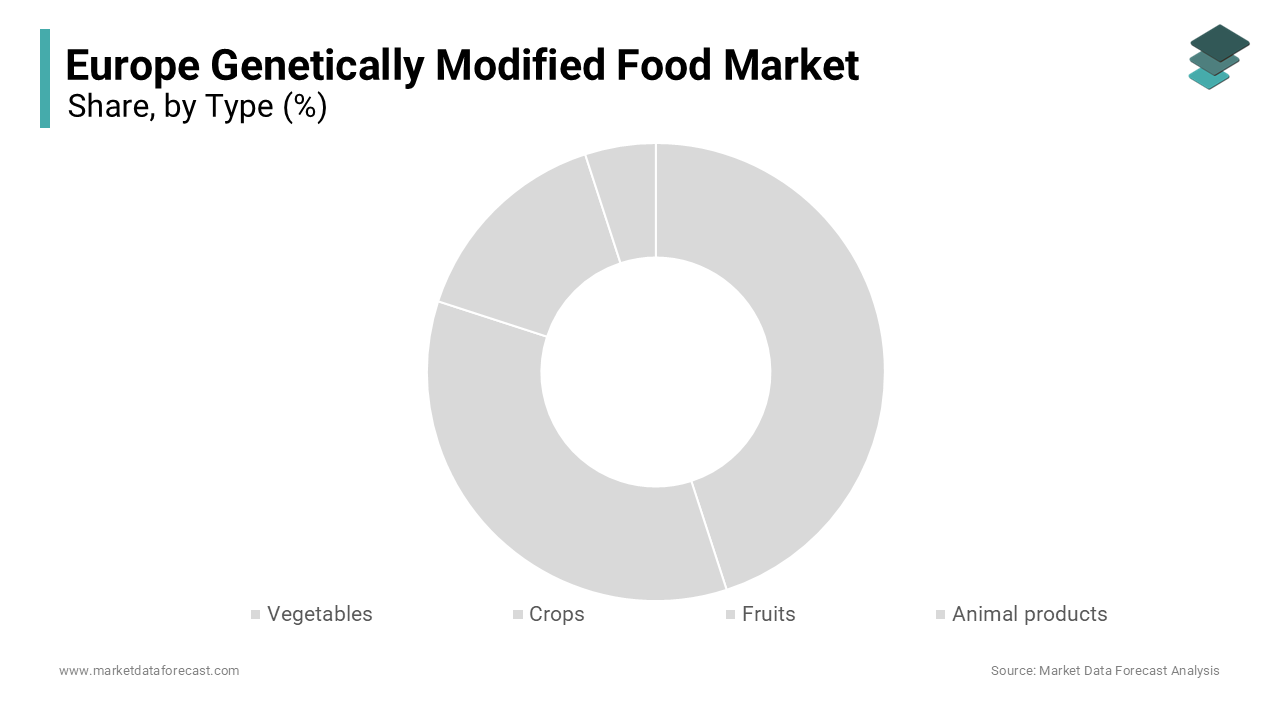
The vegetables segment is projected to expand at a fastest CAGR of 6.8% throughout the forecast period owing to the emerging research and pilot projects focused on gene-edited vegetables designed to withstand climate change impacts and reduce pesticide usage by aligning with the European Green Deal objectives. The development of new varieties of potatoes, tomatoes, and mushrooms using CRISPR technology to resist late blight and other diseases by offering a sustainable alternative to chemical fungicides. As per reports from the European Plant Science Organisation, over 50 field trials involving gene-edited vegetables are currently underway across member states, signaling a shift toward acceptance of precision breeding techniques that do not introduce foreign DNA. The growing consumer demand for nutrient-dense produce, prompting innovation in biofortified vegetables that offer enhanced levels of vitamins and antioxidants to address public health concerns is also escalating the growth of segment. The biofortified crops could play a crucial role in combating micronutrient deficiencies, providing a compelling public health narrative that may soften regulatory and public resistance. Furthermore, the potential for reduced food waste through traits that extend shelf life appeals to retailers and consumers alike by creating a pull for innovative vegetable varieties.
By Product Type Insights
The herbicide tolerance segment was accounted in holding 55.4% of the Europe genetically modified food market share in 2025 owing to the agricultural practices of major exporting nations like Brazil and the United States, where HT crops are the standard for efficient weed management, ensuring a steady supply of cost-effective feed for Europe. The economic efficiency HT traits provide to global suppliers by allowing them to produce soybean meal at lower costs which is then exported to fill Europe's protein deficit. The streamlined supply chain logistics associated with HT crops, which simplify farming operations for exporters and ensure consistent quality and availability for European feed manufacturers is also levelling up the growth of Europe genetically modified food market. Statistics from the European Oilseed and Protein Crushers Association reveal that the crushing industry depends entirely on these imports to operate, with no viable large-scale alternative that matches the price and volume of HT soybeans.
The stacked traits segment is anticipated to grow at a CAGR of 7.5% during the forecast period owing to the increasing adoption of crops that combine both herbicide tolerance and insect resistance genes by offering dual benefits that enhance yield stability and reduce the need for multiple chemical applications. The escalating pressure from pests and weeds due to climate change, which renders single-trait crops less effective and pushes global farmers toward more robust stacked solutions that Europe subsequently imports. The environmental argument that stacked traits can lead to a net reduction in overall pesticide load by targeting specific pests and allowing for more precise herbicide application by aligning with European sustainability goals. Furthermore, the higher yield reliability of stacked varieties ensures food security for the livestock sector, making them increasingly preferred by traders and crushers.
By Crop Type Insights
The soybean segment was the largest by holding a dominant share of the Europe genetically modified food market in 2025 owing to the European Union's massive deficit in domestic protein production, necessitating heavy reliance on imported genetically modified soybean meal to feed its intensive livestock sectors. The growth of the segment is likely to grow with the unparalleled efficiency and scale of genetically modified soybean production in South America and North America, which offers the only viable source of affordable protein for European farmers. The nutritional profile of soybean meal, which provides an essential balance of amino acids required for optimal animal growth and milk production, which is making it difficult to substitute with other crops without compromising efficiency. The economic reality that non-GM soybeans are significantly more expensive and available in limited quantities further cements the dominance of genetically modified soybeans.
The maize segment is swiftly emerging to expand at a CAGR of 6.2% throughout the forecast period owing to the increasing demand for genetically modified maize for both animal feed and industrial starch processing, driven by its versatility and high energy content. As per reports from the European Maize Association, the adoption of stacked trait maize in exporting countries has surged, ensuring a steady influx of these varieties into the European supply chain for feed purposes. The expansion of biogas production across Europe, which utilizes maize as a primary feedstock by creating additional demand channels that benefit from the higher yields and stability of genetically modified varieties grown abroad. Data from Eurostat shows that the biogas sector has grown by 20% in the last decade, indirectly boosting the market for high-yield maize inputs. Furthermore, ongoing research into gene-edited maize varieties that offer drought resistance and improved nitrogen use efficiency is generating optimism for future approvals and acceptance.
REGIONAL ANALYSIS
Spain Genetically Modified Food Market Analysis
Spain was the top performer in the Europe genetically modified food market by holding 24.3% of share in 2025 that continues to cultivate genetically modified crops on a significant commercial scale. The market status is defined by the widespread adoption of Bt maize, which is resistant to the corn borer pest, making it a vital tool for Spanish farmers to protect yields and reduce insecticide use. The strong support from the local agricultural community and scientific bodies, who view genetically modified crops as essential for maintaining competitiveness and sustainability. Statistics from the Spanish National Institute of Agricultural and Food Research and Technology indicate that Bt maize adoption has led to a measurable reduction in pesticide applications and mycotoxin levels by providing empirical evidence of its benefits. Furthermore, the integration of genetically modified maize into the local supply chain for animal feed ensures a stable domestic market.
Germany Genetically Modified Food Market Analysis
Germany genetically modified food market held second position with prominent share in 2025 with its massive livestock industry. The strict ban on domestic cultivation but a pragmatic reliance on imported genetically modified soybean and maize for animal nutrition is also likely to leverage the growth of Europe genetically modified food market. key The sheer size of Germany's pork and poultry sectors, which require vast quantities of high-protein feed that can only be supplied economically through genetically modified imports. As per data from the German Federal Office of Consumer Protection and Food Safety, Germany imports millions of tons of genetically modified soybean meal annually, making it the top destination for such commodities in the European Union. Furthermore, the robust regulatory framework ensures that all imported genetically modified products are strictly tracked and labeled, maintaining consumer trust while allowing the industry to function.
United Kingdom Genetically Modified Food Market Analysis
The United Kingdom genetically modified food market is likely to grow with a strict prohibitor to a potential innovator following its departure from the European Union. The heavy reliance on imported genetically modified feed, similar to its European neighbors, but with a shifting regulatory landscape that may soon allow for the cultivation of gene-edited crops. A major driving factor is the government's new Genetic Technology (Precision Breeding) Act, which aims to distinguish gene editing from traditional genetic modification, potentially unlocking new opportunities for domestic research and cultivation. As per data from the Department for Environment Food and Rural Affairs, the UK imports substantial volumes of genetically modified soy and maize for its livestock sector, mirroring the continental dependency. The second critical driver is the strong presence of world-class agricultural research institutions that are pioneering gene-editing techniques for crops like wheat and oilseed rape, positioning the UK as a future leader in biotech innovation. Statistics from the Biotechnology and Biological Sciences Research Council indicate increased funding for precision breeding projects, signaling a strategic pivot toward embracing advanced agricultural technologies.
Netherlands Genetically Modified Food Market Analysis
The Netherlands genetically modified food market growth is likely to witness a fastest growth opportunities in coming years with its role as a primary entry point for imported soybeans and maize, which are crushed and distributed throughout Europe, rather than by domestic cultivation. The country's strategic location and advanced port infrastructure in Rotterdam, which facilitates the efficient handling and transshipment of massive volumes of genetically modified feed ingredients. As per data from the Dutch Ministry of Agriculture, Nature and Food Quality, the Netherlands processes a significant%age of the European Union's imported oilseeds by making it indispensable to the regional supply chain. Furthermore, the Netherlands is a center for biotechnology research, hosting numerous companies and institutes working on plant sciences, which keeps the country at the forefront of technical discussions regarding genetic modification.
France Genetically Modified Food Market Analysis
France genetically modified food market is driven by the strong political opposition to cultivation yet a significant dependence on imports for its agricultural sector. The growing of genetically modified crops on French soil, while simultaneously relying on imported genetically modified feed for its large livestock industry. The powerful cultural and political movement advocating for food sovereignty and agroecology, which has successfully lobbied for strict restrictions on genetically modified organisms to protect the "Made in France" brand. As per data from the French Ministry of Agriculture, France maintains a zero-tolerance policy for unauthorized genetically modified crops and has actively opposed EU-wide authorizations for new varieties. However, statistics from the French Oilseed and Protein Crushers Association indicate that the country still imports millions of tons of genetically modified soybean meal annually, revealing a pragmatic contradiction between policy and practice. The second significant driver is the pressure from French farmers who demand access to cost-effective feed to compete with neighbors like Germany and Spain, creating an internal tension between ideological stance and economic reality.
COMPETITIVE LANDSCAPE
The competition in the Europe genetically modified food market is highly specialized and intensely regulated, characterized by a small group of multinational agribusiness giants competing against a backdrop of strict political and public scrutiny. Dominant players leverage their vast research capabilities and global supply chains to maintain dominance in the import sector while navigating the near-total ban on domestic cultivation. The market witnesses rivalry based on technological innovation, particularly in gene editing versus traditional genetic modification, as companies seek regulatory advantages under evolving laws. Compliance with stringent traceability and labeling requirements acts as a significant barrier to entry, favoring established corporations with resources to manage complex logistics. Public perception and activist pressure further intensify competition, forcing firms to invest heavily in communication strategies and sustainability initiatives to gain social license. The divergence between national regulations within Europe creates a fragmented landscape where companies must tailor strategies for each jurisdiction.
KEY MARKET PLAYERS
Some of the companies that are playing a dominating role in the Europe Genetically Modified Food Market include
- Bayer AG
- Corteva Agriscience
- Syngenta Group
- BASF SE
- Groupe Limagrain
- KWS SAAT SE & Co. KGaA
- Inari Agriculture
- Tropic Biosciences
- Pairwise
- Origin Agritech Limited
Top Players in the Europe Genetically Modified Food Market
Bayer AG
Bayer AG stands as a global leader in agricultural biotechnology with a significant footprint in the Europe genetically modified food market through its crop science division. The company contributes globally by developing advanced seed traits that enhance yield stability and pest resistance, crucial for feeding a growing population. In Europe, Bayer focuses heavily on supplying approved genetically modified seeds for import-dependent feed sectors and engaging in regulatory dialogues. Recent actions to strengthen its market position include investing in gene editing research facilities in Germany to develop climate-resilient crop varieties compliant with evolving EU regulations. The firm has also launched sustainability initiatives aimed at reducing pesticide use through its biotech solutions, aligning with European Green Deal objectives.
Corteva Agriscience
Corteva Agriscience operates as a major pure-play agriculture company driving innovation in the Europe genetically modified food market through its extensive portfolio of seed and protection products. The corporation contributes globally by delivering high-performance hybrids and traits that address critical challenges like drought and disease pressure. Within Europe, Corteva is actively involved in supplying non-cultivation markets with imported feed ingredients and advocating for science-based regulatory frameworks. Recent actions to strengthen its market position include expanding its breeding centers in France and Spain to accelerate the development of crops suited for European climates using precision breeding techniques. The company has also initiated educational campaigns to inform stakeholders about the benefits of biotechnology for sustainable farming practices. Furthermore, Corteva collaborates with European universities to advance research in gene editing, positioning itself at the forefront of next-generation agricultural solutions. These efforts demonstrate its dedication to supporting European agriculture through innovation while adapting to regional specificities and regulatory requirements.
Syngenta Group
Syngenta Group is a leading agribusiness entity with a profound impact on the Europe genetically modified food market via its crop protection and seeds divisions. The company contributes globally by providing integrated solutions that combine genetic traits with crop care products to maximize farm productivity. In Europe, Syngenta focuses on navigating the restrictive environment by supplying approved traits for import and investing in alternative biotechnologies like gene editing. Recent actions to strengthen its market position include establishing new research hubs in the United Kingdom to leverage post-Brexit regulatory opportunities for precision breeding. The firm has also committed to significant investments in sustainable agriculture projects that highlight the role of biotechnology in reducing environmental footprints. Syngenta actively engages with policymakers to shape favorable conditions for innovation while ensuring compliance with strict European safety standards.
Top Strategies Used by Key Market Participants
Key players in the Europe genetically modified food market primarily employ heavy investment in research and development to pioneer gene editing technologies that may bypass strict genetically modified organism regulations. Companies actively engage in strategic partnerships with academic institutions and government bodies to influence policy and promote science-based regulatory frameworks. Another major strategy involves focusing on sustainability narratives to align biotech solutions with European Green Deal goals such as reduced pesticide use and lower carbon emissions. Firms also diversify their portfolios by developing traits specifically designed for climate resilience and disease resistance to address urgent agricultural challenges. Additionally, participants prioritize supply chain transparency and traceability systems to ensure compliance with rigorous labeling and segregation requirements. These combined approaches enable market leaders to navigate complex regulatory environments while maintaining competitiveness and fostering acceptance.
MARKET SEGMENTATION
This research report on the Europe Genetically Modified Food Market has been segmented and sub-segmented based on the following categories.
By Type
- Vegetables
- Crops
- Fruits
- Animal products
By Product type
- Herbicide tolerance (HT)
- Insect resistance (IR)
- Stacked traits (ST)
By Crop Type
- Soybean
- Maize
- Cotton
- Canola
- Others
By Country
- UK
- France
- Spain
- Germany
- Italy
- Russia
- Sweden
- Denmark
- Switzerland
- Netherlands
- Turkey
- Czech Republic
- Rest of Europe