- Product Description Description
- Table of Contents TOC
- List of Table & Figure LOT
- Get Free Sample PDF Sample PDF
Market Size, 2025
$7.42 BnMarket Estimate, 2026
$7.75 BnMarket Forecast, 2034
$110.99 BnCAGR, 2026–2034
4.46%Europe Gin Market Report Summary
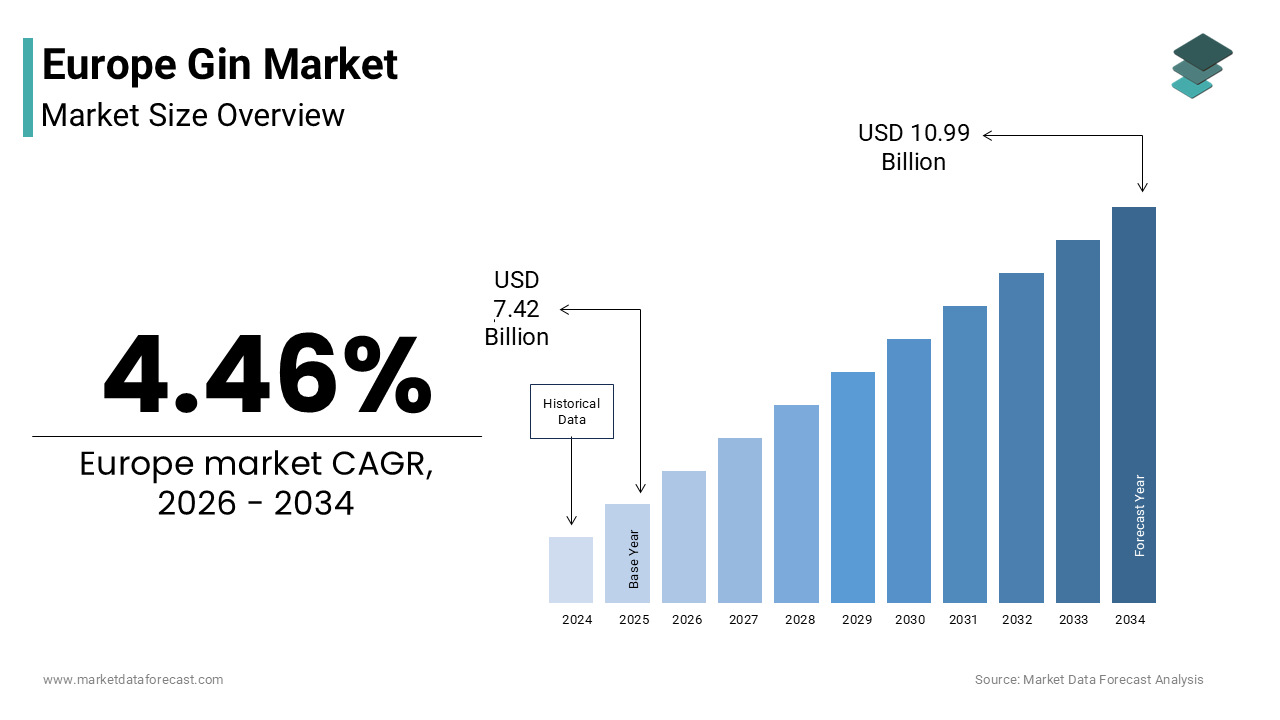
The Europe gin market was valued at USD 7.42 billion in 2025, is estimated to reach USD 7.75 billion in 2026, and is projected to reach USD 10.99 billion by 2034, growing at a CAGR of 4.46% during the forecast period from 2026 to 2034. The growth of the Europe gin market is driven by the proliferation of craft distilleries, increasing demand for premium cocktails, and the rising popularity of mixology culture across the region. Additionally, the shift toward premiumization and experiential drinking, along with innovation in botanical flavors, is further supporting market expansion. However, regulatory complexities and growing health consciousness among consumers continue to influence market dynamics.
Key Market Trends
- Rapid growth of craft distilleries and locally sourced botanical gins.
- Increasing demand for premium and super-premium gin variants.
- Rising popularity of cocktail culture and home mixology trends.
- Expansion of low and no-alcohol gin alternatives.
- Growing focus on sustainability and eco-friendly production practices.
Segmental Insights
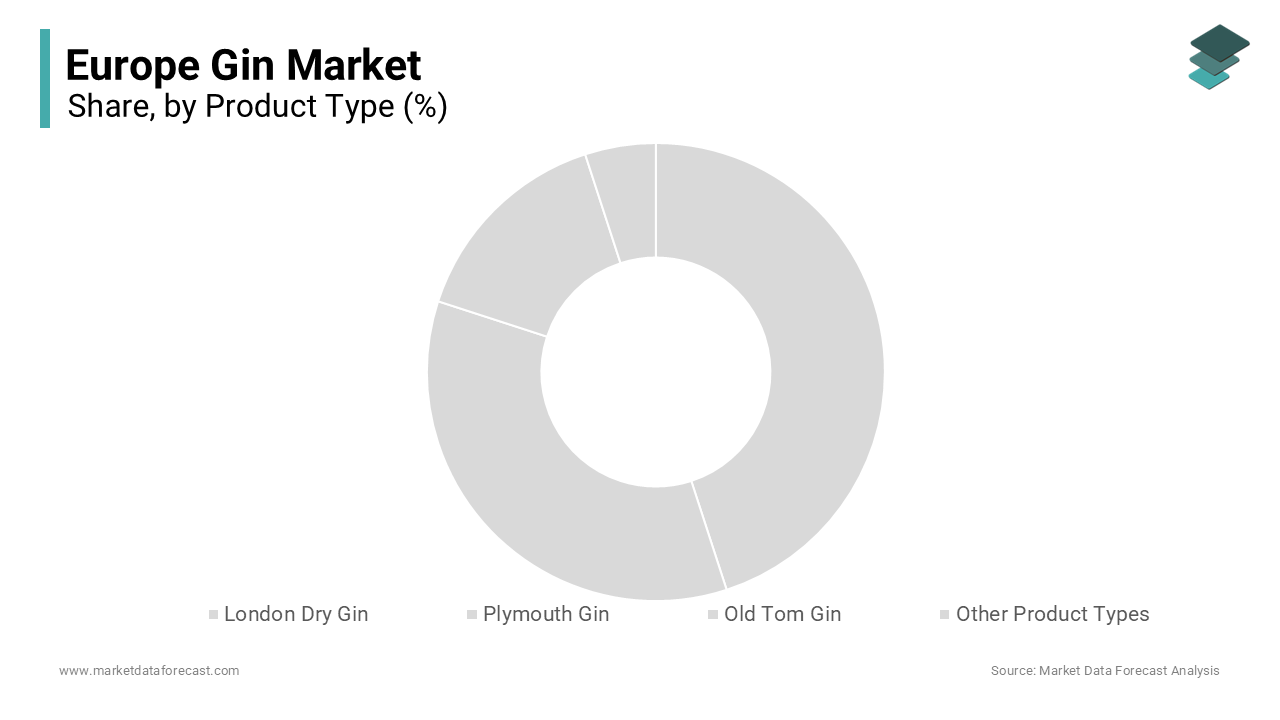
- Based on product type, the London Dry Gin segment was the largest and held a dominant share of the Europe gin market in 2025. The segment’s dominance is attributed to its standardized production methods, strong consumer trust, and widespread use in classic cocktails such as gin and tonic and martini.
- Based on product type, the other product types segment is projected to witness the fastest growth during the forecast period. This growth is driven by increasing consumer preference for flavored, fruit-forward, and innovative gin varieties, particularly among younger demographics.
- Based on category, the mass segment accounted for the largest share due to its affordability, wide availability, and strong presence in retail channels.
- Based on category, the premium segment is expected to grow at the fastest rate, supported by the “drink less but better” trend and increasing consumer willingness to pay for high-quality and artisanal products.
Regional Insights
The Europe gin market shows strong growth across key countries, driven by cultural trends, innovation, and evolving consumer preferences.
- United Kingdom was the largest contributor, accounting for 23.3% of the Europe gin market share in 2025, driven by a high number of distilleries, strong export market, and deep-rooted gin consumption culture.
- Spain is a major market supported by its popular “Gin Tonica” culture and strong on-trade consumption.
- Germany is witnessing rapid growth due to the expansion of craft distilleries and rising demand for premium spirits.
- Italy is emerging as a key market driven by aperitivo culture and increasing preference for botanical-rich premium gin.
- France is experiencing steady growth supported by premiumization trends and the expansion of cocktail culture.
Competitive Landscape
The Europe gin market is highly competitive and fragmented, with the presence of global spirits companies and numerous craft distilleries competing on innovation, quality, and brand identity. Market players focus on product differentiation, premiumization, sustainability initiatives, and strategic acquisitions to strengthen their market position. The rise of ready-to-drink formats and flavored gin variants is further intensifying competition. Key players in the Europe gin market include Diageo Plc, Pernod Ricard SA, Bacardi Limited, William Grant & Sons Ltd., Davide Campari-Milano N.V., Brown-Forman Corporation, Suntory Holdings Limited, Rémy Cointreau, Lucas Bols N.V., and San Miguel Corporation.
Europe Gin Market Size
The Europe gin market size was valued at USD 7.42 billion in 2025 and is anticipated to reach USD 7.75 billion in 2026 from USD 10.99 billion by 2034, growing at a CAGR of 4.46% during the forecast period from 2026 to 2034.
The gin is a distilled alcoholic beverage primarily flavored with juniper berries and a diverse array of botanicals. The definition of gin in Europe is strictly regulated under European Union spirit drink regulations, which mandate specific production methods and minimum alcohol strengths to ensure authenticity. As per data from Eurostat, the alcohol beverage sector contributes significantly to the agricultural economy, with millions of hectares dedicated to growing cereals and botanicals used in distillation. The European Commission notes that the spirits industry supports over 150,000 direct jobs across the continent, highlighting its socio-economic importance beyond mere consumption. Furthermore, the World Health Organization reports that while overall alcohol consumption in Europe has stabilized, there is a marked shift toward higher quality and lower volume drinking, a trend known as "drinking better not more." National statistics from the United Kingdom reveal that there are now over 400 operational gin distilleries, a tenfold increase from two decades ago, illustrating a resurgence in artisanal production. Meanwhile, the European Environment Agency emphasizes the growing pressure on producers to adopt sustainable practices in sourcing botanicals and managing water usage.
MARKET DRIVERS
Proliferation of Craft Distilleries and Local Botanical Sourcing
The explosive growth of micro-distilleries and the emphasis on locally sourced botanicals are driving the growth of Europe gin market. Consumers increasingly seek authentic narratives and unique flavor profiles that reflect their specific regional terroir, moving away from mass-produced global brands toward artisanal offerings. As per the European Craft Spirits Association, the number of small-scale distilleries in Europe has surged by over 300% in the last decade, with countries like Germany, Spain, and Italy seeing significant increases alongside the traditional leaders. This decentralization allows producers to experiment with indigenous ingredients such as Mediterranean citrus, Alpine herbs, or Nordic berries, creating distinct products that resonate with local pride and tourism. The rise of distillery tourism further reinforces this driver, as visitors engage directly with the production process, fostering brand loyalty and immediate sales. Furthermore, the agility of craft producers enables rapid innovation in flavor combinations, keeping the category fresh and exciting for adventurous drinkers.
Rising Popularity of Premium Cocktails and Mixology Culture
The escalating interest in mixology and the consumption of premium cocktails for high-quality gin is also elevating the growth of Europe gin market. The cocktail culture has shifted from niche urban bars to mainstream social settings, with consumers viewing gin-based drinks like the Gin and Tonic or Negroni as sophisticated choices for socializing and home entertainment. As per the European Bartender School, the number of certified mixologists in Europe has increased by 25% in recent years, reflecting a professionalization of the service sector that elevates the status of gin as a versatile base spirit. This trend is amplified by social media platforms, where visually appealing cocktails drive consumer curiosity and trial of new brands. Data from Euromonitor International reveals that sales of premium and super-premium gin have outpaced standard variants by a margin of 3 to 1 in major countries like France and the United Kingdom. The home mixology trend, accelerated by recent global events, has led to a surge in the purchase of diverse gin styles and artisanal tonics for private consumption. Furthermore, the perception of gin as a lighter and more botanical-forward alternative to heavier spirits like whiskey or vodka aligns with modern preferences for refreshing and complex flavor experiences. This cultural shift ensures that gin remains at the forefront of the spirits renaissance, driving volume and value growth through elevated consumption occasions.
MARKET RESTRAINTS
Stringent Regulatory Frameworks and Excise Duty Burdens
The complex web of regulatory requirements and high excise duties imposed on alcoholic beverages on the profitability and scalability is restricting the growth of the Europe gin market. Each European nation maintains its own tax regime and labeling laws by creating a fragmented landscape that complicates cross-border trade and increases compliance costs for producers, especially smaller craft distilleries. As per the European Commission, excise duties on alcohol vary wildly between member states, with some countries imposing rates that are three times higher than others, distorting competition and influencing consumer pricing significantly. Data from Spirits Europe indicates that taxation can account for up to 80% of the final retail price of a bottle of gin in high-tax jurisdictions, limiting affordability and dampening demand among price-sensitive consumers. The administrative burden of adhering to strict labeling regulations regarding health warnings, ingredient disclosure, and geographical indications further strains resources for independent operators. Furthermore, Brexit has introduced additional customs complexities and tariffs for trade between the United Kingdom, the largest gin producer, and the European Union, disrupting established supply chains. These fiscal and bureaucratic hurdles restrict market entry for new players and force existing companies to navigate a costly and uncertain regulatory environment, thereby capping potential growth and innovation.
Growing Health Consciousness and Anti-Alcohol Sentiment
The rising tide of health consciousness and increasing public scrutiny regarding alcohol consumption is additionally degrading the growth of Europe gin market. Consumers are becoming more aware of the long-term health risks associated with alcohol, leading to a cultural shift where moderation or abstinence is increasingly viewed as a desirable lifestyle choice. As per the World Health Organization, alcohol consumption is linked to numerous chronic diseases by prompting public health campaigns across Europe that encourage reduced intake and stricter controls on marketing. Data from the Global Wellness Institute shows that the "sober curious" movement has gained substantial traction, with over 40% of millennials and Gen Z consumers in Europe actively reducing their alcohol consumption or seeking non-alcoholic alternatives. This shift directly impacts gin sales, as even premium positioning cannot fully offset the decision to abstain. The introduction of stricter advertising regulations in countries like France and Lithuania limits the ability of brands to communicate with younger demographics. Furthermore, the stigma associated with drinking during pregnancy or before driving has become more pronounced, reducing the number of consumption occasions.
MARKET OPPORTUNITIES
Expansion of Low and No Alcohol Gin Variants
The burgeoning demand for low and no alcohol beverages to capture health-conscious consumers without sacrificing the ritual of drinking is setting up new opportunities for the growth of Europe gin market. Innovations in distillation and maceration techniques now allow producers to create alcohol-free spirits that replicate the complex botanical profile of traditional gin by appealing to the "sober curious" demographic. As per the International Wine and Spirit Record, the no-alcohol spirit category in Europe has grown by over 50% annually in recent years, indicating a robust and sustained shift in consumer behavior. This segment allows gin brands to extend their reach into occasions where alcohol is prohibited or undesirable, such as workplace events, dry January, or designated driving scenarios. Brands that successfully launch high-quality no-alcohol gin can leverage their existing heritage and flavor expertise to dominate this emerging space. Furthermore, retailers are dedicating more shelf space to these alternatives, recognizing their growth potential.
Sustainability and Eco-Conscious Production Practices
The increasing consumer demand for sustainability to differentiate through eco-friendly production methods and ethical sourcing is also to enhance the growth of Europe gin market. Modern drinkers are highly attuned to the environmental impact of their purchases, favoring brands that demonstrate commitment to carbon neutrality, water conservation, and waste reduction. As per the European Green Deal, there is a strong regulatory and societal push towards circular economy principles, which gin producers can leverage by adopting green energy, using recycled packaging, and sourcing organic botanicals. Opportunities exist in utilizing spent botanicals for composting or creating secondary products, implementing water recycling systems in distillation, and sourcing local ingredients to reduce carbon footprints. Furthermore, transparency in the supply chain regarding fair labor practices and biodiversity protection can enhance brand reputation and loyalty. Startups focusing exclusively on sustainable gin are gaining attention, pressuring established players to follow suit. By integrating sustainability into their core operations, gin manufacturers can appeal to the values of the next generation of consumers by ensuring long-term viability and competitive advantage in an increasingly eco-aware marketplace.
MARKET CHALLENGES
Saturation of the Craft Segment and Brand Differentiation
The extreme saturation of the craft gin segment by making it increasingly difficult for new and existing brands to stand out in a crowded place is a key challenge for the growth of Europe gin market. The low barrier to entry for small-scale distillation has led to an explosion of brands, resulting in shelf congestion and consumer confusion where distinct value propositions become blurred. As per data from the European Craft Spirits Association, there are now thousands of gin brands competing for attention across the continent, with new launches occurring weekly. This oversupply forces producers to engage in aggressive price wars or spend disproportionately on marketing to gain visibility, eroding profit margins. Data from Kantar Worldpanel indicates that brand loyalty in the spirits category is declining, with consumers frequently switching based on packaging or promotional offers rather than deep brand affinity. The difficulty in communicating unique selling points beyond generic claims of "handcrafted" or "botanical" exacerbates the issue, leading to market fatigue. Furthermore, retail buyers are becoming more selective, delisting underperforming SKUs to make room for proven winners, which squeezes out smaller players. The challenge of achieving scale while maintaining artisanal credibility requires strategic agility and significant investment in storytelling and innovation, tasks that are resource-intensive and risky in such a hyper-competitive environment.
Volatility in Raw Material Costs and Supply Chain Disruptions
The instability of global supply chains and the volatility in the costs of key raw materials to the economic stability are other factors declining the growth of Europe gin market. Gin production relies heavily on specific agricultural inputs such as juniper berries, citrus peels, and various spices, which are susceptible to climate change, crop failures, and geopolitical tensions. As per the Food and Agriculture Organization of the United Nations, extreme weather events have caused significant fluctuations in the yield and quality of botanical crops in recent years, leading to unpredictable pricing. As per the European Spice Association, the cost of imported spices and citrus oils has risen by over 20% due to logistics and harvest shortages in key producing regions. This inflationary pressure squeezes margins for distillers, who may struggle to pass increased costs onto consumers in a competitive market. Furthermore, the reliance on glass bottles and aluminum caps exposes producers to energy price volatility and material scarcity, compounding the cost challenges. Small craft distilleries often lack the purchasing power to hedge against these fluctuations, making them vulnerable to cash flow crises. The inability to secure consistent supplies of high-quality botanicals at stable prices threatens product consistency and profitability, forcing companies to constantly adapt their sourcing strategies and operational models to survive in an uncertain economic landscape.
REPORT COVERAGE
| REPORT METRIC | DETAILS |
| Market Size Available | 2025 to 2034 |
| Base Year | 2025 |
| Forecast Period | 2026 to 2034 |
| CAGR | 4.46% |
| Segments Covered | By Product Type, End-User, Category, Distribution Channel and Region. |
| Various Analyses Covered | Global, Regional & Country Level Analysis, Segment-Level Analysis, DROC, PESTLE Analysis, Porter’s Five Forces Analysis, Competitive Landscape, Analyst Overview of Investment Opportunities |
| Country Covered | UK, France, Spain, Germany, Italy, Russia, Sweden, Denmark, Switzerland, the Netherlands, Turkey, the Czech Republic, and the Rest of Europe. |
| Market Leaders Profiled | Diageo Plc, Pernod Ricard SA, Bacardi Limited, William Grant & Sons Ltd., Davide Campari-Milano N.V., Brown-Forman Corporation, Suntory Holdings Limited, Rémy Cointreau, Lucas Bols N.V., and San Miguel Corporation. |
SEGMENTAL ANALYSIS
By Product Type Insights
The London dry gin segment was the largest by holding a dominant share of the Europe gin market in 2025 with its status as the global benchmark for quality and its strict regulatory definition which guarantees a specific production method that resonates with consumer trust. A primary factor sustaining this leadership is the versatility of London Dry Gin in mixology, making it the preferred base spirit for classic cocktails like the Gin and Tonic and the Martini across European bars and homes. As per data from the International Wine and Spirit Record, over 75% of gin sales in key markets such as the United Kingdom and Spain are attributed to the London Dry style, reflecting its deep entrenchment in drinking culture. The second critical driver is the legal protection and clarity of the category, which mandates that no artificial flavors or colors be added after distillation, assuring consumers of a pure botanical profile. Statistics from Spirits Europe indicate that this transparency has fostered strong brand loyalty, with consumers actively seeking out the "London Dry" label as a mark of authenticity amidst a crowded marketplace. Furthermore, the extensive distribution networks of major heritage brands specializing in this style ensure ubiquitous availability in both on-trade and off-trade channels. The combination of historical prestige, regulatory clarity, and mixological utility cements London Dry Gin as the undisputed leader in the regional landscape.
The "Other Product Types" segment is projected to expand at a CAGR of 9.2% throughout the forecast period with a shift in consumer palates toward sweeter, fruit-forward, and less juniper-dominant profiles that appeal to younger demographics and novice gin drinkers. The innovation agility of craft distilleries that utilize local and exotic botanicals to create unique flavor narratives that differentiate them from traditional offerings is amplifying the growth of the segment. As per reports from Mintel, launches of flavored and contemporary style gins in Western Europe increased by 35% over the last two years, driven by demand for novel taste experiences. The second significant driver is the rise of ready-to-drink formats and low-alcohol variations that often utilize these alternative gin styles as their base, tapping into the convenience and wellness trends. Data from Euromonitor International reveals that consumers under the age of 30 are 40% more likely to purchase non-traditional gin varieties compared to older generations, signaling a generational shift in preference. Furthermore, the flexibility of these styles allows for broader culinary pairings and experimental cocktail creations, expanding their usage occasions beyond traditional settings.
By Category Insights
The mass gin segment was the largest by holding 58.3% of the Europe gin market share in 2025 with its widespread accessibility, affordable price points, and the strong presence of established global brands that have secured shelf space in every major retail outlet across the continent. As per data from Nielsen IQ, mass market brands account for over 65% of gin units sold in discount supermarkets and hypermarkets in countries like Germany and Italy, where promotional pricing drives significant volume. The second critical driver is the entrenched habit of consuming gin as a standard mixer in high-volume settings such as festivals, large parties, and casual dining establishments where cost control is paramount. Furthermore, the consistent quality and reliable supply chain of major mass producers ensure that these products remain the default choice for everyday consumption. The ability of these brands to maintain visibility through aggressive marketing and broad distribution networks ensures their continued supremacy in terms of sheer volume moved.
The premium gin segment is anticipated to grow at a CAGR of 8.5% over the forecast period with the overarching consumer trend of "drinking better not more," where individuals are willing to pay higher prices for superior quality, unique storytelling, and artisanal craftsmanship. As per data from the European Craft Spirits Association, the number of premium gin launches in Europe has doubled in the last five years, with many achieving rapid success in niche markets before scaling up. The second significant driver is the influence of social media and cocktail culture, where visually striking premium bottles and complex flavor profiles are showcased, driving aspirational purchasing behavior. Statistics from IWSR Drinks Market Analysis show that value growth in the premium segment outpaces volume growth by a factor of two, indicating that consumers are trading up rather than buying more units. Additionally, the gifting occasion plays a crucial role, with premium gin increasingly viewed as a sophisticated present, further boosting sales during holiday seasons.
By Distribution Channel Insights
The off-trade channel segment was accounted for a significant share of Europe gin market owing to the convenience of one-stop shopping, the ability for consumers to compare prices and varieties easily, and the impact of lockdown measures that permanently shifted habits toward home consumption. The extensive range of products available in modern retail environments are allowing shoppers to access everything from mass-market staples to rare craft editions without visiting multiple venues. The second critical driver is the aggressive promotional activity and discounting strategies employed by large retail chains, which attract price-conscious consumers and drive bulk purchases. Statistics from Kantar Worldpanel indicate that 60% of gin buyers prefer purchasing from supermarkets due to the availability of multi-buy offers and the trust in consistent stock levels. Furthermore, the rapid growth of e-commerce within the off-trade sector has removed geographical barriers, enabling consumers in rural areas to access premium and niche brands previously only available in cities.
The on-trade channel is likely to expand at an anticipated CAGR of 7.8% from 2026 to 2034 with the resurgence of social dining and the increasing sophistication of cocktail menus that highlight premium and craft gin varieties. The revival of experiential drinking, where consumers seek the expertise of bartenders and the ambiance of social venues to enjoy complex gin-based cocktails that are difficult to replicate at home is also fuelling the growth of Europe gin market. As per reports from the European Hospitality Industry, gin-based cocktail orders in bars and restaurants have increased by 25% since the lifting of pandemic restrictions, driven by a desire for social reconnection. The second significant driver is the trend of "premiumization on-premise," where venues curate exclusive gin lists and host tasting events to attract discerning customers willing to pay a premium for the experience. Additionally, the collaboration between distillers and bar chains to create signature serves drives footfall and brand engagement. The return of tourism and the cultural importance of the aperitivo hour in Southern Europe further accelerate the recovery and growth of the on-trade channel.
REGIONAL ANALYSIS
United Kingdom Gin Market Analysis
The United Kingdom was the top performer of the Europe gin market by holding 23.3% of share in 2025 with an unparalleled density of distilleries, ranging from historic giants to innovative craft operators, creating a vibrant ecosystem of competition and collaboration. The national obsession with the Gin and Tonic, which serves as the default social drink in pubs and homes alike by ensuring consistent high-volume demand year-round is also elevating the growth of the segment. As per data from the Wine and Spirit Trade Association, the UK is home to over 400 operational gin distilleries, more than any other country, fostering a culture of experimentation and local pride. The second critical driver is the robust export industry, where British gin is viewed as a premium global commodity, reinforcing domestic production scales and investment in quality. Statistics from HM Revenue and Customs indicate that gin duties contribute significantly to treasury revenues, highlighting the economic importance of the sector. Furthermore, the strong regulatory framework protecting geographical indications like Plymouth Gin adds value and authenticity to the market.
Spain Gin Market Analysis
Spain gin market growth is likely to be driven by iconic "Gin Tonica" culture that treats the drink as a gourmet experience. Also, the climate and lifestyle, where outdoor terrace drinking is a year-round activity in many regions, are fueling high per capita consumption rates that rival or exceed those of northern European nations. As per data from the Spanish Association of Distillers and Liqueurs, Spain is consistently among the top three consumers of gin in Europe, with millions of liters consumed annually primarily in the on-trade sector. The second significant driver is the openness to innovation, with Spanish consumers eagerly embracing new flavors, premium brands, and craft interpretations, making it a testing ground for new product launches. Statistics from the Ministry of Agriculture, Fisheries and Food reveal that gin has surpassed traditional spirits like whiskey in popularity among younger demographics in urban centers. Furthermore, the strong tourism industry amplifies demand, as visitors partake in the local gin culture along the coasts and in major cities.
Germany Gin Market Analysis
Germany gin market growth is driven by the booming craft distillery scene and a strong appreciation for high-quality, locally produced spirits. The rising popularity of regional identity, where consumers actively seek out gins made with local German botanicals, such as Black Forest berries or Alpine herbs are fostering a sense of national pride. As per data from the German Distillers Association, the number of registered gin distilleries in Germany has increased tenfold in the last decade, creating a diverse and competitive domestic supply. The second critical driver is the strong off-trade retail structure, with discounters and supermarkets offering extensive gin selections at competitive prices, making the spirit accessible to a broad demographic. Statistics from the Federal Statistical Office show that spirit consumption patterns are shifting towards premiumization, with gin leading the charge as a modern alternative to traditional schnapps. Additionally, the vibrant festival culture and Christmas markets provide seasonal spikes in consumption, introducing gin to wider audiences. The combination of craft innovation, retail strength, and changing consumer preferences positions Germany as a dynamic and high-potential market.
Italy Gin Market Analysis
Italy gin market growth is likely to grow with the rich heritage of botanicals and the enduring popularity of the aperitivo culture to drive sustained demand. The seamless integration of gin into the pre-dinner ritual, where it often competes with or complements traditional drinks like Aperol Spritz and Negroni will also propel the growth of the market. The abundance of high-quality indigenous ingredients such as Sicilian lemons, Mediterranean juniper, and aromatic herbs, which Italian distillers use to create distinctive and flavorful profiles that appeal to both locals and exporters. The sophistication of the Italian consumer, who demands authenticity and quality, pushing producers to adopt premium positioning and artisanal methods is leveraging the growth of the market in this country. Statistics from Assodistilli indicate that the premium and super-premium segments are the fastest growing, reflecting a willingness to pay for excellence. Furthermore, the strong design aesthetic of Italian brands enhances their appeal on shelves and in bars, aligning with the country's reputation for style.
France Gin Market Analysis
France gin market growth is likely to grow with the resurgence of domestic production and a growing appreciation for gin as a refined alternative to traditional cognac and armagnac. The evolving cocktail scene in Paris and other major cities, where mixologists are championing French gin brands to create unique signatures that celebrate local heritage. As per data from the French Federation of Spirits, gin production in France has seen a double-digit growth rate annually, with hundreds of new micro-distilleries emerging to meet domestic demand. Statistics from INSEE reveal that while overall alcohol consumption is declining, the value of premium spirit sales is rising, with gin capturing a significant share of this uptrading trend. Additionally, the strong tourism sector introduces international visitors to French gin, boosting exports and brand recognition.
COMPETITVE LANDSCAPE
The competition in the Europe gin market is intensely fierce characterized by a fragmented landscape of multinational giants alongside thousands of agile craft distilleries. Dominant players leverage their vast distribution networks and marketing budgets to secure prime shelf space and dominate mainstream channels while smaller producers compete on uniqueness and local provenance. The market witnesses constant rivalry based on flavor innovation, packaging design, and brand narrative as consumers seek novel experiences and authentic stories. Premiumization drives much of the competition with brands vying for the attention of affluent drinkers willing to pay for superior quality and exclusivity. Private label offerings from major retailers have gained significant traction exerting pressure on branded manufacturers to demonstrate clear value propositions. The rise of ready-to-drink formats has introduced new competitors from adjacent categories further intensifying the battle for share. Consolidation activities remain frequent as large entities acquire successful craft brands to fill gaps in their portfolios.
KEY MARKET PLAYERS
Some of the companies that are playing a dominating role in the Europe Gin Market include
- Diageo Plc
- Pernod Ricard SA
- Bacardi Limited
- William Grant & Sons Ltd.
- Davide Campari-Milano N.V.
- Brown-Forman Corporation
- Suntory Holdings Limited
- Rémy Cointreau
- Lucas Bols N.V.
- San Miguel Corporation
Top Players in the Europe Gin Market
Diageo plc
Diageo plc stands as a global powerhouse in the spirits industry with a profound influence on the Europe gin market through its iconic Tanqueray and Gordon's brands. The company contributes significantly to the global landscape by setting standards for quality and consistency while driving innovation in premium segments. Diageo actively engages in expanding its portfolio of craft gins to capture the growing demand for artisanal and locally inspired flavors. Recent actions to strengthen its market position include the launch of limited-edition botanical variations and substantial investments in sustainable sourcing practices for juniper and other key ingredients. The firm has also enhanced its digital marketing strategies to connect with younger consumers through immersive virtual tasting experiences.
Pernod Ricard SA
Pernod Ricard SA operates as a leading French spirits and wine company with a dominant presence in the Europe gin market via its Beefeater and Plymouth Gin brands. The corporation plays a vital role globally by championing the art of mixology and promoting responsible drinking initiatives that resonate with modern consumers. In Europe, Pernod Ricard focuses on revitalizing classic brands while acquiring niche craft distilleries to diversify its offerings. Recent actions to strengthen its market position include the expansion of visitor centers at historic distilleries to boost tourism and brand loyalty. The company has also introduced eco-friendly packaging solutions and committed to reducing its carbon footprint across the supply chain. These strategic moves demonstrate its dedication to sustainability and innovation while maintaining strong connections with trade partners and consumers.
Campari Group
Campari Group is an Italian multinational beverage company renowned for its dynamic portfolio of spirits including its growing range of gin brands like Wild Turkey American Honey Gin and various craft acquisitions. The group contributes to the global market by blending traditional Italian craftsmanship with contemporary trends to create unique flavor profiles. In Europe, Campari Group aggressively pursues growth in the premium gin segment through strategic acquisitions of independent distilleries. Recent actions to strengthen its market position include the integration of newly acquired craft brands into its international distribution network to maximize reach. The company has also invested heavily in marketing campaigns that emphasize the heritage and botanical complexity of its gin offerings. Additionally, Campari Group focuses on developing ready-to-drink gin cocktails to cater to the convenience-seeking demographic. These efforts underscore its commitment to expanding its footprint in the competitive European gin landscape through innovation and strategic consolidation.
Top Strategies Used by Key Market Participants
Key players in the Europe gin market primarily employ product differentiation strategies by launching unique botanical blends and limited-edition releases to capture consumer interest. Companies heavily invest in brand storytelling and heritage marketing to build emotional connections and justify premium pricing among discerning drinkers. Another major strategy involves strategic acquisitions of small craft distilleries to rapidly expand portfolios and access niche markets with authentic local appeal. Firms also focus on sustainability initiatives such as eco-friendly packaging and responsible sourcing to align with evolving consumer values and regulatory requirements. Additionally, participants prioritize experiential marketing through distillery tours and cocktail masterclasses to engage directly with customers and foster brand loyalty. These combined approaches enable market leaders to maintain competitiveness and drive growth in a saturated environment.
MARKET SEGMENTATION
This research report on the Europe Gin Market has been segmented and sub-segmented based on the following categories.
By Product Type
- London Dry Gin
- Plymouth Gin
- Old Tom Gin
- Other Product Types
By End User
- Men
- Women
By Category
- Mass
- Premium
By Distribution Channel
- On-Trade
- Off-Trade
By Country
- UK
- France
- Spain
- Germany
- Italy
- Russia
- Sweden
- Denmark
- Switzerland
- Netherlands
- Turkey
- Czech Republic
- Rest of Europe