- Product Description Description
- Table of Contents TOC
- List of Table & Figure LOT
- Get Free Sample PDF Sample PDF
Market Size, 2025
$0.92 BnMarket Estimate, 2026
$0.95 BnMarket Forecast, 2034
$1.27 BnCAGR, 2026–2034
3.71%Europe Ginger Market Report Summary
The Europe ginger market was valued at USD 0.92 billion in 2025, is estimated to reach USD 0.95 billion in 2026, and is projected to reach USD 1.27 billion by 2034, growing at a CAGR of 3.71% during the forecast period from 2026 to 2034. The growth of the Europe ginger market is driven by rising consumer demand for natural remedies, increasing adoption of ginger in functional foods and beverages, and the region’s expanding health and wellness economy. Growing integration of ginger across culinary innovation, clean-label product development, and herbal medicine applications is further fueling market growth. Moreover, Europe’s dependence on imports from major producing countries, combined with strengthening traceability standards and regulatory oversight, has shaped a market characterized by strong quality control, evolving consumer preferences, and expanding application diversity.
Key Market Trends
-
Rising demand for ginger-based wellness products such as immunity shots, herbal teas, and digestive supplements across European markets.
-
Growing incorporation of ginger into mainstream culinary and beverage innovation including craft beverages, plant-based foods, and artisanal bakery products.
-
Increasing consumer preference for clean-label and natural flavor enhancers positioning ginger as a substitute for synthetic additives.
-
Expansion of pharmaceutical and clinical nutrition applications supported by scientific validation of ginger’s antiemetic and anti-inflammatory properties.
-
Strengthening adoption of digital traceability and ethical sourcing frameworks to meet EU regulatory and sustainability requirements.
Segmental Insights
- Based on product type, the fresh ginger segment was the largest and held a significant share of the Europe ginger market in 2025. The segment’s dominance is attributed to its widespread use in household cooking, food service applications, and functional beverages where fresh ginger delivers superior flavor, aroma, and perceived health benefits.
- Based on application, the food segment accounted for 66.5% of the Europe ginger market share in 2025. Ginger’s deep integration into processed foods, beverages, and culinary preparations, along with its role as a natural flavor enhancer and preservative, continues to drive segment leadership.
- Based on distribution channel, the modern retail stores segment was the largest, occupying a prominent share of the Europe ginger market in 2025. The dominance of this segment stems from extensive supermarket and hypermarket networks offering diverse ginger formats, consistent supply availability, and strong consumer accessibility across urban and suburban markets.
Regional Insights
The Europe ginger market is witnessing steady growth across major economies, supported by strong consumer awareness of natural wellness ingredients, diversified culinary usage, and efficient import and distribution networks.
-
Germany was the largest contributor, accounting for 23.3% of the Europe ginger market share in 2025, driven by high demand for organic and functional ginger products, widespread herbal medicine adoption, and strong retail infrastructure.
-
The United Kingdom and France continue to perform well, fueled by multicultural culinary influences, expanding functional beverage segments, and growing artisanal food innovation.
-
The Netherlands plays a strategic role as a key import and redistribution hub, supported by advanced port logistics and processing capabilities.
-
Italy is emerging as a growing market, driven by rising interest in global flavors, fusion cuisine trends, and increasing adoption of ginger in beverages and wellness products.
Competitive Landscape
The Europe ginger market is characterized by the presence of global spice suppliers, ingredient solution providers, and specialty beverage and wellness brands competing on quality, traceability, and application versatility. Leading companies are focusing on organic certification, blockchain-enabled supply chain transparency, and expansion into high-value derivatives such as ginger oils and standardized extracts. Strategic partnerships with origin-country producers, investments in compliance infrastructure, and diversification across food, pharmaceutical, and cosmetic applications are strengthening competitive positioning. Prominent players in the Europe ginger market include McCormick & Company Inc., The Ginger People Group, Monterey Bay Spice Co. Inc., Floracopeia Inc., Mountain Rose Herbs, Fisherville Greenhouses, Ipoki Produce LLC, Pommer Fresh Foods Inc., Buderim Group Limited, Sino-Nature International Co. Ltd., Olam Group Ltd., Archer-Daniels-Midland Company, and Sun Impex International LLC.
Europe Ginger Market Size
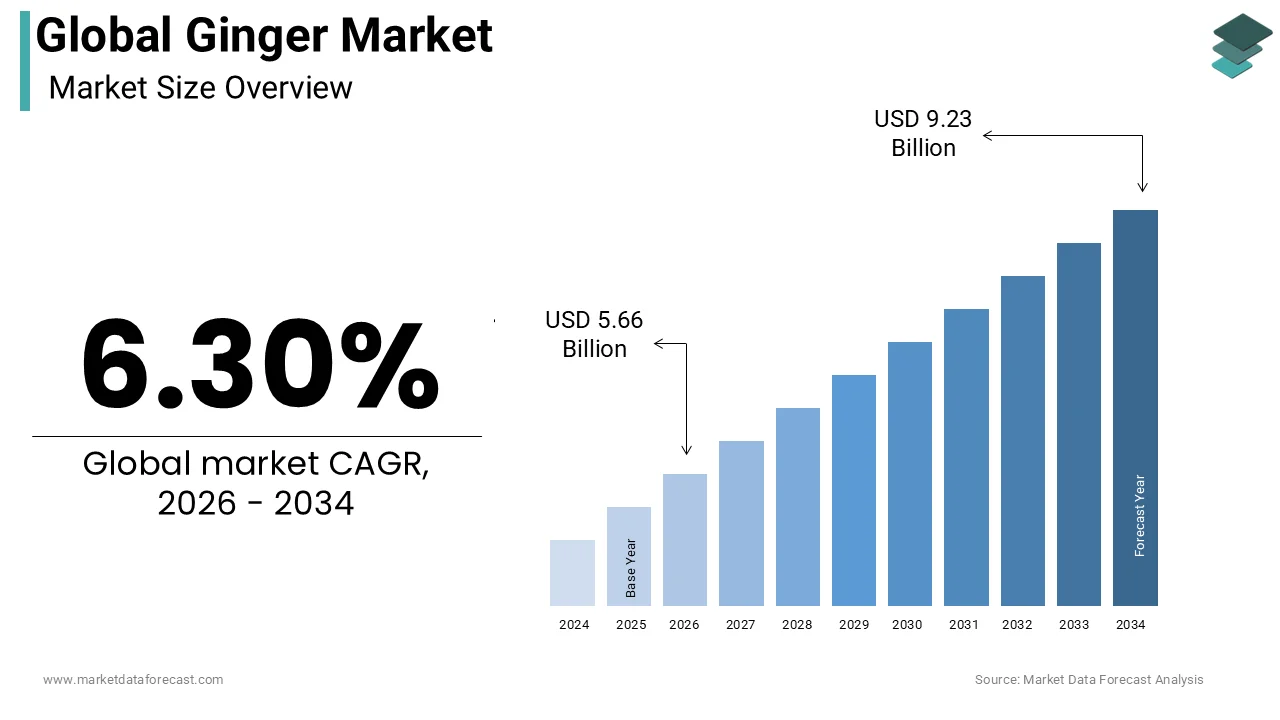
The europe ginger market size was valued at USD 0.92 billion in 2025 and is anticipated to reach USD 0.95 billion in 2026 from USD 1.27 billion by 2034, growing at a CAGR of 3.71% during the forecast period from 2026 to 2034.
Ginger is fresh, dried, powdered, and extract forms of ginger root (Zingiber officinale) used across culinary, beverage, pharmaceutical, and wellness sectors. Unlike self-sufficient agricultural markets, Europe relies almost entirely on imports that is primarily from India, China, Peru, and Nigeria as ginger is not commercially cultivated at scale within the EU due to climatic constraints. In 2025, the market is defined by its dual identity as a traditional spice in regional cuisines and as a functional ingredient in the continent’s booming health and wellness economy. According to Eurostat, the European Union imported a substantial volume of ginger in 2024, with Germany, the Netherlands, and the UK serving as primary entry points. As per the European Food Safety Authority, gingerol is recognized as safe for human consumption and noted for its traditional use in supporting digestive comfort. According to the European Commission, all ginger imports must comply with maximum residue levels for pesticides and heavy metals, with specific limits set for dried roots. This regulatory and cultural framework positions ginger not merely as a commodity but as a bridge between global agriculture and Europe’s evolving demand for natural, evidence backed wellness solutions.
MARKET DRIVERS
Rising Consumer Demand for Natural Remedies and Functional Wellness Ingredients
European consumers are increasingly turning to plant-based solutions for everyday health management, which is driving robust demand for ginger across food, beverage, and supplement categories and is one of the major factors propelling the ginger market growth in Europe. As per the European Commission’s Special Eurobarometer on Health and Nutrition, many EU citizens actively seek natural alternatives to synthetic medications for minor ailments like nausea, inflammation, and digestive discomfort. Ginger, clinically studied for its antiemetic and anti-inflammatory properties, aligns perfectly with this shift. According to the European Herbal and Traditional Medicine Practitioners Association, ginger is among the most used botanicals in complementary medicine, with many Europeans consuming it regularly. As per the European Soft Drinks Association, sales of ginger shots and kombucha grew across Germany and Scandinavia. Supermarkets now dedicate entire aisles to functional wellness shots, with ginger as the lead ingredient. This transition from culinary spice to therapeutic staple transforms ginger into a high frequency, high trust ingredient in Europe’s preventive health landscape.
Integration of Ginger into Mainstream Culinary and Beverage Innovation
Ginger has transcended ethnic boundaries to become a versatile flavor and functional component in contemporary European food and drink development, which is further boosting the ginger market expansion in Europe. Once confined to Asian or holiday recipes, it now features in craft beers, cold pressed juices, plant based dairy alternatives, and even savory snacks. According to the European Flavour Association, ginger was the fastest growing botanical note in new product launches in 2024, appearing in many items ranging from oat milk lattes to vegan ginger cookies. The rise of clean label trends favors ginger’s natural pungency as a salt and sugar reducer, and Unilever’s Knorr brand reformulated several soup bases using ginger to enhance umami without additives. In the premium spirits segment, craft distilleries in France and the Netherlands launched ginger infused gins and vodkas, capitalizing on its warming profile. Even traditional sectors adapt, with German bakeries offering ginger spiced sourdough and Italian gelaterias featuring ginger swirl gelato. This culinary democratization, supported by consistent supply and consumer familiarity, ensures ginger remains relevant beyond seasonal or niche usage, embedding it into Europe’s everyday flavor lexicon.
MARKET RESTRAINTS
Stringent EU Regulations on Pesticide Residues and Heavy Metal Contamination
The Europe ginger market faces significant compliance hurdles due to rigorous food safety standards that restrict permissible levels of chemical and elemental contaminants. The European Commission enforces strict maximum residue limits for many pesticides, with violations detected in shipments from major origins like India and China. More critically, ginger is prone to cadmium accumulation, a toxic heavy metal naturally present in some tropical soils. Regulation (EU) No 2023/915 sets the limit for cadmium in dried ginger at 0.2 milligrams per kilogram, among the strictest globally. According to the European Food Safety Authority, some ginger consignments tested in 2023 exceeded this threshold, leading to border rejections and costly recalls. Compliance requires pre shipment laboratory testing, soil mapping, and supplier certification, costs that small exporters struggle to absorb. These regulations, while protective of public health, fragment supply chains, increase costs, and disproportionately impact developing country producers, forcing European importers to consolidate sourcing and invest heavily in verification infrastructure to maintain market access.
High Volatility in Global Supply Due to Climate and Geopolitical Factors
Europe’s ginger market remains acutely vulnerable to production shocks in key origin countries, where climate extremes and logistical disruptions cause significant price and availability fluctuations. As per the Indian Ministry of Agriculture, unseasonal monsoon rains in southern India delayed harvests and reduced yields. Simultaneously, drought conditions in Peru, a major supplier to the EU, cut exports in early 2024. Geopolitical tensions further complicate trade, with port congestion in China and export restrictions in Nigeria creating bottlenecks that inflate freight costs and extend lead times. According to the International Trade Centre, ginger import prices into Rotterdam surged during late 2023 and early 2024. Unlike grains with deep futures markets, ginger lacks hedging mechanisms, leaving processors exposed. This dependency on ecologically fragile and politically sensitive regions creates systemic risk that undermines planning certainty for manufacturers, retailers, and wellness brands alike.
MARKET OPPORTUNITIES
Expansion into Pharmaceutical and Clinical Nutrition Applications
A significant opportunity for the Europe ginger market lies in leveraging clinical evidence to position ginger as a validated ingredient in medical nutrition and over the counter therapeutics. As per the European Journal of Clinical Nutrition, studies confirm ginger’s efficacy in reducing chemotherapy induced nausea and pregnancy related vomiting. Building on this, pharmaceutical companies are developing standardized ginger extracts with guaranteed gingerol content for inclusion in antiemetic formulations. In Germany, where herbal medicines enjoy regulatory recognition under the Commission E monographs, ginger capsules are available in pharmacies as digestive aids. According to the European Society for Clinical Nutrition and Metabolism, ginger supplementation is recommended in specific oncology protocols. Additionally, medical food manufacturers are incorporating ginger into enteral formulas for gastrointestinal support. As regulatory pathways for botanicals mature under the EU’s Traditional Herbal Medicinal Products Directive, ginger’s transition from kitchen staple to clinically endorsed ingredient opens high margin, science driven avenues aligned with Europe’s integrative health model.
Adoption of Blockchain and Digital Traceability for Ethical Sourcing
Digital innovation presents a transformative opportunity to address Europe’s demand for transparent, deforestation free, and ethically sourced ginger through end-to-end supply chain visibility. Companies are deploying blockchain ledgers and mobile based farmer platforms to link individual farms to final products, satisfying both regulatory mandates and conscious consumer expectations. Dutch importer Tradin Organic uses GPS mapping and digital ID systems to register ginger farmers across India and Peru, enabling real time monitoring of agrochemical use and labor practices. Similarly, UK brand Fentimans provides QR code scans on its ginger beer bottles showing farm location, harvest date, and fair wage verification. According to the European Institute of Innovation and Technology, pilot projects in Belgium and Sweden reduced traceability gaps using these tools. The EU Deforestation Regulation further accelerates adoption by requiring geolocation data for all agricultural imports by 2025. As per Wageningen University, consumers are willing to pay more for fully traceable ginger. By digitizing the first mile, Europe turns ginger into a verifiable, story rich product aligned with its green and ethical consumption ethos.
MARKET CHALLENGES
Dependence on Distant, Non-EU Origins with Limited Domestic Alternatives
Europe’s ginger market is structurally constrained by near total reliance on imports from tropical regions, with no viable large scale domestic production due to climatic unsuitability, which is challenging the ginger market expansion in Europe. Unlike herbs such as mint or thyme, ginger requires warm, humid conditions and long growing seasons incompatible with most European agroclimates. According to Eurostat, the majority of ginger consumed in the EU is imported, primarily from India, China, Peru, and Nigeria. This geographic concentration creates systemic vulnerability, as any export restriction, phytosanitary ban, or shipping disruption can trigger immediate shortages. Vertical farming trials in the Netherlands and Germany remain experimental and prohibitively expensive, yielding only a small fraction of national demand. Without investment in controlled environment agriculture or alternative bioactive sources, Europe will remain tethered to external harvest cycles and geopolitical trade dynamics. This lack of supply sovereignty undermines resilience in a market where ginger is increasingly positioned as a critical wellness ingredient rather than a discretionary spice.
Labor Intensity and Post Harvest Handling Challenges in Origin Countries
A critical yet often overlooked challenge confronting the Europe ginger market is the high labor intensity and post-harvest fragility of ginger rhizomes in origin countries, which directly impacts quality and cost. Ginger requires manual harvesting to avoid bruising, followed by careful washing, curing, and drying to prevent mold and sprouting. According to the Food and Agriculture Organization, a significant portion of ginger yield is lost post-harvest in developing countries due to inadequate handling and storage infrastructure. In India and Nigeria, rural labor shortages, exacerbated by urban migration, delay harvesting, increasing fibrousness and reducing pungency. Furthermore, inconsistent drying methods lead to variable moisture content, affecting shelf life and extract potency. These quality variances force European processors to implement costly sorting and reprocessing steps, inflating final prices. Without coordinated investment in origin country post-harvest technology such as solar dryers and cold chain hubs or mechanization breakthroughs, Europe’s access to consistent, high-quality ginger will remain compromised, affecting everything from beverage clarity to supplement efficacy.
REPORT COVERAGE
| REPORT METRIC | DETAILS |
| Market Size Available | 2025 to 2034 |
| Base Year | 2025 |
| Forecast Period | 2026 to 2034 |
| CAGR | 3.71% |
| Segments Covered | By Product Type, Application, Distribution Channel, and Region |
| Various Analyses Covered | Regional & Country Level Analysis, Segment-Level Analysis, DROC, PESTLE Analysis, Porter’s Five Forces Analysis, Competitive Landscape, Analyst Overview on Investment Opportunities |
| Countries Covered | UK, France, Spain, Germany, Italy, Russia, Sweden, Denmark, Switzerland, the Netherlands, Turkey, the Czech Republic, and the Rest of Europe. |
| Market Leaders Profiled | McCormick & Company, Inc., The Ginger People Group, Monterey Bay Spice Co., Inc., Floracopeia Inc., Mountain Rose Herbs, Fisherville Greenhouses, Ipoki Produce LLC, Pommer Fresh Foods, Inc., Buderim Group Limited, Sino-Nature International Co. Ltd., Olam Group Ltd., Archer-Daniels-Midland Company, and Sun Impex International LLC. |
SEGMENTAL ANALYSIS
By Product Type Insights
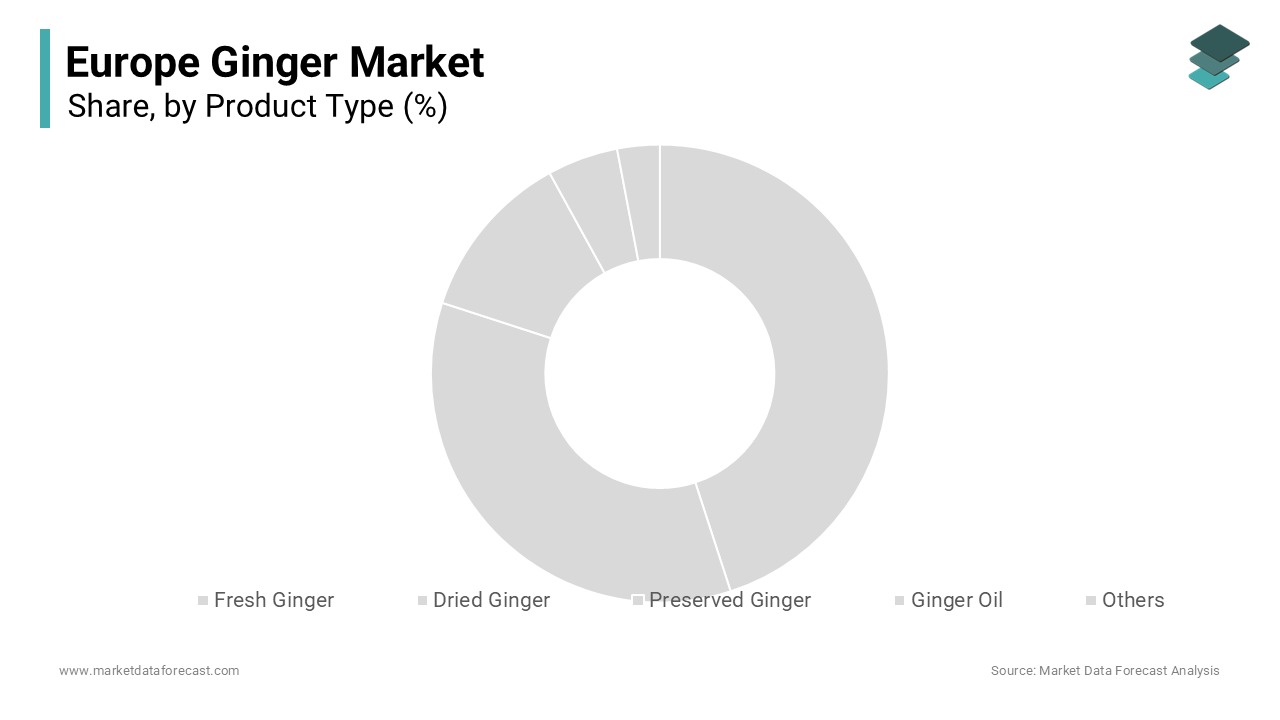
The fresh ginger segment led the market by holding the highest share of 56.4% of the regional market share in 2025. The versatility in both household cooking and commercial food service where its pungent aroma and crisp texture are irreplaceable, which is primarily driving the growth of the fresh ginger segment in the European market According to Eurostat, the European Union imported fresh ginger in large volumes in 2024, primarily from Peru, China, and Nigeria, with the Netherlands and Germany serving as key distribution hubs. Supermarkets across Western Europe dedicate prominent refrigerated displays to fresh ginger, often alongside garlic and turmeric, reflecting its status as a daily staple. As per the British Nutrition Foundation, many UK households now keep fresh ginger in their kitchens. Food service channels rely on it for soups, stir fries, marinades, and craft cocktails, with gastropubs in Berlin and Paris featuring house made ginger syrups. Unlike processed forms, fresh ginger offers immediate sensory appeal and perceived potency, making it the default choice for health conscious and culinary adventurous consumers alike.
The ginger oil segment is anticipated to record a CAGR of 11.5% over the forecast period owing to the rising demand in aromatherapy, natural cosmetics, and functional food applications where concentrated bioactive compounds are essential. Ginger oil, rich in zingiberene and gingerol, is prized for its anti-inflammatory and warming properties, which is making it a staple in premium skincare formulations. According to the European Cosmetic Association, many new cosmetic products launched in the EU in 2024 featured ginger oil as a key ingredient. In aromatherapy, it is used in diffusers and massage blends to alleviate muscle soreness and digestive discomfort. The food industry also leverages its intense flavor, where small amounts impart robust ginger notes in beverages and confectionery, reducing raw material costs. Additionally, pharmaceutical companies are exploring standardized ginger oil extracts for nausea relief supplements. As consumers seek potent, natural actives with scientific backing, ginger oil transitions from niche essential oil to mainstream functional ingredient across wellness and beauty sectors.
By Application Insights
The food segment dominated the market by capturing 66.5% of the regional market share in 2025. The growth of food segment in the European market is driven by ginger’s deep integration into both traditional and modern culinary practices across households, restaurants, and processed food manufacturing. According to the European Flavour Association, ginger appears in many new food and beverage launches annually, spanning craft beers, plant-based yogurts, cold pressed juices, and savory snacks. Supermarkets stock fresh, powdered, and preserved ginger in multiple formats, catering to diverse cooking needs. The rise of clean label trends has amplified its use as a natural flavor enhancer and preservative, with Unilever’s Knorr brand reformulating soup bases using ginger to reduce sodium without compromising taste. In food service, ginger is indispensable in Asian, Middle Eastern, and increasingly European fusion cuisines. Seasonal demand peaks during winter for immune supporting teas and baked goods like gingerbread. This ubiquitous presence ensures the food industry remains the primary engine of ginger consumption in Europe.
The pharmaceuticals segment is estimated to witness a CAGR of 10.6% over the forecast period in the European ginger market. The growing clinical evidence supporting ginger’s efficacy in managing nausea, inflammation, and digestive disorders is propelling the expansion of the pharmaceuticals segment in the regional market. According to the European Medicines Agency, ginger extracts are now included in many registered herbal medicinal products across the EU, particularly in Germany and France where phytotherapy is integrated into mainstream healthcare. As per the European Journal of Clinical Nutrition, studies confirm ginger’s role in reducing chemotherapy induced and pregnancy related nausea, driving adoption in oncology and prenatal care protocols. Pharmaceutical companies are developing standardized capsules with guaranteed gingerol content to ensure batch consistency and therapeutic reliability. Additionally, medical nutrition brands incorporate ginger into enteral formulas for gastrointestinal support. As regulatory pathways for botanicals mature under the EU’s Traditional Herbal Medicinal Products Directive, ginger’s transition from kitchen remedy to clinically validated therapeutic ingredient opens high margin, science backed avenues aligned with Europe’s integrative health model.
By Distribution Channel Insights
The modern retail stores segment led the market by holding 61.5% of the European market share in 2025. The extensive reach, consistent supply, and strategic product placement that caters to both convenience and wellness shoppers is majorly driving the growth of the modern retail stores segment in the European market. Hypermarkets, supermarkets, and organic chains like Carrefour, Edeka, and Albert Heijn stock fresh ginger in refrigerated produce sections, dried powder in spice aisles, and ginger shots in chilled wellness zones. According to the European Retail Round Table, many European households purchase ginger through modern retail channels at least once a month. These stores leverage private label development to offer value added formats such as pre peeled ginger cubes or organic ginger tea bags, enhancing accessibility and reducing preparation barriers. Seasonal promotions during winter and festive periods further boost visibility. The integration of digital shelf tags and loyalty programs allows retailers to personalize offers based on purchase history, reinforcing repeat buying. This combination of scale, innovation, and consumer insight ensures modern retail remains the primary gateway for ginger consumption across urban and suburban Europe.
REGIONAL ANALYSIS
Germany Ginger Market Analysis
Germany held the leading share of 23.3% of the European ginger market in 2025. The leading position of Germany in the European market is driven by its position as Europe’s most populous nation, a leader in natural health and wellness consumption and strong demand for organic and functional ginger products, supported by a well-developed retail infrastructure and high health literacy. As per the German Federal Ministry of Food and Agriculture, organic ginger sales grew in 2024, with fresh roots and powdered extracts leading purchases. According to the German Nutrition Society, many adults regularly drink ginger tea or shots. The pharmaceutical sector further drives demand, as Germany accounts for a significant portion of EU herbal medicine sales, with ginger capsules widely available in pharmacies. Major retailers like Edeka and DM Drogerie dedicate extensive shelf space to ginger in multiple formats. This blend of preventive health culture, regulatory acceptance of phytotherapy, and retail innovation ensures Germany remains the continent’s most influential ginger market.
United Kingdom Market Analysis
The United Kingdom captured the second largest share of the European ginger market in 2025. The growth of the UK in the European market is attributed to its multicultural palate and booming functional beverage sector. The historical trade links with South Asia and a dynamic wellness economy that embraces ginger as both a culinary staple and immune booster are further contributing to the growth of the UK in the European market. As per the British Nutrition Foundation, many UK households keep fresh ginger in their kitchens, while sales of ginger shots grew in 2024. London hosts numerous cold pressed juice bars featuring ginger as a core ingredient. The rise of plant based and gut health trends further amplifies usage in kombucha, kefir, and vegan broths. Supermarkets like Tesco and Sainsbury’s offer extensive ethnic and organic ginger selections, while e commerce platforms like Ocado enable convenient home delivery. Post Brexit, the UK aligned its import standards with EU pesticide limits, ensuring consistent quality. This fusion of cultural familiarity, health consciousness, and retail agility makes the UK a high volume, innovation led ginger market.
France Ginger Market Analysis
France is estimated to command for a promising share of the European ginger market during the forecast period owing to the gourmet appreciation and integration into haute cuisine and artisanal beverages. France blends traditional skepticism toward supplements with growing openness to natural wellness, particularly in urban centers, which is further propelling the ginger market expansion in France. As per FranceAgriMer, ginger imports rose in 2024, driven by demand from Michelin starred chefs who use it in broths, sauces, and dessert infusions. Craft beverage producers lead innovation, with microbreweries in Paris and Lyon launching ginger infused beers and shrubs. The organic sector thrives, with a notable portion of ginger sold in Biocoop and Naturalia carrying certified labels. While pharmaceutical use is limited compared to Germany, ginger features prominently in herbal teas and digestive tonics. Government support for Mediterranean diet principles indirectly promotes ginger as part of a diverse plant-based regimen. This balance of culinary prestige, artisanal craftsmanship, and cautious wellness adoption sustains France’s influential role in Europe’s premium ginger segment.
Netherlands Ginger Market Analysis
The Netherlands is expected to exhibit a healthy CAGR in the European ginger market over the forecast period. Netherlands is notable not for consumption but as Europe’s primary ginger import and distribution hub. The Port of Rotterdam that handles a large share of ginger entering the EU, primarily from Peru, India, and China is one of the factors driving the ginger market growth in Netherlands. As per Statistics Netherlands, the Netherlands re exports a majority of its ginger imports to Germany, Belgium, and Scandinavia, functioning as a critical logistics nexus. Dutch processors like Euroma and Van Delft specialize in ginger extracts and oils for the food and fragrance industries. The domestic market is highly sophisticated, with wellness shops and juice bars in Amsterdam and Utrecht driving demand for organic and fair-trade ginger. Strict enforcement of EU contaminant limits ensures only high-quality consignments enter the supply chain. This strategic positioning as the continent’s ginger clearinghouse makes the Netherlands indispensable to Europe’s ginger availability and quality control.
Italy Ginger Market Analysis
Italy is anticipated to record a steady CAGR in the European ginger market during the forecast period owing to its evolving culinary landscape, growing interest in global flavors and a shift from traditional Mediterranean ingredients toward Asian and fusion influences, particularly in northern urban centers. As per ISMEA, Italy’s agricultural economics institute, ginger imports grew in 2024, with fresh roots favored by chefs in Milan and Turin for broths, seafood marinades, and innovative desserts. The beverage sector shows rapid adoption, with craft distilleries in Emilia Romagna launching ginger liqueurs and artisanal gelaterias featuring ginger swirl gelato. Health trends also contribute, as sales of ginger herbal teas rose in 2024, especially among younger demographics. Supermarkets like Conad and Esselunga now stock ginger in multiple formats, which is signalling mainstream acceptance. Though not historically central to Italian cuisine, ginger’s integration into modern gastronomy and wellness routines positions Italy as a dynamic and expanding ginger market in Southern Europe.
Top Players in the Market
Tradin Organic Agriculture B V
Tradin Organic Agriculture B V is a leading European supplier of organic ginger, operating across Germany, the Netherlands, and Scandinavia with direct sourcing from certified farms in India, Peru, and Nigeria. The company specializes in fresh, dried, and powdered ginger for food, beverage, and supplement manufacturers seeking traceable, high-quality ingredients. Tradin contributes to global sustainability by promoting regenerative farming practices and fair pricing models that support smallholder farmers. In recent years, it strengthened its European position by implementing blockchain enabled traceability that allows customers to verify farm origin, harvest date, and cadmium test results via QR codes. It also launched a low cadmium ginger powder line compliant with strict EU food safety standards. These initiatives reinforce Tradin’s reputation as a transparent, ethical, and technically rigorous partner in Europe’s health focused ginger supply chain.
Euroma B V
Euroma B V, headquartered in the Netherlands, is a major flavor and ingredient solutions provider with a strong presence in the Europe ginger market through its ginger extracts, oils, and compounded seasonings. The company serves industrial clients in soups, sauces, plant-based meats, and functional beverages requiring consistent, standardized ginger profiles. Euroma leverages it’s in house R&D to develop clean label ginger solutions that replace synthetic additives while enhancing umami and warmth. Recently, it expanded its ginger oil portfolio with steam distilled variants for natural cosmetics and aromatherapy brands. It also achieved full compliance with the EU Deforestation Regulation through GPS mapped supplier registries. By bridging culinary functionality with wellness applications, Euroma positions ginger as a versatile, science backed ingredient across multiple high growth sectors in Europe.
Fentimans Ltd
Fentimans Ltd is a UK based premium botanical soft drink manufacturer renowned for its authentic ginger beer and ginger ale, made using traditional brewing methods and high-quality ginger root. The company has played a pivotal role in elevating ginger’s profile in Europe’s beverage sector by championing its digestive and warming properties. Fentimans sources ginger through long term partnerships with ethical suppliers, ensuring consistent pungency and purity. In recent years, it strengthened its market position by introducing a zero-sugar ginger beer variant and expanding distribution across Germany, France, and Scandinavia. It also implemented QR code traceability on bottles showing farm origin and sustainability credentials. These actions align with Europe’s clean label and transparency trends, reinforcing Fentimans as a heritage brand driving mainstream adoption of ginger in functional refreshment.
Top Strategies Used by the Key Market Participants
Key players in the Europe ginger market prioritize digital traceability through blockchain and QR code systems to provide real time data on farm origin, cadmium levels, and sustainability practices to meet stringent EU import regulations. They invest in low cadmium and organic certification programs to ensure compliance with maximum residue limits and capture premium segments. Companies expand into high value applications such as ginger oil for cosmetics, standardized extracts for pharmaceuticals, and clean label flavourings for plant-based foods. Strategic partnerships with origin country cooperatives enhance supply security and ethical credibility. Additionally, firms leverage e commerce and direct to consumer channels to build brand loyalty and bypass traditional retail markups in a rapidly digitizing wellness landscape.
COMPETITIVE LANDSCAPE
Competition in the Europe ginger market is characterized by a dual race: large ingredient suppliers compete on traceability, regulatory compliance, and application versatility, while premium beverage and wellness brands differentiate through heritage, transparency, and sensory authenticity. Unlike commoditized spice markets, success here hinges on proving origin, safety, and functional efficacy to discerning consumers and regulators alike. Retailers and food manufacturers demand certified low cadmium and organic ginger, forcing suppliers to invest in pre shipment testing and farmer training. The market is further segmented by form as fresh ginger dominates volume, but oils and extracts drive growth in cosmetics and pharma. Climate volatility in origin countries adds supply risk, rewarding companies with diversified sourcing and robust verification systems. Ultimately, the most resilient players harmonize global supply chain rigor with European values of sustainability, health, and transparency transforming ginger from a simple root into a trusted, story rich ingredient in Europe’s evolving wellness and culinary narrative.
KEY MARKET PLAYERS
Some of the companies that are playing a dominating role in the Europe ginger market include
- McCormick & Company, Inc.
- The Ginger People Group
- Monterey Bay Spice Co., Inc.
- Floracopeia Inc.
- Mountain Rose Herbs
- Fisherville Greenhouses
- Ipoki Produce LLC
- Pommer Fresh Foods, Inc.
- Buderim Group Limited
- Sino-Nature International Co. Ltd.
- Olam Spices (Olam Group Ltd.)
- Archer-Daniels-Midland Company
- Sun Impex International LLC
MARKET SEGMENTATION
This research report on the Europe ginger market has been segmented and sub-segmented based on the following categories.
By Product Type
- Fresh Ginger
- Dried Ginger
- Preserved Ginger
- Ginger Oil
- Others
By Application
- Food Industry
- Pharmaceuticals Industry
- Cosmetics Industry
- Others
By Distribution Channel
- Traditional Retail
- Modern Retail Stores
- Others
By Country
- UK
- France
- Spain
- Germany
- Italy
- Russia
- Sweden
- Denmark
- Switzerland
- Netherlands
- Turkey
- Czech Republic
- Rest of Europe