- Product Description Description
- Table of Contents TOC
- List of Table & Figure LOT
- Get Free Sample PDF Sample PDF
Market Size, 2025
$0.25 BnMarket Estimate, 2026
$0.26 BnMarket Forecast, 2034
$0.35 BnCAGR, 2026–2034
3.85%Europe Ginseng Market Size, Growth, Trends & Forecast (2026–2034)
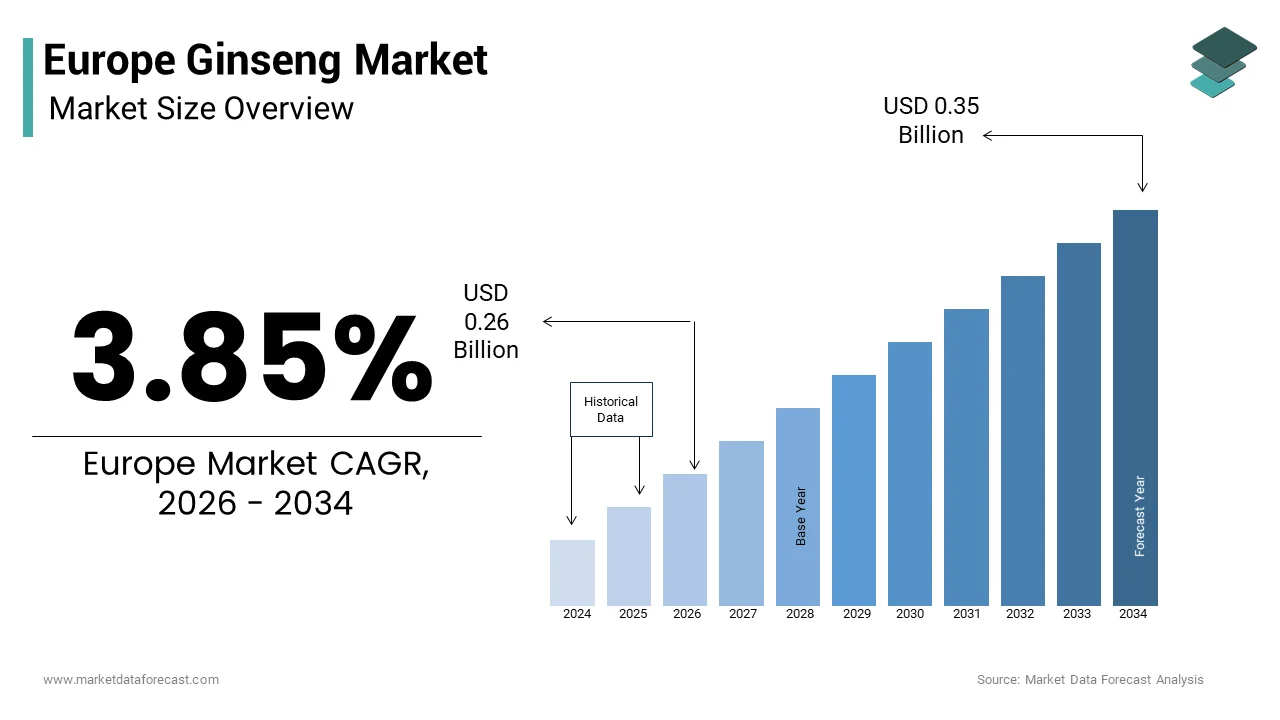
The Europe ginseng market size was valued at USD 0.25 billion in 2025, is anticipated to reach USD 0.26 billion in 2026, and is projected to scale up to USD 0.35 billion by 2034, registering a compound annual growth rate (CAGR) of 3.85% during the forecast period from 2026 to 2034. Driven by the escalating prevalence of chronic stress, rising demand for adaptogens, and the growing integration of herbal remedies into mainstream healthcare, the European ginseng sector continues to expand steadily.
Key Executive Metrics (At-a-Glance)
- 2025 Base Valuation: USD 0.25 Billion
- 2026 Current Valuation: USD 0.26 Billion
- 2034 Forecast Valuation: USD 0.35 Billion
- Compound Annual Growth Rate (CAGR): 3.85% (2026–2034)
- Dominant Form Segment: Extract Segment (held 58.3% market share in 2025)
- Fastest-Growing Form Segment: Powder Segment (projected at 8.4% CAGR)
- Dominant Variety Segment: Oriental Ginseng (held a prominent share in 2025)
- Fastest-Growing Variety Segment: American Ginseng (projected at 9.1% CAGR)
- Dominant Country Markets: Germany (34.2% share in 2025) followed by France and the United Kingdom
Core Market Drivers
- Adaptogenic Demand: Rising consumer interest in natural solutions for stress-related disorders, fatigue management, and cognitive enhancement.
- Mainstream Healthcare Integration: Institutional recognition of phytotherapy and herbal medicines across major European nations like Germany, France, and Switzerland.
- Product Innovation: Expansion into functional beverages, energy shots, and standardized clinical formulations.
Primary Market Restraints & Challenges
- Regulatory Hurdles: Strict EU health claim restrictions under EFSA guidelines and fragmented cross-border herbal classifications.
- Supply Chain Vulnerabilities: Heavy reliance on imported raw materials from South Korea, China, and North America, leading to price volatility.
- Quality Consistency: Persistent challenges regarding product adulteration, pesticide residues, and variable ginsenoside potency.
Europe Ginseng Market Segmentation Highlights
| Segment Category | Largest Market Segment | Fastest-Growing Market Segment |
|---|---|---|
| By Form | Extract Segment (58.3% share in 2025) | Powder Segment (8.4% CAGR) |
| By Variety | Oriental Ginseng (Prominent Share) | American Ginseng (9.1% CAGR) |
| By Source | Cultivated Segment | Wild-Simulated Segment |
| By Country | Germany (34.2% share in 2025) | United Kingdom and France |
Major Industry Players Profiled
Key enterprises dominating the European ginseng market include Korea Ginseng Corporation, Finzelberg GmbH & Co. KG, Naturex (Givaudan), Ilhwa Co., Ltd., Nature’s Way, RFI Ingredients, and Euromed S.A.
Europe Ginseng Market Size
The Europe ginseng market size was valued at USD 0.25 billion in 2025 and is anticipated to reach USD 0.26 billion in 2026 to reach USD 0.35 billion by 2034, growing at a CAGR of 3.85% during the forecast period from 2026 to 2034.
Curent Market Introduction and Definition
The ginseng is derived primarily from Panax ginseng (Asian) and Panax quinquefolius (American), utilized extensively in dietary supplements, functional beverages, and traditional herbal remedies. As per data from Eurostat, the import volume of medicinal plants, including ginseng into the European Union has seen a steady annual increase, reflecting growing consumer reliance on botanical solutions for wellness. The European Medicines Agency notes that several member states classify specific ginseng preparations as traditional herbal medicinal products, requiring rigorous registration processes that differ from standard food supplements. National statistics from Germany reveal that over 60% of the population uses herbal medicines regularly, creating a fertile ground for ginseng adoption. Meanwhile, the European Commission emphasizes the need for strict quality control to prevent adulteration, a persistent issue in the global supply chain. These factors define a market driven by therapeutic demand yet constrained by regulatory complexity and supply dependencies.
MARKET DRIVERS
Escalating Prevalence of Chronic Stress and Demand for Adaptogens
The rising incidence of stress-related disorders and burnout with a potent adaptogen is levelling up the growth of Europe ginseng market. Modern lifestyles characterized by high pressure, digital overload, and sleep deprivation have led consumers to seek natural solutions that enhance resilience and mental clarity without the side effects of pharmaceutical stimulants. As per the European Agency for Safety and Health at Work, work-related stress affects most of the employed population in the European Union, costing economies billions annually and driving individuals toward preventative health measures. This widespread concern has elevated the status of adaptogenic herbs, with ginseng recognized for its ability to modulate the body's stress response and improve cognitive function. Consumers are increasingly educated about the specific benefits of Panax ginseng in reducing fatigue and enhancing concentration, leading to higher uptake in both capsule and beverage formats. Furthermore, the aging population in countries like Italy and Germany seeks natural ways to maintain vitality and cognitive sharpness, which is further expanding the addressable market. The shift from reactive healthcare to proactive wellness management ensures sustained demand for ginseng products that promise tangible improvements in daily performance and stress mitigation.
Growing Integration of Herbal Remedies in Mainstream Healthcare
The increasing acceptance and integration of herbal medicine into conventional healthcare systems is additionally accelerating the growth of ginseng market. Unlike in some regions where herbal remedies remain fringe, many European nations have established frameworks that recognize and regulate botanical treatments, lending them credibility and facilitating insurance coverage or pharmacist recommendation. As per the World Health Organization, over 80% of the population in some European countries utilizes traditional medicine, and national health systems in Germany, France, and Switzerland often reimburse costs for prescribed herbal products. This institutional validation encourages physicians to recommend ginseng for conditions such as chronic fatigue, immune support, and recovery from illness, bridging the gap between alternative and allopathic medicine. Data from the European Society of Phytotherapy highlights that clinical research on ginseng has expanded significantly, with numerous studies validating its efficacy in improving physical endurance and immune response, which reinforces professional confidence. The presence of ginseng in pharmacy shelves alongside synthetic drugs normalizes its consumption and reduces consumer skepticism. Furthermore, the "phytotherapy" culture in Southern and Central Europe creates a deep-rooted trust in plant-based interventions, making ginseng a staple in household medicine cabinets. This structural support from the medical community and regulatory bodies provides a stable foundation for market growth that transcends fleeting wellness trends.
MARKET RESTRAINTS
Stringent Regulatory Hurdles and Restricted Health Claims
The rigorous regulatory framework enforced by the European Union regarding health claims and novel food approvals is restricting the growth of Europe ginseng market. As per the European Food Safety Authority maintains a conservative stance, having rejected many broad health claims associated with ginseng due to insufficient clinical evidence meeting their specific criteria, which limits the ability of manufacturers to communicate benefits effectively. As per the European Commission, only a very limited number of health claims for botanicals have been authorized under the Nutrition and Health Claims Regulation, forcing companies to use vague language that fails to resonate with consumers seeking specific solutions. This restriction creates a competitive disadvantage against unregulated markets where bold claims can be made freely. Data from the European Federation of Associations of Health Product Manufacturers indicates that the cost and time required to substantiate a single health claim can exceed 1 million euros and take several years, a barrier that stifles innovation especially for small and medium-sized enterprises. Furthermore, the classification of ginseng varies between member states, with some treating it as a medicine requiring prescription while others allow it as a supplement by creating a fragmented market that complicates cross-border trade. The uncertainty surrounding the approval of new ginseng varieties or extraction methods under the Novel Food Regulation further delays product launches. These regulatory complexities hinder market dynamism and restrict the potential for aggressive marketing campaigns that could drive mass adoption.
Concerns Over Product Adulteration and Quality Consistency
Persistent issues regarding product adulteration, contamination, and inconsistent potency of ginseng supplies, undermining consumer trust is declining the growth of Europe ginseng market. The global supply chain for ginseng is complex and often opaque, which is leading to instances where products are diluted with fillers, substituted with cheaper species, or contaminated with heavy metals and pesticides, posing safety risks. As per the Rapid Alert System for Food and Feed of the European Union, numerous notifications regarding non-compliant herbal supplements containing ginseng have been issued in recent years due to excessive pesticide residues or unauthorized additives. These incidents erode consumer confidence and prompt retailers to delist suspicious brands, limiting market access for legitimate players who struggle to prove purity. This variability makes it difficult for consumers to experience consistent benefits, leading to awareness about efficacy. Furthermore, the lack of standardized farming practices in major exporting countries exacerbates quality fluctuations, making it challenging for European importers to guarantee uniformity. The high cost of implementing rigorous third-party testing and certification to assure quality adds to the final retail price, potentially pricing out price-sensitive segments.
MARKET OPPORTUNITIES
Development of Standardized Extracts and Clinical Formulations
The high standardized ginseng extracts with verified clinical backing to overcome and command premium pricing is eventually to set up new opportunities for the growth of Europe ginseng market. By focusing on specific ginsenoside profiles and utilizing advanced extraction technologies, manufacturers can create products with guaranteed potency and reproducible therapeutic effects that appeal to both consumers and healthcare professionals. As per the European Pharmacopoeia, there is a growing demand for monographs that define strict quality standards for herbal drugs, and companies that align their products with these specifications can gain a significant competitive edge. This approach allows brands to differentiate themselves from generic powders and low-quality supplements by offering scientifically validated solutions for specific health indications such as cognitive decline or physical fatigue. Data from the International Ginseng Institute suggests that standardized extracts demonstrate superior bioavailability and efficacy compared to raw root powders, providing a compelling narrative for marketing. Furthermore, partnerships with research institutions to conduct localized clinical trials can generate the robust data needed to support future health claim applications in Europe. The rise of personalized nutrition also opens avenues for tailored ginseng formulations based on individual genetic profiles or health needs.
Expansion into Functional Beverages and Convenience Formats
The surging popularity of functional beverages and on-the-go wellness formats to reach younger demographics and expand consumption occasions beyond traditional pill forms is additionally to fuel the growth of Europe ginseng market. Consumers increasingly seek convenient, ready-to-drink solutions that deliver immediate energy and mental focus, positioning ginseng-infused waters, teas, and shots as ideal candidates for this growing segment. This trend allows ginseng to shed its image as a medicinal remedy for the elderly and rebrand as a lifestyle enhancer for active professionals and students. Data from the European Soft Drinks Association indicates that sugar-free and naturally fortified beverages are the fastest-growing sub-categories, aligning perfectly with clean-label ginseng formulations. Innovations in flavor masking technology enable the incorporation of ginseng's distinct bitter note into palatable fruit and citrus blends, broadening appeal. Furthermore, the integration of ginseng into energy shots provides a natural alternative to caffeine-heavy drinks, appealing to health-conscious consumers avoiding jitters. Retailers are eager to stock these innovative formats to attract foot traffic and increase basket size.
MARKET CHALLENGES
Supply Chain Vulnerability and Geopolitical Instability
The heavy reliance on imported ginseng from a limited number of geographic regions, primarily South Korea, China, and the United States, to significant supply chain vulnerabilities and geopolitical risks is one of the major challenges for the growth of Europe ginseng market. Any disruption in these source countries due to climate change, trade disputes, or political tensions can lead to severe shortages and price volatility, threatening the stability of the European supply. As per the Food and Agriculture Organization of the United Nations, ginseng is a labor-intensive crop with a long growth cycle of four to six years, making it impossible to quickly ramp up production in response to sudden demand spikes or supply shocks. Data from the European Importers of Medicinal Plants association highlights that freight costs and customs delays have fluctuated wildly in recent years, impacting the landed cost of ginseng roots and extracts. Furthermore, the concentration of high-quality Panax ginseng production in specific regions of Asia creates a monopoly-like dynamic where exporters can dictate prices, squeezing margins for European formulators. The lack of domestic cultivation options in Europe due to unsuitable climatic conditions means there is no local buffer to mitigate these external shocks. Additionally, stringent phytosanitary regulations at European borders can lead to the rejection of entire shipments if minor compliance issues are detected, further disrupting supply continuity. This dependency on distant and sometimes unstable supply lines remains a critical structural challenge that requires sophisticated risk management strategies.
High Cost of Premium Raw Materials and Consumer Price Sensitivity
The exorbitant cost of high-quality, aged ginseng roots penetration in price-sensitive segments of the European population is also to inhibit the growth of Europe ginseng market. Genuine Panax ginseng, especially varieties aged for several years to maximize ginsenoside content, commands a premium price that translates into expensive end-products, limiting accessibility for average consumers. As per the Korea Ginseng Corporation, the price of top-grade red ginseng has increased steadily over the last decade due to shrinking arable land and labor shortages in producing regions, pushing retail prices beyond the reach of many. Data from Eurostat shows that inflationary pressures on household budgets in Europe have led consumers to prioritize essential goods, often viewing premium herbal supplements as discretionary expenditures that can be cut. This price sensitivity forces manufacturers to choose between maintaining quality and risking low sales volumes or diluting formulations with cheaper fillers, which compromises efficacy and brand reputation. The presence of low-cost, low-quality alternatives in the market further confuses consumers, who may opt for cheaper options unaware of the potency differences. Furthermore, the lack of reimbursement for ginseng supplements in many European healthcare systems means the full cost burden falls on the consumer. Balancing the need for premium raw materials to ensure efficacy with the reality of constrained consumer spending power remains a persistent dilemma for market participants striving for growth.
REPORT COVERAGE
| REPORT METRIC | DETAILS |
| Market Size Available | 2025 to 2034 |
| Base Year | 2025 |
| Forecast Period | 2026 to 2034 |
| CAGR | 3.85% |
| Segments Covered | By Source, End-User, Form, Variety, and Countries |
| Various Analyses Covered | Regional & Country Level Analysis, Segment-Level Analysis, DROC, PESTLE Analysis, Porter’s Five Forces Analysis, Competitive Landscape, Analyst Overview on Investment Opportunities |
| Regions Covered | UK, France, Spain, Germany, Italy, Russia, Sweden, Denmark, Switzerland, Netherlands, Turkey, Czech Republic, & Rest of Europe |
| Market Leaders Profiled | Korea Ginseng Corporation, llhwa Co., Ltd., Finzelberg GmbH & Co. KG, Nature’s Way, RFI Ingredients, Euromed S.A. |
SEGMENTAL ANALYSIS
By Form Insights
The extract segment was the largest by holding 58.3% of the Europe ginseng market share in 2025 owing to the superior bioavailability and standardized potency that extracts offer compared to raw or powdered forms, which is for achieving therapeutic effects. The preference of pharmaceutical and high-end supplement manufacturers for standardized extracts that guarantee specific concentrations of ginsenosides, the active compounds responsible for ginseng's health benefits. As per data from the European Pharmacopoeia, monographs for herbal medicines increasingly specify minimum levels of active markers, a requirement that only rigorously processed extracts can consistently meet. The second critical driver is the versatility of liquid and dry extracts in formulation, allowing them to be easily incorporated into capsules, softgels, and functional beverages without the texture or taste issues associated with raw root powder.
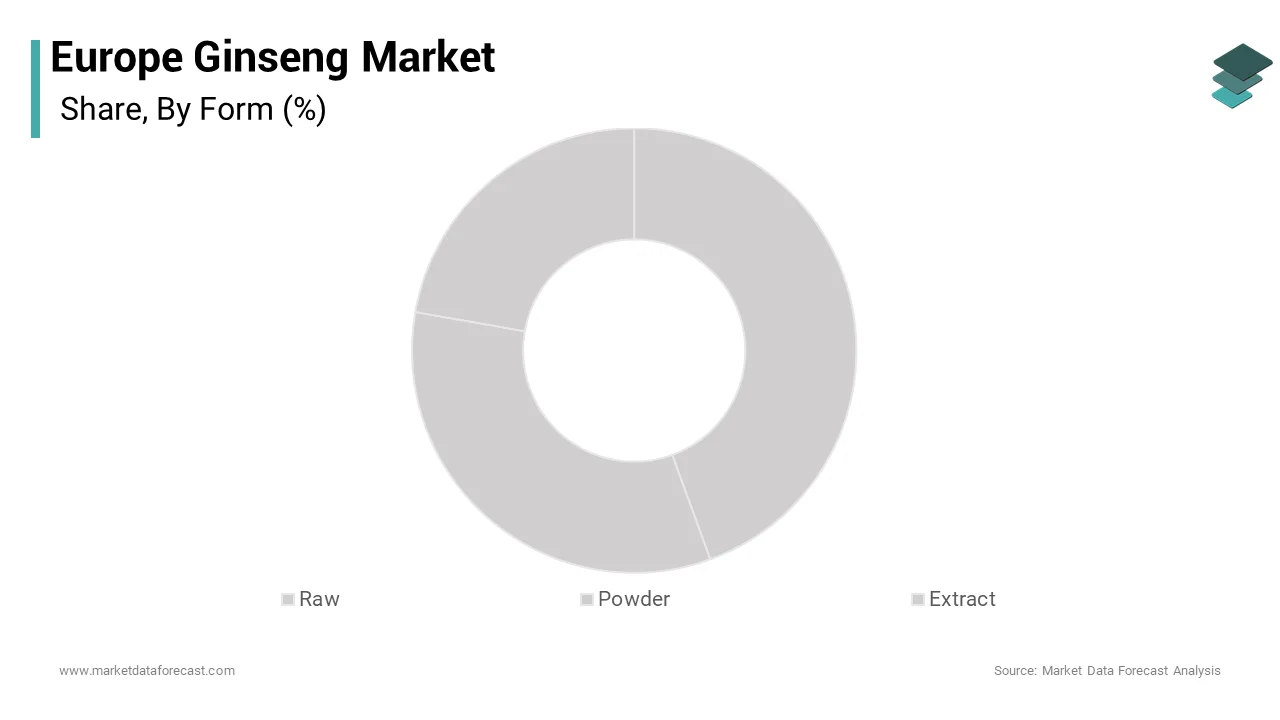
The powder segment is projected to expand at a fastest CAGR of 8.4% throughout the forecast period with the rising trend of DIY wellness and the incorporation of herbal ingredients into home-prepared foods and beverages, a behavior accelerated by digital health communities. A key driving factor is the versatility of ginseng powder as a convenient additive for smoothies, teas, soups, and baking, appealing to consumers who prefer integrating supplements into their daily culinary routines rather than taking pills. The perception of powder as a more "natural" and less processed form compared to extracts, resonating with the clean-label movement that favors minimal processing is also propelling the growth of segment. Data from the European Consumer Organisation reveals that 45% of shoppers actively seek whole-food supplement formats, believing them to retain a broader spectrum of phytonutrients. Furthermore, the economic advantage of buying bulk powder allows cost-conscious consumers to access premium ginseng varieties at a lower price point per serving than proprietary extract blends. The rise of online retail platforms offering diverse single-ingredient powders has also improved accessibility by enabling niche brands to reach dedicated enthusiasts directly. This convergence of culinary integration, natural positioning, and affordability positions powder as the most dynamic growth engine in the form segment.
By Variety Insights
The oriental segment was the largest by holding a prominent share of the Europe ginseng market in 2025 owing to its deep historical reputation as the most potent adaptogen and its extensive validation in traditional medicine systems that have gained acceptance in Europe. A primary factor driving this leadership is the robust body of clinical research specifically focused on Panax ginseng, which supports claims regarding energy enhancement, cognitive improvement, and immune modulation, giving it a scientific edge over other varieties. As per data from the World Health Organization, Panax ginseng is listed in numerous national pharmacopoeias across Europe as a recognized medicinal herb, facilitating its inclusion in pharmacy-grade supplements. The strong cultural branding associated with Korean Red Ginseng, which is perceived as a premium, high-quality product due to rigorous processing methods and government-backed quality control in its country of origin. Statistics from the Korea Ginseng Corporation indicate that exports of Red Ginseng products to Europe have grown steadily, driven by marketing campaigns that emphasize its unique heating process which enhances efficacy. Furthermore, the specific demand for "warming" energy solutions in colder European climates aligns with the traditional properties attributed to Oriental ginseng in herbal medicine. The established supply chains and long-standing relationships between European importers and Asian producers ensure consistent availability, cementing its status as the default choice for consumers seeking proven stress relief and vitality boosts.
The American segment is anticipated to grow at a CAGR of 9.1% during the forecast period owing to a shifting consumer preference for "cooling" adaptogens that provide calm focus and stress reduction without the over-stimulation sometimes associated with Asian varieties. As per data from the United States Department of Agriculture, sustainable wild-simulated cultivation practices in North America have ensured a steady supply of high-quality roots that meet stringent European organic and purity standards. The second significant driver is the alignment of American ginseng with the "clean and calm" wellness trend, where consumers seek mental clarity and emotional balance rather than just physical energy. Statistics from the American Herbal Products Association show that export volumes of American ginseng to the EU have increased by 25% recently, reflecting rising demand from manufacturers developing products for sleep and anxiety management. Furthermore, the perception of American ginseng as a milder, safer option for long-term daily use encourages adoption among older adults and those sensitive to stimulants. The increasing availability of certified organic American ginseng also caters to the eco-conscious segment, differentiating it from conventionally farmed Asian counterparts.
COUNTRY LEVEL ANALYSIS
Germany Ginseng Market Analysis
Germany was the top performer in the Europe ginseng market by holding 34.2% of share in 2025 owing to its deeply entrenched culture of phytotherapy and the highest per capita consumption of herbal medicines on the continent. The sophisticated regulatory environment where ginseng is often classified as a traditional herbal medicinal product, granting it credibility and access to pharmacy channels alongside standard supplements. The reimbursement system and the strong recommendation of general practitioners, who frequently prescribe herbal remedies for fatigue and immune support, normalizing ginseng usage across all age groups is ascribed in boosting the growth of the market in this country. As per data from the German Federal Institute for Drugs and Medical Devices, ginseng preparations are among the top-selling herbal drugs in the country, with millions of packs sold annually. The presence of major domestic supplement manufacturers, who invest heavily in research and quality assurance, producing standardized extracts that meet the rigorous demands of German consumers is also escalating the growth of market. Furthermore, the aging demographic in Germany seeks natural solutions for maintaining cognitive function and vitality, driving demand for premium ginseng products.
France Ginseng Market Analysis
France ginseng market growth is likely to grow with its strong tradition of aromatherapy and herbalism which seamlessly integrates ginseng into its wellness ecosystem. A key driving factor is the robust network of pharmacies and parapharmacies that serve as the primary distribution channel, where pharmacists play a crucial role in educating consumers about the specific benefits of different ginseng varieties. The influence of the "bien-etre" lifestyle trend, which encourages the use of natural tonics to manage stress and enhance performance in a competitive work environment is also enhancing the growth of market. Statistics from the French Syndicate of Dietary Food Industries reveal that functional foods and beverages infused with ginseng are gaining traction, expanding the market beyond traditional capsules. Additionally, the French preference for high-quality, traceable ingredients drives demand for premium branded products with clear origins.
United Kingdom Ginseng Market Analysis
The United Kingdom ginseng market growth is likely to grow with a shift from ethnic niche usage to mainstream acceptance driven by the wellness boom. The vibrant retail sector, including major supermarket chains and online platforms, which have expanded their "free-from" and natural health aisles to include a wide array of ginseng products ranging from teas to energy shots. As per data from the UK Food Standards Agency, the import volume of herbal ingredients including ginseng has risen significantly, reflecting increased manufacturing activity and consumer demand. The influence of digital media and celebrity endorsements that have popularized ginseng as a "superfood" for busy professionals and athletes, demystifying its use for the average consumer. Statistics from the Health Food Manufacturers Association indicate that the supplement sector in the UK is one of the largest in Europe, with ginseng benefiting from the overall trend toward proactive health management. The combination of accessible retail distribution, strong digital marketing, and a health-aware populace positions the UK as a key market for both traditional and modern ginseng formats.
Italy Ginseng Market Analysis
Italy ginseng market growth is likely to grow with the heritage of natural remedies and a strong preference for plant-based solutions to drive consistent demand. The integration of ginseng into the daily routine of many Italians, as an energizer to complement the coffee culture or as a seasonal immune booster. The widespread presence of herbalist shops ("erboristerie") alongside pharmacies, which provide specialized advice and high-quality artisanal ginseng products that appeal to discerning consumers. As per data from the Italian Ministry of Health, the consumption of food supplements has grown steadily, with ginseng ranking among the top ingredients for its revitalizing properties. The growing interest in sports nutrition and endurance, where ginseng is valued by amateur and professional athletes for its ability to improve oxygen uptake and reduce fatigue. Furthermore, the Italian aesthetic and wellness industry promotes ginseng-infused cosmetics and tonics, expanding the application scope beyond oral consumption.
Russia Ginseng Market Analysis
Russia ginseng market growth is likely to grow with the popularity of Siberian ginseng (Eleutherococcus) and a growing appetite for Panax varieties. The legacy of Soviet-era research into adaptogens, which normalized the use of ginseng and Eleutherococcus for enhancing work capacity and immunity among the general population. As per data from the Russian Association of Supplement Producers, the domestic market for tonic herbs remains resilient despite economic fluctuations, with ginseng being a staple in household medicine cabinets. The second critical driver is the increasing availability of imported high-quality Asian ginseng products in major urban centers like Moscow and St. Petersburg, catering to a rising middle class seeking premium wellness solutions. Statistics from the Federal Service for Surveillance on Consumer Rights Protection indicate that imports of dietary supplements have diversified, with ginseng seeing notable growth. Furthermore, the local cultivation of Siberian ginseng provides a cost-effective alternative that keeps the category accessible, while simultaneously raising awareness of the broader ginseng family.
COMPETITIVE LANDSCAPE
The competition in the Europe ginseng market is characterized by a mix of dominant global exporters and specialized regional extract manufacturers vying for shelf space and consumer trust. Large multinational corporations leverage their extensive distribution networks and substantial marketing budgets to promote branded finished goods while ingredient suppliers compete on purity, standardization, and scientific backing. The market sees intense rivalry based on product quality and the ability to navigate complex regulatory frameworks regarding health claims and novel food approvals. Differentiation is often achieved through certification schemes such as organic or fair trade labels which resonate with eco-conscious European buyers. Private label offerings from major retail chains have gained traction exerting pressure on branded players to justify premium pricing through superior efficacy and transparency. The fragmentation of the market allows niche artisanal brands to thrive by focusing on specific varieties like American or Siberian ginseng. Consolidation trends continue as larger entities acquire smaller specialists to expand their botanical portfolios. This dynamic landscape requires continuous innovation and robust supply chain management to maintain competitiveness amidst evolving consumer preferences.
KEY MARKET PLAYERS
A dominating players that are in the Europe ginseng market
- Korea Ginseng Corporation
- llhwa Co., Ltd.
- Finzelberg GmbH & Co. KG
- Nature’s Way
- RFI Ingredients
- Euromed S.A.
Top Players In The Market
- Korea Ginseng Corporation stands as a global leader in the ginseng industry with a profound influence on the Europe market through its premium CheongKwanJang brand. The company contributes globally by setting rigorous quality standards for red ginseng processing and promoting scientific research on adaptogenic benefits. In Europe, it focuses on educating consumers about the unique properties of Korean red ginseng versus other varieties. Recent actions to strengthen its market position include launching specialized extract lines tailored for European regulatory compliance and expanding partnerships with local pharmacy chains. The firm has also invested in digital marketing campaigns promoting clinical studies to build trust among health-conscious Europeans. By establishing flagship stores in major cities and participating in key health expos, the corporation reinforces its reputation for authenticity and efficacy. These strategic moves ensure its products remain the benchmark for quality in the competitive European herbal supplement landscape.
- Naturex, now integrated into Givaudan, operates as a powerhouse in natural ingredients with a significant footprint in the Europe ginseng market through its extensive extraction capabilities. The company contributes globally by providing standardized ginseng extracts to leading supplement and beverage manufacturers, ensuring consistency and potency. Its involvement in Europe is defined by supplying high-quality, traceable ingredients that meet strict EU safety regulations. Recent actions to strengthen its market position include expanding its production facilities in France to increase capacity for botanical extracts and developing novel clean-label ginseng formulations. The firm has also launched sustainability initiatives to secure ethical sourcing from certified farms in Asia and North America. Furthermore, Naturex leverages its R&D centers to create customized ginseng blends for specific health applications like stress relief and energy.
- Finzelberg GmbH & Co. KG is a German specialist in phytopharmaceuticals and plant extracts with a strong presence in the Europe ginseng market known for its high-purity standardized extracts. The company contributes globally by supplying pharmaceutical-grade ginseng ingredients to manufacturers who require documented efficacy and safety profiles. Its deep roots in the European regulatory environment allow it to navigate complex approval processes efficiently. Recent actions to strengthen its market position include investing in advanced extraction technologies to enhance the bioavailability of ginsenosides and obtaining additional organic certifications for its product lines. The firm has also forged strategic alliances with research institutions to conduct clinical trials validating the cognitive benefits of its specific ginseng extracts. Additionally, Finzelberg has expanded its portfolio to include ready-to-use liquid formats for the growing functional beverage sector. These initiatives highlight its dedication to scientific rigor and product versatility, ensuring it remains a preferred partner for premium health brands seeking reliable and effective ginseng solutions in Europe.
Top Strategies Used By Key Market Participants
Key players in the Europe ginseng market primarily employ vertical integration strategies to control the supply chain from cultivation to extraction ensuring consistent quality and traceability. Companies heavily invest in clinical research and scientific validation to substantiate health claims and gain acceptance from medical professionals and regulators. Another major strategy involves product diversification by developing innovative formats such as functional beverages, shots, and gummies to appeal to younger demographics. Firms also focus on strategic partnerships with local distributors and pharmacy chains to enhance market penetration and brand visibility across diverse European regions. Additionally, participants prioritize sustainability and ethical sourcing certifications to align with consumer values and differentiate their premium offerings. These combined approaches enable market leaders to build trust and drive growth in a highly regulated environment.
MARKET SEGMENTATION
This research report on the Europe ginseng market is segmented and sub-segmented into the following categories.
By Source
- Wild
- Cultivated
By End-Use
- Personal Care Products
- Dietary Supplements
- Food and Beverage Processing
- Pharmaceutical Products
By Form
- Raw
- Powder
- Extract
By Variety
- Oriental Ginseng
- American Ginseng
- Siberian Ginseng
- Others
By Country
- UK
- France
- Spain
- Germany
- Italy
- Russia
- Sweden
- Denmark
- Switzerland
- Netherlands
- Turkey
- Czech Republic
- Rest of Europe