- Product Description Description
- Table of Contents TOC
- List of Table & Figure LOT
- Get Free Sample PDF Sample PDF
Market Size, 2025
$2.83 BnMarket Estimate, 2026
$3.09 BnMarket Forecast, 2034
$6.25 BnCAGR, 2026–2034
9.21%Europe Gluten-Free Products Market Report Summary
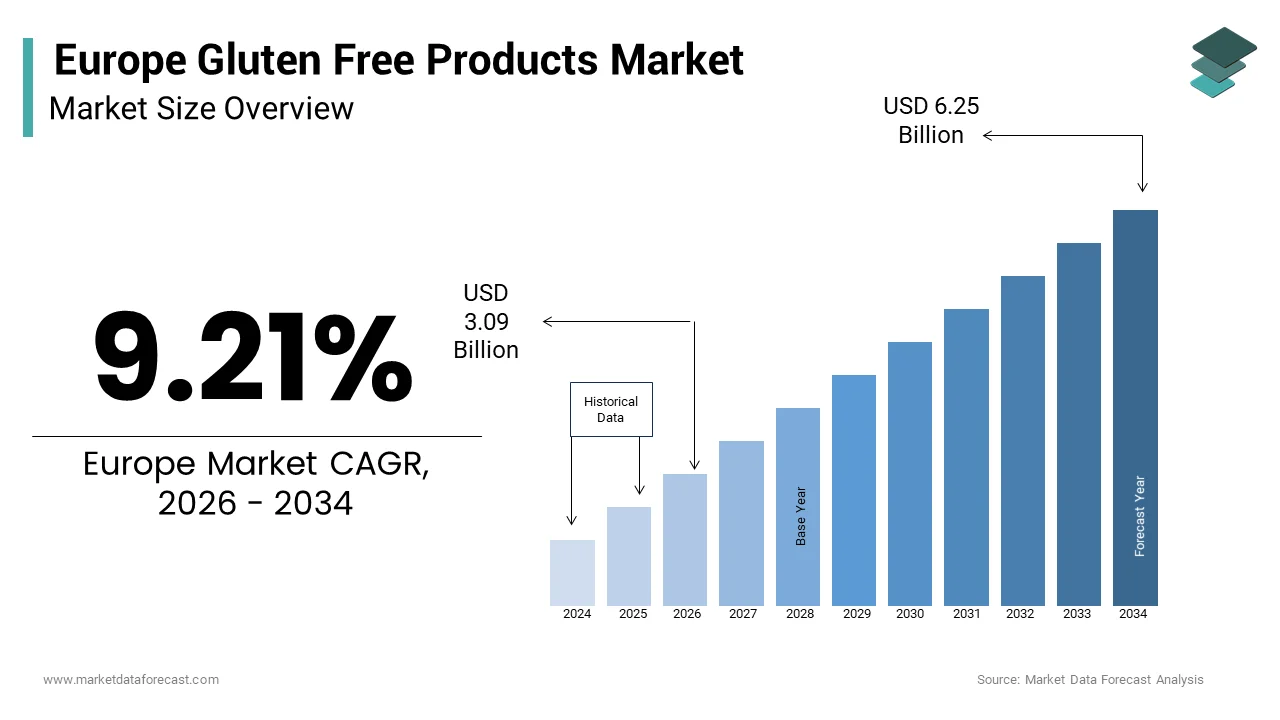
The Europe gluten-free products market was valued at USD 2.83 billion in 2025, and is estimated to reach USD 3.09 billion in 2026, and is projected to reach USD 6.25 billion by 2034, growing at a CAGR of 9.21% during the forecast period from 2026 to 2034.
The market growth is driven by rising health awareness, increasing prevalence of celiac disease and gluten intolerance, and a broader shift toward healthier, allergen-free diets among European consumers. Growing demand for clean-label, natural, and plant-based foods, along with the influence of fitness and wellness trends, continues to propel the adoption of gluten-free products across the region. In addition, advancements in food processing technology, the expansion of certified gluten-free product lines, and wider availability in retail and online channels are further supporting market growth.
KEY MARKET TRENDS
- Rising consumer preference for gluten-free bakery and snack options, driven by demand for convenient yet healthy food alternatives.
- Strong penetration of supermarkets and hypermarkets as primary retail channels offering certified gluten-free brands and private-label options.
- Expansion of e-commerce and health-focused specialty stores, making gluten-free foods more accessible across urban and rural regions.
- Increased innovation in taste, texture, and nutritional profile, enabling gluten-free products to compete directly with conventional counterparts.
- Regulatory support and strict labeling standards in the EU ensure product transparency and boost consumer confidence.
SEGMENTAL INSIGHTS
By Product Insights
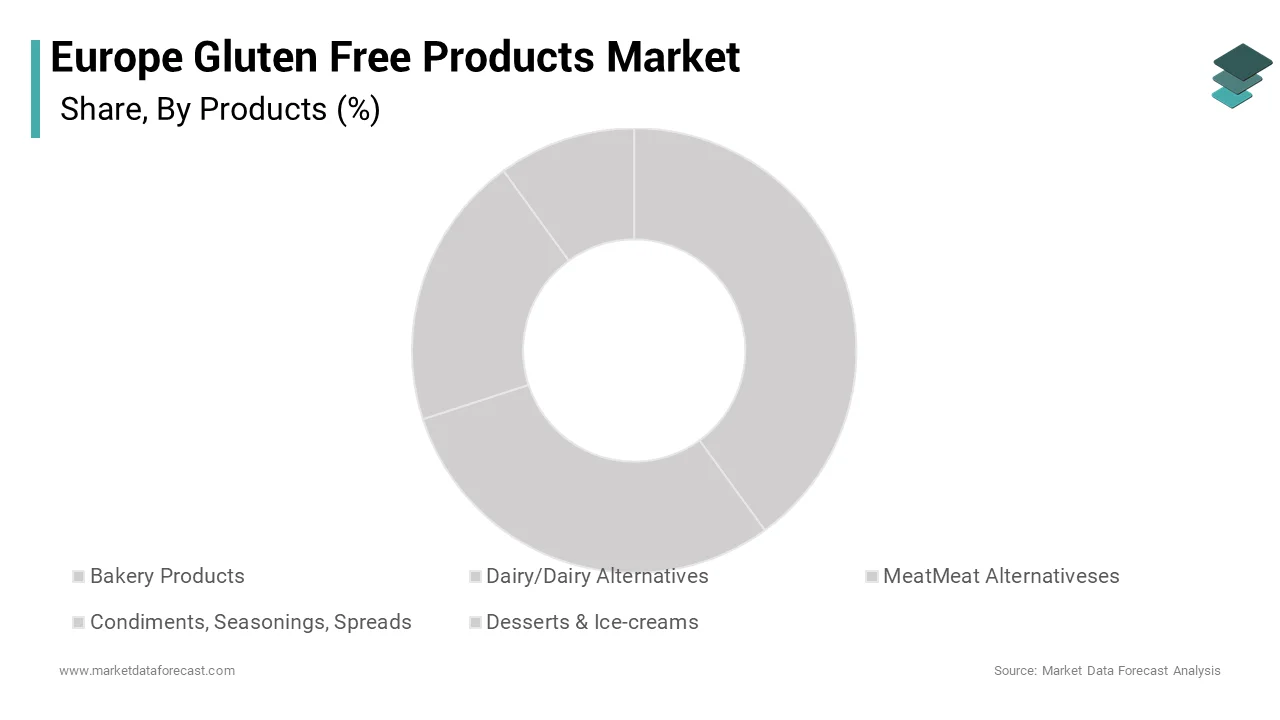
The bakery products segment dominated the Europe gluten-free products market, accounting for a 48.3% share in 2025. The segment’s leadership is attributed to the growing popularity of gluten-free bread, cookies, muffins, and pastries among both gluten-intolerant consumers and the broader health-conscious population.
By Distribution Channel Insights
The supermarkets and hypermarkets segment held the largest share of 32.2% in 2025. Their dominance stems from widespread availability, trusted brand portfolios, and promotional retail strategies that enhance consumer access to gluten-free products across Europe.
REGIONAL INSIGHTS
The Europe gluten-free products market demonstrates strong growth across major economies, driven by evolving dietary habits and robust retail expansion.
- Italy led the market with a 33.4% share in 2025, supported by a well-established gluten-free food industry, government-backed health initiatives, and the cultural emphasis on high-quality wheat alternatives.
- The United Kingdom ranked second, holding a 23.4% share in 2025, driven by high consumer awareness, premium product innovation, and strong supermarket distribution networks.
- Germany secured the third position, supported by rising health consciousness, premiumization trends, and rigorous food safety standards fostering consumer trust in gluten-free labels.
COMPETITIVE LANDSCAPE
The Europe gluten-free products market is moderately consolidated, with leading global and regional players investing in product innovation, gluten-free certifications, and strategic retail partnerships. Companies are focusing on improving flavor profiles, nutritional content, and sustainable sourcing to strengthen brand loyalty.
Prominent players in the European gluten-free products market include:
Conagra Brands, Inc., The Hain Celestial Group, General Mills Inc., Kellogg Co., The Kraft Heinz Company, Siete Foods, Barilla G. e R. Fratelli S.p.A, Seitz glutenfree, Dr. Schär, and Ecotone.
Europe Gluten-Free Products Market Size
The Europe gluten-free products market was valued at USD 2.83 billion in 2025 and is anticipated to reach USD 3.09 billion in 2026 to reach USD 6.25 billion by 2034, growing at a CAGR of 9.21% during the forecast period from 2026 to 2034.
The food and beverage items are specifically formulated to exclude gluten-containing grains such as wheat, barley, and their derivatives, catering to individuals with celiac disease non non-celiac gluten sensitivity, and lifestyle-driven dietary preferences. According to the European Society for the Study of Coeliac Disease, approximately 1% of the European population, or over 7 million people, live with diagnosed celiac disease, though prevalence varies significantly by country, with Finland and Italy reporting rates as high as 2.4 %.
MARKET DRIVERS
Rising Prevalence of Medically Diagnosed Gluten-Related Disorders Fuels Essential Demand
The growing clinical recognition and diagnosis of celiac disease and non-celiac gluten sensitivity constitute a foundational driver of sustained demand for certified gluten-free products is majorly propelling the growth of the Europe gluten-free products market. The number of newly diagnosed celiac cases in the EU increased by 12% annually between 2020 and 2024, largely due to improved serological screening and endoscopic protocols in primary care. Similarly, Finland’s national registry documents a 30% rise in adult celiac diagnoses since 202,1, attributable to heightened physician awareness and public health campaigns. These medically mandated consumers represent a non-discretionary segment whose purchasing behavior is consistent and price-insensitive compared to lifestyle adopters. Furthermore, the European Food Safety Authority mandates that all gluten-free medical foods prescribed under national health schemes must meet stringent compositional standards ensuring a stable baseline of institutional demand.
Mainstream Retail Integration and Product Normalization Expand Consumer Accessibility
Gluten-free products have transitioned from niche health store exclusives to mainstream supermarket staples, significantly broadening their reach beyond clinical populations. The mainstream retail integration and product normalization expand consumer accessibility, and are another factor propelling the growth of the Europe gluten-free products market. This normalization reduces stigma and encourages trial among health-conscious consumers who may not have a medical diagnosis. Retailers such as Carrefour and Tesco have launched in-store bakery sections producing fresh gluten-free loaves daily using dedicated equipment to prevent cross-contamination. This shift is further supported by EU Regulation 1169 2011, which mandates clear allergen labeling enabling confident selection at the point of purchase.
MARKET RESTRAINTS
Persistent Price Premiums Limit Mass Market Adoption Among Budget-Conscious Households
Gluten-free products remain significantly more expensive than their conventional counterpart, creating a barrier to consistent consumption in price-sensitive demographics. The increasing price of the premium products is restraining the growth of the European gluten-free products market. Similarly, gluten-free pasta costs 2.5 times more on average across major EU countries. For the estimated 23 million Europeans living below the national poverty line, as documented by Eurostat, such premiums render long-term adherence economically unfeasible even for diagnosed celiac patients. While some countries like Italy and Spain provide partial reimbursement through national health systems, coverage remains inconsistent and often excludes snacks or convenience items.
Risk of Cross Contamination in Shared Manufacturing Facilities Undermines Consumer Trust
Consumer confidence in gluten-free labeling is frequently eroded by concerns over inadvertent gluten exposure during production,n transport, or handling in facilities that process gluten-containing and gluten-free items. The growing risk of cross-contamination in shared manufacturing facilities is also hampering the growth of the European gluten-free products market. As per the UK Food Standards Agency, gluten-free bakery samples from shared kitchens failed compliance tests despite proper labeling. Although the EU mandates good manufacturing practice,,s the absence of a universal certification seal like the Crossed Grain symbol, voluntarily adopted by only 12 member states tbat creates confusion.
MARKET OPPORTUNITIES
Expansion into Functional and Fortified Gluten-Free Formats Meets Holistic Health Expectations
Consumers increasingly expect gluten-free products to deliver added nutritional value beyond allergen exclusion, which is creating new opportunities for the growth of the European gluten-free products market. According to the European Food Information Council, European shoppers now prioritize protein,,n fiber, or vitamin enrichment when selecting free-from foods. Manufacturers are reformulating staples, nutrient-dense alternatives such as chickpea flour, quinoa, and flaxseed to address the historical criticism of gluten-free diets as nutritionally deficient. Companies like Dr Schär have launched high-protein gluten-free pasta with 20 grams of plant-based protein per serving,, fitness-oriented demographics.
Growth of E Commerce and Direct-to-Consumer Platforms Enhances Product Discovery and Loyalty
The digital retail channels are reshaping access to specialized gluten-free products in regions with limited physical distribution, which is elevating the growth of the Europe gluten-free products market. According to the European E Commerce Association, online sales of free-from foods are growing year on year, with subscription models for staples like bread mixes and pasta gaining traction. Platforms such as Amazon Pantry and specialized retailers like Gluten Free Village in the UK offer curated assortments with verified certification and customer reviews, reducing purchase anxiety. Brands are leveraging this direct relationship to gather consumption data and personalize offers. For instance, Schär’s MyGlutenFree service provides tailored product boxes based on dietary preferences and health goals.
MARKET CHALLENGES
Nutritional Deficiencies in Conventional Gluten-Free Diets Trigger Long-Term Health Concerns
Many commercially available gluten-free products rely heavily on refined starches and lack essential micronutrients, leading to potential dietary imbalances among long-term consumers is likely to pose a challenge for the growth of the Europe gluten-free products market. In Italy, where celiac patients receive subsidized gluten-free staples, users consume products with less than 1 gram of fiber per serving, contributing to elevated risks of constipation and cardiovascular issues. Similarly, prolonged consumption of low-protein gluten-free carbohydrates has been shown to reduce muscle mass in elderly celiac patients.
Fragmented Regulatory Interpretation of “Gluten Free” Claims Across Member States Creates Market Inefficiencies
The implementation of verification testing, labeling formats, and certification protocols varies widely among member states, confusing for both manufacturers and consumers, and additionally inhibits the growth of the Europe gluten-free products market. Cross-border audit revealed that products legally labeled gluten-free in Poland sometimes failed to meet voluntary certification standards required for shelf placement in Sweden or Austria. Furthermore, countries like France and Belgium permit the use of “very low gluten” claims for products containing up to 100 parts per million, creating ambiguity for newly diagnosed patients. Only 9 member states recognize the internationally accredited Crossed Grain symbol as a trusted indica, leading to uneven consumer confidence.
REPORT COVERAGE
| REPORT METRIC | DETAILS |
| Market Size Available | 2025 to 2034 |
| Base Year | 2025 |
| Forecast Period | 2026 to 2034 |
| CAGR | 9.21% |
| Segments Covered | By Product, Distribution Channel, and Country |
| Various Analyses Covered | Global, Regional, and Country Level Analysis; Segment-Level Analysis, DROC; PESTLE Analysis; Porter’s Five Forces Analysis; Competitive Landscape; Analyst Overview of Investment Opportunities |
| Regions Covered | Germany, France, Italy, UK, Spain, Italy, Russia, Sweden, Denmark, Switzerland, Netherlands, Rest of Europe |
| Market Leaders Profiled | Conagra Brands, Inc., The Hain Celestial Group, General Mills Inc., Kellogg Co., The Kraft Heinz Company, Siete Foods, Barilla G. e R. Fratelli S.p.A, Seitz glutenfree, Dr. Schär, Ecotone |
SEGMENTAL ANALYSIS
By Product Insights
The bakery products set accounted in holding 48.3% of the European gluten-free products market share in 2024 due to their central role in daily diets and the high prevalence of wheat exclusion among celiac gluten-sensitive consumers. Bread,d rol, ls pasta, and cakes represent the most frequently replaced items when individuals adopt a gluten-free regimen. The diagnosed patients cite bread as the most missed conventional food ititemdriving consistent demand for credible alternatives. Similarly, many gluten-free households purchase bakery items at least twice weekly. Manufacturers have responded with advanced formulations using psyllium husk and sourdough fermentation to replicate texture and shelf life. Retailers like Carrefour and Edeka now feature in-store gluten-free bakeries with dedicated equipment, reducing cross-contamination risks.
The condiments segment is likely to grow with an estimated CAGR of 8.2% during the forecast period, with the heightened label scrutiny and the hidden presence of gluten in sauces, dressings, and flavor enhancers. Consumers increasingly recognize that soy sauce , malt vinegar, and spice blends often contain wheat derivatives, prompting demand for certified alternativesgluten-freent sales in France and the Netherlands are reflecting pantry-level substitution beyond main meals. The rise of clean label trends further accelerates this shift, with 57 % of European shoppers checking ingredient lists for hidden gluten. Additionally, the proliferation of ethnic cuisines that rely heavily on gluten-containing sauces such as teriyaki or hoisin has spurred innovation in tamari-based and rice-fermented alternatives.
By Distribution Channel Insights
The supermarkets and hypermarkets segment accounted in holding 32.2% of the European gluten-free products market share in 2024, which reduces the stigma historically associated with specialty diets. These channels stock both branded private-label gluten-free lines across mainstream aisles rather than isolating them in health food sections. In Germany, Edeka and Rewe collectively list more than 200gluten-freee SKUs per store with dedicated shelf tags compliant with EU allergen labeling rules. Similarly, Tesco in the UK allocates end cap displays gluten-free bakery and pasta during awareness month,,s boosting visibility. The integration of digital shelf labels that highlight allergen status further enhances trust.
The online retail segment is likely to register a CAGR of 18.2% in the coming year,,s with the convenience, personalization,n and access to specialized offerings unavailable in physical stores. Platforms such as Amazon Pantry, country-specific retailers like Gluten Free Village in the U.S.,, K provide verified certification, customer reviews, and auto-replenishment, reducing purchase anxiety. Brands leveraged direct-to-consumer data to tailor assortments. For instance, D r Schär’s MyGlutenFree service curates boxes based on dietary preferences and health goals. Social commerce also plays a role, with 48 % of new users in Spain citing Instagram or TikTok as their discovery channel.
COUNTRY ANALYSIS
Italy Gluten Free Products Market Analysis
Italy was the largest contributor to the European gluten-free products market by holding 33.4% of the market share in 2024. The country mandates that all diagnosed patients receive monthly vouchers redeemable for certified gluten-free staples, including bread, pasta, and snacks. Many individuals are officially registered with celiac disease as of 2024, though epidemiological studies suggest the actual prevalence may exceed 300000. Local manufacturers such as Dr Schär and Lo Conte dominate shelf space with products tailored to Mediterranean culinary tradition, including gluten-free focaccia and gnocchi. Furthermore, nationwide screening initiatives in schools and primary care clinics continue to identify new cases at a rate of 15000 annually.
United Kingdom Gluten Free Products Market Analysis
The United Kingdom gluten-free market was positioned second by holding 23.4% of share in 202,4, owing to the high consumer awareness, robust retail competition, and a strong presence of domestic brands. The UK pioneered mandatory allergen labeling under the Food Information for Consumers Regulation,n which requires explicit “gluten-free” declarations, enhancing shopper confidence. Major retailers such as Tesco Sainsbury,,y’s, and Asda offer extensive private label ranges with over 150 certified SKUs each, often priced within 20 % of conventional equivalents. The post-Brexit regulatory environment has also enabled faster approval of novel ingredients, such as high-protein pulses, accelerating product innovation.
Germany Gluten-Free Products Market Analysis
Germany occupies the third position in the European gluten-free products market, driven by high health consciousness, strong purchasing power, and rigorous food safety standards. The country’s Lebensmittelbuch guidelines enforce stricter verification than the E,requiringgg manufacturers to validate gluten levels through independent labs for gluten-free” claim. Retailers like Edeka and dm Drogerie have invested in dedicated gluten-free sections with color-coded packaging and QR codes linking to batch test results. German consumers spend an average of 42 euros monthly on gluten-free goods, the highest in Europe. Domestic brands such as Hammermühle and Schar have expanded into organic and high fiber variants, aligning with broader clean label trends. Furthermore, Germany’s dual education system includes nutrition modules that raise early awareness of food intolerance,e, contributing to proactive dietary management.
France Gluten-Free Products Market Analysis
France's gluten-free market growth is likely to be driven by the emphasis on culinary quality and gastronomic integrity within free-from formulations. French manufacturers prioritize sensorial authenticity using heritage grains like buckwheat and chestnut flour to replicate traditional textures in baguettes and tarts. Retailers such as Carrefour and Monoprix feature in-store gluten-free bakeries staffed by trained bakers, ensuring freshness and minimizing cross-contamination. The government also supports awareness through the National Nutrition and Health Program, which includes guidelines for managing food intolerances. This fusion of gastronomy regulation and public health education positions France as a premium and trusted market for high-quality gluten-free innovation.
Spain Gluten-Free Products Market Analysis
Spain's gluten-free products market growth is propelled by rising diagnosis rates and alignment with Mediterranean dietary patterns. The national health system provides partial rreireimbursementluten-free staplesn 12 ain utonomous communities, enhancing affordability. Spanish consumers favor naturally gluten-free staples such as rice, legumes, and olive oil, which eases dietary transition and reduces reliance on processed substitutes. Brands like Proceli and Schär have localized offerings using saffron smoked paprika and almond flour to maintain cultural relevance.
COMPETITIVE LANDSCAPE
Competition in the European gluten-free products market is characterized by a dual dynamic between specialized medical nutrition brands and multinational consumer packaged goods companies. Established players like Dr Schär and Lo Conte emphasize clinical credibility certification and product safety while global giants such asNestlél,é Kellogg's, and PepsiCo leverage scale, brand recognition, od retail relationships to capture lifestyle consumers. Private label offerings from major retailers further intensify price competition, particularly in the bakery and pasta segments. Innovation now centers on sensory parparit nutritional eeenhancementlean label formulations using ancient grains and pulse flours. Regulatory scrutiny remains high with frequent audits by national food safety agencies ensuring label accuracy. Consumer trust is fragile and easily eroded by contamination incidents, making supply chain transparency a key differentiator.
KEY MARKET PLAYERS
A few of the market players in the gluten-free products market include
- Conagra Brands, Inc.
- The Hain Celestial Group
- Nestlé
- General Mills Inc.
- Kellogg Co.
- The Kraft Heinz Company
- Siete Foods
- Barilla G. e R. Fratelli S.p.A
- Seitz glutenfree
- Dr. Schär
- Ecotone
Top Players in the Market
- Dr Schär is a European pioneer in gluten-free nutrition with a presence in over 100 countries and a legacy of medical collaboration since its founding in 1981. Headquartered Italytal,, the company supplies certified gluten-free bread, pasta snacks, and medical foods aligned with EU and global regulatory standards. The company also expanitsithigh-proteinin line using pea and rice protein to address nutritional gaps. These initiatives reinforce its reputation as aascience-backedd brand and brand while extending its global footprint through e-commerce and clinical partnerships.
- Nestlé leverages its global scale and R&D infrastructure to advance gluten-free innovation under its medical nutrition and consumer health divisions. Through its Garden Gourmet and Vital Proteinssub-brandss Nestlé has introduced gluten-free ready meals and fortified beverages tailored for European consumers. Nestlé also collaborates with celiac associations across Europe to support awareness campaigns and dietary education. These actions enhance product safety, credibility, accessibility, and position Nestlé as a mainstream yet trusted player in the category worldwide.
- Kellogg’s has strategically repositioned its European portfolio to meet rising demand for certified gluten-free cereals and snacks. The company reformulated its iconic Special K and RXBAR lines to achieve gluten-free certification while maintaining taste and texture expectations. Inn 20, Kellogg’s invested in a segregated production line at its Manchester facility to eliminate cross-contamination risks and support UK and Irish distribution. It also partnered with Coeliac UK to train retail staff on allergen management and shelf placement.
Top Strategies Used By The Key Market Participants
Key players in the European gluten-free products market focus on dedicated production facilities to eliminate cross-contamination and ensure compliance with the 20 parts per million threshold. They invest in nutritional fortification using plant-based protein fibers and vitamins to address historical deficiencies in free-from diets. Companies expanded e-commerce and subscription models to enhance convenience and gather consumer insights. They collaborate with national celiac associations and health authorities to build trust and support public awareness. Additionally, firms localize product formats to align with regional culinary traditions, such as Italian pasta or French baguettes.
MARKET SEGMENTATION
This research report on the Europe gluten-free products market is segmented and sub-segmented into the following categories.
By Product
- Bakery Products
- Dairy/Dairy Alternatives
- MeatMeat Alternativeses
- Condiments, Seasonings, Spreads
- Desserts & Ice-creams
- Prepared Food
- Pasta & Rice
- Others
By Distribution Channel
- Convenience Stores
- Supermarkets & Hypermarket
- Specialty Stores
- Online
- Others
By Country
- United Kingdom
- France
- Spain
- Germany
- Italy
- Russia
- Sweden
- Denmark
- Switzerland
- Netherlands
- Rest of Europe