- Product Description Description
- Table of Contents TOC
- List of Table & Figure LOT
- Get Free Sample PDF Sample PDF
Market Size, 2025
$570.73 MnMarket Estimate, 2026
$752.79 MnMarket Forecast, 2034
$6896.6 MnCAGR, 2026–2034
31.9%Executive Summary: Europe Graphene Market
- Market Scope: Comprehensive European graphene industry analysis covering product classifications (GNP and graphene oxide), end-use sectors, country leadership frameworks, strategic corporate developments, and competitive landscapes.
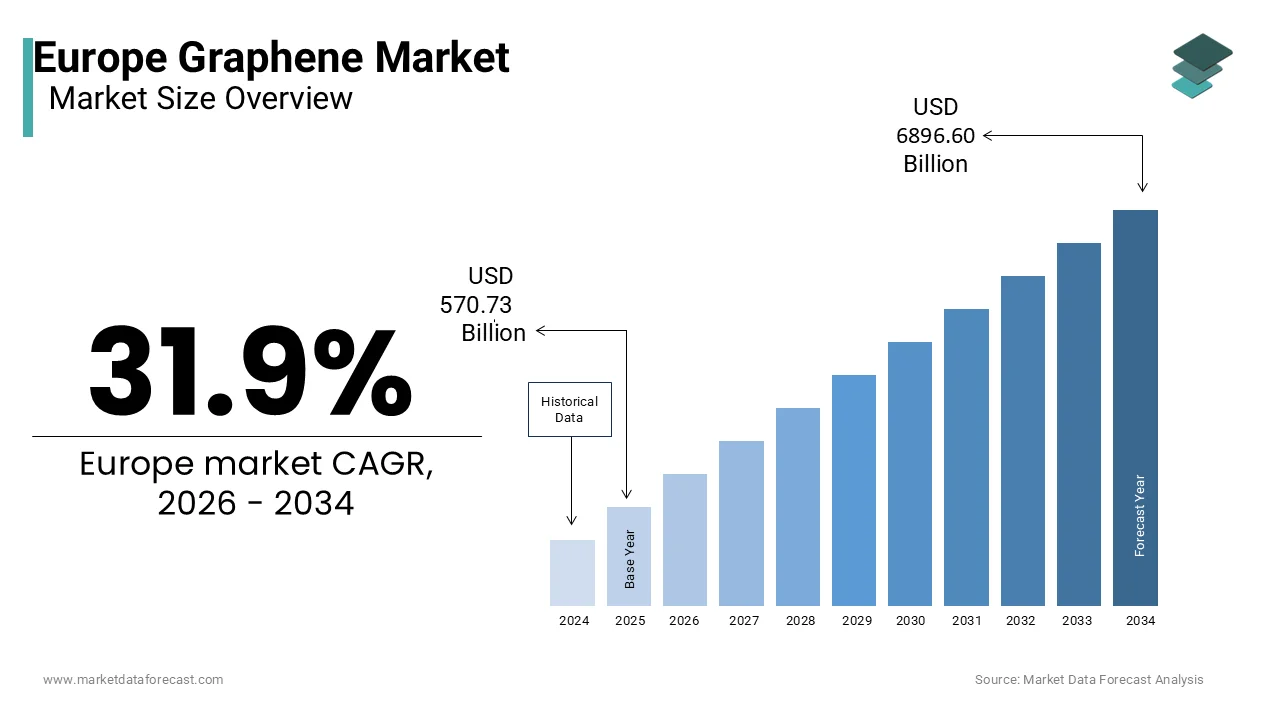
- Market Valuation: Valued at USD 570.73 million (2025), estimated at USD 752.79 million (2026), and projected to reach USD 6,896.6 million by 2034, registering a massive CAGR of 31.9% (2026–2034).
- Primary Growth Drivers: Strategic EU investments via the European Chips Act (EUR 43 billion allocation) and Horizon Europe, electric mobility battery material demand, autonomous sensor development, silicon carbide localization, and vehicle software-defined architecture integration. Restraints include Asian foundry reliance, ISO 26262 functional safety certification delays, and design engineer shortages.
Key Market Segment Metrics (2026–2034)
| Category | Leading Segment / Country (Position) | Fastest-Growing Segment |
|---|---|---|
| By Product | Graphene Nanoplatelets / GNP (dominated product segment with a 58.3% share in 2025) | Graphene oxide (anticipated fastest CAGR of 31.2% from 2025–2033 via filtration & biomedical applications) |
| By End-Use Industry | Electronics (accounted for 32.4% of market share in 2025) | Energy applications (fastest CAGR of 34.8% due to silicon carbide adoption in EV powertrains) |
| By Region / Country | Germany (held leading 32.2% share in 2025, followed by France at 14.7%) | Advanced European industrial and automotive manufacturing corridors securing local semiconductor supply chains |
Major Market Players & Market Structure
Market Structure: Highly collaborative European advanced materials and semiconductor-adjacent ecosystem driven by large-scale production facilities exceeding 100 tonnes annually, aerospace composite partnerships, electromagnetic shielding solutions, and graphene supercapacitor energy recovery systems.
Key Companies: Directa Plus S.p.A., Graphenea S.A., Versarien plc, Haydale Graphene Industries plc, Applied Graphene Materials plc, Thomas Swan & Co. Ltd., Talga Group Ltd., Nanoinnova Technologies S.L., Avanzare Innovación Tecnológica S.L., XG Sciences Inc., First Graphene Ltd., G6 Materials Corp., Graphite Central, ACS Material LLC, BGT Materials Limited, Angstron Materials Inc., 2D Carbon (Changzhou) Tech Inc., NanoXplore Inc., Sixonia Tech GmbH, and Cambridge Nanosystems Ltd.
Europe Graphene Market Size
The europe graphene market was valued at USD 570.73 million in 2025, is expected to reach USD 752.79 million in 2026, and is projected to grow at a CAGR of 31.9% from 2026 to 2034 is projected to reach USD 6896.60 billion by 2034.
Graphene is a single layer of carbon atoms arranged in a two-dimensional honeycomb lattice and is integrated into advanced materials, composites, coatings, sensors and electronic components. Renowned for its exceptional electrical, thermal, and mechanical properties, graphene enables breakthrough innovations across aerospace, energy, electronics and biomedical sectors. Europe maintains a distinctive position in this domain, not merely as a consumer but as a global research pioneer where foundational graphene science originated at the University of Manchester. According to research, European institutions and companies have filed a significant number of patents related to graphene, demonstrating ongoing scientific dominance. Furthermore, within the European Union, a substantial portion of overall research and development spending has been directed toward advanced materials, a category that includes nanomaterials, as part of its major funding programs. The incorporation of graphene-related technologies is evident in several industrial sectors. Early adoption has been documented in the creation of anodes for lithium-ion batteries. Simultaneously, official certification processes have begun for the use of graphene-reinforced composites in critical applications such as aircraft structures. This confluence of scientific heritage, policy support, and industrial experimentation positions Europe as a crucible for high-value graphene applications rather than mass commodity production.
MARKET DRIVERS
EU Strategic Investment in Advanced Materials Through Horizon Europe and Digital Europe Programs
The European Union has institutionalised graphene as a strategic material through sustained public funding and coordinated research infrastructure to ultimately fuel the growth of the European graphene market. According to the European Commission, the Graphene Flagship, a ten-year, one-billion-euro initiative launched in 2013, has mobilised over 200 academic and industrial partners across Europe to transition graphene from lab to market. This initiative has created 20 spin-offs and brought over 100 products to market. In addition, the European Union actively funds nanomaterials innovation through programs like Horizon Europe, which supports various pilot lines and research projects to drive technological advancements and commercial applications for materials such as graphene. Unlike regions focused solely on bulk graphene powder, Europe prioritises high-performance applications with strict quality control, enabling integration into regulated sectors like medical devices and aerospace. Policy-driven ecosystem de risks private investment and accelerates technology maturation beyond basic material supply.
Growing Demand for High-Performance Battery Materials in Electric Mobility
The continent’s aggressive electric vehicle transition is creating urgent demand for next-generation battery components, where graphene enhances conductivity, energy density and charging speed, and this contributes to the expansion of the European graphene market. According to the European Automobile Manufacturers Association (ACEA), electric vehicles (specifically, battery electric vehicles, or BEVs) accounted for 14.6% of new car sales in the EU in 2023. The figure for 2021 was approximately 9.1%. To meet EU battery regulations, which require minimum recycled content and carbon footprint tracking, manufacturers are incorporating graphene into silicon anodes to mitigate expansion issues. Northvolt, a Swedish battery producer, demonstrated progress in its 2023 sustainability report with prototype cells; however, the company subsequently faced severe financial challenges and filed for bankruptcy in late 2025 and early 2025. The upcoming EU Battery Passport will necessitate supply chains to become more traceable, leading to a shift towards certified additives like graphene to enable Europe's goal of a sovereign and sustainable battery value chain.
MARKET RESTRAINTS
Lack of Standardised Quality Metrics and Material Classification
The absence of universally accepted standards for graphene quality, purity, and layer count creates significant barriers to commercial adoption across European industries, which restrains the growth of the European graphene market. According to sources, only a few proposed graphene characterisation standards had been formally adopted, leaving manufacturers to rely on vendor-specific specifications. This inconsistency causes performance variability. The absence of adopted characterisation protocols results in significant variance in properties like electrical conductivity, even between supposedly identical samples from different suppliers, as per studies. In the composites sector, this material heterogeneity has led to the suspension of trials for graphene-reinforced components in advanced manufacturing sectors after failing to produce reliable mechanical test results. The absence of harmonised ISO and CEN standards leads to fragmented and risk-averse procurement practices, especially in safety-critical sectors like aerospace and medical devices, where certified materials are mandatory.
High Production Costs and Limited Scalable Manufacturing Infrastructure
The region lacks cost-competitive and high-volume graphene production capacity, particularly for defect-free monolayer material required in electronics, which poses a key obstacle to the European graphene market. According to sources, the production of high-quality graphene using chemical vapour deposition (CVD) methods generally incurs substantial costs, which limit its application to specialised, niche fields. In contrast, bulk graphene nanoplatelets are available at a significantly lower price point, although they tend to offer only modest improvements in performance for most applications. This scale gap forces European battery and electronics firms to source advanced graphene from Asia or develop in-house processes, delaying time to market. Europe's widespread commercial utilisation of graphene will be restricted to niche and high-value applications until public-private collaborations successfully bridge the gap between initial lab synthesis and large-scale industrial production.
MARKET OPPORTUNITIES
Integration of Graphene into Next Generation Semiconductor and Quantum Devices
The ambition to achieve semiconductor sovereignty offers a growth opportunity, beyond silicon electronics, for the European graphene market. Efforts are underway to develop advanced interconnects and high-frequency transistors using graphene, which would enable ultrafast, low-power devices. This work is being supported by initiatives like the Chips for Europe Initiative. In addition, researchers have demonstrated functional prototypes, such as a graphene-based terahertz detector that operates at room temperature. This technology is a significant step toward improving capabilities for 6G communications and medical imaging. Similarly, research into graphene-based spin qubits is advancing through focused projects that explore the material's unique quantum behaviour. This work aims to establish graphene as a promising platform for building and connecting qubits within quantum circuits. Integrating graphene into its semiconductor roadmaps allows the EU to achieve technological differentiation while simultaneously enhancing supply chain resilience for critical electronics, a strategy made more urgent by the current restrictions on non-European chip suppliers.
Expansion of Graphene-Enhanced Protective and Functional Coatings
Graphene’s impermeability, corrosion resistance and antimicrobial properties are driving adoption in advanced industrial and marine coatings across Europe. This generates fresh prospects for the expansion of the European graphene market. As per studies, graphene-based antifouling coatings are being adopted in new shipbuilding contracts as a way to meet stricter regulations on biocides. Also, graphene additives improve the chemical and corrosion resistance of marine coatings, which leads to longer-lasting protection for ships. In construction, Graphene-reinforced plasters are being developed that offer improved thermal insulation, allowing for thinner walls while maintaining performance. The ability to achieve better insulation with thinner walls means less material is needed for construction projects. Similarly, Graphene epoxy coatings are being used on offshore wind turbine towers to significantly extend their service life, especially in harsh conditions like the North Sea. The tightening of environmental performance requirements under the EU Construction Products Regulation (CPR) means graphene-enhanced formulations represent a viable pathway to achieving durability and energy efficiency, making coatings a significant near-term commercial application for graphene across Europe.
MARKET CHALLENGES
Regulatory Uncertainty Under the EU Chemicals Strategy for Sustainability
The classification of this material under European chemical regulations remains ambiguous, which is among the major barriers to the European graphene market. This regulatory uncertainty creates compliance risks for manufacturers and downstream users. Moreover, regulatory limbo discourages investment in graphene formulation, especially in consumer-facing sectors like textiles and cosmetics, where liability exposure is high. The lack of a defined regulatory status and clear safety guidelines will impede graphene's market penetration, despite its technical potential.
Limited Cross-Sectoral Collaboration and Fragmented Value Chains
Poor coordination between material producers’ application developers and end users, despite strong academic output, is also a factor negatively impacting the European graphene market. A battery developer in Spain may not access high-conductivity graphene from a German producer due to incompatible dispersion formats or missing quality certificates. In aerospace, a UK composite manufacturer may abandon graphene trials because no EU supplier offers aerospace-grade material with full traceability documentation. This fragmentation increases time to market and raises costs as each application requires bespoke material engineering. Graphene's potential will not reach scalable industrial solutions until integrated platforms, like those envisioned in the EU’s Important Project of Common European Interest (IPCEI) on advanced materials, connect producers, formulators, and original equipment manufacturers (OEMs) under shared quality and data standards.
REPORT COVERAGE
| REPORT METRIC | DETAILS |
| Market Size Available | 2025 to 2034 |
| Base Year | 2025 |
| Forecast Period | 2026 to 2034 |
| Segments Covered | By Product, End-use Industry, and Region. |
| Various Analyses Covered | Global, Regional and Country-Level Analysis, Segment-Level Analysis, Drivers, Restraints, Opportunities, Challenges; PESTLE Analysis; Porter’s Five Forces Analysis, Competitive Landscape, Analyst Overview of Investment Opportunities |
| Countries Covered | UK, France, Spain, Germany, Italy, Russia, Sweden, Denmark, Switzerland, Netherlands, Turkey, Czech Republic, Rest of Europe |
| Market Leaders Profiled | Directa Plus S.p.A., Graphenea S.A., Versarien plc, Haydale Graphene Industries plc, Applied Graphene Materials plc, Thomas Swan & Co. Ltd., Talga Group Ltd., Nanoinnova Technologies S.L., Avanzare Innovación Tecnológica S.L., XG Sciences, Inc., First Graphene Ltd., G6 Materials Corp., Graphite Central, ACS Material, LLC, BGT Materials Limited, Angstron Materials, Inc., 2D Carbon (Changzhou) Tech Inc., NanoXplore Inc., Sixonia Tech GmbH, Cambridge Nanosystems Ltd. |
SEGMENTAL ANALYSIS
By Product Insights
The Graphene Nanoplatelets (GNP) segment was the dominant segment by capturing a 58.3% share of the European graphene market in 2025. Its balance of performance cost and compatibility with industrial processing methods is propelling the expansion of the GNP segment in the regional market. Graphene nanoplatelets integrate seamlessly into existing thermoplastic and thermoset production lines without requiring major retooling, making them the preferred choice for industrial-scale applications. The ability to deliver measurable performance gains, without disrupting established manufacturing workflows, underpins GNP’s widespread adoption across Europe’s materials-intensive sectors. Moreover, GNP can be produced at a lower cost using liquid phase exfoliation or shear mixing techniques that yield multi-layer flakes suitable for bulk applications. Companies operate tonne-scale GNP facilities supplying consistent material to construction and energy clients. This combination of affordability, reproducibility, and adequate functionality for non-electronic applications ensures GNP remains the workhorse of Europe’s commercial graphene landscape.
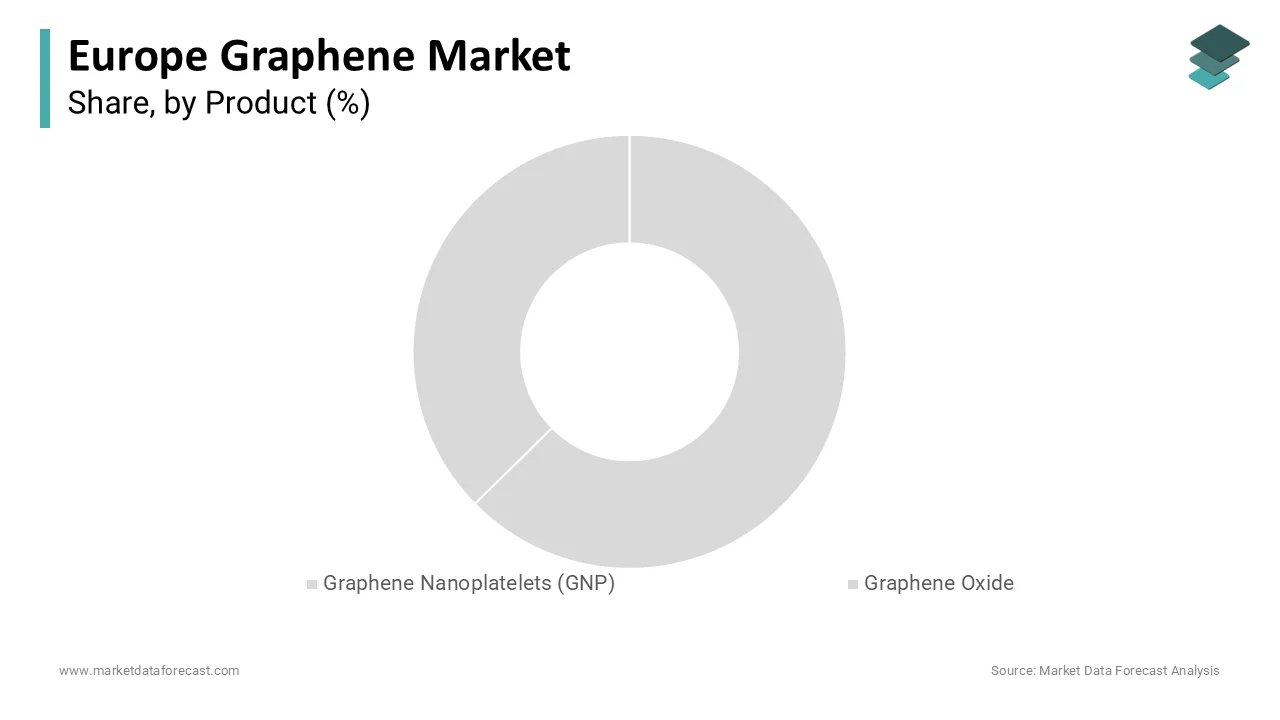
The graphene oxide segment is anticipated to witness the fastest CAGR of 31.2% from 2025 to 2033, which is driven by its unique chemical functionality and biomedical potential. Graphene oxygen-rich surface allows strong adsorption of heavy metals, organic pollutants, and microplastics, cs making it ideal for next-generation filtration membranes. Stricter discharge limits from the new EU Urban Wastewater Treatment Directive are forcing municipalities and industries to use advanced nanomaterials like GO, accelerating its integration beyond labs into practical water infrastructure. Graphene oxide’s biocompatibility and high surface area enable efficient loading and controlled release of therapeutic agents. Apart from these, GO’s fluorescence quenching properties are leveraged in rapid diagnostic biosensors. Graphene oxide is transitioning rapidly from an academic curiosity to a regulated healthcare innovation, largely because the EU Medical Devices Regulation now offers clearer pathways for nanomaterial-based diagnostics and therapeutics.
By End-use Industry Insights
In 2025, the electronics segment maintained the lead in the European graphene market and accounted for a 32.4% share. Factors such as Europe’s strategic push for semiconductor sovereignty and advanced sensor development have mainly contributed to the growth of the electronics segment. Europe’s ambition to reduce reliance on Asian and US chipmakers has intensified R&D into graphene for high-frequency transistors, interconnects, and photodetectors. The European Space Agency also uses graphene-coated sensors in satellite payloads for radiation detection, highlighting its dual use in defence and civil electronics. Graphene’s optical transparency and electrical conductivity make it a compelling alternative to indium tin oxide in touchscreens, displays, and wearable electronics. The EU’s Digital Europe Programme further supports pilot lines for printed graphene electronics, enabling roll-to-roll production of low-cost RFID tags and environmental sensors. This convergence of academic innovation, public funding,g, and industrial validation solidifies electronics as the dominant end-use segment.
The energy segment is likely to experience the fastest CAGR of 34.8% during the forecast period and is propelled by battery and supercapacitor advancements. European battery manufacturers are integrating graphene to overcome anode limitations and enable fast charging. The EU Battery Regulation mandates carbon footprint declarations from 202,7 and graphene’s ability to extend battery life reduces lifecycle emissions, which makes it a strategic enabler of compliance. Graphene is emerging as a catalyst support and membrane enhancer for electrolysers and fuel cells. Graphene is a critical material for the hydrogen economy because its ability to boost efficiency and reduce dependency on precious metals directly supports Europe's goal of significantly increasing electrolyser capacity by 2030, which is driving exceptional growth in the energy sector.
COUNTRY LEVEL ANALYSIS
United Kingdom Graphene Market Analysis
The United Kingdom held the majority share of 22.4% of the European graphene market in 2025. The prominence of the UK in the regional market is largely driven by its scientific legacy and vibrant innovation ecosystem. As the birthplace of graphene at the University of Manchester, the UK hosts the National Graphene Institute and the Graphene Engineering Innovation Centre, which bridge fundamental research and industrial application. Companies have secured supply contracts with Airbus, Rolls-Royce and Siemens Energy, validating commercial pathways. The UK’s post-Brexit science strategy continues to prioritise advanced materials, with funds allocated to the Electrification Future programme supporting graphene integration in batteries and power electronics. This combination of foundational research, manufacturing scale-up, and industrial adoption maintains the UK’s leadership despite evolving regulatory landscapes.
Germany Graphene Market Analysis
Germany was the next prominent country in the European graphene market and captured a 19.1% share in 2025. The growth of graphene in Germany is attributable to its world-class engineering base and integration of graphene into high-value manufacturing. The country’s Fraunhofer Society operates six institutes actively developing graphene applications in automotive, aerospace, and energy. Germany’s stringent industrial standards ensure that only reproducible high-quality graphene enters production lines, fostering trust in material performance. The German nation showcases how to integrate advanced materials into established industrial strengths, evidenced by several of its small and medium-sized enterprises (SMEs) now producing or formulating graphene.
France Graphene Market Analysis
France remains a major player in the European graphene market, with its state-coordinated approach through the French Graphene Initiative and strong focus on energy and defence applications. In France, the national graphene initiative has expanded to include a wide variety of collaborative projects, fostering innovation across multiple industries. Major aerospace and defence corporations are actively testing graphene composites in the construction of satellite components, aiming to decrease mass and bolster radiation shielding. Within the energy sector, significant partnerships are underway to incorporate graphene-enhanced materials, specifically in developing advanced anodes for energy storage systems used at large-scale solar power facilities. France’s top-down coordination between government research agencies and industrial champions creates a focused and strategically aligned graphene ecosystem.
Sweden Graphene Market Analysis
Sweden grew steadily in the European graphene market owing to its command in sustainable battery and clean tech innovation. The region is home to several flagship battery manufacturers that leverage advanced materials like graphene to enhance cell performance while adhering to strict environmental standards. Numerous graphene-related projects in this sector have received significant public funding through national programmes designed to promote carbon-neutral production methods. Leading academic institutions are also at the forefront of innovation, achieving global leadership in research areas such as graphene spintronics and making breakthroughs in quantum device development with the support of major international initiatives. Apart from these, companies supply graphene-modified steel for hydrogen storage tanks meeting stringent Nordic safety norms. Sweden’s combination of green industrial policy world world-class academia, and corporate commitment to circularity positions it as a high-impact niche leader in advanced graphene applications.
Italy Graphene Market Analysis
Italy is expected to be the most lucrative region in the European graphene market during the forecast period. It is experiencing dynamic growth through SME driven innovation and construction sector adoption. The country hosts Europe’s largest tonne scale graphene producer, Directa Plu, which supplies GNP to global tyre and construction firms. In infrastructure, the integration of graphene-enhanced asphalt on major roadways is improving durability and significantly extending the lifespan of the pavement, offering a more resilient solution for modern transport networks. The material's utility is also being harnessed in the energy sector, where major utility companies are incorporating graphene supercapacitors into grid stabilisation systems to enhance performance and reliability. The fashion industry is exploring advanced applications as well, with luxury brands developing graphene-coated textiles designed for intelligent temperature regulation, pushing the boundaries of functional apparel. This unique blend of infrastructure modernisation, consumer goods experimentation, and policy support makes Italy a versatile and rapidly expanding graphene market in Southern Europe.
COMPETITIVE LANDSCAPE
The European graphene market features a competitive landscape shaped by scientific excellence, industrial pragmatism, and policy support rather than price competition. Leading firms differentiate through material quality,application-specific engineering, and regulatory compliance, rather than volume alone. Competition is highly fragmented with over 150 specialised producers and formulators across the EU, but dominated by a handful of companies that have successfully transitioned from lab scale to industrial deployment. The market is segmented by product type and application, with distinct competitive dynamics in electronic, composites, and energy storage. National innovation ecosystems—such as the UK’s graphene institutes or Germany’s Fraunhofer network—act as a force multiplier, enabling SMEs to access advanced characterisation and pilot lines. As the EU tightens chemical and sustainability regulations, the ability to provide traceable, certified and high-performance graphene will increasingly determine market leadership over the next decade.
KEY MARKET PLAYERS
Some of the companies that are playing a dominating role in the global europe graphene market include
- Directa Plus S.p.A.
- Graphenea S.A.
- Versarien plc
- Haydale Graphene Industries plc
- Applied Graphene Materials plc
- Thomas Swan & Co. Ltd.
- Talga Group Ltd.
- Nanoinnova Technologies S.L.
- Avanzare Innovación Tecnológica S.L.
- XG Sciences, Inc.
- First Graphene Ltd.
- G6 Materials Corp.
- Graphite Central
- ACS Material, LLC
- BGT Materials Limited
- Angstron Materials, Inc.
- 2D Carbon (Changzhou) Tech Inc.
- NanoXplore Inc.
- Sixonia Tech GmbH
- Cambridge Nanosystems Ltd.
TOP LEADING PLAYERS IN THE MARKET
- Directa Plus is an Italy-based global leader in the production and commercialisation of graphene nanoplatelets with a strong footprint across Europe and international markets. The company operates one of the largest graphene manufacturing facilities in Europe with an annual capacity exceeding 100 tonnes. Directa Plus supplies its GNP under the brand name G+ to diverse sectors, including tyre reconstruction and sports wear, where it enhances material performance and sustainability. Recent actions include partnerships with major tyre manufacturers like Vittoria and Pirelli to develop high-performance bicycle and automotive tyres with reduced rolling resistance and extended lifespan, reinforcing its role as a key enabler of industrial graphene adoption.
- Versarien is a UK-headquartered advanced materials group specialising in the development and scale-up of graphene and related 2D materials for industrial applications. The company owns proprietary production methods for both graphene nanoplatelets and graphene oxide and serves sectors ranging from aerospace to healthcare. Versarien has established strategic collaborations with global engineering firms, including Airbus and BAE Systems, to integrate graphene into composite structures and electromagnetic shielding solutions. Its active participation in UK and EU innovation programs ensures alignment with regional sustainability and digital infrastructure goals while expanding its global licensing and supply network.
- Skeleton Technologies is a Germany-based innovator renowned for its curved graphene supercapacitors that deliver high power density and ultra-long cycle life for transportation and energy applications. The company’s proprietary material, known as curved graphene, is produced in its Saxony facility and integrated into supercapacitor cells used in rail, automotive, and grid stabilisation systems across Europe. Skeleton has secured major contracts with Siemens Mobility and ABB to deploy its energy recovery systems in trams and industrial machinery. This expansion underscores its commitment to advancing Europe’s energy storage sovereignty and positions it as a global leader in high-performance graphene-based energy solutions.
TOP STRATEGIES USED BY THE KEY MARKET PARTICIPANTS
Key players in the European graphene market focus on vertical integration by controlling material synthesis, formulation, and end product development to ensure performance consistency and intellectual property protection. They actively collaborate with industrial OEMs and research institutions through EU-funded consortia to de-risk application development and accelerate regulatory approval. Companies prioritise scalable and reproducible production methods such as liquid phase exfoliation or proprietary CVD processes to meet industrial volume and quality demands. Strategic diversification across multiple end-use sectors, including energy, automotive and consconstructionreduces dependency on any single market. Additionally, they investstandardisedized characterisation and certification to build customer trust and comply with evolving EU chemical and product safety regulations, enhancing long-term commercial viability.
MARKET SEGMENTATION
This research report on the europe graphene market is segmented and sub-segmented into the following categories.
By Product
- Graphene Nanoplatelets (GNP)
- Graphene Oxide
- Others
By End-use Industry
- Electronics
- Energy
- Others
By Country
- United Kingdom
- Germany
- France
- Sweden
- Italy
- Rest of Europe