- Product Description Description
- Table of Contents TOC
- List of Table & Figure LOT
- Get Free Sample PDF Sample PDF
Market Size, 2025
$25.74 BnMarket Estimate, 2026
$27.54 BnMarket Forecast, 2034
$47.35 BnCAGR, 2026–2034
7.01%Europe Healthcare Staffing Market Report Summary
The Europe healthcare staffing market was valued at USD 25.74 billion in 2025, is estimated to reach USD 27.54 billion in 2026, and is projected to reach USD 47.35 billion by 2034, growing at a CAGR of 7.01% during the forecast period from 2026 to 2034.
The growth of the Europe healthcare staffing market is driven by persistent workforce shortages, a rising geriatric population, and increasing demand for flexible clinical workforce models across hospitals, clinics, and long-term care facilities. Growing cross-border mobility of healthcare professionals within the European Union, expanding reliance on temporary and agency staff to manage demand fluctuations, and policy reforms supporting continuity of care are further strengthening market growth. Moreover, the rapid expansion of community-based care models and digital health services is creating new staffing requirements across allied health and specialized care roles.
Key Market Trends
- Rising demand for travel nurses and locum professionals to manage chronic workforce shortages in hospitals and emergency care.
- Growing cross-border recruitment of healthcare professionals within the EU supported by mutual qualification recognition frameworks.
- Expansion of allied healthcare roles such as physiotherapists, radiographers, and care coordinators driven by chronic disease burden.
- Increasing adoption of digital staffing platforms and AI-based scheduling systems for workforce optimization.
- Shift toward home healthcare and community-based care models accelerating demand for decentralized staffing solutions.
Segmental Insights
- Based on service type, the travel nurse segment held the largest share of the Europe healthcare staffing market in 2024. The segment’s dominance is attributed to severe nursing shortages, high demand in acute care settings, and the ability of travel nurses to provide rapid workforce coverage without long-term payroll commitments.
- The allied healthcare staffing segment is projected to be the fastest-growing, expected to expand at a CAGR of 9.45% over the forecast period. Growth is driven by increased demand for multidisciplinary care teams including physiotherapists, occupational therapists, radiographers, and rehabilitation specialists across hospitals and community care networks.
- Based on end use, the hospitals segment dominated the Europe healthcare staffing market in 2024, supported by continuous staffing gaps, regulatory staffing requirements, and high dependence on agency personnel for emergency, ICU, and specialized departments.
- The ambulatory facilities segment is expected to register the fastest growth with a CAGR of 8.12%, driven by policy-driven expansion of outpatient care, same-day surgeries, diagnostic hubs, and community treatment centers across major European healthcare systems.
Regional Insights
- Germany led the Europe healthcare staffing market in 2024, driven by acute nursing shortages, an aging population, and strong reliance on temporary staffing agencies to meet minimum staffing regulations across hospitals and long-term care facilities.
- The United Kingdom remains one of the highest-demand markets due to ongoing NHS workforce shortages, continued reliance on locum professionals, and growing adoption of digital staffing platforms.
- France continues to show stable growth supported by government workforce reform programs and the strategic use of agency staffing to bridge short-term shortages.
- Italy and Spain are witnessing increasing dependence on flexible staffing models, driven by regional workforce imbalances, aging clinicians, and expanding outpatient and community care initiatives.
Competitive Landscape
The Europe healthcare staffing market is highly competitive, characterized by the presence of global staffing conglomerates and strong regional agencies. Competition is based on deployment speed, regulatory compliance, workforce quality, ethical recruitment practices, and digital platform capabilities. Market leaders are focusing on cross-border recruitment networks, digital credentialing platforms, workforce upskilling programs, and long-term partnerships with public healthcare systems.
Prominent companies operating in the Europe healthcare staffing market include Randstad, The Adecco Group, ManpowerGroup, Hays, Kelly Services, ID Medical, Pulse, Reed, House of HR, and Pluss.
 Download Free Sample Report
Europe Healthcare Staffing Market Size
The Europe Healthcare staffing market size was valued at USD 24.06 billion in 2024 and is anticipated to reach USD 25.74 billion in 2025 from USD 44.27 billion by 2033, growing at a CAGR of 7.01% during the forecast period from 2025 to 2033.
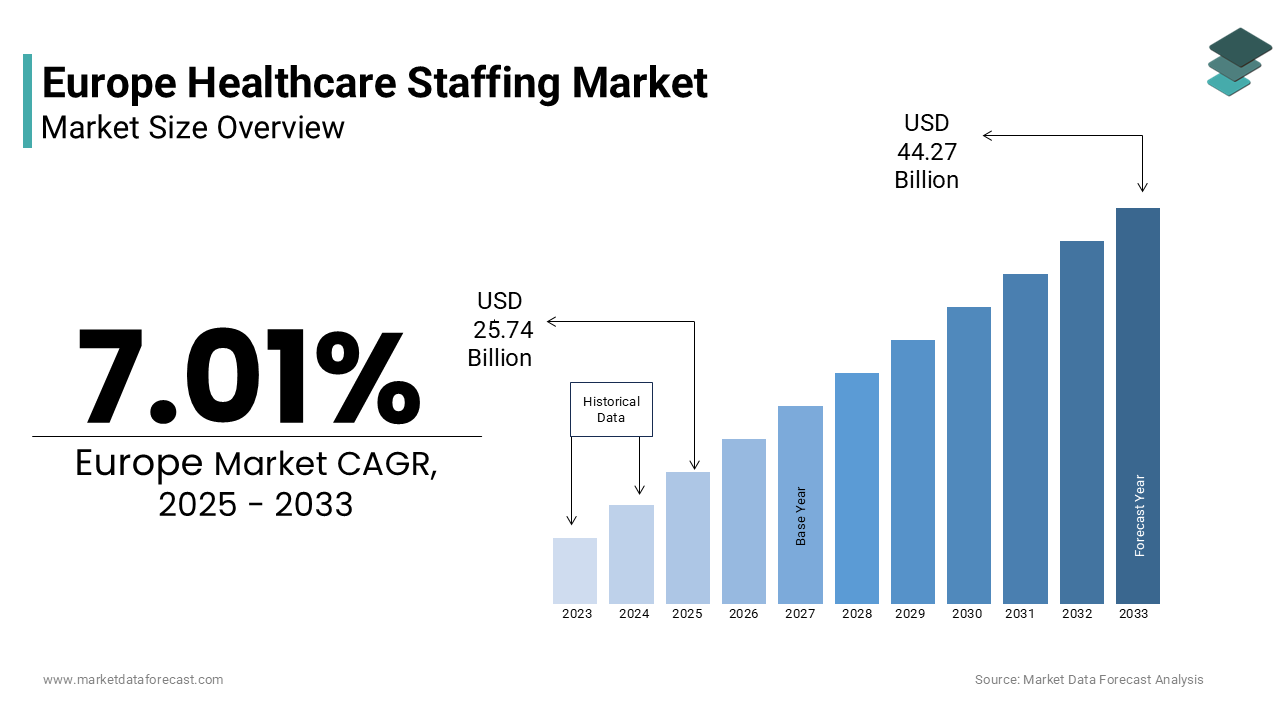
Healthcare staffing refers to the organized provision of qualified clinical and non-clinical personnel to public and private healthcare facilities across the continent. This market operates at the intersection of demographic pressure workforce policy and health system resilience responding dynamically to episodic demand surges and chronic labor imbalances. Unlike general employment sectors healthcare staffing is governed by stringent professional accreditation cross border recognition frameworks and ethical deployment standards. According to the World Health Organization, Europe faces a projected shortfall of 2.4 million health workers by 2030 if current training and retention trends persist. Compounding this, the European Commission estimates that 38% of practicing nurses in the EU will reach retirement age by 2035, which indicates looming workforce attrition. Simultaneously, Eurostat data shows that the share of the EU population aged 65 and over rose to 21.3% in 2023, which is intensifying care dependency ratios. These structural realities compel hospitals, clinics, and long‑term care providers to increasingly rely on temporary staffing agencies and intra‑European mobility to maintain service continuity. The market thus functions not as a commercial add‑on but as a critical operational buffer sustaining Europe’s universal health coverage commitment amid deepening workforce fragility.
MARKET DRIVERS
Accelerating Geriatric Care Demand Intensifies Need for Specialized Clinical Staff
Europe’s rapidly aging population is fundamentally reshaping healthcare service requirements and driving sustained demand for specialized geriatric and long‑term care professionals, which is one of the major factors propelling the growth of the European healthcare staffing market. According to Eurostat, 21.3% of the European Union’s population was aged 65 or older in 2023, and this proportion is projected to reach 29.9% by 2050. This demographic shift directly increases the prevalence of chronic conditions such as dementia, cardiovascular disease, and mobility impairments which require multidisciplinary care teams. As per the European Centre for Disease Prevention and Control, over 9 million people in the EU currently live with dementia, a figure expected to double by 2050. Consequently, nursing homes and home‑based care services are scaling operations but face severe staffing bottlenecks. Germany alone requires an additional 150,000 nursing professionals by 2030, according to the German Federal Ministry of Health, yet domestic training output falls short by nearly 40,000 annually. This gap compels facilities to engage staffing agencies for temporary nurses with gerontology certifications. Moreover, the European Union’s 2023 Long‑Term Care Initiative encourages member states to formalize home‑care pathways, further institutionalizing demand for mobile and community‑based clinical personnel.
Cross‑Border Labor Mobility Facilitates Rapid Workforce Augmentation
The European Union’s principle of free movement has evolved into a strategic enabler for healthcare staffing flexibility, allowing facilities to rapidly address acute shortages through intra‑European recruitment, which is further boosting the expansion of the European healthcare staffing market. According to the European Commission, over 145,000 health professionals benefited from mutual recognition of professional qualifications under Directive 2005/36/EC in 2023, enabling seamless employment across member states. Countries like Poland, Romania, and Portugal have emerged as key talent reservoirs with their nursing graduates increasingly filling vacancies in Germany, France, and the Nordic region. According to the Germany’s Federal Employment Agency, 68% of newly registered foreign nurses in 2023 originated from other EU countries, primarily from Eastern and Southern Europe. This mobility is further streamlined by the European Professional Card, which reduced credential‑verification time from months to weeks, as per the European Labour Authority. During seasonal health crises such as the 2022–2023 respiratory virus surge, Dutch and Belgian hospitals recruited hundreds of temporary Polish and Czech nurses through pre‑vetted staffing partnerships.
MARKET RESTRAINTS
Divergent National Licensing and Credentialing Standards Impede Workforce Integration
Despite EU‑wide mobility frameworks, significant disparities in national licensing requirements continue to obstruct the efficient deployment of healthcare professionals across borders, which is majorly impeding the growth of the European healthcare staffing market. According to the European Observatory on Health Systems and Policies, only 14 of the 27 EU member states had fully transposed the 2013 European Professional Card regulations into national law as of 2023, which is creating procedural inconsistencies that delay onboarding. For example, a nurse trained in Greece must complete additional language‑proficiency tests and supervised clinical hours to practice in Austria, whereas Sweden accepts the same credentials with minimal verification. According to the estimations of the European Federation of Nurses Associations, credential‑recognition delays average 11 weeks across Western Europe, significantly hampering response during staffing emergencies. Moreover non‑EU trained professionals face even steeper barriers. Germany’s recognition authority processed only 42% of third‑country nursing applications in 2023 due to incomplete documentation or curriculum mismatches, according to the Federal Office for Migration and Refugees. These administrative friction points inflate recruitment costs and discourage qualified candidates from seeking cross‑border opportunities.
Persistent Wage Disparities Fuel Staff Attrition and Internal Migration
Significant imbalances in compensation across European healthcare systems drive internal labor migration and undermine workforce stability in lower‑income countries, which is another notable restraint to the expansion of the European healthcare staffing market. According to Eurofound, the average monthly gross salary for a registered nurse in Germany exceeded €4,200 in 2023, while in Bulgaria it remained below €1,100 despite similar educational requirements. This nearly fourfold gap incentivizes skilled professionals from Central and Eastern Europe to seek employment in Western and Northern member states. Romania’s College of Physicians reported that over 8,000 doctors emigrated within the EU between 2020 and 2023, primarily to Italy and the UK. Even within Western Europe, disparities influence retention. Portuguese nurses are leaving public hospitals at a rate of 12% annually to join German or Swiss private clinics offering double the pay, according to Portugal’s National Health Service Observatory. These outflows reduce training capacity in source countries, creating cycles of understaffing and service degradation. While EU mobility is a legal right, the absence of wage‑convergence mechanisms transforms staffing into a zero‑sum game where patient access deteriorates in sending regions. Without coordinated investment in equitable compensation or retention bonuses, this imbalance will continue to destabilize national health systems and inflate reliance on temporary staffing intermediaries.
MARKET OPPORTUNITIES
Digital Health Integration Creates Demand for Tech‑Enabled Clinical Roles
The rapid adoption of telehealth, electronic health records, and remote monitoring systems across Europe is generating demand for healthcare staff proficient in digital workflows and data‑driven care coordination, which is a prominent opportunity in the European healthcare staffing market. According to European Commission, a large majority of EU hospitals had implemented electronic prescribing or e‑prescribing capabilities and many offer virtual consultation services by 2023. This transformation necessitates not only upskilling existing personnel but also recruiting hybrid roles such as digital care coordinators and remote patient‑monitoring technicians. In the Netherlands, all home‑care nurses are increasingly required to use real‑time mobile documentation platforms, with national inspections reporting widespread daily use of analytics dashboards. Similarly, France’s 2023 Digital Health Strategy recommends that public hospitals strengthen health‑data management capacity, including designated data‑management roles to oversee interoperability and cybersecurity compliance. These emerging roles require competencies beyond traditional clinical training, blending IT literacy, workflow design, and patient communication. Staffing agencies are responding by partnering with edtech firms to certify temporary personnel in national digital‑health standards such as Germany’s Telematikinfrastruktur. This convergence of care and technology is redefining staffing needs from volume‑based replacement to capability‑based augmentation, creating high‑value niches for digitally fluent professionals.
Expansion of Community‑Based Care Models Drives Decentralized Staffing Needs
Policy shifts across Europe toward decentralized and preventive care are redirecting staffing demand from hospitals to community settings such as home‑care clinics and social health hubs, which is another prominent opportunity in this regional market. As per the European Commission’s 2023 State of Health in the EU reporting, many member states have enacted measures to expand primary and home‑based services to reduce acute hospital admissions. Germany’s Hospital Relief Act aims to shift a substantial number of inpatient cases to outpatient or domiciliary care by 2025, creating material demand for additional community nurses. Similarly, Italy’s National Recovery and Resilience Plan include multi‑billion‑euro allocations to expand community health infrastructure and staffing. These roles demand greater autonomy, cultural competence, and logistical coordination than hospital‑based positions, intensifying competition for qualified personnel. Staffing firms are adapting by developing specialized rosters of mobile clinicians trained in home‑safety assessment, chronic‑disease management, and family engagement. This spatial redistribution of care diversifies employment settings and necessitates new recruitment metrics centered on adaptability, communication, and independent judgment rather than institutional seniority.
MARKET CHALLENGES
Burnout and Moral Distress Undermine Workforce Retention and Reliability
Chronic understaffing and emotional burden have precipitated a crisis of burnout among European healthcare professionals, which is directly impacting retention and the reliability of temporary staffing pools and challenging the expansion of the European market. According to recent pan‑European union and sector surveys, a large share of nurses report emotional exhaustion and a significant minority are considering leaving the profession within a short time horizon. The strain is particularly acute in emergency and intensive care units where staff‑to‑patient ratios can exceed recommended thresholds during peak periods. This environment increases turnover and reduces the availability of experienced professionals for agency deployment. Moreover, moral distress from resource rationing or ethical dilemmas during health emergencies erodes professional satisfaction independent of pay. Staffing agencies struggle to maintain quality rosters when even short‑term assignments become psychologically untenable. Without systemic interventions to reduce cognitive load and improve working conditions, the pipeline of willing and resilient clinicians will continue to narrow, destabilizing both permanent and contingent staffing ecosystems.
Ethical and Legal Risks in International Recruitment from Non‑EU Countries
While EU internal mobility offers a regulated staffing pathway, growing reliance on health workers from outside Europe introduces complex ethical and legal vulnerabilities, which is further challenging the growth of the European healthcare staffing market. According to WHO, tens of thousands of health professionals were recruited into EU and UK systems in recent years from low‑ and middle‑income countries, raising concerns about source‑country shortages and ethical recruitment. Although the WHO Global Code of Practice on International Recruitment provides guidance, it is non‑binding and enforcement varies. Some national systems sourced a substantial share of new international hires from countries classified by the WHO as having critical workforce deficits, prompting policy debate and proposals to condition recruitment on bilateral capacity‑building agreements. Additionally, visa processing delays and credential mismatches increase onboarding failure rates for non‑EU applicants. These uncertainties complicate long‑term workforce planning and expose staffing agencies to compliance risks, making third‑country recruitment a higher‑friction, higher‑scrutiny strategy compared with intra‑European alternatives.
REPORT COVERAGE
| REPORT METRIC | DETAILS |
| Market Size Available | 2024 to 2033 |
| Base Year | 2024 |
| Forecast Period | 2025 to 2033 |
| CAGR | 7.01% |
| Segments Covered | By Service Type, End-User, And Region |
| Various Analyses Covered | Global, Regional & Country Level Analysis; Segment-Level Analysis; DROC, PESTLE Analysis; Porter’s Five Forces Analysis; Competitive Landscape; Analyst Overview of Investment Opportunities |
| Regions Covered | United Kingdom, France, Spain, Germany, Italy, Russia, Sweden, Denmark, Switzerland, the Netherlands, Turkey, and the Czech Republic |
| Market Leaders Profiled | Randstad, The Adecco Group, ManpowerGroup, Hays, Kelly Services, ID Medical, Pulse, Reed, House of HR, and Pluss. |
SEGMENTAL ANALYSIS
By Service Type Insights
The travel nurse segment held the largest share of the Europe healthcare staffing market by service type in 2024. The dominance of the travel nurse segment in this regional market is majorly driven by systemic nursing shortages, seasonal demand fluctuations, and the need for rapid clinical coverage in acute care settings. According to the European Commission, Member States continue to report substantial nursing shortfalls across hospital systems, with Germany, France and Italy accounting for a large share of the deficit. Travel nurses offer a scalable solution by deploying qualified professionals for fixed durations to fill critical gaps without long term payroll commitments. In Germany alone the Federal Ministry of Health reported increased use of travel nurses by public hospitals during winter 2023 to manage respiratory illness surges. The standardization of EU professional recognition under Directive 2005 36 EC further reduces credentialing delays enabling faster onboarding. Unlike per diem roles which address daily shifts travel nursing provides continuity in high acuity units such as ICUs and emergency departments where consistent team integration is essential. This operational reliability combined with demographic and epidemiological pressures solidifies travel nursing as the backbone of Europe’s contingent clinical workforce.
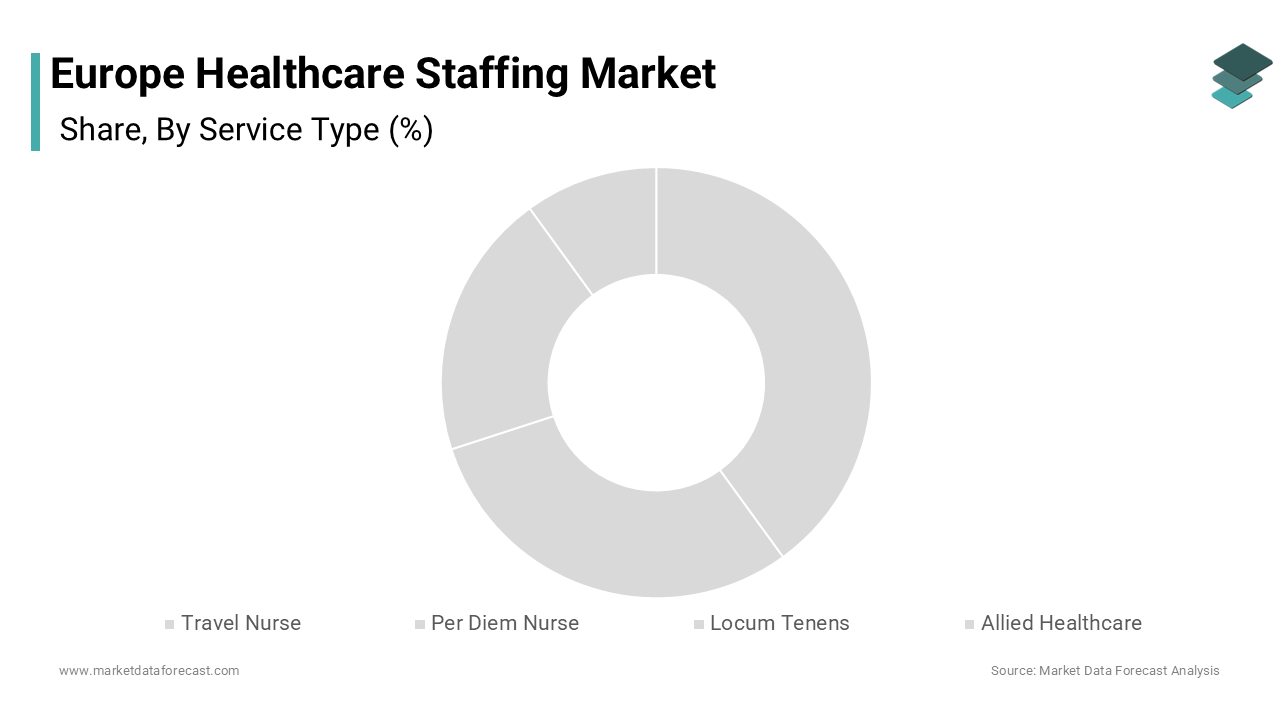
The allied healthcare staffing segment is the fastest growing segment in the Europe healthcare staffing market and is projected to expand at a CAGR of 9.45% over the forecast period owing to the EU’s strategic pivot toward integrated multidisciplinary care models that emphasize prevention rehabilitation and chronic disease management. As per the World Health Organization, Europe a large share of the region’s disease burden is attributable to non-communicable conditions such as diabetes cardiovascular disease and musculoskeletal disorders as these conditions require sustained input from physiotherapists, radiographers, occupational therapists and dietitians. Germany’s 2023 Rehabilitation Reform Act mandates that all major hospitals employ allied health teams in post-acute care pathways increasing staffing demand as documented by national professional associations. Similarly, the Netherlands’ Integrated Care Agreements require primary care networks to include at least three allied disciplines per patient with complex needs driving a marked increase in temporary allied staffing contracts as reported by the Dutch Healthcare Authority. Digital health expansion further fuels demand as remote monitoring of heart failure patients in Sweden now routinely involves respiratory therapists and telehealth coordinators. This shift from physician centric to team-based care redefines staffing priorities and positions allied roles as the most dynamically expanding frontier in Europe’s health workforce landscape.
By End Use Insights
The hospitals segment commanded for the largest share of the Europe healthcare staffing market by end use in 2024. The leading position of hospitals segment in this regional market is driven by high dependency on acute care personnel complex regulatory requirements and persistent workforce imbalances. According to Eurostat, inpatient and emergency services comprise a significant portion of EU health expenditure, reflecting the centrality of hospitals in the care continuum. These institutions operate 24 7 with stringent staff to patient ratios. Spain’s Ministry of Health maintains minimum nurse‑to‑patient standards in medical wards, yet many public hospitals reported difficulty meeting these ratios in 2023 due to vacancies as per national nursing bodies. This chronic understaffing compels reliance on external agencies for temporary nurses, physicians and technicians. Furthermore, hospitals are legally required to maintain surge capacity for public health emergencies, which is a provision activated during the 2022 2023 influenza wave when Italian hospitals rapidly recruited temporary staff according to Civil Protection reporting. The complexity of hospital environments also necessitates specialized skills such as ICU certification or surgical assistance which internal pools often lack. Unlike outpatient settings where tasks are standardized hospital care demands adaptable highly credentialed professionals available on demand making them the most consistent and voluminous consumers of staffing services across Europe.
The ambulatory facilities segment is the fastest growing end use segment in the Europe healthcare staffing market and is predicted to witness a promising CAGR of 8.12% over the forecast period owing to the policy driven efforts to reduce hospital admissions contain costs and improve patient convenience through same day diagnostic therapeutic and surgical interventions. The European Commission’s recent outpatient care initiatives target shifting a substantial share of low-risk surgeries from inpatient to ambulatory settings over the medium term. In France, a majority of surgeries are now performed in ambulatory centers, reflecting steady growth since 2020 according to national health authorities. These facilities require tightly coordinated teams of anesthetists surgical nurses and recovery specialists who work in compressed timeframes demanding high precision and flexibility. Additionally, the rise of diagnostic hubs and cancer screening centers across Scandinavia and the Benelux further diversifies demand for radiographers, phlebotomists and genetic counselors on short term contracts. This structural reorientation of care delivery transforms ambulatory settings from peripheral to central staffing destinations.
REGIONAL ANALYSIS
Germany Healthcare Staffing Market Analysis
Germany occupied 22.5% of the European healthcare staffing market share in 2024 and is likely to remain the strongest performer in the regional staffing market over the coming years owing to the high demand and strategic importance. The growing aging population, acute nursing shortages, and a decentralized public health infrastructure are contributing to the dominating position of Germany in the European market. Persistent shortfalls will keep hospitals and long‑term care providers reliant on temporary staffing, streamlined foreign credential recognition, and state‑level agency partnerships. Regulatory measures such as minimum staffing mandates will continue to institutionalize contingent labor as a core capacity tool.
United Kingdom Healthcare Staffing Market Analysis
The United Kingdom is expected to remain a high‑intensity market, with chronic vacancies and digital staffing innovations shaping demand. Ongoing NHS workforce attrition and record vacancy levels will sustain large‑scale international recruitment and heavy use of locum and agency staff. At the same time, broad adoption of algorithmic scheduling and platform‑based shift matching will increase operational efficiency and create new opportunities for tech‑enabled staffing providers. Private sector growth will continue to compete for clinicians, keeping the market dynamic and contested.
France Healthcare Staffing Market Analysis
France is projected to be a resilient, policy‑driven market that balances short‑term agency reliance with long‑term workforce rebuilding. National reform programs and targeted recruitment initiatives will continue to use temporary staffing to bridge immediate gaps while investments in training and retention scale up. Regulated contracting mechanisms and incentives for deployment to underserved areas will preserve access and control costs, maintaining France’s steady role in the regional staffing landscape.
Italy Healthcare Staffing Market Analysis
Italy is likely to remain a structurally complex market with strong regional variation and sustained demand for flexible clinical staffing. Fragmented governance and an aging clinical workforce will keep reliance on locum tenens, particularly in emergency and hospitalist roles, while EU‑funded modernization programs create waves of temporary placement needs during implementation. Northern regions’ specialized staffing ecosystems and medical tourism niches will coexist with persistent shortages in the south, preserving high activity for staffing agencies.
Spain Healthcare Staffing Market Analysis
Spain is expected to continue as a dynamic, seasonally responsive market where tourism cycles and primary‑care reforms drive fluctuating demand. Peak tourist seasons will keep temporary staffing needs elevated in coastal provinces, while national primary‑care initiatives will require short‑term deployments during rollout phases. Growth of private insurance and digital staffing platforms will diversify demand for bilingual and specialized staff, reinforcing Spain’s adaptable role in Europe’s staffing ecosystem.
COMPETITIVE LANDSCAPE
Competition in the Europe healthcare staffing market is characterized by a dual structure comprising large multinational agencies and specialized national firms each vying through differentiation rather than price. The absence of a unified European staffing regulator allows diverse operational models to coexist from public in house providers like NHS Professionals to private global players and regional boutiques. Competition centers on speed of deployment quality of candidate vetting compliance with national licensing frameworks and ability to offer value added services such as language training or digital onboarding. Larger firms leverage technology and cross border networks to serve multinational hospital chains while local agencies excel in cultural fluency and relationships with regional health authorities. Ethical recruitment practices have become a key competitive frontier as clients increasingly demand adherence to WHO guidelines and EU labor standards. Innovation in predictive staffing using AI to forecast regional shortages is emerging as a new battleground. Overall, the market rewards agility regulatory literacy and deep integration with evolving care delivery models over sheer scale.
KEY MARKET PLAYERS
Some of the companies that are playing a dominating role in the europe Healthcare staffing market include
- Randstad
- The Adecco Group
- ManpowerGroup
- Hays
- Kelly Services
- ID Medical
- Pulse
- Reed
- House of HR
- Pluss
Top Players in the Market
NHS Professionals
NHS Professionals is the United Kingdom’s leading in house healthcare staffing organization operating as a wholly owned subsidiary of the National Health Service. It plays a pivotal role across Europe by setting benchmarks in ethical staffing reducing reliance on high-cost external agencies. The organization manages a flexible workforce of over 100 000 nurses, doctors and allied health professionals who support NHS trusts on a temporary basis. In 2024 NHS Professionals expanded its Managed Service Provider model to fifteen additional hospital trusts enhancing workforce coordination and cost transparency. It also launched a digital upskilling platform in collaboration with the Open University to fast-track credentialing of internationally trained nurses. These initiatives reinforce its leadership in public sector staffing while contributing globally through knowledge exchange on sustainable workforce models.
Vivisol Group
Vivisol Group headquartered in France is a major European healthcare staffing and home care services provider with operations spanning over ten countries. It specializes in nursing home support rehabilitation staffing and chronic disease management personnel. The company distinguishes itself through integrated care pathways that blend clinical staffing with remote monitoring solutions. In early 2024 Vivisol acquired a Portuguese home nursing agency to strengthen its presence in Southern Europe and launched a bilingual nurse certification program for cross border assignments within the EU. Its emphasis on community-based staffing aligns with Europe’s policy shift toward decentralized care. Globally Vivisol contributes by pioneering hybrid staffing models that combine in person care with telehealth coordination enhancing scalability and continuity.
MediCrew Personalmanagement GmbH
MediCrew Personalmanagement GmbH is a leading German healthcare staffing firm known for its specialized recruitment of international medical professionals for hospitals and clinics. The company operates a robust pipeline connecting nursing graduates from Eastern Europe and Latin America with German healthcare institutions. It has deepened its market position through partnerships with vocational schools in Romania and the Philippines to ensure curriculum alignment with EU standards. In late 2023, MediCrew introduced an AI powered language and cultural readiness program to accelerate integration of non-German speaking nurses into clinical teams. This proactive approach reduces onboarding time and improves retention. Its model exemplifies how national staffing firms can address systemic shortages while contributing to global health workforce mobility standards.
Top Strategies Used by the Key Market Participants
Key players in the Europe healthcare staffing market prioritize strategic partnerships with public health systems to embed themselves as preferred workforce partners through managed service agreements. They invest in digital platforms that streamline credential verification scheduling and compliance tracking to enhance deployment speed and regulatory adherence. Firms actively develop cross border training pipelines with nursing schools in talent rich countries to ensure curriculum alignment and ethical recruitment. Additionally, they expand service scope beyond traditional staffing by integrating upskilling programs language training and cultural orientation to improve retention and performance. Lastly companies align offerings with EU health policy shifts such as community care expansion and digital health adoption to capture emerging staffing niches in allied and ambulatory roles.
MARKET SEGMENTATION
This research report on the europe Healthcare staffing market has been segmented and sub–segmented into the following categories.
By Service Type
- Travel Nurse
- Per Diem Nurse
- Locum Tenens
- Allied Healthcare
By End Use
- Hospitals
- Clinics
- Ambulatory Facilities
- Others
By Country
- UK
- France
- Spain
- Germany
- Italy
- Russia
- Sweden
- Denmark
- Switzerland
- Netherlands
- Turkey
- Czech Republic
- Rest of Europe